Traffic signals and pavement markings in South Carolina
The South Carolina Driver's Manual shows or names everything on this page: 20 in all, on pages 6-2 – 6-3, 6-13 – 6-16, 7-2, 7-11, 8-7.
Independent educational site · not affiliated with any government agency or DMV
Traffic signals
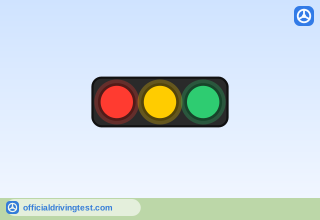
Horizontal Traffic Signal (Red, Yellow, Green)
In some metropolitan areas traffic lights are horizontal instead of vertical, and the red light is on the left, the yellow light is in the middle, and the green light is on the right.
Manual page 6-2 · Open this page in the manual (Manual page 6-2)
Single-Color Traffic Light
There are some intersections, and other locations, where there are lights of only one color (green, yellow, or red).
Manual page 6-2 · Open this page in the manual (Manual page 6-2)
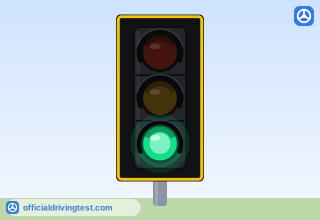
Steady Green Light
GREEN Traffic Light—This means you may go through the intersection if it is clear to do so, with caution.
Manual page 6-3 · Open this page in the manual (Manual page 6-3)
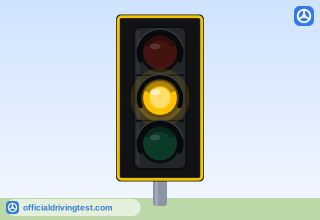
Steady Yellow Light
YELLOW Traffic Light—A yellow caution light follows the green signal and is a warning that the signal is about to change to the red stop signal. Therefore, you should stop your vehicle and wait for the next green light. If you are already in the intersection, clear the intersection as quickly as possible. You must observe and allow for errors made by other drivers - side, front and rear – when you are approaching a yellow light.
Manual page 6-3 · Open this page in the manual (Manual page 6-3)
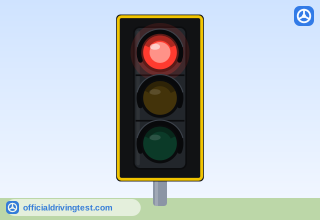
Steady Red Light
RED Traffic Light—This means stop before entering the intersection. You must wait behind the stop line, crosswalk, or intersection until the traffic light turns green. An exception to this rule permits traffic facing a red signal to turn right except where a sign prohibits a right turn on red. When turning on red you must stop before entering the crosswalk on the near side of the turn and yield right-of-way to pedestrians who are lawfully within and adjacent to the crosswalk and to other traffic lawfully using the intersection.
Manual page 6-3 · Open this page in the manual (Manual page 6-3)
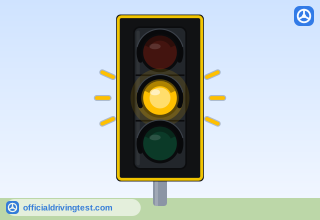
Flashing Yellow Light
Flashing YELLOW Traffic Light—This means slow down and proceed with caution. You should be prepared to stop for any traffic flow that may be entering the intersection.
Manual page 6-3 · Open this page in the manual (Manual page 6-3)
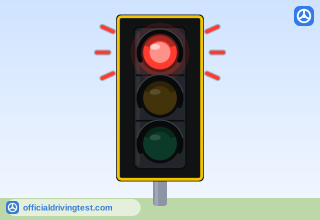
Flashing Red Light
Flashing RED Traffic Light—This means you must stop behind a stop line, crosswalk, or intersection before entering and use the same procedure as you would at a stop sign, by coming to a complete stop. Look both ways before entering the intersection and yield right-of-way, if applicable.
Manual page 6-3 · Open this page in the manual (Manual page 6-3)
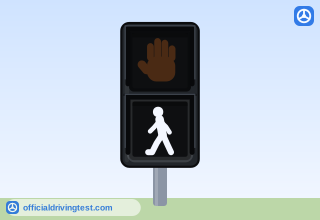
Pedestrian Signal Heads
The manual does not state it
Manual page 8-7 · Open this page in the manual (Manual page 8-7)
Pavement markings
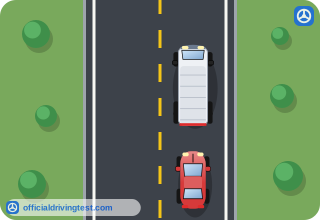
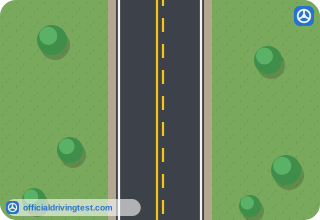
Passing Permitted (Broken Yellow Line)
Two-direction roadway—passing permitted
Manual page 6-13 · Open this page in the manual (Manual page 6-13)
Passing Permitted Only on the Broken Line Side
Two-direction roadway—passing permitted when dashed line is on your side
Manual page 6-13 · Open this page in the manual (Manual page 6-13)
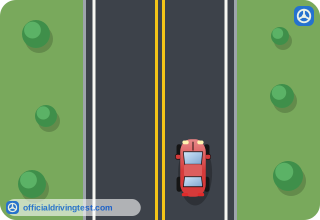
Passing Prohibited Both Directions (Double Solid Yellow)
Two-direction roadway—passing prohibited in both directions
Manual page 6-13 · Open this page in the manual (Manual page 6-13)
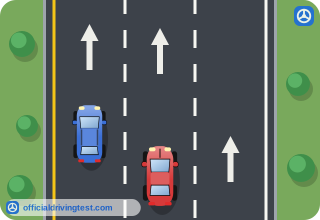
One-Direction Roadway, Passing Permitted (Broken White Line)
One-direction roadway—passing permitted
Manual page 6-14 · Open this page in the manual (Manual page 6-14)
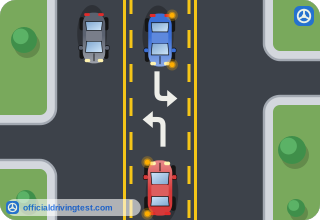
Shared Center Left Turn Lane
A lane is reserved for the use of left turning vehicles from either direction and is not to be used for through traffic or passing other vehicles.
Manual page 6-14 · Open this page in the manual (Manual page 6-14)
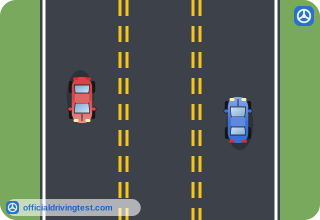
Reversible Lanes (Double Broken Lines)
The manual does not state it
Manual page 6-14 · Open this page in the manual (Manual page 6-14)
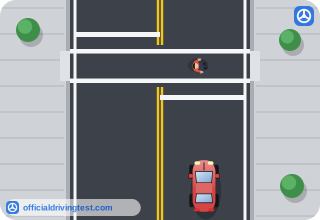
Marked Crosswalk
Crosswalks define the area where pedestrians may cross the roadway. ... You must yield to pedestrians entering or in a crosswalk. Not all crosswalks are marked. Be alert for pedestrians when crossing intersections. If crosswalks are not apparent, then you must stop before entering the intersection.
Manual page 6-15 · Open this page in the manual (Manual page 6-15)
Stop Line
When required to stop because of a sign or signal you must stop behind the stop line or crosswalk, but if there are neither, then you must stop at the point nearest the intersection where you can see in both directions without entering the cross traffic in front of you. ... If there is a stop line before the crosswalk, the stop line must be obeyed first. (6-15) Many intersections are marked with stop lines to show where you must come to a complete stop. These stop lines help to set you farther back at an intersection to give larger vehicles more turning space. Always stop behind stop lines. (10-11)
Manual page 6-15 · Open this page in the manual (Manual page 6-15)
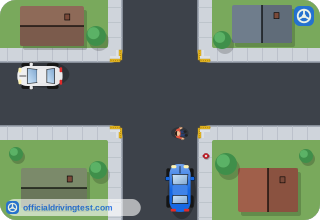
Unmarked Crosswalk
Crosswalks define the area where pedestrians may cross the roadway. ... You must yield to pedestrians entering or in a crosswalk. Not all crosswalks are marked. Be alert for pedestrians when crossing intersections. If crosswalks are not apparent, then you must stop before entering the intersection.
Manual page 6-16 · Open this page in the manual (Manual page 6-16)
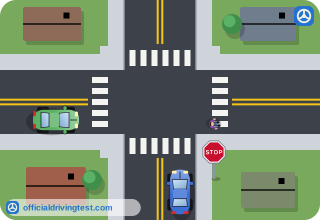
Crosswalk with Wide Bars
Crosswalks define the area where pedestrians may cross the roadway. ... You must yield to pedestrians entering or in a crosswalk. Not all crosswalks are marked. Be alert for pedestrians when crossing intersections. If crosswalks are not apparent, then you must stop before entering the intersection.
Manual page 6-16 · Open this page in the manual (Manual page 6-16)
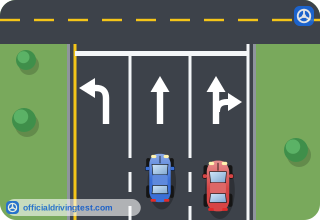
Lane-Use Arrows at an Intersection
Identify and enter the lane from which you will turn. Stay in that lane until the turn is completed. (7-2) Pavement markings are lines, arrows, words, or symbols painted on the roadway to give directions or warnings. They are used to divide lanes, tell you when you may pass other vehicles or change lanes, tell you which lanes to use for turns, define pedestrian walkways, and show where you must stop for signs or traffic signals. (6-12)
Manual page 7-2 · Open this page in the manual (Manual page 7-2)
Painted Curb
Check for signs or painted curbs that may prohibit or limit parking. Some parking restrictions are indicated by colored curb markings.
Manual page 7-11 · Open this page in the manual (Manual page 7-11)