Rhode Island: Signals and vehicle controls
Hand signals and turn signals, mirrors and blind spots, headlights, backing, what to check before starting the engine, and the equipment you must inspect. Split into 3 shorter tests so you're not stuck in one long quiz.
Independent educational site · not affiliated with any government agency or DMV
Choose a part
Signals and vehicle controls — Part 1
Questions in this part include: “If you take your driving skills test in the rain, what should you know beforehand?”
StartSignals and vehicle controls — Part 2
Questions in this part include: “During which hours does the law require motorists to turn their headlights on?”
StartSignals and vehicle controls — Part 3
Questions in this part include: “How should the steering wheel feel when you turn it?”
StartAll 60 Signals and vehicle controls questions with answers
Choose a part above to take a practice test, or study every question and answer here.
Show the questions and answersHide the questions
-
If you take your driving skills test in the rain, what should you know beforehand?
- Which route the examiner will use when the roads are wet
- Where the wiper and headlight controls are and how to adjust them
- Where the radio and air conditioning controls are and how to adjust them
- Where the examiner's own controls are and how to operate them
Show answer
Correct answer: Where the wiper and headlight controls are and how to adjust them
In the rain you should already know where the wiper and headlight controls are and how to adjust them.
Source: Rhode Island Driver’s Manual (April 2024), page 13
-
How familiar must you be with the controls of the vehicle you use for the driving skills test?
- Familiar with the lights and wipers only
- Familiar enough to find them with the examiner's help
- Familiar after a short demonstration by the examiner
- Fully familiar, without having to look for them
Show answer
Correct answer: Fully familiar, without having to look for them
The driver must know every control of the vehicle well enough to use it without searching for it.
Source: Rhode Island Driver’s Manual (April 2024), page 13
-
How is the hazard light button usually indicated?
- By a red or white triangle
- By a blue circle with a white dot
- By a green arrow pointing up
- By a yellow square with an X
Show answer
Correct answer: By a red or white triangle
The hazard light button is usually marked with a red or white triangle.
Source: Rhode Island Driver’s Manual (April 2024), page 13
-
Where is the hazard light button normally located?
- On the floor beside the parking brake or the seat
- On the driver's door panel near the window controls
- On top of the steering column or in the center of the dash
- Under the left side of the dash beside the hood release
Show answer
Correct answer: On top of the steering column or in the center of the dash
The button is normally on top of the steering column or in the center of the dash.
Source: Rhode Island Driver’s Manual (April 2024), page 14
-
What does the manual say to do before entering your vehicle?
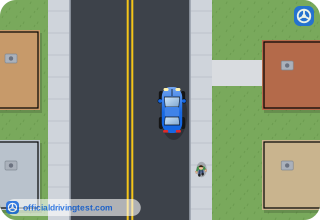
- Check in front and behind it for objects, animals, or persons in your path
- Check the air pressure in every tire with a tire gauge you carry
- Turn on the headlights and the wipers to make sure they both work
- Ask a passenger to walk around the vehicle and sound the horn
Show answer
Correct answer: Check in front and behind it for objects, animals, or persons in your path
Safe driving starts before the engine is on, so the manual says to check the area in front of and behind the vehicle for anything in your path.
Source: Rhode Island Driver’s Manual (April 2024), page 26
-
Which of these is one of the steps the manual lists to take every time you get in your vehicle?
- Set the cruise control
- Turn on the high-beam headlights
- Adjust the head restraint
- Warm up the engine for one minute
Show answer
Correct answer: Adjust the head restraint
The manual's list of steps to take every time you get in includes adjusting the head restraint.
Source: Rhode Island Driver’s Manual (April 2024), page 26
-
Before starting the engine, what does the manual say to ask your passengers to do?
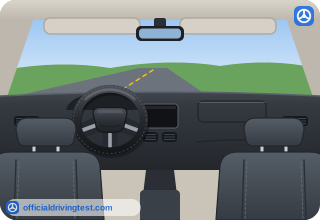
- Turn off their phones
- Fasten their seat belts
- Move to the back seat
- Open their windows
Show answer
Correct answer: Fasten their seat belts
Asking passengers to fasten their seat belts is one of the steps listed for every time you get in your vehicle.
Source: Rhode Island Driver’s Manual (April 2024), page 26
-
On the driving test, what will the examiner tell you to do when you stop and start on a hill?
- Drive to the right side of the road, stop, set the parking brake, and shift to neutral
- Drive to the left side of the road, stop, and put the vehicle in park
- Stop in the travel lane, release the parking brake, and shift to reverse
- Drive to the right side of the road, stop, and keep your foot on the accelerator
Show answer
Correct answer: Drive to the right side of the road, stop, set the parking brake, and shift to neutral
The examiner has you drive to the right side, stop, set the parking brake and shift to neutral.
Source: Rhode Island Driver’s Manual (April 2024), page 33
-
When you stop on a hill with the parking brake set, what must the parking brake do?
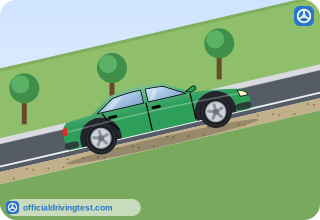
- Slow the vehicle gradually while it is still moving
- Replace the need to shift to neutral
- Hold the vehicle from rolling back
- Release automatically when the engine starts
Show answer
Correct answer: Hold the vehicle from rolling back
The manual says the parking brake must hold the vehicle from rolling back.
Source: Rhode Island Driver’s Manual (April 2024), page 33
-
When starting your vehicle on a hill, which shoulder should you look over to be sure that traffic is clear?
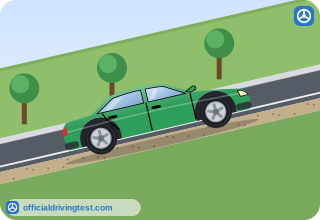
- Your right shoulder
- Your left shoulder
- Neither, because mirrors are enough
- Your right shoulder, but only at night
Show answer
Correct answer: Your left shoulder
Before driving out, you look over your left shoulder to make sure traffic is clear.
Source: Rhode Island Driver’s Manual (April 2024), page 33
-
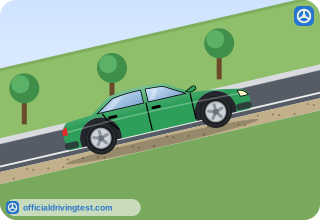
In a vehicle with a standard shift, what should you be able to do when starting on a hill?
- Roll back a short distance before the vehicle moves forward
- Start without releasing the parking brake
- Keep the vehicle in neutral while you drive up the hill
- Drive up the hill without rolling back
Show answer
Correct answer: Drive up the hill without rolling back
The manual says a driver of a standard shift should be able to drive up the hill without rolling back.
Source: Rhode Island Driver’s Manual (April 2024), page 33
-
The manual recommends activating your hazard lights when you back up for a distance greater than how many feet?
- 10 feet
- 20 feet
- 50 feet
- 30 feet
Show answer
Correct answer: 30 feet
It is recommended that you use your hazard lights if you back up more than 30 feet.
Source: Rhode Island Driver’s Manual (April 2024), page 34
-
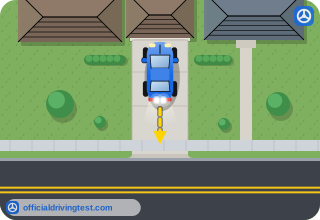
While backing, over which shoulder should you look?
- Your right shoulder, partially turning your body
- Your left shoulder, partially turning your body
- Neither, because the rear-view mirror shows everything
- Your left shoulder, but only when backing into a driveway
Show answer
Correct answer: Your right shoulder, partially turning your body
The manual says to look over your right shoulder while keeping proper control of the vehicle.
Source: Rhode Island Driver’s Manual (April 2024), page 34
-
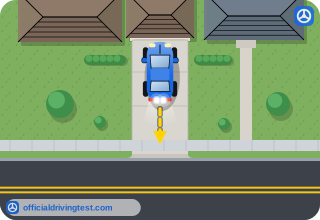
When backing in a straight line, what should you do periodically?
- Sound the horn to warn any pedestrians behind the vehicle
- Tap the brakes so the brake lights flash behind you
- Check all mirrors for vehicles, pedestrians, or obstacles
- Turn off the engine so you can look behind you
Show answer
Correct answer: Check all mirrors for vehicles, pedestrians, or obstacles
You should periodically check all mirrors to be sure nothing is in your path of travel.
Source: Rhode Island Driver’s Manual (April 2024), page 34
-
Which hand signal does the manual give for a left turn?
- Left hand and arm straight out, held still
- Left hand and arm up, held still
- Left hand and arm down, held still
- Right hand and arm straight out, held still
Show answer
Correct answer: Left hand and arm straight out, held still
For a left turn the driver puts the left hand and arm straight out and keeps them still.
Source: Rhode Island Driver’s Manual (April 2024), page 38
-
Which hand signal does the manual give for a right turn?
- Left hand and arm straight out, held still
- Left hand and arm down, held still
- Left hand and arm up, held still
- Right hand and arm straight out, held still
Show answer
Correct answer: Left hand and arm up, held still
For a right turn the driver puts the left hand and arm up and keeps them still.
Source: Rhode Island Driver’s Manual (April 2024), page 38
-
Which hand signal does the manual give for stopping or slowing down?
- Left hand and arm up, held still
- Left hand and arm down, held still
- Left hand and arm straight out, held still
- Right hand and arm up, held still
Show answer
Correct answer: Left hand and arm down, held still
To show that you are stopping or slowing, the left hand and arm go down and stay still.
Source: Rhode Island Driver’s Manual (April 2024), page 38
-
At a minimum, how far before making a turn does Rhode Island law say a driver must signal?
- At least 25 feet
- At least 50 feet
- At least 300 feet
- At least 100 feet
Show answer
Correct answer: At least 100 feet
The law requires a hand or directional-light signal at least 100 feet before a turn.
Source: Rhode Island Driver’s Manual (April 2024), page 38
-
Besides before making a turn, when does Rhode Island law say a driver must signal by hand or by directional lights?
- When driving out of a parking space
- When driving straight through an intersection
- When driving on a road with no other vehicles
- When parked with the engine off
Show answer
Correct answer: When driving out of a parking space
The law names driving out of a parking space as a time to signal, along with at least 100 feet before a turn.
Source: Rhode Island Driver’s Manual (April 2024), page 38
-
When should a driver give a signal?
- Only at the moment the turn actually begins
- Only when a police officer is close behind you
- Early enough for drivers behind to know your plan
- Only when turning to the right at an intersection
Show answer
Correct answer: Early enough for drivers behind to know your plan
Signals should be given early enough that drivers in back of you can tell what you plan to do.
Source: Rhode Island Driver’s Manual (April 2024), page 38
-
During which hours does the law require motorists to turn their headlights on?
- From sunset to sunrise
- From one hour after sunset to one hour before sunrise
- From 6 p.m. to 6 a.m.
- Only when it is completely dark
Show answer
Correct answer: From sunset to sunrise
The law requires headlights on from sunset to sunrise, whenever you cannot see 500 feet ahead, and when the wipers are in use.
Source: Rhode Island Driver’s Manual (April 2024), page 52
-
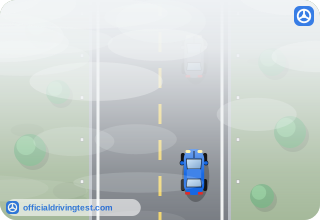
Headlights must be on any time you cannot see how far ahead of you?
- 100 feet
- 300 feet
- 500 feet
- 1,000 feet
Show answer
Correct answer: 500 feet
The law requires headlights on any time you cannot see 500 feet ahead.
Source: Rhode Island Driver’s Manual (April 2024), page 52
-
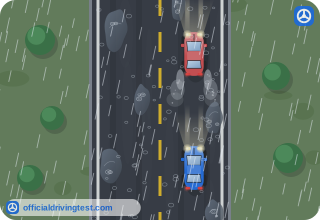
When must you turn your headlights on because of rain, sleet or snow?
- Only after sunset
- Whenever your windshield wipers are in use
- Only when it is also foggy
- Only when you cannot see 100 feet ahead
Show answer
Correct answer: Whenever your windshield wipers are in use
The law requires headlights on when the windshield wipers are in use because of rain, sleet, snow or similar weather.
Source: Rhode Island Driver’s Manual (April 2024), page 52
-
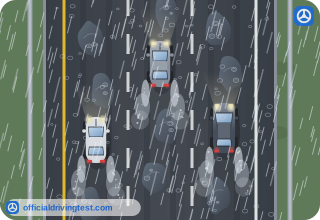
What kind of headlights does the law require you to use in inclement weather such as snow, rain and fog?
- High beam headlights
- Parking lights only
- Fog lights only
- Low beam headlights
Show answer
Correct answer: Low beam headlights
The law requires low beams when weather reduces visibility.
Source: Rhode Island Driver’s Manual (April 2024), page 52
-
Why should you not use high beams in snow, rain or fog?
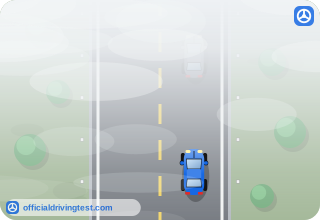
- They may reflect off snow, rain or fog and shorten the distance you can see
- They use too much battery power when the wipers are also running
- They make the brake lights of other drivers harder to see ahead
- They are not allowed on any road with a posted speed limit
Show answer
Correct answer: They may reflect off snow, rain or fog and shorten the distance you can see
High beams can reflect off precipitation or fog in the air and reduce how far you can see.
Source: Rhode Island Driver’s Manual (April 2024), page 52
-
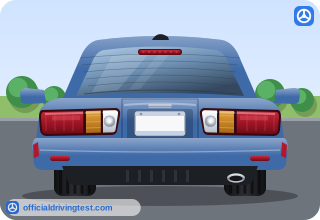
The rear license plate on your vehicle must be lit so it can be seen and read from at least how far behind the vehicle?
- 20 feet
- 100 feet
- 60 feet
- 150 feet
Show answer
Correct answer: 60 feet
The manual says the rear plate must be lit so it can be read at least 60 feet from the back of the vehicle.
Source: Rhode Island Driver’s Manual (April 2024), page 52
-
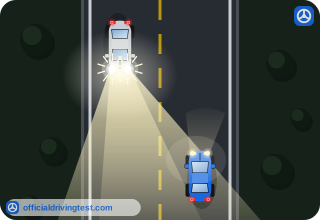
On the open highway at night, at what distance should you dim your high beams when approaching another vehicle?
- At 100 feet
- Promptly, at least 500 feet ahead
- At 300 feet
- Only when the other driver flashes lights at you
Show answer
Correct answer: Promptly, at least 500 feet ahead
The 500/200 rule says to dim promptly at a distance of at least 500 feet when approaching another vehicle.
Source: Rhode Island Driver’s Manual (April 2024), page 53
-
To avoid being temporarily blinded by approaching headlights, where should you glance?
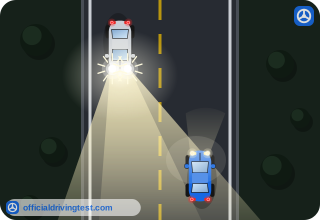
- At the right edge of the roadway
- Directly at the oncoming headlights
- At the center line
- At your rear-view mirror
Show answer
Correct answer: At the right edge of the roadway
Glancing at the right edge of the road or fog line until the bright lights pass helps your vision return to normal.
Source: Rhode Island Driver’s Manual (April 2024), page 53
-
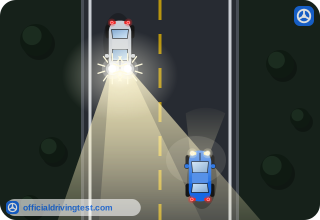
What is the temporary blindness that follows staring into oncoming headlights called?
- Night adjustment time
- Glare recovery time
- Headlight delay
- Reaction recovery period
Show answer
Correct answer: Glare recovery time
The time your body takes to regain sight after glare is called glare recovery time.
Source: Rhode Island Driver’s Manual (April 2024), page 53
-
During which hours must vehicle headlights be on, regardless of weather?
- Only from one hour after sunset to one hour before sunrise
- Only after 9 p.m. each night
- Any time from sunset to sunrise
- Only between midnight and sunrise
Show answer
Correct answer: Any time from sunset to sunrise
The manual says headlights must be on any time from sunset to sunrise, as well as when you cannot see 500 feet ahead.
Source: Rhode Island Driver’s Manual (April 2024), page 58
-
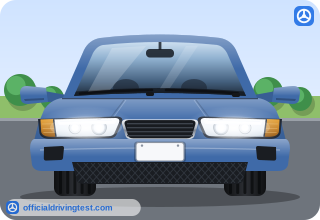
Which situation requires your headlights to be on during the day?
- Any time your windshield wipers are on
- Only when you are driving on a highway
- Only when another vehicle is within 200 feet
- Only when you are carrying passengers
Show answer
Correct answer: Any time your windshield wipers are on
The list of laws says headlights must be on any time the windshield wipers are on.
Source: Rhode Island Driver’s Manual (April 2024), page 58
-
What does Rhode Island law make the motorist responsible for removing from the vehicle in winter?
- Snow and ice that limit vision, including snow on the roof
- Only snow on the windshield, never the roof
- Only ice on the license plate
- Nothing, because snow may stay on the vehicle if it is light
Show answer
Correct answer: Snow and ice that limit vision, including snow on the roof
The motorist must clear snow and ice that limit vision and must clear the roof of snow that could blow onto other vehicles’ windshields.
Source: Rhode Island Driver’s Manual (April 2024), page 58
-
What does the manual say you are required by law to do regarding your vehicle's condition?
- Have a certified mechanic check the whole vehicle every month
- Maintain its serviceability and required equipment
- Replace all four tires every year, worn or not
- Service it only at a licensed dealership
Show answer
Correct answer: Maintain its serviceability and required equipment
The equipment chapter says state law requires you to keep your vehicle serviceable and to comply with the equipment the law mandates.
Source: Rhode Island Driver’s Manual (April 2024), page 68
-
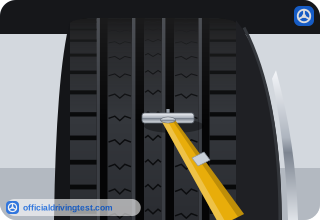
A tire with less than what amount of tread may you not drive on?
- 2/32 of an inch
- 1/32 of an inch
- 4/32 of an inch
- 6/32 of an inch
Show answer
Correct answer: 2/32 of an inch
The manual says you may not drive on a tire with less than 2/32 of an inch of tread.
Source: Rhode Island Driver’s Manual (April 2024), page 68
-
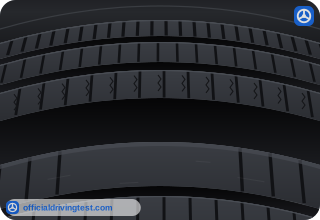
Which coin does the manual say to use to measure the depth of tire tread?
- A penny
- A nickel
- A quarter
- A dime
Show answer
Correct answer: A quarter
The manual says to measure the depth of the tread with a quarter.
Source: Rhode Island Driver’s Manual (April 2024), page 68
-
What does the manual say about mixing radial tires with bias-belted tires on your vehicle?
- It is allowed on the rear axle only
- Never do it
- It is allowed if the tread depth matches
- It is allowed for winter driving only
Show answer
Correct answer: Never do it
The manual says never to mix and match tires, such as radial with bias-belted.
Source: Rhode Island Driver’s Manual (April 2024), page 68
-
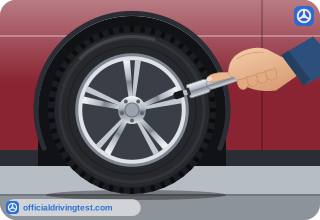
To get an accurate reading, when should you measure your tire pressure?
- After a long highway drive
- While the tire is hot
- Right after the engine is started
- While the tire is cold
Show answer
Correct answer: While the tire is cold
The manual says to measure tire pressure while the tire is cold to get an accurate reading.
Source: Rhode Island Driver’s Manual (April 2024), page 68
-
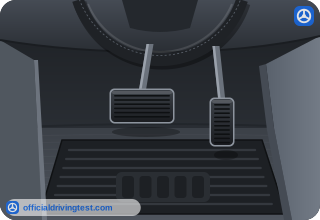
When does the manual say you should schedule brake repairs?
- Only after the pedal touches the floor
- Only when the brake warning light comes on
- Once a year when the vehicle is inspected
- Without waiting for the pedal to touch the floor
Show answer
Correct answer: Without waiting for the pedal to touch the floor
The manual warns not to wait for the brake pedal to touch the floor before scheduling repairs.
Source: Rhode Island Driver’s Manual (April 2024), page 68
-
Which brake symptom does the manual say should prompt you to follow the maintenance checks in your owner's manual?
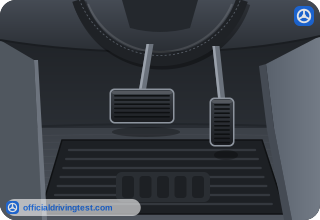
- The pedal feels firm
- The vehicle pulls to one side while braking
- The vehicle stops in a straight line
- The pedal returns quickly after braking
Show answer
Correct answer: The vehicle pulls to one side while braking
The manual says that if the vehicle pulls to one side while braking, or the pedal feels spongy, you should follow the prescribed maintenance checks.
Source: Rhode Island Driver’s Manual (April 2024), page 68
-
What does the manual say about the parking brake?
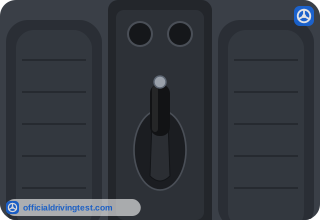
- It is optional equipment
- It needs checking only on hills
- It must also be in proper working order
- It needs no maintenance because it is rarely used
Show answer
Correct answer: It must also be in proper working order
The manual says the parking brake helps stop a vehicle's movement, so it too must be in proper working order.
Source: Rhode Island Driver’s Manual (April 2024), page 68
-
How should the steering wheel feel when you turn it?
- No play, and it does not feel loose
- Slightly loose, with some play
- Heavy, with some noise
- Loose at low speeds only
Show answer
Correct answer: No play, and it does not feel loose
The manual says there should be no play in the steering wheel and it should not feel loose.
Source: Rhode Island Driver’s Manual (April 2024), page 68
-
According to the manual, noises when you turn the steering wheel may indicate you need which fluid?
- Brake fluid
- Windshield washer fluid
- Power steering fluid
- Engine coolant
Show answer
Correct answer: Power steering fluid
The manual says noises when turning the wheel may mean the power steering fluid is low.
Source: Rhode Island Driver’s Manual (April 2024), page 68
-
What does the manual say about checking some of your vehicle's lights?
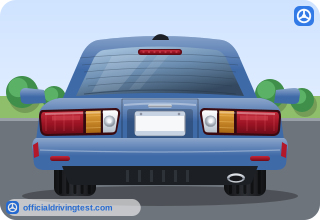
- Some must be checked with another person's help
- All lights can be checked from the driver's seat
- Only a mechanic may check them
- They need checking only at inspection
Show answer
Correct answer: Some must be checked with another person's help
The manual notes that certain lights can only be checked with the assistance of another person.
Source: Rhode Island Driver’s Manual (April 2024), page 68
-
What does the manual say is a good idea as you inspect the lighting system?
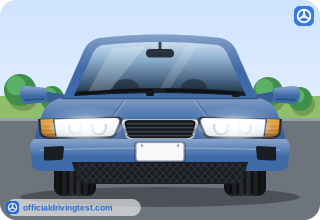
- Replace all of the bulbs every single year
- Tint the lenses to cut down on glare
- Cover the lights whenever you park
- Clean the grime, dirt, and salt from all lights
Show answer
Correct answer: Clean the grime, dirt, and salt from all lights
The manual suggests cleaning grime, dirt and salt from the lights while you inspect them.
Source: Rhode Island Driver’s Manual (April 2024), page 68
-
What can happen to a car's safety sensors when snow, ice, or salt grime gathers on the vehicle in winter?
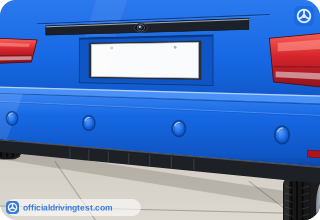
- They melt the ice automatically
- They can become blocked and shut down
- They send a warning to the DMV
- They work better in the cold
Show answer
Correct answer: They can become blocked and shut down
The manual warns that sensors key to advanced safety systems can be blocked and shut down, so you should check them for obstructions.
Source: Rhode Island Driver’s Manual (April 2024), page 68
-
Which group is named as other equipment that must be maintained and serviced regularly?
- Radio, antenna, and floor mats
- Mirrors, mufflers, horn, and wipers
- Heater, seat covers, and cup holders
- Sunroof, trunk latch, and bumper stickers
Show answer
Correct answer: Mirrors, mufflers, horn, and wipers
The manual lists mirrors, mufflers, the horn and wipers as important equipment to be maintained and serviced regularly.
Source: Rhode Island Driver’s Manual (April 2024), page 68
-
In the manual's list of instrument panel warning lights, what does the SRS indicator light stand for?
- Secondary Roadway Safety System
- Steering Response and Stability
- Standard Rear Suspension Setting
- Supplemental Restraint System (airbag)
Show answer
Correct answer: Supplemental Restraint System (airbag)
The warning light list says SRS stands for Supplemental Restraint System, the airbag.
Source: Rhode Island Driver’s Manual (April 2024), page 68
-
In the manual's list of instrument panel warning lights, what does the ABS indicator light stand for?
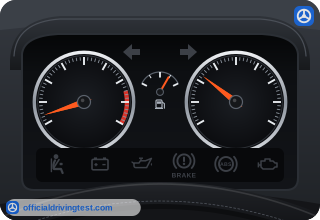
- Anti-lock Brake System
- Automatic Braking Signal
- Advanced Brake Sensor
- All-wheel Braking System
Show answer
Correct answer: Anti-lock Brake System
The warning light list says ABS stands for the Anti-lock Brake System.
Source: Rhode Island Driver’s Manual (April 2024), page 68
-
Rhode Island follows the Federal Motor Vehicle Safety Standards for window tint. What total visible light transmittance must a vehicle's windows have?
- Not less than 70%
- Not less than 50%
- Not less than 60%
- Not less than 80%
Show answer
Correct answer: Not less than 70%
Rhode Island follows the federal standard of a total visible light transmittance of not less than 70 percent.
Source: Rhode Island Driver’s Manual (April 2024), page 72
-
What is the fine for violating Rhode Island's law against nontransparent windshield and windows (unlawful tint, film or window application)?
- $75.00
- $150.00
- $250.00
- $500.00
Show answer
Correct answer: $250.00
The manual states the fine for a violation of the nontransparent windshield and windows law is $250.00.
Source: Rhode Island Driver’s Manual (April 2024), page 72
-
Under the Rhode Island law on altered vehicle height, a vehicle may not be raised or lowered by more than how many inches from the original manufacturer's specified height?
- 2 inches
- 4 inches
- 3 inches
- 6 inches
Show answer
Correct answer: 4 inches
The law prohibits altering a vehicle's height by more than four inches from the manufacturer's specified height.
Source: Rhode Island Driver’s Manual (April 2024), page 72
-
The Rhode Island law against altered vehicle height applies to vehicles with an original manufacturer's gross vehicle weight rating of up to and including how many pounds?
- 6,000 pounds
- 8,000 pounds
- 12,000 pounds
- 10,000 pounds
Show answer
Correct answer: 10,000 pounds
The law covers vehicles with an original gross vehicle weight rating of up to and including 10,000 pounds.
Source: Rhode Island Driver’s Manual (April 2024), page 72
-
Under Rhode Island's noise limit law, what is the maximum noise a vehicle may make in speed zones of 35 mph or less?
- 86 dbA
- 80 dbA
- 90 dbA
- 96 dbA
Show answer
Correct answer: 86 dbA
In speed zones of 35 mph or less the limit is not more than 86 dbA.
Source: Rhode Island Driver’s Manual (April 2024), page 72
-
Under Rhode Island's noise limit law, what is the maximum noise a vehicle may make in speed zones of more than 35 mph?
- 80 dbA
- 86 dbA
- 90 dbA
- 100 dbA
Show answer
Correct answer: 90 dbA
In speed zones of more than 35 mph the limit is not more than 90 dbA.
Source: Rhode Island Driver’s Manual (April 2024), page 72
-
Rhode Island's noise limits for vehicles are based on a measurement taken at what distance?
- 25 feet from the center of the lane of travel
- 50 feet from the center of the lane of travel
- 75 feet from the center of the lane of travel
- 100 feet from the center of the lane of travel
Show answer
Correct answer: 50 feet from the center of the lane of travel
The law bases the limits on a distance of fifty feet from the center of the lane of travel.
Source: Rhode Island Driver’s Manual (April 2024), page 72
-
In Rhode Island's noise law, what does "dbA" mean?
- Decibels measured with the vehicle's engine idling in a closed garage
- A measure of exhaust pressure taken at the muffler outlet each year
- Decibels measured at the driver's ear with the windows rolled down
- Decibels measured with a calibrated sound level meter weighted to the "A" scale
Show answer
Correct answer: Decibels measured with a calibrated sound level meter weighted to the "A" scale
The law defines dbA as decibels measured with a calibrated sound level meter weighted to the A scale.
Source: Rhode Island Driver’s Manual (April 2024), page 72
-
In addition to the state noise limits, what does Rhode Island's noise law also allow local cities and towns to do?
- Develop other means to deal with noise regulations
- Raise the state noise limit within their own boundaries
- Exempt town residents from the noise limits
- Collect the fines instead of the state
Show answer
Correct answer: Develop other means to deal with noise regulations
The law allows cities and towns to develop other means to deal with noise regulations.
Source: Rhode Island Driver’s Manual (April 2024), page 72
-
Rhode Island's multiple beam lamps law requires head lamps to be arranged so that you can do what?
- Switch the lamps off automatically when the vehicle is stopped
- Aim the light at one fixed height that cannot be changed
- Select between distributions of light projected to different elevations
- Flash the lamps automatically when another vehicle approaches
Show answer
Correct answer: Select between distributions of light projected to different elevations
Head lamps must allow a choice between distributions of light projected to different elevations, such as high and low beams.
Source: Rhode Island Driver’s Manual (April 2024), page 72
-
Who is authorized to approve or disapprove lighting devices on vehicles in Rhode Island?
- The Governor of Rhode Island
- The Administrator of the Division of Motor Vehicles
- The Director of the Department of Transportation
- The Rhode Island Board of Governors for Higher Education
Show answer
Correct answer: The Administrator of the Division of Motor Vehicles
The manual says the Administrator of the Division of Motor Vehicles is authorized to approve or disapprove lighting devices.
Source: Rhode Island Driver’s Manual (April 2024), page 72
-
Rhode Island's regulations on lighting devices must conform, as far as possible, to the standards and specifications of which organization?
- American Automobile Association
- National Safety Council
- Federal Highway Administration
- Society of Automotive Engineers
Show answer
Correct answer: Society of Automotive Engineers
The regulations are to conform as far as possible to the current standards of the Society of Automotive Engineers.
Source: Rhode Island Driver’s Manual (April 2024), page 72