Pennsylvania: Parking rules Practice Test
Parallel parking, hill parking, and where parking is prohibited.
Independent educational site · not affiliated with any government agency or DMV
Ready? Test yourself
Answer to start, or tap Start below:
When you must park on the roadway, what should you use to help other drivers see your vehicle?
- Instant feedback with an explanation
- Every answer cites its source in the manual
- Your best score is saved on this device
- Keyboard: press 1 to 4 to answer and Enter for the next question
Questions are original and based on the official manual "Pennsylvania Driver's Manual" (Pub 95), Pennsylvania Department of Transportation (PennDOT), Bureau of Driver Licensing.
All 30 questions in this practice test
Take the test above first, then use this list to study. Tap “Show answer” to see the correct answer and explanation.
Show the questions and answersHide the questions
-
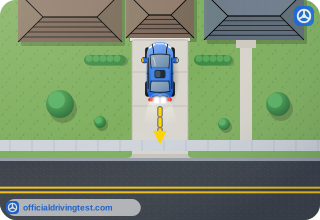
According to the manual, what should you do before backing up your vehicle?
- Rely on your rearview mirror and backup sensors alone
- Sound your horn continuously while moving
- Check behind it before getting in and look out the rear window
- Ask a passenger to stand behind the vehicle
Show answer
Correct answer: Check behind it before getting in and look out the rear window
When backing up, always check behind your vehicle before you get in it. Before backing up, turn your head so you can see through the rear window — do not depend on your mirrors or sensors alone.
Source: Pennsylvania Driver's Manual (Pub 95), page 38 · Open this page in the manual (Manual page 38)
-
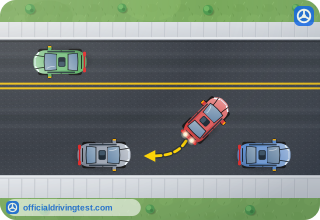
If the street you are on has a curb, how close must you park to it?
- No more than 12 inches away
- At least 2 feet away
- No more than 3 feet away
- Exactly touching the curb
Show answer
Correct answer: No more than 12 inches away
The manual requires parking as close to the curb as you can, but no more than 12 inches away.
Source: Pennsylvania Driver's Manual (Pub 95), page 52 · Open this page in the manual (Manual page 52)
-
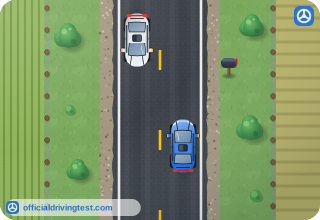
If the street has no curb, how should you position your vehicle to park?
- In the middle of the travel lane
- Facing oncoming traffic
- Directly on the centerline
- As far off the roadway as possible
Show answer
Correct answer: As far off the roadway as possible
Where there is no curb, you must pull as far off of the roadway as possible.
Source: Pennsylvania Driver's Manual (Pub 95), page 52 · Open this page in the manual (Manual page 52)
-
When you must park on the roadway, what should you use to help other drivers see your vehicle?
- Your interior dome light
- Your horn
- Your four-way flashers
- Your high beam headlights
Show answer
Correct answer: Your four-way flashers
The manual instructs using your four-way flashers when you must park on the roadway.
Source: Pennsylvania Driver's Manual (Pub 95), page 52 · Open this page in the manual (Manual page 52)
-
When parked on the roadway, how far away in both directions should your vehicle be visible?
- 500 feet
- 100 feet
- 1,000 feet
- 200 feet
Show answer
Correct answer: 500 feet
The manual requires your vehicle to be visible for at least 500 feet in both directions when parked on the roadway.
Source: Pennsylvania Driver's Manual (Pub 95), page 52 · Open this page in the manual (Manual page 52)
-
In which direction should you always park your vehicle on a street?
- In the direction traffic moves
- Facing oncoming traffic
- Perpendicular to the flow of traffic
- It does not matter
Show answer
Correct answer: In the direction traffic moves
The manual instructs drivers to always park in the direction traffic moves.
Source: Pennsylvania Driver's Manual (Pub 95), page 52 · Open this page in the manual (Manual page 52)
-
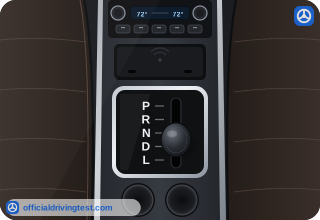
If your vehicle has an automatic transmission, what should you do after setting the parking brake?
- Shift to Park
- Shift to Drive
- Leave it in Reverse
- Shift to Neutral
Show answer
Correct answer: Shift to Park
With an automatic transmission, you should set the parking brake and shift to Park.
Source: Pennsylvania Driver's Manual (Pub 95), page 52 · Open this page in the manual (Manual page 52)
-
If your vehicle has a manual transmission, which gear should you use when parking?
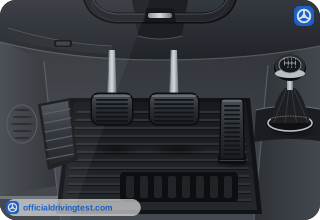
- Whichever gear you were last driving in
- Neutral
- Fourth gear
- Reverse or First
Show answer
Correct answer: Reverse or First
With a manual transmission, you should shift to Reverse or First when parking.
Source: Pennsylvania Driver's Manual (Pub 95), page 52 · Open this page in the manual (Manual page 52)
-
When parking downhill, with or without a curb, which way should you turn your steering wheel?
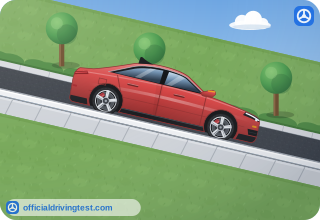
- Completely to the left
- Keep the wheels straight
- It does not matter
- Completely to the right
Show answer
Correct answer: Completely to the right
The manual instructs that when parking downhill, with or without a curb, you should turn your steering wheel so your wheels are completely to the right.
Source: Pennsylvania Driver's Manual (Pub 95), page 52 · Open this page in the manual (Manual page 52)
-
According to the manual's diagram, when parking uphill next to a curb, which way should you turn your wheels?
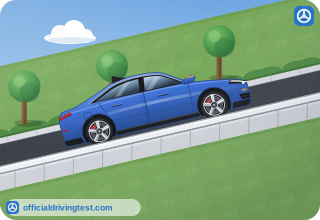
- Halfway to the right
- Turned to the right
- Turned to the left
- Keep them straight
Show answer
Correct answer: Turned to the left
The manual's hill-parking diagram shows the steering wheel turned left when parking uphill with a curb.
Source: Pennsylvania Driver's Manual (Pub 95), page 52 · Open this page in the manual (Manual page 52)
-
Except in an emergency or unless told to by police, how close to a fire hydrant may you never stop, stand, or park?
- Within 15 feet
- Within 30 feet
- Within 5 feet
- Within 50 feet
Show answer
Correct answer: Within 15 feet
The manual lists 15 feet of a fire hydrant as a place you may never stop, stand, or park.
Source: Pennsylvania Driver's Manual (Pub 95), page 53 · Open this page in the manual (Manual page 53)
-
How close to a crosswalk at an intersection are you prohibited from stopping, standing, or parking?
- Within 40 feet
- Within 10 feet
- Within 60 feet
- Within 20 feet
Show answer
Correct answer: Within 20 feet
You may not stop, stand, or park within 20 feet of a crosswalk at an intersection.
Source: Pennsylvania Driver's Manual (Pub 95), page 53 · Open this page in the manual (Manual page 53)
-
You may not stop, stand, or park within how many feet of a flashing signal, stop sign, yield sign, or other traffic control device located at the side of a roadway?
- 20 feet
- 30 feet
- 50 feet
- 15 feet
Show answer
Correct answer: 30 feet
The manual sets this distance at 30 feet for a flashing signal, stop sign, yield sign, or similar roadside traffic control device.
Source: Pennsylvania Driver's Manual (Pub 95), page 53 · Open this page in the manual (Manual page 53)
-
How close to a driveway entrance to a fire station may you never stop, stand, or park?
- Within 50 feet
- Within 20 feet
- Within 10 feet
- Within 30 feet
Show answer
Correct answer: Within 20 feet
The manual prohibits stopping, standing, or parking within 20 feet of a driveway entrance to a fire station.
Source: Pennsylvania Driver's Manual (Pub 95), page 53 · Open this page in the manual (Manual page 53)
-
How close to the nearest rail at a railroad crossing are you prohibited from stopping, standing, or parking?
- 30 feet
- 20 feet
- 50 feet
- 15 feet
Show answer
Correct answer: 50 feet
You may not stop, stand, or park within 50 feet of the nearest rail at a railroad crossing.
Source: Pennsylvania Driver's Manual (Pub 95), page 53 · Open this page in the manual (Manual page 53)
-
What is it called when you stop on the roadway side of a vehicle already stopped or parked along the curb?
- Curb parking
- Diagonal parking
- Double parking
- Angle parking
Show answer
Correct answer: Double parking
Stopping on the roadway side of a vehicle already parked along the edge or curb of the street is called double parking, and it is prohibited.
Source: Pennsylvania Driver's Manual (Pub 95), page 53 · Open this page in the manual (Manual page 53)
-
Besides on a sidewalk or within an intersection, where else does the manual say you must never stop, stand, or park, except in emergencies or when a police officer tells you to?
- In a numbered parking space
- On a crosswalk
- In a public parking lot
- On a residential street
Show answer
Correct answer: On a crosswalk
The manual's list also prohibits stopping, standing, or parking on a crosswalk.
Source: Pennsylvania Driver's Manual (Pub 95), page 53 · Open this page in the manual (Manual page 53)
-
Besides on a bridge or other elevated structure, where else are you prohibited from stopping, standing, or parking?
- In a shopping center lot
- In a highway tunnel
- In a hotel parking lot
- On a rural gravel road
Show answer
Correct answer: In a highway tunnel
The manual prohibits stopping, standing, or parking on any bridge or other elevated structure, or in a highway tunnel.
Source: Pennsylvania Driver's Manual (Pub 95), page 53 · Open this page in the manual (Manual page 53)
-
On what type of surface does the manual say you must never stop, stand, or park?
- An alley behind a store
- A gravel driveway
- A private lawn
- Any railroad tracks
Show answer
Correct answer: Any railroad tracks
The manual specifically prohibits stopping, standing, or parking on any railroad tracks.
Source: Pennsylvania Driver's Manual (Pub 95), page 53 · Open this page in the manual (Manual page 53)
-
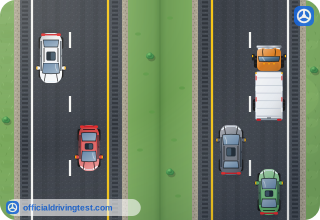
Where between the roadways of a divided highway is stopping, standing, or parking prohibited?
- Only in the right lane
- Only during rush hour
- Only at night
- Including at crossovers
Show answer
Correct answer: Including at crossovers
The manual prohibits parking between the roadways of a divided highway, including at crossovers.
Source: Pennsylvania Driver's Manual (Pub 95), page 53 · Open this page in the manual (Manual page 53)
-
You may not stop, stand, or park your vehicle where it would prevent what from moving freely?
- A shopping cart
- A pedestrian
- A bicycle
- A streetcar
Show answer
Correct answer: A streetcar
The manual prohibits parking where your vehicle would prevent a streetcar from moving freely.
Source: Pennsylvania Driver's Manual (Pub 95), page 53 · Open this page in the manual (Manual page 53)
-
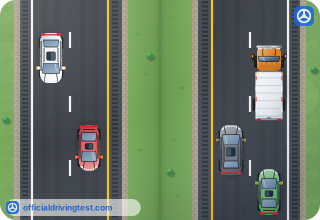
On a limited access highway, when are you allowed to stop, stand, or park?
- Only during daylight hours
- Anytime there is no traffic nearby
- Never, under any circumstance
- When traffic control devices allow it
Show answer
Correct answer: When traffic control devices allow it
Except in emergencies or when a police officer tells you to, you must never stop, stand, or park on a limited access highway unless official traffic control devices indicate you are allowed.
Source: Pennsylvania Driver's Manual (Pub 95), page 53 · Open this page in the manual (Manual page 53)
-
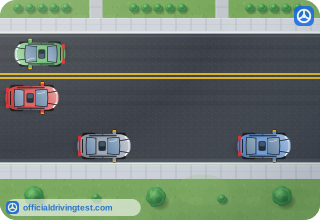
In the manual's parallel parking method, how far away from the vehicle ahead should you stop before beginning to park?
- One car length behind it
- Even with it and touching bumpers
- Even with it and two feet away
- Ten feet behind it
Show answer
Correct answer: Even with it and two feet away
Step 1 of the manual's parallel parking method is to stop even with the vehicle ahead and two feet away from it.
Source: Pennsylvania Driver's Manual (Pub 95), page 53 · Open this page in the manual (Manual page 53)
-
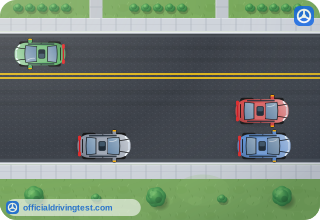
In step 2 of the manual's parallel parking method, which way do you turn your wheels as you back slowly toward the vehicle behind?
- Keep them straight
- Sharply to the left
- Sharply to the right
- Halfway to the left
Show answer
Correct answer: Sharply to the right
Step 2 has you turn your wheels sharply to the right and back slowly toward the vehicle behind.
Source: Pennsylvania Driver's Manual (Pub 95), page 53 · Open this page in the manual (Manual page 53)
-
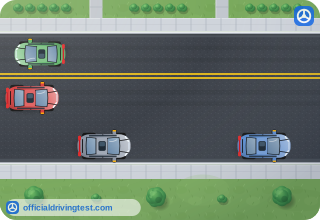
In step 3 of the manual's parallel parking method, what do you do as your front door passes the back bumper of the vehicle ahead?
- Pull forward again
- Stop the vehicle completely
- Turn the wheels sharply left
- Quickly straighten the wheels
Show answer
Correct answer: Quickly straighten the wheels
Step 3 has you quickly straighten the wheels once your front door passes the back bumper, and continue backing straight.
Source: Pennsylvania Driver's Manual (Pub 95), page 53 · Open this page in the manual (Manual page 53)
-
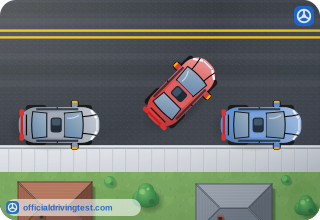
In step 4 of the manual's parallel parking method, once you are clear of the vehicle ahead, which way do you turn the wheels?
- Keep them straight
- Sharply to the right
- Halfway to the right
- Sharply to the left
Show answer
Correct answer: Sharply to the left
Step 4 has you turn the wheels sharply to the left and back slowly toward the vehicle behind, once clear of the vehicle ahead.
Source: Pennsylvania Driver's Manual (Pub 95), page 53 · Open this page in the manual (Manual page 53)
-
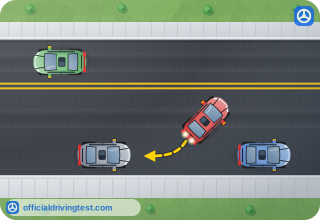
In the final step of the manual's parallel parking method, after turning the wheels sharply to the right, what do you do?
- Back up further toward the vehicle behind
- Pull forward and away from the curb
- Pull toward the center of the parking space
- Shift into Park immediately
Show answer
Correct answer: Pull toward the center of the parking space
The final step has you turn the wheels sharply right and pull toward the center of the parking space.
Source: Pennsylvania Driver's Manual (Pub 95), page 53 · Open this page in the manual (Manual page 53)
-
Before leaving your parked vehicle, what does the manual say you should do?
- Leave the engine running for the next driver
- Leave a door unlocked in case you forgot something
- Turn off the engine, remove the key, and lock all doors
- Leave the parking brake off
Show answer
Correct answer: Turn off the engine, remove the key, and lock all doors
Before leaving your vehicle, turn off the engine, remove the key, lock all doors, and check for traffic behind you before getting out.
Source: Pennsylvania Driver's Manual (Pub 95), page 53 · Open this page in the manual (Manual page 53)
-
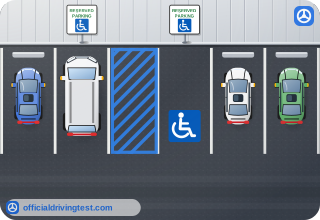
According to Pennsylvania law, what two conditions must be met before someone may legally park in a space designated for persons with disabilities?
- The vehicle must be a certain color, and the driver must show ID
- The space must be reserved in advance, and a fee must be paid
- The vehicle must show a disabled plate/placard, and be driven by or for the disabled person
- The vehicle must be registered in Pennsylvania, and the driver must be over 18
Show answer
Correct answer: The vehicle must show a disabled plate/placard, and be driven by or for the disabled person
Pennsylvania law requires the vehicle to display a disabled person/veteran plate or placard and to be operated by or for the transportation of that disabled person or veteran.
Source: Pennsylvania Driver's Manual (Pub 95), page 92 · Open this page in the manual (Manual page 92)
-
What can happen to a vehicle that is unlawfully parked in a space for persons with disabilities in Pennsylvania?
- Nothing, unless a police officer is present at the time
- It is impounded permanently
- The registration is automatically revoked
- It may be towed, and the driver may be fined $50 to $200
Show answer
Correct answer: It may be towed, and the driver may be fined $50 to $200
An unlawfully parked vehicle may be towed and reclaimed upon payment of towing costs; the violation is a summary offense with a fine between $50 and $200.
Source: Pennsylvania Driver's Manual (Pub 95), page 92 · Open this page in the manual (Manual page 92)