Oklahoma: Right-of-way and turning
Who yields at intersections, stop signs and yield signs, passing on the left and right, and how to make right and left turns. Split into 4 shorter tests so you're not stuck in one long quiz.
Independent educational site · not affiliated with any government agency or DMV
Choose a part
Right-of-way and turning — Part 1
Questions in this part include: “Who must follow the right-of-way laws?”
StartRight-of-way and turning — Part 2
Questions in this part include: “What should you do with your speed when crossing an intersection?”
StartRight-of-way and turning — Part 3
Questions in this part include: “On which type of road may you overtake and pass on the right?”
StartRight-of-way and turning — Part 4
Questions in this part include: “The manual says turning requires paying attention in all directions at once, planning and preparation, and what else?”
StartAll 67 Right-of-way and turning questions with answers
Choose a part above to take a practice test, or study every question and answer here.
Show the questions and answersHide the questions
-
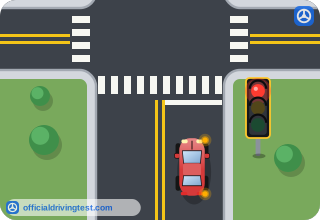
May you turn right at a red light after coming to a complete stop?
- Yes, but only where a sign allows it
- No, you must always wait for green
- Yes, unless signs forbid the turn
- Yes, but only if no pedestrians are in sight
Show answer
Correct answer: Yes, unless signs forbid the turn
After a complete stop, a right turn on red is allowed unless there are signs forbidding it.
Source: Oklahoma Driver Manual (2025 (updated November 24, 2025)), page 26 · Open this page in the manual (Manual page 26)
-
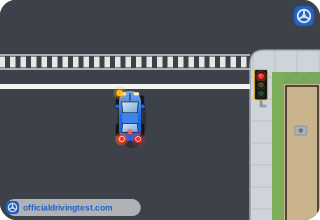
After a complete stop at a red light, which left turn is allowed unless signs forbid it?
- From a two-way street into a one-way street
- From a one-way street into a one-way street
- From a one-way street into a two-way street
- From a two-way street into a two-way street
Show answer
Correct answer: From a one-way street into a one-way street
The manual allows a left turn on red only from a one-way street into a one-way street, unless signs forbid it.
Source: Oklahoma Driver Manual (2025 (updated November 24, 2025)), page 26 · Open this page in the manual (Manual page 26)
-
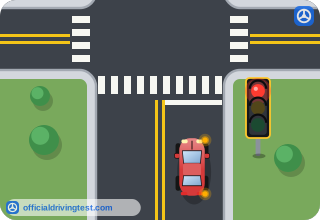
When you turn on a red light, whom must you yield to?
- Only pedestrians who are already in the crosswalk of the intersection
- Only vehicles coming from the left
- Only motor vehicles, not bicycles
- All pedestrians and vehicles using the intersection, including bicycles
Show answer
Correct answer: All pedestrians and vehicles using the intersection, including bicycles
A driver turning on red must yield to all pedestrians and vehicles in the intersection, bicycles included.
Source: Oklahoma Driver Manual (2025 (updated November 24, 2025)), page 26 · Open this page in the manual (Manual page 26)
-
Who must follow the right-of-way laws?
- All people and all vehicles, including bicyclists
- Only drivers of motor vehicles
- Only drivers and pedestrians, not bicyclists
- Only drivers in intersections that have signs
Show answer
Correct answer: All people and all vehicles, including bicyclists
The laws apply to every person and every vehicle on the road, and that includes bicyclists.
Source: Oklahoma Driver Manual (2025 (updated November 24, 2025)), page 28 · Open this page in the manual (Manual page 28)
-
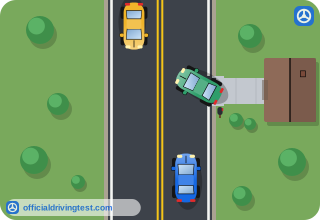
When other people do not follow the right-of-way rules and there is a possibility of damage or injury, what should you do?
- Insist on your right-of-way so traffic keeps moving
- Sound your horn and then proceed
- Yield, even if the right-of-way belongs to you
- Speed up to clear the intersection quickly
Show answer
Correct answer: Yield, even if the right-of-way belongs to you
Safety comes first, so you give way when a collision is possible, even when the right-of-way is yours.
Source: Oklahoma Driver Manual (2025 (updated November 24, 2025)), page 28 · Open this page in the manual (Manual page 28)
-
When should each driver determine who has the right-of-way?
- While crossing the intersection
- Before entering an intersection
- Only when a collision seems likely
- After stopping on the far side
Show answer
Correct answer: Before entering an intersection
Each driver decides who has the right-of-way before going into the intersection.
Source: Oklahoma Driver Manual (2025 (updated November 24, 2025)), page 28 · Open this page in the manual (Manual page 28)
-
If you have the right-of-way and another driver yields it to you, what should you do?
- Stop and wait for a signal from a police officer
- Yield it back to the other driver
- Wait until the other driver has left the intersection
- Proceed immediately
Show answer
Correct answer: Proceed immediately
When a driver gives you the right-of-way, you should go right away.
Source: Oklahoma Driver Manual (2025 (updated November 24, 2025)), page 28 · Open this page in the manual (Manual page 28)
-
What does the manual tell you to do to make sure another driver sees you?
- Flash your headlights twice
- Honk your horn
- Make eye contact
- Wave your arm out the window
Show answer
Correct answer: Make eye contact
The manual advises making sure the other driver sees you by making eye contact.
Source: Oklahoma Driver Manual (2025 (updated November 24, 2025)), page 28 · Open this page in the manual (Manual page 28)
-
How does the manual say you should think of the right-of-way?
- As something to be given, not taken
- As something that belongs to the fastest driver
- As something to be taken when you are in a hurry
- As something that is lost once you slow down
Show answer
Correct answer: As something to be given, not taken
The manual says the right-of-way is something you give to others, not something you take.
Source: Oklahoma Driver Manual (2025 (updated November 24, 2025)), page 28 · Open this page in the manual (Manual page 28)
-
When the lead vehicle of a funeral procession enters an intersection, what may the remaining vehicles in the procession do?
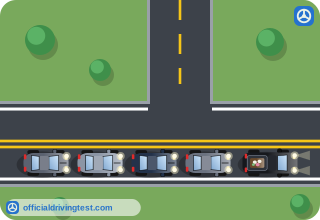
- Follow through regardless of traffic control devices
- Stop and wait for the signal to turn green
- Proceed only if the traffic signal is green or flashing
- Pass through only after traffic in all directions has cleared
Show answer
Correct answer: Follow through regardless of traffic control devices
Once the lead vehicle enters, the other vehicles in the procession may follow it through, whatever the signals or signs show.
Source: Oklahoma Driver Manual (2025 (updated November 24, 2025)), page 28 · Open this page in the manual (Manual page 28)
-
What should all vehicles in a funeral procession have on to signal other drivers not to drive between them?
- Their hazard lights
- Their high beams only
- Their headlights
- Their parking lights only
Show answer
Correct answer: Their headlights
Headlights on tell other drivers not to drive between or interfere with the procession.
Source: Oklahoma Driver Manual (2025 (updated November 24, 2025)), page 28 · Open this page in the manual (Manual page 28)
-
When you have a stop sign at an intersection, where must you stop?
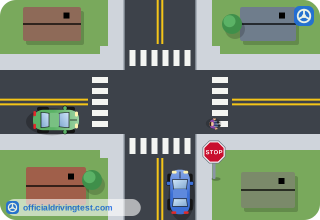
- At the center of the intersection
- Past the crosswalk, where you can see traffic
- Wherever you can see traffic best
- Before the crosswalk
Show answer
Correct answer: Before the crosswalk
At a stop sign you stop before the crosswalk, then yield and go when it is safe.
Source: Oklahoma Driver Manual (2025 (updated November 24, 2025)), page 29 · Open this page in the manual (Manual page 29)
-
After stopping at a stop sign, whom must you yield to?
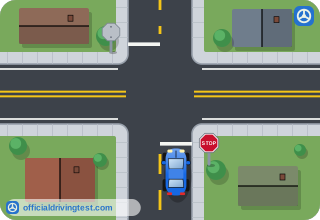
- Only the vehicles that are already inside the intersection
- Pedestrians and vehicles in or approaching the intersection
- Only pedestrians in the crosswalk
- Only vehicles coming from your right
Show answer
Correct answer: Pedestrians and vehicles in or approaching the intersection
You must yield to pedestrians and to vehicles that are in or approaching the intersection.
Source: Oklahoma Driver Manual (2025 (updated November 24, 2025)), page 29 · Open this page in the manual (Manual page 29)
-
When entering or crossing a highway that has no traffic signs or signals, what must you do?
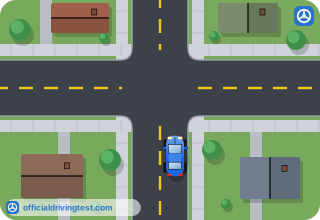
- Slow down and cross without stopping if the road looks clear
- Yield only to traffic coming from the right
- Stop and yield to approaching traffic, then go only when it is safe
- Sound your horn and then proceed
Show answer
Correct answer: Stop and yield to approaching traffic, then go only when it is safe
Where no signs or signals control traffic, you stop, yield to approaching traffic and go only when safe.
Source: Oklahoma Driver Manual (2025 (updated November 24, 2025)), page 29 · Open this page in the manual (Manual page 29)
-
What should you do at an intersection with a yield sign?
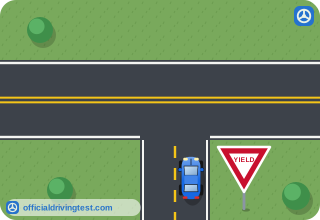
- Slow down to a reasonable speed and be ready to stop
- Come to a complete stop every time, then enter the traffic
- Maintain your speed and expect others to yield
- Stop only if a vehicle is directly in front of you
Show answer
Correct answer: Slow down to a reasonable speed and be ready to stop
At a yield sign you slow down and get ready to stop if vehicles or pedestrians are approaching.
Source: Oklahoma Driver Manual (2025 (updated November 24, 2025)), page 29 · Open this page in the manual (Manual page 29)
-
When making a left turn, what must you yield to?
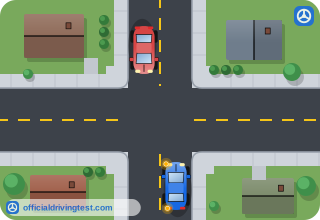
- Only oncoming traffic that is in the intersection
- All oncoming traffic
- Only oncoming traffic that is signaling a turn
- Only vehicles behind you
Show answer
Correct answer: All oncoming traffic
A driver turning left yields to all oncoming traffic.
Source: Oklahoma Driver Manual (2025 (updated November 24, 2025)), page 29 · Open this page in the manual (Manual page 29)
-
When may you make a left turn?
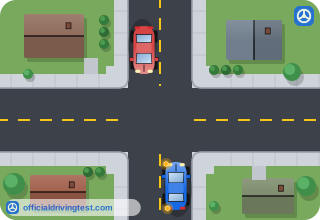
- As soon as the oncoming driver slows down
- Once the oncoming driver has signaled you to go
- Whenever you have started to signal
- Only when you have enough clear distance to turn
Show answer
Correct answer: Only when you have enough clear distance to turn
You go only when you can turn without interfering with oncoming traffic, stopping first if needed.
Source: Oklahoma Driver Manual (2025 (updated November 24, 2025)), page 29 · Open this page in the manual (Manual page 29)
-
When entering a public road from a private road, alley, driveway or building, where must you stop?
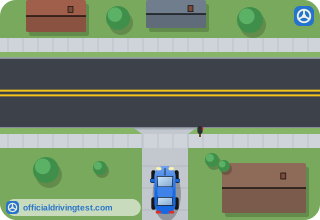
- At the edge of the roadway, past the sidewalk
- On the sidewalk, if you can see traffic
- Before the sidewalk or crosswalk
- Only if traffic is approaching
Show answer
Correct answer: Before the sidewalk or crosswalk
You stop before the sidewalk or crosswalk and go when it is safe.
Source: Oklahoma Driver Manual (2025 (updated November 24, 2025)), page 29 · Open this page in the manual (Manual page 29)
-
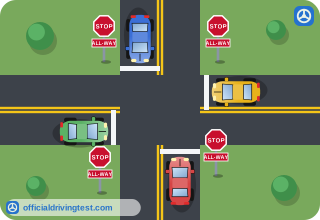
At a four-way stop, or at an intersection without stop signs or signals, who has the right-of-way?
- The vehicle that is traveling at the higher speed
- The larger of the two vehicles, such as a truck
- The driver who signals first, whatever the order of arrival
- The car or truck that entered the intersection first
Show answer
Correct answer: The car or truck that entered the intersection first
The vehicle that enters the intersection first has the right-of-way.
Source: Oklahoma Driver Manual (2025 (updated November 24, 2025)), page 29 · Open this page in the manual (Manual page 29)
-
When two vehicles approach an intersection at the same time, which driver yields?
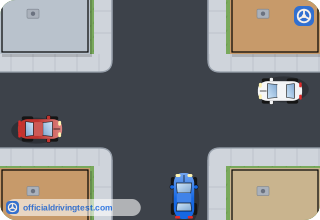
- The driver on the left yields to the driver on the right
- The driver on the right yields to the driver on the left
- The driver in the smaller vehicle yields to the larger one
- The driver traveling faster yields to the slower one
Show answer
Correct answer: The driver on the left yields to the driver on the right
With vehicles arriving together, the one on the left gives way to the one on the right.
Source: Oklahoma Driver Manual (2025 (updated November 24, 2025)), page 29 · Open this page in the manual (Manual page 29)
-
What should you do with your speed when crossing an intersection?
- Slow down gradually while you are turning or crossing
- Keep a constant speed from before the intersection until you clear it
- Slow down before you enter, then speed up until you clear it
- Speed up before you enter, then slow down inside the intersection
Show answer
Correct answer: Slow down before you enter, then speed up until you clear it
You slow down before entering, then increase speed until you are through; slowing while turning or crossing is wrong.
Source: Oklahoma Driver Manual (2025 (updated November 24, 2025)), page 30 · Open this page in the manual (Manual page 30)
-
Before you enter an intersection, the manual says to slow down, look both ways and do what next?
- Honk your horn
- Come to a full stop
- Turn on your hazard lights
- Look left again
Show answer
Correct answer: Look left again
The advice is to slow down, look both ways and then look to the left again before entering.
Source: Oklahoma Driver Manual (2025 (updated November 24, 2025)), page 30 · Open this page in the manual (Manual page 30)
-
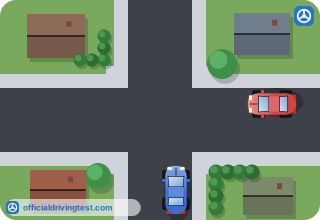
If your view is blocked so that you cannot see traffic on the side street, what should you do?
- Keep your speed and rely on other drivers to see you
- Slow down so you can stop if a car is coming
- Speed up to clear the intersection quickly
- Sound your horn and continue at the same speed
Show answer
Correct answer: Slow down so you can stop if a car is coming
With a blocked view you slow down enough to be able to stop for a car that appears.
Source: Oklahoma Driver Manual (2025 (updated November 24, 2025)), page 30 · Open this page in the manual (Manual page 30)
-
If traffic is stopped and is blocking an intersection, what should you do?
- Enter the intersection and wait for traffic to move
- Drive through the crosswalk and wait in the intersection
- Stop before reaching the crosswalk and wait
- Go around the stopped traffic on the shoulder
Show answer
Correct answer: Stop before reaching the crosswalk and wait
You do not enter a blocked intersection; you stop before the crosswalk until traffic moves.
Source: Oklahoma Driver Manual (2025 (updated November 24, 2025)), page 30 · Open this page in the manual (Manual page 30)
-
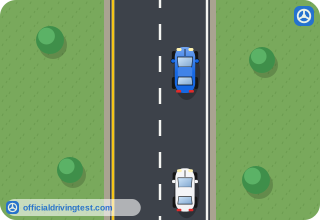
Which of these is one of the steps for changing lanes?
- Sound your horn to alert nearby drivers
- Brake to match the speed of the vehicle beside you
- Move into the lane first, then signal
- Signal your intention to change lanes
Show answer
Correct answer: Signal your intention to change lanes
Before changing lanes you signal your intention.
Source: Oklahoma Driver Manual (2025 (updated November 24, 2025)), page 33 · Open this page in the manual (Manual page 33)
-
Before changing lanes, which way should you look over your shoulder?
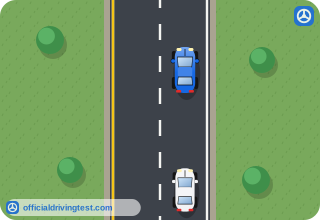
- Away from the direction you will be moving
- In the direction you will be moving
- Straight ahead only
- At the vehicle ahead of you
Show answer
Correct answer: In the direction you will be moving
You look over your shoulder in the direction you will be moving.
Source: Oklahoma Driver Manual (2025 (updated November 24, 2025)), page 33 · Open this page in the manual (Manual page 33)
-
When a driver ahead of you signals a lane change, what should you do?
- Speed up to pass before the change
- Slow down and leave space for the change
- Stay close behind to discourage the change
- Move into the adjacent lane first
Show answer
Correct answer: Slow down and leave space for the change
You slow down and leave room so the other driver can change lanes.
Source: Oklahoma Driver Manual (2025 (updated November 24, 2025)), page 33 · Open this page in the manual (Manual page 33)
-
On a roadway divided into four or more lanes, which statement about the left lane is correct?
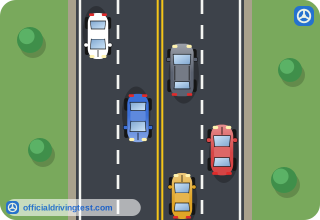
- It is reserved for trucks and buses
- It may be used only in daylight
- A vehicle cannot impede the normal flow of traffic by driving in it
- It may be used only by vehicles going faster than the limit
Show answer
Correct answer: A vehicle cannot impede the normal flow of traffic by driving in it
The manual says a vehicle cannot hold up the normal flow of traffic by staying in the left lane of such a roadway.
Source: Oklahoma Driver Manual (2025 (updated November 24, 2025)), page 35 · Open this page in the manual (Manual page 35)
-
On a roadway with four or more lanes, when are you not prohibited from using a lane other than the right-hand lane?
- Only when you are driving below the speed limit to avoid passing others
- When traffic flow or road layout, like merging traffic, calls for other lanes
- Only when no other vehicle is within sight in any of the lanes
- Only when you are driving in the daytime on a dry roadway
Show answer
Correct answer: When traffic flow or road layout, like merging traffic, calls for other lanes
Other lanes may be used when traffic conditions, flow or road configuration (such as merging traffic) call for them to keep traffic safe.
Source: Oklahoma Driver Manual (2025 (updated November 24, 2025)), page 35 · Open this page in the manual (Manual page 35)
-
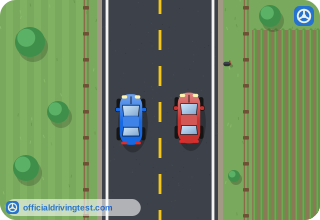
What does the manual say about your speed when you pass another vehicle?
- You may go 5 mph over the limit while passing
- You may exceed the limit if the other driver is slower than the limit
- You may exceed the limit on a divided highway only
- You may not exceed the speed limit to pass
Show answer
Correct answer: You may not exceed the speed limit to pass
Passing never justifies speeding; the posted limit still applies.
Source: Oklahoma Driver Manual (2025 (updated November 24, 2025)), page 35 · Open this page in the manual (Manual page 35)
-
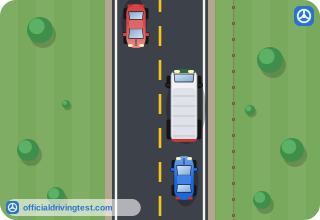
Before you move left to pass, how much clear roadway without a "No Passing Zone" should you check for ahead?
- At least 50 feet
- At least 200 feet
- At least 300 feet
- At least 500 feet
Show answer
Correct answer: At least 200 feet
The first step of passing on the left is to check for at least 200 feet of clear road without a No Passing Zone.
Source: Oklahoma Driver Manual (2025 (updated November 24, 2025)), page 35 · Open this page in the manual (Manual page 35)
-
You are about to pass a large truck or bus. How close should you follow it before you pull out?
- Right behind its bumper, so you can pull out quickly
- Within one car length, so you can speed up faster
- Close enough to stay out of oncoming traffic's view
- Not so close that it blocks your view of the road ahead
Show answer
Correct answer: Not so close that it blocks your view of the road ahead
You should stay back at a safe distance until you can see far enough ahead to pass safely.
Source: Oklahoma Driver Manual (2025 (updated November 24, 2025)), page 35 · Open this page in the manual (Manual page 35)
-
Before moving left to pass, how do you make sure no other car is passing or about to pass you?
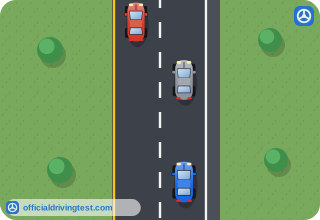
- Check the rearview mirror and look over your shoulder at blind spots
- Look only in your rearview mirror and then move over
- Sound your horn and wait for the other driver to answer it
- Look at the left side mirror once and move over
Show answer
Correct answer: Check the rearview mirror and look over your shoulder at blind spots
The manual says to check the rearview mirror and also look over your shoulder to cover the blind spots.
Source: Oklahoma Driver Manual (2025 (updated November 24, 2025)), page 35 · Open this page in the manual (Manual page 35)
-
After you pass a car on the left, when may you return to the right lane?
- As soon as your front bumper is even with that car
- As soon as the other car begins to slow down
- After you have driven 100 feet beyond that car
- When you can see that car in your rearview mirror
Show answer
Correct answer: When you can see that car in your rearview mirror
You wait until the passed car shows in your rearview mirror before you pull back right.
Source: Oklahoma Driver Manual (2025 (updated November 24, 2025)), page 35 · Open this page in the manual (Manual page 35)
-
You may overtake and pass on the right when the road is wide enough for two or more lanes in each direction and what else is true?
- The vehicle ahead is driving well below the posted speed limit
- No oncoming vehicles are in sight
- There are no parked cars or other obstructions on the roadway
- You have already signaled for a right turn
Show answer
Correct answer: There are no parked cars or other obstructions on the roadway
Passing on the right on a wide road requires that no parked cars or other obstructions are on the roadway.
Source: Oklahoma Driver Manual (2025 (updated November 24, 2025)), page 35 · Open this page in the manual (Manual page 35)
-
On which type of road may you overtake and pass on the right?
- A one-way road
- Any road, if you use the paved shoulder
- A road with a hill or curve, if it is unmarked
- A two-lane road, by driving onto the shoulder
Show answer
Correct answer: A one-way road
A one-way road is one of the stated situations in which passing on the right is allowed.
Source: Oklahoma Driver Manual (2025 (updated November 24, 2025)), page 35 · Open this page in the manual (Manual page 35)
-
You may overtake and pass on the right if the vehicle in front of you is doing which of these?
- Making or about to make a left turn
- Driving below the speed limit
- Making or about to make a right turn
- Slowing down for a stop sign
Show answer
Correct answer: Making or about to make a left turn
The manual allows passing on the right when the vehicle ahead is turning left or is about to.
Source: Oklahoma Driver Manual (2025 (updated November 24, 2025)), page 35 · Open this page in the manual (Manual page 35)
-
Which way of passing on the right is never legal?
- Passing a vehicle that is about to turn left
- Passing on a one-way road
- Driving off the pavement or main portion of the highway
- Passing on a road with two lanes each way and no obstructions
Show answer
Correct answer: Driving off the pavement or main portion of the highway
The manual states you can never legally pass on the right by driving off the pavement or the main part of the highway.
Source: Oklahoma Driver Manual (2025 (updated November 24, 2025)), page 35 · Open this page in the manual (Manual page 35)
-
How close to an obstructed view may you not pass?
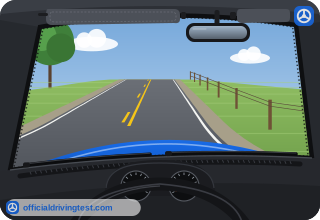
- Within 25 feet
- Within 100 feet
- Within 50 feet
- Within 300 feet
Show answer
Correct answer: Within 100 feet
The manual says not to pass within 100 feet of an obstructed view or if vehicles or pedestrians might cross your path.
Source: Oklahoma Driver Manual (2025 (updated November 24, 2025)), page 35 · Open this page in the manual (Manual page 35)
-
Near which of these should you watch for the need not to pass?
- Toll plazas
- Roadside rest areas
- Wide paved shoulders
- Bridges and tunnels
Show answer
Correct answer: Bridges and tunnels
The manual lists bridges, viaducts, tunnels, overpasses, intersections and crosswalks among the places where you should watch for the need not to pass.
Source: Oklahoma Driver Manual (2025 (updated November 24, 2025)), page 35 · Open this page in the manual (Manual page 35)
-
If another driver is passing you on the left, what should you do?
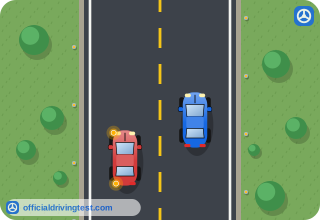
- Stay in your lane and move right
- Move toward the center line to make room
- Speed up and move toward the center line
- Slow down and drive on the left shoulder
Show answer
Correct answer: Stay in your lane and move right
You help the other driver pass by staying in your lane and moving right when you are being passed on the left.
Source: Oklahoma Driver Manual (2025 (updated November 24, 2025)), page 35 · Open this page in the manual (Manual page 35)
-
If a car approaches from the other direction while you are being passed, what should you do?
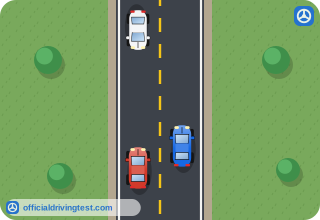
- Speed up so the passing driver falls behind
- Move to the left shoulder and stop
- Slow down and let the passing driver pull in front of you
- Speed up so the passing driver cannot pull in front of you
Show answer
Correct answer: Slow down and let the passing driver pull in front of you
Slowing down lets the passing car pull in front of you and avoids a head-on crash.
Source: Oklahoma Driver Manual (2025 (updated November 24, 2025)), page 35 · Open this page in the manual (Manual page 35)
-
While another driver is passing you, what should you do with your speed?
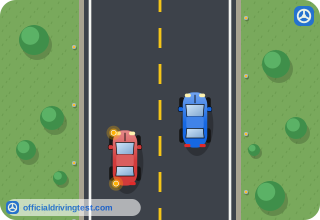
- Increase it to stay even with the other car
- Increase it to make the pass shorter
- Increase it only on a straight road
- Do not increase it
Show answer
Correct answer: Do not increase it
The manual says not to increase your speed when someone is passing you.
Source: Oklahoma Driver Manual (2025 (updated November 24, 2025)), page 35 · Open this page in the manual (Manual page 35)
-
Before you make a left turn, what should you watch for besides the oncoming traffic?
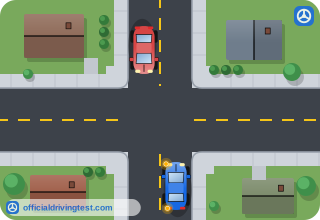
- Cars parked along the street you are leaving
- Cars turning right from the opposite lane
- Cars waiting at the far corner to turn right on red
- Cars trying to pass you while you are turning
Show answer
Correct answer: Cars trying to pass you while you are turning
The manual says to turn when oncoming traffic is clear and to watch behind you for cars trying to pass.
Source: Oklahoma Driver Manual (2025 (updated November 24, 2025)), page 36 · Open this page in the manual (Manual page 36)
-
How does the speed of traffic affect when you should move into the proper lane for a turn?
- The faster the traffic is moving, the sooner you should move
- The faster the traffic is moving, the later you should move
- Speed does not matter; move at the intersection
- You should move only when traffic is at a stop
Show answer
Correct answer: The faster the traffic is moving, the sooner you should move
Fast traffic leaves you less time, so you must get into the turning lane earlier.
Source: Oklahoma Driver Manual (2025 (updated November 24, 2025)), page 36 · Open this page in the manual (Manual page 36)
-
If you are going too fast to make a turn safely, where should you slow down?
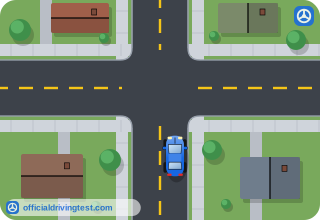
- After you enter the intersection and begin turning
- In the middle of the turn
- Before you reach the stop line or crosswalk
- Right after the turn
Show answer
Correct answer: Before you reach the stop line or crosswalk
The manual says to slow down before reaching the stop line or crosswalk.
Source: Oklahoma Driver Manual (2025 (updated November 24, 2025)), page 36 · Open this page in the manual (Manual page 36)
-
When making a turn, what should you do as you go through it?
- Coast without touching the pedals
- Brake lightly until the turn is finished
- Accelerate hard to clear the intersection
- Accelerate slightly through the turn
Show answer
Correct answer: Accelerate slightly through the turn
After slowing and choosing the gear, you accelerate slightly through the turn.
Source: Oklahoma Driver Manual (2025 (updated November 24, 2025)), page 36 · Open this page in the manual (Manual page 36)
-
Which of these should you not do while you are turning?
- Accelerate slightly
- Brake or depress the clutch
- Look behind and on both sides before the turn
- Finish the turn in the proper lane
Show answer
Correct answer: Brake or depress the clutch
The manual says not to brake or depress the clutch while turning.
Source: Oklahoma Driver Manual (2025 (updated November 24, 2025)), page 36 · Open this page in the manual (Manual page 36)
-
When should you select the proper gear for a turn?
- Halfway through the turn
- Right after the turn is finished
- Before entering the intersection
- In the middle of the intersection
Show answer
Correct answer: Before entering the intersection
The gear is chosen before you enter the intersection; you do not shift gears inside it.
Source: Oklahoma Driver Manual (2025 (updated November 24, 2025)), page 36 · Open this page in the manual (Manual page 36)
-
When may you make a turn?
- Only when the turn is permitted and can be made easily
- Whenever no vehicle is behind you and you have signaled
- Whenever you have signaled
- Whenever the cars ahead of you have turned
Show answer
Correct answer: Only when the turn is permitted and can be made easily
The manual says not to turn unless it is permitted and can be made easily.
Source: Oklahoma Driver Manual (2025 (updated November 24, 2025)), page 36 · Open this page in the manual (Manual page 36)
-
If you are not in the proper lane for a turn, what should you do?
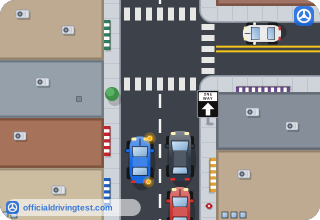
- Drive to the next intersection and turn from the proper lane there
- Cut across the lanes and make the turn
- Stop in your lane and back up to the last intersection to turn
- Turn from the lane you are in if no cars are near you
Show answer
Correct answer: Drive to the next intersection and turn from the proper lane there
Do not turn from the wrong lane; go on to the next intersection, and circle back if necessary.
Source: Oklahoma Driver Manual (2025 (updated November 24, 2025)), page 36 · Open this page in the manual (Manual page 36)
-
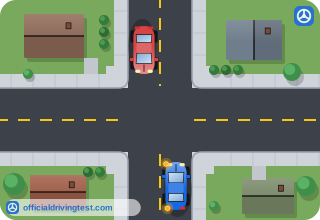
Why should you not turn your steering wheel to the left while waiting for oncoming traffic before a left turn?
- It wears out the front tires and steering parts faster while you wait
- It makes the brake lights of your car go out until you straighten the wheel
- If you are hit from the rear, the impact can push you into oncoming cars
- It causes the turn signal to cancel itself before you can start the turn
Show answer
Correct answer: If you are hit from the rear, the impact can push you into oncoming cars
With the wheels already turned, a hit from behind could shove your car across the path of oncoming vehicles.
Source: Oklahoma Driver Manual (2025 (updated November 24, 2025)), page 36 · Open this page in the manual (Manual page 36)
-
The manual says turning requires paying attention in all directions at once, planning and preparation, and what else?
- A wide swing
- Good timing
- A high speed
- A loud horn
Show answer
Correct answer: Good timing
The three requirements named for a good turn are attention in all directions, planning and preparation, and good timing.
Source: Oklahoma Driver Manual (2025 (updated November 24, 2025)), page 36 · Open this page in the manual (Manual page 36)
-
What speed does the manual recommend when turning?
- 15 mph or less
- 20 mph or less
- 25 mph or less
- 10 mph or less
Show answer
Correct answer: 10 mph or less
The manual recommends turning at 10 mph or less.
Source: Oklahoma Driver Manual (2025 (updated November 24, 2025)), page 37 · Open this page in the manual (Manual page 37)
-
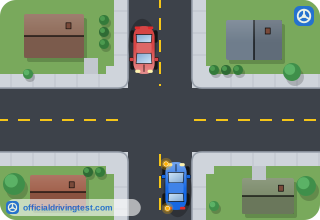
When making a left turn, how should you position your car in relation to the centerline?
- Keep well to the right of it
- Keep close to it, but don't cross it
- Cross it slightly to begin the turn
- Keep one full lane away from it
Show answer
Correct answer: Keep close to it, but don't cross it
For a left turn you stay close to the centerline without crossing it.
Source: Oklahoma Driver Manual (2025 (updated November 24, 2025)), page 37 · Open this page in the manual (Manual page 37)
-
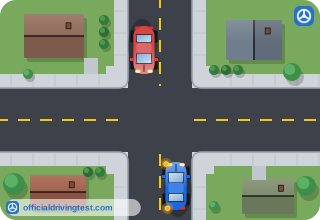
In a left turn, where do you move well ahead of the turn?
- To the far right side of the road
- Into the lane for oncoming traffic
- To the shoulder of the road
- Close to the centerline
Show answer
Correct answer: Close to the centerline
The first step of a left turn is to check for following cars, then move close to the centerline and signal.
Source: Oklahoma Driver Manual (2025 (updated November 24, 2025)), page 37 · Open this page in the manual (Manual page 37)
-
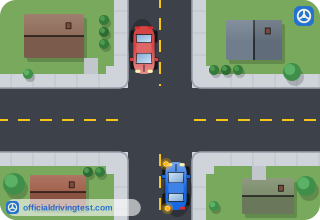
After you turn left onto a two-way street, where should you enter the street?
- Just to the right of center
- Just to the left of center
- On the centerline
- In the lane for oncoming traffic
Show answer
Correct answer: Just to the right of center
The left turn ends just to the right of the center of the new street, and then you move gradually right.
Source: Oklahoma Driver Manual (2025 (updated November 24, 2025)), page 37 · Open this page in the manual (Manual page 37)
-
After completing a left turn, what should you do?
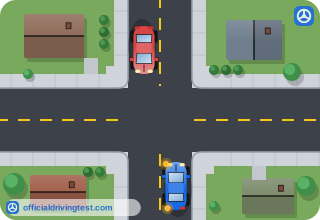
- Stay close to the centerline
- Stop and signal right
- Gradually move over to the right
- Move quickly across to the right curb
Show answer
Correct answer: Gradually move over to the right
Once the turn is done, you move over gradually to the right.
Source: Oklahoma Driver Manual (2025 (updated November 24, 2025)), page 37 · Open this page in the manual (Manual page 37)
-
What should you be careful not to do when making a right turn?
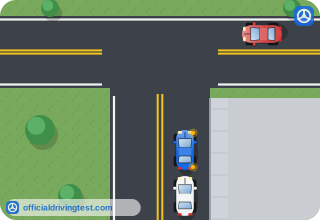
- Move to the right side before the corner
- Signal at least 100 feet from the corner
- Look both ways before starting the turn
- Swing to the left before or during the turn
Show answer
Correct answer: Swing to the left before or during the turn
The manual warns against swinging left before or during a right turn.
Source: Oklahoma Driver Manual (2025 (updated November 24, 2025)), page 37 · Open this page in the manual (Manual page 37)
-
When should you move over to the right side before a right turn?
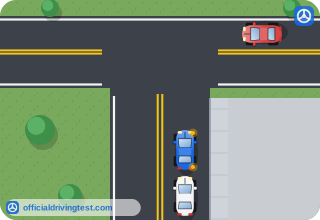
- Just as you reach the corner
- Far before the corner
- After you begin the turn
- Inside the intersection
Show answer
Correct answer: Far before the corner
The first step of a right turn is to move over to the right side far before the corner.
Source: Oklahoma Driver Manual (2025 (updated November 24, 2025)), page 37 · Open this page in the manual (Manual page 37)
-
How should you finish a right turn?
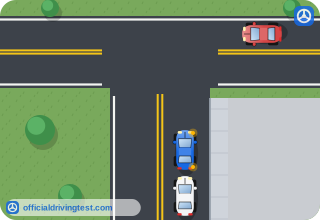
- Swing wide to the left first
- Enter the center lane of the new street
- Keep as close as possible to the right
- Stop before the crosswalk and wait
Show answer
Correct answer: Keep as close as possible to the right
The last step of a right turn is to keep as close as possible to the right.
Source: Oklahoma Driver Manual (2025 (updated November 24, 2025)), page 37 · Open this page in the manual (Manual page 37)
-
Two drivers meet at an intersection and both want to turn left. How do they turn?
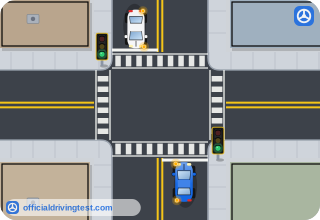
- Each turns to the left of the other, leaving from and entering the left lane
- Each turns to the right of the other, leaving from the center lane
- One turns in front of the other, and both enter the right lane
- Both wait until the oncoming car has fully stopped
Show answer
Correct answer: Each turns to the left of the other, leaving from and entering the left lane
With two left turners, each passes to the left of the other, leaving from and entering the left lane.
Source: Oklahoma Driver Manual (2025 (updated November 24, 2025)), page 37 · Open this page in the manual (Manual page 37)
-
When you turn on one-way or divided streets, from which lane should you turn?
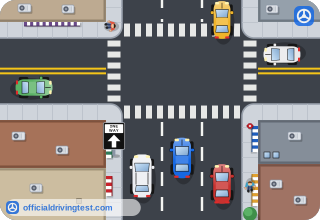
- The lane nearest the curb
- The lane nearest the center of the street
- Any lane that is clear
- The lane closest to the middle of the intersection
Show answer
Correct answer: The lane nearest the curb
The manual says to turn from the lane nearest the curb on one-way or divided streets.
Source: Oklahoma Driver Manual (2025 (updated November 24, 2025)), page 38 · Open this page in the manual (Manual page 38)
-
On a one-way street, which lanes should be used for turning?
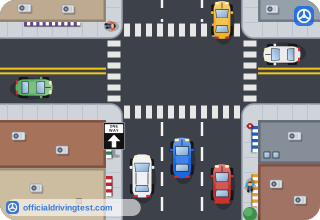
- The middle lanes
- Any lane, when no one is behind you
- The extreme right or left lanes
- The lane that is moving the fastest
Show answer
Correct answer: The extreme right or left lanes
When driving straight you may use any lane, but turns should come from the extreme right or left lanes.
Source: Oklahoma Driver Manual (2025 (updated November 24, 2025)), page 38 · Open this page in the manual (Manual page 38)
-
What should you not do on a one-way street?
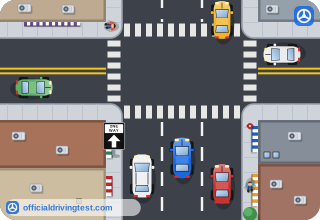
- Drive in any lane when going straight
- Weave in and out of lanes
- Turn from the lane nearest the curb
- Use the extreme left lane for a left turn
Show answer
Correct answer: Weave in and out of lanes
The manual says not to weave in and out of lanes.
Source: Oklahoma Driver Manual (2025 (updated November 24, 2025)), page 38 · Open this page in the manual (Manual page 38)
-
What does the manual say about backing into an intersection to turn around?
- It is safe if you check both directions first and signal
- It is safe if you use your emergency flashers
- It is safe in an intersection with no traffic
- Never do it; it is much safer to drive around the block
Show answer
Correct answer: Never do it; it is much safer to drive around the block
Backing into an intersection to turn around is never done; driving around the block is safer.
Source: Oklahoma Driver Manual (2025 (updated November 24, 2025)), page 39 · Open this page in the manual (Manual page 39)
-
When you pull out from a curb on a hill, who has the right-of-way?
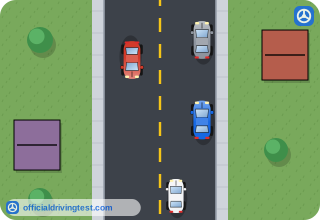
- The driver pulling out from the curb
- The drivers already traveling
- Whichever driver signals first
- The driver in the larger vehicle
Show answer
Correct answer: The drivers already traveling
The driver leaving the curb must wait for an opening because drivers already on the road have the right-of-way.
Source: Oklahoma Driver Manual (2025 (updated November 24, 2025)), page 48 · Open this page in the manual (Manual page 48)