Ohio: Right of way & turning
Intersections, turning, roundabouts, lanes, changing lanes and passing. Split into 3 shorter tests so you're not stuck in one long quiz.
Independent educational site · not affiliated with any government agency or DMV
Choose a part
Right of way & turning — Part 1
Questions in this part include: “What does right-of-way describe?”
StartRight of way & turning — Part 2
Questions in this part include: “From which part of your lane should you make a right turn?”
StartRight of way & turning — Part 3
Questions in this part include: “Which part of the roadway must you generally drive on?”
StartAll 52 Right of way & turning questions with answers
Choose a part above to take a practice test, or study every question and answer here.
Show the questions and answersHide the questions
-
What does right-of-way describe?
- The minimum distance a driver must keep between vehicles on a roadway
- The part of the road reserved for vehicles that are turning left or right
- The priority of traffic flow: who may proceed first in a given situation
- The highest speed at which a driver may travel on a particular road
Show answer
Correct answer: The priority of traffic flow: who may proceed first in a given situation
Right-of-way is the priority of traffic flow, meaning who has the right to proceed with precedence over others in a situation or place.
Source: Ohio Driver Manual (HSY 7607 10/25 (October 2025)), page 10
-
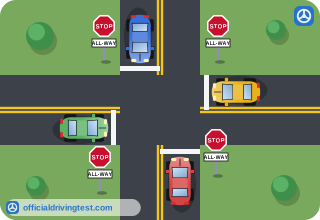
At an intersection, you must yield the right-of-way to which driver?
- The driver who is traveling the fastest
- The driver who is at the intersection or arrives before you
- The driver who arrives at the intersection after you
- The driver of the largest vehicle at the intersection
Show answer
Correct answer: The driver who is at the intersection or arrives before you
The manual lists the driver who is at or arrives before you at an intersection as someone to yield to.
Source: Ohio Driver Manual (HSY 7607 10/25 (October 2025)), page 10
-
When you are making a left turn, to whom must you yield the right-of-way?
- Drivers who are stopped behind you
- Drivers who are parked along the curb
- Only drivers who are in a larger vehicle than yours
- Drivers in the opposing traffic lane
Show answer
Correct answer: Drivers in the opposing traffic lane
The manual says to yield to drivers in the opposing traffic lane when you make a left turn.
Source: Ohio Driver Manual (HSY 7607 10/25 (October 2025)), page 10
-
If you and another driver arrive at a four-way intersection at the same time, which driver must you yield to?
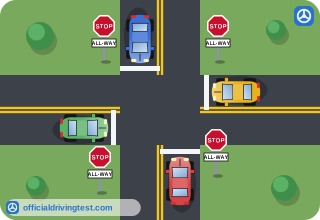
- The driver on your right
- The driver on your left
- The driver directly across from you
- The driver in the larger vehicle
Show answer
Correct answer: The driver on your right
At a four-way intersection, if both drivers arrive at the same time, you yield to the driver on your right.
Source: Ohio Driver Manual (HSY 7607 10/25 (October 2025)), page 10
-
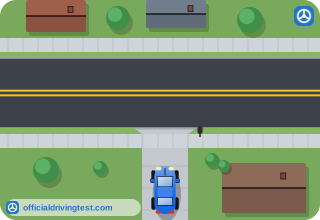
Who must you yield to when you are entering a public highway from a driveway or a private road?
- Drivers who are waiting to enter behind you
- Only bicyclists and pedestrians
- Drivers already on the public highway
- No one, because the highway driver must give way to you
Show answer
Correct answer: Drivers already on the public highway
The manual says to yield to drivers on a public highway if you are entering it from a driveway or private road.
Source: Ohio Driver Manual (HSY 7607 10/25 (October 2025)), page 10
-
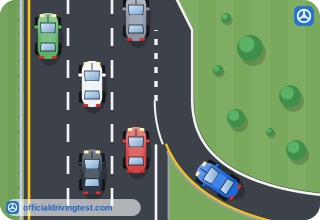
If you are on an entrance or acceleration ramp, to whom must you yield the right-of-way?
- Drivers who are entering the highway from the next ramp ahead
- Drivers already on the limited access or interstate highway
- Drivers who are following you on the entrance ramp behind you
- Drivers traveling in the left lane of the interstate only
Show answer
Correct answer: Drivers already on the limited access or interstate highway
The manual says to yield to drivers already on a limited access or interstate highway when you are on the ramp.
Source: Ohio Driver Manual (HSY 7607 10/25 (October 2025)), page 10
-
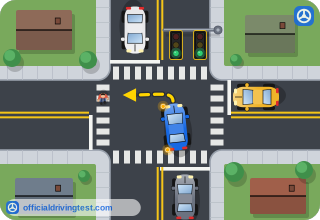
Which of these must you yield the right-of-way to when they are still in the intersection?
- Only pedestrians who are in a marked crosswalk
- Only other drivers who were there before you
- Only bicyclists who are riding in a bike lane
- Pedestrians, bicyclists, and other drivers
Show answer
Correct answer: Pedestrians, bicyclists, and other drivers
The manual says to yield to pedestrians, bicyclists and other drivers who are still in the intersection.
Source: Ohio Driver Manual (HSY 7607 10/25 (October 2025)), page 10
-
Which vehicles does the manual list as public safety vehicles that you must yield the right-of-way to?
- Emergency, police, and fire vehicles
- Only police cars that have their sirens on
- School buses, mail trucks, and utility vehicles
- Only ambulances and fire trucks, but not police vehicles
Show answer
Correct answer: Emergency, police, and fire vehicles
The manual lists public safety vehicles (emergency, police, fire) among those you must yield to.
Source: Ohio Driver Manual (HSY 7607 10/25 (October 2025)), page 10
-
Which of these must you yield the right-of-way to, according to the manual?
- Delivery trucks making a stop
- Vehicles that are towing a trailer
- Funeral processions
- Drivers who are going faster than you
Show answer
Correct answer: Funeral processions
Funeral processions are on the manual’s list of those to whom you yield the right-of-way.
Source: Ohio Driver Manual (HSY 7607 10/25 (October 2025)), page 10
-
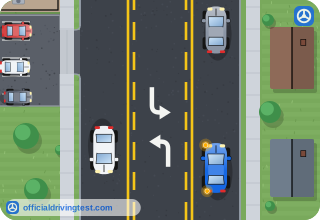
Who may use the center lane of a two-way left turn lane immediately prior to making a left turn?
- Vehicles from either direction
- Only vehicles traveling in the nearest direction
- Only vehicles that are turning into a driveway
- Only vehicles that are passing a slow-moving vehicle
Show answer
Correct answer: Vehicles from either direction
Vehicles from either direction may use the center lane immediately prior to making a left turn.
Source: Ohio Driver Manual (HSY 7607 10/25 (October 2025)), page 14
-
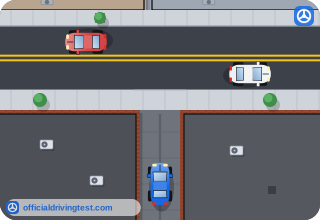
When emerging from an alley, driveway or private road in a business or residential district, where must a driver stop?
- Only after the front of the vehicle has entered the roadway itself
- Only when traffic is approaching, at a point beside the driveway
- At the sidewalk, or before entering the roadway if there is no sidewalk
- At the center of the sidewalk, even if pedestrians are crossing
Show answer
Correct answer: At the sidewalk, or before entering the roadway if there is no sidewalk
The manual says to stop at a sidewalk, or at a point before entering the roadway if there is no sidewalk.
Source: Ohio Driver Manual (HSY 7607 10/25 (October 2025)), page 15
-
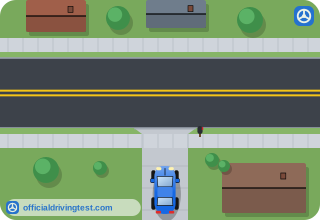
When emerging from an alley, driveway or private road, who must a driver yield the right-of-way to on the sidewalk?
- Only pedestrians in a crosswalk
- Any pedestrian
- Only children
- No one, the driver has the right-of-way
Show answer
Correct answer: Any pedestrian
The manual says drivers must yield the right-of-way to any pedestrian on the sidewalk.
Source: Ohio Driver Manual (HSY 7607 10/25 (October 2025)), page 15
-
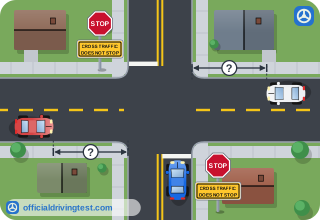
When you approach an intersection and check oncoming and cross traffic, which direction order does the manual give?
- Right, left, then right again
- Left, right, then left again
- Left, then right only
- Straight ahead only
Show answer
Correct answer: Left, right, then left again
The manual says to look left, right, then left again for oncoming and cross traffic.
Source: Ohio Driver Manual (HSY 7607 10/25 (October 2025)), page 16
-
When making a turn, which lane should you enter and maintain?
- The lane closest to the direction you want to go
- The center lane
- The lane with the least traffic
- The lane farthest from the direction you want to go
Show answer
Correct answer: The lane closest to the direction you want to go
The manual says to enter and maintain proper position in the lane that is closest to the direction you want to go.
Source: Ohio Driver Manual (HSY 7607 10/25 (October 2025)), page 16
-
Where should you look while turning?
- At the hood of your own vehicle to see where the wheels point
- At the nearest curb, to keep the vehicle from running over it
- Through the turn to the farthest point possible along your intended path
- At the nearest traffic light or sign until the turn is finished
Show answer
Correct answer: Through the turn to the farthest point possible along your intended path
The manual says to look through the turn to the farthest point possible along the intended path.
Source: Ohio Driver Manual (HSY 7607 10/25 (October 2025)), page 16
-
After completing a turn, what should you do once you accelerate smoothly to an appropriate speed?
- Sound your horn briefly and check the speedometer for speed
- Make sure your turn signal is canceled and check traffic to the rear
- Turn on your hazard lights and then check only the road ahead
- Leave your turn signal on and check only the traffic in front
Show answer
Correct answer: Make sure your turn signal is canceled and check traffic to the rear
The manual says to make sure your turn signal is canceled and check traffic to the rear.
Source: Ohio Driver Manual (HSY 7607 10/25 (October 2025)), page 16
-
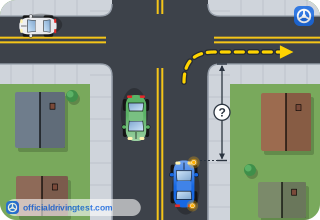
How many feet before an intended turn must a turn signal be given?
- At least 25 feet
- At least 50 feet
- At least 300 feet
- At least 100 feet
Show answer
Correct answer: At least 100 feet
The manual says a turn signal must be given at least 100 feet before the intended turn.
Source: Ohio Driver Manual (HSY 7607 10/25 (October 2025)), page 17
-
How may a turn signal be given?
- Only with a mechanical signal, never with an arm signal
- Only with a hand/arm signal, never with a mechanical one
- By either a mechanical signal or the appropriate hand/arm signal
- By tapping the horn twice and then flashing the headlights
Show answer
Correct answer: By either a mechanical signal or the appropriate hand/arm signal
The manual says the signal may be given using either a mechanical signal or the appropriate hand/arm signal.
Source: Ohio Driver Manual (HSY 7607 10/25 (October 2025)), page 17
-
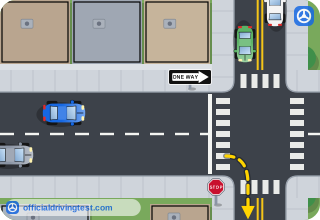
What should you avoid before making a right turn?
- Swinging wide to the left
- Signaling too early
- Slowing down
- Looking at the crosswalk
Show answer
Correct answer: Swinging wide to the left
The manual says to avoid swinging wide to the left before making a right turn.
Source: Ohio Driver Manual (HSY 7607 10/25 (October 2025)), page 17
-
From which part of your lane should you make a right turn?
- From the middle of your lane into the middle of the street
- From the left-most portion of your lane into the right-most portion of the street
- From the right-most portion of your lane into the left-most portion of the street
- From the right-most portion of your lane into the right-most portion of the street
Show answer
Correct answer: From the right-most portion of your lane into the right-most portion of the street
The manual says to turn right from the right-most portion of your lane into the right-most portion of the street you are turning onto.
Source: Ohio Driver Manual (HSY 7607 10/25 (October 2025)), page 17
-
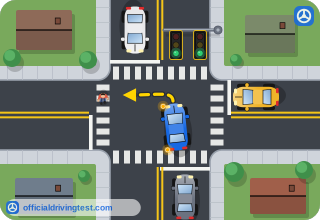
When making a left turn, what must you do regarding oncoming traffic?
- Drive through it quickly
- Yield to it
- Flash your headlights and proceed
- Sound your horn and proceed
Show answer
Correct answer: Yield to it
The manual says to yield to oncoming traffic when making a left turn.
Source: Ohio Driver Manual (HSY 7607 10/25 (October 2025)), page 17
-
Into which lane should you make a left turn, including onto a four-lane highway?
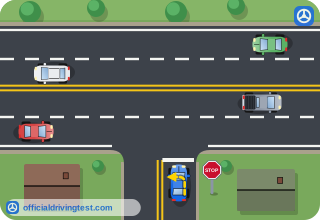
- The lane furthest left, just right of the center dividing line
- The lane furthest right, next to the curb or shoulder
- The middle lane of the street, whatever the lane count
- Any lane that is open, as long as you signal the turn
Show answer
Correct answer: The lane furthest left, just right of the center dividing line
The manual says to turn left into the lane furthest left, just to the right of the center dividing line, and this applies to four-lane highways too.
Source: Ohio Driver Manual (HSY 7607 10/25 (October 2025)), page 17
-
When turning left at a green signal and heavy traffic gives you no opportunity to turn, what does the manual say to do?
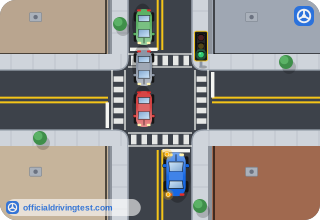
- Stay behind the stop bar and wait through the light until the next green light
- Go straight through the intersection and turn left at the next intersection
- Position the front of the vehicle slightly past the stop bar, yield, and turn when safe
- Turn immediately in front of the oncoming traffic before it reaches the intersection
Show answer
Correct answer: Position the front of the vehicle slightly past the stop bar, yield, and turn when safe
The manual says to position the front of the vehicle slightly past the stop bar, yield to pedestrians and oncoming traffic, and turn left as soon as it is safe.
Source: Ohio Driver Manual (HSY 7607 10/25 (October 2025)), page 17
-
When turning from one of several turn lanes, what should you do after you enter the lane you will turn from?
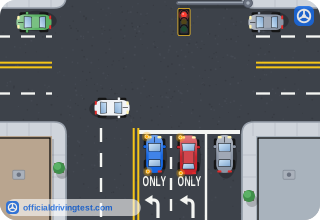
- Change lanes during the turn if traffic allows
- Stay in that lane until the turn is completed
- Move to the outside lane while you turn
- Stop in the middle of the turn to check traffic
Show answer
Correct answer: Stay in that lane until the turn is completed
The manual says to identify and enter the lane from which you will turn and stay in it until the turn is completed.
Source: Ohio Driver Manual (HSY 7607 10/25 (October 2025)), page 17
-
When turning onto a road, what kind of gap in traffic do you need?
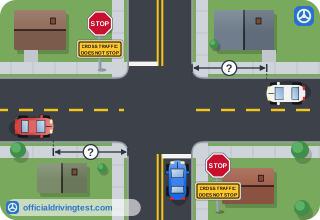
- A gap just big enough to cross the roadway, since you can speed up later
- A gap big enough to cross the roadway, turn into the lane and get up to speed
- A gap in only the lane closest to you, without checking farther lanes
- No gap at all, because crossing traffic must yield to a turning vehicle
Show answer
Correct answer: A gap big enough to cross the roadway, turn into the lane and get up to speed
The manual says you need a large enough gap to get across the roadway and enough space to turn into the lane and get up to speed.
Source: Ohio Driver Manual (HSY 7607 10/25 (October 2025)), page 18
-
An approaching vehicle has its turn signal on. What should you do?
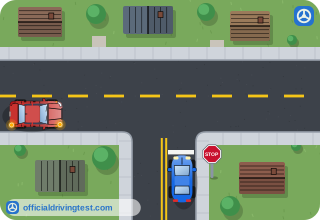
- Do not assume it will turn, and do not pull out in front of it without proper distance
- Assume the driver will turn, and pull out or turn in front of the vehicle right away
- Flash your headlights so the driver knows to turn, then pull out in front
- Stop and wave the vehicle through, because signaling drivers always turn
Show answer
Correct answer: Do not assume it will turn, and do not pull out in front of it without proper distance
The manual says not to assume the vehicle is turning, because the driver may turn after passing you or may have forgotten to turn off the signal.
Source: Ohio Driver Manual (HSY 7607 10/25 (October 2025)), page 18
-
When stopped at a stop sign where you cannot see crossing traffic, what should you do?
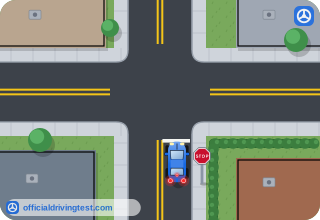
- Wait for other drivers to honk before moving ahead slowly
- Proceed straight across at normal speed, since others must stop
- Edge forward to check for traffic before entering the intersection
- Stay stopped until a driver waves you across the intersection
Show answer
Correct answer: Edge forward to check for traffic before entering the intersection
The manual says to edge forward to check for traffic before entering the intersection.
Source: Ohio Driver Manual (HSY 7607 10/25 (October 2025)), page 18
-
In which direction do vehicles travel around a roundabout or traffic circle?
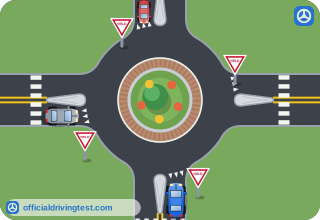
- Clockwise
- Counterclockwise
- Either direction
- Straight across the center
Show answer
Correct answer: Counterclockwise
The manual says vehicles travel counterclockwise around a raised center island.
Source: Ohio Driver Manual (HSY 7607 10/25 (October 2025)), page 18
-
In a roundabout or traffic circle, who yields the right-of-way?
- Circulating traffic yields to entering traffic
- The vehicle that arrives first always goes first
- The larger vehicle always goes first
- Entering traffic yields to circulating traffic
Show answer
Correct answer: Entering traffic yields to circulating traffic
The manual says entering traffic yields the right-of-way to circulating traffic.
Source: Ohio Driver Manual (HSY 7607 10/25 (October 2025)), page 18
-
Once you have entered a roundabout, what should you do?
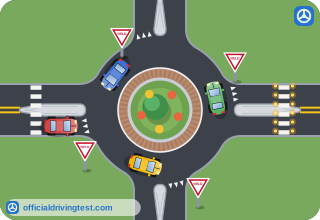
- Stop at the first exit to check for traffic
- Change lanes to reach your exit
- Keep moving, and do not stop or change lanes
- Stop if you miss your exit
Show answer
Correct answer: Keep moving, and do not stop or change lanes
The manual says that once you have entered the roundabout you should keep moving and not stop or change lanes.
Source: Ohio Driver Manual (HSY 7607 10/25 (October 2025)), page 18
-
What should you do as you approach a roundabout or traffic circle to enter it?
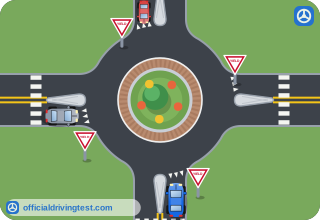
- Slow down
- Speed up to merge ahead of circulating traffic
- Keep your speed the same
- Stop and wait for a signal from a police officer
Show answer
Correct answer: Slow down
The manual says to slow down to enter the roundabout or traffic circle.
Source: Ohio Driver Manual (HSY 7607 10/25 (October 2025)), page 18
-
In which direction should you look for traffic before entering a roundabout?
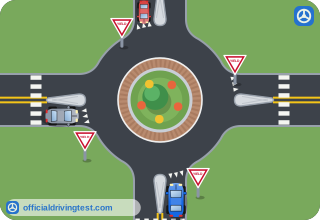
- To the right
- Straight ahead only
- Behind you only
- To the left
Show answer
Correct answer: To the left
The manual says to look to the left for traffic and enter when the lane is clear.
Source: Ohio Driver Manual (HSY 7607 10/25 (October 2025)), page 18
-
Which exit of a roundabout do you use to turn right?
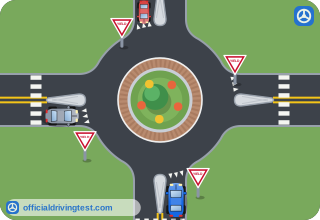
- The 2nd exit
- The 1st exit
- The 3rd exit
- The 4th exit
Show answer
Correct answer: The 1st exit
The manual says to use the 1st exit to turn right.
Source: Ohio Driver Manual (HSY 7607 10/25 (October 2025)), page 18
-
Which exit of a roundabout do you use to go straight?
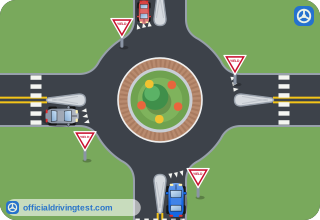
- The 2nd exit
- The 1st exit
- The 3rd exit
- The 4th exit
Show answer
Correct answer: The 2nd exit
The manual says to use the 2nd exit to go straight.
Source: Ohio Driver Manual (HSY 7607 10/25 (October 2025)), page 18
-
Which exit of a roundabout do you use to turn left?
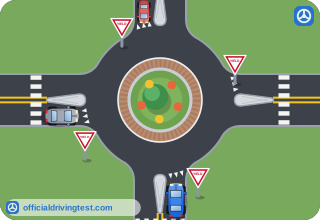
- The 1st exit
- The 2nd exit
- The 3rd exit
- The 4th exit
Show answer
Correct answer: The 3rd exit
The manual says to use the 3rd exit to turn left.
Source: Ohio Driver Manual (HSY 7607 10/25 (October 2025)), page 18
-
Which exit of a roundabout do you use to make a U-turn?
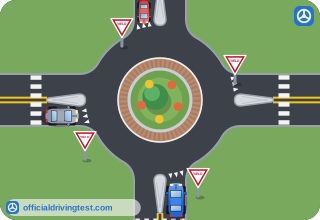
- The 1st exit
- The 4th exit
- The 2nd exit
- The 3rd exit
Show answer
Correct answer: The 4th exit
The manual says to use the 4th exit to make a U-turn.
Source: Ohio Driver Manual (HSY 7607 10/25 (October 2025)), page 18
-
Which part of the roadway must you generally drive on?
- The left half
- The center of the road
- Whichever half has less traffic
- The right half
Show answer
Correct answer: The right half
The manual says to drive on the right half of the roadway except in certain listed situations.
Source: Ohio Driver Manual (HSY 7607 10/25 (October 2025)), page 18
-
Which of these situations allows you to drive on the left half of the roadway?
- The road is wet or icy
- You are driving slower than the other traffic
- The road is divided into three or more marked lanes
- You are following a large truck
Show answer
Correct answer: The road is divided into three or more marked lanes
The manual lists driving on a road divided into three or more marked lanes as an exception to driving on the right half.
Source: Ohio Driver Manual (HSY 7607 10/25 (October 2025)), page 18
-
If an obstruction makes it necessary to drive left-of-center, what must you do?
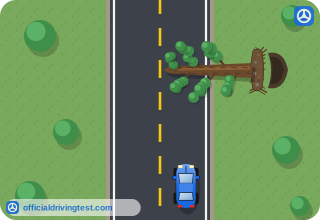
- Yield the right-of-way to oncoming traffic
- Sound your horn and keep moving ahead
- Flash your headlights and then proceed
- Speed up to clear the obstruction quickly
Show answer
Correct answer: Yield the right-of-way to oncoming traffic
The manual says to yield the right-of-way to oncoming traffic when an obstruction forces you left-of-center.
Source: Ohio Driver Manual (HSY 7607 10/25 (October 2025)), page 18
-
On a road with four or more lanes, which lane should you normally drive in?
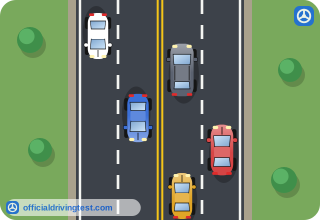
- The lane just right of center
- The left-most lane
- Whichever lane is moving fastest
- The right lane
Show answer
Correct answer: The right lane
The manual says to drive in the right lane on a road with four or more lanes.
Source: Ohio Driver Manual (HSY 7607 10/25 (October 2025)), page 18
-
On a road with four or more lanes, which lane do you use to pass and to make left turns?
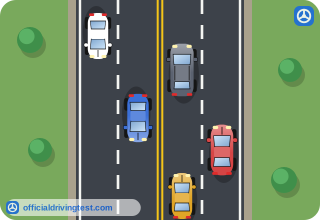
- The right lane next to the curb
- The lane just right of center
- The paved shoulder on the left
- The paved shoulder on the right
Show answer
Correct answer: The lane just right of center
The manual says to use the lane just right of center to pass and make left turns.
Source: Ohio Driver Manual (HSY 7607 10/25 (October 2025)), page 18
-
How should you check your blind spots before changing lanes?
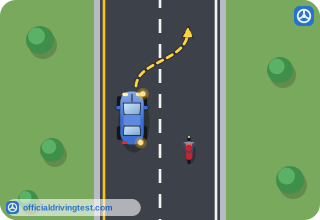
- Turn your head and look over your shoulder in the direction you plan to move
- Glance only at the side-view mirror on the side you will move to
- Adjust both mirrors so they cover the lane you plan to move into
- Check your rear-view mirror twice while holding the wheel steady
Show answer
Correct answer: Turn your head and look over your shoulder in the direction you plan to move
The manual says blind spots are checked by turning your head and looking over your shoulder in the direction you plan to move.
Source: Ohio Driver Manual (HSY 7607 10/25 (October 2025)), page 19
-
After you identify a gap in traffic and signal, what should you do before changing lanes?
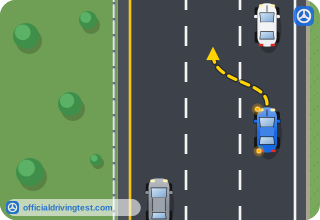
- Sound your horn to let the other drivers know
- Brake firmly to create a larger gap behind you
- Look again in the direction of the lane change
- Change lanes at once because the signal has been given
Show answer
Correct answer: Look again in the direction of the lane change
The manual says to identify a gap, signal, and look again in the direction of the lane change.
Source: Ohio Driver Manual (HSY 7607 10/25 (October 2025)), page 19
-
What is the last step the manual lists for changing lanes?
- Sound your horn
- Cancel your turn signal
- Turn on your hazard lights
- Check your speedometer
Show answer
Correct answer: Cancel your turn signal
After adjusting speed and steering into the lane, the manual says to cancel your turn signal.
Source: Ohio Driver Manual (HSY 7607 10/25 (October 2025)), page 19
-
When you pass another vehicle, how long should you continue to pass before returning to your lane?
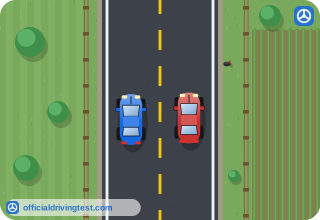
- Until you have gone one full car length beyond the vehicle you passed
- Until the passed vehicle slows down
- Until you see the passed vehicle in your side-view mirror
- Until both headlights of the passed vehicle are visible in your rear-view mirror
Show answer
Correct answer: Until both headlights of the passed vehicle are visible in your rear-view mirror
The manual says to continue to pass until both headlights of the passed vehicle are visible in the rear-view mirror.
Source: Ohio Driver Manual (HSY 7607 10/25 (October 2025)), page 20
-
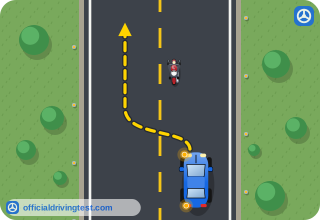
When passing, what should you check in addition to oncoming traffic?
- Only the vehicle directly ahead of the one you are passing
- Only the speedometer to confirm the speed limit
- Your mirrors and over your shoulder for following or passing vehicles
- Only your rear-view mirror for the vehicle behind you
Show answer
Correct answer: Your mirrors and over your shoulder for following or passing vehicles
The manual says to check for oncoming traffic, then check your mirrors and over your shoulder for following or passing vehicles.
Source: Ohio Driver Manual (HSY 7607 10/25 (October 2025)), page 20
-
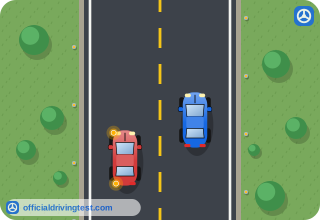
What should you do when another vehicle is passing you?
- Stay in your lane and maintain a constant speed
- Speed up to keep the other driver behind you
- Slow down and move partly onto the shoulder
- Drift toward the center line to give the driver room
Show answer
Correct answer: Stay in your lane and maintain a constant speed
The manual says to stay in your lane and maintain a constant speed to allow the driver to pass you.
Source: Ohio Driver Manual (HSY 7607 10/25 (October 2025)), page 20
-
In which situation should you not attempt to pass?
- When you are in a marked passing zone
- When the vehicle ahead is a motorcycle
- When you are traveling below the speed limit
- When your view is blocked by a curve or a hill
Show answer
Correct answer: When your view is blocked by a curve or a hill
The manual says not to pass when your view is blocked by a curve or a hill.
Source: Ohio Driver Manual (HSY 7607 10/25 (October 2025)), page 20
-
Where should you not attempt to pass?
- On a straight road with no traffic
- Before a highway-railroad crossing or bridge
- On a road divided into three or more marked lanes
- On a road designed and posted for one-way traffic
Show answer
Correct answer: Before a highway-railroad crossing or bridge
The manual says not to attempt to pass before a highway-railroad crossing or bridge.
Source: Ohio Driver Manual (HSY 7607 10/25 (October 2025)), page 20
-
Which of these is a place where you should not attempt to pass?
- At intersections
- On a straight road with a broken yellow line in your lane
- On the left-most lane of a multi-lane road
- On a long, straight rural road in daylight
Show answer
Correct answer: At intersections
The manual lists intersections among the places where you should not attempt to pass.
Source: Ohio Driver Manual (HSY 7607 10/25 (October 2025)), page 20
-
On a multi-lane road, what is the left-most lane intended for?
- Driving at the highest speed in the flow of traffic
- Driving in any lane other than the right-most lane
- Passing slower vehicles
- Stopping to let other traffic pass
Show answer
Correct answer: Passing slower vehicles
The manual says the left-most lane on multi-lane roads is intended for passing slower vehicles.
Source: Ohio Driver Manual (HSY 7607 10/25 (October 2025)), page 21
-
Where may you never pass another vehicle?
- In the left-most lane of a multi-lane road
- On the shoulder, whether it is paved or not
- On a road with three or more lanes
- In a zone where the broken yellow line is in your lane
Show answer
Correct answer: On the shoulder, whether it is paved or not
The manual says never to pass on the shoulder, whether it is paved or not.
Source: Ohio Driver Manual (HSY 7607 10/25 (October 2025)), page 21