North Dakota: Sharing the road
Large trucks and their blind spots, motorcycles, bicycles, motorized bicycles, off-highway vehicles and snowmobiles. Split into 5 shorter tests so you're not stuck in one long quiz.
Independent educational site · not affiliated with any government agency or DMV
Choose a part
Sharing the road — Part 1
Questions in this part include: “What is it that plow drivers cannot see?”
StartSharing the road — Part 2
Questions in this part include: “Which of these is described as a particularly dangerous situation around trucks?”
StartSharing the road — Part 3
Questions in this part include: “When does the manual say you may drive in a designated bicycle lane?”
StartSharing the road — Part 4
Questions in this part include: “When may a bicycle rider carry a package or bundle?”
StartSharing the road — Part 5
Questions in this part include: “The right of way of an Interstate highway, where a snowmobile may never be operated, includes which of these?”
StartAll 99 Sharing the road questions with answers
Choose a part above to take a practice test, or study every question and answer here.
Show the questions and answersHide the questions
-
A school bus is stopped with its red lights flashing. Which drivers must stop?
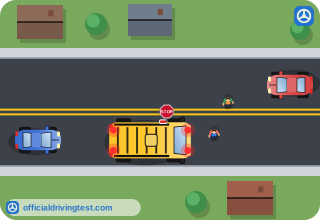
- Only drivers approaching from behind the bus
- Drivers approaching from both directions
- Only drivers approaching from the front of the bus
- Only drivers on a road with no center line
Show answer
Correct answer: Drivers approaching from both directions
When a school bus is stopped and flashing its red lights, drivers approaching from both directions must stop because children are being loaded or unloaded.
Source: North Dakota Noncommercial Driver License Manual (2025-2027), page 20 · Open this page in the manual (Manual page 20)
-
Why must drivers stop when a stopped school bus has its red lights flashing?
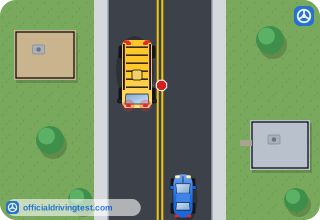
- Children are being loaded or unloaded
- The bus is about to turn around
- The bus has broken down
- The bus driver is changing shifts
Show answer
Correct answer: Children are being loaded or unloaded
Red flashing lights on a stopped school bus mean that children are being loaded or unloaded.
Source: North Dakota Noncommercial Driver License Manual (2025-2027), page 20 · Open this page in the manual (Manual page 20)
-
Which of these allows you to proceed after stopping for a school bus with flashing red lights?
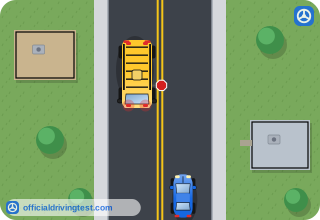
- No children are visible near the bus
- A car behind you passes the bus
- The bus driver signals to let vehicles pass
- Traffic behind you starts to honk
Show answer
Correct answer: The bus driver signals to let vehicles pass
Drivers cannot proceed until the bus begins moving, the bus driver signals to let vehicles pass, or the red lights are no longer flashing.
Source: North Dakota Noncommercial Driver License Manual (2025-2027), page 20 · Open this page in the manual (Manual page 20)
-
What may yellow caution lights on a school bus warn you of?
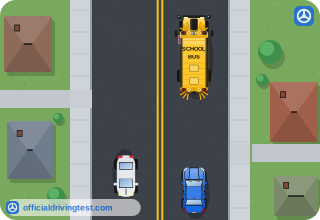
- The school bus is about to turn around at the next corner.
- The school bus is about to stop and its red lights will come on.
- The school bus has finished loading and is about to leave.
- The school bus is allowed to be passed on the right side.
Show answer
Correct answer: The school bus is about to stop and its red lights will come on.
Yellow caution lights on a school bus may warn that the bus is about to stop and that its red flashing lights will soon come on.
Source: North Dakota Noncommercial Driver License Manual (2025-2027), page 20 · Open this page in the manual (Manual page 20)
-
What should you do at dawn and dusk in areas where deer crossing signs are posted?
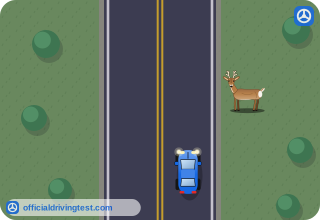
- Pay close attention for deer and drive at slower speeds
- Use your high beams at all times in those areas
- Drive faster to pass through the area quickly
- Sound your horn continuously while driving there
Show answer
Correct answer: Pay close attention for deer and drive at slower speeds
The manual says to pay close attention at dawn and dusk for animals, especially deer, and to drive at slower speeds where deer crossing signs are posted.
Source: North Dakota Noncommercial Driver License Manual (2025-2027), page 25 · Open this page in the manual (Manual page 25)
-
The manual says to stay well back from snowplows because sometimes they have to do what?

- Swerve into the oncoming lane
- Speed up to clear a drift
- Turn off their warning lights
- Stop and back up
Show answer
Correct answer: Stop and back up
The manual says to stay well back from snowplows because sometimes they have to stop and back up.
Source: North Dakota Noncommercial Driver License Manual (2025-2027), page 28 · Open this page in the manual (Manual page 28)
-
What is it that plow drivers cannot see?
- Directly behind themselves
- Directly ahead of the blade
- Both sides of the plow at once
- The road surface under the blade
Show answer
Correct answer: Directly behind themselves
The manual says plow drivers can't see directly behind themselves, which is one reason to stay well back.
Source: North Dakota Noncommercial Driver License Manual (2025-2027), page 28 · Open this page in the manual (Manual page 28)
-
Besides snow, what do plows also throw?

- Road flares
- Antifreeze
- Sanding material
- Warning cones
Show answer
Correct answer: Sanding material
The manual notes that plows also throw sanding material, so you should not crowd the plow.
Source: North Dakota Noncommercial Driver License Manual (2025-2027), page 28 · Open this page in the manual (Manual page 28)
-
On a multi-lane roadway, where could a snowplow be?
- Only in the right-hand lane
- In either lane or on the shoulder
- Only in the lane next to the median
- Only on the shoulder
Show answer
Correct answer: In either lane or on the shoulder
The manual says to know where the plow is on multi-lane roadways, because it could be in either lane or on the shoulder.
Source: North Dakota Noncommercial Driver License Manual (2025-2027), page 28 · Open this page in the manual (Manual page 28)
-
Why must you be extremely cautious when passing a snowplow?

- Its blade extends well into the neighboring lane as it passes you
- Its driver may not slow down for other traffic that is approaching
- It has the right-of-way over all other traffic on the road
- It can be moved sideways by drifts and hard snow-pack
Show answer
Correct answer: It can be moved sideways by drifts and hard snow-pack
The manual says a snowplow can be moved sideways by drifts and hard snow-pack, so be extremely cautious when passing one.
Source: North Dakota Noncommercial Driver License Manual (2025-2027), page 28 · Open this page in the manual (Manual page 28)
-
Where does the manual say to watch for plow trucks that may be turning around?
- At every railroad crossing along the route
- At school bus stops
- On “authorized vehicle only” cross-overs
- At the end of every city block
Show answer
Correct answer: On “authorized vehicle only” cross-overs
The manual says to watch for plow trucks on Interstate ramps and turning around on “authorized vehicle only” cross-overs.
Source: North Dakota Noncommercial Driver License Manual (2025-2027), page 28 · Open this page in the manual (Manual page 28)
-
How far may a fully-loaded tractor-trailer take to come to a complete stop on dry pavement?
- About 100 feet
- About 150 feet
- More than 400 feet
- About 250 feet
Show answer
Correct answer: More than 400 feet
A fully-loaded tractor-trailer may take more than 400 feet on dry pavement to stop, more than the length of a football field.
Source: North Dakota Noncommercial Driver License Manual (2025-2027), page 31 · Open this page in the manual (Manual page 31)
-
With any turning vehicle, how do the rear wheels travel compared with the front wheels?
- They follow the same path
- They follow a shorter path
- They follow a longer path
- They follow a path farther to the left
Show answer
Correct answer: They follow a shorter path
The manual says the rear wheels follow a shorter path than the front wheels, and the longer the vehicle, the greater the difference.
Source: North Dakota Noncommercial Driver License Manual (2025-2027), page 31 · Open this page in the manual (Manual page 31)
-
Drivers of tractor-trailers must often swing out to the left as the first step in making which kind of turn?
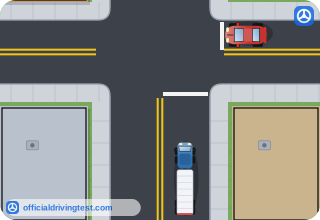
- A left turn
- A U-turn
- A turn into a driveway on the left
- A right turn
Show answer
Correct answer: A right turn
Because the rear wheels follow a shorter path, tractor-trailer drivers must often swing out to the left first when making a right turn.
Source: North Dakota Noncommercial Driver License Manual (2025-2027), page 31 · Open this page in the manual (Manual page 31)
-
What should you do when following a tractor-trailer before you try to pass it?
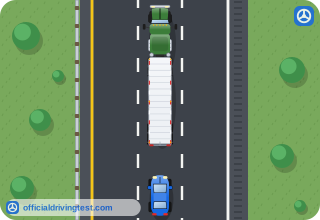
- Sound your horn twice
- Observe its turn signals
- Flash your headlights at the driver
- Move close behind its rear bumper
Show answer
Correct answer: Observe its turn signals
The manual says to observe a tractor-trailer’s turn signals before trying to pass.
Source: North Dakota Noncommercial Driver License Manual (2025-2027), page 31 · Open this page in the manual (Manual page 31)
-
A tractor-trailer you are following appears to be starting a left turn. What should you do before passing it on the right?
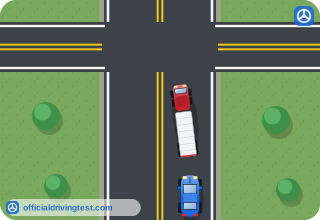
- Pass at once, since the truck is turning away from you
- Speed up and move up alongside its cab to pass
- Stay close behind it and sound your horn at the driver
- Wait a moment to see which way the driver signals
Show answer
Correct answer: Wait a moment to see which way the driver signals
The manual says to wait a moment and check which way the driver is signaling before passing on the right.
Source: North Dakota Noncommercial Driver License Manual (2025-2027), page 31 · Open this page in the manual (Manual page 31)
-
Many drivers falsely assume that a trucker can see the road better because truckers sit twice as high. What does the manual say about a trucker’s blind spots?
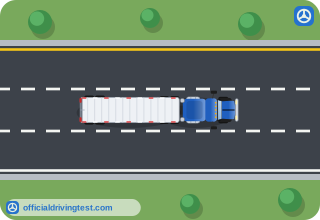
- Truckers still have serious blind spots, called no-zones, into which a car can disappear from view
- Sitting that high means a trucker has no blind spots at all, since the view is better
- The only blind spot is directly behind the trailer, where cars cannot be seen
- Bigger mirrors remove every blind spot a trucker has when changing lanes
Show answer
Correct answer: Truckers still have serious blind spots, called no-zones, into which a car can disappear from view
Truckers have a better forward view and bigger mirrors, but they still have serious blind spots or no-zones where a car can disappear from view.
Source: North Dakota Noncommercial Driver License Manual (2025-2027), page 31 · Open this page in the manual (Manual page 31)
-
What is the rule of thumb for drivers sharing the road with a tractor-trailer?
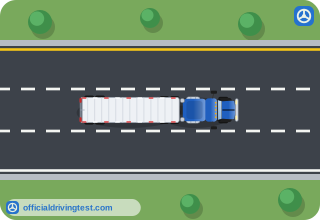
- If you can see the truck’s tail lights, the driver can see you well
- If the truck’s turn signal is off, the driver does not see you at all
- If you can’t see the truck driver in the side mirror, he or she can’t see you
- If you stay in the truck’s lane, the driver can always see you well
Show answer
Correct answer: If you can’t see the truck driver in the side mirror, he or she can’t see you
The manual gives this rule of thumb: if you cannot see the truck driver in the side mirror, the driver cannot see you.
Source: North Dakota Noncommercial Driver License Manual (2025-2027), page 32 · Open this page in the manual (Manual page 32)
-
Why does lingering in a truck’s blind spots on the sides and in the rear increase the chance of a crash?
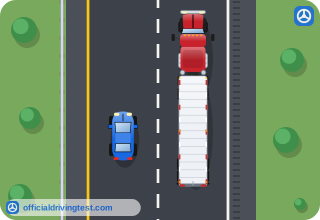
- It makes the truck use more fuel when it is carrying a load
- It makes the truck’s turn signals stop working in a crowd
- It forces the truck to move into the right lane at once
- It hampers the trucker’s ability to take evasive action
Show answer
Correct answer: It hampers the trucker’s ability to take evasive action
Drivers lingering in a truck’s side and rear blind spots hamper the trucker’s ability to take evasive action, and the possibility of a crash increases.
Source: North Dakota Noncommercial Driver License Manual (2025-2027), page 32 · Open this page in the manual (Manual page 32)
-
On multi-lane highways, which lane do tractor-trailers stay in to help the flow of local traffic on and off the highway?
- The center lane
- The far left lane
- The far right lane
- The lane next to the shoulder
Show answer
Correct answer: The center lane
The manual says tractor-trailers stay in the center lane, which also increases the driver’s options if a lane change is needed to avoid a crash.
Source: North Dakota Noncommercial Driver License Manual (2025-2027), page 32 · Open this page in the manual (Manual page 32)
-
What does cutting into the open space in front of a truck remove?
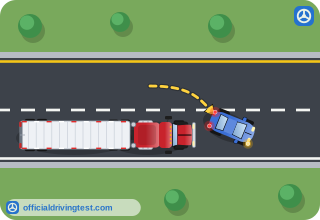
- The truck’s right of way
- The truck’s no-zone on the left side
- The truck driver’s cushion of safety
- The truck driver’s need to use mirrors
Show answer
Correct answer: The truck driver’s cushion of safety
The manual says cutting into the open space in front of a truck removes the truck driver’s cushion of safety.
Source: North Dakota Noncommercial Driver License Manual (2025-2027), page 32 · Open this page in the manual (Manual page 32)
-
Which of these is described as a particularly dangerous situation around trucks?
- Exiting the highway behind a truck
- Trying to beat a truck to a single-lane construction zone
- Passing a tractor-trailer completely on the left side
- Slowing down to leave extra space behind a truck
Show answer
Correct answer: Trying to beat a truck to a single-lane construction zone
The manual calls trying to beat a truck to a single-lane construction zone a particularly dangerous situation.
Source: North Dakota Noncommercial Driver License Manual (2025-2027), page 32 · Open this page in the manual (Manual page 32)
-
You need to reach your exit or turn and a truck is next to you. What does the manual advise?
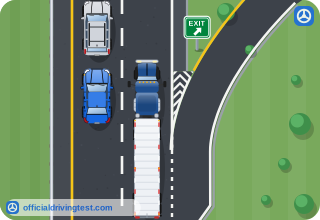
- Slow down and exit behind the truck
- Speed up and cut in front of the truck to make the exit
- Move into the truck’s blind spot and wait for an opening
- Sound your horn so the truck lets you in front
Show answer
Correct answer: Slow down and exit behind the truck
The manual says to take a moment to slow down and exit behind a truck rather than cut it off.
Source: North Dakota Noncommercial Driver License Manual (2025-2027), page 32 · Open this page in the manual (Manual page 32)
-
How should you pass a tractor-trailer?
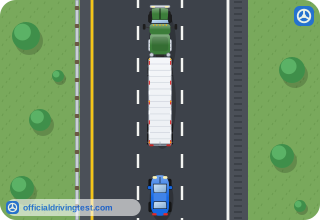
- Pass it on the right side to stay out of its mirrors
- Pass it slowly, staying beside the cab for a while
- Pass it completely, and always on the left side
- Pass it on whichever side has the most room
Show answer
Correct answer: Pass it completely, and always on the left side
The manual says to always pass a tractor-trailer completely and always on the left side, without lingering alongside.
Source: North Dakota Noncommercial Driver License Manual (2025-2027), page 32 · Open this page in the manual (Manual page 32)
-
If you linger beside a vehicle when passing, what does your position make impossible for a trucker?
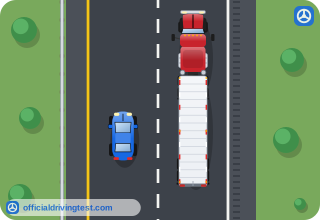
- Seeing the traffic signs along the road ahead
- Taking evasive action if an obstacle appears
- Using the truck’s turn signals and mirrors
- Changing to a different route toward the exit
Show answer
Correct answer: Taking evasive action if an obstacle appears
The manual says that if you linger when passing, the trucker cannot take evasive action if an obstacle appears ahead.
Source: North Dakota Noncommercial Driver License Manual (2025-2027), page 32 · Open this page in the manual (Manual page 32)
-
Why is tailgating a truck or car dangerous?
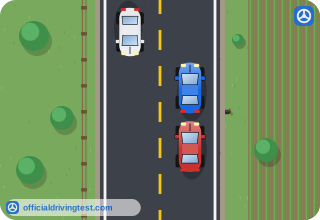
- The vehicle ahead is likely to speed up
- The vehicle ahead cannot use its brake lights
- You cannot see the lane markings behind it
- You take away your own cushion of safety
Show answer
Correct answer: You take away your own cushion of safety
The manual says tailgating removes your own cushion of safety if the vehicle in front stops short.
Source: North Dakota Noncommercial Driver License Manual (2025-2027), page 32 · Open this page in the manual (Manual page 32)
-
Because of its large size, how does a tractor-trailer often appear to be traveling?
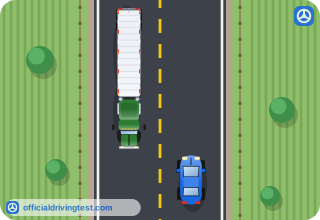
- At a faster speed than it really is
- At a slower speed than it really is
- At exactly its true speed
- At a speed that matches the cars around it
Show answer
Correct answer: At a slower speed than it really is
The manual warns that a tractor-trailer often appears to be going slower than it actually is, so never underestimate its size and speed.
Source: North Dakota Noncommercial Driver License Manual (2025-2027), page 32 · Open this page in the manual (Manual page 32)
-
Do motorcyclists have the same rights and responsibilities on public roadways as other drivers?
- No, they have rights but fewer responsibilities
- No, they must yield to every car
- Yes, they have the same rights and responsibilities
- No, they may use only the shoulder
Show answer
Correct answer: Yes, they have the same rights and responsibilities
The manual states that motorcyclists have the same rights and responsibilities on public roadways as other drivers.
Source: North Dakota Noncommercial Driver License Manual (2025-2027), page 32 · Open this page in the manual (Manual page 32)
-
What does the manual say about the traffic lane when you share the road with a motorcycle?
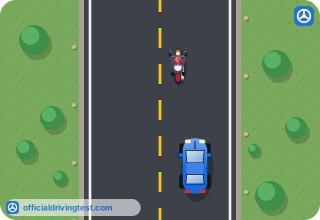
- Share the lane if there seems to be enough room for both
- Share the lane only on multi-lane highways in daylight
- Share the lane when the motorcycle moves to the edge
- Give the motorcyclist a full lane width; do not share the lane
Show answer
Correct answer: Give the motorcyclist a full lane width; do not share the lane
Even if there seems to be enough room for both, the motorcycle needs the room to maneuver safely, so do not share the lane.
Source: North Dakota Noncommercial Driver License Manual (2025-2027), page 32 · Open this page in the manual (Manual page 32)
-
Why can it be more difficult to judge the speed and distance of an approaching motorcycle?
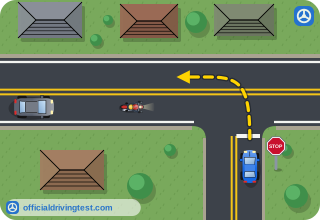
- They have a much smaller profile than other vehicles
- Motorcycles always travel faster than other vehicles
- Motorcycles use much brighter headlights than cars
- Motorcycles never use turn signals or brake lights
Show answer
Correct answer: They have a much smaller profile than other vehicles
A motorcycle’s much smaller profile makes it harder to see and harder to judge its speed and distance.
Source: North Dakota Noncommercial Driver License Manual (2025-2027), page 32 · Open this page in the manual (Manual page 32)
-
Why should you always signal your intentions before changing lanes or merging with traffic when motorcyclists are around?
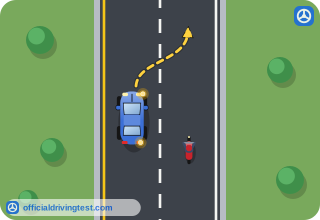
- It gives the motorcyclist the right of way
- It lets the motorcyclist pass you on the right
- It lets the rider anticipate traffic flow
- It lets the motorcyclist ride in your blind spot
Show answer
Correct answer: It lets the rider anticipate traffic flow
Signaling lets the motorcyclist anticipate traffic flow and find a safe lane position.
Source: North Dakota Noncommercial Driver License Manual (2025-2027), page 33 · Open this page in the manual (Manual page 33)
-
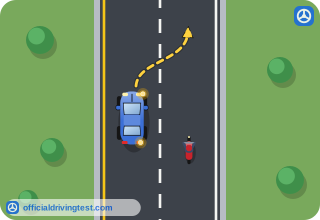
When should you make a visual check for motorcycles by checking mirrors and blind spots?
- Only when you see a motorcycle right ahead of you
- Before entering or leaving a lane and at intersections
- Only when driving on multi-lane highways in traffic
- Only when driving at night or in bad weather
Show answer
Correct answer: Before entering or leaving a lane and at intersections
Motorcyclists are often hidden in a blind spot, so check mirrors and blind spots before entering or leaving a lane and at intersections.
Source: North Dakota Noncommercial Driver License Manual (2025-2027), page 33 · Open this page in the manual (Manual page 33)
-
You see a motorcycle with a flashing turn signal. What should you do?
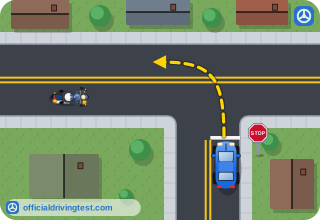
- Wait to be sure it is going to turn
- Assume it will turn and proceed at once
- Sound your horn to warn the rider
- Pass the motorcycle on the same side it signals
Show answer
Correct answer: Wait to be sure it is going to turn
Motorcycle signals usually are not self cancelling and riders sometimes forget to turn them off, so wait to be sure the motorcycle will turn.
Source: North Dakota Noncommercial Driver License Manual (2025-2027), page 33 · Open this page in the manual (Manual page 33)
-
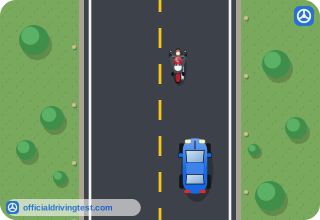
Which road condition is named as one that can make a motorcyclist suddenly change speed or position within a lane?
- A wide, smooth shoulder
- Dry, newly painted lane lines
- Gravel
- A clear view of the road ahead
Show answer
Correct answer: Gravel
The manual lists potholes, gravel, wet or slippery surfaces, pavement seams, railroad crossings and grooved pavement as hazards that can make motorcyclists change speed or position.
Source: North Dakota Noncommercial Driver License Manual (2025-2027), page 33 · Open this page in the manual (Manual page 33)
-
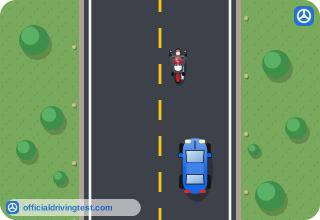
Why should you allow more following distance when following a motorcycle?
- Because motorcycles always stop slower than cars
- So the motorcyclist has time to maneuver or stop
- Because motorcycles cannot use their brakes
- So the motorcyclist can pass you more easily
Show answer
Correct answer: So the motorcyclist has time to maneuver or stop
The manual says the extra following distance gives the motorcyclist enough time to maneuver or stop in an emergency.
Source: North Dakota Noncommercial Driver License Manual (2025-2027), page 33 · Open this page in the manual (Manual page 33)
-
In dry conditions, how does a motorcycle’s stopping ability compare with a car’s?
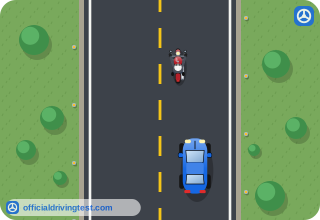
- Motorcycles need a longer distance to stop than a car
- Motorcycles stop in exactly the same distance as a car
- Motorcycles cannot stop in less than 400 feet
- Motorcycles can stop more quickly than a car
Show answer
Correct answer: Motorcycles can stop more quickly than a car
The manual says that in dry conditions motorcycles can stop more quickly than a car.
Source: North Dakota Noncommercial Driver License Manual (2025-2027), page 33 · Open this page in the manual (Manual page 33)
-
What should you do when you encounter bicyclists?
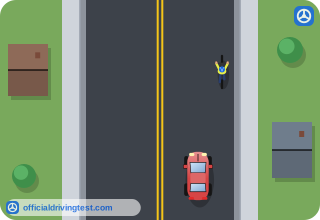
- Sound your horn to warn them
- Reduce speed
- Keep your speed and move to the center lane
- Drive close beside them to guide them
Show answer
Correct answer: Reduce speed
The manual says to reduce speed when encountering bicyclists, who generally travel at slower speeds than motorists.
Source: North Dakota Noncommercial Driver License Manual (2025-2027), page 33 · Open this page in the manual (Manual page 33)
-
When passing a bicyclist, what minimum passing space is the driver required to leave between the vehicle and the bicycle?
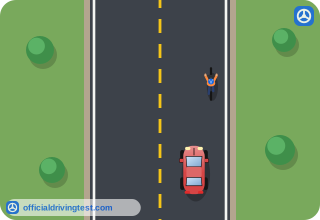
- One foot
- Two feet
- Five feet
- Three feet
Show answer
Correct answer: Three feet
The manual says the driver is required to leave a minimum of three feet of passing space between the vehicle and the bicycle.
Source: North Dakota Noncommercial Driver License Manual (2025-2027), page 33 · Open this page in the manual (Manual page 33)
-
When should you pass a bicyclist?
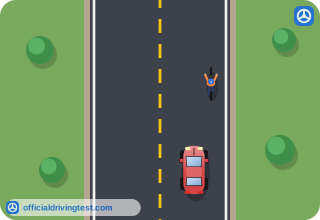
- Only when it is safe, given road and traffic conditions
- Whenever the bicyclist is traveling slowly ahead of you
- Whenever the bicyclist is near the edge of the road
- As soon as you come up behind the bicyclist on the road
Show answer
Correct answer: Only when it is safe, given road and traffic conditions
The manual says to pass a bicyclist only when road and traffic conditions dictate that it is safe.
Source: North Dakota Noncommercial Driver License Manual (2025-2027), page 33 · Open this page in the manual (Manual page 33)
-
What should you do after passing a bicyclist and before moving back to your normal position?
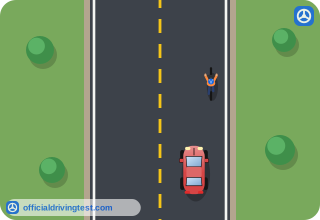
- Sound your horn
- Flash your headlights
- Check over your shoulder
- Brake to slow down
Show answer
Correct answer: Check over your shoulder
The manual says to check over your shoulder after passing a bicyclist and before moving back to your normal position.
Source: North Dakota Noncommercial Driver License Manual (2025-2027), page 33 · Open this page in the manual (Manual page 33)
-
How should you treat bicyclists in inclement weather?
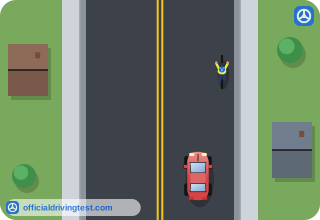
- Pass them as quickly as possible
- Drive in the bicycle lane
- Follow them closely so they can see your lights
- Give them extra room
Show answer
Correct answer: Give them extra room
The manual says that in inclement weather, you should give bicyclists extra room.
Source: North Dakota Noncommercial Driver License Manual (2025-2027), page 33 · Open this page in the manual (Manual page 33)
-
What does the manual say you should do at intersections where bicyclists are present?
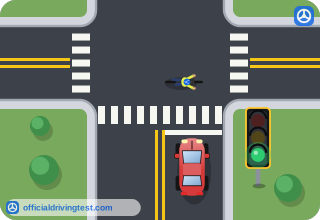
- Scan for bicyclists and give them extra time to cross
- Speed up so you clear the intersection first
- Assume bicyclists will always yield the right of way
- Stop in the crosswalk and wave them through first
Show answer
Correct answer: Scan for bicyclists and give them extra time to cross
The manual says to scan for bicyclists in traffic, particularly at intersections, and to allow them extra time to cross.
Source: North Dakota Noncommercial Driver License Manual (2025-2027), page 33 · Open this page in the manual (Manual page 33)
-
What should you do before turning right when a bicyclist may be near?
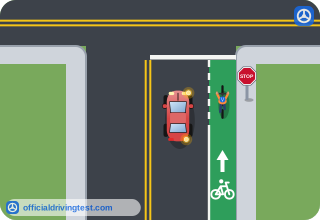
- Sound your horn and turn at once
- Turn from the center of the road
- Check your blind spot for bicyclists
- Look only at your rear-view mirror
Show answer
Correct answer: Check your blind spot for bicyclists
The manual says that when turning right, check your blind spot for bicyclists before starting the turn.
Source: North Dakota Noncommercial Driver License Manual (2025-2027), page 33 · Open this page in the manual (Manual page 33)
-
When does the manual say you may drive in a designated bicycle lane?
- To pass slower traffic on the right side of the road
- Only to make a right turn, after you signal and look
- To get around a car that is waiting to turn left
- Whenever the bicycle lane is clear of bicyclists
Show answer
Correct answer: Only to make a right turn, after you signal and look
The manual says to avoid driving in designated bicycle lanes other than to make a right turn, and to signal and look first.
Source: North Dakota Noncommercial Driver License Manual (2025-2027), page 33 · Open this page in the manual (Manual page 33)
-
What does the manual advise when you see children on bicycles?
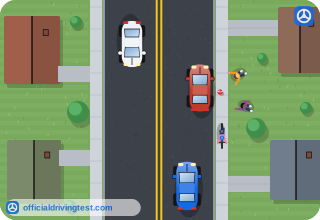
- Expect the unexpected and slow down
- Expect them to follow every traffic law
- Pass them quickly before they can react
- Sound your horn to make them stop
Show answer
Correct answer: Expect the unexpected and slow down
Children on bicycles are often unpredictable and may not know traffic laws, and they are harder to see, so slow down.
Source: North Dakota Noncommercial Driver License Manual (2025-2027), page 33 · Open this page in the manual (Manual page 33)
-
Which rules must a bicycle or motorized bicycle rider obey?
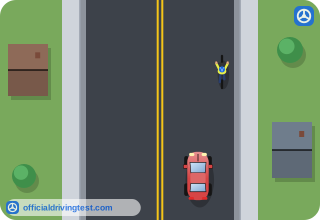
- Only the traffic signs and signals, not the rules of the road
- The same basic rules of the road as drivers of cars and trucks
- Only the rules for pedestrians on the shoulder
- Only the rules posted for bicycles on that road
Show answer
Correct answer: The same basic rules of the road as drivers of cars and trucks
Traffic laws apply to everyone, whether driving a car, truck, motorcycle, bicycle, or motorized bicycle.
Source: North Dakota Noncommercial Driver License Manual (2025-2027), page 38 · Open this page in the manual (Manual page 38)
-
A motorized bicycle is a two- or three-wheeled vehicle no more than how wide?
- 24 inches
- 36 inches
- 32 inches
- 48 inches
Show answer
Correct answer: 32 inches
A motorized bicycle is a two- or three-wheeled vehicle no more than 32 inches wide.
Source: North Dakota Noncommercial Driver License Manual (2025-2027), page 38 · Open this page in the manual (Manual page 38)
-
Which of these must a motorized bicycle have?
- Foot pedals or footrests
- A passenger seat
- A manual transmission
- A sidecar
Show answer
Correct answer: Foot pedals or footrests
A motorized bicycle must have foot pedals or footrests, among other requirements.
Source: North Dakota Noncommercial Driver License Manual (2025-2027), page 38 · Open this page in the manual (Manual page 38)
-
What kind of drive system must a motorized bicycle have?
- An automatic drive system not requiring the use of a clutch
- A manual gear system requiring the use of a clutch
- A four-speed drive system with a hand clutch
- A belt drive system that needs a foot clutch
Show answer
Correct answer: An automatic drive system not requiring the use of a clutch
A motorized bicycle must have an automatic drive system not requiring the use of a clutch.
Source: North Dakota Noncommercial Driver License Manual (2025-2027), page 38 · Open this page in the manual (Manual page 38)
-
What is the maximum piston or rotor displacement of a motorized bicycle?
- 39.98 cc
- 59.98 cc
- 49.98 cc
- 99.98 cc
Show answer
Correct answer: 49.98 cc
A motorized bicycle must have a maximum piston or rotor displacement of 49.98 cc (3.05 cubic inches).
Source: North Dakota Noncommercial Driver License Manual (2025-2027), page 38 · Open this page in the manual (Manual page 38)
-
Which of these allows you to operate a motorized bicycle?
- A snowmobile safety certificate
- An off-highway vehicle safety certificate
- A bicycle registration sticker
- A motorized bicycle permit
Show answer
Correct answer: A motorized bicycle permit
To operate a motorized bicycle you need a valid operator’s license, motorized bicycle permit, operator permit, temporary permit, instruction permit, or motorcycle permit in your immediate possession.
Source: North Dakota Noncommercial Driver License Manual (2025-2027), page 38 · Open this page in the manual (Manual page 38)
-
How many bicycle riders may ride abreast?
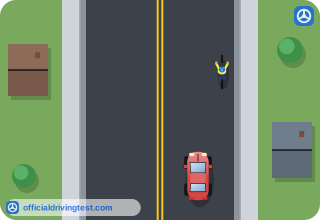
- Not more than three
- Not more than two
- Not more than four
- As many as the lane can hold
Show answer
Correct answer: Not more than two
The rules say to ride not more than two abreast, and that single file is safest.
Source: North Dakota Noncommercial Driver License Manual (2025-2027), page 38 · Open this page in the manual (Manual page 38)
-
Where on the roadway should a bicycle rider ride?
- Keep to the left side of the roadway
- Ride in the center of the lane
- Keep to the right side of the roadway
- Ride on whichever side has less traffic
Show answer
Correct answer: Keep to the right side of the roadway
Bicycle riders must keep to the right side of the roadway.
Source: North Dakota Noncommercial Driver License Manual (2025-2027), page 38 · Open this page in the manual (Manual page 38)
-
Bicycle riders must give the right of way to which of these?
- Pedestrians
- Only parked vehicles
- Only other bicyclists
- Nobody, since bicycles always go first
Show answer
Correct answer: Pedestrians
The rules and guidelines say bicycle riders must give pedestrians the right of way.
Source: North Dakota Noncommercial Driver License Manual (2025-2027), page 38 · Open this page in the manual (Manual page 38)
-
What should bicycle riders use before turning and stopping?
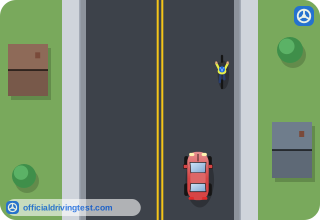
- Hand signals
- A horn
- A whistle
- Headlights only
Show answer
Correct answer: Hand signals
Bicycle riders should use hand signals before turning and stopping.
Source: North Dakota Noncommercial Driver License Manual (2025-2027), page 38 · Open this page in the manual (Manual page 38)
-
How many people may be carried on a bicycle or motorized bicycle?
- Up to two people if the rider is an adult
- As many as can hold on
- No more than it was designed to carry
- Two people in daylight only
Show answer
Correct answer: No more than it was designed to carry
Do not carry more people on a bicycle or motorized bicycle than it was designed to carry.
Source: North Dakota Noncommercial Driver License Manual (2025-2027), page 38 · Open this page in the manual (Manual page 38)
-
What equipment must all bicycles and motorized bicycles have?
- A horn
- A brake
- A rearview mirror
- A speedometer
Show answer
Correct answer: A brake
All bicycles and motorized bicycles must be equipped with a brake.
Source: North Dakota Noncommercial Driver License Manual (2025-2027), page 38 · Open this page in the manual (Manual page 38)
-
Under what age is an approved safety helmet required to operate a motorized bicycle?
- Under 14
- Under 16
- Under 21
- Under 18
Show answer
Correct answer: Under 18
If under 18, an approved safety helmet is required to operate a motorized bicycle.
Source: North Dakota Noncommercial Driver License Manual (2025-2027), page 38 · Open this page in the manual (Manual page 38)
-
How does the manual describe wearing a safety helmet while riding a bicycle, regardless of age?
- Required by law for every rider
- Required only after dark
- Required only for adults
- A good practice
Show answer
Correct answer: A good practice
The manual says a good practice is to wear a safety helmet while riding a bicycle and motorized bicycle regardless of age.
Source: North Dakota Noncommercial Driver License Manual (2025-2027), page 38 · Open this page in the manual (Manual page 38)
-
What does the manual say is a good idea for a bicycle rider to increase visibility in traffic?
- Wearing dark-colored clothing
- Wearing brightly-colored clothing
- Riding in the middle of the lane
- Riding on the left side of the road
Show answer
Correct answer: Wearing brightly-colored clothing
It is a good idea to wear brightly-colored clothing to increase your visibility in traffic.
Source: North Dakota Noncommercial Driver License Manual (2025-2027), page 38 · Open this page in the manual (Manual page 38)
-
When may a bicycle rider carry a package or bundle?
- Only if it is held against the body with both arms
- Only if it weighs less than ten pounds
- Only if it allows at least one hand to stay on the handlebar
- Only during daylight hours
Show answer
Correct answer: Only if it allows at least one hand to stay on the handlebar
Only carry a package or bundle if it allows you to keep at least one hand on the handlebar.
Source: North Dakota Noncommercial Driver License Manual (2025-2027), page 38 · Open this page in the manual (Manual page 38)
-
Which of these should a bicycle rider NOT do?
- Hold on to other moving vehicles to be towed
- Keep to the right side of the roadway
- Use hand signals before turning
- Wear brightly-colored clothing
Show answer
Correct answer: Hold on to other moving vehicles to be towed
Bicycle riders must not hold on to other moving vehicles for the purpose of being towed.
Source: North Dakota Noncommercial Driver License Manual (2025-2027), page 38 · Open this page in the manual (Manual page 38)
-
At night, a bicycle headlight must be visible from what distance?
- 500 feet
- 100 feet
- 300 feet
- 1,000 feet
Show answer
Correct answer: 500 feet
At night, all bicycles must be equipped with a headlight visible from a distance of 500 feet.
Source: North Dakota Noncommercial Driver License Manual (2025-2027), page 38 · Open this page in the manual (Manual page 38)
-
At night, what must a bicycle also have on the rear?
- A white reflector
- A yellow flashing light
- A red reflector
- A bell
Show answer
Correct answer: A red reflector
At night the bicycle must also have a red reflector on the rear.
Source: North Dakota Noncommercial Driver License Manual (2025-2027), page 38 · Open this page in the manual (Manual page 38)
-
If a bicycle is equipped with a taillight, how far to the rear must it be visible?
- 100 feet
- 500 feet
- 300 feet
- 1,000 feet
Show answer
Correct answer: 500 feet
If equipped with a taillight, it must be visible for 500 feet to the rear.
Source: North Dakota Noncommercial Driver License Manual (2025-2027), page 38 · Open this page in the manual (Manual page 38)
-
Which agency issues the off-highway vehicle safety certificate that an operator may have instead of a driver’s license or permit?
- North Dakota Highway Patrol
- The Driver License Division
- North Dakota Game and Fish Department
- North Dakota Parks and Recreation Department
Show answer
Correct answer: North Dakota Parks and Recreation Department
The off-highway vehicle safety certificate is issued by the North Dakota Parks and Recreation Department.
Source: North Dakota Noncommercial Driver License Manual (2025-2027), page 38 · Open this page in the manual (Manual page 38)
-
Persons under what age must wear a safety helmet that meets United States Department of Transportation standards when operating an off-highway vehicle?
- 14
- 16
- 21
- 18
Show answer
Correct answer: 18
Persons under the age of 18 must wear a safety helmet that meets United States Department of Transportation standards.
Source: North Dakota Noncommercial Driver License Manual (2025-2027), page 38 · Open this page in the manual (Manual page 38)
-
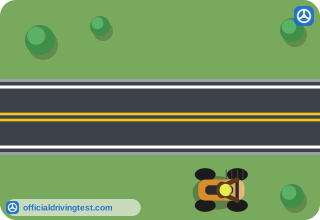
At what angle must an off-highway vehicle cross a street or highway?
- At a 45-degree angle to the direction of traffic
- Approximately 90 degrees to the direction of the highway
- At whatever angle is quickest
- At a shallow angle so it crosses as quickly as possible
Show answer
Correct answer: Approximately 90 degrees to the direction of the highway
An off-highway vehicle must cross at an angle of approximately 90 degrees to the direction of the highway.
Source: North Dakota Noncommercial Driver License Manual (2025-2027), page 39 · Open this page in the manual (Manual page 39)
-
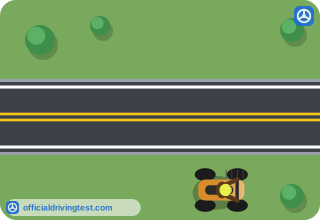
What must an off-highway vehicle operator do before crossing the shoulder or main-traveled roadway?
- Slow to a walking speed
- Honk the horn twice
- Come to a complete stop
- Turn on the headlight
Show answer
Correct answer: Come to a complete stop
The operator must come to a complete stop before crossing the shoulder or main-traveled roadway and yield to all roadway traffic.
Source: North Dakota Noncommercial Driver License Manual (2025-2027), page 39 · Open this page in the manual (Manual page 39)
-
Where may an off-highway vehicle cross a divided highway?
- Only at an intersection of the highway with another street or highway
- At any place along the highway where the operator has a clear view
- At any gap in the median between the two roadways
- Only where a flagger directs the operator across the road
Show answer
Correct answer: Only at an intersection of the highway with another street or highway
When crossing a divided highway, an off-highway vehicle may cross only at an intersection of the highway with another street or highway.
Source: North Dakota Noncommercial Driver License Manual (2025-2027), page 39 · Open this page in the manual (Manual page 39)
-
What is true about operating an off-highway vehicle within the right of way of a controlled-access highway?
- It is not allowed except in emergencies
- It is allowed if the vehicle is registered
- It is allowed if the operator is over 16 years of age
- It is allowed only between sunrise and sunset
Show answer
Correct answer: It is not allowed except in emergencies
Except in emergencies, you may not operate within the right of way of any controlled-access highway.
Source: North Dakota Noncommercial Driver License Manual (2025-2027), page 39 · Open this page in the manual (Manual page 39)
-
Who may operate an off-highway vehicle on the bottom, back slope, inside slope, and shoulder of a highway other than a controlled-access highway?
- A person delivering supplies for a private landowner along the road
- Anyone under 18 wearing a safety helmet
- A person performing pest control or survey work for a political subdivision
- Any person with an off-highway vehicle safety certificate
Show answer
Correct answer: A person performing pest control or survey work for a political subdivision
A person performing pest control or survey work for a political subdivision may operate there.
Source: North Dakota Noncommercial Driver License Manual (2025-2027), page 39 · Open this page in the manual (Manual page 39)
-
A licensed driver may operate a registered off-highway vehicle on which type of roadway?
- An Interstate highway or any controlled-access highway
- A gravel, dirt, or loose surface roadway
- A paved highway posted at 70 miles per hour
- A divided highway posted at 75 miles per hour
Show answer
Correct answer: A gravel, dirt, or loose surface roadway
A licensed driver may operate a registered off-highway vehicle on a gravel, dirt, or loose surface roadway.
Source: North Dakota Noncommercial Driver License Manual (2025-2027), page 39 · Open this page in the manual (Manual page 39)
-
What is the highest posted speed of a paved highway on which a licensed driver may operate a registered off-highway vehicle?
- 35 mph
- 40 mph
- 45 mph
- 55 mph
Show answer
Correct answer: 55 mph
A registered off-highway vehicle may be operated by a licensed driver on a paved highway designated and posted at a speed not exceeding 55 mph.
Source: North Dakota Noncommercial Driver License Manual (2025-2027), page 39 · Open this page in the manual (Manual page 39)
-
What is the highest posted speed of a paved highway on which a licensed driver over 16 may operate a registered class III off-highway vehicle?
- 45 mph
- 70 mph
- 75 mph
- 65 mph
Show answer
Correct answer: 65 mph
A licensed driver over 16 may operate a registered class III off-highway vehicle on a paved highway designated and posted at a speed not exceeding 65 mph.
Source: North Dakota Noncommercial Driver License Manual (2025-2027), page 39 · Open this page in the manual (Manual page 39)
-
In order to operate a snowmobile on a highway right of way, what must you have in your possession?
- A snowmobile registration decal only
- A valid driver’s license or a snowmobile safety certificate
- A written permit from the highway department for each trip
- Proof of snowmobile insurance
Show answer
Correct answer: A valid driver’s license or a snowmobile safety certificate
You must have a valid driver’s license or a snowmobile safety certificate issued by the North Dakota Parks and Recreation Department.
Source: North Dakota Noncommercial Driver License Manual (2025-2027), page 39 · Open this page in the manual (Manual page 39)
-
Which of these must a snowmobile have?
- A horn
- A turn signal
- Brakes
- A rearview mirror
Show answer
Correct answer: Brakes
A snowmobile must have a headlight, a taillight, brakes, and a leakproof exhaust system that includes a muffler.
Source: North Dakota Noncommercial Driver License Manual (2025-2027), page 39 · Open this page in the manual (Manual page 39)
-
What kind of exhaust system must a snowmobile have?
- A leakproof exhaust system that includes a muffler
- A straight-pipe exhaust system with no muffler
- A sealed exhaust system with a spark arrester
- An exhaust system open to the engine
Show answer
Correct answer: A leakproof exhaust system that includes a muffler
A snowmobile must have a leakproof exhaust system which includes a muffler.
Source: North Dakota Noncommercial Driver License Manual (2025-2027), page 39 · Open this page in the manual (Manual page 39)
-
Persons under what age must wear a safety helmet that meets United States Department of Transportation standards when operating a snowmobile?
- 18
- 14
- 16
- 21
Show answer
Correct answer: 18
Persons under the age of 18 must wear a safety helmet that meets United States Department of Transportation standards.
Source: North Dakota Noncommercial Driver License Manual (2025-2027), page 39 · Open this page in the manual (Manual page 39)
-
Where may a snowmobile never be operated?
- Across a roadway at a right angle after stopping
- On private land with permission
- On the roadway, shoulder, or inside bank of any road
- At an intersection when crossing a divided highway
Show answer
Correct answer: On the roadway, shoulder, or inside bank of any road
Never operate a snowmobile on the roadway, shoulder, or inside bank of any road in North Dakota.
Source: North Dakota Noncommercial Driver License Manual (2025-2027), page 39 · Open this page in the manual (Manual page 39)
-
The right of way of an Interstate highway, where a snowmobile may never be operated, includes which of these?
- Only the driving portion of the road and the shoulders
- The driving portion, the median, the shoulders, and the ditches
- Only the driving lanes and the median
- Only the paved lanes and the outside ditches
Show answer
Correct answer: The driving portion, the median, the shoulders, and the ditches
The right of way includes the driving portion of the road, the median, the shoulders, and the ditches on either side.
Source: North Dakota Noncommercial Driver License Manual (2025-2027), page 39 · Open this page in the manual (Manual page 39)
-
A snowmobile operated in a ditch alongside the roadway must move in which direction?
- Facing oncoming roadway traffic
- Whichever direction is quicker
- Away from the road
- The same direction as roadway traffic
Show answer
Correct answer: The same direction as roadway traffic
If you operate in any ditch alongside the roadway, move in the same direction as roadway traffic.
Source: North Dakota Noncommercial Driver License Manual (2025-2027), page 39 · Open this page in the manual (Manual page 39)
-
During what period must you never operate a snowmobile on any right of way?
- From March 1 to October 1
- From May 1 to December 1
- From June 1 to September 1
- From April 1 to November 1
Show answer
Correct answer: From April 1 to November 1
Never operate on any right of way from April 1 to November 1 of any year.
Source: North Dakota Noncommercial Driver License Manual (2025-2027), page 39 · Open this page in the manual (Manual page 39)
-
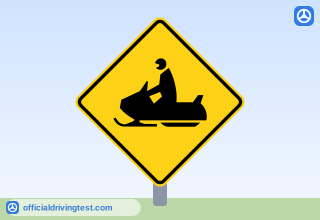
What must a snowmobile operator do before reaching the shoulder of a road they must cross?
- Slow to a walking speed
- Come to a complete stop
- Honk the horn
- Turn off the headlight
Show answer
Correct answer: Come to a complete stop
If you must cross a roadway, yield to all roadway traffic and come to a complete stop before reaching the shoulder of the road.
Source: North Dakota Noncommercial Driver License Manual (2025-2027), page 39 · Open this page in the manual (Manual page 39)
-
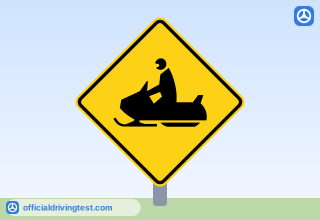
When it is clear, how should a snowmobile proceed across a road?
- At a 45-degree angle to the road
- Diagonally with the flow of traffic
- At right angles to the road
- Parallel to the road
Show answer
Correct answer: At right angles to the road
A snowmobile should proceed at right angles to the road when it is clear.
Source: North Dakota Noncommercial Driver License Manual (2025-2027), page 39 · Open this page in the manual (Manual page 39)
-
Where may a snowmobile cross a divided highway?
- Only at intersections
- At any gap in the median
- Anywhere that is clear of traffic
- At any place with a clear view
Show answer
Correct answer: Only at intersections
On a divided highway, a snowmobile may cross only at intersections.
Source: North Dakota Noncommercial Driver License Manual (2025-2027), page 39 · Open this page in the manual (Manual page 39)
-
When should a snowmobile operator use headlights and taillights?
- When required for the safety of yourself and others
- Only when another snowmobile is within sight
- Only when crossing a road after sunset
- Only when it is snowing or foggy
Show answer
Correct answer: When required for the safety of yourself and others
You should use your headlights and taillights when required for your safety and that of others.
Source: North Dakota Noncommercial Driver License Manual (2025-2027), page 39 · Open this page in the manual (Manual page 39)
-
What does the manual say about operating a snowmobile while under the influence of alcohol or drugs?
- It is allowed after one drink
- It is allowed on private land
- Never operate it
- It is allowed in a ditch
Show answer
Correct answer: Never operate it
Never operate a snowmobile while under the influence of alcohol or drugs.
Source: North Dakota Noncommercial Driver License Manual (2025-2027), page 39 · Open this page in the manual (Manual page 39)
-
If you harass animals with your snowmobile, what does the manual say about damages?
- The animal’s owner is liable
- You are liable for damages
- The state pays for damages
- No one is liable for damages
Show answer
Correct answer: You are liable for damages
Do not harass any animals with your snowmobile; you are liable for damages.
Source: North Dakota Noncommercial Driver License Manual (2025-2027), page 39 · Open this page in the manual (Manual page 39)
-
What do you need before you operate a snowmobile on private land?
- A highway use permit
- A second safety certificate
- A local registration decal
- Permission
Show answer
Correct answer: Permission
Do not operate a snowmobile on private land without permission.
Source: North Dakota Noncommercial Driver License Manual (2025-2027), page 39 · Open this page in the manual (Manual page 39)
-
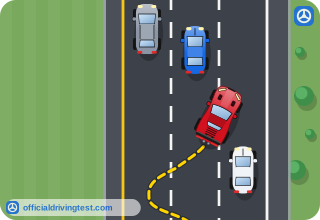
According to the manual, aggressive driving can easily escalate into what?
- Road fatigue
- Road rage
- Hydroplaning
- Tunnel vision
Show answer
Correct answer: Road rage
The manual warns that aggressive driving can easily escalate into road rage.
Source: North Dakota Noncommercial Driver License Manual (2025-2027), page 43 · Open this page in the manual (Manual page 43)
-
Which behavior does the manual say shows that problem driving is related to aggression rather than inexperience?
- Slowing down to let a faster vehicle pass
- Braking gently for a yellow light
- Signaling before every lane change
- Constant rushing and lane jumping
Show answer
Correct answer: Constant rushing and lane jumping
Constant rushing, lane jumping and the need to get ahead are listed as signs of aggression rather than inexperience.
Source: North Dakota Noncommercial Driver License Manual (2025-2027), page 43 · Open this page in the manual (Manual page 43)
-
Which behavior is listed as a sign of aggressive driving?
- Moving over to let others pass
- Maintaining a steady speed in your lane
- Preventing another driver from passing
- Leaving extra space for merging vehicles
Show answer
Correct answer: Preventing another driver from passing
Denying entry into your lane or preventing passing is listed among the signs of aggression.
Source: North Dakota Noncommercial Driver License Manual (2025-2027), page 43 · Open this page in the manual (Manual page 43)
-
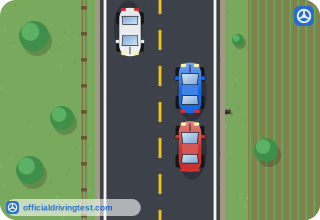
What should you do first when confronted by an aggressive driver?
- Make every attempt to get out of their way
- Speed up to stay ahead of them on the road
- Hold your own and stay in your travel lane
- Brake hard so that they back off quickly
Show answer
Correct answer: Make every attempt to get out of their way
The manual says first and foremost to make every attempt to get out of the aggressive driver's way.
Source: North Dakota Noncommercial Driver License Manual (2025-2027), page 43 · Open this page in the manual (Manual page 43)
-
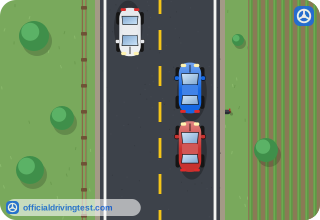
What does the manual say NOT to do when confronted by an aggressive driver?
- Avoid eye contact with the driver
- Wear your seat belt
- Ignore their rude gestures
- Challenge them by speeding up
Show answer
Correct answer: Challenge them by speeding up
The manual says not to challenge an aggressive driver by speeding up or trying to hold your own in your travel lane.
Source: North Dakota Noncommercial Driver License Manual (2025-2027), page 43 · Open this page in the manual (Manual page 43)
-
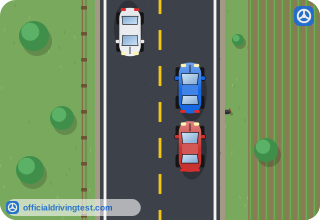
How should you respond to the gestures of an aggressive driver?
- Return them so the driver backs off
- Ignore them and refuse to return them
- Roll down the window and respond
- Flash your headlights at the driver
Show answer
Correct answer: Ignore them and refuse to return them
The manual says to ignore gestures and refuse to return them.
Source: North Dakota Noncommercial Driver License Manual (2025-2027), page 43 · Open this page in the manual (Manual page 43)
-
Why does the manual tell you to wear your seat belt when confronted by an aggressive driver?
- It signals to the other driver that you are calm
- It keeps you behind the wheel during an abrupt maneuver
- It lets you drive faster safely
- It allows you to stop watching your mirrors
Show answer
Correct answer: It keeps you behind the wheel during an abrupt maneuver
The seat belt holds you in your seat and behind the wheel if you need to make an abrupt driving maneuver, and it protects you in a crash.
Source: North Dakota Noncommercial Driver License Manual (2025-2027), page 43 · Open this page in the manual (Manual page 43)
-
Which details should you give when reporting an aggressive driver to the authorities?
- The driver's name, age, and home address
- The vehicle's owner and insurance company
- A photo of the driver and a phone number
- Vehicle description, license number, and location
Show answer
Correct answer: Vehicle description, license number, and location
The manual says to report aggressive drivers with a vehicle description, license number, location and, if possible, direction of travel.
Source: North Dakota Noncommercial Driver License Manual (2025-2027), page 43 · Open this page in the manual (Manual page 43)
-
If you have a cell phone and can do it safely, what does the manual say to do about an aggressive driver?
- Call 911
- Text the license number to a friend
- Call the driver's insurance company
- Post a description online
Show answer
Correct answer: Call 911
The manual says that if you have a cell phone and can do it safely, you should call 911.
Source: North Dakota Noncommercial Driver License Manual (2025-2027), page 43 · Open this page in the manual (Manual page 43)