New Hampshire: Pedestrians Practice Test
Yielding to pedestrians at crosswalks and in school zones, what the law asks of pedestrians, and blind pedestrians with a white cane or guide dog.
Independent educational site · not affiliated with any government agency or DMV
Ready? Test yourself
- Instant feedback with an explanation
- Every answer cites its source in the manual
- Your best score is saved on this device
- Keyboard: press 1 to 4 to answer and Enter for the next question
Questions are original and based on the official manual "New Hampshire Driver’s Manual" (DSMV 360 (Rev. 11/25)), New Hampshire Division of Motor Vehicles (DMV).
All 15 questions in this practice test
Take the test above first, then use this list to study. Tap “Show answer” to see the correct answer and explanation.
Show the questions and answersHide the questions
-
When are drivers required to yield to pedestrians crossing the road?
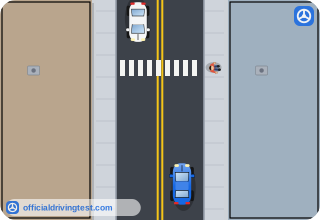
- Only in marked crosswalks
- In marked crosswalks and also at intersections with no lines
- Only at intersections that have traffic signals
- Only when the pedestrian signals to the driver first
Show answer
Correct answer: In marked crosswalks and also at intersections with no lines
Drivers are required to yield to pedestrians in marked crosswalks or at intersections even if no crosswalk lines exist at the intersection.
Source: New Hampshire Driver’s Manual (DSMV 360 (Rev. 11/25)), page 23 · Open this page in the manual (Manual page 23)
-
What should drivers provide for pedestrians in crosswalks?
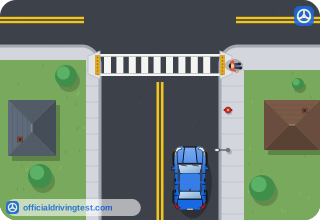
- A short tap on the horn
- Adequate stopping space
- A flash of the headlights
- A signal from the turn signal
Show answer
Correct answer: Adequate stopping space
Drivers should provide adequate stopping space for pedestrians in crosswalks, and space around the vehicle for bicyclists, children, joggers and pedestrians along the road.
Source: New Hampshire Driver’s Manual (DSMV 360 (Rev. 11/25)), page 31 · Open this page in the manual (Manual page 31)
-
What kind of white cane marks a visually impaired pedestrian who has the right of way while crossing the street?
- A white cane with a red tip
- A white cane with a green tip
- A white cane with a yellow tip
- A white cane with a blue tip
Show answer
Correct answer: A white cane with a red tip
Pedestrians have the right of way when visually impaired and crossing the street guided by a service animal or carrying a white cane with a red tip.
Source: New Hampshire Driver’s Manual (DSMV 360 (Rev. 11/25)), page 36 · Open this page in the manual (Manual page 36)
-
Which of these is named as an area where drivers must use extreme care to avoid colliding with a pedestrian?
- Car washes
- Toll booths
- Playgrounds
- Gas stations
Show answer
Correct answer: Playgrounds
The manual says drivers must use extreme care to avoid colliding with a pedestrian, especially in school zones, bus stops, playgrounds and parks.
Source: New Hampshire Driver’s Manual (DSMV 360 (Rev. 11/25)), page 36 · Open this page in the manual (Manual page 36)
-
How often should drivers be prepared to yield to pedestrians?
- Only at night
- At all times
- Only in school zones
- Only at bus stops
Show answer
Correct answer: At all times
Pedestrians are difficult to see and their intentions are hard to determine, so drivers should be prepared to yield to pedestrians at all times.
Source: New Hampshire Driver’s Manual (DSMV 360 (Rev. 11/25)), page 36 · Open this page in the manual (Manual page 36)
-
On a road with no sidewalk, which side of the roadway must a pedestrian walk on?
- The right side, with traffic behind
- The center of the nearest lane
- Either side, in the direction of traffic
- The left side, facing oncoming traffic
Show answer
Correct answer: The left side, facing oncoming traffic
Pedestrians must walk on the left side of the roadway facing oncoming traffic when there is no sidewalk.
Source: New Hampshire Driver’s Manual (DSMV 360 (Rev. 11/25)), page 36 · Open this page in the manual (Manual page 36)
-
What must pedestrians do when walking at night?
- Wear light colored clothing or carry a light
- Wear dark clothing and stay at the road edge
- Walk only on the right side of the roadway
- Carry a whistle and wave at oncoming traffic
Show answer
Correct answer: Wear light colored clothing or carry a light
The manual says pedestrians must always wear white or light colored clothing or carry a light when walking at night.
Source: New Hampshire Driver’s Manual (DSMV 360 (Rev. 11/25)), page 36 · Open this page in the manual (Manual page 36)
-
Where must pedestrians never walk?
- On the left side of a road with no sidewalk
- In a crosswalk at an intersection
- On interstate or limited access highways
- On a sidewalk beside a road
Show answer
Correct answer: On interstate or limited access highways
Pedestrians must never walk on interstate or limited access highways.
Source: New Hampshire Driver’s Manual (DSMV 360 (Rev. 11/25)), page 36 · Open this page in the manual (Manual page 36)
-
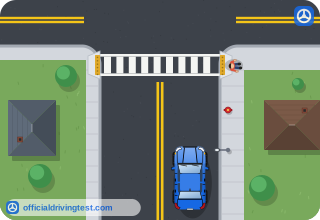
What must a pedestrian do before crossing any roadway?
- Wait for a driver to wave them across
- Look in both directions
- Sound a horn to signal approaching traffic
- Look only toward oncoming traffic
Show answer
Correct answer: Look in both directions
Pedestrians must look in both directions before crossing any roadway.
Source: New Hampshire Driver’s Manual (DSMV 360 (Rev. 11/25)), page 36 · Open this page in the manual (Manual page 36)
-
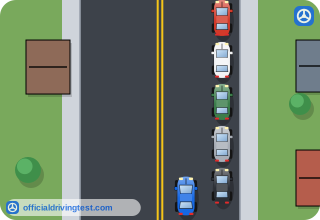
Why should drivers use caution when driving next to parked or stopped vehicles?
- The vehicles may pull out without signaling
- Parked vehicles block the view of traffic signs
- Drivers must slow to the school zone speed limit
- Pedestrians can walk out between the vehicles
Show answer
Correct answer: Pedestrians can walk out between the vehicles
The manual tells drivers to use caution next to parked or stopped vehicles because pedestrians can walk out between them.
Source: New Hampshire Driver’s Manual (DSMV 360 (Rev. 11/25)), page 36 · Open this page in the manual (Manual page 36)
-
What should a driver always do before backing up?
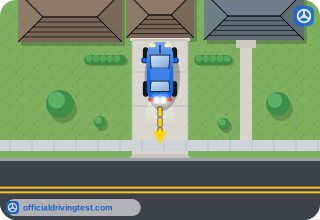
- Check for pedestrians
- Sound the horn twice
- Turn on the hazard flashers
- Wait for a passenger to get out
Show answer
Correct answer: Check for pedestrians
Drivers should always check for pedestrians before backing, especially in parking lots or places where there are many pedestrians.
Source: New Hampshire Driver’s Manual (DSMV 360 (Rev. 11/25)), page 36 · Open this page in the manual (Manual page 36)
-
What must drivers obey when approaching a school zone with flashing lights or children present?
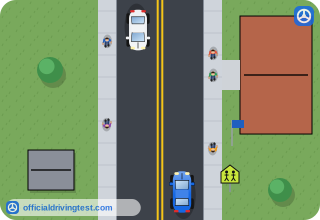
- The posted speed limit of the nearest highway
- A speed of 25 mph
- The school zone speed limit
- The speed of the vehicle ahead
Show answer
Correct answer: The school zone speed limit
Drivers approaching a school zone when lights are flashing or children are present must obey the school zone speed limit.
Source: New Hampshire Driver’s Manual (DSMV 360 (Rev. 11/25)), page 36 · Open this page in the manual (Manual page 36)
-
What should a driver do at a school crossing with a crossing guard who signals the driver to stop?
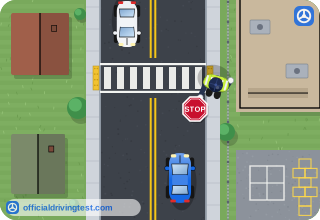
- Slow down and sound the horn
- Stop and yield
- Proceed if no children are in the crosswalk
- Slow down and drive around the guard
Show answer
Correct answer: Stop and yield
At a school crossing with a crossing guard, drivers should stop and yield if they are signaled to do so.
Source: New Hampshire Driver’s Manual (DSMV 360 (Rev. 11/25)), page 36 · Open this page in the manual (Manual page 36)
-
What does New Hampshire law require of drivers when a person carrying a white cane or using a harnessed guide dog is attempting to cross a roadway?
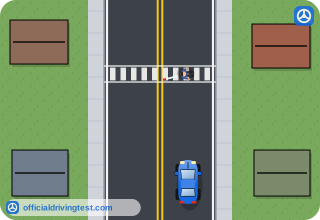
- Slow down and sound the horn
- Slow down and steer around the person
- Stop only if the person is in a marked crosswalk
- Come to a complete stop
Show answer
Correct answer: Come to a complete stop
New Hampshire law requires drivers to come to a complete stop whenever a person carrying a white cane or using a harnessed guide dog is attempting to cross a roadway.
Source: New Hampshire Driver’s Manual (DSMV 360 (Rev. 11/25)), page 36 · Open this page in the manual (Manual page 36)
-
What should a driver never do when a visually impaired person is crossing the road?
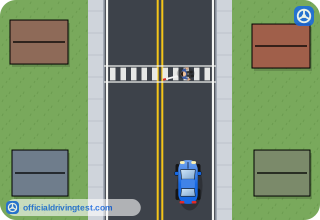
- Honk the horn or yell at the person
- Come to a complete stop
- Use extra caution when proceeding
- Allow the person time to cross
Show answer
Correct answer: Honk the horn or yell at the person
Drivers must come to a complete stop, use extra caution, and should never honk the horn or yell at a person who is visually impaired.
Source: New Hampshire Driver’s Manual (DSMV 360 (Rev. 11/25)), page 36 · Open this page in the manual (Manual page 36)