New Hampshire: Parking rules — Part 1 Practice Test
Questions in this part include: “Who is responsible for making sure a parked vehicle is not causing a driving hazard?” · “What is an access aisle next to an accessible parking space?”
Independent educational site · not affiliated with any government agency or DMV
Ready? Test yourself
- Instant feedback with an explanation
- Every answer cites its source in the manual
- Your best score is saved on this device
- Keyboard: press 1 to 4 to answer and Enter for the next question
Questions are original and based on the official manual "New Hampshire Driver’s Manual" (DSMV 360 (Rev. 11/25)), New Hampshire Division of Motor Vehicles (DMV).
All 21 questions in this practice test
Take the test above first, then use this list to study. Tap “Show answer” to see the correct answer and explanation.
Show the questions and answersHide the questions
-
Who is responsible for making sure a parked vehicle is not causing a driving hazard?
- The local police
- The driver
- The road owner
- The state
Show answer
Correct answer: The driver
Drivers are responsible for making sure that their vehicle is not causing a driving hazard when it is parked.
Source: New Hampshire Driver’s Manual (DSMV 360 (Rev. 11/25)), page 27 · Open this page in the manual (Manual page 27)
-
Where must a vehicle parked along a rural highway be placed?
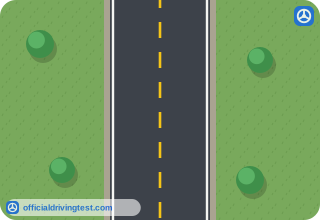
- Off the paved or main travelled portion of the road
- On the right edge of the travelled lane with flashers on
- On the paved part of the road if the driver stays inside
- Anywhere that the vehicle can be seen from the road
Show answer
Correct answer: Off the paved or main travelled portion of the road
Any vehicle parked along a rural highway must be moved off the paved or main travelled portion of the road.
Source: New Hampshire Driver’s Manual (DSMV 360 (Rev. 11/25)), page 27 · Open this page in the manual (Manual page 27)
-
If a driver cannot pull completely off the road, the vehicle may be left as far off as possible if there is a clear view for how far in each direction?
- 100 feet
- 150 feet
- 200 feet
- 500 feet
Show answer
Correct answer: 200 feet
If it is impossible to pull completely off the road, drivers should pull off as much as they can as long as there is a clear view for 200 feet in each direction and enough space for other vehicles to pass.
Source: New Hampshire Driver’s Manual (DSMV 360 (Rev. 11/25)), page 27 · Open this page in the manual (Manual page 27)
-
What may happen to a vehicle abandoned along the roadway even if it is well off the travelled portion?
- It is exempt from towing if it is off the pavement
- The police often tow it
- It is left alone for at least 24 hours
- The driver gets a written warning before any towing
Show answer
Correct answer: The police often tow it
The police often tow vehicles abandoned along the roadway even if the vehicle is well off the travelled portion.
Source: New Hampshire Driver’s Manual (DSMV 360 (Rev. 11/25)), page 27 · Open this page in the manual (Manual page 27)
-
If a driver must leave a vehicle for several hours, what should the driver leave on the windshield?
- A note with the vehicle registration and the name of a nearby garage
- A copy of the driver's license and the insurance card
- A note asking other drivers to help move the vehicle
- A note on the problem, when the vehicle will be moved and how to reach the driver
Show answer
Correct answer: A note on the problem, when the vehicle will be moved and how to reach the driver
The driver should leave a note on the windshield advising the police of the problem, an anticipated time the vehicle will be moved, and how to get in touch with the driver or owner.
Source: New Hampshire Driver’s Manual (DSMV 360 (Rev. 11/25)), page 27 · Open this page in the manual (Manual page 27)
-
When parking along the roadway, where should drivers park their vehicle?
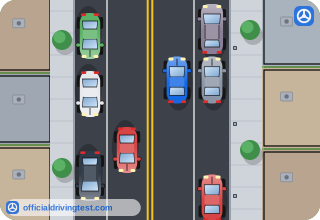
- As close to the center line as safely possible
- Partly in the travel lane with flashers on
- As far away from the flow of traffic as possible
- At an angle to the curb so it is easy to see
Show answer
Correct answer: As far away from the flow of traffic as possible
When parking along the roadway drivers should park as far away from the flow of traffic as possible.
Source: New Hampshire Driver’s Manual (DSMV 360 (Rev. 11/25)), page 28 · Open this page in the manual (Manual page 28)
-
If parking near a curb, how close to the curb should a driver park?
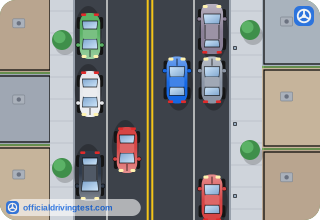
- As close as possible
- About one foot away
- Far enough to open the door
- About three feet away
Show answer
Correct answer: As close as possible
When parking near a curb a driver should park as close to it as possible.
Source: New Hampshire Driver’s Manual (DSMV 360 (Rev. 11/25)), page 28 · Open this page in the manual (Manual page 28)
-
What does the law require drivers to do when leaving a vehicle unattended?
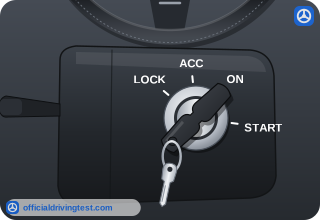
- Turn off the engine and leave the key under the seat
- Leave the engine running if the doors are locked
- Turn off the engine and turn on the parking lights
- Turn off the engine and remove the key
Show answer
Correct answer: Turn off the engine and remove the key
The law requires drivers to turn off the engine and remove the key when leaving a vehicle unattended.
Source: New Hampshire Driver’s Manual (DSMV 360 (Rev. 11/25)), page 28 · Open this page in the manual (Manual page 28)
-
What should drivers do whenever the vehicle is being parked?
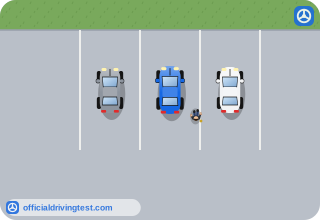
- Leave a window open
- Lock the vehicle
- Leave the key in the ignition
- Turn on the hazard lights
Show answer
Correct answer: Lock the vehicle
Drivers should also lock the vehicle whenever it is being parked.
Source: New Hampshire Driver’s Manual (DSMV 360 (Rev. 11/25)), page 28 · Open this page in the manual (Manual page 28)
-
A driver is parking a vehicle with an automatic transmission. How should the driver make sure it cannot move?
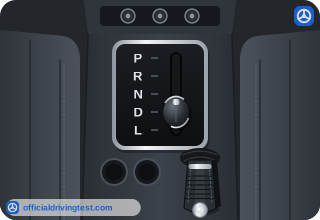
- Place the vehicle in park
- Leave it in neutral gear
- Leave it in reverse
- Leave it in drive
Show answer
Correct answer: Place the vehicle in park
Drivers should place the vehicle in “park” if it has an automatic transmission.
Source: New Hampshire Driver’s Manual (DSMV 360 (Rev. 11/25)), page 28 · Open this page in the manual (Manual page 28)
-
A driver is parking a vehicle with a manual transmission. How should the driver leave it?
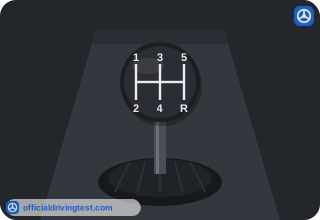
- In neutral
- In park
- In gear
- In neutral with the engine running
Show answer
Correct answer: In gear
Drivers should leave a vehicle with a manual transmission in gear.
Source: New Hampshire Driver’s Manual (DSMV 360 (Rev. 11/25)), page 28 · Open this page in the manual (Manual page 28)
-
What should a driver do with the wheels and the parking brake when parking on a hill?
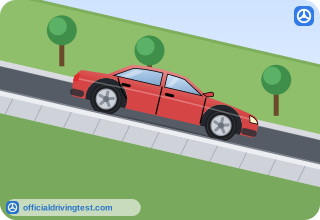
- Release the parking brake and keep the wheels straight
- Set the parking brake and turn the wheels into the curb
- Set the parking brake and turn the wheels away from the curb
- Keep the wheels straight and leave the vehicle in neutral
Show answer
Correct answer: Set the parking brake and turn the wheels into the curb
On a hill drivers should set the parking brake and turn the wheels into the curb.
Source: New Hampshire Driver’s Manual (DSMV 360 (Rev. 11/25)), page 28 · Open this page in the manual (Manual page 28)
-
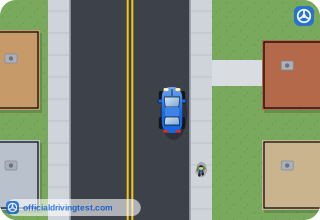
Which of these should drivers never do when parked?
- Lock the vehicle
- Set the parking brake
- Park as close to the curb as possible
- Open a door into traffic
Show answer
Correct answer: Open a door into traffic
The manual says drivers should never open a door into traffic.
Source: New Hampshire Driver’s Manual (DSMV 360 (Rev. 11/25)), page 28 · Open this page in the manual (Manual page 28)
-
What should drivers check for to learn where parking is prohibited or limited?
- Reflective posts along the shoulder
- Traffic cones at each space
- Signs or painted curbs
- Changes in the pavement texture
Show answer
Correct answer: Signs or painted curbs
Drivers should check for signs or painted curbs that may prohibit or limit parking.
Source: New Hampshire Driver’s Manual (DSMV 360 (Rev. 11/25)), page 28 · Open this page in the manual (Manual page 28)
-
What is the result of a conviction for parking in a space reserved for individuals with walking disabilities?
- A fine
- Automatic license suspension
- A warning with no fine
- Mandatory community service
Show answer
Correct answer: A fine
Parking in a space reserved for individuals with walking disabilities is against the law, and a conviction carries a fine.
Source: New Hampshire Driver’s Manual (DSMV 360 (Rev. 11/25)), page 28 · Open this page in the manual (Manual page 28)
-
What is an access aisle next to an accessible parking space?
- A lane leading into the parking lot for ambulances
- A walkway across the parking lot to the entrance
- A reserved space for a second vehicle of the same person
- The crosshatched area parallel and adjacent to the accessible space
Show answer
Correct answer: The crosshatched area parallel and adjacent to the accessible space
Access aisles are the crosshatched area parallel and adjacent to the accessible parking space.
Source: New Hampshire Driver’s Manual (DSMV 360 (Rev. 11/25)), page 28 · Open this page in the manual (Manual page 28)
-
How is an access aisle marked?
- With solid blue lines around the space
- With yellow or white diagonally striped lines
- With red and white vertical stripes
- With a green and white checkerboard
Show answer
Correct answer: With yellow or white diagonally striped lines
The access aisle is marked with yellow or white diagonally striped lines.
Source: New Hampshire Driver’s Manual (DSMV 360 (Rev. 11/25)), page 28 · Open this page in the manual (Manual page 28)
-
Why is the access aisle needed?
- So people with walking disabilities can open the door and move safely
- So large vehicles have extra room to turn around in the lot
- So emergency vehicles have a place to wait for patients
- So other drivers can back out of the adjacent spaces easily
Show answer
Correct answer: So people with walking disabilities can open the door and move safely
The access aisle is the space individuals with walking disabilities need to fully open the door to their vehicle and safely maneuver in and out of it.
Source: New Hampshire Driver’s Manual (DSMV 360 (Rev. 11/25)), page 28 · Open this page in the manual (Manual page 28)
-
How wide can the access aisle be that a van with a lift or ramp requires?
- Up to 4 feet wide
- Up to 6 feet wide
- Up to 8 feet wide
- Up to 12 feet wide
Show answer
Correct answer: Up to 8 feet wide
Exiting or entering a van with a lift or ramp requires the entire access aisle space, which can be up to 8 feet wide.
Source: New Hampshire Driver’s Manual (DSMV 360 (Rev. 11/25)), page 28 · Open this page in the manual (Manual page 28)
-
What happens to the fine for each subsequent offense of parking in an access aisle?
- It stays the same as the first offense
- It increases
- It is waived after the first offense
- It is replaced by a license suspension
Show answer
Correct answer: It increases
There is a fine for the first offense and an increased fine for each subsequent offense of parking in an access aisle.
Source: New Hampshire Driver’s Manual (DSMV 360 (Rev. 11/25)), page 28 · Open this page in the manual (Manual page 28)
-
Whom should a person contact immediately if a vehicle parked in an access aisle prevents safe entry or exit of their vehicle?
- The Division of Motor Vehicles
- The Department of Transportation
- The owner of the nearest business
- The local police department
Show answer
Correct answer: The local police department
A person who cannot exit or enter their vehicle safely because of a vehicle in the access aisle should contact the local police department immediately.
Source: New Hampshire Driver’s Manual (DSMV 360 (Rev. 11/25)), page 28 · Open this page in the manual (Manual page 28)