New Hampshire: Emergency vehicles and work zones
Yielding to emergency vehicles, fire trucks, the move-over law, police traffic stops and driving through work zones. Split into 2 shorter tests so you're not stuck in one long quiz.
Independent educational site · not affiliated with any government agency or DMV
Choose a part
Emergency vehicles and work zones — Part 1
Questions in this part include: “What color are work zone signs generally, and what color are their letters or symbols?”
StartEmergency vehicles and work zones — Part 2
Questions in this part include: “Under the highway emergency law, a wide berth is given to vehicles displaying which colors of emergency warning lights?”
StartAll 39 Emergency vehicles and work zones questions with answers
Choose a part above to take a practice test, or study every question and answer here.
Show the questions and answersHide the questions
-
An emergency vehicle approaches from any direction with its siren sounding or flashing lights operating. What should a driver do?
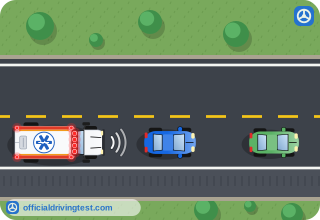
- Drive immediately to the right side of the road and stop until the emergency has passed
- Drive to the left side of the road and slow down until the emergency has passed
- Keep moving in the lane at the same speed so traffic does not back up
- Stop in the middle of the nearest intersection until the emergency has passed
Show answer
Correct answer: Drive immediately to the right side of the road and stop until the emergency has passed
Right-of-way must be given to emergency vehicles from any direction when they are sounding a siren or operating flashing lights. Drivers should drive immediately to the right side of the road and stop until the emergency has passed.
Source: New Hampshire Driver’s Manual (DSMV 360 (Rev. 11/25)), page 14 · Open this page in the manual (Manual page 14)
-
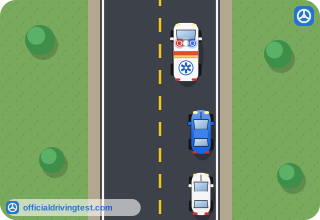
After an emergency vehicle has passed, what must a driver do before turning back into the roadway?
- Enter immediately to follow the emergency vehicle
- Wait for the next emergency vehicle to pass
- Use the turn signal and enter only when it is safe
- Turn on the hazard flashers and enter at once
Show answer
Correct answer: Use the turn signal and enter only when it is safe
Once the emergency vehicle has passed, drivers must use their signal and turn back into the roadway, only when it is safe to do so.
Source: New Hampshire Driver’s Manual (DSMV 360 (Rev. 11/25)), page 14 · Open this page in the manual (Manual page 14)
-
What color are work zone signs generally, and what color are their letters or symbols?
- Yellow with black letters or symbols
- Orange with black letters or symbols
- Orange with white letters or symbols
- Red with white letters or symbols
Show answer
Correct answer: Orange with black letters or symbols
Work zone signs are generally orange with black letters or symbols.
Source: New Hampshire Driver’s Manual (DSMV 360 (Rev. 11/25)), page 23 · Open this page in the manual (Manual page 23)
-
What shapes are work zone signs generally?
- Octagonal or round
- Pentagon or pennant
- Triangular or circular
- Diamond or rectangular
Show answer
Correct answer: Diamond or rectangular
Work zone signs are generally diamond or rectangular shaped.
Source: New Hampshire Driver’s Manual (DSMV 360 (Rev. 11/25)), page 23 · Open this page in the manual (Manual page 23)
-
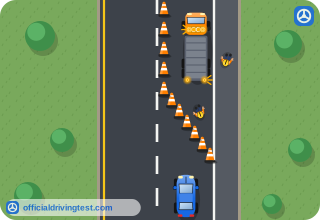
Which of these do work zone signs warn drivers about?
- Animals crossing the roadway ahead
- Stopped school buses along the road
- Flooded roads and intersections
- Poor or suddenly changing road surfaces
Show answer
Correct answer: Poor or suddenly changing road surfaces
Work zone warnings include workers ahead, reduced speed, detours, slow moving construction equipment and poor or suddenly changing road surfaces.
Source: New Hampshire Driver’s Manual (DSMV 360 (Rev. 11/25)), page 23 · Open this page in the manual (Manual page 23)
-
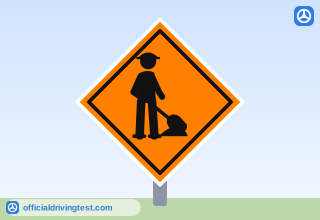
An orange diamond sign shows a black figure digging with a shovel. What does the manual call it?
- Flagger Ahead
- Workers Ahead
- Road Construction Ahead
- One Lane Road Ahead
Show answer
Correct answer: Workers Ahead
An orange diamond showing a figure with a shovel is the Workers Ahead sign.
Source: New Hampshire Driver’s Manual (DSMV 360 (Rev. 11/25)), page 23 · Open this page in the manual (Manual page 23)
-
An orange diamond sign shows a black human figure with an arm held out holding a flag. What does the manual call it?
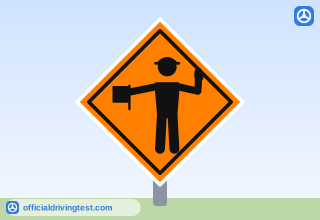
- Workers Ahead
- Detour
- Flagger Ahead
- One Lane Road Ahead
Show answer
Correct answer: Flagger Ahead
An orange diamond showing a figure with a flag is the Flagger Ahead sign.
Source: New Hampshire Driver’s Manual (DSMV 360 (Rev. 11/25)), page 23 · Open this page in the manual (Manual page 23)
-
What must drivers do when a person with a sign or flag controls traffic in a work zone?
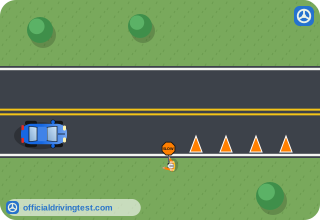
- Follow the instructions of that person
- Follow only the posted signs and ignore that person
- Treat the directions as advice that may be ignored
- Keep to the usual speed unless a vehicle is stopped
Show answer
Correct answer: Follow the instructions of that person
In work zones traffic may be controlled by a person with a sign or flag to tell drivers which direction to travel, to slow down or stop, and drivers must follow their instructions.
Source: New Hampshire Driver’s Manual (DSMV 360 (Rev. 11/25)), page 23 · Open this page in the manual (Manual page 23)
-
What are barriers such as drums, cones, and tubes (panels) used for in work zones?
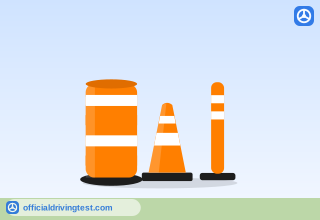
- To keep traffic out of hazardous work zones
- To mark where parking is allowed
- To show the speed limit in the work zone
- To warn drivers of a railroad crossing
Show answer
Correct answer: To keep traffic out of hazardous work zones
Barriers such as drums, cones, and tubes (panels) are used to keep traffic out of hazardous work zones.
Source: New Hampshire Driver’s Manual (DSMV 360 (Rev. 11/25)), page 23 · Open this page in the manual (Manual page 23)
-
What may be used in work zones to control traffic besides signs and flaggers?
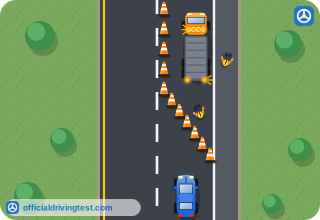
- Railroad crossing gates
- Permanent toll booths
- Temporary traffic signals
- Pedestrian crosswalk lights only
Show answer
Correct answer: Temporary traffic signals
Temporary traffic signals may be used in work zones.
Source: New Hampshire Driver’s Manual (DSMV 360 (Rev. 11/25)), page 23 · Open this page in the manual (Manual page 23)
-
What should drivers be prepared to do in work zones?
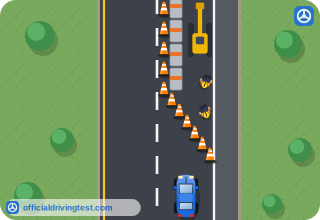
- Pass slow vehicles
- Stop suddenly
- Change lanes often
- Speed up to clear it
Show answer
Correct answer: Stop suddenly
Drivers should reduce speed in work zones and be prepared to stop suddenly.
Source: New Hampshire Driver’s Manual (DSMV 360 (Rev. 11/25)), page 23 · Open this page in the manual (Manual page 23)
-
What should drivers not do in work zones?
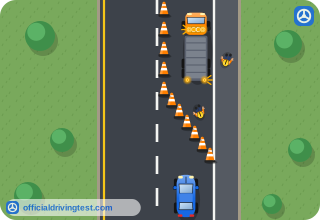
- Use headlights
- Slow down
- Obey flaggers
- Tailgate
Show answer
Correct answer: Tailgate
The manual says not to tailgate in work zones.
Source: New Hampshire Driver’s Manual (DSMV 360 (Rev. 11/25)), page 23 · Open this page in the manual (Manual page 23)
-
What may happen to fines in a work zone?
- They are always reduced for any speeding in a work zone
- They are tripled, and no sign warns of this ahead of time
- They stay the same as outside of a work zone
- They may be doubled, as marked before entering the work zone
Show answer
Correct answer: They may be doubled, as marked before entering the work zone
Fines may be doubled in a work zone, but this will be clearly marked before entering the work zone.
Source: New Hampshire Driver’s Manual (DSMV 360 (Rev. 11/25)), page 23 · Open this page in the manual (Manual page 23)
-
If emergency vehicles are approaching as a driver is about to reach a roundabout, what should the driver do?
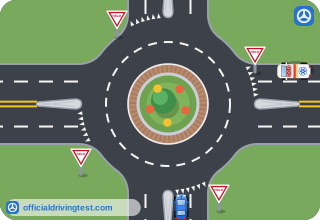
- Enter and stop in the center of the roundabout
- Enter quickly and pull over to the left inside
- Not enter the roundabout and pull over to the right
- Stop in the entrance lane and wait for a signal
Show answer
Correct answer: Not enter the roundabout and pull over to the right
Drivers should not enter a roundabout when emergency vehicles are approaching and should pull over to the right.
Source: New Hampshire Driver’s Manual (DSMV 360 (Rev. 11/25)), page 27 · Open this page in the manual (Manual page 27)
-
A driver is already inside a roundabout when emergency vehicles approach. What should the driver do?
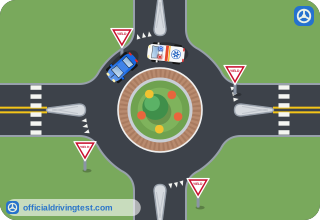
- Stop at once inside the roundabout
- Move through and exit, then pull over to the right
- Stay in the roundabout and circle until they pass
- Pull over to the left inside the roundabout
Show answer
Correct answer: Move through and exit, then pull over to the right
Drivers must never stop inside the roundabout; they should move through, exit, pull over to the right and let the emergency vehicles pass.
Source: New Hampshire Driver’s Manual (DSMV 360 (Rev. 11/25)), page 27 · Open this page in the manual (Manual page 27)
-
What should drivers avoid when stopping for an emergency vehicle?
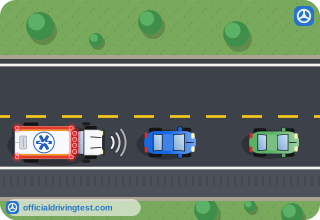
- Using the right shoulder
- Blocking an intersection
- Turning on the hazard flashers
- Stopping near a curb
Show answer
Correct answer: Blocking an intersection
Drivers should avoid blocking an intersection when stopping for an emergency vehicle.
Source: New Hampshire Driver’s Manual (DSMV 360 (Rev. 11/25)), page 40 · Open this page in the manual (Manual page 40)
-
How close may a driver follow a fire truck that is sounding a siren or operating flashing lights?
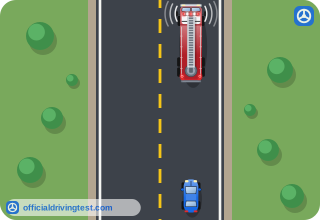
- No closer than 500 feet
- No closer than 100 feet
- No closer than 250 feet
- No closer than 1,000 feet
Show answer
Correct answer: No closer than 500 feet
Drivers must not follow a fire truck closer than 500 feet when it is sounding a siren or operating flashing lights.
Source: New Hampshire Driver’s Manual (DSMV 360 (Rev. 11/25)), page 40 · Open this page in the manual (Manual page 40)
-
Where must drivers not drive or park when a fire truck has stopped to answer a fire alarm?
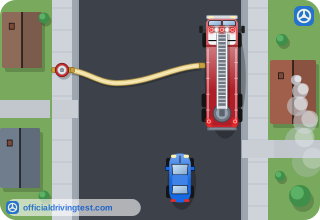
- Within 100 feet of the fire truck
- On the side of the road opposite the fire truck
- Within the block where the fire truck has stopped
- Within the next two intersections
Show answer
Correct answer: Within the block where the fire truck has stopped
Drivers must not drive or park a vehicle within the block where the fire truck has stopped to answer a fire alarm.
Source: New Hampshire Driver’s Manual (DSMV 360 (Rev. 11/25)), page 40 · Open this page in the manual (Manual page 40)
-
What does New Hampshire's "Sherrill's Law" (RSA 265:37-a) require drivers to do when approaching certain highway emergencies, if traffic conditions allow doing so safely?
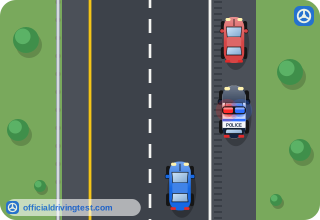
- Stop completely and wait until the situation is cleared
- Provide a wide space or change to a lane not adjacent
- Turn on hazard flashers and drive on the shoulder
- Follow the emergency vehicle closely
Show answer
Correct answer: Provide a wide space or change to a lane not adjacent
Sherrill's Law requires drivers to provide a wide space or change into a lane not adjacent to certain situations if traffic conditions allow doing so safely.
Source: New Hampshire Driver’s Manual (DSMV 360 (Rev. 11/25)), page 40 · Open this page in the manual (Manual page 40)
-
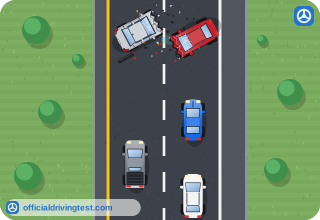
Under the highway emergency law, what must every driver other than the driver of an emergency response vehicle do when in or approaching an incident blocking a highway?
- Maintain normal speed in the left lane
- Stop and wait for a police officer to give instructions
- Sound the horn to warn others and pass the incident slowly
- Maintain a reduced speed and, if practical, give a wide berth
Show answer
Correct answer: Maintain a reduced speed and, if practical, give a wide berth
The law requires drivers to maintain a reduced speed and, if practical, give a wide berth, without endangering oncoming traffic, to public safety personnel and vehicles with emergency warning lights.
Source: New Hampshire Driver’s Manual (DSMV 360 (Rev. 11/25)), page 40 · Open this page in the manual (Manual page 40)
-
Under the highway emergency law, a wide berth is given to vehicles displaying which colors of emergency warning lights?
- Blue, red, or amber
- Green, white, or purple
- Red, green, or white
- Blue, white, or green
Show answer
Correct answer: Blue, red, or amber
The law requires drivers to give a wide berth to public safety personnel, persons in the roadway, and vehicles displaying blue, red, or amber emergency warning lights.
Source: New Hampshire Driver’s Manual (DSMV 360 (Rev. 11/25)), page 40 · Open this page in the manual (Manual page 40)
-
Under the highway emergency law, whose directions must drivers obey?
- Only a uniformed police officer
- Only the driver of the nearest emergency vehicle
- Any authorized person directing traffic
- Only a tow truck operator
Show answer
Correct answer: Any authorized person directing traffic
The law requires drivers to obey the directions of any authorized person directing traffic and all applicable emergency signals and traffic control devices.
Source: New Hampshire Driver’s Manual (DSMV 360 (Rev. 11/25)), page 40 · Open this page in the manual (Manual page 40)
-
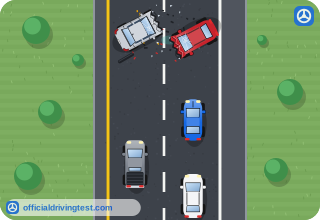
Under the highway emergency law, what must drivers do about a lane that is wholly or partially blocked?
- Stop in it and wait for instructions
- Vacate it as soon as possible
- Drive through it at reduced speed
- Continue in it until the next exit
Show answer
Correct answer: Vacate it as soon as possible
The law requires drivers to vacate any lane wholly or partially blocked as soon as possible.
Source: New Hampshire Driver’s Manual (DSMV 360 (Rev. 11/25)), page 40 · Open this page in the manual (Manual page 40)
-
Under the highway emergency law, what is the penalty for a subsequent offense in a 12-month period?
- The same fine as for a first offense
- A warning only, with no fine at all
- A fine with no penalty assessment added
- An increased fine plus penalty assessment
Show answer
Correct answer: An increased fine plus penalty assessment
A person violating this law is fined plus penalty assessment for a first offense and an increased fine plus penalty assessment for a subsequent offense in a 12-month period.
Source: New Hampshire Driver’s Manual (DSMV 360 (Rev. 11/25)), page 40 · Open this page in the manual (Manual page 40)
-
When a police vehicle with lights or sirens pulls in behind a vehicle that is pulling off to the side of the road, what must the driver do first?
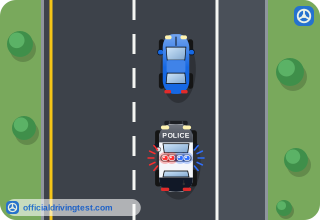
- Come to a complete stop and place the vehicle in park
- Slow down and keep driving until reaching a well lit area
- Get out and walk back to the police vehicle
- Stop and keep the vehicle in gear with the engine on
Show answer
Correct answer: Come to a complete stop and place the vehicle in park
The manual says the driver must come to a complete stop and place the vehicle in park.
Source: New Hampshire Driver’s Manual (DSMV 360 (Rev. 11/25)), page 40 · Open this page in the manual (Manual page 40)
-
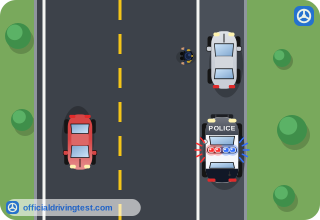
During a police traffic stop, when may the driver get out of the vehicle?
- As soon as the vehicle has stopped
- When the officer walks back to the police car
- Only when requested to
- When the driver needs to find documents
Show answer
Correct answer: Only when requested to
A driver stopped by police must remain in the vehicle unless requested to get out.
Source: New Hampshire Driver’s Manual (DSMV 360 (Rev. 11/25)), page 40 · Open this page in the manual (Manual page 40)
-
What should a driver do with the engine and lights during a police traffic stop?
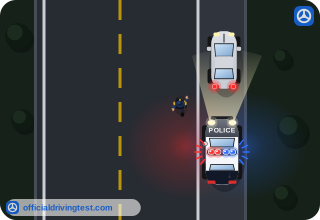
- Leave the engine running and turn off all lights
- Turn off the engine, use hazard flashers, and at night turn on interior lights
- Turn off the engine, use hazard flashers, and turn off interior lights at night
- Keep the engine running and turn on the high beams
Show answer
Correct answer: Turn off the engine, use hazard flashers, and at night turn on interior lights
The driver should turn off the engine, turn on the hazard flashers and, at night, the interior lights to help the officer see that everything is in order inside the vehicle.
Source: New Hampshire Driver’s Manual (DSMV 360 (Rev. 11/25)), page 40 · Open this page in the manual (Manual page 40)
-
During a police traffic stop, what should the driver do with the safety belt and hands?
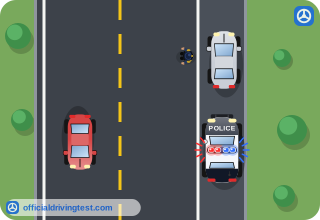
- Unfasten the safety belt and place hands on the dashboard
- Unfasten the safety belt and keep hands in the lap
- Keep the safety belt fastened and reach for the glove box
- Keep the safety belt fastened and place hands on the steering wheel
Show answer
Correct answer: Keep the safety belt fastened and place hands on the steering wheel
The driver should remain calm, keep the safety belt fastened, ask passengers to do so as well, place hands on the steering wheel and limit movements.
Source: New Hampshire Driver’s Manual (DSMV 360 (Rev. 11/25)), page 40 · Open this page in the manual (Manual page 40)
-
When an officer asks for the driver's license and vehicle registration, what should the driver do?
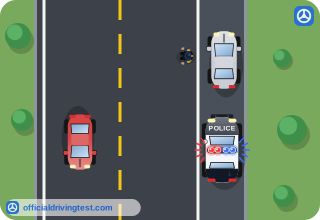
- Say where they are and reach slowly with one hand on the wheel
- Reach for them quickly with both hands off the wheel
- Get out of the vehicle to look for them in the trunk
- Reach for them without saying anything to the officer
Show answer
Correct answer: Say where they are and reach slowly with one hand on the wheel
If the officer asks for these documents, the driver should tell the officer where they are located and reach for them slowly with one hand on the wheel.
Source: New Hampshire Driver’s Manual (DSMV 360 (Rev. 11/25)), page 41 · Open this page in the manual (Manual page 41)
-
If a police vehicle is unmarked, what should a driver be sure of during a traffic stop?
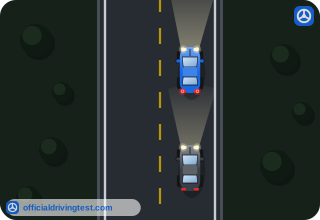
- That it has a siren sounding
- That it displays red and amber lights
- That it has its blue lights activated
- That a second police vehicle is present
Show answer
Correct answer: That it has its blue lights activated
If the vehicle is unmarked, the driver should be sure it has its blue lights activated.
Source: New Hampshire Driver’s Manual (DSMV 360 (Rev. 11/25)), page 41 · Open this page in the manual (Manual page 41)
-
If a police officer is in plain clothes during a traffic stop, what should the driver ask for?
- A copy of the officer's driver's license
- A badge or department identification card
- A written statement from the police department
- The officer's vehicle registration
Show answer
Correct answer: A badge or department identification card
If the police officer is in plain clothes (no uniform), the driver should ask for identification such as a badge or department identification card.
Source: New Hampshire Driver’s Manual (DSMV 360 (Rev. 11/25)), page 41 · Open this page in the manual (Manual page 41)
-
What is a work zone?
- Any area where a road is covered with sand or gravel
- A stretch of road with a reduced speed limit at all times
- An area where vehicles may park for maintenance
- An area where roadwork takes place and may involve lane closures
Show answer
Correct answer: An area where roadwork takes place and may involve lane closures
A work zone is an area where roadwork takes place and may involve lane closures, detours and moving equipment.
Source: New Hampshire Driver’s Manual (DSMV 360 (Rev. 11/25)), page 41 · Open this page in the manual (Manual page 41)
-
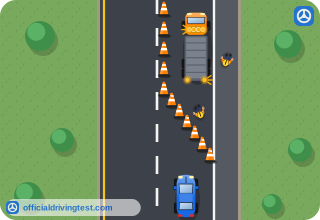
What should a driver do in a work zone even if no signs indicate a change in the speed limit?
- Keep the normal speed
- Speed up to leave the work zone
- Reduce speed
- Follow the vehicle ahead more closely
Show answer
Correct answer: Reduce speed
The manual says to always reduce speed in a work zone, because the narrower lanes and rough pavement can create hazardous conditions.
Source: New Hampshire Driver’s Manual (DSMV 360 (Rev. 11/25)), page 41 · Open this page in the manual (Manual page 41)
-
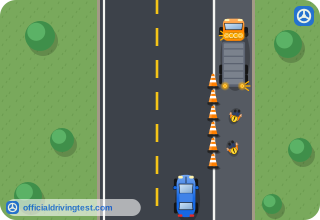
In a work zone, what should a driver do with speed and following distance?
- Reduce speed and decrease the following distance
- Reduce speed and increase the following distance
- Keep speed and increase the following distance
- Increase speed and keep the following distance
Show answer
Correct answer: Reduce speed and increase the following distance
While driving in a work zone, drivers should reduce speed, increase the following distance, watch the traffic around the vehicle and be prepared to stop.
Source: New Hampshire Driver’s Manual (DSMV 360 (Rev. 11/25)), page 41 · Open this page in the manual (Manual page 41)
-
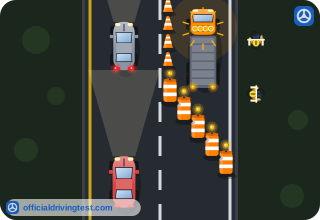
When should a driver use extreme caution when driving through a work zone at night?
- Only when workers are present
- Only when lane closures are in place
- Only when the speed limit is posted
- Whether workers are present or not
Show answer
Correct answer: Whether workers are present or not
Drivers should use extreme caution when driving through a work zone at night whether workers are present or not.
Source: New Hampshire Driver’s Manual (DSMV 360 (Rev. 11/25)), page 41 · Open this page in the manual (Manual page 41)
-
What should a driver adjust in a work zone to allow space for workers and construction vehicles?
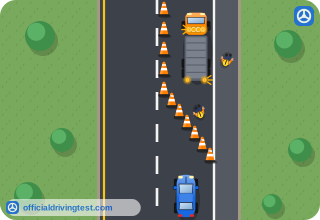
- Lane position
- Headlight angle
- Seat position
- Mirror angle
Show answer
Correct answer: Lane position
Drivers should adjust lane position to allow space for workers and construction vehicles.
Source: New Hampshire Driver’s Manual (DSMV 360 (Rev. 11/25)), page 41 · Open this page in the manual (Manual page 41)
-
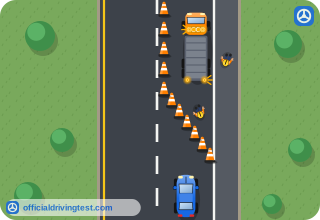
When may a driver resume normal speed after driving through a work zone?
- As soon as the workers are out of sight
- After passing the last traffic cone
- Not until the "End Road Work" sign is visible
- When the road ahead has two lanes again
Show answer
Correct answer: Not until the "End Road Work" sign is visible
Drivers should observe the posted work zone signs and not resume normal speed until the "End Road Work" sign is visible.
Source: New Hampshire Driver’s Manual (DSMV 360 (Rev. 11/25)), page 41 · Open this page in the manual (Manual page 41)
-
What should a driver do about expected delays from a work zone?
- Drive faster through the work zone to make up time
- Plan for them and leave early to reach a destination on time
- Follow other vehicles closely
- Ignore them and use the shoulder
Show answer
Correct answer: Plan for them and leave early to reach a destination on time
Drivers should expect delays, plan for them, and leave early to reach a destination on time.
Source: New Hampshire Driver’s Manual (DSMV 360 (Rev. 11/25)), page 41 · Open this page in the manual (Manual page 41)
-
What should a driver do, when available, to avoid work zones?
- Drive in the right lane
- Increase speed
- Drive on the shoulder
- Use alternate routes
Show answer
Correct answer: Use alternate routes
When available, drivers should use alternate routes to avoid work zones.
Source: New Hampshire Driver’s Manual (DSMV 360 (Rev. 11/25)), page 41 · Open this page in the manual (Manual page 41)