Nevada: Parking rules
Colored curbs, parallel parking, parking on a hill, where Nevada forbids parking and disability parking. Split into 3 shorter tests so you're not stuck in one long quiz.
Independent educational site · not affiliated with any government agency or DMV
Choose a part
Parking rules — Part 1
Questions in this part include: “Whenever you park and leave your vehicle, what should you do?”
StartParking rules — Part 2
Questions in this part include: “After parallel parking an automatic transmission car, to what position do you shift when correctly positioned?”
StartParking rules — Part 3
Questions in this part include: “You may not park on a crosswalk or within how many feet of a crosswalk?”
StartAll 51 Parking rules questions with answers
Choose a part above to take a practice test, or study every question and answer here.
Show the questions and answersHide the questions
-
Whenever you park and leave your vehicle, what should you do?
- Leave the engine idling and set the hazard flashers
- Turn off the engine and leave the front wheels straight
- Turn off the engine and set the parking brake
- Shift to neutral and leave the parking brake off
Show answer
Correct answer: Turn off the engine and set the parking brake
The handbook says that whenever you park and leave your vehicle you turn off the engine and set the parking (emergency) brake.
Source: Nevada Driver's Handbook (March 2024 (DMV 700)), page 48 · Open this page in the manual (Manual page 48)
-
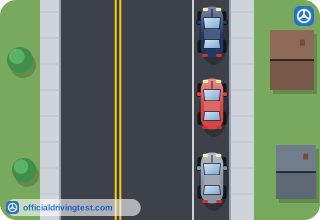
Before opening your door to get out of a parked vehicle, what should you do?
- Sound the horn once to warn others
- Look carefully for bicycles and other vehicles
- Turn on your four-way flashers
- Open the door halfway and step out quickly
Show answer
Correct answer: Look carefully for bicycles and other vehicles
Before opening your door to get out, you should look carefully for bicycles and other vehicles.
Source: Nevada Driver's Handbook (March 2024 (DMV 700)), page 48 · Open this page in the manual (Manual page 48)
-
Which way should your parked vehicle face?
- Toward oncoming traffic so you can see it
- At an angle to the road
- Away from the direction of traffic
- In the direction that normal traffic flows
Show answer
Correct answer: In the direction that normal traffic flows
The handbook says a parked vehicle should face in the direction that normal traffic flows.
Source: Nevada Driver's Handbook (March 2024 (DMV 700)), page 48 · Open this page in the manual (Manual page 48)
-
What is the legal parking position in relation to the curb?
- Front and rear wheels within 6 inches of the curb
- Front and rear wheels within 36 inches of the curb
- Front and rear wheels within 18 inches of the curb
- Front and rear wheels within 5 feet of the curb
Show answer
Correct answer: Front and rear wheels within 18 inches of the curb
The legal parking position is with the front and rear wheels within 18 inches of the curb.
Source: Nevada Driver's Handbook (March 2024 (DMV 700)), page 48 · Open this page in the manual (Manual page 48)
-
How far in each direction should your parked vehicle be visible?
- 200 feet
- 50 feet
- 100 feet
- 500 feet
Show answer
Correct answer: 200 feet
The handbook says your parked vehicle should be visible for 200 feet (about 20 car lengths) in each direction.
Source: Nevada Driver's Handbook (March 2024 (DMV 700)), page 48 · Open this page in the manual (Manual page 48)
-
When a roadway has no curb or other barrier and no signs or markings give instruction, how should you park?
- At an angle to the road
- Facing the road at a right angle
- Parallel to the road
- Backed in toward the road
Show answer
Correct answer: Parallel to the road
With no curb or barrier and no signs or markings, you should park parallel to the road.
Source: Nevada Driver's Handbook (March 2024 (DMV 700)), page 48 · Open this page in the manual (Manual page 48)
-
If you must stop on a highway, where should you park if possible?
- With all four wheels well off the pavement
- With two wheels on the pavement and two off
- In the right lane, close to the curb
- Just past the crest of a hill so others see you
Show answer
Correct answer: With all four wheels well off the pavement
If you must stop on a highway, park with all four wheels well off the pavement, if possible, leaving enough space for other vehicles to pass safely.
Source: Nevada Driver's Handbook (March 2024 (DMV 700)), page 48 · Open this page in the manual (Manual page 48)
-
If you must stop on a highway, when should you use your parking lights or four-way flashers?
- Only if you stay inside the vehicle
- Only if you are stopped for more than 10 minutes
- Only between midnight and sunrise
- If visibility is poor, or between sunset and sunrise
Show answer
Correct answer: If visibility is poor, or between sunset and sunrise
The handbook says to use your parking lights or four-way flashers if visibility is poor, or if it is between sunset and sunrise.
Source: Nevada Driver's Handbook (March 2024 (DMV 700)), page 48 · Open this page in the manual (Manual page 48)
-
What should you always use when you have to use emergency parking areas on highways and freeways?
- Your high-beam headlights and horn
- Four-way flashers or parking lights
- Your left turn signal and wipers
- Your horn every few seconds
Show answer
Correct answer: Four-way flashers or parking lights
When you use emergency parking areas on highways and freeways, you should always use your four-way flashers or parking lights.
Source: Nevada Driver's Handbook (March 2024 (DMV 700)), page 48 · Open this page in the manual (Manual page 48)
-
Which curb color usually indicates a very short stop only, to take on or let off passengers or to drop mail in a mailbox?
- Green
- Yellow
- White
- Blue
Show answer
Correct answer: White
A white curb usually indicates you are allowed a very short stop only to take on or let off passengers, or to drop mail in a mailbox.
Source: Nevada Driver's Handbook (March 2024 (DMV 700)), page 48 · Open this page in the manual (Manual page 48)
-
Which curb color allows you to park for a limited time, usually shown on a sign?
- White
- Green
- Red
- Yellow
Show answer
Correct answer: Green
A green curb allows you to park for a limited time, and the amount of time is usually shown on a sign.
Source: Nevada Driver's Handbook (March 2024 (DMV 700)), page 48 · Open this page in the manual (Manual page 48)
-
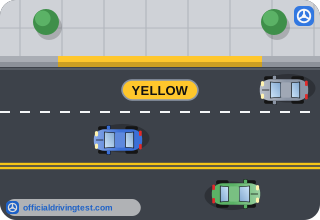
What does a yellow curb mean?
- Parking for a limited time shown on a sign
- No stopping, standing or parking
- A very short stop to drop mail only
- A loading zone; rules depend on local laws
Show answer
Correct answer: A loading zone; rules depend on local laws
A yellow curb means a loading zone, and the rules depend on local laws.
Source: Nevada Driver's Handbook (March 2024 (DMV 700)), page 48 · Open this page in the manual (Manual page 48)
-
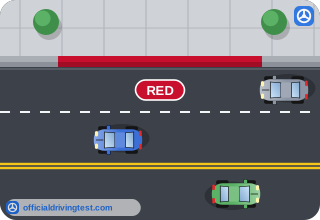
What does a red curb mean?
- A loading zone where rules depend on local laws
- Parking for a limited time shown on a sign
- Handicapped parking only
- No stopping, standing or parking; local laws apply
Show answer
Correct answer: No stopping, standing or parking; local laws apply
A red curb means no stopping, standing or parking, and local laws apply.
Source: Nevada Driver's Handbook (March 2024 (DMV 700)), page 48 · Open this page in the manual (Manual page 48)
-
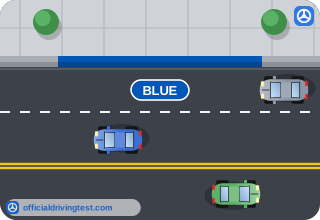
What does a blue curb designate?
- A loading zone
- Handicapped parking areas
- Parking for a limited time
- A very short stop only
Show answer
Correct answer: Handicapped parking areas
A blue curb designates handicapped parking areas.
Source: Nevada Driver's Handbook (March 2024 (DMV 700)), page 48 · Open this page in the manual (Manual page 48)
-
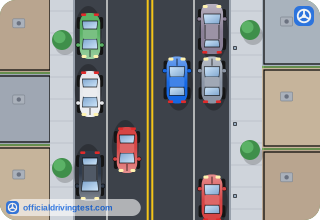
When parallel parking, the open space between two cars should be about how much longer than your car?
- About 5 feet
- About 1 foot
- About 10 feet
- About 15 feet
Show answer
Correct answer: About 5 feet
The space should be big enough for your vehicle, about 5 feet longer than your car.
Source: Nevada Driver's Handbook (March 2024 (DMV 700)), page 49 · Open this page in the manual (Manual page 49)
-
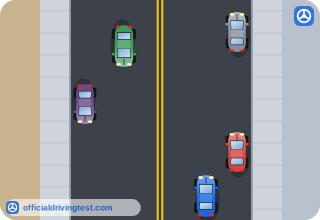
When starting to parallel park, how far from the car beside you should your car be as you line up the rear bumpers?
- About 6 inches
- About 10 feet
- About 2 or 3 feet
- About 15 feet
Show answer
Correct answer: About 2 or 3 feet
Your car should be about 2 or 3 feet away from the car beside you, with your rear bumpers lined up across from each other.
Source: Nevada Driver's Handbook (March 2024 (DMV 700)), page 49 · Open this page in the manual (Manual page 49)
-
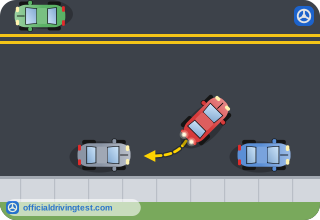
When parallel parking on the right side of the road, how do you turn the steering wheel as you first slowly back up into the space?
- All the way to the left
- All the way to the right
- Halfway to the left
- Keep the wheels straight
Show answer
Correct answer: All the way to the right
You slowly back up with the steering wheel turned all the way to the right.
Source: Nevada Driver's Handbook (March 2024 (DMV 700)), page 49 · Open this page in the manual (Manual page 49)
-
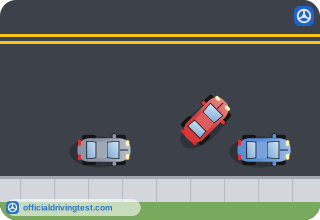
While parallel parking on the right side, what should you do when the back of your front seat is in line with the rear bumper of the car you are parking behind?
- Stop and turn the steering wheel all the way to the right again
- Shift to drive and pull forward to straighten the car out
- Keep turning the wheel to the right while you keep backing up
- Straighten the wheels by steering smoothly and quickly to the left
Show answer
Correct answer: Straighten the wheels by steering smoothly and quickly to the left
At that point you straighten the wheels by steering smoothly and quickly to the left, keeping your speed slow.
Source: Nevada Driver's Handbook (March 2024 (DMV 700)), page 49 · Open this page in the manual (Manual page 49)
-
When parallel parking on the right side, what happens if you do not straighten your front wheels at the right time?
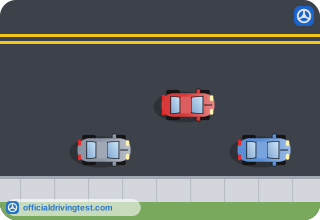
- Your left front fender will hit the car ahead
- Your car will stop 5 feet from the curb
- Your right rear wheel will hit the curb
- Your engine will stall
Show answer
Correct answer: Your right rear wheel will hit the curb
The handbook says that if you do not straighten your front wheels, your right rear wheel will hit the curb.
Source: Nevada Driver's Handbook (March 2024 (DMV 700)), page 49 · Open this page in the manual (Manual page 49)
-
When parallel parking on the right side, what may happen if you turn your steering wheel too far to the left?
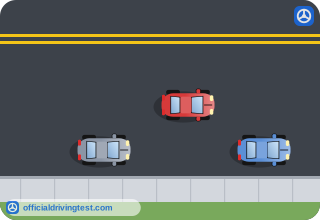
- Your right front fender may hit the car you are parking behind
- Your right rear wheel will hit the curb and the steering will lock
- Your rear bumper will hit the car behind the space
- Your car will stop 5 feet from the curb
Show answer
Correct answer: Your right front fender may hit the car you are parking behind
If you turn your steering wheel too far to the left, your right front fender may hit the car you are parking behind.
Source: Nevada Driver's Handbook (March 2024 (DMV 700)), page 49 · Open this page in the manual (Manual page 49)
-
While parallel parking on the right side, how far do you continue to back up slowly after straightening the wheels?
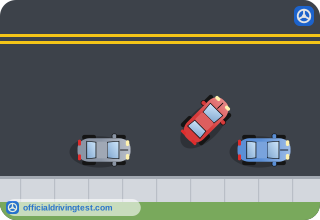
- Until your front bumper touches the other car's rear bumper
- Until your car is 5 feet from the curb
- Until your front fender just clears the other car's left bumper
- Until your rear wheel touches the curb
Show answer
Correct answer: Until your front fender just clears the other car's left bumper
You continue to back up slowly until your front fender just clears the other car’s left bumper.
Source: Nevada Driver's Handbook (March 2024 (DMV 700)), page 49 · Open this page in the manual (Manual page 49)
-
While backing into the last part of a parallel parking space on the right, which way do you look and steer?
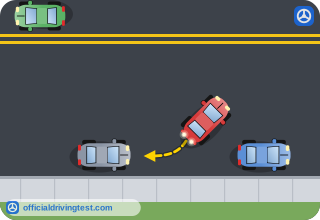
- Over your right shoulder, steering the wheel to the left
- Over your left shoulder, steering the wheel to the right
- Over your right shoulder, steering the wheel to the right
- Into the rearview mirror only, with the wheel straight
Show answer
Correct answer: Over your right shoulder, steering the wheel to the left
You look over your right shoulder and back slowly, turning the steering wheel to the left and stopping before your car touches the vehicle behind you.
Source: Nevada Driver's Handbook (March 2024 (DMV 700)), page 49 · Open this page in the manual (Manual page 49)
-
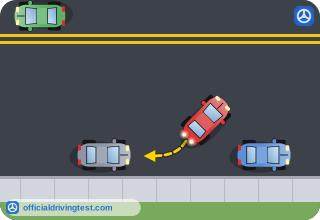
After backing into the parallel parking space, what do you do next?
- Shift to park and leave the car where it is
- Shift to reverse and back up until you touch the curb
- Turn off the engine and walk back to check the space
- Shift to drive and center your car in the space
Show answer
Correct answer: Shift to drive and center your car in the space
You shift to drive, move slowly forward, turn the steering wheel to the right to straighten the wheels, and center your car in the space.
Source: Nevada Driver's Handbook (March 2024 (DMV 700)), page 49 · Open this page in the manual (Manual page 49)
-
After parallel parking an automatic transmission car, to what position do you shift when correctly positioned?
- Neutral
- Park
- Drive
- Reverse
Show answer
Correct answer: Park
When you are correctly positioned, you stop and shift to park in an automatic transmission car, then set the parking brake.
Source: Nevada Driver's Handbook (March 2024 (DMV 700)), page 49 · Open this page in the manual (Manual page 49)
-
After parallel parking a manual transmission car, which gear do you use when correctly positioned, in addition to setting the parking brake?
- First gear or reverse
- Second gear or neutral
- Neutral
- Third gear
Show answer
Correct answer: First gear or reverse
In a manual transmission car you shift to first gear or reverse and set the parking brake.
Source: Nevada Driver's Handbook (March 2024 (DMV 700)), page 49 · Open this page in the manual (Manual page 49)
-
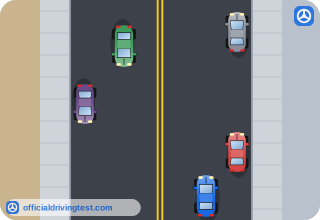
As you approach a parallel parking space, what should you check first?
- The traffic in front of the car ahead
- Whether your wheels are straight
- The traffic beside and behind you
- The distance to the curb ahead
Show answer
Correct answer: The traffic beside and behind you
As you approach the space, you check the traffic beside and behind you before using your turn signal.
Source: Nevada Driver's Handbook (March 2024 (DMV 700)), page 49 · Open this page in the manual (Manual page 49)
-
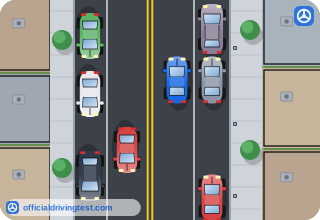
As you approach a parallel parking space, what do you use to show you are preparing to park?
- Your four-way flashers
- Your turn signal
- Your horn
- Your parking lights
Show answer
Correct answer: Your turn signal
If the driver behind you is far enough away to stop or move around you safely, you use your turn signal to show you are preparing to park.
Source: Nevada Driver's Handbook (March 2024 (DMV 700)), page 49 · Open this page in the manual (Manual page 49)
-
The handbook's parallel parking steps are for parking on the right side of the road. What do you do to park on the left side?
- Use the same actions without any change
- Back in with the wheels turned all the way to the right
- Enter the space nose first
- Use the opposite actions
Show answer
Correct answer: Use the opposite actions
The guide is for the right side of the road, and you use the opposite actions for parking on the left side.
Source: Nevada Driver's Handbook (March 2024 (DMV 700)), page 49 · Open this page in the manual (Manual page 49)
-
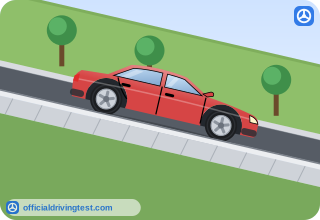
When parking on a hill, why do you turn your front tires?
- So the vehicle can pull out faster when traffic clears
- So the parking brake does not have to be set
- So the wheels do not touch the curb or the shoulder
- So a rolling vehicle moves away from traffic or into the curb
Show answer
Correct answer: So a rolling vehicle moves away from traffic or into the curb
You turn your front tires so that if your vehicle should start to roll, it will move away from traffic or into the curb.
Source: Nevada Driver's Handbook (March 2024 (DMV 700)), page 49 · Open this page in the manual (Manual page 49)
-
When your vehicle is parked headed downhill, which way should you turn your front tires?
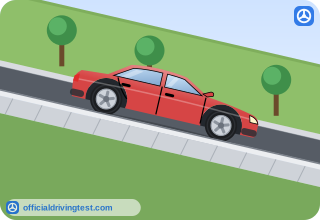
- Away from the curb or road shoulder
- Toward or into the curb or road shoulder
- Straight ahead, parallel to the road
- Toward the center of the road
Show answer
Correct answer: Toward or into the curb or road shoulder
When headed downhill, you turn your front tires toward or into the curb or road shoulder.
Source: Nevada Driver's Handbook (March 2024 (DMV 700)), page 49 · Open this page in the manual (Manual page 49)
-
When your vehicle is parked headed uphill and there is a curb, which way should you turn your front tires?
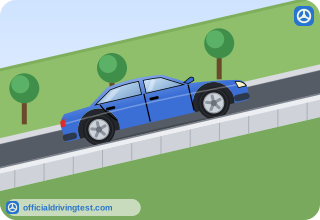
- Away from the curb
- Toward the curb
- Straight ahead
- Any direction, once the parking brake is set
Show answer
Correct answer: Away from the curb
When headed uphill and there is a curb, you turn your front tires away from the curb.
Source: Nevada Driver's Handbook (March 2024 (DMV 700)), page 49 · Open this page in the manual (Manual page 49)
-
When your vehicle is parked headed uphill and there is no curb, which way should you turn your front tires?
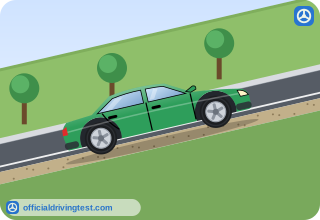
- Away from the road shoulder
- Straight ahead
- Toward the road shoulder
- Toward the center of the road
Show answer
Correct answer: Toward the road shoulder
When headed uphill with no curb, you turn your front tires toward the road shoulder, and you always set the parking brake.
Source: Nevada Driver's Handbook (March 2024 (DMV 700)), page 49 · Open this page in the manual (Manual page 49)
-
How close to a fire hydrant may you not park in a place where parallel parking is permitted?
- Within 5 feet
- Within 15 feet
- Within 10 feet
- Within 30 feet
Show answer
Correct answer: Within 15 feet
You may not park within 15 feet of a fire hydrant in a place where parallel parking is permitted.
Source: Nevada Driver's Handbook (March 2024 (DMV 700)), page 50 · Open this page in the manual (Manual page 50)
-
How close to a fire hydrant may you not park in a place where angle parking is permitted?
- Within 5 feet
- Within 10 feet
- Within 15 feet
- Within 20 feet
Show answer
Correct answer: Within 20 feet
Where angle parking is permitted, you may not park within 20 feet of a fire hydrant.
Source: Nevada Driver's Handbook (March 2024 (DMV 700)), page 50 · Open this page in the manual (Manual page 50)
-
You may not park on a crosswalk or within how many feet of a crosswalk?
- 5 feet
- 10 feet
- 20 feet
- 50 feet
Show answer
Correct answer: 20 feet
You may not park on a crosswalk or within 20 feet of a crosswalk.
Source: Nevada Driver's Handbook (March 2024 (DMV 700)), page 50 · Open this page in the manual (Manual page 50)
-
How close to a traffic control signal at the side of a highway may you not park?
- Within 30 feet
- Within 10 feet
- Within 20 feet
- Within 50 feet
Show answer
Correct answer: Within 30 feet
You may not park within 30 feet of a traffic control signal at the side of a highway.
Source: Nevada Driver's Handbook (March 2024 (DMV 700)), page 50 · Open this page in the manual (Manual page 50)
-
How close to the nearest rail of a railroad may you not park?
- Within 10 feet
- Within 30 feet
- Within 50 feet
- Within 100 feet
Show answer
Correct answer: Within 50 feet
You may not park within 50 feet of the nearest rail of a railroad.
Source: Nevada Driver's Handbook (March 2024 (DMV 700)), page 50 · Open this page in the manual (Manual page 50)
-
How close to a driveway entrance to any fire station may you not park?
- Within 20 feet
- Within 10 feet
- Within 30 feet
- Within 50 feet
Show answer
Correct answer: Within 20 feet
You may not park within 20 feet of a driveway entrance to any fire station.
Source: Nevada Driver's Handbook (March 2024 (DMV 700)), page 50 · Open this page in the manual (Manual page 50)
-
On the side of a highway opposite the entrance to any fire station, how close to that entrance may you not park?
- Within 20 feet
- Within 50 feet
- Within 100 feet
- Within 75 feet
Show answer
Correct answer: Within 75 feet
On the side of a highway opposite the entrance to any fire station, you may not park within 75 feet of that entrance.
Source: Nevada Driver's Handbook (March 2024 (DMV 700)), page 50 · Open this page in the manual (Manual page 50)
-
Which of these is a place where you may not park?
- Within 18 inches of a curb
- On a sidewalk
- Facing the direction of traffic
- In a legal parallel parking space
Show answer
Correct answer: On a sidewalk
The handbook lists a sidewalk among the places where you may not park.
Source: Nevada Driver's Handbook (March 2024 (DMV 700)), page 50 · Open this page in the manual (Manual page 50)
-
Which of these is a place where you may not park?
- In front of a public or private driveway
- Along a curb painted green, within its time limit
- In a space where parallel parking is permitted
- On a road with no curb, parallel to the road
Show answer
Correct answer: In front of a public or private driveway
The handbook lists the area in front of a public or private driveway among the places where you may not park.
Source: Nevada Driver's Handbook (March 2024 (DMV 700)), page 50 · Open this page in the manual (Manual page 50)
-
Which of these is a place where you may not park?
- Within 18 inches of the curb
- Beside a green curb for the posted time
- Within an intersection
- Facing the direction traffic flows
Show answer
Correct answer: Within an intersection
The handbook lists a place within an intersection among the places where you may not park.
Source: Nevada Driver's Handbook (March 2024 (DMV 700)), page 50 · Open this page in the manual (Manual page 50)
-
What is parking next to a vehicle that is already parked on the side of the roadway called in the handbook's no-parking list?
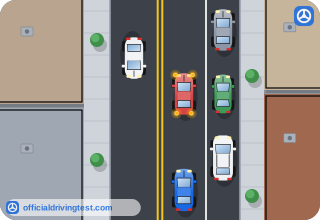
- Angle parking
- Double parking
- Parallel parking
- Shoulder parking
Show answer
Correct answer: Double parking
The handbook labels parking next to any vehicle already parked on the side of the roadway as double parking, which is not allowed.
Source: Nevada Driver's Handbook (March 2024 (DMV 700)), page 50 · Open this page in the manual (Manual page 50)
-
Parking on any bridge or other elevated structure, or within a highway tunnel, is:
- Allowed in the right lane only
- Allowed if you use four-way flashers
- Allowed for up to 15 minutes
- Not allowed
Show answer
Correct answer: Not allowed
The handbook lists any bridge or other elevated structure and any highway tunnel among the places where you may not park.
Source: Nevada Driver's Handbook (March 2024 (DMV 700)), page 50 · Open this page in the manual (Manual page 50)
-
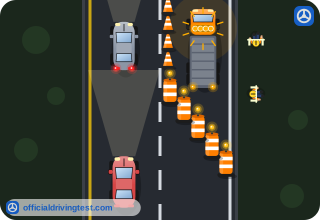
Parking next to or opposite a highway construction zone is:
- Allowed on the side farthest from the work
- Allowed if you leave your hazard lights on
- Allowed for a few minutes only
- Not allowed next to it or opposite it
Show answer
Correct answer: Not allowed next to it or opposite it
The handbook lists a place next to or opposite any highway construction zone among the places where you may not park.
Source: Nevada Driver's Handbook (March 2024 (DMV 700)), page 50 · Open this page in the manual (Manual page 50)
-
When may you park in a space reserved for the handicapped?
- Only if you stay with the vehicle and leave the engine running
- Only with the special license plate or window placard for the space
- Only if the space is not marked by a painted curb or a sign
- Only if you are loading or unloading passengers for a short time
Show answer
Correct answer: Only with the special license plate or window placard for the space
You may park in a space reserved for the handicapped only if you have the special license plate or window placard that entitles you to use it.
Source: Nevada Driver's Handbook (March 2024 (DMV 700)), page 50 · Open this page in the manual (Manual page 50)
-
Which of these is an exception to the rule against parking in a bicycle lane?
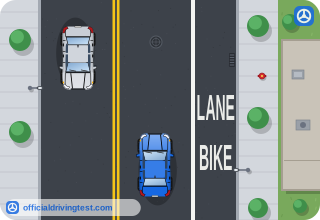
- When your vehicle is disabled
- For a few minutes to load passengers
- When no cyclist is in sight
- When your four-way flashers are on
Show answer
Correct answer: When your vehicle is disabled
Parking within a bicycle lane is not allowed unless your vehicle is disabled.
Source: Nevada Driver's Handbook (March 2024 (DMV 700)), page 50 · Open this page in the manual (Manual page 50)
-
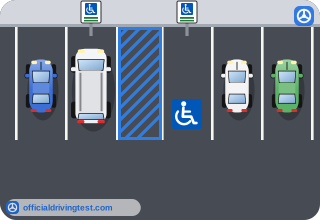
When may parking spaces marked with the international symbol of access be used?
- Whenever the vehicle displays any placard, even if the holder is not present
- Whenever the driver is carrying a passenger who is over 65 years old
- Only when the person the placard was issued to drives or rides in the vehicle
- Any time the space is empty and no other spaces are nearby
Show answer
Correct answer: Only when the person the placard was issued to drives or rides in the vehicle
Spaces marked with the symbol may only be used when the person to whom the valid disabled placard or license plate was issued is either operating or being transported in the vehicle.
Source: Nevada Driver's Handbook (March 2024 (DMV 700)), page 50 · Open this page in the manual (Manual page 50)
-
What is the minimum fine for parking in a space marked with the international symbol of access when you are not entitled to use it?
- $250
- $100
- $50
- $500
Show answer
Correct answer: $250
It is illegal for anyone else to park in spaces marked by the international symbol of access, and the minimum fine is $250.
Source: Nevada Driver's Handbook (March 2024 (DMV 700)), page 50 · Open this page in the manual (Manual page 50)
-
Whenever feasible, what does the handbook ask individuals with a placard to do about parking spaces with loading zones?
- Use them first, before other spaces
- Use them only at night
- Use them only with a passenger
- Use them as little as possible
Show answer
Correct answer: Use them as little as possible
Whenever feasible, placard holders are asked to practice civility and use spaces with loading zones as little as possible.
Source: Nevada Driver's Handbook (March 2024 (DMV 700)), page 50 · Open this page in the manual (Manual page 50)
-
Parking spaces with loading zones may be needed by individuals who require what to exit and enter their vehicle?
- A person to carry them
- The assistance of machinery, such as lifts
- A wider space at the entrance of the lot
- A second parking space on each side
Show answer
Correct answer: The assistance of machinery, such as lifts
These spaces may be needed by individuals with a higher degree of impairment who require the assistance of machinery, such as lifts, to exit and enter their vehicle.
Source: Nevada Driver's Handbook (March 2024 (DMV 700)), page 50 · Open this page in the manual (Manual page 50)