Montana: Emergencies — Part 5 Practice Test
Questions in this part include: “When is it a crime to leave a crash site where your vehicle was involved?” · “Which items does the manual say you should carry in a basic emergency kit in your vehicle?”
Independent educational site · not affiliated with any government agency or DMV
Ready? Test yourself
- Instant feedback with an explanation
- Every answer cites its source in the manual
- Your best score is saved on this device
- Keyboard: press 1 to 4 to answer and Enter for the next question
Questions are original and based on the official manual "Montana Driver Manual" (Revised April 2024), Montana Department of Justice, Motor Vehicle Division.
All 18 questions in this practice test
Take the test above first, then use this list to study. Tap “Show answer” to see the correct answer and explanation.
Show the questions and answersHide the questions
-
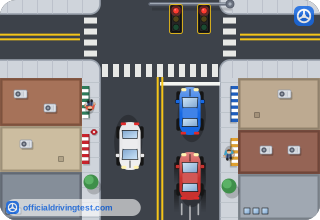
If your vehicle is hit from the rear, why should you be ready to apply your brakes?
- So the airbag will deploy properly
- So the vehicle behind can stop sooner
- So your head stays against the head restraint
- So you will not be pushed into another vehicle
Show answer
Correct answer: So you will not be pushed into another vehicle
You should be ready to apply your brakes so that you will not be pushed into another vehicle.
Source: Montana Driver Manual (Revised April 2024), page 79
-
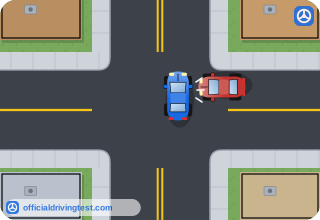
If your vehicle is hit from the side, toward which direction will your body be thrown?
- Toward the side that is hit
- Away from the side that is hit
- Straight forward into the steering wheel
- Backward against the seat
Show answer
Correct answer: Toward the side that is hit
When a vehicle is hit from the side, the body will be thrown toward the side that is hit.
Source: Montana Driver Manual (Revised April 2024), page 79
-
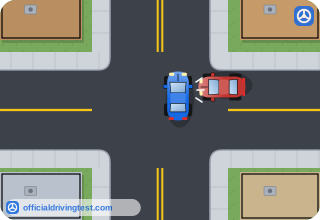
When your vehicle is hit from the side, why do you still need lap and shoulder belts even with side air bags?
- To keep the side air bags from inflating
- To keep the doors from opening
- To help keep you behind the wheel
- To hold your head against the head restraint
Show answer
Correct answer: To help keep you behind the wheel
Lap and shoulder belts are needed to help keep you behind the wheel and to minimize your vulnerability to injury.
Source: Montana Driver Manual (Revised April 2024), page 79
-
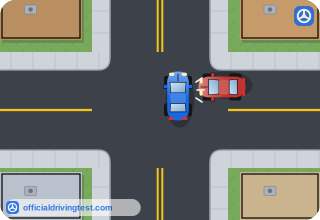
If your vehicle is hit from the side, what should you get ready to do?
- Press back against the head restraint
- Steer or brake to prevent hitting something else
- Turn off the ignition and let go of the wheel
- Speed up to leave the area at once
Show answer
Correct answer: Steer or brake to prevent hitting something else
After a side hit you get ready to steer or brake to prevent your vehicle from hitting something else.
Source: Montana Driver Manual (Revised April 2024), page 79
-
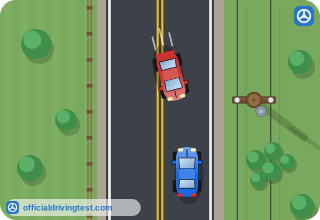
If your vehicle is going to be hit from the front, what should you try to do?
- Speed up so that the impact is lighter
- Turn your vehicle to avoid a direct, head-on collision
- Brake hard and brace against the steering wheel
- Hold your course and keep both hands on the wheel
Show answer
Correct answer: Turn your vehicle to avoid a direct, head-on collision
You should try to turn your vehicle in such a way as to avoid a direct, head-on collision.
Source: Montana Driver Manual (Revised April 2024), page 79
-
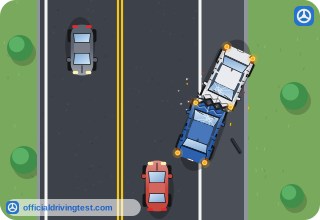
When should you stop at an accident that you pass on the road?
- Always, so that you can offer help to those involved
- Only if there is a fire at the scene
- Only if the accident is blocking your lane
- Only if you are involved or emergency help has not arrived yet
Show answer
Correct answer: Only if you are involved or emergency help has not arrived yet
The manual says not to stop unless you are involved or emergency help has not arrived yet; keep your attention on driving and keep moving.
Source: Montana Driver Manual (Revised April 2024), page 79
-
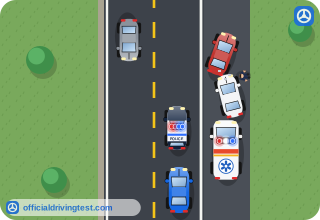
Why should you never drive to the scene of an accident, fire, or other disaster just to look?
- You may be fined for slowing down near an emergency scene
- You may be asked to give a statement to the police there
- You may block the way for police and other rescue vehicles
- You may be required to help with any injured people there
Show answer
Correct answer: You may block the way for police and other rescue vehicles
Driving to a scene just to look may block the way for police, firefighters, ambulances, tow trucks, and other rescue vehicles.
Source: Montana Driver Manual (Revised April 2024), page 79
-
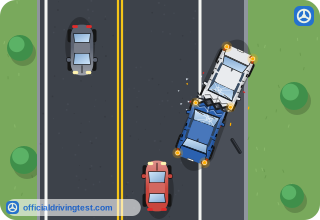
If you are involved in an accident, what must you do?
- Stop
- Keep moving if there is little damage
- Drive home and report it later
- Move on if no one is hurt
Show answer
Correct answer: Stop
A driver involved in an accident must stop.
Source: Montana Driver Manual (Revised April 2024), page 79
-
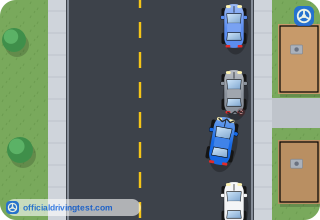
If you are involved in an accident with a parked vehicle, what must you try to do?
- Have the parked vehicle towed away
- Wait for the police to arrive at the scene
- Move the parked vehicle off the road
- Locate the owner
Show answer
Correct answer: Locate the owner
If you are involved in an accident with a parked vehicle, you must try to locate the owner.
Source: Montana Driver Manual (Revised April 2024), page 79
-
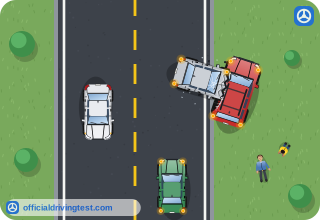
If any person is injured or killed in an accident, who must be notified?
- Only your insurance company
- The police
- Only the other driver’s insurance company
- The nearest driver exam station
Show answer
Correct answer: The police
If any person is injured or killed, the police must be notified.
Source: Montana Driver Manual (Revised April 2024), page 79
-
When is it a crime to leave a crash site where your vehicle was involved?
- If any vehicle is damaged, before you exchange phone numbers
- If the crash happened at night, before a tow truck arrives
- If there is an injury or death, before police have the information they need
- If the crash happened on a highway, before you move your vehicle
Show answer
Correct answer: If there is an injury or death, before police have the information they need
Leaving a crash site where your vehicle was involved is a crime when there is an injury or death, until police have talked to you and gotten all the information they need.
Source: Montana Driver Manual (Revised April 2024), page 79
-
Which items does the manual say you should carry in a basic emergency kit in your vehicle?
- Flares and first aid supplies
- A fire extinguisher and a tire gauge
- Jumper cables and a spare fuse
- Reflective vests and a tow rope
Show answer
Correct answer: Flares and first aid supplies
You should carry a basic emergency kit that has flares and first aid supplies in your vehicle.
Source: Montana Driver Manual (Revised April 2024), page 79
-
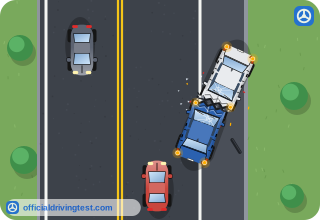
Where should you stop your vehicle if you are involved in an accident?
- At or near the accident site
- At the next exit past the site
- A mile or more beyond the site
- At the nearest police station
Show answer
Correct answer: At or near the accident site
You stop your vehicle at or near the accident site.
Source: Montana Driver Manual (Revised April 2024), page 79
-
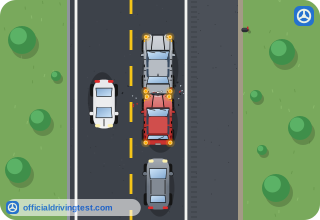
After a crash, if your vehicle can move, what should you do with it?
- Leave it where it stopped until the police arrive
- Get it off the road so it does not block traffic
- Move it several miles away before you stop
- Leave it where it is and turn on the headlights
Show answer
Correct answer: Get it off the road so it does not block traffic
If your vehicle can move, you get it off the road so that it does not block traffic.
Source: Montana Driver Manual (Revised April 2024), page 79
-
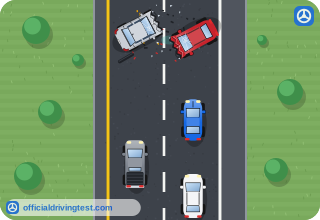
Why should you not stand or walk in traffic lanes at an accident scene?
- You could disturb evidence the police need
- You could be cited for obstructing traffic
- You could be struck by another vehicle
- You could block the view of approaching drivers
Show answer
Correct answer: You could be struck by another vehicle
The manual says you could be struck by another vehicle if you stand or walk in traffic lanes.
Source: Montana Driver Manual (Revised April 2024), page 79
-
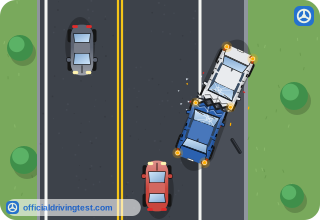
What should you do about the ignition of wrecked vehicles?
- Leave it running to power the lights
- Leave it on so the vehicle stays warm
- Restart it to check the damage
- Turn it off
Show answer
Correct answer: Turn it off
You turn off the ignition of wrecked vehicles because fuel could have spilled and fire is a real danger.
Source: Montana Driver Manual (Revised April 2024), page 79
-
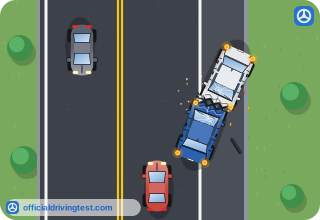
Why should you not smoke around wrecked vehicles?
- Smoke may hide the crash from other drivers
- Smoking is not allowed on any highway
- Smoke may make injured people sick
- Fuel could have spilled and fire is a real danger
Show answer
Correct answer: Fuel could have spilled and fire is a real danger
Do not smoke around wrecked vehicles, because fuel could have spilled and fire is a real danger.
Source: Montana Driver Manual (Revised April 2024), page 79
-
What should you do if there are electrical wires down at an accident scene?
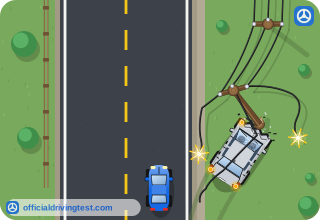
- Do not go near them
- Move them off the road with a dry stick
- Step over them quickly to reach the injured
- Check them for damage before helping anyone
Show answer
Correct answer: Do not go near them
If there are electrical wires down, you do not go near them.
Source: Montana Driver Manual (Revised April 2024), page 79