Pavement markings in Maryland
The Maryland Driver’s Manual shows or names everything on this page: 21 in all, on pages 24–25, 32.
Independent educational site · not affiliated with any government agency or DMV
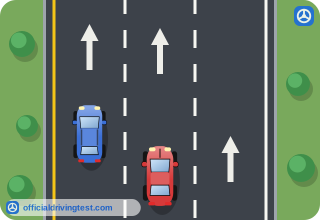
Single Broken White Line
Separates lanes where all traffic is going in the same direction, and crossing from one lane to the other is permitted. Used on roads with more than one lane.
Manual page 24
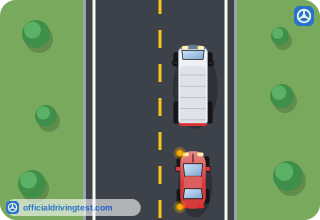
Single Broken Yellow Line
Separates lanes where vehicles are traveling in opposite directions, and passing with care is permitted in either direction. Used as the center line on 2-lane, 2-way roads.
Manual page 24
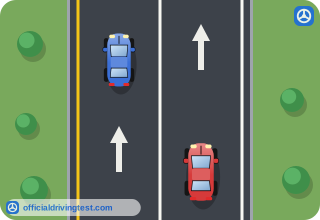
Single Solid White Line
Marks the right edge of the road. Also separates lanes where all vehicles are going in the same direction, but lane changing is discouraged.
Manual page 24
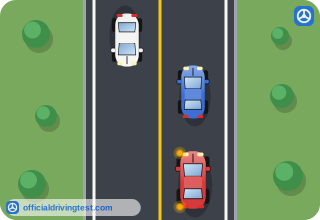
Single Solid Yellow Line
Marks left edge lines on divided highways, one-way roads, and ramps. A divided highway has a guardrail, strip of land, or other barrier between traffic traveling in each direction.
Manual page 24
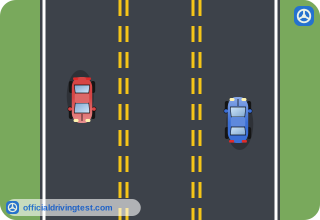
Double Broken Yellow Lines
Marks the edges of reversible lanes – lanes where traffic flows in one direction some times and the other direction other times. You may enter and exit the lane based on what traffic signs and signals say is permitted.
Manual page 24
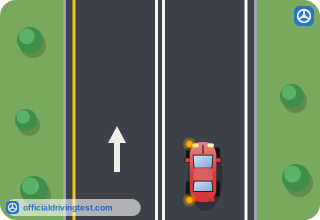
Double Solid White Lines
Separates lanes where all traffic is going in the same direction and you are not allowed to change lanes. May also be used to separate general lanes from HOV lanes. Also, may be used before obstructions that you may pass on either side.
Manual page 24
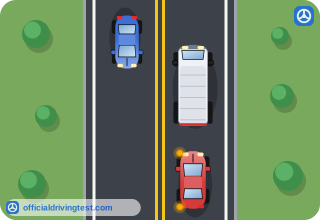
Double Solid Yellow Lines
Separates lanes where traffic is going in opposite directions and passing is not allowed in either direction. You may make a left turn across a double solid yellow line. For example, when turning into a driveway.
Manual page 24
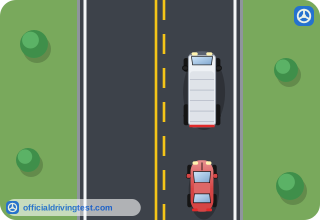
Solid plus Broken Yellow Lines
Used on two-way roads where passing is permitted in only one direction. Careful passing is: Allowed for traffic on the side of the broken line. Not allowed for traffic on the side of the solid line. Also used to mark the edges of two-way left turn lanes – solid lines are on the outside and broken lines are on the inside.
Manual page 24
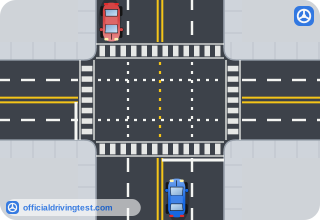
Dotted Lane Lines through an Intersection
Continues lane lines through intersections. Drivers in intersections should stay inside the lane markings.
Manual page 24
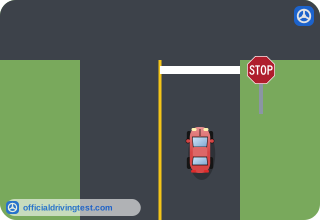
Stop Line
White, solid line that shows where a vehicle must stop for a STOP sign or red traffic signal.
Manual page 25
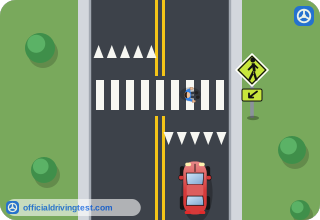
Yield Lines
Rows of small triangles across the lane that show where a vehicle must yield to other vehicles or pedestrians.
Manual page 25
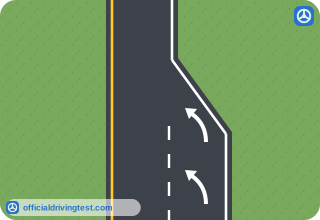
Lane Ending Markings
About lane reductions (for example, the road is changing from two lanes to just one).
Manual page 25
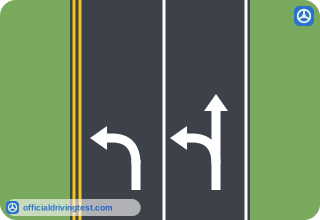
Left Turn Arrow (Pavement)
What direction to travel. / Markings used with arrows or other word messages to show how you may move in that lane.
Manual page 25
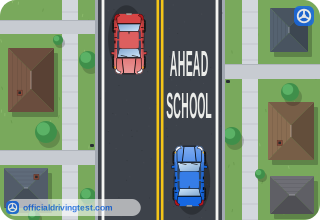
SCHOOL (Pavement Word)
‘SCHOOL’ and ‘RxR’ markings to warn that you are approaching school areas and railroad crossings.
Manual page 25
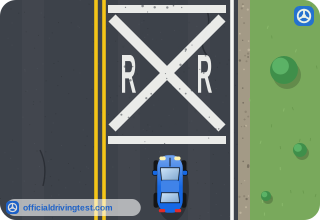
Railroad Crossing Pavement Marking (R X R)
‘SCHOOL’ and ‘RxR’ markings to warn that you are approaching school areas and railroad crossings.
Manual page 25
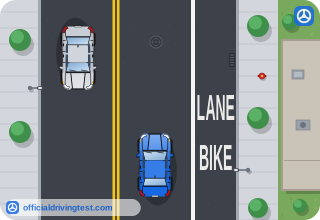
BIKE LANE (Pavement Word)
Some roads have pavement markings that show lanes that are just for bicycles. Solid or broken white lines separate these bike lanes from motor vehicle lanes. You may see bike lanes marked with bike lane signs or by bicycle symbols and arrows.
Manual page 25
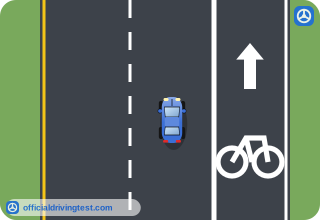
Bike Lane Symbol and Arrow
Some roads have pavement markings that show lanes that are just for bicycles. Solid or broken white lines separate these bike lanes from motor vehicle lanes. You may see bike lanes marked with bike lane signs or by bicycle symbols and arrows.
Manual page 25
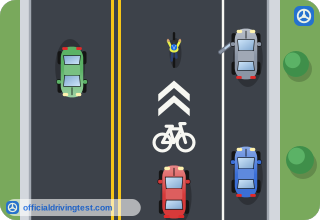
Shared Lane Marking
These markings: Alert drivers that bicyclists may be on the road, Tell bicyclists where to ride, and Discourage biking in the wrong direction.
Manual page 25
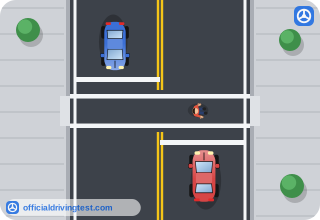
Pedestrian Crosswalk Lines
Pedestrian crosswalk lines are white, solid lines that show where pedestrians cross. Crosswalks may have additional lines between the white, solid lines or in place of them.
Manual page 25
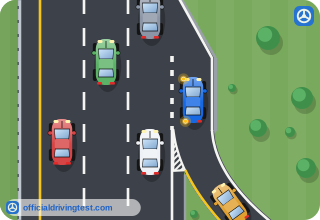
Entrance Ramp Gore Markings
When entering an interstate or other limited access highway, you should not cross the solid lines that divide the entrance and the highway.
Manual page 32
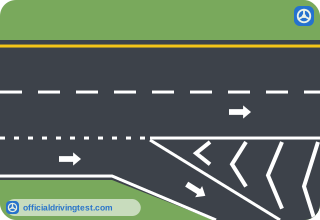
Exit Ramp Gore Markings
Start slowing down as soon as you enter the deceleration lane. The deceleration lane leads you to the exit ramp and gives you time to start slowing down to a safe speed.
Manual page 32