Maine: Signals and vehicle controls — Part 3 Practice Test
Inspecting and maintaining your vehicle, adjusting the seat and mirrors, starting, shifting, stopping and backing, and signaling with lights and hand signals. — Part 3
Independent educational site · not affiliated with any government agency or DMV
Ready? Test yourself
- Instant feedback with an explanation
- Every answer cites its source in the manual
- Your best score is saved on this device
Questions are original and based on the official manual "Maine Driver’s License Manual" (Rev 4/24), Maine Bureau of Motor Vehicles.
All 40 questions in this practice test
Take the test above first, then use this list to study. Tap “Show answer” to see the correct answer and explanation.
Show the questions and answersHide the questions
-
According to the manual, second gear lets you go at about what speed?
- 5 to 10 mph
- 15 to 25 mph
- 25 to 35 mph
- 35 to 45 mph
Show answer
Correct answer: 15 to 25 mph
Second gear lets you go 15 to 25 mph, depending on the engine horsepower and the type of transmission.
Source: Maine Driver’s License Manual (Rev 4/24), page 5-1 · Open this page in the manual (Manual page 5-1)
-
Which gear does the manual say you can also use to start on ice or to drive in heavy snow?

- Third gear
- Fourth gear
- Fifth gear
- Second gear
Show answer
Correct answer: Second gear
The manual says you can use second gear to start on ice or drive in heavy snow.
Source: Maine Driver’s License Manual (Rev 4/24), page 5-1 · Open this page in the manual (Manual page 5-1)
-
In a car with a 3-speed transmission, third gear is generally used for which speeds?
- All speeds over 25 mph
- All speeds under 15 mph
- Only speeds over 40 mph
- Only speeds under 25 mph
Show answer
Correct answer: All speeds over 25 mph
In cars with 3-speed transmissions, third gear is generally used for all speeds over 25 mph.
Source: Maine Driver’s License Manual (Rev 4/24), page 5-2 · Open this page in the manual (Manual page 5-2)
-
In a car with a 4- or 5-speed transmission and a small engine, third gear is used at speeds up to what?
- 20 or 25 mph
- 50 or 60 mph
- 30 or 40 mph
- 10 or 15 mph
Show answer
Correct answer: 30 or 40 mph
With a 4- or 5-speed transmission and a small engine, third is used at speeds up to 30 or 40 mph.
Source: Maine Driver’s License Manual (Rev 4/24), page 5-2 · Open this page in the manual (Manual page 5-2)
-
Fourth gear is used for driving above what speed on a flat roadway?
- 20 mph
- 35 mph
- 25 mph
- 55 mph
Show answer
Correct answer: 35 mph
The manual says to use fourth gear for driving above 35 mph on a flat roadway.
Source: Maine Driver’s License Manual (Rev 4/24), page 5-2 · Open this page in the manual (Manual page 5-2)
-
When driving uphill, what speed may you need to reach before shifting to fourth or fifth gear?
- Less than 25 mph
- Exactly 35 mph
- 30 mph or less
- 40 mph or more
Show answer
Correct answer: 40 mph or more
Driving uphill, you may need to achieve 40 mph or more before shifting to fourth or fifth gear.
Source: Maine Driver’s License Manual (Rev 4/24), page 5-2 · Open this page in the manual (Manual page 5-2)
-
When shifting to a higher gear, after you press the clutch pedal to the floor, what do you do next?
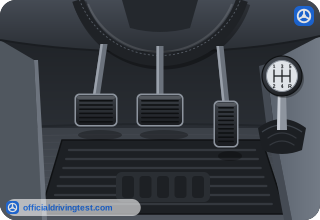
- Release the accelerator
- Press the brake pedal
- Set the parking brake
- Shift into reverse
Show answer
Correct answer: Release the accelerator
The steps for shifting to a higher gear are to press the clutch pedal to the floor and then release the accelerator.
Source: Maine Driver’s License Manual (Rev 4/24), page 5-2 · Open this page in the manual (Manual page 5-2)
-
According to the manual, downshifting to slow the car on a down slope should not be done when what is true?
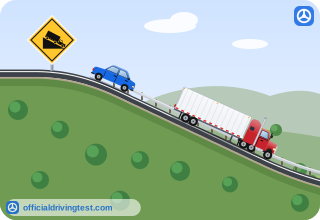
- The road is dry
- The engine is warm
- The road is slippery
- The car is traveling in a low gear
Show answer
Correct answer: The road is slippery
The manual lists slowing the car on a down slope as a reason to downshift, except when the road is slippery.
Source: Maine Driver’s License Manual (Rev 4/24), page 5-2 · Open this page in the manual (Manual page 5-2)
-
When downshifting, what do you do after releasing the accelerator if you also want to slow down?
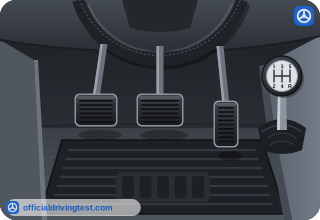
- Set the parking brake
- Press the brake pedal
- Shift to the next higher gear
- Press the accelerator again
Show answer
Correct answer: Press the brake pedal
The downshifting steps say to release the accelerator and, if you also want to slow down, press the brake pedal.
Source: Maine Driver’s License Manual (Rev 4/24), page 5-2 · Open this page in the manual (Manual page 5-2)
-
What may a sudden decrease in speed, such as braking sharply, require you to do when downshifting?
- Shift to the next higher gear
- Stay in the same gear and release the clutch
- Shift into neutral and coast
- Shift to an even lower gear
Show answer
Correct answer: Shift to an even lower gear
A sudden decrease in speed may require you to shift to an even lower gear, as when downshifting from fourth gear to second.
Source: Maine Driver’s License Manual (Rev 4/24), page 5-2 · Open this page in the manual (Manual page 5-2)
-
To keep a manual transmission car from rolling backward when you start on an uphill grade, what do you do first?
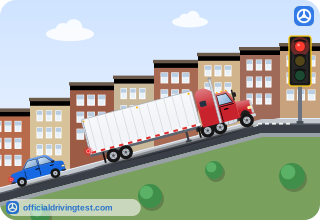
- Set the parking brake
- Press the accelerator to the floor
- Shift into reverse
- Turn off the engine
Show answer
Correct answer: Set the parking brake
The first step for holding a manual car in place on an uphill grade is to set the parking brake.
Source: Maine Driver’s License Manual (Rev 4/24), page 5-2 · Open this page in the manual (Manual page 5-2)
-
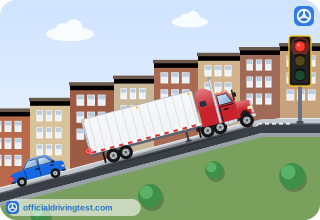
When starting uphill in a manual transmission car, when do you release the parking brake?
- Before you press the clutch pedal to the floor
- Only after you have shifted into second gear
- As you begin to feel the car pulling forward
- Right after the car begins rolling backward
Show answer
Correct answer: As you begin to feel the car pulling forward
You release the parking brake as you begin to feel the car pulling forward.
Source: Maine Driver’s License Manual (Rev 4/24), page 5-2 · Open this page in the manual (Manual page 5-2)
-
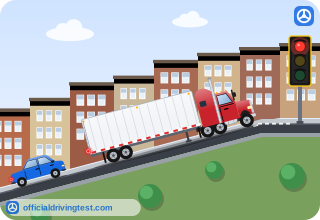
After starting uphill in a manual transmission car, in which gear do you accelerate until you can shift into second gear?
- Third gear
- First gear
- Reverse
- Neutral
Show answer
Correct answer: First gear
The manual says to accelerate in first gear until you have gained enough speed to shift into second gear.
Source: Maine Driver’s License Manual (Rev 4/24), page 5-2 · Open this page in the manual (Manual page 5-2)
-
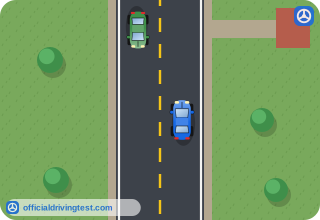
What do you check before you move your foot to the brake pedal to stop?
- The fuel level and the gauges
- Whether the parking brake is set
- The owner’s manual for the right gear
- Your mirrors for traffic to the rear
Show answer
Correct answer: Your mirrors for traffic to the rear
The stopping steps start with checking your mirrors for traffic to the rear.
Source: Maine Driver’s License Manual (Rev 4/24), page 5-2 · Open this page in the manual (Manual page 5-2)
-
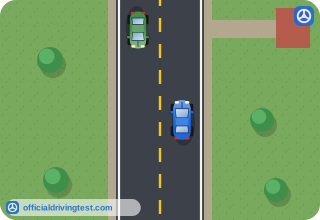
How does the manual say to press the brake pedal when stopping?
- Steadily and smoothly
- Quickly and as hard as you can
- Only with the parking brake
- With alternating light and hard pressure
Show answer
Correct answer: Steadily and smoothly
The manual says to press the brake pedal steadily and smoothly until your vehicle comes to a stop.
Source: Maine Driver’s License Manual (Rev 4/24), page 5-2 · Open this page in the manual (Manual page 5-2)
-
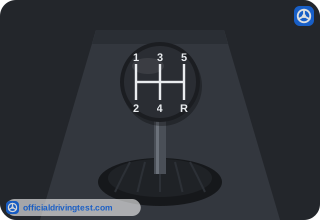
In a manual transmission vehicle, what else do you do while coming to a stop?
- Shift into reverse
- Release the parking brake
- Depress the clutch
- Turn off the engine
Show answer
Correct answer: Depress the clutch
In a manual transmission vehicle, you also depress the clutch while coming to a stop.
Source: Maine Driver’s License Manual (Rev 4/24), page 5-2 · Open this page in the manual (Manual page 5-2)
-
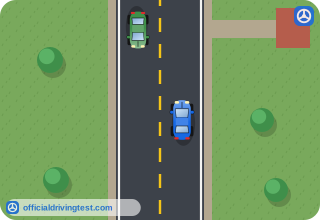
How should you signal to the driver behind you that you will stop or slow down where that driver does not expect it?
- Press the brake pedal once and hold it firmly
- Tap your brake pedal three or four times quickly
- Release the gas pedal and coast without braking
- Sound your horn twice
Show answer
Correct answer: Tap your brake pedal three or four times quickly
The manual says to tap your brake pedal three or four times quickly to signal your intention to the driver behind you.
Source: Maine Driver’s License Manual (Rev 4/24), page 5-3 · Open this page in the manual (Manual page 5-3)
-
Which statement about turning the steering wheel in the direction you want to go is correct?
- It applies only when going forward
- It applies only when going in reverse
- It applies only at low speeds
- It works both going forward and in reverse
Show answer
Correct answer: It works both going forward and in reverse
The manual says to always turn the steering wheel in the direction you want to go, whether going forward or in reverse.
Source: Maine Driver’s License Manual (Rev 4/24), page 5-3 · Open this page in the manual (Manual page 5-3)
-
What part of your hands should you use when steering?
- Your fingers, not your palms
- Your palms, not your fingers
- Your fingers and palms equally
- Your thumbs only
Show answer
Correct answer: Your fingers, not your palms
The manual says to use your fingers, not the palms of your hands, when steering.
Source: Maine Driver’s License Manual (Rev 4/24), page 5-3 · Open this page in the manual (Manual page 5-3)
-
Where should you keep your thumbs when steering?
- Wrapped around the rim from behind
- Tucked inside the rim of the wheel
- Up along the face of the steering wheel
- Resting on the dashboard
Show answer
Correct answer: Up along the face of the steering wheel
The manual says to keep your thumbs up along the face of the steering wheel.
Source: Maine Driver’s License Manual (Rev 4/24), page 5-3 · Open this page in the manual (Manual page 5-3)
-
How should you grip the steering wheel?
- Loosely with only your fingertips
- Firmly but gently
- As tightly as you can
- Lightly with one hand
Show answer
Correct answer: Firmly but gently
The manual says to grip the steering wheel firmly but gently.
Source: Maine Driver’s License Manual (Rev 4/24), page 5-3 · Open this page in the manual (Manual page 5-3)
-
To maintain better vehicle control, what does the manual say you should never do?
- Grip the wheel with both hands
- Steer with your fingers
- Turn the wheel in the direction you want to go
- Hold the inside of the wheel when driving
Show answer
Correct answer: Hold the inside of the wheel when driving
To maintain better vehicle control, you should never hold the inside of the wheel when driving.
Source: Maine Driver’s License Manual (Rev 4/24), page 5-3 · Open this page in the manual (Manual page 5-3)
-
Why does the manual say to check behind the vehicle before you get in to back up?
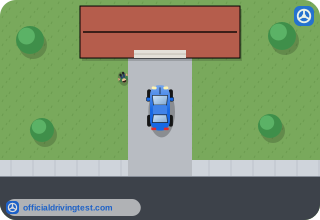
- Children or small objects are hard to see from the driver’s seat
- Your mirrors are blocked when the doors are closed
- Back-up cameras do not work until the car is moving
- Other drivers cannot see your brake lights from behind
Show answer
Correct answer: Children or small objects are hard to see from the driver’s seat
Children or small objects are hard to see from the driver’s seat, so you check behind the vehicle before you get in.
Source: Maine Driver’s License Manual (Rev 4/24), page 5-3 · Open this page in the manual (Manual page 5-3)
-
What does the manual say about relying on mirrors or a back-up camera while backing?
- A back-up camera is enough once the car is in reverse
- Mirrors alone are enough if you back slowly
- Do not depend solely on them, because they give a limited view
- A back-up camera shows the whole area around the vehicle
Show answer
Correct answer: Do not depend solely on them, because they give a limited view
Mirrors do not show the area directly behind the vehicle and a back-up camera provides a limited view, so you should not depend solely on them.
Source: Maine Driver’s License Manual (Rev 4/24), page 5-3 · Open this page in the manual (Manual page 5-3)
-
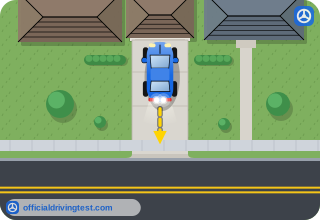
Why does the manual say to back slowly?
- The engine uses more fuel in reverse
- It is harder to steer while backing
- Mirrors work only when the car is stopped
- Back-up cameras shut off at higher speeds
Show answer
Correct answer: It is harder to steer while backing
The manual says to back slowly because it is harder to steer while backing.
Source: Maine Driver’s License Manual (Rev 4/24), page 5-3 · Open this page in the manual (Manual page 5-3)
-
When backing, in which direction should you steer?
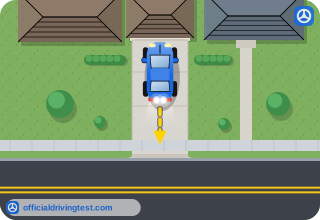
- In the direction you want the front of the vehicle to move
- Opposite to the direction you want the rear to move
- Straight until the vehicle has stopped
- In the direction you want the rear of the vehicle to move
Show answer
Correct answer: In the direction you want the rear of the vehicle to move
The manual says to steer in the direction you want the rear of the vehicle to move.
Source: Maine Driver’s License Manual (Rev 4/24), page 5-3 · Open this page in the manual (Manual page 5-3)
-
If you are turning while backing, what should you do?
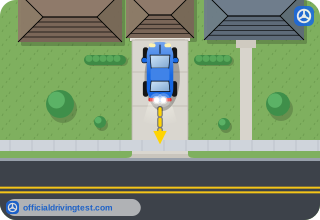
- Make quick checks to the front and sides
- Look only through the rear window
- Watch only the back-up camera
- Stop and shift into neutral before each turn
Show answer
Correct answer: Make quick checks to the front and sides
If turning while backing, you make quick checks to the front and sides.
Source: Maine Driver’s License Manual (Rev 4/24), page 5-3 · Open this page in the manual (Manual page 5-3)
-
How fast may you back up?
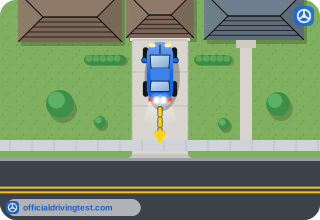
- No faster than 10 mph
- No faster than the traffic behind you
- No faster than a slow walk
- As fast as needed to clear the space
Show answer
Correct answer: No faster than a slow walk
The manual says to back no faster than a slow walk.
Source: Maine Driver’s License Manual (Rev 4/24), page 5-3 · Open this page in the manual (Manual page 5-3)
-
Until when should you continue looking to the rear while backing?
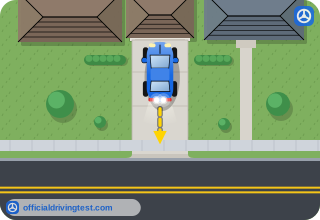
- Until the vehicle starts moving
- Until you are fully stopped
- Until you shift out of reverse
- Until you reach the curb
Show answer
Correct answer: Until you are fully stopped
The manual says to continue looking to the rear until you are fully stopped.
Source: Maine Driver’s License Manual (Rev 4/24), page 5-3 · Open this page in the manual (Manual page 5-3)
-
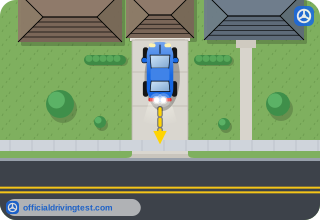
Because it is hard to see while you are backing, what does the manual say you should try to do?
- Back only on straight roads
- Back only with a passenger watching
- Back only with the windows closed
- Do as little backing as possible
Show answer
Correct answer: Do as little backing as possible
The manual says that because it is hard to see while backing, you should try to do as little backing as possible.
Source: Maine Driver’s License Manual (Rev 4/24), page 5-3 · Open this page in the manual (Manual page 5-3)
-
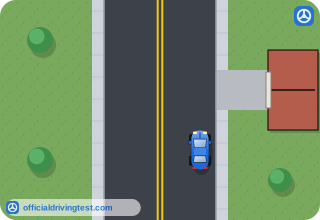
When entering a driveway or parking space, what does the manual say to do unless signs forbid it?
- Back into it
- Pull in nose first
- Enter it at an angle
- Park in it parallel to the curb
Show answer
Correct answer: Back into it
You back into a driveway or parking space unless signs forbid it, so you will be going forward when you pull out.
Source: Maine Driver’s License Manual (Rev 4/24), page 5-3 · Open this page in the manual (Manual page 5-3)
-
When you stop or start the car, the manual says not to idle for more than how long?
- Five minutes
- One minute
- Ten minutes
- Thirty minutes
Show answer
Correct answer: One minute
The manual says not to idle for more than one minute when you stop or start the car.
Source: Maine Driver’s License Manual (Rev 4/24), page 5-4 · Open this page in the manual (Manual page 5-4)
-
What does the manual say is a more efficient way to warm the motor than idling?
- Letting it idle for five minutes
- Revving the engine while parked
- Running the heater on high while parked
- Driving slowly for the first few minutes
Show answer
Correct answer: Driving slowly for the first few minutes
Driving slowly for the first few minutes is a more efficient way to warm the motor.
Source: Maine Driver’s License Manual (Rev 4/24), page 5-4 · Open this page in the manual (Manual page 5-4)
-
After you accelerate smoothly out of a turn, what should you make sure of?
- That your hazard lights are on
- That your headlights are on high beam
- That your horn has sounded
- That your signal cancels
Show answer
Correct answer: That your signal cancels
The manual says to accelerate smoothly and make sure your signal cancels.
Source: Maine Driver’s License Manual (Rev 4/24), page 7-1 · Open this page in the manual (Manual page 7-1)
-
What should you do with your turn signal after completing a lane change?
- Cancel it
- Leave it on until the next intersection
- Switch it to the hazard flashers
- Flash it once more
Show answer
Correct answer: Cancel it
The manual says to cancel your turn signal after completing a lane change.
Source: Maine Driver’s License Manual (Rev 4/24), page 7-3 · Open this page in the manual (Manual page 7-3)
-
How far before making a change should you always signal what you intend to do?
- At least 25 feet
- At least 50 feet
- At least 200 feet
- At least 100 feet
Show answer
Correct answer: At least 100 feet
The manual says to always signal at least 100 feet before making a change.
Source: Maine Driver’s License Manual (Rev 4/24), page 7-4 · Open this page in the manual (Manual page 7-4)
-
By law, through what must you be able to see clearly?
- The windshield and the rearview mirror only
- All windows, the windshield, and all mirrors
- The windshield and front side windows only
- The windshield and the headlights only
Show answer
Correct answer: All windows, the windshield, and all mirrors
The manual says that by law, and for safety, you must see clearly through all windows, the windshield and all mirrors.
Source: Maine Driver’s License Manual (Rev 4/24), page 8-1 · Open this page in the manual (Manual page 8-1)
-
What should you carry so you can stop and clean your windshield when needed?
- A can of de-icer
- A spare wiper blade
- A rag
- A small snow shovel
Show answer
Correct answer: A rag
The manual advises carrying a rag so you can stop and clean the windshield when needed.
Source: Maine Driver’s License Manual (Rev 4/24), page 8-1 · Open this page in the manual (Manual page 8-1)
-
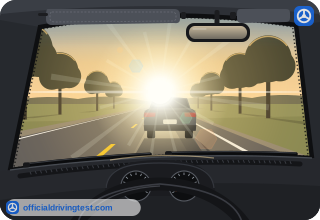
What makes it hard to see when bright sun or headlights hit your windshield?
- A dirty windshield
- A clean windshield
- A windshield with washer fluid on it
- A windshield with a rearview mirror
Show answer
Correct answer: A dirty windshield
Bright sun or headlights on a dirty windshield make it hard to see, so the windshield should be kept clean.
Source: Maine Driver’s License Manual (Rev 4/24), page 8-1 · Open this page in the manual (Manual page 8-1)
-
Why should you clean the inside of your windows frequently if you smoke while driving?
- Smoke weakens the glass over time
- A film builds up on the glass inside the car
- Smoke damages the defroster system
- Smoke leaves ash on the outside mirrors
Show answer
Correct answer: A film builds up on the glass inside the car
Smoking while driving causes a film to build up on the glass inside the car.
Source: Maine Driver’s License Manual (Rev 4/24), page 8-1 · Open this page in the manual (Manual page 8-1)