Maine: Signals and vehicle controls — Part 1 Practice Test
Inspecting and maintaining your vehicle, adjusting the seat and mirrors, starting, shifting, stopping and backing, and signaling with lights and hand signals. — Part 1
Independent educational site · not affiliated with any government agency or DMV
Ready? Test yourself
- Instant feedback with an explanation
- Every answer cites its source in the manual
- Your best score is saved on this device
Questions are original and based on the official manual "Maine Driver’s License Manual" (Rev 4/24), Maine Bureau of Motor Vehicles.
All 40 questions in this practice test
Take the test above first, then use this list to study. Tap “Show answer” to see the correct answer and explanation.
Show the questions and answersHide the questions
-
How often must a vehicle bearing a Maine registration have a Maine inspection?
- Once a year
- Once every two years
- Every six months
- Only when the vehicle is sold
Show answer
Correct answer: Once a year
These inspections must be done at an official inspection station once a year.
Source: Maine Driver’s License Manual (Rev 4/24), page 2-4 · Open this page in the manual (Manual page 2-4)
-
Before it is operated on any public way, a vehicle bearing a Maine registration must have what?
- A current excise tax receipt
- A current Maine inspection
- A commercial safety permit
- A municipal operating permit
Show answer
Correct answer: A current Maine inspection
All motor vehicles bearing a Maine registration must have a current Maine inspection before being operated on any public way.
Source: Maine Driver’s License Manual (Rev 4/24), page 2-4 · Open this page in the manual (Manual page 2-4)
-
Does a motorcycle need to have a valid inspection sticker?
- Yes, a motorcycle must have a valid inspection sticker
- No, only cars and trucks need one
- No, motorcycles are inspected only when they are sold
- Only motorcycles with an engine over 500 cc
Show answer
Correct answer: Yes, a motorcycle must have a valid inspection sticker
Motorcycles must have a valid inspection sticker.
Source: Maine Driver’s License Manual (Rev 4/24), page 2-4 · Open this page in the manual (Manual page 2-4)
-
When may a police officer conduct a vehicle safety inspection?
- Only once a year
- Only after a crash
- Only within 30 days of the sticker expiring
- At any time
Show answer
Correct answer: At any time
A police officer may conduct a vehicle safety inspection at any time, and Maine occasionally uses legal roadblocks for that purpose.
Source: Maine Driver’s License Manual (Rev 4/24), page 2-4 · Open this page in the manual (Manual page 2-4)
-
What is required of the Vehicle Identification Number (VIN) to pass inspection?
- It must not be changed, removed, or hidden from view
- It must be repainted every time the vehicle is inspected
- It must be re-stamped each year at the inspection station
- It must be written on the inspection sticker by the mechanic
Show answer
Correct answer: It must not be changed, removed, or hidden from view
The VIN must not be changed, removed, or hidden from view.
Source: Maine Driver’s License Manual (Rev 4/24), page 2-4 · Open this page in the manual (Manual page 2-4)
-
To meet inspection standards, a rear view mirror must not be which of these?

- Tinted, adjustable, or mounted on the windshield
- Cracked, broken, clouded or have sharp edges
- Smaller than the side mirrors or set below eye level
- Equipped with a dimming switch or a built-in light
Show answer
Correct answer: Cracked, broken, clouded or have sharp edges
A rear view mirror must not be cracked, broken, clouded or have sharp edges.
Source: Maine Driver’s License Manual (Rev 4/24), page 2-4 · Open this page in the manual (Manual page 2-4)
-
To meet state inspection standards, how far away must a vehicle’s horn be loud enough to hear?
- 100 feet
- 300 feet
- 500 feet
- 200 feet
Show answer
Correct answer: 200 feet
The horn must be loud enough to hear from 200 feet away.
Source: Maine Driver’s License Manual (Rev 4/24), page 2-4 · Open this page in the manual (Manual page 2-4)
-
What must a defroster do to pass inspection?
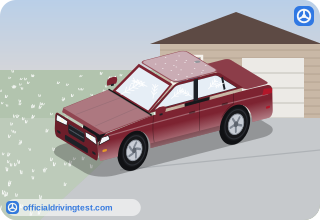
- Have a working fan that blows heated air on the windshield
- Heat the rear window and both side mirrors
- Clear the windshield within one minute of starting the engine
- Blow cool air on the side windows and the dashboard
Show answer
Correct answer: Have a working fan that blows heated air on the windshield
The defroster fan must work and the defroster must blow heated air on the windshield.
Source: Maine Driver’s License Manual (Rev 4/24), page 2-4 · Open this page in the manual (Manual page 2-4)
-
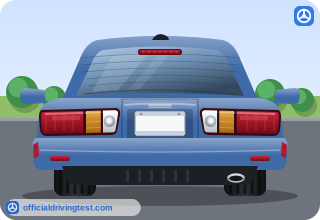
What must be true of the lenses of a vehicle’s lights to pass inspection?
- They must be clear or amber
- They must be tinted to reduce glare
- They must be of the proper color and type
- They must be replaced every year
Show answer
Correct answer: They must be of the proper color and type
All lights must work properly, and all lenses must be of the proper color and type.
Source: Maine Driver’s License Manual (Rev 4/24), page 2-4 · Open this page in the manual (Manual page 2-4)
-
Which two brakes must a vehicle have to pass inspection?
- A foot brake and an engine brake
- A hand brake and an air brake
- A parking brake and a trailer brake
- A foot brake and a parking brake
Show answer
Correct answer: A foot brake and a parking brake
Your vehicle must have a foot brake and a parking brake.
Source: Maine Driver’s License Manual (Rev 4/24), page 2-4 · Open this page in the manual (Manual page 2-4)
-
To pass inspection, the foot brake must be able to stop the vehicle within what distance when it is going 20 miles per hour?
- 10 feet
- 30 feet
- 40 feet
- 60 feet
Show answer
Correct answer: 30 feet
The foot brake must be able to stop the vehicle within 30 feet when the vehicle is going 20 miles per hour.
Source: Maine Driver’s License Manual (Rev 4/24), page 2-4 · Open this page in the manual (Manual page 2-4)
-
What must the parking brake be able to do to pass inspection?
- Hold the vehicle on a hill
- Lock the rear wheels while the vehicle moves at 20 miles per hour
- Release automatically when the engine is started
- Work only when the foot brake is also applied
Show answer
Correct answer: Hold the vehicle on a hill
The parking brake must be able to hold the vehicle on a hill.
Source: Maine Driver’s License Manual (Rev 4/24), page 2-4 · Open this page in the manual (Manual page 2-4)
-
What must be true of the windshield and windows to meet inspection standards?
- They must be replaced every two years regardless of condition
- They must be tinted to reduce glare from other vehicles
- They must not be cracked, broken, clouded, or blocked
- They must be open at least one inch while the vehicle is moving
Show answer
Correct answer: They must not be cracked, broken, clouded, or blocked
The windshield and windows must not be cracked, broken, clouded, or blocked.
Source: Maine Driver’s License Manual (Rev 4/24), page 2-4 · Open this page in the manual (Manual page 2-4)
-
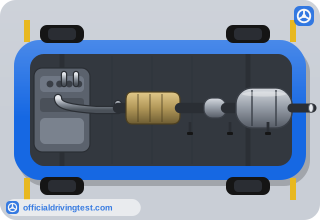
Which describes an exhaust system that meets inspection standards?
- Fitted with a muffler that is no more than five years old
- Free of rust and replaced every two years
- Sealed with tape wherever small holes are found
- Free of holes and leaks, and not making excessive noise
Show answer
Correct answer: Free of holes and leaks, and not making excessive noise
All parts of the exhaust system must be free of holes and leaks and must not make excessive noise.
Source: Maine Driver’s License Manual (Rev 4/24), page 2-4 · Open this page in the manual (Manual page 2-4)
-
To meet inspection standards, all parts of the fuel system must be free of what?
- Dents and scratches
- Holes and leaks
- Mud and dust
- Odor and vapors
Show answer
Correct answer: Holes and leaks
All parts of the fuel system must be free of holes and leaks.
Source: Maine Driver’s License Manual (Rev 4/24), page 2-4 · Open this page in the manual (Manual page 2-4)
-
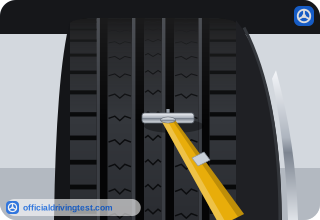
To meet inspection standards, passenger vehicle tires must have how much tread?
- 1/32 of an inch
- 3/32 of an inch
- 2/32 of an inch
- 5/32 of an inch
Show answer
Correct answer: 2/32 of an inch
Tires must have 2/32 of an inch of tread and be free of cuts, tears, or other dangerous conditions.
Source: Maine Driver’s License Manual (Rev 4/24), page 2-4 · Open this page in the manual (Manual page 2-4)
-
What is required of the registration plates on a vehicle to pass inspection?
- All issued plates must be attached to the vehicle and easy to read
- Only the rear plate must be attached and visible from 50 feet
- Plates must be removed and replaced with new ones each year
- Plates may be kept in the vehicle if the registration is current
Show answer
Correct answer: All issued plates must be attached to the vehicle and easy to read
All issued plates must be attached to the vehicle and easy to read.
Source: Maine Driver’s License Manual (Rev 4/24), page 2-4 · Open this page in the manual (Manual page 2-4)
-
Which condition of the body or chassis meets state inspection standards?
- Small amounts of rust, as long as no parts are missing or loose
- Sharp edges, as long as they are covered with tape
- Missing trim pieces, as long as the frame is sound
- All parts present and free of rust, sharp edges, or other defects
Show answer
Correct answer: All parts present and free of rust, sharp edges, or other defects
All parts of the body or chassis must be present and free of rust, sharp edges, or other defects.
Source: Maine Driver’s License Manual (Rev 4/24), page 2-4 · Open this page in the manual (Manual page 2-4)
-
What is required of the speedometer and odometer to pass inspection?
- They must be calibrated by an inspection station each year
- They must work properly and not be tampered with or changed
- They must display speed in both miles and kilometers per hour
- They must have been replaced within the last five years
Show answer
Correct answer: They must work properly and not be tampered with or changed
The speedometer and odometer must work properly and not be tampered with or changed.
Source: Maine Driver’s License Manual (Rev 4/24), page 2-4 · Open this page in the manual (Manual page 2-4)
-
What does inspection require of the fuel inlet?
- It must be fitted with a locking gas cap
- It must be on the driver’s side of the vehicle
- It must accept both gasoline and diesel nozzles
- It must not be changed in any way
Show answer
Correct answer: It must not be changed in any way
The fuel inlet must not be changed in any way.
Source: Maine Driver’s License Manual (Rev 4/24), page 2-4 · Open this page in the manual (Manual page 2-4)
-
Which part must be properly installed and not changed in any way to pass inspection?
- The catalytic converter
- The horn
- The windshield wipers
- The defroster
Show answer
Correct answer: The catalytic converter
The catalytic converter must be properly installed and not changed in any way.
Source: Maine Driver’s License Manual (Rev 4/24), page 2-4 · Open this page in the manual (Manual page 2-4)
-
How much can dirty headlight lenses cut your night vision?
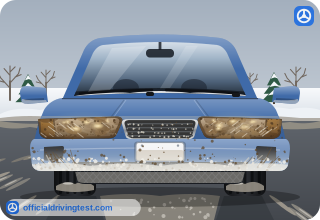
- By about one quarter
- By about one third
- By more than half
- By less than one tenth
Show answer
Correct answer: By more than half
Dirty lenses can cut your night vision by more than half.
Source: Maine Driver’s License Manual (Rev 4/24), page 2-5 · Open this page in the manual (Manual page 2-5)
-
If your signal and brake lights do not work properly, what will you be unable to do?
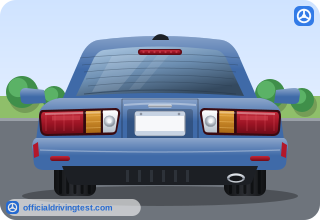
- See the road ahead at night
- Communicate with other drivers
- Start the engine
- Tell how fast you are going
Show answer
Correct answer: Communicate with other drivers
If signal and brake lights do not work properly, you will not be able to communicate with other drivers.
Source: Maine Driver’s License Manual (Rev 4/24), page 2-5 · Open this page in the manual (Manual page 2-5)
-
Why should you keep the glass of windows and windshields clear, inside and out?
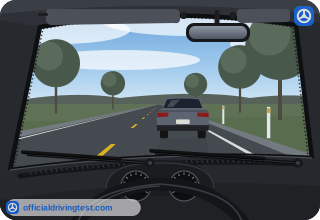
- To keep the wiper blades from wearing out
- To make the inspection sticker easier to read
- To reduce glare and ensure good visibility
- To keep the defroster fan from running too long
Show answer
Correct answer: To reduce glare and ensure good visibility
Keeping the glass clear, inside and out, reduces glare and ensures good visibility.
Source: Maine Driver’s License Manual (Rev 4/24), page 2-5 · Open this page in the manual (Manual page 2-5)
-
When should you check the air pressure in your tires?
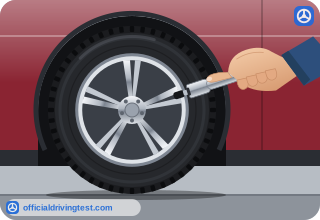
- Right after driving, when the tires are hot
- After the vehicle has been driven at least 30 miles
- Once the engine has fully warmed up
- When the tires are cold, before you have driven very far
Show answer
Correct answer: When the tires are cold, before you have driven very far
Check tire air pressure when the tires are “cold”, before you have driven very far.
Source: Maine Driver’s License Manual (Rev 4/24), page 2-5 · Open this page in the manual (Manual page 2-5)
-
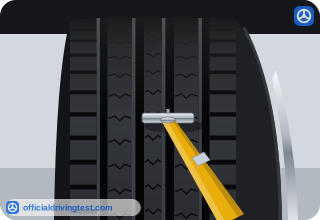
Besides less control and using more gas, what is a risk if your tires are not in good shape?
- A broken axle
- A tire blow-out
- A stalled engine
- Failure of the power steering
Show answer
Correct answer: A tire blow-out
Tires that are not in good shape give you less control, use more gas and risk a tire blow-out.
Source: Maine Driver’s License Manual (Rev 4/24), page 2-5 · Open this page in the manual (Manual page 2-5)
-
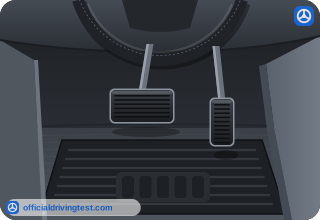
When you step on the brake pedal, what should you check?
- That the pedal stays well above the floor
- That the pedal sinks halfway to the floor
- That the pedal pulses against your foot
- That the pedal stays loose until the brakes warm up
Show answer
Correct answer: That the pedal stays well above the floor
When you step on the brake pedal it should stay well above the floor.
Source: Maine Driver’s License Manual (Rev 4/24), page 2-5 · Open this page in the manual (Manual page 2-5)
-
Which is a sign of a brake problem that you should be aware of when braking?
- The engine idles faster once you stop
- The brake lights flicker as you slow down
- The headlights dim when you press the pedal
- The vehicle pulls to one side
Show answer
Correct answer: The vehicle pulls to one side
Listen for scraping and squealing and be aware if your vehicle is pulling to one side when braking.
Source: Maine Driver’s License Manual (Rev 4/24), page 2-5 · Open this page in the manual (Manual page 2-5)
-
Your steering wheel has too much play if it turns how far without moving the vehicle?
- One inch or more
- Two inches or more
- Half an inch or more
- Four inches or more
Show answer
Correct answer: Two inches or more
If the steering wheel turns two inches or more without moving the vehicle it has too much play.
Source: Maine Driver’s License Manual (Rev 4/24), page 2-5 · Open this page in the manual (Manual page 2-5)
-
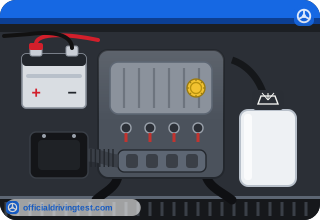
What kind of washer fluid should you use in the winter?
- A fluid with antifreeze
- Plain water without any additives
- Any fluid with a rain-repellent coating
- A fluid mixed half and half with oil
Show answer
Correct answer: A fluid with antifreeze
Keep the windshield fluid bottle full and use a fluid with antifreeze in the winter.
Source: Maine Driver’s License Manual (Rev 4/24), page 2-5 · Open this page in the manual (Manual page 2-5)
-
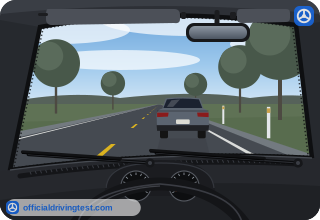
What should you check on your windshield wiper blades?
- Length and the angle of the arm
- Color and thickness of the rubber
- Wear and tension on the windshield
- Age and the brand name
Show answer
Correct answer: Wear and tension on the windshield
Check the wiper blades for wear and for tension on the windshield.
Source: Maine Driver’s License Manual (Rev 4/24), page 2-5 · Open this page in the manual (Manual page 2-5)
-
If you hear loud noises or rattles or notice rust on the muffler or tailpipe, what should you do?
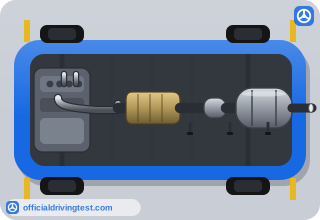
- Have the exhaust system checked by a mechanic
- Wait until the next yearly inspection to look at it
- Wrap the exhaust pipe with tape to quiet it
- Replace the muffler yourself the same day
Show answer
Correct answer: Have the exhaust system checked by a mechanic
You should have the exhaust system checked by a mechanic if you hear loud noises or rattles or see rust on the muffler or tailpipe.
Source: Maine Driver’s License Manual (Rev 4/24), page 2-5 · Open this page in the manual (Manual page 2-5)
-
What does a leaky muffler improperly discharge?
- Engine oil mist
- Hot engine coolant
- Water vapor only
- Poisonous fumes
Show answer
Correct answer: Poisonous fumes
A leaky muffler improperly discharges poisonous fumes.
Source: Maine Driver’s License Manual (Rev 4/24), page 2-5 · Open this page in the manual (Manual page 2-5)
-
Carbon monoxide, found in the exhaust of all gas-powered engines, is what kind of gas?
- A harmless gas with a strong smell
- A visible gray gas that smells like fuel
- A deadly, odorless gas
- A heavy gas that only forms in cold weather
Show answer
Correct answer: A deadly, odorless gas
Carbon monoxide is a deadly, odorless gas found in the exhaust of all gas-powered engines.
Source: Maine Driver’s License Manual (Rev 4/24), page 2-5 · Open this page in the manual (Manual page 2-5)
-
Which of these does carbon monoxide cause?
- Blurred color vision
- Ringing in the ears
- Sneezing and watery eyes
- Muscle cramps in the legs
Show answer
Correct answer: Ringing in the ears
Carbon monoxide causes weariness, headaches, dizziness, nausea and ringing in the ears.
Source: Maine Driver’s License Manual (Rev 4/24), page 2-5 · Open this page in the manual (Manual page 2-5)
-
A gasoline-powered motor vehicle may not emit visible smoke, other than water vapor, for more than how long on a public way?
- 5 consecutive seconds
- 2 consecutive seconds
- 10 consecutive seconds
- 15 consecutive seconds
Show answer
Correct answer: 5 consecutive seconds
A person may not operate a gasoline-powered vehicle on a public way if it emits visible smoke, other than water vapor, for more than 5 consecutive seconds.
Source: Maine Driver’s License Manual (Rev 4/24), page 2-5 · Open this page in the manual (Manual page 2-5)
-
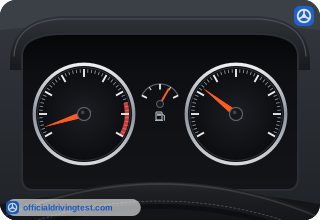
Which problems can your vehicle’s gauges notify you of?
- Worn tires or low washer fluid
- A leaking muffler or loose fan belt
- Overheating or loss of oil pressure
- A cracked windshield or dirty headlights
Show answer
Correct answer: Overheating or loss of oil pressure
Gauges can notify you of potentially serious problems such as overheating or loss of oil pressure.
Source: Maine Driver’s License Manual (Rev 4/24), page 2-5 · Open this page in the manual (Manual page 2-5)
-
You push down on the front and rear of your vehicle. How many times must it bounce before you may need new shocks?
- More than once
- More than twice
- More than four times
- More than six times
Show answer
Correct answer: More than twice
If the vehicle bounces more than twice when you push down on the front and rear, you may need new shocks.
Source: Maine Driver’s License Manual (Rev 4/24), page 2-5 · Open this page in the manual (Manual page 2-5)
-
What can worn shocks make difficult?
- Braking on a straight, dry road
- Starting the engine in cold weather
- Seeing the instrument panel clearly at night
- Staying in your lane when driving through curves
Show answer
Correct answer: Staying in your lane when driving through curves
When shocks are worn you may have difficulty staying in your lane when driving through curves in the road.
Source: Maine Driver’s License Manual (Rev 4/24), page 2-5 · Open this page in the manual (Manual page 2-5)
-
Which of these should you check, or have checked, on a regular basis?
- Fan belt tightness and wear
- Spark plug gap and wire wear
- Door lock and hinge tightness
- Dashboard bulb brightness
Show answer
Correct answer: Fan belt tightness and wear
You should regularly check or have checked the oil level, engine coolant, transmission fluid, brake fluid level and fan belt tightness and wear.
Source: Maine Driver’s License Manual (Rev 4/24), page 2-6 · Open this page in the manual (Manual page 2-6)