Iowa: Signals and vehicle controls — Part 3 Practice Test
Maintaining your vehicle, seats and mirrors, driver-assistance systems, starting, shifting, braking, steering, backing, turn signals, headlights and the horn. — Part 3
Independent educational site · not affiliated with any government agency or DMV
Ready? Test yourself
- Instant feedback with an explanation
- Every answer cites its source in the manual
- Your best score is saved on this device
Questions are original and based on the official manual "Iowa Driver’s License Manual" (July 2026), Iowa Department of Transportation.
All 37 questions in this practice test
Take the test above first, then use this list to study. Tap “Show answer” to see the correct answer and explanation.
Show the questions and answersHide the questions
-
As the vehicle moves closer to a bicycle, pedestrian, or obstacle, what happens to the detection system’s beeps?
- They become slower
- They become quieter
- They become faster
- They stay at the same pace
Show answer
Correct answer: They become faster
The beeps become faster as the vehicle moves closer to the bicycle, pedestrian, or obstacle.
Source: Iowa Driver’s License Manual (July 2026), page 29
-
What does it mean when the beeps of a bicycle, pedestrian, or obstacle detection system become continuous?
- The system has been switched off
- A crash is imminent
- The vehicle is traveling above 25 mph
- The obstacle is moving away from the vehicle
Show answer
Correct answer: A crash is imminent
A crash is imminent when the detection beeps become continuous.
Source: Iowa Driver’s License Manual (July 2026), page 29
-
Which of these can a bicycle, pedestrian, or obstacle detection warning be?
- A message sent to the driver’s phone
- A flash from the other vehicle’s headlights
- A change in engine idle speed
- A quick brake pulse
Show answer
Correct answer: A quick brake pulse
Warnings can come as sounds, visuals, vibrations, a quick brake pulse, or a mix of warnings.
Source: Iowa Driver’s License Manual (July 2026), page 29
-
What do the sensors of a detection system need in order to function properly?
- To be covered when parked
- To be adjusted by a mechanic every month
- To be kept clean
- To be switched off in rain
Show answer
Correct answer: To be kept clean
Detection sensors need to be kept clean in order to function properly.
Source: Iowa Driver’s License Manual (July 2026), page 29
-
What does a curve speed warning do?
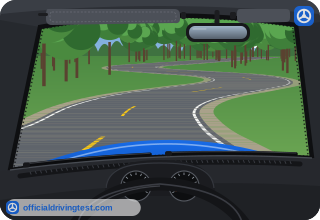
- Steers the vehicle around curves automatically
- Warns you when you approach a curve or exit too quickly
- Brakes the vehicle automatically on every curve
- Tells you the posted speed limit of the next road
Show answer
Correct answer: Warns you when you approach a curve or exit too quickly
A curve speed warning warns you when you approach a curve or exit on the road too quickly.
Source: Iowa Driver’s License Manual (July 2026), page 29
-
How does a curve speed warning track the vehicle’s speed and location?
- Via radar sensors at the front of the vehicle
- Via the rear camera
- Via signals from the road signs
- Via GPS
Show answer
Correct answer: Via GPS
A curve speed warning tracks the vehicle’s speed and location via GPS and warns you to slow down for curves and exits.
Source: Iowa Driver’s License Manual (July 2026), page 29
-
What is the job of a forward collision warning system?
- It alerts you to an impending collision with a slower or stationary vehicle or object ahead
- It slows the vehicle on its own whenever traffic ahead moves more slowly
- It alerts you when your vehicle begins to drift out of its lane without a signal
- It shows you how fast the vehicle ahead of you is travelling
Show answer
Correct answer: It alerts you to an impending collision with a slower or stationary vehicle or object ahead
A forward collision warning system alerts you to an impending collision with a slower-moving or stationary vehicle or object in front of you so you can brake or swerve in time.
Source: Iowa Driver’s License Manual (July 2026), page 30
-
When a forward collision warning sounds, who has to do the braking or steering?
- The system, which brakes the vehicle as soon as it warns you
- The system, which steers the vehicle around the hazard on its own
- The driver, because the warning alone does not brake the vehicle
- Nobody, because the warning clears the hazard from your path
Show answer
Correct answer: The driver, because the warning alone does not brake the vehicle
The forward collision warning alone will not automatically brake for the driver; it warns you so that you can brake or steer.
Source: Iowa Driver’s License Manual (July 2026), page 30
-
What kind of sensors does a forward collision warning system typically use?
- Sonar or laser sensors
- Camera or radar sensors
- Tire pressure sensors
- Wheel speed sensors
Show answer
Correct answer: Camera or radar sensors
The sensors at the front of the vehicle that detect how close it is to vehicles ahead are typically camera or radar based.
Source: Iowa Driver’s License Manual (July 2026), page 30
-
Which of these is one way a forward collision warning system may warn you?
- Locking the doors
- Dimming the headlights
- Opening the windows
- A quick brake pulse
Show answer
Correct answer: A quick brake pulse
Forward collision warnings can come as sounds, visuals, vibrations, a quick brake pulse, or a mix of these warnings.
Source: Iowa Driver’s License Manual (July 2026), page 30
-
How many times per second does a forward collision warning system scan the traffic ahead?
- 5 times
- 50 times
- 20 times
- 100 times
Show answer
Correct answer: 20 times
A forward collision warning system scans the traffic ahead 20 times per second.
Source: Iowa Driver’s License Manual (July 2026), page 30
-
Up to how far in front of your vehicle does a forward collision warning system scan the traffic ahead?
- 500 feet
- 100 feet
- 250 feet
- 1,000 feet
Show answer
Correct answer: 500 feet
A forward collision warning system scans the traffic ahead up to 500 feet in front of the vehicle and warns you to brake or steer if a hazard is in your path.
Source: Iowa Driver’s License Manual (July 2026), page 30
-
In the example alert levels for forward collision warning, how long before a collision does the system warn you at 15 to 18 mph?
- 1 second
- 2 seconds
- 6 seconds
- 3 seconds
Show answer
Correct answer: 3 seconds
In the manual's example of forward collision warning alert levels, the warning comes 3 seconds before a collision at 15 to 18 mph.
Source: Iowa Driver’s License Manual (July 2026), page 30
-
In the example alert levels for forward collision warning, how long before a collision does the system warn you at speeds between 18 and 50 mph?
- 2 seconds
- 4 seconds
- 6 seconds
- 8 seconds
Show answer
Correct answer: 4 seconds
In the manual's example of forward collision warning alert levels, the warning comes 4 seconds before a collision at 18 to 50 mph.
Source: Iowa Driver’s License Manual (July 2026), page 30
-
In the example alert levels for forward collision warning, how long before a collision does the system warn you at 50 mph or more?
- 2 seconds
- 5 seconds
- 7 seconds
- 10 seconds
Show answer
Correct answer: 5 seconds
In the manual's example of forward collision warning alert levels, the warning comes 5 seconds before a collision at 50 mph or more.
Source: Iowa Driver’s License Manual (July 2026), page 30
-
What does a lane departure warning device do?
- It alerts you when you drift out of your lane
- It warns you when you are following another vehicle too closely behind
- It warns you when you go over the posted speed limit on the road
- It warns you when objects are close to the vehicle as you park
Show answer
Correct answer: It alerts you when you drift out of your lane
A lane departure warning device alerts you with visual, vibration, or sound warnings when you are drifting out of your lane.
Source: Iowa Driver’s License Manual (July 2026), page 30
-
What does a lane departure warning feature rely on to operate?
- Other drivers' signals
- A rear camera image
- Roadway markings
- The posted speed limit
Show answer
Correct answer: Roadway markings
A lane departure warning feature relies on roadway markings to operate.
Source: Iowa Driver’s License Manual (July 2026), page 30
-
How should you treat a lane departure warning device when it comes to your lane position?
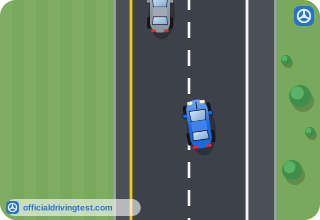
- Do not rely on it to maintain correct lane position
- Rely on it to keep the vehicle centered in its lane
- Rely on it on straight roads and ignore it on curves
- Rely on it whenever the roadway markings are faint
Show answer
Correct answer: Do not rely on it to maintain correct lane position
You should not rely on lane departure warning devices to maintain correct lane position.
Source: Iowa Driver’s License Manual (July 2026), page 30
-
What does a rear cross-traffic alert warn you about?
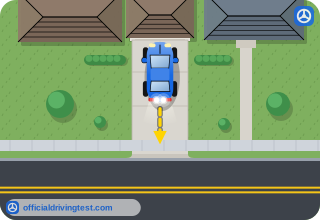
- A vehicle following too closely behind you
- A bicyclist riding beside the vehicle as you start
- One or more vehicles about to enter your backing path
- Low tire pressure when you shift into reverse
Show answer
Correct answer: One or more vehicles about to enter your backing path
A rear cross-traffic alert warns you if one or more vehicles are about to enter the backing path.
Source: Iowa Driver’s License Manual (July 2026), page 31
-
A rear cross-traffic alert sounds a tone or flashes lights on the mirrors or dashboard. What is it telling you to do?
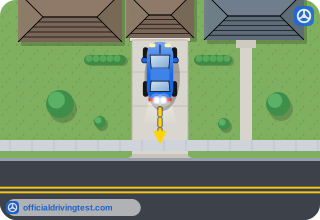
- Back out more quickly
- Stop the vehicle
- Turn the wheel sharply
- Honk and keep backing
Show answer
Correct answer: Stop the vehicle
A rear cross-traffic alert, through a warning tone or flashing lights on the mirrors or dashboard, alerts you to stop.
Source: Iowa Driver’s License Manual (July 2026), page 31
-
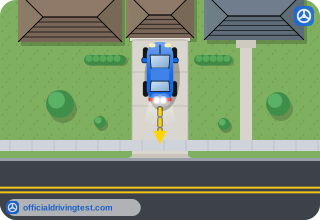
A rear cross-traffic alert is not enough on its own. What else should you remain aware of near the rear of your vehicle?
- People or objects that may enter the path
- Only other vehicles in the lane behind you
- Only parked cars beside the vehicle
- Nothing, because the alert detects everything
Show answer
Correct answer: People or objects that may enter the path
You should not depend on the rear cross-traffic alert and should remain aware of people or objects that may enter the path near the rear of the vehicle.
Source: Iowa Driver’s License Manual (July 2026), page 31
-
What do vehicle assistance system technologies do?
- They replace the driver in every driving situation
- They teach drivers how to pass the driving test
- They warn drivers only after a crash has happened
- They assist drivers in avoiding hazards and crashes
Show answer
Correct answer: They assist drivers in avoiding hazards and crashes
Vehicle assistance system technologies assist drivers in avoiding hazards and crashes, either by adjusting the vehicle or by helping the driver make adjustments.
Source: Iowa Driver’s License Manual (July 2026), page 31
-
With driver assistance technologies, what may the driver still need to do?
- Nothing, because the vehicle handles every hazard
- Wait for the system to finish before reacting
- Change how the vehicle is operated to prevent a crash
- Switch the technologies off before moving
Show answer
Correct answer: Change how the vehicle is operated to prevent a crash
The driver may still need to make changes to the operation of the vehicle to prevent a problem or crash, but the vehicle assists.
Source: Iowa Driver’s License Manual (July 2026), page 31
-
What does automatic emergency braking do?
- It alerts you with a sound but never touches the brakes
- It applies the brakes only when the vehicle is moving in reverse
- It holds the vehicle in its lane by braking individual wheels
- It urgently applies the brakes if you fail to respond to traffic ahead
Show answer
Correct answer: It urgently applies the brakes if you fail to respond to traffic ahead
Automatic emergency braking can sense slow or stopped traffic or an object ahead and urgently applies the brakes if you fail to respond.
Source: Iowa Driver’s License Manual (July 2026), page 31
-
With automatic emergency braking, what should you continue to do?
- Wait for the brakes to engage before you slow down
- Follow closely, because the system will stop the vehicle
- Scan the road for hazards and maintain a safe following distance
- Look only at the dashboard display for warnings
Show answer
Correct answer: Scan the road for hazards and maintain a safe following distance
You should continue to scan the road for hazards and maintain a safe following distance, even though the vehicle may slow or stop on its own.
Source: Iowa Driver’s License Manual (July 2026), page 31
-
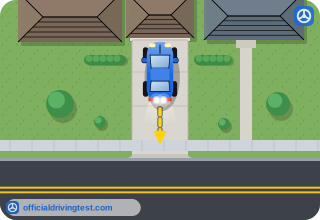
You are backing up and an object is detected. If you do not react to the beeps or visual indicators, what does automatic reverse braking do?
- The brakes are applied immediately to help avoid a crash
- It sounds more beeps until you shift out of reverse
- It turns the steering wheel away from the object
- It shifts the vehicle into park after a short delay
Show answer
Correct answer: The brakes are applied immediately to help avoid a crash
If you do not react while backing up, the reverse automatic brake activates and the brakes are immediately applied to help avoid a potential crash.
Source: Iowa Driver’s License Manual (July 2026), page 32
-
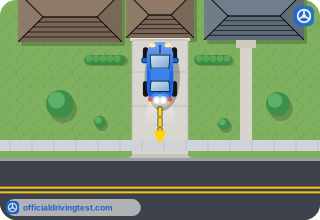
What should you continue to do when your vehicle has automatic reverse braking?
- Rely on the automatic brakes and stop looking behind you
- Check mirrors, check over your shoulder, and use rear cameras
- Check only the dashboard indicators and warning beeps
- Use only the beeps to judge the distance to objects
Show answer
Correct answer: Check mirrors, check over your shoulder, and use rear cameras
Do not depend on automatic reverse braking; continue to check mirrors, check over the shoulder (head checks), and use rear cameras if equipped.
Source: Iowa Driver’s License Manual (July 2026), page 32
-
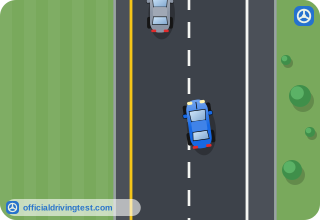
If you do not return to your lane after a lane keeping assist alert, what may the feature do?
- Brake until the vehicle stops
- Lock the steering wheel in place
- Gently steer the vehicle into its lane
- Speed up to leave the lane quickly
Show answer
Correct answer: Gently steer the vehicle into its lane
If you do not take action after a lane keeping assist alert, the feature may gently steer the vehicle into its lane.
Source: Iowa Driver’s License Manual (July 2026), page 32
-
How is lane keeping assist easily cancelled?
- By pressing the horn
- By nudging the wheel
- By tapping the brake pedal
- By flashing the headlights
Show answer
Correct answer: By nudging the wheel
Lane keeping assist is easily cancelled by nudging the wheel.
Source: Iowa Driver’s License Manual (July 2026), page 32
-
When will lane keeping assist not work?
- When the road is wide and the pavement is dry
- When the vehicle is driven during the daytime
- When the vehicle travels in a straight line for miles
- When lane lines are faint or covered with snow or dirt
Show answer
Correct answer: When lane lines are faint or covered with snow or dirt
Lane keeping assist will not work when lane lines are faint or covered with snow or dirt.
Source: Iowa Driver’s License Manual (July 2026), page 32
-
Even with lane keeping assist, what must the driver do?
- Always maintain control of the vehicle and remain within the driving lane
- Let the feature keep the vehicle in its lane without watching the road
- Take both hands off the wheel while the feature is on
- Watch the lane only when an alert sounds
Show answer
Correct answer: Always maintain control of the vehicle and remain within the driving lane
The driver should not depend on lane keeping assist and should always maintain control of the vehicle on the roadway and remain within the driving lane.
Source: Iowa Driver’s License Manual (July 2026), page 32
-
When does left turn crash avoidance monitor traffic?
- When you turn right onto a busy road at any speed
- When you turn left across traffic at low speeds
- When you merge onto a freeway from an on-ramp
- When you change lanes at highway speeds
Show answer
Correct answer: When you turn left across traffic at low speeds
Left turn crash avoidance monitors traffic when you turn left across traffic at low speeds, such as at a traffic light.
Source: Iowa Driver’s License Manual (July 2026), page 32
-
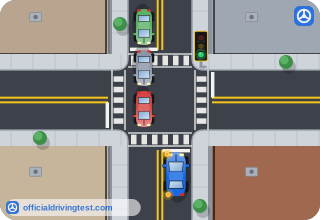
With left turn crash avoidance, what happens if the gap in oncoming traffic is too small to permit a turn?
- The system sounds the horn until the gap is clear
- The system speeds up the turn to clear the gap
- The system turns on the hazard lights for you
- The system prevents the vehicle from moving forward
Show answer
Correct answer: The system prevents the vehicle from moving forward
If the gap in traffic is too small to permit a turn, left turn crash avoidance prevents the vehicle from moving forward.
Source: Iowa Driver’s License Manual (July 2026), page 32
-
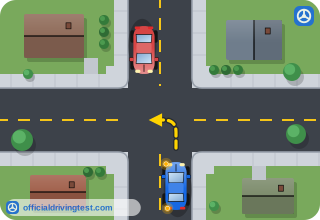
How does left turn crash avoidance stop a turn when a crash with an oncoming vehicle is imminent?
- By steering the vehicle back into its original lane
- By accelerating to clear the oncoming vehicle
- By initiating an automatic emergency braking maneuver
- By switching off the engine during the turn
Show answer
Correct answer: By initiating an automatic emergency braking maneuver
If a crash with an oncoming vehicle is imminent, the system stops the turn in time by initiating an automatic emergency braking maneuver.
Source: Iowa Driver’s License Manual (July 2026), page 32
-
With left turn crash avoidance, who determines when it is safe to turn in front of other traffic?
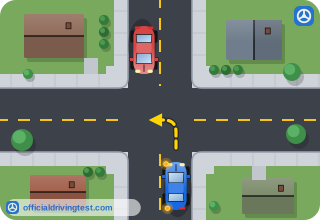
- You do, by scanning and monitoring the road ahead
- The system, which handles every left turn safely
- The oncoming driver, who must yield to you
- The traffic signal alone, regardless of oncoming cars
Show answer
Correct answer: You do, by scanning and monitoring the road ahead
Do not depend on left turn crash avoidance; you should safely scan and monitor the driving environment ahead for hazards and determine when it is safe to turn in front of other traffic.
Source: Iowa Driver’s License Manual (July 2026), page 32
-
What should you carefully review to learn about vehicle features that are new to you?
- Your vehicle owner's manual
- The dealership's sales brochure
- Your vehicle's registration papers
- Your insurance policy
Show answer
Correct answer: Your vehicle owner's manual
You should carefully review your vehicle owner's manual to read about any features that are new to you and make sure you know how they work.
Source: Iowa Driver’s License Manual (July 2026), page 33
-
If you still have questions about a new vehicle feature, what does the manual say to do?
- Ask the examiner at the driver's license service center
- Reach out to the dealership so they can explain
- Turn the feature off and avoid using it
- Check with the county treasurer's office
Show answer
Correct answer: Reach out to the dealership so they can explain
If you still have questions about a feature after reviewing your owner's manual, reach out to the dealership so they can explain.
Source: Iowa Driver’s License Manual (July 2026), page 33