Florida: Signals & vehicle controls
Signaling, horns, headlights, and what to do if your vehicle breaks down. Split into 3 shorter tests so you're not stuck in one long quiz.
Independent educational site · not affiliated with any government agency or DMV
Choose a part
Signals & vehicle controls — Part 1
Questions in this part include: “A vehicle's horn must be heard from a distance of how far?”
Signals & vehicle controls — Part 2
Questions in this part include: “What is the key difference between a Collision Warning System and a Collision Intervention System?”
Signals & vehicle controls — Part 3
Questions in this part include: “In Florida, what is illegal to do to a vehicle's pollution control device?”
Questions are original and based on the official manual "Florida Driver License Handbook" (Revised August 2023), Florida Department of Highway Safety and Motor Vehicles (FLHSMV).
All 55 Signals & vehicle controls questions with answers
Choose a part above to take a practice test, or study every question and answer here.
Show the questions and answersHide the questions
1Part 119 questions
-
According to Florida's equipment standards, how many separate braking systems must a car have, each capable of stopping the car alone?
- Two
- One
- Three
- Four
Show answer
Correct answer: Two
A car must have two braking systems, each able to stop the car alone; the parking or emergency brake should be strong enough to hold the car on any hill.
Source: Florida Driver License Handbook (Revised August 2023), page 38
-
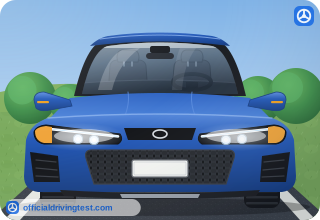
In Florida, low beam headlights must show objects how far ahead, and be visible from how far away?
- Show objects 300 feet ahead; visible from 1,000 feet
- Show objects 450 feet ahead; visible from 1,000 feet
- Show objects 150 feet ahead; visible from 1,000 feet
- Show objects 150 feet ahead; visible from 500 feet
Show answer
Correct answer: Show objects 150 feet ahead; visible from 1,000 feet
Low beam headlights must show objects 150 feet ahead and be visible from 1,000 feet.
Source: Florida Driver License Handbook (Revised August 2023), page 38
-
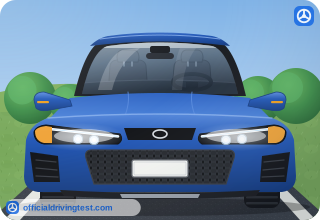
High beam headlights must show objects how far ahead?
- 300 feet
- 600 feet
- 150 feet
- 450 feet
Show answer
Correct answer: 450 feet
High beam headlights must show objects 450 feet ahead and be visible from 1,000 feet.
Source: Florida Driver License Handbook (Revised August 2023), page 38
-
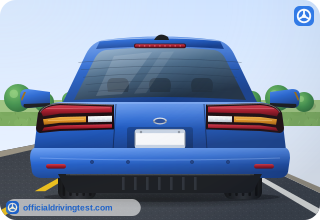
A vehicle's two red taillights must be visible from how far away?
- 200 feet
- 1,000 feet
- 300 feet
- 500 feet
Show answer
Correct answer: 1,000 feet
A vehicle must have two red taillights visible from 1,000 feet.
Source: Florida Driver License Handbook (Revised August 2023), page 38
-
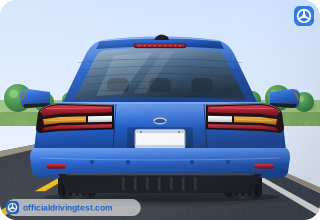
In the daytime, a vehicle's brake lights must be visible from how far away?
- 100 feet
- 500 feet
- 300 feet
- 200 feet
Show answer
Correct answer: 300 feet
A vehicle must have two red brake lights visible from 300 feet in the daytime.
Source: Florida Driver License Handbook (Revised August 2023), page 38
-
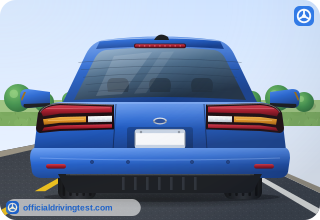
The white license plate light must make the plate visible from how far away?
- 50 feet
- 20 feet
- 200 feet
- 100 feet
Show answer
Correct answer: 50 feet
The license plate light must be a white light that makes the license plate visible from 50 feet.
Source: Florida Driver License Handbook (Revised August 2023), page 38
-
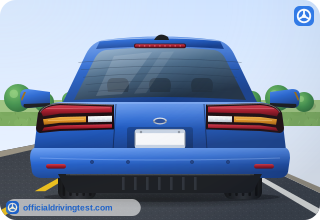
Directional signals (amber, or white in front / red in rear) must be visible from how far away?
- 300 feet
- 200 feet
- 500 feet
- 1,000 feet
Show answer
Correct answer: 500 feet
Directional signals must be amber, or white in front and red in the rear, and visible from 500 feet.
Source: Florida Driver License Handbook (Revised August 2023), page 38
-
A vehicle's horn must be heard from a distance of how far?
- 200 feet
- 100 feet
- 300 feet
- 150 feet
Show answer
Correct answer: 200 feet
The horn must be able to be heard from a distance of 200 feet.
Source: Florida Driver License Handbook (Revised August 2023), page 38
-
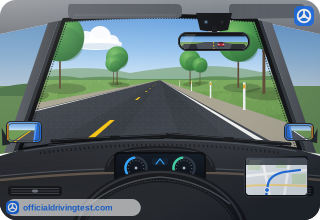
A required rear-view mirror must give a view how far to the rear?
- 500 feet
- 200 feet
- 100 feet
- 300 feet
Show answer
Correct answer: 200 feet
A vehicle must have at least one rear-view mirror giving a view 200 feet to the rear.
Source: Florida Driver License Handbook (Revised August 2023), page 38
-
Which of the following is a Florida requirement for windshields?
- It may be tinted to any darkness the vehicle owner prefers
- It may be covered with any reflective material
- It must be safety glass and free of stickers not required by law
- It has no equipment standards in Florida
Show answer
Correct answer: It must be safety glass and free of stickers not required by law
Windshields must be safety glass, may not be covered or treated to be reflective or non-transparent, and must be free of stickers not required by law.
Source: Florida Driver License Handbook (Revised August 2023), page 38
-
Under Florida's window tint rules, side windows may not reflect more than what percentage of light?
- 35%
- 15%
- 25%
- 50%
Show answer
Correct answer: 25%
Side windows may not reflect more than 25% of light (rear windows may not reflect more than 35%).
Source: Florida Driver License Handbook (Revised August 2023), page 38
-
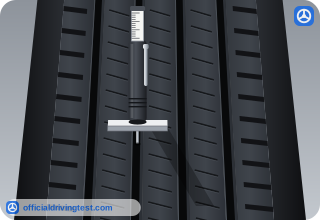
What is the minimum tire tread depth required in Florida?
- 3/32 of an inch
- 2/32 of an inch
- 5/32 of an inch
- 1/32 of an inch
Show answer
Correct answer: 3/32 of an inch
Tires should have a minimum tread of at least 3/32 of an inch or greater, with no worn spots showing the ply.
Source: Florida Driver License Handbook (Revised August 2023), page 38
-
Red lights visible from the front, and blue lights, are reserved for which vehicles?
- Emergency and law enforcement vehicles
- School buses only
- Any vehicle with a business license
- Tow trucks and taxis
Show answer
Correct answer: Emergency and law enforcement vehicles
Red lights visible from the front, and blue lights, are not permitted equipment except on emergency/law enforcement vehicles.
Source: Florida Driver License Handbook (Revised August 2023), page 38
-
Florida equipment rules do NOT permit more than how many spotlights on a vehicle?
- One
- Three
- Two
- Four
Show answer
Correct answer: Two
More than two spotlights, cowl or fender lights, fog lights, or other extra lights are not permitted.
Source: Florida Driver License Handbook (Revised August 2023), page 38
-
Which piece of equipment is NOT permitted on a Florida vehicle?
- A siren, bell, or whistle
- Amber directional signals
- A single spotlight
- A rear-view mirror
Show answer
Correct answer: A siren, bell, or whistle
A siren, bell, or whistle is not permitted equipment on a regular vehicle.
Source: Florida Driver License Handbook (Revised August 2023), page 38
-
A muffler is not permitted if it can be heard from more than how many feet, or if it emits smoke?
- 20 feet
- 50 feet
- 200 feet
- 100 feet
Show answer
Correct answer: 50 feet
A very loud muffler heard from more than 50 feet, or one that emits smoke, is not permitted.
Source: Florida Driver License Handbook (Revised August 2023), page 38
-
Which of the following is NOT permitted for a driver to have visible while driving?
- A television-type receiver
- The speedometer
- The fuel gauge
- A backup camera display
Show answer
Correct answer: A television-type receiver
A "television-type receiver" that the driver can see is not permitted equipment.
Source: Florida Driver License Handbook (Revised August 2023), page 39
-
It is not permitted for a driver to wear which of the following while operating a vehicle?
- Sunglasses
- A seatbelt
- Prescription eyeglasses
- Headsets or headphones
Show answer
Correct answer: Headsets or headphones
Headsets/headphones worn by the driver while operating a vehicle are not permitted.
Source: Florida Driver License Handbook (Revised August 2023), page 39
-
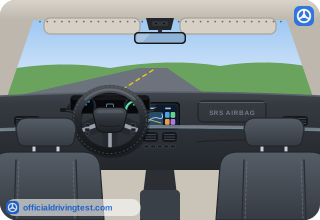
What is true about air bags and safety belts?
- Air bags make wearing a safety belt unnecessary
- Air bags are only required in the rear seats
- Air bags work with safety belts but do not replace them
- Safety belts are optional if the vehicle has air bags
Show answer
Correct answer: Air bags work with safety belts but do not replace them
Air bags are designed to work with safety belts to protect occupants during a collision; they are NOT a replacement for wearing a safety belt.
Source: Florida Driver License Handbook (Revised August 2023), page 39
2Part 218 questions
-
What is the key difference between a Collision Warning System and a Collision Intervention System?
- They are the same thing with different names
- A Warning System controls steering; an Intervention System only sounds an alarm
- Only Intervention Systems are found in Florida-registered vehicles
- A Warning System only alerts the driver; an Intervention System takes action to avoid a crash
Show answer
Correct answer: A Warning System only alerts the driver; an Intervention System takes action to avoid a crash
Collision Warning Systems only provide warnings and do NOT take action to avoid a crash, while Collision Intervention Systems are designed to take action to avoid a crash.
Source: Florida Driver License Handbook (Revised August 2023), page 39
-
Which ADAS feature alerts a driver with an audio or visual warning about vehicles in adjacent lanes that may not be seen when changing lanes?
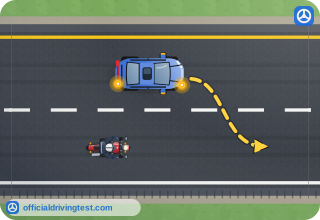
- Blind Spot Warning
- Lane Departure Warning
- Rear Cross Traffic Warning
- Forward Collision Warning
Show answer
Correct answer: Blind Spot Warning
Blind Spot Warning systems alert drivers with an audio or visual warning if there are vehicles in adjacent lanes the driver may not see when changing lanes.
Source: Florida Driver License Handbook (Revised August 2023), page 39
-
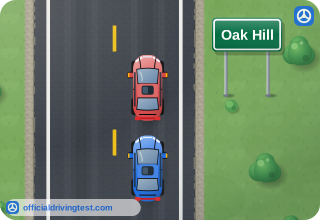
Which ADAS feature monitors your vehicle's speed, the speed of the vehicle ahead, and the distance between vehicles, warning of an impending crash?
- Automatic Crash Notification
- Rear Automatic Braking
- Forward Collision Warning
- Blind Spot Warning
Show answer
Correct answer: Forward Collision Warning
Forward Collision Warning systems monitor your vehicle's speed, the speed of the vehicle in front of it, and the distance between the vehicles, warning the driver of an impending crash.
Source: Florida Driver License Handbook (Revised August 2023), page 39
-
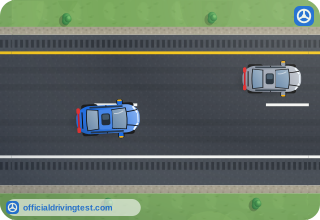
Which ADAS feature monitors lane markings and alerts the driver when it detects the vehicle drifting out of its lane?
- Lane Centering Assistance
- Blind Spot Intervention
- Lane Departure Warning
- Adaptive Cruise Control
Show answer
Correct answer: Lane Departure Warning
Lane Departure Warning systems monitor lane markings and alert the driver when it detects that the vehicle is drifting out of its lane.
Source: Florida Driver License Handbook (Revised August 2023), page 39
-
Which Collision Intervention System applies the vehicle's brakes automatically to avoid or reduce an impending forward crash with another vehicle?
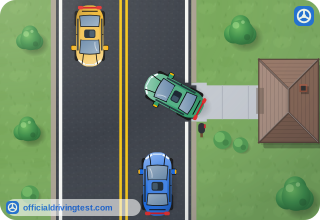
- Automatic Emergency Braking
- Forward Collision Warning
- Adaptive Cruise Control
- Automatic High Beams
Show answer
Correct answer: Automatic Emergency Braking
Automatic Emergency Braking systems apply the vehicle's brakes automatically in time to avoid or mitigate an impending forward crash with another vehicle.
Source: Florida Driver License Handbook (Revised August 2023), page 39
-
If a driver ignores a blind spot warning and starts changing into an occupied lane, which system automatically applies light braking or steering input to guide the vehicle back?
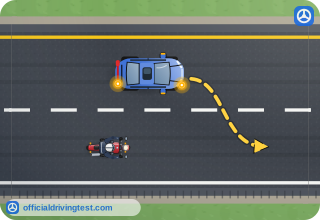
- Rear Cross Traffic Warning
- Automatic Crash Notification
- Lane Departure Warning
- Blind Spot Intervention
Show answer
Correct answer: Blind Spot Intervention
Blind Spot Intervention systems monitor the blind spot, and if the driver ignores the warning and starts changing into an occupied lane, the system applies light braking pressure or steering input to guide the vehicle back into its original lane.
Source: Florida Driver License Handbook (Revised August 2023), page 39
-
Which system uses information from forward sensors to detect a pedestrian in the vehicle's path and provides automatic braking if the driver has not acted?
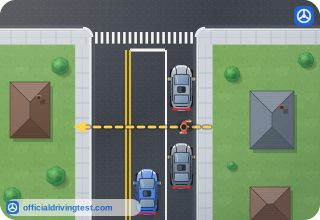
- Semi-Automatic Beam Switching Headlamps
- Rear Automatic Braking
- Pedestrian Automatic Emergency Braking
- Lane Keeping Assistance
Show answer
Correct answer: Pedestrian Automatic Emergency Braking
Pedestrian Automatic Emergency Braking systems use information from forward sensors to detect a pedestrian in the vehicle's path and provide automatic braking if the driver has not acted to avoid a crash.
Source: Florida Driver License Handbook (Revised August 2023), page 39
-
Which system uses sensors, like parking sensors and the backup camera, to automatically apply the brakes if a crash is imminent while backing up?
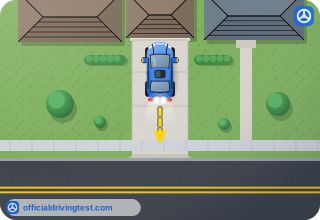
- Rear Automatic Braking
- Rear Cross Traffic Warning
- Automatic Emergency Braking
- Lane Centering Assistance
Show answer
Correct answer: Rear Automatic Braking
Rear Automatic Braking uses sensors, like parking sensors and the backup camera, to detect objects behind the vehicle and automatically applies the brakes if a crash is imminent while in reverse.
Source: Florida Driver License Handbook (Revised August 2023), page 40
-
Automatic High Beams, also known as semi-automatic beam switching headlamps, switch between low and high beam based on what?
- The time set on the dashboard clock
- The vehicle's fuel level
- Manual input from the passenger only
- Lighting conditions and traffic
Show answer
Correct answer: Lighting conditions and traffic
Automatic High Beams use photometric sensors or onboard cameras to detect lighting conditions and traffic, switching between low and high beam, including when an oncoming vehicle approaches.
Source: Florida Driver License Handbook (Revised August 2023), page 40
-
Which Driving Control Assistance feature automatically adjusts your vehicle's speed to keep a pre-set distance from the vehicle ahead?
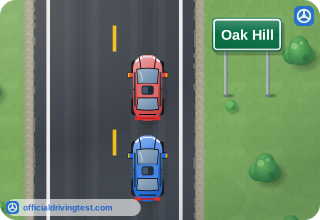
- Adaptive Cruise Control
- Forward Collision Warning
- Lane Keeping Assistance
- Lane Centering Assistance
Show answer
Correct answer: Adaptive Cruise Control
Adaptive Cruise Control automatically adjusts the vehicle's speed to keep a pre-set distance between it and the vehicle in front of it.
Source: Florida Driver License Handbook (Revised August 2023), page 40
-
Which feature uses a camera-based vision system to automatically and continuously apply steering inputs to keep the vehicle centered within its lane?
- Lane Departure Warning
- Lane Centering Assistance
- Automatic Crash Notification
- Adaptive Cruise Control
Show answer
Correct answer: Lane Centering Assistance
Lane Centering Assistance utilizes a camera-based vision system to monitor the vehicle's lane position and automatically and continuously apply the steering inputs needed to keep the vehicle centered within its lane.
Source: Florida Driver License Handbook (Revised August 2023), page 40
-
Which system uses lane departure warning sensors and, if the vehicle is about to unintentionally leave its lane, activates and corrects the steering, brakes, or accelerates one or more wheels?
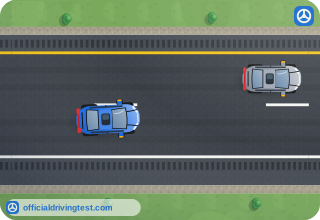
- Adaptive Cruise Control
- Lane Keeping Assistance
- Blind Spot Warning
- Lane Departure Warning
Show answer
Correct answer: Lane Keeping Assistance
Lane Keeping Assistance systems use lane departure warning sensors; if the vehicle is about to unintentionally move out of its lane, the system activates and corrects the steering, brakes, or accelerates one or more wheels to return the vehicle to its lane.
Source: Florida Driver License Handbook (Revised August 2023), page 40
-
What is an important limitation to remember about backup cameras?
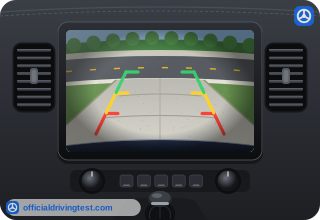
- They are required only on commercial vehicles
- They are not a replacement for mirrors or turning around to look
- They only work at night
- They automatically apply the brakes in every situation
Show answer
Correct answer: They are not a replacement for mirrors or turning around to look
Backup cameras help the driver see behind the vehicle while in reverse, but it's important to remember that they are not a replacement for mirrors or turning around to look.
Source: Florida Driver License Handbook (Revised August 2023), page 40
-
What does an anti-lock brake system (ABS) help a driver do during emergency braking?
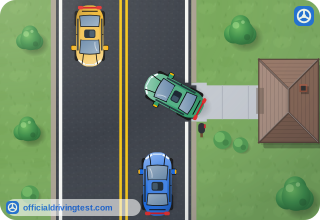
- Automatically steers the car around obstacles
- Prevents skidding and allows the driver to steer
- Increases the vehicle's top speed
- Turns off the headlights automatically
Show answer
Correct answer: Prevents skidding and allows the driver to steer
ABS prevents skidding and allows drivers to steer during an emergency braking situation, helping improve vehicle stability, steering, and stopping capability.
Source: Florida Driver License Handbook (Revised August 2023), page 40
-
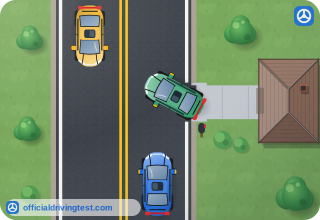
In an emergency situation, what should a driver with ABS brakes do?
- Take their foot off the brake completely
- Shift into neutral immediately
- Press down hard on the brake pedal, hold it, and steer out of danger
- Pump the brake pedal rapidly, as with conventional brakes
Show answer
Correct answer: Press down hard on the brake pedal, hold it, and steer out of danger
Drivers with ABS need to press down hard on the brake pedal, hold it, and steer out of danger; the ABS automatically pumps the brakes faster than the driver could.
Source: Florida Driver License Handbook (Revised August 2023), page 40
-
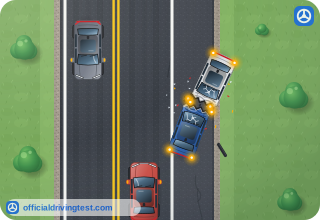
Which system notifies emergency responders that a crash has occurred and provides its location, often connecting the driver to an operator after air bag deployment or a sudden deceleration?
- Adaptive Cruise Control
- Rear Cross Traffic Warning
- Forward Collision Warning
- Automatic Crash Notification
Show answer
Correct answer: Automatic Crash Notification
Automatic Crash Notification systems notify emergency responders that a crash occurred and provide its location; when an air bag deploys or there is a dramatic sudden deceleration, the system connects to an operator who can communicate with the driver.
Source: Florida Driver License Handbook (Revised August 2023), page 40
-
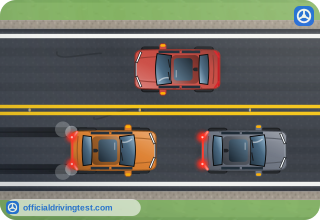
Drivers with conventional (non-ABS) brakes must do what to stop in an emergency where traction is lost and the vehicle slides?
- Shift into park
- Take their foot completely off the brake
- Press once and hold without pumping
- Pump the brakes
Show answer
Correct answer: Pump the brakes
Drivers with conventional brakes must pump the brakes in order to stop in an emergency situation where traction is lost and the vehicle slides.
Source: Florida Driver License Handbook (Revised August 2023), page 41
-
How can you determine if your vehicle has ABS?
- Drive at highway speed and slam the brakes to test it
- There is no way to find out
- Check the vehicle's paint color
- Look for a lit ABS dashboard symbol after starting the engine
Show answer
Correct answer: Look for a lit ABS dashboard symbol after starting the engine
You can determine if the vehicle has ABS by looking for a lighted ABS symbol on the dashboard after starting the engine, checking the owner's manual, or asking the dealer.
Source: Florida Driver License Handbook (Revised August 2023), page 41
3Part 318 questions
-
For a car weighing less than 2,500 pounds, what is the maximum allowable bumper height (front and rear) between the pavement and the bottom of the bumper?
- 22 inches
- 18 inches
- 26 inches
- 30 inches
Show answer
Correct answer: 22 inches
For cars weighing less than 2,500 pounds, the maximum allowable bumper height is 22 inches, both front and rear. Height limits are based on the vehicle's net shipping weight, not a modified or altered weight.
Source: Florida Driver License Handbook (Revised August 2023), page 41
-
In Florida, what is illegal to do to a vehicle's pollution control device?
- Have it inspected annually
- Replace it with an identical factory part
- Keep the owner's manual in the glove box
- Tamper with, remove, or cause it not to work
Show answer
Correct answer: Tamper with, remove, or cause it not to work
It is illegal to tamper with, remove, or cause not to work any pollution control device on your vehicle; doing so can damage the vehicle, increase air pollution, lower gas mileage, reduce efficiency, and cause breathing difficulties.
Source: Florida Driver License Handbook (Revised August 2023), page 41
-
A trailer, semitrailer, or pole trailer weighing 3,000 pounds or less must have which equipment?
- No equipment is required under this weight
- Four headlights and a horn
- Two rear reflectors, one at each side
- A rear-view mirror only
Show answer
Correct answer: Two rear reflectors, one at each side
A trailer, semitrailer, or pole trailer weighing 3,000 pounds or less must have two rear reflectors, one at each side, and a brake light if the trailer or load blocks/hides the brake lights on the towing vehicle.
Source: Florida Driver License Handbook (Revised August 2023), page 41
-
A trailer or semitrailer weighing more than 3,000 pounds must have which of the following, in addition to brakes and reflectors?
- Front and rear clearance lamps and side marker lamps
- Flashing blue warning lights on the front and rear
- A siren
- A television-type receiver
Show answer
Correct answer: Front and rear clearance lamps and side marker lamps
A trailer or semitrailer weighing more than 3,000 pounds must have two front clearance lamps, two side marker lamps, two reflectors, two rear clearance lamps, and brakes that the driver in the towing vehicle can operate.
Source: Florida Driver License Handbook (Revised August 2023), page 41
-
For a trailer or semitrailer over 3,000 pounds, the brakes operated by the towing vehicle's driver must be designed to do what?
- Automatically stop the trailer if it breaks away
- Turn on the trailer's hazard lights only when parked
- Disconnect the trailer's electrical system
- Increase the trailer's top speed
Show answer
Correct answer: Automatically stop the trailer if it breaks away
The brakes for a trailer or semitrailer over 3,000 pounds must be operable by the driver in the towing vehicle and designed and connected to automatically stop the trailer if it breaks away from the towing vehicle.
Source: Florida Driver License Handbook (Revised August 2023), page 42
-
A pole trailer weighing more than 3,000 pounds must have which of the following?
- No lighting equipment is required on a pole trailer
- A single headlight in the center
- A loud siren
- Side marker lamps, clearance lamps, and rear reflectors
Show answer
Correct answer: Side marker lamps, clearance lamps, and rear reflectors
A pole trailer weighing more than 3,000 pounds must have two side marker lamps, two clearance lamps, and two rear reflectors, one on each side.
Source: Florida Driver License Handbook (Revised August 2023), page 42
-
Every motor vehicle, trailer, semitrailer, and pole trailer must have two or more stop lamps, except vehicles built before which date, which are permitted only one?
- January 1, 1972
- January 1, 1960
- January 1, 1985
- January 1, 2000
Show answer
Correct answer: January 1, 1972
Every motor vehicle, trailer, semitrailer, and pole trailer must have two or more stop lamps; one stop lamp is permitted only on vehicles built before January 1, 1972.
Source: Florida Driver License Handbook (Revised August 2023), page 42
-
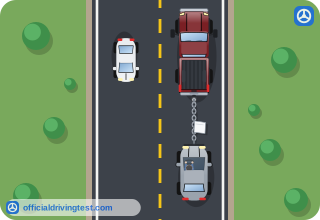
A drawbar or towing connection may not be more than how many feet long, unless towing poles, pipes, machinery, or objects that cannot be easily taken apart?
- 20 feet
- 15 feet
- 25 feet
- 10 feet
Show answer
Correct answer: 15 feet
The drawbar/towing connection must not be more than 15 feet long, unless you are towing poles, pipes, machinery, or other objects that cannot be easily taken apart.
Source: Florida Driver License Handbook (Revised August 2023), page 42
-
If a drawbar/towing connection is chain, rope, or cable, it must have a white flag of what minimum size attached to it?
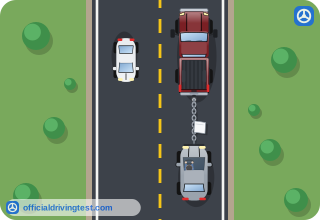
- 18 inches square
- 12 inches square
- 24 inches square
- 8 inches square
Show answer
Correct answer: 12 inches square
The drawbar/towing connection must have a white flag at least 12 inches square attached to it if it is chain, rope, or cable.
Source: Florida Driver License Handbook (Revised August 2023), page 42
-
When inspecting your brakes before driving, what is a sign that your brakes may need to be repaired?
- The fuel gauge drops quickly while the engine is idling
- The car pulls to one side or makes squealing noises when braking
- The radio volume changes on its own
- The car accelerates faster than usual from a full stop
Show answer
Correct answer: The car pulls to one side or makes squealing noises when braking
The handbook says if the car pulls to one side when braking, or you hear scraping or squealing noises, your brakes may need repair.
Source: Florida Driver License Handbook (Revised August 2023), page 59
-
If your rear window is covered or treated with material that makes it non-transparent, what must your vehicle be equipped with?
- An extra interior rear-view mirror mounted on the dashboard
- Nothing extra, as long as the driver checks blind spots more often
- Side mirrors on both sides allowing a rearview of at least 200 feet
- A rear-facing camera only, with no mirrors required
Show answer
Correct answer: Side mirrors on both sides allowing a rearview of at least 200 feet
If the rear window is non-transparent, the vehicle must be equipped with side mirrors on both sides that allow a rearview of at least 200 feet.
Source: Florida Driver License Handbook (Revised August 2023), page 59
-
Before you start your engine, what should you be sure the vehicle is in?
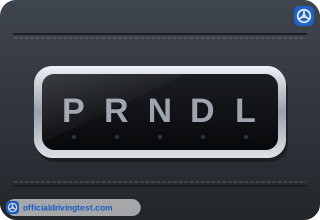
- Park or neutral
- Drive
- Low gear
- Reverse
Show answer
Correct answer: Park or neutral
Before starting your engine, be sure the vehicle is in park or neutral.
Source: Florida Driver License Handbook (Revised August 2023), page 59
-
How should you adjust your rear-view mirrors before driving?
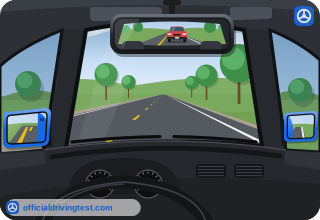
- Only after you reach highway speed
- So you can use them without leaning forward or backward
- Pointed toward the ground to check tire pressure
- As wide as possible, even if you must lean to see them
Show answer
Correct answer: So you can use them without leaning forward or backward
Adjust all rear-view mirrors so that you can use them without having to lean forward or backward.
Source: Florida Driver License Handbook (Revised August 2023), page 59
-
Before starting your engine, you should fasten your safety belt and make sure of what?
- That the windows are fully open
- That the radio is turned off
- That the trunk is locked from the outside
- That all passengers fasten their safety belts too
Show answer
Correct answer: That all passengers fasten their safety belts too
Before starting the engine, fasten your safety belt and make sure all passengers do the same.
Source: Florida Driver License Handbook (Revised August 2023), page 59
-
Before backing up, why should you check behind your vehicle before getting in, and then turn around to look through the rear window rather than relying on your mirrors?
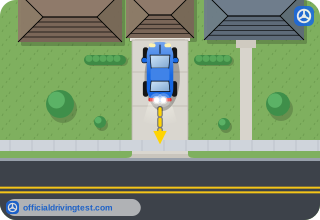
- It saves fuel by reducing the time the engine spends idling
- It keeps the rear window from fogging up while you back up
- It is required only when you are towing a trailer or a boat
- Children and small objects can't be seen from the seat or in mirrors
Show answer
Correct answer: Children and small objects can't be seen from the seat or in mirrors
Children and small objects cannot be seen from the driver's seat, and you cannot see directly behind your vehicle using rear-view or side mirrors, so you must check behind the vehicle first and then turn to look through the rear window.
Source: Florida Driver License Handbook (Revised August 2023), page 59
-
Why should you back up slowly?
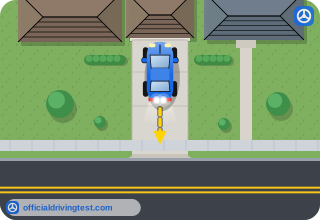
- It uses less fuel than backing up quickly
- It prevents the transmission from overheating
- Your vehicle is harder to steer while you are backing
- It is required by law only in parking lots
Show answer
Correct answer: Your vehicle is harder to steer while you are backing
You should back up slowly because your vehicle is harder to steer while you are backing.
Source: Florida Driver License Handbook (Revised August 2023), page 59
-
According to the handbook, what are blind spots?
- Areas near the rear corners that you can't see in mirrors or with peripheral vision
- Parts of the windshield covered by dirt or frost
- Areas directly in front of the windshield that are covered by the sun visor
- Sections of the dashboard hidden by the steering wheel
Show answer
Correct answer: Areas near the rear corners that you can't see in mirrors or with peripheral vision
Blind spots are areas near the left and right rear corners of your vehicle that you can't see in your rear-view mirrors or with your peripheral vision.
Source: Florida Driver License Handbook (Revised August 2023), page 60
-
How does vehicle size affect blind spots?
- Larger vehicles have smaller blind spots because their mirrors are bigger
- The larger the vehicle, the larger the blind spots
- Vehicle size has no effect on blind spots
- Only motorcycles have blind spots
Show answer
Correct answer: The larger the vehicle, the larger the blind spots
The larger the vehicle, the larger the blind spots. Large trucks and SUVs have blind spots close to the rear of the vehicle that cannot be seen in rear-view mirrors.
Source: Florida Driver License Handbook (Revised August 2023), page 60