Connecticut: Distracted driving and fitness
Cell phone laws, distractions, drowsy driving, health and emotions behind the wheel. Split into 3 shorter tests so you're not stuck in one long quiz.
Independent educational site · not affiliated with any government agency or DMV
Choose a part
Distracted driving and fitness — Part 1
Questions in this part include: “Which of these is named as a distracting activity that increases the risk of a serious crash for teens?”
StartDistracted driving and fitness — Part 2
Questions in this part include: “Which of these does the manual list as a possible distraction outside a moving vehicle?”
StartDistracted driving and fitness — Part 3
Questions in this part include: “On long trips, how often does the manual suggest scheduling breaks?”
StartAll 62 Distracted driving and fitness questions with answers
Choose a part above to take a practice test, or study every question and answer here.
Show the questions and answersHide the questions
-
Which of these is named as a distracting activity that increases the risk of a serious crash for teens?
- Unrestrained pets in the car
- Wearing a seat belt
- Driving with the windows closed
- Using the turn signal
Show answer
Correct answer: Unrestrained pets in the car
The manual lists talking, texting, dialing radio stations and unrestrained pets among distractions that raise crash risk.
Source: Connecticut Driver's Manual (Revised March 2023), page 4 · Open this page in the manual (Manual page 4)
-
May a driver use a hand-held cell phone while temporarily stopped because of traffic or at a traffic signal?
- No, state law also prohibits it
- Yes, because the vehicle is not moving
- Yes, but only at a red light
- Yes, but only for calls under one minute
Show answer
Correct answer: No, state law also prohibits it
State law prohibits hand-held use even when the vehicle is temporarily stopped because of traffic, road conditions or a traffic control sign or signal.
Source: Connecticut Driver's Manual (Revised March 2023), page 13 · Open this page in the manual (Manual page 13)
-
Where may you use a hand-held cell phone or mobile electronic device?
- In the left lane of a highway when traffic is light
- While moving slower than 25 mph on a local road
- Parked safely on the side or shoulder of a highway
- While stopped at a stop sign
Show answer
Correct answer: Parked safely on the side or shoulder of a highway
The manual allows use only if you are parked safely on the side or shoulder of a highway.
Source: Connecticut Driver's Manual (Revised March 2023), page 13 · Open this page in the manual (Manual page 13)
-
Under Connecticut's cell phone law, what kind of phone use is generally permitted for drivers 18 or older?
- Hand-held calls but not texting
- Hands-free accessories only
- Hand-held use with the speaker on
- Any use that keeps one hand on the wheel
Show answer
Correct answer: Hands-free accessories only
Drivers are permitted only to use hands-free mobile telephone accessories.
Source: Connecticut Driver's Manual (Revised March 2023), page 13 · Open this page in the manual (Manual page 13)
-
Apart from an emergency, what cell phone use is permitted for a driver who is 16 or 17 years old?
- Hands-free devices only
- Hand-held calls only, not texting
- Hand-held use when stopped in traffic
- None, not even a hands-free device
Show answer
Correct answer: None, not even a hands-free device
Drivers who are 16 or 17 may not use any type of cell phone or mobile electronic device, hands-free included.
Source: Connecticut Driver's Manual (Revised March 2023), page 13 · Open this page in the manual (Manual page 13)
-
Which of these does the manual say a "mobile electronic device" includes?
- A laptop computer
- A vehicle’s rearview mirror
- A tire pressure gauge
- A vehicle’s turn signal lever
Show answer
Correct answer: A laptop computer
The manual lists a laptop computer, personal digital assistant, and paging or text-messaging device.
Source: Connecticut Driver's Manual (Revised March 2023), page 13 · Open this page in the manual (Manual page 13)
-
Which situation allows a driver of any age to use a hand-held phone?
- A call to a family member to say you are running late
- A call to a friend while stopped at a red light
- An emergency call to the police or a hospital
- A call to your employer about a work schedule
Show answer
Correct answer: An emergency call to the police or a hospital
The exception is an emergency situation, such as contacting an emergency response operator, hospital, or police or fire department.
Source: Connecticut Driver's Manual (Revised March 2023), page 13 · Open this page in the manual (Manual page 13)
-
Which drivers aged 18 and older may use hand-held cell phones and electronic devices?
- Delivery drivers while they are working on the job
- Peace officers, firefighters and ambulance drivers
- Taxi drivers and bus drivers carrying passengers
- Licensed driving instructors giving a lesson
Show answer
Correct answer: Peace officers, firefighters and ambulance drivers
The manual names peace officers, firefighters and ambulance drivers aged 18 and older as exceptions.
Source: Connecticut Driver's Manual (Revised March 2023), page 13 · Open this page in the manual (Manual page 13)
-
What is a 16- or 17-year-old charged with for violating Connecticut’s cell phone law?
- A parking violation
- A written warning only
- A criminal misdemeanor
- A moving violation
Show answer
Correct answer: A moving violation
The manual says such a driver will be charged with a moving violation.
Source: Connecticut Driver's Manual (Revised March 2023), page 13 · Open this page in the manual (Manual page 13)
-
What results from an operator under age 18 being convicted of violating the cell phone law?
- A license suspension
- A warning letter only
- Loss of insurance coverage
- A mandatory driving lesson
Show answer
Correct answer: A license suspension
A conviction for an operator under 18 results in a license suspension.
Source: Connecticut Driver's Manual (Revised March 2023), page 13 · Open this page in the manual (Manual page 13)
-
A cell phone moving violation by a driver under 18 is counted for what purpose?
- Setting the length of the learner’s permit period
- Deciding whether the road test must be retaken
- Deciding if the operator retraining program is required
- Determining the driver’s insurance rate class
Show answer
Correct answer: Deciding if the operator retraining program is required
The manual says it is counted when determining if attendance is required in the operator retraining program.
Source: Connecticut Driver's Manual (Revised March 2023), page 13 · Open this page in the manual (Manual page 13)
-
Which of these is named as a distraction to avoid when driving through work zones?
- Checking your mirrors
- Changing the radio station
- Reading the warning signs
- Using the turn signal
Show answer
Correct answer: Changing the radio station
The manual lists cell phones, changing the radio station and applying make-up as distractions to avoid in work zones.
Source: Connecticut Driver's Manual (Revised March 2023), page 16 · Open this page in the manual (Manual page 16)
-
According to the manual, what is the single biggest contributor to crashes?
- Driving too slowly on busy roads
- Mechanical failure of the vehicle
- Failing to see what is happening
- Bad weather and slippery roads
Show answer
Correct answer: Failing to see what is happening
The manual states that the single biggest contributor to crashes is failing to see what is happening.
Source: Connecticut Driver's Manual (Revised March 2023), page 24 · Open this page in the manual (Manual page 24)
-
If you need to look at a map, what should you do?
- Glance at it at a red light only
- Pull safely off the road first
- Hold it at the top of the wheel
- Slow to 10 mph and look quickly
Show answer
Correct answer: Pull safely off the road first
The manual says not to take your eyes off the road for more than a few seconds and to pull safely off the road to look at a map.
Source: Connecticut Driver's Manual (Revised March 2023), page 24 · Open this page in the manual (Manual page 24)
-
Why should you not drive with head or earphones that cover or go into both ears?
- They can damage your hearing over a long time
- They block sunlight from reaching your eyes
- They are required only for commercial drivers
- They make it hard to hear emergency horns or sirens
Show answer
Correct answer: They make it hard to hear emergency horns or sirens
The manual says they are illegal in many states and make it too hard to hear emergency horns or sirens.
Source: Connecticut Driver's Manual (Revised March 2023), page 24 · Open this page in the manual (Manual page 24)
-
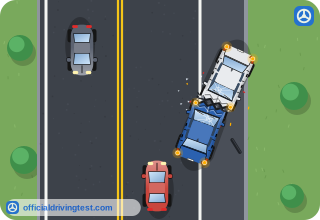
What is it called when you slow down just to look at a crash or someone getting a ticket?
- Rubbernecking
- Tail drifting
- Lane gaping
- Road scanning
Show answer
Correct answer: Rubbernecking
The manual calls slowing down to look at roadside activity "rubbernecking", and it could cause a crash.
Source: Connecticut Driver's Manual (Revised March 2023), page 24 · Open this page in the manual (Manual page 24)
-
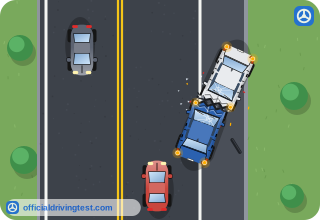
What else can rubbernecking do besides raising the risk of a crash?
- Shorten stopping distance
- Improve traffic flow
- Increase congestion
- Lower the speed limit
Show answer
Correct answer: Increase congestion
The manual says rubbernecking can also increase congestion.
Source: Connecticut Driver's Manual (Revised March 2023), page 24 · Open this page in the manual (Manual page 24)
-
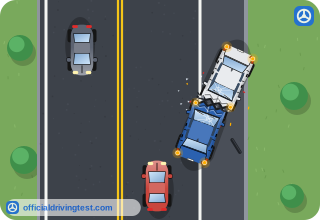
When you pass a crash or other roadside activity, what should you do?
- Slow to a crawl so you can see what happened
- Keep your eyes on the road and get past it safely
- Stop on the shoulder and watch the activity
- Look at the scene first, then speed up
Show answer
Correct answer: Keep your eyes on the road and get past it safely
The manual says to keep your eyes on the road and get past the activity as quickly and safely as you can.
Source: Connecticut Driver's Manual (Revised March 2023), page 24 · Open this page in the manual (Manual page 24)
-
How does the manual define a distraction?
- Anything that takes your attention away from driving
- Any object that blocks your view of the road ahead
- Any task that needs both hands off the steering wheel
- Any sound inside the vehicle louder than the engine
Show answer
Correct answer: Anything that takes your attention away from driving
The manual defines a distraction as anything that takes your attention away from driving, and says distractions may occur anytime and anywhere.
Source: Connecticut Driver's Manual (Revised March 2023), page 27 · Open this page in the manual (Manual page 27)
-
Compared with taking your eyes off the road, how dangerous are mental activities that take your mind away from driving?
- Less dangerous, since your eyes stay on the road
- Only dangerous at speeds above 50 mph
- Just as dangerous
- Not dangerous if both hands are on the wheel
Show answer
Correct answer: Just as dangerous
The manual says taking your eyes off the road or hands off the wheel is risky, and mental activities that take your mind off driving are just as dangerous.
Source: Connecticut Driver's Manual (Revised March 2023), page 27 · Open this page in the manual (Manual page 27)
-
Why can a driver look straight at an object and still fail to see it?
- The windshield distorts objects close to the car
- The driver's mind is thinking of something else
- The eyes need several seconds to refocus each time
- Objects in front of the car are hidden by the hood
Show answer
Correct answer: The driver's mind is thinking of something else
The manual explains that your eyes can gaze at objects but fail to see them because your mind is thinking of something else.
Source: Connecticut Driver's Manual (Revised March 2023), page 27 · Open this page in the manual (Manual page 27)
-
Which of these does the manual list as a possible distraction outside a moving vehicle?
- Combing your hair
- Attending to pets
- Adjusting the radio
- Reading billboards
Show answer
Correct answer: Reading billboards
Reading billboards or other road advertisements is on the manual's list of distractions outside the vehicle; the other three are on its list of distractions inside the vehicle.
Source: Connecticut Driver's Manual (Revised March 2023), page 27 · Open this page in the manual (Manual page 27)
-
Which activity does the manual list as a possible distraction inside a moving vehicle?
- Checking your mirrors
- Talking to passengers
- Signaling before a turn
- Scanning the road ahead
Show answer
Correct answer: Talking to passengers
Talking to passengers is on the manual's list of possible distractions inside a moving vehicle, along with phone use, grooming, eating and adjusting controls.
Source: Connecticut Driver's Manual (Revised March 2023), page 27 · Open this page in the manual (Manual page 27)
-
Instead of eating while driving, what does the manual suggest?
- Eat only while stopped at red lights and stop signs
- Eat only foods you can hold with one hand while driving
- Eat only while driving on a straight, empty highway
- Leave a little early so you have time to stop and eat
Show answer
Correct answer: Leave a little early so you have time to stop and eat
To avoid this distraction, the manual says to leave a little early so you have time to stop to eat instead of eating while driving.
Source: Connecticut Driver's Manual (Revised March 2023), page 27 · Open this page in the manual (Manual page 27)
-
How does the manual suggest keeping children from distracting you while you drive?
- Buckle them up properly and give them books, toys or games
- Seat them in the front seat so you can watch them closely
- Talk with them continuously so they stay calm on the trip
- Let them operate the radio and climate controls for you
Show answer
Correct answer: Buckle them up properly and give them books, toys or games
The manual advises making sure children are properly and safely buckled up and giving them books, toys or games to occupy their time.
Source: Connecticut Driver's Manual (Revised March 2023), page 27 · Open this page in the manual (Manual page 27)
-
Where does the manual say pets should be secured before you move your vehicle?
- On the front passenger seat
- On the lap of an adult passenger
- In a pet carrier or portable kennel
- Loose in the rear cargo area
Show answer
Correct answer: In a pet carrier or portable kennel
To keep pets from distracting you, the manual says to properly secure them in a pet carrier or portable kennel before moving your vehicle.
Source: Connecticut Driver's Manual (Revised March 2023), page 27 · Open this page in the manual (Manual page 27)
-
When does the manual suggest adjusting vehicle controls such as the radio or climate controls?
- Only while driving on straight roads with no other traffic
- Only while moving slowly, below about 25 mph
- At any time, as long as one hand stays on the wheel
- Before the trip, at normal stops, or by asking a passenger
Show answer
Correct answer: Before the trip, at normal stops, or by asking a passenger
The manual says to adjust vehicle controls before you begin your trip, take advantage of normal stops, or ask your passenger to adjust them.
Source: Connecticut Driver's Manual (Revised March 2023), page 27 · Open this page in the manual (Manual page 27)
-
Among the manual's tips for avoiding distractions, why should you not look at something in the distance?
- It is never more important than your immediate path of travel
- It makes oncoming drivers think you are about to turn
- It is allowed only when your vehicle is fully stopped
- It tires your eyes faster than checking your mirrors
Show answer
Correct answer: It is never more important than your immediate path of travel
In its list of ways to avoid distractions, the manual says not to look at something in the distance, because those things are never more important than concentrating on your immediate path of travel.
Source: Connecticut Driver's Manual (Revised March 2023), page 27 · Open this page in the manual (Manual page 27)
-
What does the manual say about wearing headphones to listen to music or talking with friends in other vehicles while driving?
- It is fine as long as the music volume is kept low
- It is fine if only one ear is covered by a headphone
- Do not do it; it can be deadly when combined with driving
- It is fine on highways but should be avoided in towns
Show answer
Correct answer: Do not do it; it can be deadly when combined with driving
The manual says not to talk with friends in other vehicles or wear headphones to listen to music, because these can be deadly when combined with driving.
Source: Connecticut Driver's Manual (Revised March 2023), page 27 · Open this page in the manual (Manual page 27)
-
What kind of conversations with passengers does the manual tell you to avoid while driving?
- Any conversation at all, even a short one
- Arguments and stressful or emotional conversations
- Conversations about directions or the route
- Conversations with passengers in the back seat
Show answer
Correct answer: Arguments and stressful or emotional conversations
The manual advises avoiding arguments and stressful or emotional conversations with passengers that may distract your attention from the road.
Source: Connecticut Driver's Manual (Revised March 2023), page 27 · Open this page in the manual (Manual page 27)
-
Which of these does the manual list as a sign that another driver may be distracted?
- A vehicle traveling at inconsistent speeds
- A vehicle signaling well before every turn
- A vehicle keeping a steady following distance
- A vehicle dimming its lights for oncoming cars
Show answer
Correct answer: A vehicle traveling at inconsistent speeds
The manual tells you to watch for vehicles traveling at inconsistent speeds as one sign of a distracted driver.
Source: Connecticut Driver's Manual (Revised March 2023), page 27 · Open this page in the manual (Manual page 27)
-
Which vehicle movement does the manual list as a sign of a distracted driver?
- Slowing down gradually before a stop sign
- Moving to the right lane to let others pass
- Drifting over lane lines or within its own lane
- Stopping fully behind the line at a red light
Show answer
Correct answer: Drifting over lane lines or within its own lane
Among the signs of distracted drivers, the manual lists vehicles that may drift over the lane divider lines or within their own lane.
Source: Connecticut Driver's Manual (Revised March 2023), page 27 · Open this page in the manual (Manual page 27)
-
Why should you be very careful when passing a driver who seems to be distracted?
- The driver will usually speed up to keep you from passing
- The driver is required by law to pull over and let you pass
- The driver will probably brake hard as soon as you pass
- The driver may not notice you and may drift in front of you
Show answer
Correct answer: The driver may not notice you and may drift in front of you
The manual warns that a distracted driver may not be aware of your presence and may drift in front of you.
Source: Connecticut Driver's Manual (Revised March 2023), page 27 · Open this page in the manual (Manual page 27)
-
If you are distracted and have a crash, on whom does the responsibility fall?
- On the maker of the device that distracted you
- On you, the driver, not on the distraction
- Shared equally between you and your passengers
- On no one, if the distraction came from outside
Show answer
Correct answer: On you, the driver, not on the distraction
The manual says you are completely and solely responsible for operating your vehicle safely, and if you are distracted and crash, the responsibility falls on you, not the distraction.
Source: Connecticut Driver's Manual (Revised March 2023), page 27 · Open this page in the manual (Manual page 27)
-
According to the manual, what can cause fatigue?
- Only a lack of sleep on the previous night
- Only highway trips that last over four hours
- Only driving after dark on unlit country roads
- Strain, repetitive tasks, illness or lack of sleep
Show answer
Correct answer: Strain, repetitive tasks, illness or lack of sleep
The manual defines fatigue as physical or mental tiredness that can be caused by physical or mental strain, repetitive tasks, illness or lack of sleep.
Source: Connecticut Driver's Manual (Revised March 2023), page 27 · Open this page in the manual (Manual page 27)
-
The manual says fatigue impairs your vision and judgment just like what?
- Alcohol and drugs
- Bright sunlight
- Loud music
- Low tire pressure
Show answer
Correct answer: Alcohol and drugs
The manual states that fatigue, just like alcohol and drugs, impairs your vision and judgment.
Source: Connecticut Driver's Manual (Revised March 2023), page 27 · Open this page in the manual (Manual page 27)
-
Which of these is an effect of fatigue described in the manual?
- Quicker decisions in heavy traffic
- Sharper vision when driving at night
- Errors related to speed and distance
- A calmer, more patient mood
Show answer
Correct answer: Errors related to speed and distance
The manual says fatigue causes errors related to speed and distance, raises crash risk, slows decisions and can make you more irritable.
Source: Connecticut Driver's Manual (Revised March 2023), page 27 · Open this page in the manual (Manual page 27)
-
Which age group does the manual say often needs more sleep than an average adult?
- 25 to 34 years old
- 35 to 49 years old
- 65 years and older
- 16 to 24 years old
Show answer
Correct answer: 16 to 24 years old
The manual names young adults 16 to 24 years old as a group that often needs more sleep than an average adult and is at special risk of a fatigue-related crash.
Source: Connecticut Driver's Manual (Revised March 2023), page 28 · Open this page in the manual (Manual page 28)
-
People working more than how many hours a week does the manual say need to be particularly careful about drowsy driving?
- 60 hours
- 40 hours
- 45 hours
- 50 hours
Show answer
Correct answer: 60 hours
The manual says rotating-shift workers and people working more than 60 hours a week need to be particularly careful.
Source: Connecticut Driver's Manual (Revised March 2023), page 28 · Open this page in the manual (Manual page 28)
-
Which sleep disorder does the manual call serious and potentially life-threatening, and often undiagnosed?
- Restless sleep from caffeine
- Occasional insomnia
- Obstructive sleep apnea
- Jet lag after travel
Show answer
Correct answer: Obstructive sleep apnea
The manual describes sleep apnea as a serious, potentially life-threatening condition that often goes unrecognized and undiagnosed, and says untreated sleep apnea raises the risk of falling asleep at the wheel.
Source: Connecticut Driver's Manual (Revised March 2023), page 28 · Open this page in the manual (Manual page 28)
-
Which work schedule does the manual say increases your risk of falling asleep at the wheel?
- Working an early morning shift
- Working the night shift
- Working from home
- Working a four-day week
Show answer
Correct answer: Working the night shift
The manual explains that the body's clock is tuned to sleep at night, and working the night shift increases your risk of falling asleep at the wheel.
Source: Connecticut Driver's Manual (Revised March 2023), page 28 · Open this page in the manual (Manual page 28)
-
How much sleep does the manual say most adults need to stay properly alert during the day?
- 7 to 9 hours
- 4 to 5 hours
- 5 to 6 hours
- 10 to 12 hours
Show answer
Correct answer: 7 to 9 hours
Before a trip, the manual advises getting adequate sleep: most adults need 7 to 9 hours to maintain proper alertness during the day.
Source: Connecticut Driver's Manual (Revised March 2023), page 28 · Open this page in the manual (Manual page 28)
-
On long trips, how often does the manual suggest scheduling breaks?
- About every 50 miles or 1 hour
- About every 200 miles or 4 hours
- About every 100 miles or 2 hours
- About every 300 miles or 5 hours
Show answer
Correct answer: About every 100 miles or 2 hours
The manual says to schedule proper breaks about every 100 miles or 2 hours during long trips.
Source: Connecticut Driver's Manual (Revised March 2023), page 28 · Open this page in the manual (Manual page 28)
-
Why does the manual suggest arranging a travel companion before a trip?
- To have someone watch the speedometer for you
- To have someone to talk with and share the driving
- To have someone read the map aloud as you drive
- To have someone handle the radio and phone for you
Show answer
Correct answer: To have someone to talk with and share the driving
To prevent fatigue, the manual suggests arranging for a travel companion, someone to talk with and share the driving.
Source: Connecticut Driver's Manual (Revised March 2023), page 28 · Open this page in the manual (Manual page 28)
-
You keep turning up the radio and rolling down the window to wake yourself up. What does the manual say this is?
- A safe way to stay alert for hours
- A warning sign of fatigue
- A good substitute for a rest stop
- A problem only for new drivers
Show answer
Correct answer: A warning sign of fatigue
The manual lists turning up the radio or rolling down the window to wake yourself up as a warning sign of fatigue.
Source: Connecticut Driver's Manual (Revised March 2023), page 28 · Open this page in the manual (Manual page 28)
-
Which of these does the manual list as a warning sign of fatigue?
- You check your mirrors every few seconds
- You keep a steady speed below the limit
- You signal well before every lane change
- You drift from your lane or miss signs or exits
Show answer
Correct answer: You drift from your lane or miss signs or exits
Drifting from your lane, tailgating, or missing signs or exits are listed in the manual among the warning signs of fatigue.
Source: Connecticut Driver's Manual (Revised March 2023), page 28 · Open this page in the manual (Manual page 28)
-
How long a nap does the manual suggest taking in a safe parking area to prevent a fatigue-related crash?
- 15 to 20 minutes
- 5 minutes or less
- 45 to 60 minutes
- 2 to 3 hours
Show answer
Correct answer: 15 to 20 minutes
The manual says to find a safe parking area to take a 15 to 20 minute nap.
Source: Connecticut Driver's Manual (Revised March 2023), page 28 · Open this page in the manual (Manual page 28)
-
According to the manual, about how much caffeine can increase alertness for several hours?
- About 6 cups of coffee
- Half a cup of coffee
- About 2 cups of coffee
- About 10 cups of coffee
Show answer
Correct answer: About 2 cups of coffee
The manual says the equivalent of 2 cups of coffee can increase alertness for several hours, but warns not to drink too much caffeine.
Source: Connecticut Driver's Manual (Revised March 2023), page 28 · Open this page in the manual (Manual page 28)
-
What does the manual say about relying on caffeine to prevent fatigue?
- It is the best way to prevent fatigue
- It lasts all night if taken early enough
- It removes the need for rest breaks
- Do not rely on it, because it wears off
Show answer
Correct answer: Do not rely on it, because it wears off
The manual warns that caffeine will wear off and says not to rely on caffeine to prevent fatigue.
Source: Connecticut Driver's Manual (Revised March 2023), page 28 · Open this page in the manual (Manual page 28)
-
What does the manual suggest doing to get the benefits of both caffeine and a short nap?
- Consume caffeine before taking the nap
- Consume caffeine only after waking up
- Take the nap while still driving slowly
- Skip caffeine entirely before napping
Show answer
Correct answer: Consume caffeine before taking the nap
The manual suggests trying to consume caffeine before taking a short nap to get the benefits of both.
Source: Connecticut Driver's Manual (Revised March 2023), page 28 · Open this page in the manual (Manual page 28)
-
To prevent a fatigue-related crash, between which hours does the manual say to try not to drive late at night?
- 9 p.m. and 3 a.m.
- 10 p.m. and 4 a.m.
- Midnight and 6 a.m.
- 2 a.m. and 8 a.m.
Show answer
Correct answer: Midnight and 6 a.m.
The manual advises trying not to drive late at night between the hours of midnight and 6 a.m.
Source: Connecticut Driver's Manual (Revised March 2023), page 28 · Open this page in the manual (Manual page 28)
-
What does the manual call the best way to prevent fatigue?
- Caffeine
- Sleep
- Cold air
- Loud music
Show answer
Correct answer: Sleep
The manual states that the best way to prevent fatigue is sleep.
Source: Connecticut Driver's Manual (Revised March 2023), page 28 · Open this page in the manual (Manual page 28)
-
What kind of crash do fatigue-related crashes tend to be?
- A single vehicle leaving the road and rolling or hitting an object
- A rear-end crash between two cars stopped at a red light
- A crash with a pedestrian who is crossing at a crosswalk
- A low-speed head-on crash between two cars in a parking lot
Show answer
Correct answer: A single vehicle leaving the road and rolling or hitting an object
The manual says fatigue-related crashes tend to be single-vehicle crashes in which a car or truck leaves the roadway and then turns over or hits a fixed object.
Source: Connecticut Driver's Manual (Revised March 2023), page 28 · Open this page in the manual (Manual page 28)
-
What are rumble strips?
- Painted lines that glow in the dark at night
- Reflectors mounted along the guardrails
- Raised or grooved patterns in the pavement
- Speed bumps placed across parking lots
Show answer
Correct answer: Raised or grooved patterns in the pavement
The manual describes rumble strips as raised or grooved patterns installed in the pavement of shoulders or directly in travel lanes, which help prevent fatigue-related crashes.
Source: Connecticut Driver's Manual (Revised March 2023), page 28 · Open this page in the manual (Manual page 28)
-
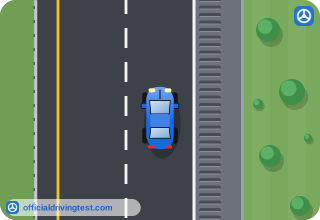
What should you do if you run over a shoulder rumble strip?
- Speed up a little to get past the strip more quickly
- Pull off the road safely right away and check your alertness
- Move to the far left lane and keep driving as before
- Turn up the radio loudly and continue to your destination
Show answer
Correct answer: Pull off the road safely right away and check your alertness
The manual says that if you run over a shoulder rumble strip, pull off the road at a safe place immediately and check your alertness level.
Source: Connecticut Driver's Manual (Revised March 2023), page 28 · Open this page in the manual (Manual page 28)
-
If you are not feeling well and need to go somewhere, what does the manual advise?
- Drive only on highways
- Drive with windows open
- Drive below the limit
- Let someone else drive
Show answer
Correct answer: Let someone else drive
The manual says health problems such as a bad cold, infection or virus can affect your driving, so if you are not feeling well, let someone else drive.
Source: Connecticut Driver's Manual (Revised March 2023), page 28 · Open this page in the manual (Manual page 28)
-
Can little health problems such as a stiff neck, a cough or a sore leg affect your driving?
- No, only serious illnesses affect driving
- Yes, even little problems like these can
- Only if you take medicine to treat them
- Only on trips lasting more than two hours
Show answer
Correct answer: Yes, even little problems like these can
The manual says even little problems like a stiff neck, a cough or a sore leg can affect your driving.
Source: Connecticut Driver's Manual (Revised March 2023), page 28 · Open this page in the manual (Manual page 28)
-
What should you do if you feel you may have a health condition that could prevent you from driving safely?
- Drive only in daylight
- Wait for license renewal
- Have a passenger watch you
- Check with your doctor
Show answer
Correct answer: Check with your doctor
The manual says many health conditions and medications can affect your driving, and to check with your doctor if you feel you may have such a condition.
Source: Connecticut Driver's Manual (Revised March 2023), page 28 · Open this page in the manual (Manual page 28)
-
According to the manual, how can emotions affect your driving?
- They can increase risk taking
- They sharpen your attention
- They speed up your reactions
- They improve your judgment
Show answer
Correct answer: They can increase risk taking
The manual says emotions can interfere with your ability to think, create mental distractions, increase risk taking, create a lack of attention and interrupt your ability to process information.
Source: Connecticut Driver's Manual (Revised March 2023), page 28 · Open this page in the manual (Manual page 28)
-
If you are angry or excited, what does the manual advise?
- Drive faster so that you get home sooner
- Play loud music while driving to calm down
- Cool off and stay off the road until you are calm
- Drive only in the left lane until you calm down
Show answer
Correct answer: Cool off and stay off the road until you are calm
The manual says to give yourself time to cool off, take a short walk or nap if necessary, and stay off the road until you have calmed down.
Source: Connecticut Driver's Manual (Revised March 2023), page 28 · Open this page in the manual (Manual page 28)
-
If you are worried or upset, what does the manual say some drivers find helpful?
- Talking on a hands-free phone while they drive
- Driving with all of the windows rolled down
- Driving a little faster than they usually do
- Listening to the radio, if it does not distract
Show answer
Correct answer: Listening to the radio, if it does not distract
The manual says to keep your mind on your driving, and that some drivers find listening to the radio helps, as long as it is not distracting from safe driving.
Source: Connecticut Driver's Manual (Revised March 2023), page 28 · Open this page in the manual (Manual page 28)
-
If you are impatient, what does the manual advise?
- Give yourself extra time and leave a few minutes early
- Drive a little faster than the flow of traffic
- Change lanes often to get around slower traffic
- Use the shoulder to pass vehicles that are slow
Show answer
Correct answer: Give yourself extra time and leave a few minutes early
The manual says to give yourself extra time and leave a few minutes early, and warns not to drive faster than the flow of traffic, since darting around other traffic can be fatal.
Source: Connecticut Driver's Manual (Revised March 2023), page 28 · Open this page in the manual (Manual page 28)