Colorado: Emergencies
Brake and tire failures, stuck accelerators, collisions with animals, crashes, the Move It law and helping the injured. Split into 3 shorter tests so you're not stuck in one long quiz.
Independent educational site · not affiliated with any government agency or DMV
Choose a part
Emergencies — Part 1
Brake and tire failures, stuck accelerators, collisions with animals, crashes, the Move It law and helping the injured. — Part 1
StartEmergencies — Part 2
Questions in this part include: “When might it be necessary to speed up to avoid a collision?”
StartEmergencies — Part 3
Questions in this part include: “Which information must you exchange with the other driver after a crash?”
StartAll 61 Emergencies questions with answers
Choose a part above to take a practice test, or study every question and answer here.
Show the questions and answersHide the questions
-
What should you do if you see a flooded roadway?
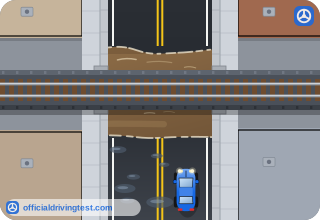
- Drive through slowly in a low gear
- Drive through quickly to avoid stalling
- Find another route to your destination
- Follow the vehicle ahead through the water
Show answer
Correct answer: Find another route to your destination
Do not drive through large bodies of standing water; find another route.
Source: Colorado Driver Handbook (DR 2337, January 2025), page 16 · Open this page in the manual (Manual page 16)
-
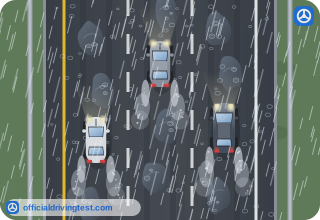
What is it called when your tires begin to ride on the water on top of the road pavement?
- Threshold braking
- Hydroplaning
- Washboarding
- Overcorrecting
Show answer
Correct answer: Hydroplaning
The handbook calls this hydroplaning; it can cause complete loss of traction and control of steering.
Source: Colorado Driver Handbook (DR 2337, January 2025), page 16 · Open this page in the manual (Manual page 16)
-
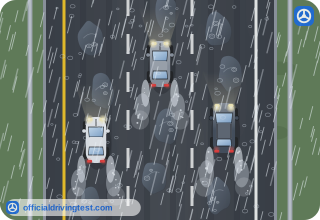
Hydroplaning can cause which of these?
- Better traction on the wet pavement
- Loss of braking only, with steering unaffected
- A stronger hold on the road for worn tires
- Complete loss of traction and control of steering
Show answer
Correct answer: Complete loss of traction and control of steering
Hydroplaning can cause complete loss of traction and control of steering.
Source: Colorado Driver Handbook (DR 2337, January 2025), page 16 · Open this page in the manual (Manual page 16)
-
Which tires are at increased risk of hydroplaning?
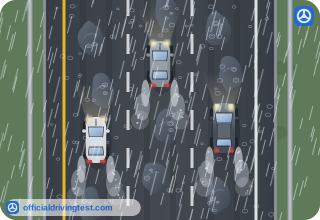
- Tires that have more wear
- Brand-new tires
- Tires with high tread depth
- Tires on four-wheel drive vehicles
Show answer
Correct answer: Tires that have more wear
Tires with more wear are at increased risk, so check your tread depth regularly.
Source: Colorado Driver Handbook (DR 2337, January 2025), page 16 · Open this page in the manual (Manual page 16)
-
Your tires lose contact with the road surface in wet weather. Which is a correct response?
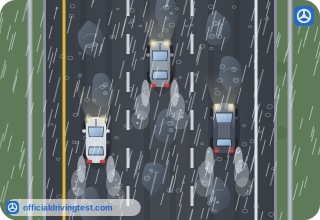
- Brake hard to stop as quickly as possible
- Accelerate to push through the water
- Take your foot off the gas pedal
- Turn the wheel sharply away from the skid
Show answer
Correct answer: Take your foot off the gas pedal
The first listed response is to take your foot off the gas pedal and let the vehicle slow down.
Source: Colorado Driver Handbook (DR 2337, January 2025), page 16 · Open this page in the manual (Manual page 16)
-
When your vehicle hydroplanes, which way should you slowly steer?
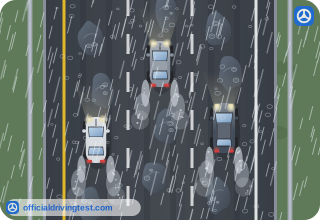
- Opposite to the direction you are hydroplaning
- In the direction you are hydroplaning
- Toward the shoulder of the road
- Straight into the nearest lane
Show answer
Correct answer: In the direction you are hydroplaning
Steering slowly in the direction of the hydroplane helps your tires realign with the vehicle.
Source: Colorado Driver Handbook (DR 2337, January 2025), page 16 · Open this page in the manual (Manual page 16)
-
How should you steer while recovering from hydroplaning?
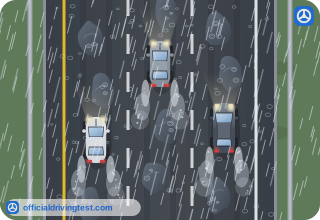
- With quick, sharp turns
- Hard, in one motion
- By letting go of the wheel
- Slowly and without jerking
Show answer
Correct answer: Slowly and without jerking
Steering needs to be slow; jerking the wheel could flip your car due to overcorrecting.
Source: Colorado Driver Handbook (DR 2337, January 2025), page 16 · Open this page in the manual (Manual page 16)
-
When should you try to stop or turn after your tires hydroplane?
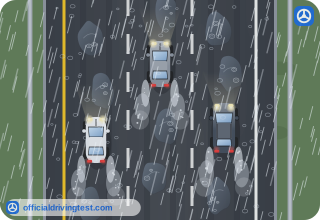
- Only after your tires are gripping the road again
- Immediately, to get out of the skid quickly
- After you have traveled one more mile
- As soon as the windshield wipers clear the water
Show answer
Correct answer: Only after your tires are gripping the road again
Do not try to stop or turn until your tires are gripping the road again.
Source: Colorado Driver Handbook (DR 2337, January 2025), page 16 · Open this page in the manual (Manual page 16)
-
If your vehicle does not have anti-lock brakes, which technique should you use in slippery conditions?
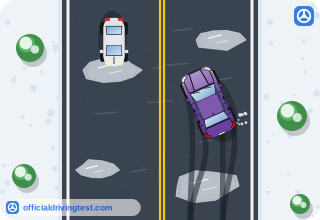
- Anti-lock braking
- Hydroplaning
- Threshold braking
- Washboarding
Show answer
Correct answer: Threshold braking
Without anti-lock brakes, use threshold braking when skidding or in slippery conditions.
Source: Colorado Driver Handbook (DR 2337, January 2025), page 17 · Open this page in the manual (Manual page 17)
-
What is threshold braking?
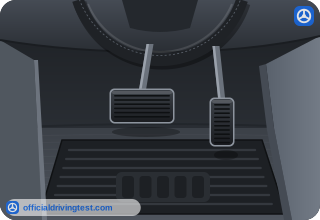
- Pressing the brake pedal to the floor and holding it
- Braking just short of the point where the brakes lock up
- Pumping the brake pedal rapidly without pressing hard
- Braking only with the parking brake
Show answer
Correct answer: Braking just short of the point where the brakes lock up
Threshold braking means applying brake pressure to a point just short of locking up the brakes.
Source: Colorado Driver Handbook (DR 2337, January 2025), page 17 · Open this page in the manual (Manual page 17)
-
Which statement about threshold braking and anti-lock brakes is correct?
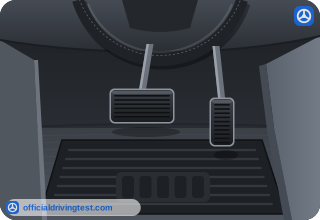
- You can use anti-lock braking techniques on a vehicle without ABS
- Threshold braking cannot be used on a vehicle with ABS
- Threshold braking is only for dry pavement
- You can use threshold braking on a vehicle with ABS
Show answer
Correct answer: You can use threshold braking on a vehicle with ABS
You can use threshold braking on a vehicle with ABS, but not anti-lock braking techniques on a vehicle without it.
Source: Colorado Driver Handbook (DR 2337, January 2025), page 17 · Open this page in the manual (Manual page 17)
-
Which set lists the three options drivers have to avoid a collision?
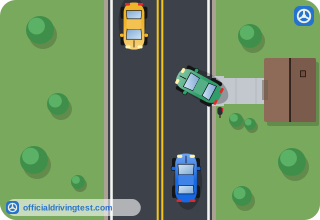
- Slow down or stop, turn, or speed up
- Slow down or stop, honk, or turn
- Turn, flash your lights, or speed up
- Slow down or stop, back up, or turn
Show answer
Correct answer: Slow down or stop, turn, or speed up
The handbook names three options: slow down or stop, turn, and speed up.
Source: Colorado Driver Handbook (DR 2337, January 2025), page 25 · Open this page in the manual (Manual page 25)
-
In a vehicle with an Anti-lock Braking System (ABS), how should you stop quickly?
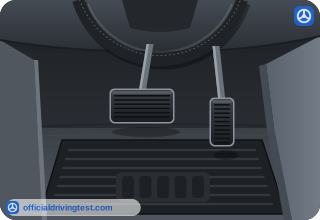
- Pump the brake pedal repeatedly until the vehicle stops
- Press the brake lightly and release it before pressing again
- Apply the brakes with hard, firm pressure and do not let up on the pedal
- Let up on the pedal when you feel it pushing back
Show answer
Correct answer: Apply the brakes with hard, firm pressure and do not let up on the pedal
With ABS, the handbook says to apply hard, firm pressure and not let up, because ABS works only with the pedal pushed down.
Source: Colorado Driver Handbook (DR 2337, January 2025), page 25 · Open this page in the manual (Manual page 25)
-
What might you feel through the brake pedal when ABS is working?
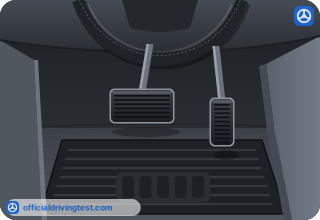
- The pedal sinking to the floor
- The pedal pushing back
- The pedal locking in place
- The pedal going completely soft
Show answer
Correct answer: The pedal pushing back
The handbook says you might feel the brake pedal pushing back when the ABS is working.
Source: Colorado Driver Handbook (DR 2337, January 2025), page 25 · Open this page in the manual (Manual page 25)
-
In a vehicle without ABS, how hard should you brake when you need to stop quickly?
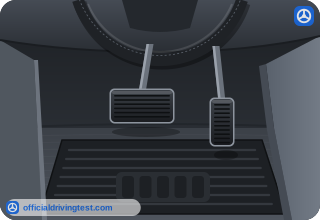
- With firm pressure and never let up
- Only with light taps on the pedal
- As hard as the pedal will go, even if the wheels lock
- As hard as you can without locking the brakes
Show answer
Correct answer: As hard as you can without locking the brakes
Without ABS, braking too hard can cause a skid, so you apply the brakes as hard as you can without locking them.
Source: Colorado Driver Handbook (DR 2337, January 2025), page 25 · Open this page in the manual (Manual page 25)
-
In most cases, which can you do more quickly when trying to avoid a collision?
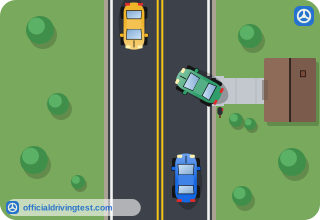
- Stop the vehicle rather than turn it
- Neither; turning and stopping take the same time
- Turn the vehicle rather than stop it
- Back the vehicle up rather than turn it
Show answer
Correct answer: Turn the vehicle rather than stop it
The handbook says that in most cases you can turn the vehicle quicker than you can stop it.
Source: Colorado Driver Handbook (DR 2337, January 2025), page 25 · Open this page in the manual (Manual page 25)
-
When should you consider turning in order to avoid a collision?
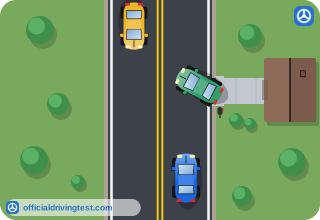
- Only when the road ahead is completely empty
- If doing so does not risk causing another collision
- Only when you are traveling below 25 mph
- Whenever you cannot sound the horn in time
Show answer
Correct answer: If doing so does not risk causing another collision
The handbook says to consider turning if it does not risk causing another collision.
Source: Colorado Driver Handbook (DR 2337, January 2025), page 25 · Open this page in the manual (Manual page 25)
-
After you have turned away or changed lanes to avoid a collision, what must you be ready to do?
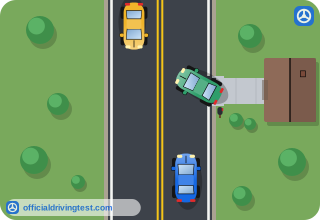
- Stop immediately in the new lane
- Return to your first lane right away
- Speed up to leave the area
- Keep the vehicle under control
Show answer
Correct answer: Keep the vehicle under control
The handbook says that once you have turned away or changed lanes, you must be ready to keep the vehicle under control.
Source: Colorado Driver Handbook (DR 2337, January 2025), page 25 · Open this page in the manual (Manual page 25)
-
What can you do in a vehicle with ABS that is very helpful if you must turn and stop or slow down?
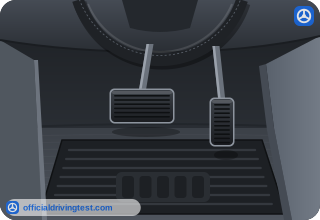
- Turn the vehicle while braking without skidding
- Brake without using the brake pedal
- Turn the steering wheel without gripping it
- Stop in a shorter distance by pumping the brake
Show answer
Correct answer: Turn the vehicle while braking without skidding
The handbook says ABS lets you turn your vehicle while braking without skidding.
Source: Colorado Driver Handbook (DR 2337, January 2025), page 25 · Open this page in the manual (Manual page 25)
-
In a vehicle without ABS, how do you turn quickly to avoid a collision?
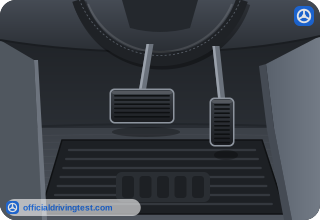
- Brake as hard as you can while turning the wheel sharply
- Lock the front wheels, then turn the wheel
- Step on the brake pedal, let up, and then turn the steering wheel
- Take your foot off the pedals and turn the wheel only
Show answer
Correct answer: Step on the brake pedal, let up, and then turn the steering wheel
Without ABS the handbook says to step on the brake, then let up and turn, because the brake should be released before an evasive turn.
Source: Colorado Driver Handbook (DR 2337, January 2025), page 26 · Open this page in the manual (Manual page 26)
-
Without ABS, what should you avoid doing when you brake and turn to avoid a collision?
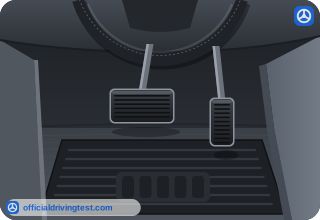
- Releasing the brake before you turn
- Locking up the front wheels while braking
- Gripping the steering wheel with both hands
- Looking ahead to where you want to go
Show answer
Correct answer: Locking up the front wheels while braking
The handbook says not to lock up the front wheels while braking or turn so sharply that the vehicle can only plow ahead.
Source: Colorado Driver Handbook (DR 2337, January 2025), page 26 · Open this page in the manual (Manual page 26)
-
Generally, which is better than crashing head-on into another vehicle?
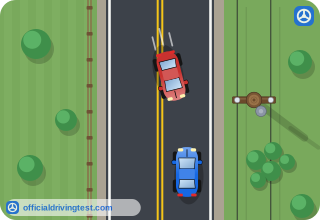
- Braking until the wheels lock
- Speeding up toward the other vehicle
- Staying in your lane and not steering
- Running off the road
Show answer
Correct answer: Running off the road
The handbook says that generally it is better to run off the road than to crash head-on into another vehicle.
Source: Colorado Driver Handbook (DR 2337, January 2025), page 26 · Open this page in the manual (Manual page 26)
-
When might it be necessary to speed up to avoid a collision?
- When another vehicle is about to hit you from the side or from behind and there is room ahead
- When another vehicle is about to hit you head-on and there is no room to the side
- When the traffic signal ahead is about to turn red
- When you are approaching a vehicle stopped in your lane
Show answer
Correct answer: When another vehicle is about to hit you from the side or from behind and there is room ahead
The handbook says speeding up may be needed when a vehicle is about to hit you from the side or behind and there is room ahead to get out of danger.
Source: Colorado Driver Handbook (DR 2337, January 2025), page 26 · Open this page in the manual (Manual page 26)
-
After you have sped up to get out of danger, what should you do once the danger has passed?
- Keep your higher speed
- Stop where you are in the lane
- Slow down
- Pull onto the shoulder and wait for law enforcement
Show answer
Correct answer: Slow down
The handbook says to be sure to slow down once the danger has passed.
Source: Colorado Driver Handbook (DR 2337, January 2025), page 26 · Open this page in the manual (Manual page 26)
-
When should you be especially alert for animals in or near the roadway?
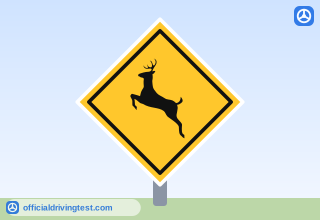
- In city centers during the middle of the day
- In rural and mountainous regions and between dusk and dawn
- Only on freeways with a posted limit of 65 mph or more
- Only in winter on snow-covered roads
Show answer
Correct answer: In rural and mountainous regions and between dusk and dawn
The handbook says to stay alert for animals, particularly in rural and mountainous regions and between dusk and dawn.
Source: Colorado Driver Handbook (DR 2337, January 2025), page 26 · Open this page in the manual (Manual page 26)
-
What is the first precaution to take upon entering a designated animal crossing?
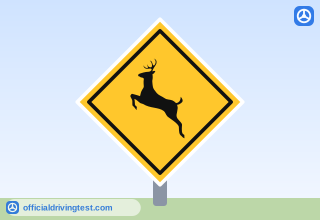
- Sound your horn to warn the animals
- Turn on your high beam lights
- Move onto the shoulder
- Slow down and look for animals
Show answer
Correct answer: Slow down and look for animals
The handbook says the first precaution on entering a designated animal crossing is to slow down and look for animals.
Source: Colorado Driver Handbook (DR 2337, January 2025), page 26 · Open this page in the manual (Manual page 26)
-
Why can drastic evasive action to avoid an animal be dangerous?
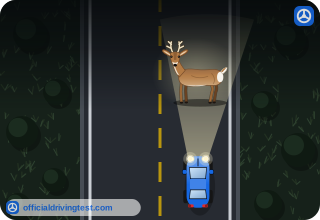
- You may lose control, causing a worse crash than hitting the animal
- The animal is more likely to be injured and to damage your vehicle
- Other drivers behind you may not see your brake lights in time
- Your airbags may switch off when you steer sharply to avoid it
Show answer
Correct answer: You may lose control, causing a worse crash than hitting the animal
The handbook warns that drastic evasive action may mean losing control of the vehicle, which can be a more serious crash than hitting the animal.
Source: Colorado Driver Handbook (DR 2337, January 2025), page 26 · Open this page in the manual (Manual page 26)
-
When an animal suddenly runs in front of your vehicle, what may be the safest alternative for the passengers?
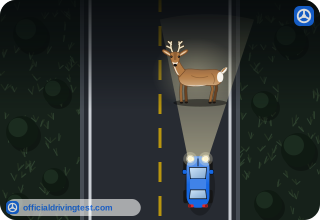
- Swerving into the oncoming lane
- Braking so hard that the wheels lock
- Hitting the animal
- Turning sharply off the roadway
Show answer
Correct answer: Hitting the animal
The handbook says that regretfully, the safest alternative for passengers may be hitting the animal.
Source: Colorado Driver Handbook (DR 2337, January 2025), page 26 · Open this page in the manual (Manual page 26)
-
If a collision with an animal cannot be avoided, what should you concentrate on?
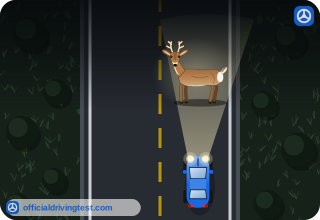
- Steering into the animal’s path to make it run away from you
- Retaining control of the vehicle before, during and after the collision
- Stopping in the lane immediately after the animal is hit
- Turning off the engine as soon as you see the animal ahead
Show answer
Correct answer: Retaining control of the vehicle before, during and after the collision
The handbook says to concentrate on retaining control of the vehicle before, during, and after the collision with the animal.
Source: Colorado Driver Handbook (DR 2337, January 2025), page 26 · Open this page in the manual (Manual page 26)
-
What greatly reduces the chance that a vehicle will have a problem?
- Driving only on freeways instead of on city streets
- Replacing all four tires on the vehicle every single year
- Warming up the engine for several minutes before every trip
- Following the recommended maintenance schedule in the owner’s manual
Show answer
Correct answer: Following the recommended maintenance schedule in the owner’s manual
The handbook says following the recommended vehicle maintenance schedule greatly reduces the chance of a vehicle problem.
Source: Colorado Driver Handbook (DR 2337, January 2025), page 26 · Open this page in the manual (Manual page 26)
-
Your brakes fail. What should you do first?
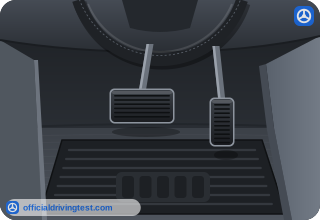
- Take your foot off the accelerator and pump the brake pedal several times
- Pull the parking brake handle all the way up and hold it there
- Shift into reverse gear and keep the brake pedal held down hard
- Shift to neutral and hold the brake pedal down as hard as you can
Show answer
Correct answer: Take your foot off the accelerator and pump the brake pedal several times
The handbook says to take your foot off the accelerator and pump the brake pedal several times, which will often build up enough pressure to stop.
Source: Colorado Driver Handbook (DR 2337, January 2025), page 26 · Open this page in the manual (Manual page 26)
-
Your brakes fail and pumping the pedal does not work. How should you use the parking brake?
- Apply it all the way at once to stop the vehicle as fast as possible
- Apply it only after the vehicle has already come to a complete stop
- Apply it slowly so the rear wheels do not lock, ready to release if you skid
- Apply it quickly while shifting up into a higher gear as you slow
Show answer
Correct answer: Apply it slowly so the rear wheels do not lock, ready to release if you skid
The handbook says to pull or push the parking brake slowly so the rear wheels do not lock and cause a skid, ready to release if the vehicle skids.
Source: Colorado Driver Handbook (DR 2337, January 2025), page 26 · Open this page in the manual (Manual page 26)
-
Your brakes fail, pumping the pedal and the parking brake do not work. What does the manual say to do next?
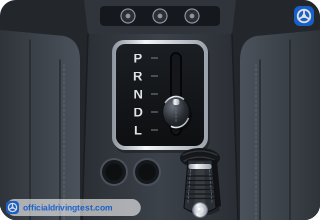
- Shift to neutral and coast until the vehicle stops by itself
- Shift to lower gears and look for a safe place to slow to a stop
- Turn off the engine and let the vehicle roll until it stops
- Keep driving normally and flash your lights to warn other drivers
Show answer
Correct answer: Shift to lower gears and look for a safe place to slow to a stop
The handbook says that if the parking brake does not work, shift to lower gears and look for a safe place to slow to a stop.
Source: Colorado Driver Handbook (DR 2337, January 2025), page 26 · Open this page in the manual (Manual page 26)
-
After a brake failure, what does the manual say you should not do?
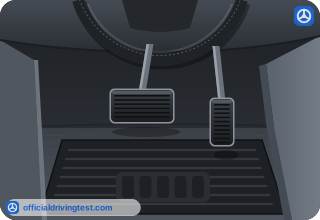
- Pull the vehicle off the roadway
- Shift to lower gears
- Pump the brake pedal
- Drive the vehicle without brakes
Show answer
Correct answer: Drive the vehicle without brakes
The handbook says to make sure the car is off the roadway and not to drive the vehicle without brakes.
Source: Colorado Driver Handbook (DR 2337, January 2025), page 26 · Open this page in the manual (Manual page 26)
-
What should you do with the steering wheel when you have a tire blowout?
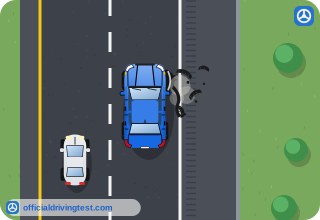
- Hold it tightly and keep the vehicle going straight
- Turn it sharply toward the shoulder as fast as you can
- Let it move freely until the vehicle has slowed down
- Turn it toward the side of the vehicle with the flat tire
Show answer
Correct answer: Hold it tightly and keep the vehicle going straight
The handbook says to hold the steering wheel tightly and keep the vehicle going straight as you slow down gradually.
Source: Colorado Driver Handbook (DR 2337, January 2025), page 26 · Open this page in the manual (Manual page 26)
-
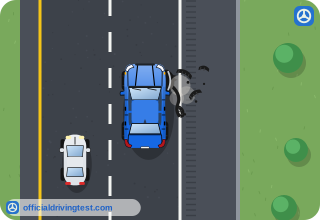
After a tire blowout, how should you use the gas pedal and the brakes?
- Press the gas pedal to keep your speed and brake hard
- Take your foot off the gas pedal and brake as hard as you can
- Take your foot off the gas pedal and use the brakes lightly
- Keep your foot on the gas pedal and do not use the brakes
Show answer
Correct answer: Take your foot off the gas pedal and use the brakes lightly
The handbook says to take your foot off the gas pedal and use the brakes lightly while slowing gradually.
Source: Colorado Driver Handbook (DR 2337, January 2025), page 26 · Open this page in the manual (Manual page 26)
-
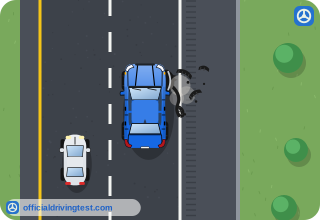
After a tire blowout, where should you stop?
- In the middle of your lane, with your hazards flashing
- Off the road in a safe place, once you have slowed down
- Immediately where the tire blew, whatever the traffic
- On the road, so that other drivers can see you clearly
Show answer
Correct answer: Off the road in a safe place, once you have slowed down
The handbook says not to stop on the road if possible and to pull off in a safe place once you have slowed.
Source: Colorado Driver Handbook (DR 2337, January 2025), page 26 · Open this page in the manual (Manual page 26)
-
What should you expect if your vehicle suffers a power failure?
- The steering wheel will lock and cannot be turned
- The steering will become very light and loose
- The brakes will stop working completely
- The steering may be hard to turn, but you can turn it
Show answer
Correct answer: The steering may be hard to turn, but you can turn it
The handbook says that with a power failure the steering may be difficult to turn, but you can turn it.
Source: Colorado Driver Handbook (DR 2337, January 2025), page 26 · Open this page in the manual (Manual page 26)
-
After a power failure, what is true about the brakes?
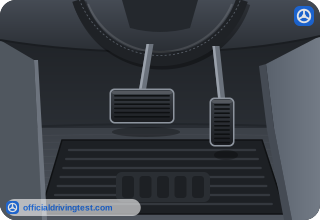
- They still work, but you may have to push very hard on the pedal
- They no longer work at all until the engine is restarted
- They work only if you pump the pedal several times in a row
- They work only when the parking brake is applied as well
Show answer
Correct answer: They still work, but you may have to push very hard on the pedal
The handbook says the brakes will still work but you may have to push very hard on the brake pedal.
Source: Colorado Driver Handbook (DR 2337, January 2025), page 26 · Open this page in the manual (Manual page 26)
-
Your headlights fail. What should you do first?
- Keep driving slowly and switch on your high beam lights to see better
- Stop in your lane, turn off the engine and wait for help to arrive
- Pull off the road as soon as possible and try the switch a few times
- Switch lanes often so other drivers can see your vehicle moving
Show answer
Correct answer: Pull off the road as soon as possible and try the switch a few times
The handbook says to pull off the road as soon as possible and try the headlight switch a few times.
Source: Colorado Driver Handbook (DR 2337, January 2025), page 26 · Open this page in the manual (Manual page 26)
-
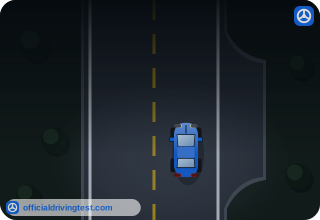
The headlight switch does not fix a headlight failure. What does the manual say to put on, if you have them?
- The windshield wipers, the horn and the radio
- The emergency flashers, turn signals or fog lights
- The interior dome light and the glove box light
- The high beam lights and the reverse lights together
Show answer
Correct answer: The emergency flashers, turn signals or fog lights
The handbook says to put on the emergency flashers, turn signals or fog lights if you have them.
Source: Colorado Driver Handbook (DR 2337, January 2025), page 26 · Open this page in the manual (Manual page 26)
-
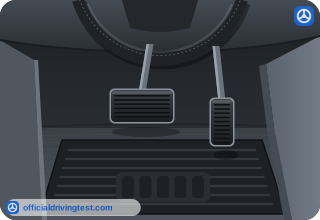
The gas pedal jams down. What should you do quickly?
- Shift to a lower gear
- Shift to park
- Turn off the engine at once
- Shift to neutral
Show answer
Correct answer: Shift to neutral
The handbook says to keep your eyes on the road and quickly shift to neutral.
Source: Colorado Driver Handbook (DR 2337, January 2025), page 26 · Open this page in the manual (Manual page 26)
-
With a jammed gas pedal, when does the manual say to turn off the engine?
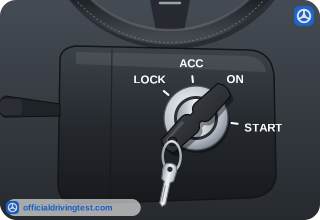
- After you pull off the road when it is safe to do so
- Before you shift to neutral
- As soon as you notice the pedal is stuck
- Only after you have come to a complete stop in your lane
Show answer
Correct answer: After you pull off the road when it is safe to do so
The handbook lists shifting to neutral, pulling off the road when safe, and then turning off the engine.
Source: Colorado Driver Handbook (DR 2337, January 2025), page 26 · Open this page in the manual (Manual page 26)
-
You are a passenger in a crash that results in personal injury, and the driver is physically incapable of reporting it. What are you required to do?
- Leave the scene at once to find the nearest police station
- Report the crash and stay at the scene if law enforcement directs
- Wait for the driver to recover before reporting anything
- Report the crash only if you own the vehicle being driven
Show answer
Correct answer: Report the crash and stay at the scene if law enforcement directs
The handbook requires a passenger to report the crash when the driver cannot, and to stay at the scene if directed by law enforcement.
Source: Colorado Driver Handbook (DR 2337, January 2025), page 26 · Open this page in the manual (Manual page 26)
-
In the event of a crash, what should you do first?
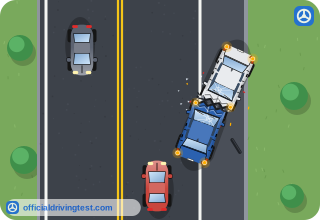
- Move your vehicle to the nearest exit
- Call your insurance company
- Take photographs of the other driver
- Stop immediately and never leave the scene
Show answer
Correct answer: Stop immediately and never leave the scene
The handbook’s first step after a crash is to stop immediately and never leave the scene.
Source: Colorado Driver Handbook (DR 2337, January 2025), page 26 · Open this page in the manual (Manual page 26)
-
After a crash, what should you do about injuries?
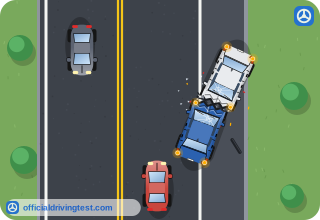
- Check for injuries and, where practical, render reasonable assistance
- Move every injured person away from the vehicles
- Leave injured people alone until a family member arrives
- Give medical treatment only if you are a licensed paramedic
Show answer
Correct answer: Check for injuries and, where practical, render reasonable assistance
The handbook says to check for injuries and where practical render reasonable assistance.
Source: Colorado Driver Handbook (DR 2337, January 2025), page 26 · Open this page in the manual (Manual page 26)
-
Which information must you exchange with the other driver after a crash?
- Name, address and driver license number, and nothing else
- Employer, home address, vehicle value and purchase date
- Name, address, phone numbers, registration and insurance information
- Social Security number, birth date and insurance policy limits
Show answer
Correct answer: Name, address, phone numbers, registration and insurance information
The handbook lists name, address, phone numbers, registration and insurance information.
Source: Colorado Driver Handbook (DR 2337, January 2025), page 26 · Open this page in the manual (Manual page 26)
-
How does the manual define Accident Alert Status?
- Times when several crashes have closed a highway for more than one hour
- Times when severe weather keeps officers from responding to the many crashes
- Times when emergency vehicles are blocked from reaching a crash scene
- Times when a driver has been seriously injured in a crash on a highway
Show answer
Correct answer: Times when severe weather keeps officers from responding to the many crashes
The handbook defines it as the times when weather conditions are so severe that officers are unable to respond to the large volume of motor vehicle crashes.
Source: Colorado Driver Handbook (DR 2337, January 2025), page 26 · Open this page in the manual (Manual page 26)
-
Under Accident Alert Status, within what time must you file an accident report with law enforcement?
- One hour
- 72 hours
- Seven days
- 24 hours
Show answer
Correct answer: 24 hours
The handbook says you must file an accident report with law enforcement within 24 hours.
Source: Colorado Driver Handbook (DR 2337, January 2025), page 26 · Open this page in the manual (Manual page 26)
-
Under Accident Alert Status, which conditions allow you to just exchange information and file a report later?
- No alcohol or drugs, no injuries and all vehicles still drivable
- No injuries, even if one of the vehicles cannot be driven
- All vehicles drivable, even if someone has been injured
- No alcohol involved, even if the driver has taken drugs
Show answer
Correct answer: No alcohol or drugs, no injuries and all vehicles still drivable
The handbook says that if alcohol and drugs are not involved, there are no injuries and all vehicles are drivable, drivers exchange information and file a report within 24 hours.
Source: Colorado Driver Handbook (DR 2337, January 2025), page 26 · Open this page in the manual (Manual page 26)
-
Your crash involves a parked car and you cannot find the owner. What should you do?
- Drive away, since the owner is not there to exchange information
- Wait beside the parked car until the owner comes back to it
- Call law enforcement and leave a note where the owner can find it
- Move the parked car out of the roadway and then drive away
Show answer
Correct answer: Call law enforcement and leave a note where the owner can find it
The handbook says to call law enforcement and leave a note in a place where the owner of the car can find it.
Source: Colorado Driver Handbook (DR 2337, January 2025), page 26 · Open this page in the manual (Manual page 26)
-
The Move It Law requires motorists in a minor crash on a divided highway to move their vehicles off the highway when which conditions are met?
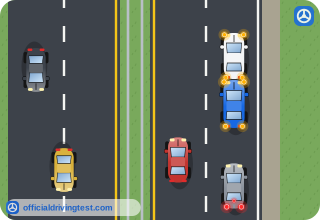
- The vehicle is drivable and a law enforcement officer has arrived
- It is drivable, no drugs or alcohol are involved, and no one is hurt
- There are no injuries, even if drugs or alcohol are involved
- Law enforcement has finished writing the crash report on scene
Show answer
Correct answer: It is drivable, no drugs or alcohol are involved, and no one is hurt
The handbook lists three conditions: the vehicle is drivable, no drugs or alcohol are involved, and there are no injuries.
Source: Colorado Driver Handbook (DR 2337, January 2025), page 26 · Open this page in the manual (Manual page 26)
-
Under the Move It Law, when can drivers notify law enforcement and exchange information?
- Before they move their vehicles
- Only after law enforcement arrives
- Only at the nearest police station
- Once they are at a safe location
Show answer
Correct answer: Once they are at a safe location
The handbook says that once at a safe location, drivers can notify law enforcement and exchange information.
Source: Colorado Driver Handbook (DR 2337, January 2025), page 26 · Open this page in the manual (Manual page 26)
-
What does the manual say about being penalized for moving your car off the road after a minor crash?
- Law enforcement and insurance companies will not penalize you for it
- You may lose your right to file a claim with your insurance company
- You may be charged with leaving the scene of the crash and fined
- Only your insurance company may penalize you, not law enforcement
Show answer
Correct answer: Law enforcement and insurance companies will not penalize you for it
The handbook says law enforcement and insurance companies will not penalize you for moving your car off the road.
Source: Colorado Driver Handbook (DR 2337, January 2025), page 26 · Open this page in the manual (Manual page 26)
-
What is the purpose of Good Samaritan laws, according to the manual?
- To encourage people to help others in emergency situations
- To require every licensed driver to give first aid at a crash
- To punish drivers who leave the scene of a crash without help
- To make rescuers pay for the injuries of the victims they help
Show answer
Correct answer: To encourage people to help others in emergency situations
The handbook says Good Samaritan laws were developed to encourage people to help others in emergency situations.
Source: Colorado Driver Handbook (DR 2337, January 2025), page 27 · Open this page in the manual (Manual page 27)
-
What does Good Samaritan immunity protect a rescuer from?
- Being asked for a written statement by law enforcement later
- Having to stay at the scene of the emergency until help comes
- Being sued and found financially responsible for the victims’ injury
- Losing the driver license after helping at an emergency scene
Show answer
Correct answer: Being sued and found financially responsible for the victims’ injury
The handbook says the legal immunity protects a rescuer from being sued and found financially responsible for the victims’ injury.
Source: Colorado Driver Handbook (DR 2337, January 2025), page 27 · Open this page in the manual (Manual page 27)
-
Good Samaritan immunity generally prevails when you respond to an emergency and act in what way?
- As quickly as possible, whatever the risk to yourself or others
- As a reasonable and prudent person would under the same conditions
- Beyond the scope of your own training, in order to save a life
- Only after law enforcement has arrived and told you to help
Show answer
Correct answer: As a reasonable and prudent person would under the same conditions
The handbook says immunity generally prevails when you act as a reasonable and prudent person would under the same conditions.
Source: Colorado Driver Handbook (DR 2337, January 2025), page 27 · Open this page in the manual (Manual page 27)
-
When would a reasonable and prudent person move a victim?
- Always, to get the victim off the road
- Only after the victim asks to be moved
- Whenever the victim is unconscious
- Only if the victim’s life is in danger
Show answer
Correct answer: Only if the victim’s life is in danger
The handbook says to move a victim only if the victim’s life is in danger.
Source: Colorado Driver Handbook (DR 2337, January 2025), page 27 · Open this page in the manual (Manual page 27)
-
What should a reasonable and prudent person do before giving care to a conscious victim?
- Ask the victim for permission
- Move the victim to a safe place
- Call the victim’s family
- Give the victim something to drink
Show answer
Correct answer: Ask the victim for permission
The handbook says to ask a conscious victim for permission before giving care.
Source: Colorado Driver Handbook (DR 2337, January 2025), page 27 · Open this page in the manual (Manual page 27)
-
What should a reasonable and prudent person check for before providing further care to a victim?
- Identification documents
- Insurance information
- Life threatening emergencies
- Signs that the victim was at fault
Show answer
Correct answer: Life threatening emergencies
The handbook says to check the victim for life threatening emergencies before providing further care.
Source: Colorado Driver Handbook (DR 2337, January 2025), page 27 · Open this page in the manual (Manual page 27)
-
How should a reasonable and prudent person summon professional help to the scene of an emergency?
- Wait for another driver to stop and call, then leave the victim there
- Call the local emergency number and keep giving care until trained help arrives
- Drive the victim to the nearest hospital without waiting for help
- Call for help, then leave as soon as the operator has been told
Show answer
Correct answer: Call the local emergency number and keep giving care until trained help arrives
The handbook says to call the local emergency number or the operator and continue to provide care until more highly trained personnel arrive.
Source: Colorado Driver Handbook (DR 2337, January 2025), page 27 · Open this page in the manual (Manual page 27)