Colorado: Emergencies — Part 2 Practice Test
Questions in this part include: “When might it be necessary to speed up to avoid a collision?” · “Your brakes fail and pumping the pedal does not work. How should you use the parking brake?”
Independent educational site · not affiliated with any government agency or DMV
Ready? Test yourself
- Instant feedback with an explanation
- Every answer cites its source in the manual
- Your best score is saved on this device
Questions are original and based on the official manual "Colorado Driver Handbook" (DR 2337, January 2025), Colorado Division of Motor Vehicles (DMV).
All 20 questions in this practice test
Take the test above first, then use this list to study. Tap “Show answer” to see the correct answer and explanation.
Show the questions and answersHide the questions
-
Generally, which is better than crashing head-on into another vehicle?
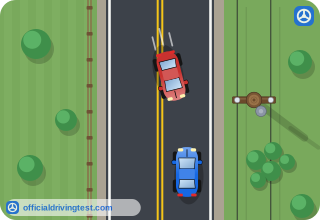
- Braking until the wheels lock
- Speeding up toward the other vehicle
- Staying in your lane and not steering
- Running off the road
Show answer
Correct answer: Running off the road
The handbook says that generally it is better to run off the road than to crash head-on into another vehicle.
Source: Colorado Driver Handbook (DR 2337, January 2025), page 26 · Open this page in the manual (Manual page 26)
-
When might it be necessary to speed up to avoid a collision?
- When another vehicle is about to hit you from the side or from behind and there is room ahead
- When another vehicle is about to hit you head-on and there is no room to the side
- When the traffic signal ahead is about to turn red
- When you are approaching a vehicle stopped in your lane
Show answer
Correct answer: When another vehicle is about to hit you from the side or from behind and there is room ahead
The handbook says speeding up may be needed when a vehicle is about to hit you from the side or behind and there is room ahead to get out of danger.
Source: Colorado Driver Handbook (DR 2337, January 2025), page 26 · Open this page in the manual (Manual page 26)
-
After you have sped up to get out of danger, what should you do once the danger has passed?
- Keep your higher speed
- Stop where you are in the lane
- Slow down
- Pull onto the shoulder and wait for law enforcement
Show answer
Correct answer: Slow down
The handbook says to be sure to slow down once the danger has passed.
Source: Colorado Driver Handbook (DR 2337, January 2025), page 26 · Open this page in the manual (Manual page 26)
-
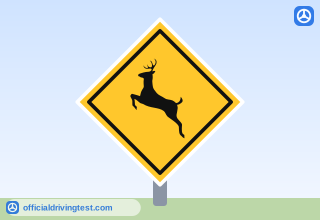
When should you be especially alert for animals in or near the roadway?
- In city centers during the middle of the day
- In rural and mountainous regions and between dusk and dawn
- Only on freeways with a posted limit of 65 mph or more
- Only in winter on snow-covered roads
Show answer
Correct answer: In rural and mountainous regions and between dusk and dawn
The handbook says to stay alert for animals, particularly in rural and mountainous regions and between dusk and dawn.
Source: Colorado Driver Handbook (DR 2337, January 2025), page 26 · Open this page in the manual (Manual page 26)
-
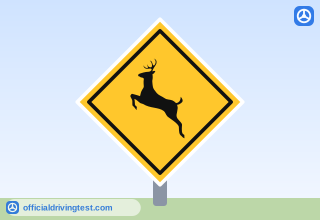
What is the first precaution to take upon entering a designated animal crossing?
- Sound your horn to warn the animals
- Turn on your high beam lights
- Move onto the shoulder
- Slow down and look for animals
Show answer
Correct answer: Slow down and look for animals
The handbook says the first precaution on entering a designated animal crossing is to slow down and look for animals.
Source: Colorado Driver Handbook (DR 2337, January 2025), page 26 · Open this page in the manual (Manual page 26)
-
Why can drastic evasive action to avoid an animal be dangerous?
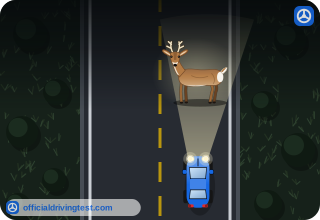
- You may lose control, causing a worse crash than hitting the animal
- The animal is more likely to be injured and to damage your vehicle
- Other drivers behind you may not see your brake lights in time
- Your airbags may switch off when you steer sharply to avoid it
Show answer
Correct answer: You may lose control, causing a worse crash than hitting the animal
The handbook warns that drastic evasive action may mean losing control of the vehicle, which can be a more serious crash than hitting the animal.
Source: Colorado Driver Handbook (DR 2337, January 2025), page 26 · Open this page in the manual (Manual page 26)
-
When an animal suddenly runs in front of your vehicle, what may be the safest alternative for the passengers?
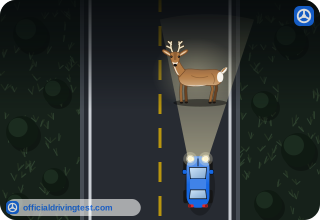
- Swerving into the oncoming lane
- Braking so hard that the wheels lock
- Hitting the animal
- Turning sharply off the roadway
Show answer
Correct answer: Hitting the animal
The handbook says that regretfully, the safest alternative for passengers may be hitting the animal.
Source: Colorado Driver Handbook (DR 2337, January 2025), page 26 · Open this page in the manual (Manual page 26)
-
If a collision with an animal cannot be avoided, what should you concentrate on?
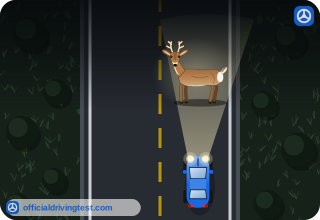
- Steering into the animal’s path to make it run away from you
- Retaining control of the vehicle before, during and after the collision
- Stopping in the lane immediately after the animal is hit
- Turning off the engine as soon as you see the animal ahead
Show answer
Correct answer: Retaining control of the vehicle before, during and after the collision
The handbook says to concentrate on retaining control of the vehicle before, during, and after the collision with the animal.
Source: Colorado Driver Handbook (DR 2337, January 2025), page 26 · Open this page in the manual (Manual page 26)
-
What greatly reduces the chance that a vehicle will have a problem?
- Driving only on freeways instead of on city streets
- Replacing all four tires on the vehicle every single year
- Warming up the engine for several minutes before every trip
- Following the recommended maintenance schedule in the owner’s manual
Show answer
Correct answer: Following the recommended maintenance schedule in the owner’s manual
The handbook says following the recommended vehicle maintenance schedule greatly reduces the chance of a vehicle problem.
Source: Colorado Driver Handbook (DR 2337, January 2025), page 26 · Open this page in the manual (Manual page 26)
-
Your brakes fail. What should you do first?
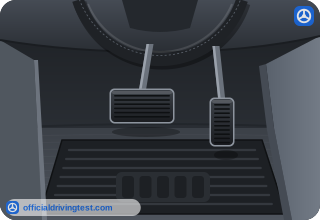
- Take your foot off the accelerator and pump the brake pedal several times
- Pull the parking brake handle all the way up and hold it there
- Shift into reverse gear and keep the brake pedal held down hard
- Shift to neutral and hold the brake pedal down as hard as you can
Show answer
Correct answer: Take your foot off the accelerator and pump the brake pedal several times
The handbook says to take your foot off the accelerator and pump the brake pedal several times, which will often build up enough pressure to stop.
Source: Colorado Driver Handbook (DR 2337, January 2025), page 26 · Open this page in the manual (Manual page 26)
-
Your brakes fail and pumping the pedal does not work. How should you use the parking brake?
- Apply it all the way at once to stop the vehicle as fast as possible
- Apply it only after the vehicle has already come to a complete stop
- Apply it slowly so the rear wheels do not lock, ready to release if you skid
- Apply it quickly while shifting up into a higher gear as you slow
Show answer
Correct answer: Apply it slowly so the rear wheels do not lock, ready to release if you skid
The handbook says to pull or push the parking brake slowly so the rear wheels do not lock and cause a skid, ready to release if the vehicle skids.
Source: Colorado Driver Handbook (DR 2337, January 2025), page 26 · Open this page in the manual (Manual page 26)
-
Your brakes fail, pumping the pedal and the parking brake do not work. What does the manual say to do next?
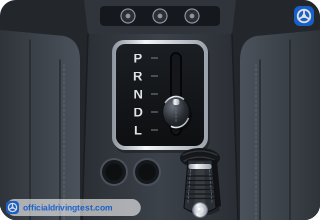
- Shift to neutral and coast until the vehicle stops by itself
- Shift to lower gears and look for a safe place to slow to a stop
- Turn off the engine and let the vehicle roll until it stops
- Keep driving normally and flash your lights to warn other drivers
Show answer
Correct answer: Shift to lower gears and look for a safe place to slow to a stop
The handbook says that if the parking brake does not work, shift to lower gears and look for a safe place to slow to a stop.
Source: Colorado Driver Handbook (DR 2337, January 2025), page 26 · Open this page in the manual (Manual page 26)
-
After a brake failure, what does the manual say you should not do?
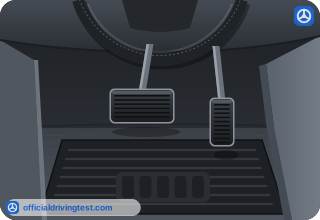
- Pull the vehicle off the roadway
- Shift to lower gears
- Pump the brake pedal
- Drive the vehicle without brakes
Show answer
Correct answer: Drive the vehicle without brakes
The handbook says to make sure the car is off the roadway and not to drive the vehicle without brakes.
Source: Colorado Driver Handbook (DR 2337, January 2025), page 26 · Open this page in the manual (Manual page 26)
-
What should you do with the steering wheel when you have a tire blowout?
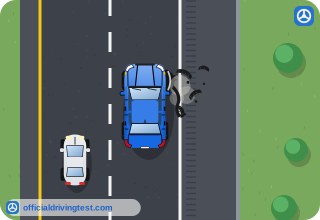
- Hold it tightly and keep the vehicle going straight
- Turn it sharply toward the shoulder as fast as you can
- Let it move freely until the vehicle has slowed down
- Turn it toward the side of the vehicle with the flat tire
Show answer
Correct answer: Hold it tightly and keep the vehicle going straight
The handbook says to hold the steering wheel tightly and keep the vehicle going straight as you slow down gradually.
Source: Colorado Driver Handbook (DR 2337, January 2025), page 26 · Open this page in the manual (Manual page 26)
-
After a tire blowout, how should you use the gas pedal and the brakes?
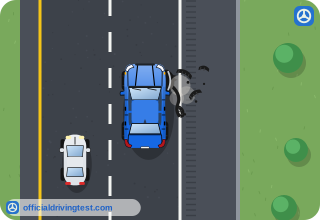
- Press the gas pedal to keep your speed and brake hard
- Take your foot off the gas pedal and brake as hard as you can
- Take your foot off the gas pedal and use the brakes lightly
- Keep your foot on the gas pedal and do not use the brakes
Show answer
Correct answer: Take your foot off the gas pedal and use the brakes lightly
The handbook says to take your foot off the gas pedal and use the brakes lightly while slowing gradually.
Source: Colorado Driver Handbook (DR 2337, January 2025), page 26 · Open this page in the manual (Manual page 26)
-
After a tire blowout, where should you stop?
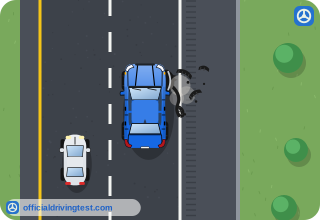
- In the middle of your lane, with your hazards flashing
- Off the road in a safe place, once you have slowed down
- Immediately where the tire blew, whatever the traffic
- On the road, so that other drivers can see you clearly
Show answer
Correct answer: Off the road in a safe place, once you have slowed down
The handbook says not to stop on the road if possible and to pull off in a safe place once you have slowed.
Source: Colorado Driver Handbook (DR 2337, January 2025), page 26 · Open this page in the manual (Manual page 26)
-
What should you expect if your vehicle suffers a power failure?
- The steering wheel will lock and cannot be turned
- The steering will become very light and loose
- The brakes will stop working completely
- The steering may be hard to turn, but you can turn it
Show answer
Correct answer: The steering may be hard to turn, but you can turn it
The handbook says that with a power failure the steering may be difficult to turn, but you can turn it.
Source: Colorado Driver Handbook (DR 2337, January 2025), page 26 · Open this page in the manual (Manual page 26)
-
After a power failure, what is true about the brakes?
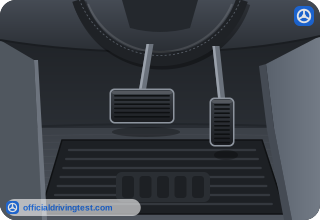
- They still work, but you may have to push very hard on the pedal
- They no longer work at all until the engine is restarted
- They work only if you pump the pedal several times in a row
- They work only when the parking brake is applied as well
Show answer
Correct answer: They still work, but you may have to push very hard on the pedal
The handbook says the brakes will still work but you may have to push very hard on the brake pedal.
Source: Colorado Driver Handbook (DR 2337, January 2025), page 26 · Open this page in the manual (Manual page 26)
-
Your headlights fail. What should you do first?
- Keep driving slowly and switch on your high beam lights to see better
- Stop in your lane, turn off the engine and wait for help to arrive
- Pull off the road as soon as possible and try the switch a few times
- Switch lanes often so other drivers can see your vehicle moving
Show answer
Correct answer: Pull off the road as soon as possible and try the switch a few times
The handbook says to pull off the road as soon as possible and try the headlight switch a few times.
Source: Colorado Driver Handbook (DR 2337, January 2025), page 26 · Open this page in the manual (Manual page 26)
-
The headlight switch does not fix a headlight failure. What does the manual say to put on, if you have them?
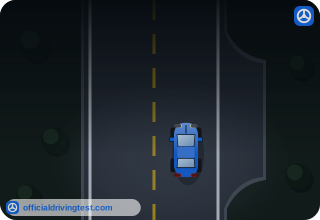
- The windshield wipers, the horn and the radio
- The emergency flashers, turn signals or fog lights
- The interior dome light and the glove box light
- The high beam lights and the reverse lights together
Show answer
Correct answer: The emergency flashers, turn signals or fog lights
The handbook says to put on the emergency flashers, turn signals or fog lights if you have them.
Source: Colorado Driver Handbook (DR 2337, January 2025), page 26 · Open this page in the manual (Manual page 26)