Arkansas: Emergencies
Brake and tire failures, skids, avoiding collisions, crashes, helping the injured and reporting a crash. Split into 3 shorter tests so you're not stuck in one long quiz.
Independent educational site · not affiliated with any government agency or DMV
Choose a part
Emergencies — Part 1
Questions in this part include: “What do emergency flashers (hazard lights) warn other drivers of?”
StartEmergencies — Part 2
Questions in this part include: “What advantage does ABS give you when you need to avoid a collision by turning?”
StartEmergencies — Part 3
Questions in this part include: “When may a driver leave the scene of a crash that involved injury or death?”
StartAll 61 Emergencies questions with answers
Choose a part above to take a practice test, or study every question and answer here.
Show the questions and answersHide the questions
-
What do emergency flashers (hazard lights) warn other drivers of?
- That you are about to make a right turn at the next intersection
- That you are allowing a pedestrian to cross in front of your vehicle
- That there is an emergency, a breakdown, or a car parked by the road
- That you are following another vehicle too closely on a highway
Show answer
Correct answer: That there is an emergency, a breakdown, or a car parked by the road
Emergency flashers warn other drivers of an emergency, a broken-down vehicle, or that your car is parked on the side of the road.
Source: Arkansas Driver License Study Guide (Volume 1, Edition 10, October 2026), page 52 · Open this page in the manual (Manual page 52)
-
If available, what does the manual say to use to notify authorities of a broken-down vehicle?
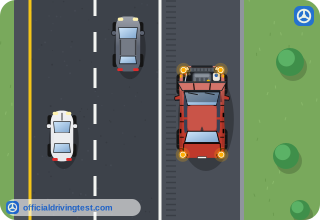
- Your horn
- Your cell phone
- Your high beams
- Your parking lights
Show answer
Correct answer: Your cell phone
The manual says to use your cell phone, if available, to notify authorities of a broken-down vehicle.
Source: Arkansas Driver License Study Guide (Volume 1, Edition 10, October 2026), page 52 · Open this page in the manual (Manual page 52)
-
If your brakes stop working while you are driving, what should you try first?
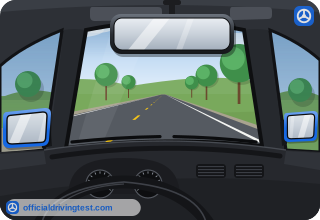
- Pump the brake pedal several times
- Shift into a higher gear
- Turn off the ignition
- Steer onto the shoulder and coast
Show answer
Correct answer: Pump the brake pedal several times
Pumping the pedal often builds up enough brake pressure to stop the vehicle.
Source: Arkansas Driver License Study Guide (Volume 1, Edition 10, October 2026), page 77 · Open this page in the manual (Manual page 77)
-
When you use the parking brake because your brakes have failed, how should you apply it?
- Hard and fast, to stop as quickly as possible
- Only after you turn off the engine
- Slowly, so the rear wheels do not lock
- Only after you shift into a higher gear
Show answer
Correct answer: Slowly, so the rear wheels do not lock
The handle or emergency brake pedal is applied slowly so the rear wheels do not lock and cause a skid.
Source: Arkansas Driver License Study Guide (Volume 1, Edition 10, October 2026), page 77 · Open this page in the manual (Manual page 77)
-
You are using the parking brake after brake failure and the vehicle starts to skid. What should you be ready to do?
- Pull the brake harder
- Release the brake
- Turn off the engine
- Shift into reverse
Show answer
Correct answer: Release the brake
The manual says to be ready to release the brake if the vehicle does start to skid.
Source: Arkansas Driver License Study Guide (Volume 1, Edition 10, October 2026), page 77 · Open this page in the manual (Manual page 77)
-
If pumping the brake pedal and using the parking brake both fail to stop your vehicle, what should you do next?
- Keep driving at a low speed until you reach home
- Turn off the engine and coast in the traffic lane
- Shift to a higher gear and stay on the road
- Shift to lower gears and look for a safe place to stop
Show answer
Correct answer: Shift to lower gears and look for a safe place to stop
After pumping and the parking brake, you start shifting to lower gears and look for a safe place to stop off the roadway.
Source: Arkansas Driver License Study Guide (Volume 1, Edition 10, October 2026), page 77 · Open this page in the manual (Manual page 77)
-
If your vehicle has no working brakes, what does the manual say about driving it?
- Do not drive the vehicle without brakes
- You may drive it slowly in the right lane
- You may drive it to the nearest repair shop
- You may drive it if you use the emergency flashers
Show answer
Correct answer: Do not drive the vehicle without brakes
The manual tells you to get the car off the roadway and not to drive the vehicle without brakes.
Source: Arkansas Driver License Study Guide (Volume 1, Edition 10, October 2026), page 77 · Open this page in the manual (Manual page 77)
-
If you have a sudden tire blowout, how should you hold the steering wheel?
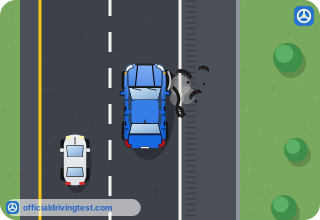
- Loosely, letting the vehicle drift to the shoulder
- Tightly, turning sharply toward the shoulder
- Tightly, keeping the vehicle going straight
- With one hand, so you can signal with the other
Show answer
Correct answer: Tightly, keeping the vehicle going straight
You hold the steering wheel tightly and keep the vehicle going straight.
Source: Arkansas Driver License Study Guide (Volume 1, Edition 10, October 2026), page 77 · Open this page in the manual (Manual page 77)
-
After a sudden tire blowout, how should you slow the vehicle?
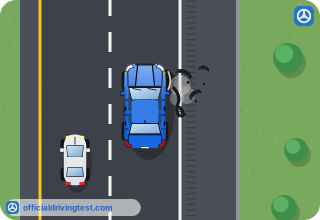
- Brake as hard as you can right away
- Ease off the gas and use the brakes lightly
- Shift into neutral and let the vehicle coast
- Turn the steering wheel back and forth
Show answer
Correct answer: Ease off the gas and use the brakes lightly
The manual says to slow gradually, easing off the gas and braking lightly.
Source: Arkansas Driver License Study Guide (Volume 1, Edition 10, October 2026), page 77 · Open this page in the manual (Manual page 77)
-
After a tire blowout, what does the manual say about stopping on the road?
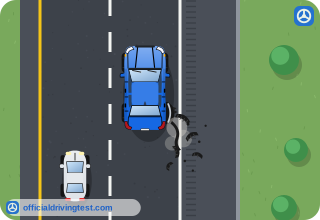
- Stop in your lane and turn on the emergency flashers
- Stop in the left lane so traffic can see you
- Stop right away wherever the blowout happens
- Do not stop on the road if possible; pull off in a safe place
Show answer
Correct answer: Do not stop on the road if possible; pull off in a safe place
You should not stop on the road if possible and should pull off the road in a safe place.
Source: Arkansas Driver License Study Guide (Volume 1, Edition 10, October 2026), page 77 · Open this page in the manual (Manual page 77)
-
If your engine fails while you are driving, what should you know about the steering?
- It may be hard to turn, but you can turn it
- It locks and cannot be turned
- It works normally with no extra effort
- It turns only to the right
Show answer
Correct answer: It may be hard to turn, but you can turn it
The manual tells you to keep a strong grip on the wheel because steering may be hard but is still possible.
Source: Arkansas Driver License Study Guide (Volume 1, Edition 10, October 2026), page 77 · Open this page in the manual (Manual page 77)
-
If your engine fails while you are driving, what should you know about the brakes?
- They stop working until the engine restarts
- They work normally with no extra effort
- They work, but you may have to push very hard
- They work only when you pump the pedal
Show answer
Correct answer: They work, but you may have to push very hard
After engine failure you pull off the roadway; the brakes still work but may need a very hard push.
Source: Arkansas Driver License Study Guide (Volume 1, Edition 10, October 2026), page 77 · Open this page in the manual (Manual page 77)
-
If your headlights suddenly go out, what should you do first?
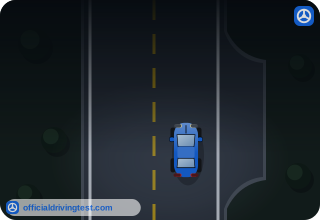
- Pull onto the shoulder and stop at once
- Try the headlight switch a few times
- Turn off the engine
- Flash your high beams at other drivers
Show answer
Correct answer: Try the headlight switch a few times
The first step listed is to try the headlight switch a few times.
Source: Arkansas Driver License Study Guide (Volume 1, Edition 10, October 2026), page 77 · Open this page in the manual (Manual page 77)
-
Your headlights go out and the headlight switch does not fix it. What should you use if you have them?
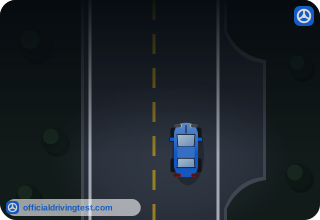
- The interior dome light and the windshield wipers
- The windshield wipers and the horn
- The parking brake light
- Emergency flashers, turn signals, or fog lights
Show answer
Correct answer: Emergency flashers, turn signals, or fog lights
The manual lists emergency flashers, turn signals or fog lights, then pulling off the road as soon as possible.
Source: Arkansas Driver License Study Guide (Volume 1, Edition 10, October 2026), page 77 · Open this page in the manual (Manual page 77)
-
The motor keeps running faster and faster because of a faulty accelerator. What should you do right away?
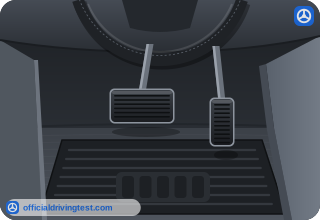
- Quickly shift to neutral
- Pump the accelerator pedal
- Turn off the ignition first
- Shift into a lower gear
Show answer
Correct answer: Quickly shift to neutral
For a faulty accelerator the manual says to keep your eyes on the road and quickly shift to neutral.
Source: Arkansas Driver License Study Guide (Volume 1, Edition 10, October 2026), page 77 · Open this page in the manual (Manual page 77)
-
With a faulty accelerator, what do you do with your eyes while you deal with the problem?
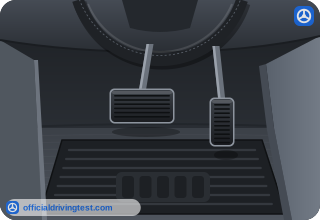
- Look down at the pedal
- Look at the shoulder only
- Keep them on the road
- Look at the dashboard gauges
Show answer
Correct answer: Keep them on the road
The first listed step for a faulty accelerator is to keep your eyes on the road.
Source: Arkansas Driver License Study Guide (Volume 1, Edition 10, October 2026), page 77 · Open this page in the manual (Manual page 77)
-
After a faulty accelerator has made the motor run faster and faster and you have shifted to neutral, what should you do when it is safe?
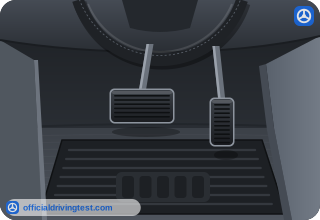
- Stop in the lane and turn off the engine
- Pull off the road, then turn off the engine
- Shift back into drive and continue slowly
- Pull off the road and leave the engine running
Show answer
Correct answer: Pull off the road, then turn off the engine
The manual lists pulling off the road when safe and then turning off the engine.
Source: Arkansas Driver License Study Guide (Volume 1, Edition 10, October 2026), page 77 · Open this page in the manual (Manual page 77)
-
What does the manual say you should follow to reduce the chance of a vehicle problem while driving?
- A repair schedule set by the Arkansas State Police
- A yearly inspection at a license office
- The advice of the nearest tire shop
- The maintenance schedule in the owner’s manual
Show answer
Correct answer: The maintenance schedule in the owner’s manual
The manual advises following the recommended maintenance schedule in the owner’s manual.
Source: Arkansas Driver License Study Guide (Volume 1, Edition 10, October 2026), page 77 · Open this page in the manual (Manual page 77)
-
What are the three options a driver has in avoiding a collision?
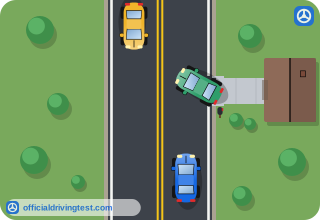
- Stop, turn, and speed up
- Stop, honk, and flash the lights
- Turn, brake, and shift to neutral
- Speed up, honk, and signal
Show answer
Correct answer: Stop, turn, and speed up
The manual says drivers have three options: stop, turn, and speed up.
Source: Arkansas Driver License Study Guide (Volume 1, Edition 10, October 2026), page 78 · Open this page in the manual (Manual page 78)
-
If your vehicle has an antilock braking system (ABS) and you need to stop quickly, what should you do?
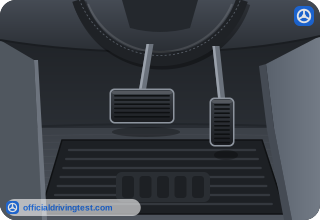
- Pump the brake pedal several times
- Press the pedal lightly and release it
- Press the brake pedal hard and keep pressing it
- Press the pedal once, then use the parking brake
Show answer
Correct answer: Press the brake pedal hard and keep pressing it
With ABS you press the brake pedal as hard as you can and keep pressing on it.
Source: Arkansas Driver License Study Guide (Volume 1, Edition 10, October 2026), page 78 · Open this page in the manual (Manual page 78)
-
With ABS, you feel the brake pedal pushing back while the system is working. What should you do?
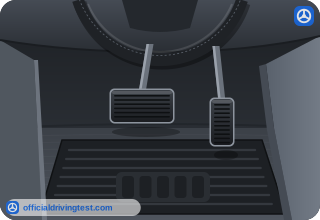
- Let up on the pedal and press it again
- Do not let up on the brake pedal
- Pump the pedal quickly
- Pull the parking brake
Show answer
Correct answer: Do not let up on the brake pedal
The ABS system only works with the brake pedal pushed down.
Source: Arkansas Driver License Study Guide (Volume 1, Edition 10, October 2026), page 78 · Open this page in the manual (Manual page 78)
-
If your vehicle does not have antilock brakes and you must stop quickly, how should you apply the brakes?
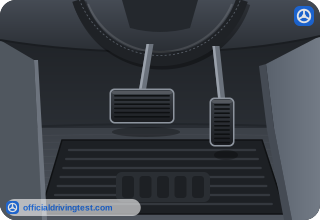
- With full force, locking the wheels
- Lightly, in short taps
- Only with the parking brake
- As hard as you can without locking them
Show answer
Correct answer: As hard as you can without locking them
Without ABS you brake as hard as you can without locking the brakes, since braking too hard can cause a skid.
Source: Arkansas Driver License Study Guide (Volume 1, Edition 10, October 2026), page 78 · Open this page in the manual (Manual page 78)
-
In a vehicle without ABS, the brakes lock up and you feel the vehicle start to skid. What should you do?
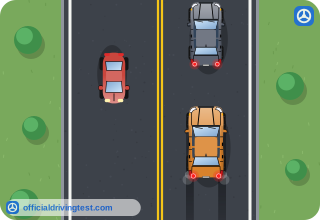
- Quickly let up on the brake pedal
- Press the brake pedal harder
- Turn off the ignition
- Shift into neutral
Show answer
Correct answer: Quickly let up on the brake pedal
If the brakes lock up and the vehicle starts to skid, you quickly let up on the pedal.
Source: Arkansas Driver License Study Guide (Volume 1, Edition 10, October 2026), page 78 · Open this page in the manual (Manual page 78)
-
In a vehicle without ABS, what do you do as soon as the vehicle stops skidding?
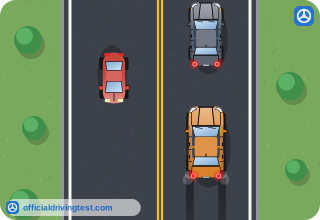
- Keep your foot off the brake until you are stopped
- Switch to the parking brake
- Push down on the brake pedal again and repeat until stopped
- Shift into a lower gear
Show answer
Correct answer: Push down on the brake pedal again and repeat until stopped
You push the brake down again and keep doing this until the vehicle has stopped.
Source: Arkansas Driver License Study Guide (Volume 1, Edition 10, October 2026), page 78 · Open this page in the manual (Manual page 78)
-
Why should you consider turning to avoid a collision?
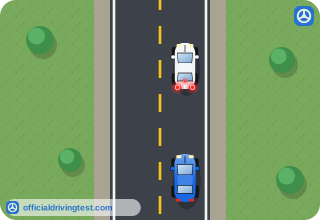
- Turning always takes less room than speeding up
- A vehicle can usually be turned quicker than stopped
- Steering is easier than braking on wet roads
- A turn is safer than stopping in every situation
Show answer
Correct answer: A vehicle can usually be turned quicker than stopped
The manual says most of the time a vehicle can be turned quicker than it can be stopped.
Source: Arkansas Driver License Study Guide (Volume 1, Edition 10, October 2026), page 78 · Open this page in the manual (Manual page 78)
-
According to the manual, what is the best way to grip the steering wheel when turning to avoid danger?
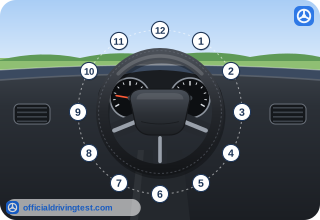
- With both hands at the 9 o’clock and 3 o’clock positions
- With one hand at the top of the wheel
- With both hands at the bottom of the wheel
- With both hands at the 10 o’clock and 2 o’clock positions
Show answer
Correct answer: With both hands at the 10 o’clock and 2 o’clock positions
The manual says both hands should be on the wheel at 10 and 2.
Source: Arkansas Driver License Study Guide (Volume 1, Edition 10, October 2026), page 78 · Open this page in the manual (Manual page 78)
-
After you turn away or change lanes to avoid danger, what must you be ready to do?
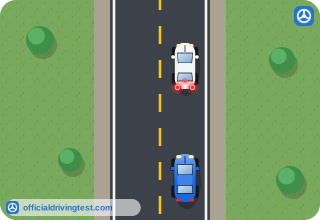
- Keep the vehicle under control
- Stop immediately in the new lane
- Speed up to leave the danger behind
- Return to your first lane at once
Show answer
Correct answer: Keep the vehicle under control
The manual warns that some drivers steer away from one collision only to end up in another.
Source: Arkansas Driver License Study Guide (Volume 1, Edition 10, October 2026), page 78 · Open this page in the manual (Manual page 78)
-
What advantage does ABS give you when you need to avoid a collision by turning?
- You can turn without using the steering wheel
- You never need to brake before a turn
- You can turn while braking without skidding
- You can turn at any speed without risk
Show answer
Correct answer: You can turn while braking without skidding
With ABS you can turn while braking without skidding, which helps with turning, stopping or slowing down.
Source: Arkansas Driver License Study Guide (Volume 1, Edition 10, October 2026), page 78 · Open this page in the manual (Manual page 78)
-
If your vehicle does not have ABS, how do you turn quickly to avoid a collision?
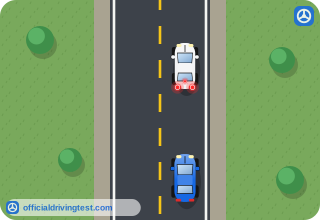
- Keep the brake pressed down while you turn
- Brake, then let up and turn the steering wheel
- Release the gas and turn without braking
- Pull the parking brake and turn the wheel
Show answer
Correct answer: Brake, then let up and turn the steering wheel
Braking puts more weight on the front tires for a quicker turn, then you let up and steer.
Source: Arkansas Driver License Study Guide (Volume 1, Edition 10, October 2026), page 78 · Open this page in the manual (Manual page 78)
-
Without ABS, what should you avoid doing when braking or turning to avoid a collision?
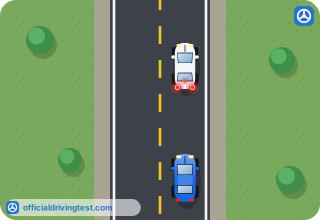
- Letting up on the brake pedal
- Using both hands on the steering wheel
- Slowing down before the turn
- Locking up the front wheels
Show answer
Correct answer: Locking up the front wheels
The manual says not to lock up the front wheels when braking or when turning so sharp that the vehicle can only plow ahead.
Source: Arkansas Driver License Study Guide (Volume 1, Edition 10, October 2026), page 78 · Open this page in the manual (Manual page 78)
-
According to the manual, which is generally better when a collision cannot be avoided?
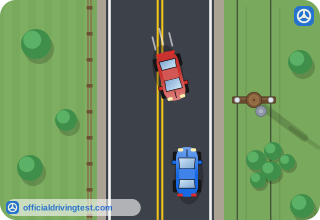
- Run off the road rather than crash head-on
- Crash head-on rather than run off the road
- Stop in the lane and brake hard
- Swerve into the oncoming lane
Show answer
Correct answer: Run off the road rather than crash head-on
The manual says it is generally better to run off the road than crash head-on.
Source: Arkansas Driver License Study Guide (Volume 1, Edition 10, October 2026), page 78 · Open this page in the manual (Manual page 78)
-
In which situation might you need to speed up to avoid a collision?
- When another vehicle is stopped in front of you
- When you are approaching a red light
- When a vehicle is about to hit you from the side
- When you are entering a school zone
Show answer
Correct answer: When a vehicle is about to hit you from the side
The manual lists a vehicle about to hit you from the side or behind, or open space ahead, as reasons to accelerate.
Source: Arkansas Driver License Study Guide (Volume 1, Edition 10, October 2026), page 78 · Open this page in the manual (Manual page 78)
-
After you speed up to get out of danger, what should you be sure to do once the danger has passed?
- Keep your speed to stay ahead
- Slow down
- Stop at once
- Change lanes
Show answer
Correct answer: Slow down
The manual says to slow down once the danger has passed.
Source: Arkansas Driver License Study Guide (Volume 1, Edition 10, October 2026), page 78 · Open this page in the manual (Manual page 78)
-
What causes a skid?
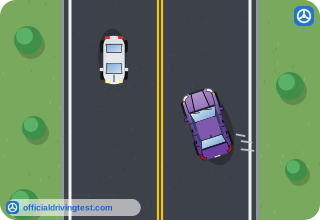
- The engine runs at too low a speed
- The brake pedal is pressed too lightly
- The steering wheel is held too tightly
- The tires can no longer grip the road
Show answer
Correct answer: The tires can no longer grip the road
Skids occur when the tires can no longer grip the road, and you cannot control a vehicle while it skids.
Source: Arkansas Driver License Study Guide (Volume 1, Edition 10, October 2026), page 79 · Open this page in the manual (Manual page 79)
-
If your vehicle begins to skid, why should you stay off the brake?
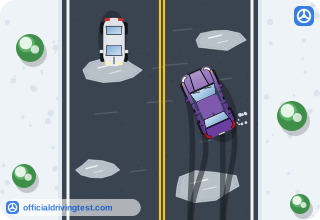
- Braking would turn the vehicle off the road
- Brakes will not work until the vehicle slows down
- Braking would stall the engine
- Braking always makes the tires blow out
Show answer
Correct answer: Brakes will not work until the vehicle slows down
The manual says the brakes will not work until the vehicle slows down and could make the skid worse.
Source: Arkansas Driver License Study Guide (Volume 1, Edition 10, October 2026), page 79 · Open this page in the manual (Manual page 79)
-
If your vehicle begins to skid, which way should you turn the steering wheel?
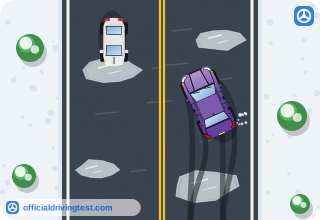
- Away from the direction you want to go
- Straight ahead and hold it
- Do not turn it; brake hard instead
- In the direction you want the vehicle to go
Show answer
Correct answer: In the direction you want the vehicle to go
You steer toward the direction you want the vehicle to go.
Source: Arkansas Driver License Study Guide (Volume 1, Edition 10, October 2026), page 79 · Open this page in the manual (Manual page 79)
-
In a skid, the vehicle begins to straighten out. What should you do with the steering wheel?
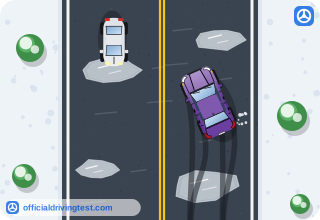
- Turn it back the other way
- Turn it further in the same direction
- Let go of the wheel
- Hold it where it is
Show answer
Correct answer: Turn it back the other way
If you fail to turn it back, the vehicle may swing around the other way and start a new skid.
Source: Arkansas Driver License Study Guide (Volume 1, Edition 10, October 2026), page 79 · Open this page in the manual (Manual page 79)
-
How long should you continue to correct your steering, left and right, during a skid?
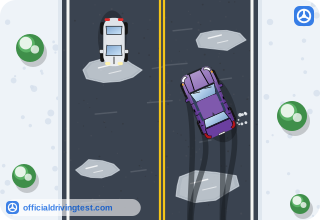
- Until you see a straight stretch of road
- Until you reach the next intersection
- Until you gain control of the vehicle
- Until you have counted to three
Show answer
Correct answer: Until you gain control of the vehicle
The manual says to keep correcting your steering until you regain control.
Source: Arkansas Driver License Study Guide (Volume 1, Edition 10, October 2026), page 79 · Open this page in the manual (Manual page 79)
-
When should you stop at the scene of a crash?
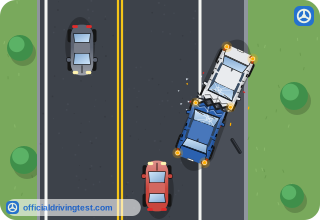
- Whenever you pass a crash, to offer help
- Only if you are involved or help has not arrived
- Only if a police officer asks you to stop
- Never, even if you are involved in the crash
Show answer
Correct answer: Only if you are involved or help has not arrived
Otherwise the manual says to focus on your driving and keep moving, watching for people in or near the road.
Source: Arkansas Driver License Study Guide (Volume 1, Edition 10, October 2026), page 80 · Open this page in the manual (Manual page 80)
-
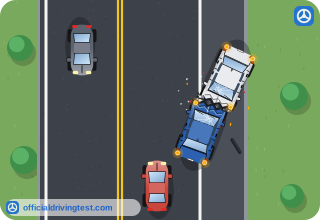
Why should you not drive to the scene of an accident, fire, or other disaster?
- It could make the road dirty
- It is illegal to take photographs at a scene
- You may be asked to pay for the damage
- It could block the way for rescue vehicles
Show answer
Correct answer: It could block the way for rescue vehicles
The manual warns that your vehicle could block rescue vehicles.
Source: Arkansas Driver License Study Guide (Volume 1, Edition 10, October 2026), page 80 · Open this page in the manual (Manual page 80)
-
What must you do if you are involved in a traffic crash?
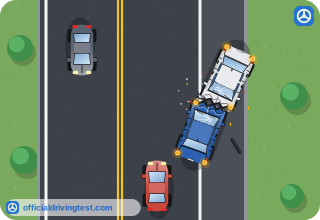
- Stop
- Keep driving and call the police later
- Drive to the nearest police station
- Stop only if someone is hurt
Show answer
Correct answer: Stop
The manual says that if you are involved in a crash you must stop.
Source: Arkansas Driver License Study Guide (Volume 1, Edition 10, October 2026), page 80 · Open this page in the manual (Manual page 80)
-
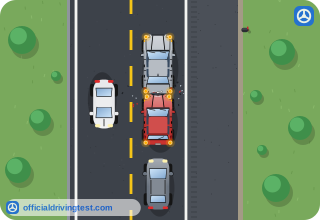
What does Arkansas law require you to do with your vehicle if you are involved in a traffic crash?
- Leave it where it is until the police arrive
- Move it only if someone is injured
- Move it from the roadway to keep traffic moving
- Park it in the left lane
Show answer
Correct answer: Move it from the roadway to keep traffic moving
The manual states the law requires moving the vehicle from the roadway so it does not block traffic.
Source: Arkansas Driver License Study Guide (Volume 1, Edition 10, October 2026), page 80 · Open this page in the manual (Manual page 80)
-
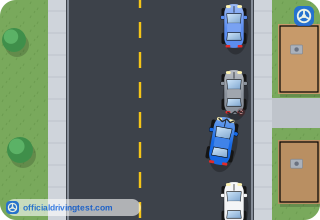
If you are involved in a crash with a parked vehicle, what must you try to do?
- Leave a note and drive away
- Locate the owner
- Move the parked vehicle yourself
- Wait for the owner to call you
Show answer
Correct answer: Locate the owner
The manual says you must try to locate the owner of the parked vehicle.
Source: Arkansas Driver License Study Guide (Volume 1, Edition 10, October 2026), page 80 · Open this page in the manual (Manual page 80)
-
A driver must notify the police immediately if someone is injured or killed, or if property damage is more than what amount?
- $250
- $500
- $2,000
- $1,000
Show answer
Correct answer: $1,000
The manual says a driver must notify the police immediately when someone is injured or killed or property damage exceeds $1,000.
Source: Arkansas Driver License Study Guide (Volume 1, Edition 10, October 2026), page 80 · Open this page in the manual (Manual page 80)
-
When may a driver leave the scene of a crash that involved injury or death?
- Not until police have talked with the driver(s)
- As soon as the injured have been taken away
- As soon as the driver has exchanged names with others
- After waiting fifteen minutes for the police
Show answer
Correct answer: Not until police have talked with the driver(s)
A driver cannot leave the scene of a crash with injury or death until police have talked with the driver(s) and collected all information.
Source: Arkansas Driver License Study Guide (Volume 1, Edition 10, October 2026), page 80 · Open this page in the manual (Manual page 80)
-
At the scene of a crash, what should you not do in the traffic lanes?
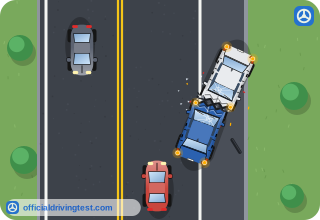
- Sit inside your vehicle
- Turn on warning devices
- Stand or walk in them
- Move your vehicle off the road
Show answer
Correct answer: Stand or walk in them
You could be struck by another vehicle.
Source: Arkansas Driver License Study Guide (Volume 1, Edition 10, October 2026), page 80 · Open this page in the manual (Manual page 80)
-
What should you do about the ignition of wrecked vehicles?
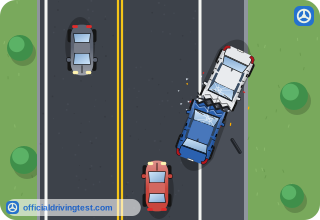
- Leave the engine running so the lights stay on
- Turn it off, and do not smoke near the vehicle
- Turn it off, but smoking nearby is safe
- Leave it alone until the police arrive
Show answer
Correct answer: Turn it off, and do not smoke near the vehicle
Fuel could have spilled and you could cause a fire.
Source: Arkansas Driver License Study Guide (Volume 1, Edition 10, October 2026), page 80 · Open this page in the manual (Manual page 80)
-
At a crash scene where electrical wires are down, what should you do?
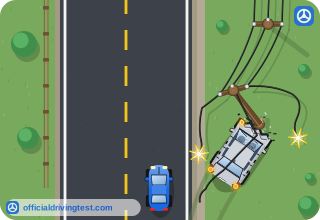
- Move the wires off the road
- Touch the wires only with a dry stick
- Drive over the wires slowly
- Do not go near the wires
Show answer
Correct answer: Do not go near the wires
The manual says not to go near downed electrical wires.
Source: Arkansas Driver License Study Guide (Volume 1, Edition 10, October 2026), page 80 · Open this page in the manual (Manual page 80)
-
How can you alert other traffic to a crash so they do not become involved in it?
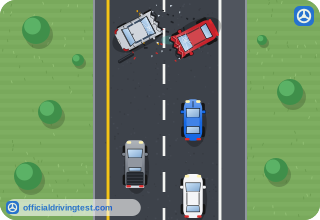
- Use flares or other warning devices
- Stand in the road and wave your arms
- Park across the lanes behind the crash
- Turn off your headlights and wait
Show answer
Correct answer: Use flares or other warning devices
The manual says to use flares or other warning devices while being aware of any spilled fuel or leaks.
Source: Arkansas Driver License Study Guide (Volume 1, Edition 10, October 2026), page 80 · Open this page in the manual (Manual page 80)
-
When you help someone who cannot move or is unconscious, what should you check for first?
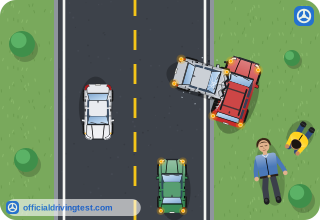
- Bleeding, and then breathing
- A pulse, and then broken bones
- Breathing, and then bleeding
- Their identification, and then their insurance
Show answer
Correct answer: Breathing, and then bleeding
The manual lists checking for breathing first, then bleeding.
Source: Arkansas Driver License Study Guide (Volume 1, Edition 10, October 2026), page 81 · Open this page in the manual (Manual page 81)
-
When you call for help after a crash, what information should you give the police?
- Only your name, your phone number and your license number
- The exact location and any warnings, such as gas spills or fire
- Only the number of vehicles and the time of day
- Only the names of the injured people and their ages
Show answer
Correct answer: The exact location and any warnings, such as gas spills or fire
The manual says to give a precise location plus warnings, then repeat the same information to rescue and medical personnel.
Source: Arkansas Driver License Study Guide (Volume 1, Edition 10, October 2026), page 81 · Open this page in the manual (Manual page 81)
-
When should you move an injured person?
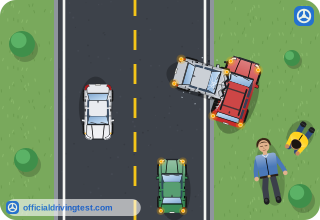
- As soon as you reach the scene
- Whenever the person asks to be moved
- Only after you have given them something to drink
- Only if trapped in a burning vehicle or other danger
Show answer
Correct answer: Only if trapped in a burning vehicle or other danger
The manual says not to move the injured unless they are trapped in a burning vehicle or another immediate danger.
Source: Arkansas Driver License Study Guide (Volume 1, Edition 10, October 2026), page 81 · Open this page in the manual (Manual page 81)
-
What should you do if an injured person is bleeding?
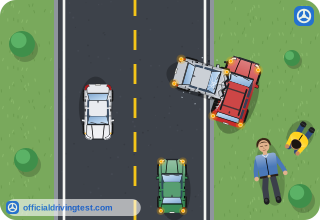
- Supply direct pressure to the wound
- Wash the wound with water
- Lift the person to a sitting position
- Wait for medical personnel before touching the wound
Show answer
Correct answer: Supply direct pressure to the wound
Even severe bleeding can almost always be stopped or slowed by direct pressure.
Source: Arkansas Driver License Study Guide (Volume 1, Edition 10, October 2026), page 81 · Open this page in the manual (Manual page 81)
-
What should you not give an injured person until medical personnel are on the scene?
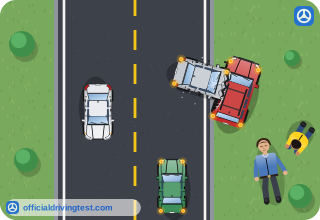
- A blanket or coat
- Direct pressure on a wound
- Anything to drink, even water
- A call for help
Show answer
Correct answer: Anything to drink, even water
The manual says not to give the injured anything to drink, even water, until medical personnel is on the scene.
Source: Arkansas Driver License Study Guide (Volume 1, Edition 10, October 2026), page 81 · Open this page in the manual (Manual page 81)
-
How can you help prevent an injured person from going into shock?
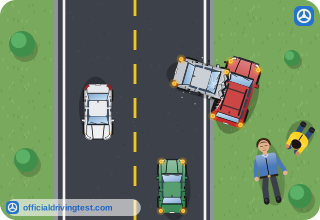
- Give the person a warm drink
- Cover the person with a blanket or a coat
- Have the person stand and walk around
- Keep the person’s face uncovered in the cold air
Show answer
Correct answer: Cover the person with a blanket or a coat
The manual recommends covering the individual with a blanket or warm clothing.
Source: Arkansas Driver License Study Guide (Volume 1, Edition 10, October 2026), page 81 · Open this page in the manual (Manual page 81)
-
Whose names and addresses should you get after a crash?
- Only the other drivers involved in the crash
- Only the injured persons and their families
- Only the owners of damaged property
- All people involved, any witnesses, and the injured
Show answer
Correct answer: All people involved, any witnesses, and the injured
The manual says to get names and addresses of everyone involved, witnesses, and injured persons.
Source: Arkansas Driver License Study Guide (Volume 1, Edition 10, October 2026), page 81 · Open this page in the manual (Manual page 81)
-
Which information should you exchange with the other drivers involved in a crash?
- Name, address, license number and insurance company
- Name, telephone number, employer and home address
- Name, date of birth and the color of the vehicle
- Name and address only, nothing about insurance
Show answer
Correct answer: Name, address, license number and insurance company
The manual lists name, address, license number, insurance company, policy number if available and vehicle details.
Source: Arkansas Driver License Study Guide (Volume 1, Edition 10, October 2026), page 81 · Open this page in the manual (Manual page 81)
-
What should you record about the vehicles involved in a crash?
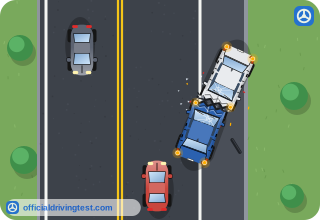
- Only their tire condition
- Only their speed before the crash
- Any damage to them
- Only their mileage
Show answer
Correct answer: Any damage to them
The manual says to record any damage to the vehicles involved.
Source: Arkansas Driver License Study Guide (Volume 1, Edition 10, October 2026), page 81 · Open this page in the manual (Manual page 81)
-
You must report a crash to the Office of Driver Services of the Department of Finance and Administration if there is an injury, a death, or property damage of more than what amount to one person’s property?
- $500
- $3,000
- $2,000
- $5,000
Show answer
Correct answer: $3,000
The manual sets this report threshold at more than $3,000 to one person’s property, or any injury or death.
Source: Arkansas Driver License Study Guide (Volume 1, Edition 10, October 2026), page 81 · Open this page in the manual (Manual page 81)
-
Within how many days of a crash must you file the report with the Office of Driver Services?
- Ten (10) days
- Fifteen (15) days
- Sixty (60) days
- Thirty (30) days
Show answer
Correct answer: Thirty (30) days
The report must be filed within thirty days of the accident.
Source: Arkansas Driver License Study Guide (Volume 1, Edition 10, October 2026), page 81 · Open this page in the manual (Manual page 81)
-
If you are injured in a crash and unable to complete the accident report, what does the manual say?
- Someone may file the report on your behalf
- The report is no longer required
- You must file it from the hospital yourself
- Only a police officer may file it
Show answer
Correct answer: Someone may file the report on your behalf
The manual allows someone else to file for an injured driver.
Source: Arkansas Driver License Study Guide (Volume 1, Edition 10, October 2026), page 81 · Open this page in the manual (Manual page 81)