Arkansas: Emergencies — Part 1 Practice Test
Questions in this part include: “What do emergency flashers (hazard lights) warn other drivers of?” · “If your vehicle has no working brakes, what does the manual say about driving it?”
Independent educational site · not affiliated with any government agency or DMV
Ready? Test yourself
- Instant feedback with an explanation
- Every answer cites its source in the manual
- Your best score is saved on this device
Questions are original and based on the official manual "Arkansas Driver License Study Guide" (Volume 1, Edition 10, October 2026), Arkansas State Police (ASP).
All 21 questions in this practice test
Take the test above first, then use this list to study. Tap “Show answer” to see the correct answer and explanation.
Show the questions and answersHide the questions
-
What do emergency flashers (hazard lights) warn other drivers of?
- That you are about to make a right turn at the next intersection
- That you are allowing a pedestrian to cross in front of your vehicle
- That there is an emergency, a breakdown, or a car parked by the road
- That you are following another vehicle too closely on a highway
Show answer
Correct answer: That there is an emergency, a breakdown, or a car parked by the road
Emergency flashers warn other drivers of an emergency, a broken-down vehicle, or that your car is parked on the side of the road.
Source: Arkansas Driver License Study Guide (Volume 1, Edition 10, October 2026), page 52 · Open this page in the manual (Manual page 52)
-
If available, what does the manual say to use to notify authorities of a broken-down vehicle?
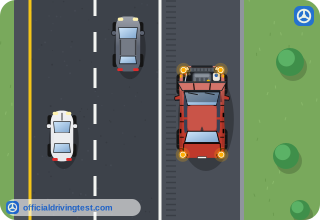
- Your horn
- Your cell phone
- Your high beams
- Your parking lights
Show answer
Correct answer: Your cell phone
The manual says to use your cell phone, if available, to notify authorities of a broken-down vehicle.
Source: Arkansas Driver License Study Guide (Volume 1, Edition 10, October 2026), page 52 · Open this page in the manual (Manual page 52)
-
If your brakes stop working while you are driving, what should you try first?
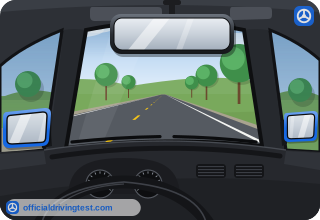
- Pump the brake pedal several times
- Shift into a higher gear
- Turn off the ignition
- Steer onto the shoulder and coast
Show answer
Correct answer: Pump the brake pedal several times
Pumping the pedal often builds up enough brake pressure to stop the vehicle.
Source: Arkansas Driver License Study Guide (Volume 1, Edition 10, October 2026), page 77 · Open this page in the manual (Manual page 77)
-
When you use the parking brake because your brakes have failed, how should you apply it?
- Hard and fast, to stop as quickly as possible
- Only after you turn off the engine
- Slowly, so the rear wheels do not lock
- Only after you shift into a higher gear
Show answer
Correct answer: Slowly, so the rear wheels do not lock
The handle or emergency brake pedal is applied slowly so the rear wheels do not lock and cause a skid.
Source: Arkansas Driver License Study Guide (Volume 1, Edition 10, October 2026), page 77 · Open this page in the manual (Manual page 77)
-
You are using the parking brake after brake failure and the vehicle starts to skid. What should you be ready to do?
- Pull the brake harder
- Release the brake
- Turn off the engine
- Shift into reverse
Show answer
Correct answer: Release the brake
The manual says to be ready to release the brake if the vehicle does start to skid.
Source: Arkansas Driver License Study Guide (Volume 1, Edition 10, October 2026), page 77 · Open this page in the manual (Manual page 77)
-
If pumping the brake pedal and using the parking brake both fail to stop your vehicle, what should you do next?
- Keep driving at a low speed until you reach home
- Turn off the engine and coast in the traffic lane
- Shift to a higher gear and stay on the road
- Shift to lower gears and look for a safe place to stop
Show answer
Correct answer: Shift to lower gears and look for a safe place to stop
After pumping and the parking brake, you start shifting to lower gears and look for a safe place to stop off the roadway.
Source: Arkansas Driver License Study Guide (Volume 1, Edition 10, October 2026), page 77 · Open this page in the manual (Manual page 77)
-
If your vehicle has no working brakes, what does the manual say about driving it?
- Do not drive the vehicle without brakes
- You may drive it slowly in the right lane
- You may drive it to the nearest repair shop
- You may drive it if you use the emergency flashers
Show answer
Correct answer: Do not drive the vehicle without brakes
The manual tells you to get the car off the roadway and not to drive the vehicle without brakes.
Source: Arkansas Driver License Study Guide (Volume 1, Edition 10, October 2026), page 77 · Open this page in the manual (Manual page 77)
-
If you have a sudden tire blowout, how should you hold the steering wheel?
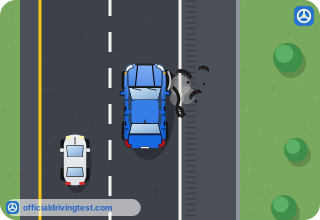
- Loosely, letting the vehicle drift to the shoulder
- Tightly, turning sharply toward the shoulder
- Tightly, keeping the vehicle going straight
- With one hand, so you can signal with the other
Show answer
Correct answer: Tightly, keeping the vehicle going straight
You hold the steering wheel tightly and keep the vehicle going straight.
Source: Arkansas Driver License Study Guide (Volume 1, Edition 10, October 2026), page 77 · Open this page in the manual (Manual page 77)
-
After a sudden tire blowout, how should you slow the vehicle?
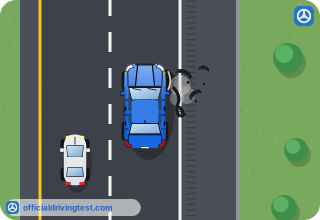
- Brake as hard as you can right away
- Ease off the gas and use the brakes lightly
- Shift into neutral and let the vehicle coast
- Turn the steering wheel back and forth
Show answer
Correct answer: Ease off the gas and use the brakes lightly
The manual says to slow gradually, easing off the gas and braking lightly.
Source: Arkansas Driver License Study Guide (Volume 1, Edition 10, October 2026), page 77 · Open this page in the manual (Manual page 77)
-
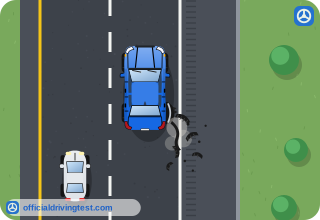
After a tire blowout, what does the manual say about stopping on the road?
- Stop in your lane and turn on the emergency flashers
- Stop in the left lane so traffic can see you
- Stop right away wherever the blowout happens
- Do not stop on the road if possible; pull off in a safe place
Show answer
Correct answer: Do not stop on the road if possible; pull off in a safe place
You should not stop on the road if possible and should pull off the road in a safe place.
Source: Arkansas Driver License Study Guide (Volume 1, Edition 10, October 2026), page 77 · Open this page in the manual (Manual page 77)
-
If your engine fails while you are driving, what should you know about the steering?
- It may be hard to turn, but you can turn it
- It locks and cannot be turned
- It works normally with no extra effort
- It turns only to the right
Show answer
Correct answer: It may be hard to turn, but you can turn it
The manual tells you to keep a strong grip on the wheel because steering may be hard but is still possible.
Source: Arkansas Driver License Study Guide (Volume 1, Edition 10, October 2026), page 77 · Open this page in the manual (Manual page 77)
-
If your engine fails while you are driving, what should you know about the brakes?
- They stop working until the engine restarts
- They work normally with no extra effort
- They work, but you may have to push very hard
- They work only when you pump the pedal
Show answer
Correct answer: They work, but you may have to push very hard
After engine failure you pull off the roadway; the brakes still work but may need a very hard push.
Source: Arkansas Driver License Study Guide (Volume 1, Edition 10, October 2026), page 77 · Open this page in the manual (Manual page 77)
-
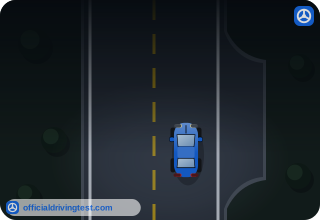
If your headlights suddenly go out, what should you do first?
- Pull onto the shoulder and stop at once
- Try the headlight switch a few times
- Turn off the engine
- Flash your high beams at other drivers
Show answer
Correct answer: Try the headlight switch a few times
The first step listed is to try the headlight switch a few times.
Source: Arkansas Driver License Study Guide (Volume 1, Edition 10, October 2026), page 77 · Open this page in the manual (Manual page 77)
-
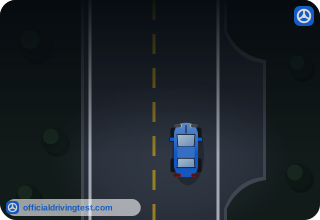
Your headlights go out and the headlight switch does not fix it. What should you use if you have them?
- The interior dome light and the windshield wipers
- The windshield wipers and the horn
- The parking brake light
- Emergency flashers, turn signals, or fog lights
Show answer
Correct answer: Emergency flashers, turn signals, or fog lights
The manual lists emergency flashers, turn signals or fog lights, then pulling off the road as soon as possible.
Source: Arkansas Driver License Study Guide (Volume 1, Edition 10, October 2026), page 77 · Open this page in the manual (Manual page 77)
-
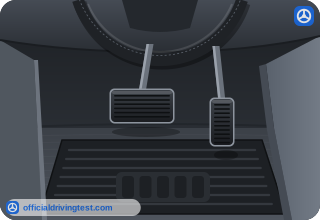
The motor keeps running faster and faster because of a faulty accelerator. What should you do right away?
- Quickly shift to neutral
- Pump the accelerator pedal
- Turn off the ignition first
- Shift into a lower gear
Show answer
Correct answer: Quickly shift to neutral
For a faulty accelerator the manual says to keep your eyes on the road and quickly shift to neutral.
Source: Arkansas Driver License Study Guide (Volume 1, Edition 10, October 2026), page 77 · Open this page in the manual (Manual page 77)
-
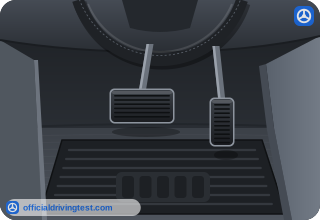
With a faulty accelerator, what do you do with your eyes while you deal with the problem?
- Look down at the pedal
- Look at the shoulder only
- Keep them on the road
- Look at the dashboard gauges
Show answer
Correct answer: Keep them on the road
The first listed step for a faulty accelerator is to keep your eyes on the road.
Source: Arkansas Driver License Study Guide (Volume 1, Edition 10, October 2026), page 77 · Open this page in the manual (Manual page 77)
-
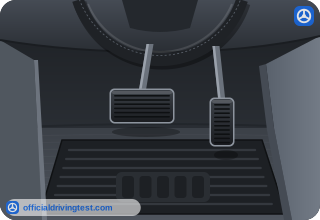
After a faulty accelerator has made the motor run faster and faster and you have shifted to neutral, what should you do when it is safe?
- Stop in the lane and turn off the engine
- Pull off the road, then turn off the engine
- Shift back into drive and continue slowly
- Pull off the road and leave the engine running
Show answer
Correct answer: Pull off the road, then turn off the engine
The manual lists pulling off the road when safe and then turning off the engine.
Source: Arkansas Driver License Study Guide (Volume 1, Edition 10, October 2026), page 77 · Open this page in the manual (Manual page 77)
-
What does the manual say you should follow to reduce the chance of a vehicle problem while driving?
- A repair schedule set by the Arkansas State Police
- A yearly inspection at a license office
- The advice of the nearest tire shop
- The maintenance schedule in the owner’s manual
Show answer
Correct answer: The maintenance schedule in the owner’s manual
The manual advises following the recommended maintenance schedule in the owner’s manual.
Source: Arkansas Driver License Study Guide (Volume 1, Edition 10, October 2026), page 77 · Open this page in the manual (Manual page 77)
-
What are the three options a driver has in avoiding a collision?
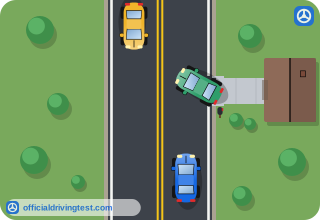
- Stop, turn, and speed up
- Stop, honk, and flash the lights
- Turn, brake, and shift to neutral
- Speed up, honk, and signal
Show answer
Correct answer: Stop, turn, and speed up
The manual says drivers have three options: stop, turn, and speed up.
Source: Arkansas Driver License Study Guide (Volume 1, Edition 10, October 2026), page 78 · Open this page in the manual (Manual page 78)
-
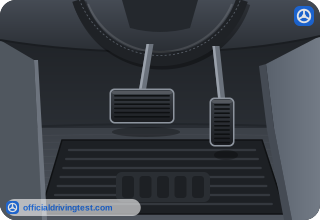
If your vehicle has an antilock braking system (ABS) and you need to stop quickly, what should you do?
- Pump the brake pedal several times
- Press the pedal lightly and release it
- Press the brake pedal hard and keep pressing it
- Press the pedal once, then use the parking brake
Show answer
Correct answer: Press the brake pedal hard and keep pressing it
With ABS you press the brake pedal as hard as you can and keep pressing on it.
Source: Arkansas Driver License Study Guide (Volume 1, Edition 10, October 2026), page 78 · Open this page in the manual (Manual page 78)
-
With ABS, you feel the brake pedal pushing back while the system is working. What should you do?
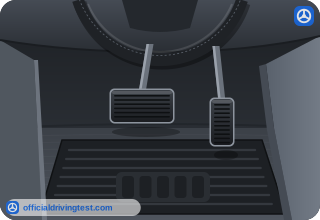
- Let up on the pedal and press it again
- Do not let up on the brake pedal
- Pump the pedal quickly
- Pull the parking brake
Show answer
Correct answer: Do not let up on the brake pedal
The ABS system only works with the brake pedal pushed down.
Source: Arkansas Driver License Study Guide (Volume 1, Edition 10, October 2026), page 78 · Open this page in the manual (Manual page 78)