Alaska: Emergencies
Crashes, blowouts, brake failure, skids, floods, carbon monoxide and other driving emergencies. Split into 4 shorter tests so you're not stuck in one long quiz.
Independent educational site · not affiliated with any government agency or DMV
Choose a part
Emergencies — Part 1
Questions in this part include: “Which of these should you obtain from the other driver after a crash?”
StartEmergencies — Part 2
Questions in this part include: “After a collision with a big game animal, whom does the manual say to contact?”
StartEmergencies — Part 3
Questions in this part include: “How many flares does the manual suggest carrying for nighttime emergencies?”
StartEmergencies — Part 4
Questions in this part include: “Which of these is listed as part of a suggested emergency kit?”
StartAll 75 Emergencies questions with answers
Choose a part above to take a practice test, or study every question and answer here.
Show the questions and answersHide the questions
-
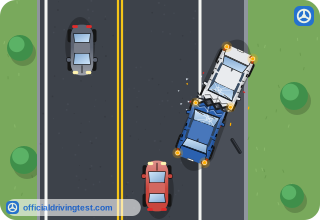
What is the first step the manual lists for every crash?
- Drive to the nearest police station
- Call your insurance company
- Stop at once
- Move all injured people to the roadside
Show answer
Correct answer: Stop at once
Step 1 for every crash is to stop at once.
Source: Alaska Driver Manual (Revised October 2025), page 11 · Open this page in the manual (Manual page 11)
-
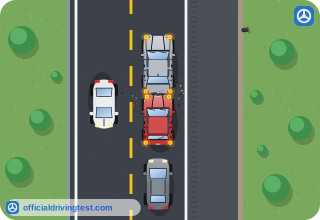
If your vehicle is blocking traffic after a crash, what should you do?
- Leave it where it is until police arrive
- Move it out of the way if possible
- Turn off the engine and walk away
- Stay inside it until help arrives
Show answer
Correct answer: Move it out of the way if possible
If you are blocking traffic, move your vehicle out of the way if possible.
Source: Alaska Driver Manual (Revised October 2025), page 11 · Open this page in the manual (Manual page 11)
-
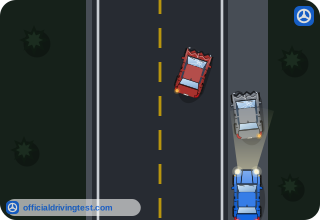
At night, how should you warn other traffic after a crash?
- Flash your high beams at passing drivers
- Stand in the lane and wave a flashlight
- Park on the shoulder and sound your horn
- Place flares or other signals on the road
Show answer
Correct answer: Place flares or other signals on the road
At night you place flares or other signals on the road, and you are careful not to walk out in front of other vehicles.
Source: Alaska Driver Manual (Revised October 2025), page 11 · Open this page in the manual (Manual page 11)
-
What should you do about an injured person at a crash scene?
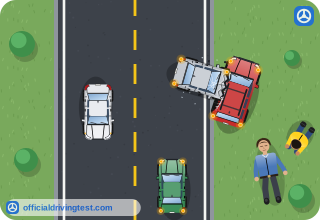
- Do not remove the person unless necessary
- Move the person into your vehicle right away
- Sit the person upright and give water
- Move the person to the roadside at once
Show answer
Correct answer: Do not remove the person unless necessary
The manual says not to remove an injured person unless necessary.
Source: Alaska Driver Manual (Revised October 2025), page 11 · Open this page in the manual (Manual page 11)
-
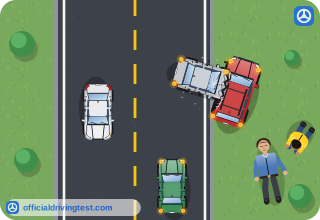
What should you do for a crash victim who is bleeding seriously?
- Keep the victim cool and moving
- Give the victim water and keep them standing
- Stop the bleeding and keep the victim warm
- Leave the victim alone until the ambulance arrives
Show answer
Correct answer: Stop the bleeding and keep the victim warm
You are told to stop serious bleeding and keep the victim warm.
Source: Alaska Driver Manual (Revised October 2025), page 11 · Open this page in the manual (Manual page 11)
-
Which of these should you obtain from the other driver after a crash?
- Social Security number and bank name
- The name of the insurance company
- Employer’s name and work address
- Date and place of birth
Show answer
Correct answer: The name of the insurance company
You obtain the other driver’s name, address, license number, plate number, telephone number, and insurance company name.
Source: Alaska Driver Manual (Revised October 2025), page 11 · Open this page in the manual (Manual page 11)
-
How many witnesses should you identify after a crash?
- Only one
- Two
- None, the police find them
- As many as you can
Show answer
Correct answer: As many as you can
The manual says to obtain the identity of as many witnesses as you can.
Source: Alaska Driver Manual (Revised October 2025), page 11 · Open this page in the manual (Manual page 11)
-
A crash occurs within a municipality and there is an injury, or total property damage is $2000 or more. Whom do you immediately contact?
- The local police department by dialing 911
- The Alaska State Troopers at the nearest post
- The DMV by phone only
- Your insurance company only
Show answer
Correct answer: The local police department by dialing 911
Within a municipality you immediately contact the local police department by dialing 911.
Source: Alaska Driver Manual (Revised October 2025), page 11 · Open this page in the manual (Manual page 11)
-
A crash with an injury, or total property damage of $2000 or more, occurs outside of a municipality. Whom do you immediately contact?
- The local police department
- The nearest DMV office
- The Alaska State Troopers
- The Department of Administration
Show answer
Correct answer: The Alaska State Troopers
Outside of a municipality you immediately contact the Alaska State Troopers.
Source: Alaska Driver Manual (Revised October 2025), page 11 · Open this page in the manual (Manual page 11)
-
What does the manual say to do when an officer investigates the crash?
- Leave before the officer arrives
- Cooperate with the investigating officer
- Refuse to answer unless you are insured
- Give your statement only to your insurer
Show answer
Correct answer: Cooperate with the investigating officer
Step 6 for every crash is to cooperate with the investigating officer.
Source: Alaska Driver Manual (Revised October 2025), page 11 · Open this page in the manual (Manual page 11)
-
When no police officer investigated the crash, within how many days must you send the crash report (12-209) to the DMV?
- 5 days
- 15 days
- 30 days
- 10 days
Show answer
Correct answer: 10 days
You report the crash to the Division of Motor Vehicles within 10 days.
Source: Alaska Driver Manual (Revised October 2025), page 11 · Open this page in the manual (Manual page 11)
-
When is a crash report to the DMV not required?
- If the crash was investigated by a police officer
- If no one was injured in the crash at all
- If you already carry liability insurance
- If you report the crash to your insurance company
Show answer
Correct answer: If the crash was investigated by a police officer
The report is not required if the crash was investigated by a police officer.
Source: Alaska Driver Manual (Revised October 2025), page 11 · Open this page in the manual (Manual page 11)
-
You strike an unattended vehicle or a fence and cannot find the owner. What must you leave?
- A written note with only your license plate number
- A written note with your name and insurance company
- A written note with your name, address, and telephone number
- Nothing, as long as you report it to the DMV later
Show answer
Correct answer: A written note with your name, address, and telephone number
If you cannot locate the owner you leave a written note containing your name, address, and telephone number.
Source: Alaska Driver Manual (Revised October 2025), page 11 · Open this page in the manual (Manual page 11)
-
Which two items does the manual say to carry in the night driving safety tips?
- A flashlight and flares
- A tire gauge and a road map
- A spare headlight bulb and fuses
- A spare set of keys and a tow rope
Show answer
Correct answer: A flashlight and flares
The night driving safety tips end with carrying a flashlight and flares.
Source: Alaska Driver Manual (Revised October 2025), page 54 · Open this page in the manual (Manual page 54 · PDF 66)
-
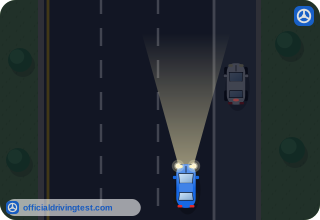
If you have vehicle trouble at night, what does the manual say you should use?
- Your high beams, flashing on and off repeatedly
- Only your interior dome light, with the engine off
- The hazard lights, with all four turn signals flashing
- Your left turn signal only, kept flashing
Show answer
Correct answer: The hazard lights, with all four turn signals flashing
There is danger of being hit from the rear at night, so the manual says to use the hazard lights (all four flashing turn signals simultaneously).
Source: Alaska Driver Manual (Revised October 2025), page 56 · Open this page in the manual (Manual page 56 · PDF 68)
-
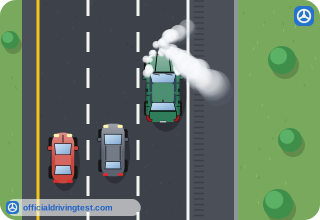
If your vehicle is disabled, where should you move it, if possible?
- To the middle of the right lane where it is most visible
- So that all wheels are off the traveled portion of the road
- So that at least two wheels are still on the road surface
- To the left side of the traveled portion of the road
Show answer
Correct answer: So that all wheels are off the traveled portion of the road
The manual says to move a disabled vehicle so that all wheels are off the traveled portion of the road, if possible.
Source: Alaska Driver Manual (Revised October 2025), page 56 · Open this page in the manual (Manual page 56 · PDF 68)
-
Where can you tie a white cloth or handkerchief to show that your vehicle is disabled?
- On the right mirror or rear bumper
- On the windshield wiper or hood latch
- On the trunk lid or right door handle
- On the left door handle or radio antenna
Show answer
Correct answer: On the left door handle or radio antenna
The manual says to tie a white cloth or handkerchief on the left door handle or radio antenna.
Source: Alaska Driver Manual (Revised October 2025), page 56 · Open this page in the manual (Manual page 56 · PDF 68)
-
Instead of tying a white cloth or handkerchief on the vehicle, what else does the manual say you can do when your vehicle is disabled?
- Raise the hood
- Open the trunk
- Turn off the hazard lights
- Lower all the windows
Show answer
Correct answer: Raise the hood
The manual says to raise the hood or tie a white cloth or handkerchief on the left door handle or radio antenna.
Source: Alaska Driver Manual (Revised October 2025), page 56 · Open this page in the manual (Manual page 56 · PDF 68)
-
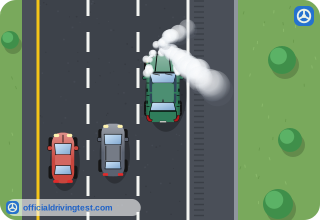
How soon does the manual say a disabled vehicle should be removed?
- Within 24 hours
- By the next morning
- Without delay
- After the traffic thins out
Show answer
Correct answer: Without delay
The manual says to remove the vehicle without delay.
Source: Alaska Driver Manual (Revised October 2025), page 56 · Open this page in the manual (Manual page 56 · PDF 68)
-
After a collision with a big game animal, whom does the manual say to contact?
- Only the nearest tow company or auto body shop in the area
- The Division of Motor Vehicles or the nearest DMV office
- Your local Police Department or the Alaska State Troopers
- Your insurance company and your car dealership first
Show answer
Correct answer: Your local Police Department or the Alaska State Troopers
The manual says to contact your local Police Department or the Alaska State Troopers.
Source: Alaska Driver Manual (Revised October 2025), page 60 · Open this page in the manual (Manual page 60)
-
Who owns big game animals that are killed or injured in a vehicular collision?
- The state
- The driver who hit it
- The landowner nearest the road
- The first person to reach it
Show answer
Correct answer: The state
The manual says big game animals killed or injured in a vehicular collision are the property of the state.
Source: Alaska Driver Manual (Revised October 2025), page 60 · Open this page in the manual (Manual page 60)
-
If you kill or injure a big game animal in a collision, whom must you notify as soon as possible?
- A county animal-control office or a veterinarian
- The nearest hunting guide or lodge owner
- A local game processor or butcher shop
- A State Trooper or a Fish & Wildlife Officer
Show answer
Correct answer: A State Trooper or a Fish & Wildlife Officer
The manual says you must notify a State Trooper or a Fish & Wildlife Officer as soon as possible.
Source: Alaska Driver Manual (Revised October 2025), page 60 · Open this page in the manual (Manual page 60)
-
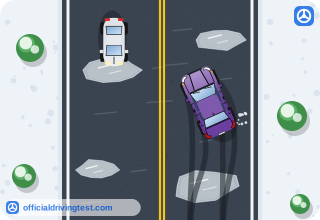
When recovering from a skid, which way should you turn the front wheels?
- Away from the direction of the skid
- Straight toward the nearest curb
- In the direction of the skid
- Back and forth in quick turns
Show answer
Correct answer: In the direction of the skid
The manual says to turn the front wheels in the direction of the skid.
Source: Alaska Driver Manual (Revised October 2025), page 61 · Open this page in the manual (Manual page 61)
-
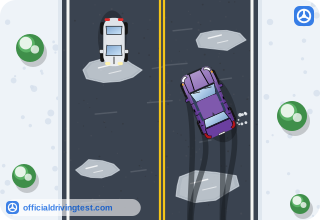
What is the first step in recovering from a skid?
- Brake as hard as you can
- Control yourself and do not panic
- Turn the wheel sharply the opposite way
- Shift the vehicle into neutral
Show answer
Correct answer: Control yourself and do not panic
The manual lists "Control Yourself - Don't Panic" as the first step of skid recovery.
Source: Alaska Driver Manual (Revised October 2025), page 61 · Open this page in the manual (Manual page 61)
-
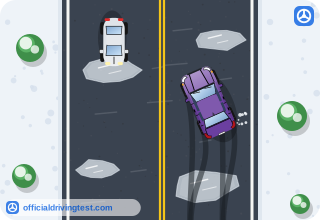
Which action does the manual list for recovering from a skid?
- Brake hard to stop the slide
- Oversteer to correct the slide quickly
- Lock the wheels to stop sliding
- Do not brake suddenly
Show answer
Correct answer: Do not brake suddenly
The manual says not to brake suddenly, and not to oversteer or overcorrect, when recovering from a skid.
Source: Alaska Driver Manual (Revised October 2025), page 61 · Open this page in the manual (Manual page 61)
-
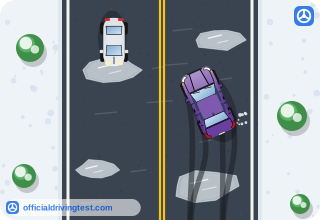
As control is being regained during a skid, how should you safely slow the vehicle?
- By braking hard and holding the pedal down
- By shifting to a lower gear and letting go of the wheel
- By very gently depressing and releasing the brake pedal
- By turning off the engine until it stops
Show answer
Correct answer: By very gently depressing and releasing the brake pedal
The manual says to slow the vehicle by very gently depressing and releasing the brake pedal as control is regained.
Source: Alaska Driver Manual (Revised October 2025), page 61 · Open this page in the manual (Manual page 61)
-
What do front-wheel drive or four-wheel drive vehicles require to pull out of a skid?

- Easy acceleration
- Hard braking
- Shifting into neutral
- A sharp turn of the wheel
Show answer
Correct answer: Easy acceleration
The manual notes that front-wheel drive or four-wheel drive vehicles require easy acceleration to pull out of a skid.
Source: Alaska Driver Manual (Revised October 2025), page 61 · Open this page in the manual (Manual page 61)
-
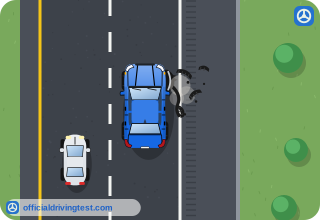
When a tire blows out, what should you concentrate on?
- Shifting gears
- Using the horn
- Steering
- Accelerating away
Show answer
Correct answer: Steering
After a blowout the manual tells you to concentrate on steering.
Source: Alaska Driver Manual (Revised October 2025), page 66 · Open this page in the manual (Manual page 66)
-
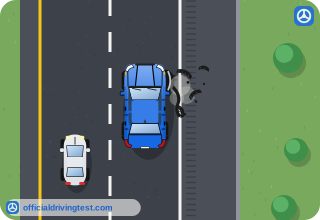
How should you slow down after a tire blows out?
- As fast as possible
- Gradually
- In one quick stop
- By shifting into neutral
Show answer
Correct answer: Gradually
The manual says to slow down gradually after a blowout.
Source: Alaska Driver Manual (Revised October 2025), page 66 · Open this page in the manual (Manual page 66)
-
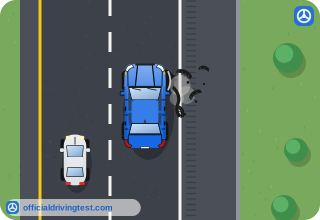
Where should you go after a tire blows out?
- Onto the center of the road
- To the left lane
- Into the next intersection
- Completely off the pavement
Show answer
Correct answer: Completely off the pavement
The manual says to pull completely off the pavement.
Source: Alaska Driver Manual (Revised October 2025), page 66 · Open this page in the manual (Manual page 66)
-
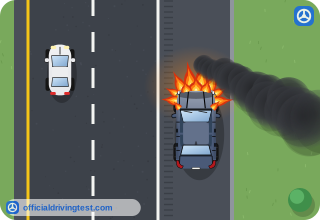
If your vehicle is on fire, until when should you keep trying to put the fire out, if it can be done safely?
- Until another driver stops
- Until it is out or no longer safe
- For exactly five minutes
- Until the engine stops running
Show answer
Correct answer: Until it is out or no longer safe
The manual says to keep at it until the fire is extinguished or it is no longer safe.
Source: Alaska Driver Manual (Revised October 2025), page 66 · Open this page in the manual (Manual page 66)
-
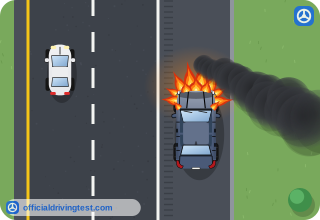
Which of these does the manual list for putting out a fire in your vehicle, if it can be done safely?
- Pouring gasoline on the flames
- Closing all the windows tightly
- Applying mud, dirt, dust, or snow
- Revving the engine to blow it out
Show answer
Correct answer: Applying mud, dirt, dust, or snow
The manual lists a fire extinguisher, water from a ditch, and mud, dirt, dust, or snow.
Source: Alaska Driver Manual (Revised October 2025), page 66 · Open this page in the manual (Manual page 66)
-
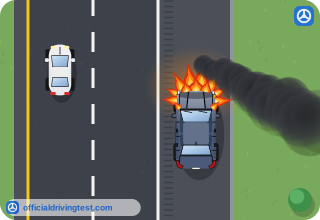
What does the manual say you can use to carry water to a vehicle fire?
- A hub cap
- A fuel cap
- The spare tire cover
- A windshield wiper
Show answer
Correct answer: A hub cap
The manual says to use a hub cap to carry water or wet wearing apparel.
Source: Alaska Driver Manual (Revised October 2025), page 66 · Open this page in the manual (Manual page 66)
-
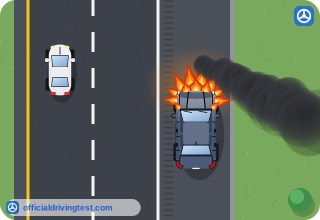
What does the manual say you can use to loosen dirt when fighting a vehicle fire?
- A tow chain
- A tire tool
- A frost scraper
- Jumper cables
Show answer
Correct answer: A tire tool
The manual says to loosen dirt with a tire tool.
Source: Alaska Driver Manual (Revised October 2025), page 66 · Open this page in the manual (Manual page 66)
-
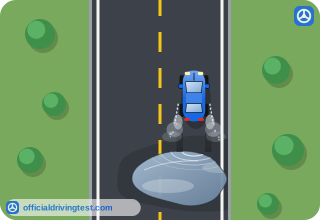
What should you do after driving through deep water?
- Brake hard to shake off water
- Turn off the engine
- Speed up to dry the tires
- Test your brakes lightly
Show answer
Correct answer: Test your brakes lightly
The manual says to test the brakes lightly after driving through deep water.
Source: Alaska Driver Manual (Revised October 2025), page 66 · Open this page in the manual (Manual page 66)
-
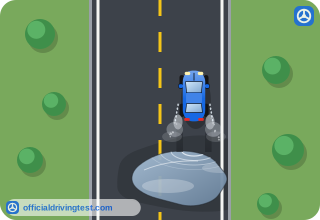
What may happen to your brakes after you drive through deep water?
- They may pull to one side or not hold
- They may lock only the rear wheels
- They will work better than usual
- They will cause the engine to stall
Show answer
Correct answer: They may pull to one side or not hold
The manual warns that wet brakes may pull to one side or may not hold at all.
Source: Alaska Driver Manual (Revised October 2025), page 66 · Open this page in the manual (Manual page 66)
-
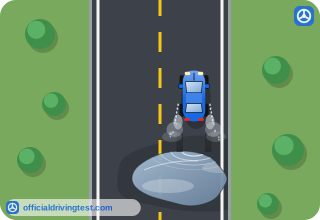
How do you dry wet brakes?
- Drive fast in high gear, braking hard
- Park and hold the brake pedal down
- Drive slowly in low gear, braking lightly
- Shift to neutral and coast downhill
Show answer
Correct answer: Drive slowly in low gear, braking lightly
The manual says to dry brakes by driving slowly in low gear while applying them lightly.
Source: Alaska Driver Manual (Revised October 2025), page 66 · Open this page in the manual (Manual page 66)
-
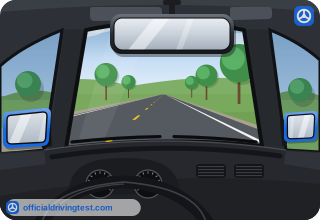
If your accelerator pedal is jammed, what is the first action listed in the manual?
- Slap the pedal hard with your foot
- Turn off all of the headlights
- Pull the parking brake very hard
- Open the hood and look at the engine
Show answer
Correct answer: Slap the pedal hard with your foot
The first step listed for a jammed accelerator is to slap the pedal hard with your foot.
Source: Alaska Driver Manual (Revised October 2025), page 66 · Open this page in the manual (Manual page 66)
-
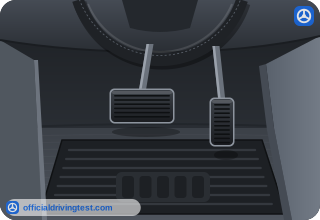
If your accelerator is jammed, which gear should you shift to?
- Reverse
- Park while moving
- Neutral
- A higher gear
Show answer
Correct answer: Neutral
The manual says to shift to neutral when the accelerator is jammed.
Source: Alaska Driver Manual (Revised October 2025), page 66 · Open this page in the manual (Manual page 66)
-
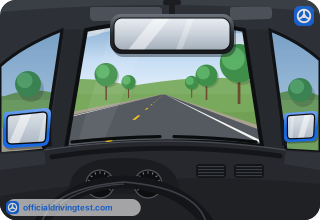
Besides slapping the pedal and shifting to neutral, what else does the manual say to do when the accelerator is jammed?
- Turn the wheel sharply to the left
- Use the brakes and concentrate on steering
- Switch off the lights and then coast
- Sound the horn and keep your speed
Show answer
Correct answer: Use the brakes and concentrate on steering
The manual lists using the brakes and concentrating on steering for a jammed accelerator.
Source: Alaska Driver Manual (Revised October 2025), page 66 · Open this page in the manual (Manual page 66)
-
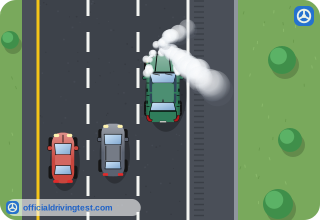
If your vehicle is disabled, where should you park it if possible?
- Two wheels on the shoulder, two on the lane
- Right beside the center line of the road
- On the nearest bridge or overpass ahead
- All four wheels off the traveled highway
Show answer
Correct answer: All four wheels off the traveled highway
The manual says to park all four wheels off the traveled part of the highway if possible.
Source: Alaska Driver Manual (Revised October 2025), page 66 · Open this page in the manual (Manual page 66)
-
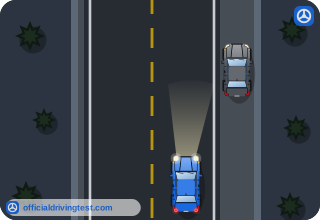
What should you turn on at night when your vehicle is disabled?
- High beam headlights only
- The windshield wipers
- The interior dome light only
- Parking lights or 4-way flashers
Show answer
Correct answer: Parking lights or 4-way flashers
The manual says to turn on parking lights or 4-way flashers at night.
Source: Alaska Driver Manual (Revised October 2025), page 66 · Open this page in the manual (Manual page 66)
-
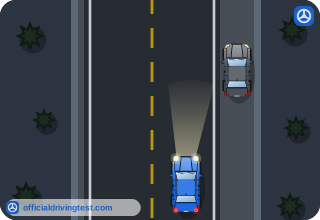
What does the manual say to set out, if available, when your vehicle is disabled?
- Tire chains and a snow brush
- Flares or warning triangles
- Spare tires and a jack stand
- Orange traffic barrels or cones
Show answer
Correct answer: Flares or warning triangles
The manual says to set out flares or warning triangles if available.
Source: Alaska Driver Manual (Revised October 2025), page 66 · Open this page in the manual (Manual page 66)
-
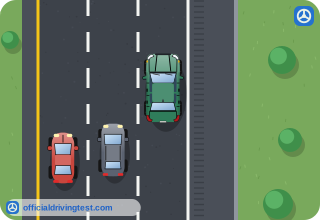
If you cannot move a disabled car off the roadway, what should you do to warn other motorists?
- Open all the doors
- Lower the windows
- Raise the hood
- Turn the wheels toward traffic
Show answer
Correct answer: Raise the hood
The manual says to raise the hood to warn other motorists.
Source: Alaska Driver Manual (Revised October 2025), page 66 · Open this page in the manual (Manual page 66)
-
Which is the first step listed if your brakes fail?
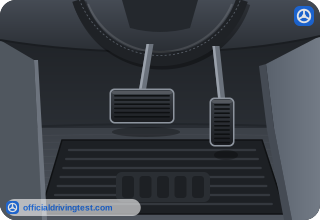
- Use the parking brake
- Turn off the engine at once
- Shift into reverse
- Steer into oncoming traffic
Show answer
Correct answer: Use the parking brake
The manual lists using the parking brake first when brakes fail.
Source: Alaska Driver Manual (Revised October 2025), page 66 · Open this page in the manual (Manual page 66)
-
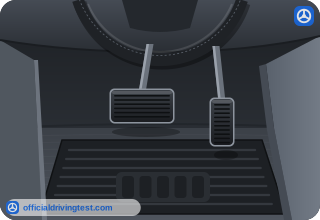
If your brakes fail, which gear should you shift to?
- A higher gear
- A lower gear
- Neutral
- Park
Show answer
Correct answer: A lower gear
The manual says to shift to a lower gear when brakes fail.
Source: Alaska Driver Manual (Revised October 2025), page 66 · Open this page in the manual (Manual page 66)
-
What does the manual say to do with your tires if your brakes fail?
- Spin them on gravel
- Lock them by turning off the engine
- Swerve them across the center line
- Rub them on the curb
Show answer
Correct answer: Rub them on the curb
The manual lists rubbing the tires on the curb as a way to slow down when brakes fail.
Source: Alaska Driver Manual (Revised October 2025), page 66 · Open this page in the manual (Manual page 66)
-
What should you do first when another vehicle is approaching in your lane?
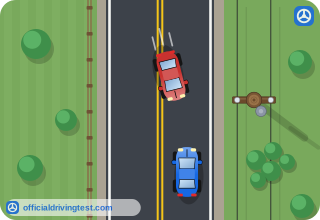
- Sound your horn
- Flash your parking lights only
- Slow down gradually
- Stop in the lane
Show answer
Correct answer: Sound your horn
The manual lists sounding your horn first for a vehicle approaching in your lane.
Source: Alaska Driver Manual (Revised October 2025), page 66 · Open this page in the manual (Manual page 66)
-
When a vehicle is approaching in your lane, how should you brake?
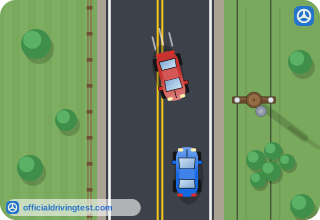
- Softly
- Not at all
- Sharply
- Intermittently and lightly
Show answer
Correct answer: Sharply
The manual says to brake sharply when a vehicle approaches in your lane.
Source: Alaska Driver Manual (Revised October 2025), page 66 · Open this page in the manual (Manual page 66)
-
Where should you steer when a vehicle is approaching in your lane?
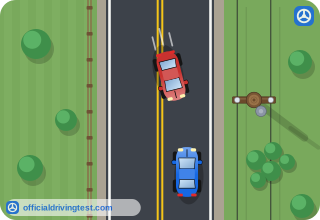
- For the shoulder or ditch
- Into the opposite lane
- Straight toward the vehicle
- Across the center line
Show answer
Correct answer: For the shoulder or ditch
The manual says to steer for the shoulder or ditch.
Source: Alaska Driver Manual (Revised October 2025), page 66 · Open this page in the manual (Manual page 66)
-
If you have veered off the roadway, what should you do about the gas?
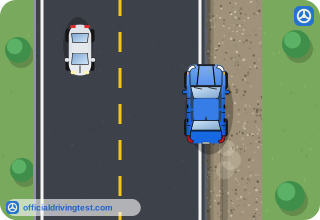
- Press the accelerator harder
- Hold steady speed
- Stop feeding gas
- Tap the accelerator to regain traction
Show answer
Correct answer: Stop feeding gas
The manual lists stopping feeding gas first when a wheel is off the roadway.
Source: Alaska Driver Manual (Revised October 2025), page 67 · Open this page in the manual (Manual page 67)
-
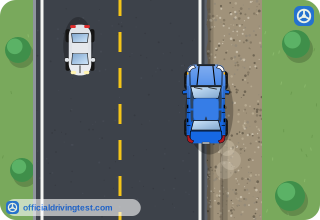
If you have veered off the roadway, how should you hold the steering wheel?
- With one hand only
- With a firm grip
- Loosely, to let the car straighten
- Turning it sharply right away
Show answer
Correct answer: With a firm grip
The manual says to maintain a firm grip on the steering wheel.
Source: Alaska Driver Manual (Revised October 2025), page 67 · Open this page in the manual (Manual page 67)
-
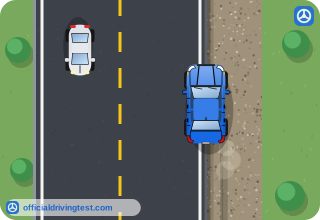
If your wheels are off the roadway, how should you use the brakes?
- Hard and continuously
- Not at all
- Only with the parking brake
- Lightly and intermittently
Show answer
Correct answer: Lightly and intermittently
The manual says to brake lightly and intermittently.
Source: Alaska Driver Manual (Revised October 2025), page 67 · Open this page in the manual (Manual page 67)
-
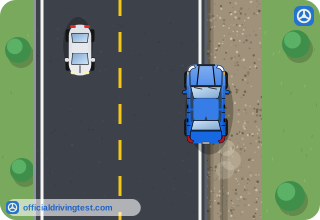
When may you try to return to the pavement after veering off the roadway?
- As soon as you have slowed down a little
- After you have sounded your horn twice
- Once the car behind you has already passed
- When no cars are in your immediate vicinity
Show answer
Correct answer: When no cars are in your immediate vicinity
The manual says not to return to pavement until there are no cars in your immediate vicinity.
Source: Alaska Driver Manual (Revised October 2025), page 67 · Open this page in the manual (Manual page 67)
-
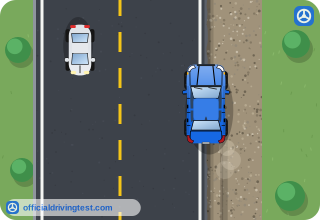
At what speed should you turn back onto the pavement after veering off the roadway?
- The speed limit
- A slow speed
- A high speed to get across quickly
- Any speed, if the angle is gentle
Show answer
Correct answer: A slow speed
The manual says to turn back on to the pavement at slow speed.
Source: Alaska Driver Manual (Revised October 2025), page 67 · Open this page in the manual (Manual page 67)
-
How many flares does the manual suggest carrying for nighttime emergencies?
- One
- Two
- Three
- Six
Show answer
Correct answer: Three
The manual lists three flares for nighttime emergencies among its suggested safety equipment.
Source: Alaska Driver Manual (Revised October 2025), page 69 · Open this page in the manual (Manual page 69)
-
Which of these is listed as suggested safety equipment?
- A trailer hitch for towing
- Snow tires or tire chains
- A roof rack for extra cargo
- A fuel additive for the tank
Show answer
Correct answer: Snow tires or tire chains
The manual's list of suggested safety equipment includes snow tires or tire chains, a frost scraper and snow brush, and booted anti-ice wiper blades.
Source: Alaska Driver Manual (Revised October 2025), page 69 · Open this page in the manual (Manual page 69)
-
Which of these is listed as part of a suggested emergency kit?
- A road atlas and a spare ignition key
- A portable radio and spare batteries
- A bicycle pump and a length of rope
- A blanket, sand, a shovel, and food
Show answer
Correct answer: A blanket, sand, a shovel, and food
The manual lists a first aid kit, extra clothing/boots, blanket, sand, shovel and food in the emergency kit.
Source: Alaska Driver Manual (Revised October 2025), page 69 · Open this page in the manual (Manual page 69)
-
What kind of gas from vehicle exhaust can make you a dangerous driver and even cost you your life?
- A yellow, sweet-smelling gas called carbon monoxide
- A colored, strong-smelling gas called methane
- A harmless gas that only causes sleepiness
- A colorless, odorless, poisonous gas called carbon monoxide
Show answer
Correct answer: A colorless, odorless, poisonous gas called carbon monoxide
The manual describes carbon monoxide as a colorless, odorless, poisonous gas from vehicle exhaust.
Source: Alaska Driver Manual (Revised October 2025), page 69 · Open this page in the manual (Manual page 69)
-
What does the manual say carbon monoxide does?
- It warns you with a strong smell
- It paralyzes before it kills
- It only makes the engine run poorly
- It is harmless in small amounts
Show answer
Correct answer: It paralyzes before it kills
The manual states that carbon monoxide paralyzes before it kills.
Source: Alaska Driver Manual (Revised October 2025), page 69 · Open this page in the manual (Manual page 69)
-
Which of these is a symptom of carbon monoxide poisoning listed in the manual?
- Ringing in the ears and a high fever
- Blurred vision, sneezing, and itching
- Headache, dizziness, nausea, and vomiting
- A cough and chest pain, and nothing else
Show answer
Correct answer: Headache, dizziness, nausea, and vomiting
The manual lists headache, dizziness, nausea, and vomiting as symptoms.
Source: Alaska Driver Manual (Revised October 2025), page 69 · Open this page in the manual (Manual page 69)
-
What does the manual list as prevention of carbon monoxide poisoning?
- A tight exhaust system and fresh air
- A loose exhaust system and closed windows
- Running the heater with the windows shut
- A high idle speed while parked in a garage
Show answer
Correct answer: A tight exhaust system and fresh air
The manual gives a tight exhaust system and adequate fresh air circulation as prevention.
Source: Alaska Driver Manual (Revised October 2025), page 69 · Open this page in the manual (Manual page 69)
-
Where should you never run a vehicle, to avoid carbon monoxide?
- On a gravel road
- In a closed garage
- In a driveway with the door open
- On a highway
Show answer
Correct answer: In a closed garage
The manual says never to run a vehicle in a closed garage.
Source: Alaska Driver Manual (Revised October 2025), page 69 · Open this page in the manual (Manual page 69)
-
What should you never do when parked, to avoid carbon monoxide?
- Leave the windows open a small crack for air
- Check the exhaust system for any small leaks
- Keep the engine well tuned and running efficiently
- Run the heater or air conditioner, windows closed
Show answer
Correct answer: Run the heater or air conditioner, windows closed
The manual says never to park and run the heater or air conditioner with the windows closed.
Source: Alaska Driver Manual (Revised October 2025), page 69 · Open this page in the manual (Manual page 69)
-
What should you do for a victim of carbon monoxide?
- Move the victim to fresh air and give artificial respiration
- Leave the victim inside the vehicle and wait
- Give the victim food and a blanket, and nothing else
- Turn up the heater to warm the victim up fast
Show answer
Correct answer: Move the victim to fresh air and give artificial respiration
The manual says to move the victim to fresh air and administer artificial respiration.
Source: Alaska Driver Manual (Revised October 2025), page 69 · Open this page in the manual (Manual page 69)
-
Which of these is listed as a safety tip for carbon monoxide?
- Let the engine idle to warm up in a garage
- Keep the windows closed in winter
- Keep the operating efficiency of the engine high
- Remove the muffler to let exhaust escape
Show answer
Correct answer: Keep the operating efficiency of the engine high
The manual lists keeping the operating efficiency of the engine high as a carbon monoxide safety tip.
Source: Alaska Driver Manual (Revised October 2025), page 69 · Open this page in the manual (Manual page 69)
-
What should you do if you see a flooded roadway ahead?
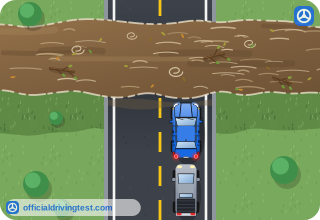
- Turn around and find another route
- Drive through slowly in a low gear
- Follow another vehicle across
- Wait at the water’s edge for it to drain
Show answer
Correct answer: Turn around and find another route
The manual says not to drive through flooded areas and to turn around and find another route.
Source: Alaska Driver Manual (Revised October 2025), page 72 · Open this page in the manual (Manual page 72)
-
Why should you be especially cautious around floodwaters at night?
- Water is deeper at night
- Flash floods only happen at night
- Visibility is limited
- Roads are closed at night
Show answer
Correct answer: Visibility is limited
The manual says to be cautious, especially at night, when the visibility is limited.
Source: Alaska Driver Manual (Revised October 2025), page 72 · Open this page in the manual (Manual page 72)
-
How much water will reach the bottom of most passenger cars, causing loss of control or possible stalling?
- 2 inches
- 6 inches
- 1 foot
- 18 inches
Show answer
Correct answer: 6 inches
Six inches of water will reach the bottom of most passenger cars.
Source: Alaska Driver Manual (Revised October 2025), page 72 · Open this page in the manual (Manual page 72)
-
How much moving water can carry away most vehicles, including sport utility vehicles and pick-up trucks?
- Three inches
- One foot
- Four feet
- Two feet
Show answer
Correct answer: Two feet
Two feet of moving water can carry away most vehicles.
Source: Alaska Driver Manual (Revised October 2025), page 72 · Open this page in the manual (Manual page 72)
-
Why should you not try to cross a flooded road even if the water looks shallow?
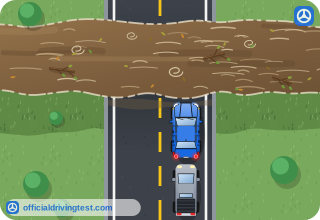
- Water can hide dips or wash away the road surface
- Shallow water always stalls a car’s engine
- Floodwater is always deeper in the middle of the road
- Tires lose all grip once any water covers the road
Show answer
Correct answer: Water can hide dips or wash away the road surface
Water can hide dips, and floodwaters can damage roadways by washing away the underlying road surface.
Source: Alaska Driver Manual (Revised October 2025), page 72 · Open this page in the manual (Manual page 72)
-
What should you do if there is no other route around floodwaters?
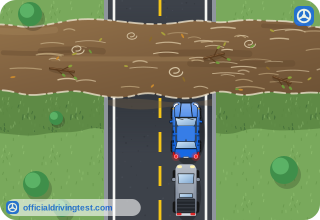
- Drive through in a low gear while watching the depth
- Cross at the shallowest point and drive slowly
- Go to higher ground and wait for the waters to subside
- Park at the edge of the water and stay in the car
Show answer
Correct answer: Go to higher ground and wait for the waters to subside
If there is no other route, proceed to higher ground and wait for the waters to subside.
Source: Alaska Driver Manual (Revised October 2025), page 72 · Open this page in the manual (Manual page 72)
-
How soon after excessive rainfall can flash floods occur?
- Only after several days
- Within a few minutes or hours
- Only after the rain has stopped for a day
- Never in less than a week
Show answer
Correct answer: Within a few minutes or hours
Flash floods can come rapidly and unexpectedly, within a few minutes or hours of excessive rainfall.
Source: Alaska Driver Manual (Revised October 2025), page 72 · Open this page in the manual (Manual page 72)
-
Which of these is named as a cause of flooding?
- A dry spell lasting several weeks
- Strong winds alone
- A drop in river levels
- Run-off from deep snow
Show answer
Correct answer: Run-off from deep snow
Flooding can occur when there is run-off from deep snow, heavy rainfall, or when dams or levees break.
Source: Alaska Driver Manual (Revised October 2025), page 72 · Open this page in the manual (Manual page 72)
-
Where can floodwaters be found?
- On roads, bridges, and low areas
- Only in rural areas
- Only on unpaved roads
- Only on bridges near rivers
Show answer
Correct answer: On roads, bridges, and low areas
Floodwaters can be found on roads, bridges, and low areas.
Source: Alaska Driver Manual (Revised October 2025), page 72 · Open this page in the manual (Manual page 72)