Alabama: Right-of-way and turning
Who goes first at intersections, turns, three-point turns, roundabouts and passing. Split into 4 shorter tests so you're not stuck in one long quiz.
Independent educational site · not affiliated with any government agency or DMV
Choose a part
Right-of-way and turning — Part 1
Questions in this part include: “How long should you continue to give your turn signal?”
StartRight-of-way and turning — Part 2
Questions in this part include: “Where are double right turns permitted?”
StartRight-of-way and turning — Part 3
Questions in this part include: “When entering a roundabout, which traffic must you yield to?”
StartRight-of-way and turning — Part 4
Questions in this part include: “According to the manual, what causes most head-on and sideswipe collisions on two-lane highways?”
StartAll 79 Right-of-way and turning questions with answers
Choose a part above to take a practice test, or study every question and answer here.
Show the questions and answersHide the questions
-
How far before making a turn should you signal your intentions?
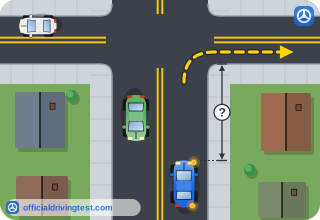
- At least 50 feet
- At least 100 feet
- At least 150 feet
- At least 300 feet
Show answer
Correct answer: At least 100 feet
The manual says to signal at least 100 feet before making the turn.
Source: Alabama Driver Manual (November 2024), page 21 · Open this page in the manual (Manual page 21)
-
How long should you continue to give your turn signal?
- Until you begin to slow down
- Until you are ready to make the actual turn
- Until you reach the intersection
- Until the vehicle behind you has slowed down
Show answer
Correct answer: Until you are ready to make the actual turn
The manual says to continue the signal until you are ready to make the actual turn.
Source: Alabama Driver Manual (November 2024), page 21 · Open this page in the manual (Manual page 21)
-
Who are turn signals given to inform?
- Only drivers behind you
- Only drivers coming toward you
- Only traffic officers
- Both pedestrians and drivers
Show answer
Correct answer: Both pedestrians and drivers
The manual says signals are given to inform both pedestrians and drivers of your intentions.
Source: Alabama Driver Manual (November 2024), page 21 · Open this page in the manual (Manual page 21)
-
Where should your hands be when you are actually making a turn?
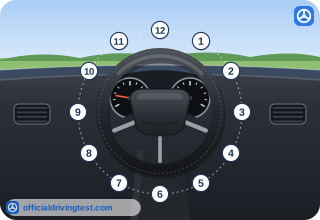
- Both hands on the steering wheel
- One hand on the wheel and one hand signaling
- One hand on the wheel and one hand on the gearshift
- Both hands resting at the bottom of the wheel
Show answer
Correct answer: Both hands on the steering wheel
The manual says both hands should be on the steering wheel when actually turning.
Source: Alabama Driver Manual (November 2024), page 21 · Open this page in the manual (Manual page 21)
-
When should you get into the proper turn lane?
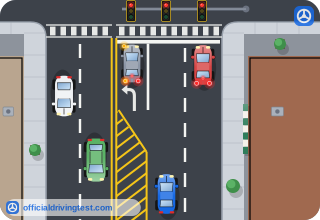
- Well ahead of the turn, once it is safe to change lanes
- Just before you reach the corner where you will turn
- Only after you have started to turn into the street
- As soon as the light changes, even if that lane is full
Show answer
Correct answer: Well ahead of the turn, once it is safe to change lanes
The manual says to get into the proper turn lane well ahead of the turn and be sure the change is safe.
Source: Alabama Driver Manual (November 2024), page 21 · Open this page in the manual (Manual page 21)
-
When should you decide to make a turn?
- As you reach the intersection, once you see the cross street
- At the last moment, after checking for other traffic
- Before you get there, preparing for it in advance
- Only when the car ahead of you has made its turn
Show answer
Correct answer: Before you get there, preparing for it in advance
The manual says to prepare for the turn before you get there and not make the decision at the last moment.
Source: Alabama Driver Manual (November 2024), page 21 · Open this page in the manual (Manual page 21)
-
When should you reduce your speed for a turn?
- In the middle of the turn
- Before making the turn
- After completing the turn
- Only when the road is wet
Show answer
Correct answer: Before making the turn
The manual lists reducing speed before making turns among its rules for turns.
Source: Alabama Driver Manual (November 2024), page 21 · Open this page in the manual (Manual page 21)
-
In which lane should you finish your turn?
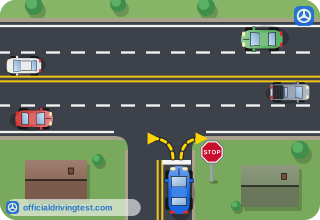
- The lane with the least traffic
- Whichever lane the vehicle ahead of you uses
- Any lane that is open
- The proper lane
Show answer
Correct answer: The proper lane
The manual says to always finish your turn in the proper lane.
Source: Alabama Driver Manual (November 2024), page 21 · Open this page in the manual (Manual page 21)
-
Before you turn, where should you check for cars and pedestrians?
- Only to the front and sides
- Only to the rear
- Only in the street you are leaving
- To the front, rear, and sides
Show answer
Correct answer: To the front, rear, and sides
The manual says to check to the front, rear, and sides for cars and pedestrians before turning.
Source: Alabama Driver Manual (November 2024), page 21 · Open this page in the manual (Manual page 21)
-
How should you make a right turn from a four-lane or divided highway?
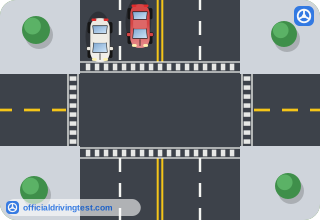
- Move to the center of the road and make a wide swing into the cross street
- Enter the left lane first, then swing right into the lane of the cross street
- Enter the right lane early and make a tight turn into the cross street's right lane
- Turn from the lane nearest the center line into any lane of the cross street
Show answer
Correct answer: Enter the right lane early and make a tight turn into the cross street's right lane
The manual says to enter the right lane well in advance and make a tight turn into the right lane of the cross street.
Source: Alabama Driver Manual (November 2024), page 21 · Open this page in the manual (Manual page 21)
-
For a left turn from a four-lane or divided highway, which lane should you turn from?
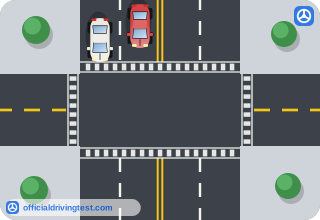
- The lane nearest the center line or traffic divider
- The right lane, using a wide swing into the cross street
- The lane farthest from the center line or traffic divider
- Whichever lane is open when you reach the intersection
Show answer
Correct answer: The lane nearest the center line or traffic divider
The manual says to move to the lane nearest the center line or traffic divider and turn from the inside lane.
Source: Alabama Driver Manual (November 2024), page 21 · Open this page in the manual (Manual page 21)
-
Where should you enter the cross street when making a left turn from a four-lane highway?
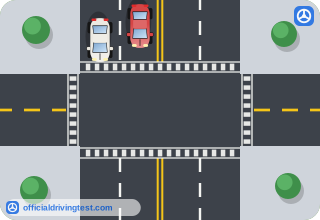
- In the lane farthest from the centerline of the cross street
- Across the centerline, into the lane of oncoming traffic
- In the center of the cross street, after a wide swing
- Just to the right of the centerline, avoiding a wide swing
Show answer
Correct answer: Just to the right of the centerline, avoiding a wide swing
The manual says to avoid a wide swing and enter the cross street just to the right of the centerline.
Source: Alabama Driver Manual (November 2024), page 21 · Open this page in the manual (Manual page 21)
-
When may you turn from more than one lane at an intersection?
- At any intersection that has four or more lanes
- When signs or pavement markings there permit it
- Whenever the traffic behind you is waiting
- Only at intersections that have traffic signals
Show answer
Correct answer: When signs or pavement markings there permit it
The manual says some intersections are marked to permit turns from more than one lane, as indicated by signs or markings.
Source: Alabama Driver Manual (November 2024), page 21 · Open this page in the manual (Manual page 21)
-
Which of these is one of the manual's proper turning rules?
- Always turn from the lane nearest the right curb
- Adjust your speed to the flow of traffic
- Stop in the intersection to look for traffic before turning
- Turn only after sounding your horn
Show answer
Correct answer: Adjust your speed to the flow of traffic
The manual lists adjusting speed to the flow of traffic as part of the proper turning rules.
Source: Alabama Driver Manual (November 2024), page 22 · Open this page in the manual (Manual page 22)
-
What must be true when you make a three-point turn?
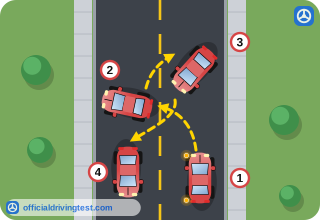
- It must be made only at a stop sign
- It must be signaled with a horn blast
- It must be completed in under ten seconds
- It must be made without endangering other traffic
Show answer
Correct answer: It must be made without endangering other traffic
The manual says a three-point turn must be made without endangering other traffic.
Source: Alabama Driver Manual (November 2024), page 23 · Open this page in the manual (Manual page 23)
-
Where are three-point turns normally permitted?
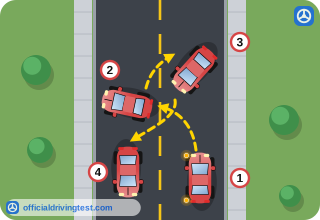
- Where you can be seen for a great distance and the turn is not a hazard
- Only on interstate freeways when the traffic is light enough
- Only near the top of a hill, where traffic is generally slower
- Anywhere that a sign does not forbid it, even on a sharp curve
Show answer
Correct answer: Where you can be seen for a great distance and the turn is not a hazard
The manual says they are normally permitted where the vehicle can be seen for a great distance and the turn would not be a hazard.
Source: Alabama Driver Manual (November 2024), page 23 · Open this page in the manual (Manual page 23)
-
Where are three-point turns NOT permitted?
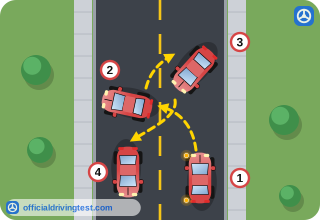
- On two-lane roads and in residential areas
- On one-way streets and in parking lots
- On interstate freeways, curves, or near the top of hills
- On roads with a posted speed limit under 45 mph
Show answer
Correct answer: On interstate freeways, curves, or near the top of hills
The manual says three-point turns are not permitted on interstate freeways, on curves, or near the top of hills.
Source: Alabama Driver Manual (November 2024), page 23 · Open this page in the manual (Manual page 23)
-
Near the top of a hill, a three-point turn is not permitted if you cannot be seen by drivers approaching from either direction within how many feet?
- 500 feet
- 200 feet
- 300 feet
- 1,000 feet
Show answer
Correct answer: 500 feet
The manual says three-point turns are not permitted near hilltops where you cannot be seen within 500 feet.
Source: Alabama Driver Manual (November 2024), page 23 · Open this page in the manual (Manual page 23)
-
Are signs always posted to warn you where a three-point turn is not allowed?
- Yes, a sign is required at every place where they are not allowed
- Yes, but only on interstate freeways and on divided highways
- No, they are governed by local ordinances and there may be no signs
- No, because they are governed only by state law on all roads
Show answer
Correct answer: No, they are governed by local ordinances and there may be no signs
The manual says they are governed by local ordinances and there may be no signs, though prohibitory signs are usually posted at hazardous locations.
Source: Alabama Driver Manual (November 2024), page 23 · Open this page in the manual (Manual page 23)
-
At a 4-way stop intersection with other vehicles stopped or moving, in what order should the vehicles leave the stop signs?
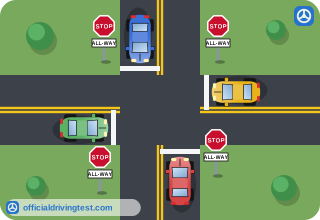
- The largest vehicle leaves first
- The vehicle on the left leaves first
- Vehicles going straight leave before turning vehicles
- In the same order in which they arrived
Show answer
Correct answer: In the same order in which they arrived
The manual says vehicles should leave the stop signs in the same order in which they arrived.
Source: Alabama Driver Manual (November 2024), page 42 · Open this page in the manual (Manual page 42)
-
Two or more vehicles arrive at the same time at a 4-way stop. Which one is allowed to leave first?
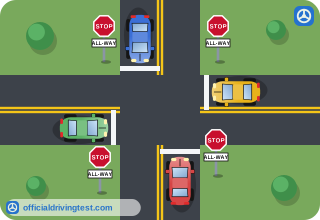
- The vehicle furthest to the left
- The vehicle furthest to the right
- The largest vehicle
- The vehicle that is going straight
Show answer
Correct answer: The vehicle furthest to the right
The manual says that when more than one vehicle arrives at the same time, the vehicle furthest to the right leaves first.
Source: Alabama Driver Manual (November 2024), page 42 · Open this page in the manual (Manual page 42)
-
Why does the manual say to allow a few seconds at a 4-way stop even when it is your turn?
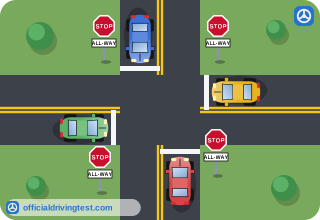
- Many people do not follow the rule
- The signal at the intersection may change
- The first vehicle must always turn left
- The vehicle behind you always has the right of way
Show answer
Correct answer: Many people do not follow the rule
The manual advises waiting a few seconds to make sure no one else enters the intersection, because many people do not follow the rule.
Source: Alabama Driver Manual (November 2024), page 42 · Open this page in the manual (Manual page 42)
-
What does a YIELD sign mean?
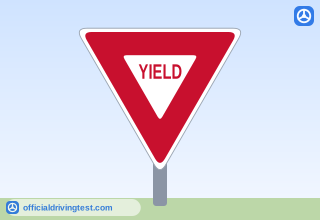
- Stop completely and wait until all other vehicles on the road have passed
- Speed up to merge ahead of the traffic on the intersecting road
- Slow down and yield to pedestrians and to vehicles on the intersecting road
- Come to a full stop only if a pedestrian is crossing in front of you
Show answer
Correct answer: Slow down and yield to pedestrians and to vehicles on the intersecting road
The manual says the YIELD sign means slow down so you can yield the right of way to pedestrians crossing the roadway and to vehicles on the intersecting street or highway.
Source: Alabama Driver Manual (November 2024), page 42 · Open this page in the manual (Manual page 42)
-
A square white sign shows a left-turn arrow inside a red circle with a slash across it. What does it mean?
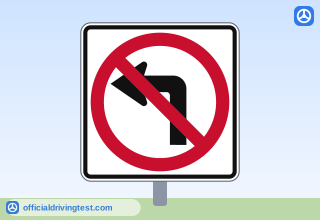
- You must not make a left turn at this intersection
- You may turn left only on a green arrow
- Only left turns are allowed at this intersection
- You may turn left only after stopping
Show answer
Correct answer: You must not make a left turn at this intersection
The manual says this sign means you must not make a left turn at this intersection.
Source: Alabama Driver Manual (November 2024), page 42 · Open this page in the manual (Manual page 42)
-
What does a LEFT LANE MUST TURN LEFT sign tell you?
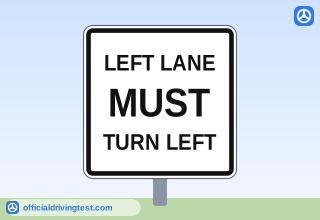
- The left lane ends and traffic must merge to the right ahead
- Left lane traffic may turn left or continue straight ahead
- The left lane must turn left at the intersection ahead
- Left turns are prohibited from every lane at the intersection ahead
Show answer
Correct answer: The left lane must turn left at the intersection ahead
The manual says traffic in the left lane must turn left at the intersection ahead.
Source: Alabama Driver Manual (November 2024), page 43 · Open this page in the manual (Manual page 43)
-
What does a NO TURNS sign mean?
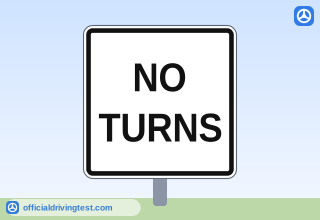
- You may turn right or left only when the signal is green
- You may not turn right or left at this intersection
- Only right turns are allowed at this intersection
- Only U-turns are allowed at this intersection
Show answer
Correct answer: You may not turn right or left at this intersection
The manual says you must not turn either to the right or to the left at this intersection.
Source: Alabama Driver Manual (November 2024), page 43 · Open this page in the manual (Manual page 43)
-
What does a NO TURN ON RED sign mean at an intersection controlled by traffic signals?
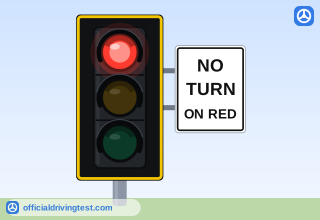
- You may turn right on red after stopping
- You may not make a right or left turn on red
- You may turn left on red only from a one-way street
- You must stop twice before turning on red
Show answer
Correct answer: You may not make a right or left turn on red
The manual says that if this sign is posted you may not make a right or left turn on red.
Source: Alabama Driver Manual (November 2024), page 44 · Open this page in the manual (Manual page 44)
-
A sign shows a straight-and-right arrow over one lane and a right-turn arrow marked ONLY over the right lane. What does it mean at the intersection ahead?
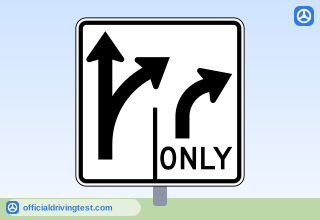
- The right lane may turn right or go straight, and the lane next to it must go straight
- Both lanes must turn right, and no vehicle may go straight
- The right lane must turn right, and the lane next to it may turn right or go straight
- The right lane is for turning right only, and the lane next to it must turn left
Show answer
Correct answer: The right lane must turn right, and the lane next to it may turn right or go straight
The manual says traffic in the right lane must turn right and traffic in the adjoining lane may turn right or continue straight ahead.
Source: Alabama Driver Manual (November 2024), page 44 · Open this page in the manual (Manual page 44)
-
Where are double right turns permitted?
- Only at intersections that are properly signed
- At any intersection with two right-turn lanes
- Only at intersections controlled by traffic signals
- Only on divided highways
Show answer
Correct answer: Only at intersections that are properly signed
The manual says double right turns are only permitted at intersections that are properly signed.
Source: Alabama Driver Manual (November 2024), page 44 · Open this page in the manual (Manual page 44)
-
At a merge sign, what must drivers entering from the right do?
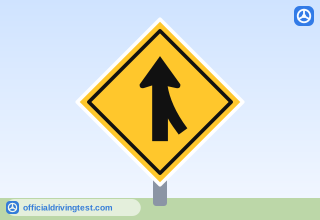
- Yield to main-route traffic and use speed-change lanes
- Stop and wait for the main traffic to give them room
- Speed up and take the first gap in the main traffic
- Stay in the right lane until the road ends
Show answer
Correct answer: Yield to main-route traffic and use speed-change lanes
The manual says drivers entering from the right must yield to traffic on the main route and use speed-change lanes to merge smoothly and safely.
Source: Alabama Driver Manual (November 2024), page 48 · Open this page in the manual (Manual page 48)
-
In which direction does traffic flow around the central island of a roundabout?
- Clockwise
- Whichever direction has less traffic
- Straight across the central island
- Counter-clockwise
Show answer
Correct answer: Counter-clockwise
The manual says a roundabout flows in a counter-clockwise direction around a central island.
Source: Alabama Driver Manual (November 2024), page 51 · Open this page in the manual (Manual page 51)
-
How must motorists enter a roundabout?
- From the right, yielding to traffic already in the roundabout
- From the left, speeding up to merge before other traffic
- From the right, ahead of traffic already in the roundabout
- From any side, after stopping completely at the entrance
Show answer
Correct answer: From the right, yielding to traffic already in the roundabout
Motorists must enter from the right and yield to traffic already in the roundabout.
Source: Alabama Driver Manual (November 2024), page 51 · Open this page in the manual (Manual page 51)
-
Which traffic control does a roundabout usually not include?
- A central island
- Yield signs at its entrances
- A traffic signal
- Crosswalks for pedestrians
Show answer
Correct answer: A traffic signal
The manual defines a roundabout as a circular intersection that usually does not include a traffic signal.
Source: Alabama Driver Manual (November 2024), page 51 · Open this page in the manual (Manual page 51)
-
Why are roundabouts becoming more common in the U.S., according to the manual?
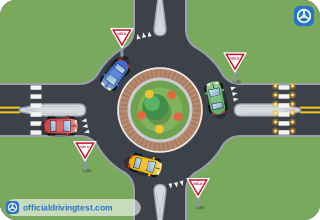
- They give safer, more efficient traffic flow than standard intersections
- They need less space than standard intersections and cost less to build
- They let drivers travel faster through intersections than signals do
- They remove the need for yield signs, crosswalks and traffic signals
Show answer
Correct answer: They give safer, more efficient traffic flow than standard intersections
The manual says roundabouts provide safer and more efficient traffic flow than standard intersections.
Source: Alabama Driver Manual (November 2024), page 57 · Open this page in the manual (Manual page 57)
-
What reduces the number of conflict points in a roundabout?
- Letting drivers enter from either side of the road at will
- Requiring every vehicle to stop at each entrance first
- Keeping traffic moving one-way in a counterclockwise direction
- Keeping traffic moving in both directions around the island
Show answer
Correct answer: Keeping traffic moving one-way in a counterclockwise direction
Keeping traffic moving one-way counterclockwise gives fewer conflict points so traffic flows smoothly.
Source: Alabama Driver Manual (November 2024), page 57 · Open this page in the manual (Manual page 57)
-
Crash statistics show roundabouts reduce fatal crashes by about how much compared to other types of intersection control?
- About 35%
- About 90%
- About 75%
- About 60%
Show answer
Correct answer: About 90%
The manual says roundabouts reduce fatal crashes about 90%.
Source: Alabama Driver Manual (November 2024), page 57 · Open this page in the manual (Manual page 57)
-
Crash statistics show roundabouts reduce injury crashes by about how much compared to other types of intersection control?
- About 90%
- About 35%
- About 50%
- About 75%
Show answer
Correct answer: About 75%
The manual says roundabouts reduce injury crashes about 75%.
Source: Alabama Driver Manual (November 2024), page 57 · Open this page in the manual (Manual page 57)
-
Crash statistics show roundabouts reduce overall crashes by about how much compared to other types of intersection control?
- About 90%
- About 75%
- About 35%
- About 20%
Show answer
Correct answer: About 35%
The manual says roundabouts reduce overall crashes about 35%.
Source: Alabama Driver Manual (November 2024), page 57 · Open this page in the manual (Manual page 57)
-
When driving through a roundabout, which rules apply?
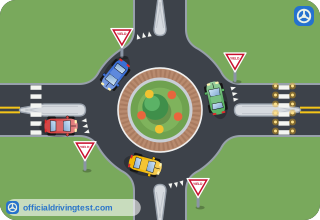
- The same general rules as for any other type of intersection
- Special rules that replace all normal right-of-way rules
- Only the rules posted at each entrance
- The rules for merging onto a freeway
Show answer
Correct answer: The same general rules as for any other type of intersection
The manual says the same general rules apply as for maneuvering through any other type of intersection.
Source: Alabama Driver Manual (November 2024), page 57 · Open this page in the manual (Manual page 57)
-
The steps for driving a roundabout say that before entering you yield to pedestrians and which other road users?
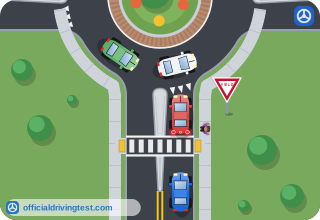
- Parked cars
- Delivery vans
- Vehicles behind you
- Bicyclists
Show answer
Correct answer: Bicyclists
The steps for driving a roundabout say to yield to pedestrians and bicyclists before entering.
Source: Alabama Driver Manual (November 2024), page 57 · Open this page in the manual (Manual page 57)
-
When entering a roundabout, which traffic must you yield to?
- Traffic on your left already in the roundabout
- Traffic on your right that is about to enter
- Only vehicles making a left turn
- Only trucks using the truck apron
Show answer
Correct answer: Traffic on your left already in the roundabout
The steps say to yield to traffic on your left already in the roundabout.
Source: Alabama Driver Manual (November 2024), page 57 · Open this page in the manual (Manual page 57)
-
When may you enter a roundabout?
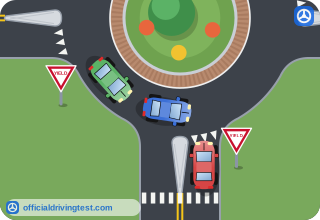
- As soon as the vehicle ahead enters
- Only after coming to a complete stop
- When there is a safe gap in traffic
- When your signal has been on for three seconds
Show answer
Correct answer: When there is a safe gap in traffic
The steps say to enter the roundabout when there is a safe gap in traffic.
Source: Alabama Driver Manual (November 2024), page 57 · Open this page in the manual (Manual page 57)
-
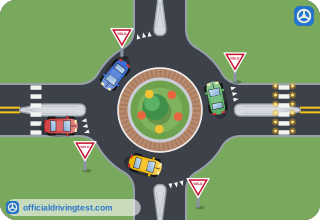
What should you do about your speed once you are in a roundabout?
- Match the speed limit of the approach road
- Go fast enough to merge ahead of other traffic
- Slow down only when pedestrians are present
- Keep it low
Show answer
Correct answer: Keep it low
The steps say to keep your speed low within the roundabout.
Source: Alabama Driver Manual (November 2024), page 57 · Open this page in the manual (Manual page 57)
-
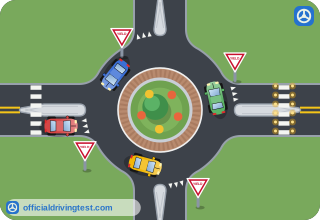
What should you do as you approach your exit from a roundabout?
- Stop at the exit and wait for traffic to clear
- Turn onto the desired road
- Cross the central island to reach the exit
- Slow to a stop in the circle and signal
Show answer
Correct answer: Turn onto the desired road
The steps say that as you approach your exit you turn onto the desired road.
Source: Alabama Driver Manual (November 2024), page 57 · Open this page in the manual (Manual page 57)
-
What should you do if you miss your exit in a roundabout?
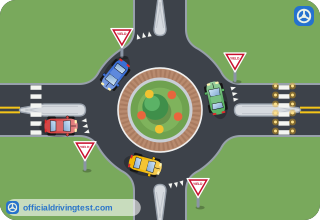
- Drive around again to your exit; never back up
- Stop and back up to the exit when traffic is clear
- Turn left across the central island to reach the exit
- Pull over inside the roundabout and wait for a gap
Show answer
Correct answer: Drive around again to your exit; never back up
If you miss your exit, you drive around the roundabout again to your exit and never back up.
Source: Alabama Driver Manual (November 2024), page 58 · Open this page in the manual (Manual page 58)
-
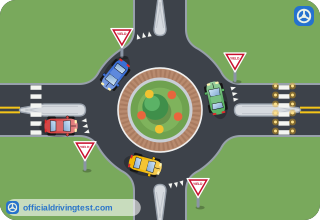
Once you are in a roundabout, when may you stop?
- Whenever the traffic ahead of you slows or stops moving
- Only if it is the only way to avoid a crash or other danger
- Whenever pedestrians appear about to enter the crosswalk
- Whenever you are unsure which exit you need to take
Show answer
Correct answer: Only if it is the only way to avoid a crash or other danger
Once in a roundabout you do not stop unless it is the only way to avoid a crash or other danger.
Source: Alabama Driver Manual (November 2024), page 58 · Open this page in the manual (Manual page 58)
-
In a roundabout, who has the right-of-way?
- Vehicles already in the roundabout
- Vehicles about to enter from the right
- Vehicles that arrived at the entrance first
- Vehicles entering from the busiest road
Show answer
Correct answer: Vehicles already in the roundabout
Vehicles already in the roundabout have the right-of-way.
Source: Alabama Driver Manual (November 2024), page 58 · Open this page in the manual (Manual page 58)
-
How do you enter a roundabout when there is a safe gap in traffic?
- By turning left, then circling clockwise
- By turning whichever way is shorter to your exit
- By stopping first and then turning left
- By turning right, never turning left
Show answer
Correct answer: By turning right, never turning left
The manual says never to make a left turn to enter a roundabout; turn right to enter.
Source: Alabama Driver Manual (November 2024), page 58 · Open this page in the manual (Manual page 58)
-
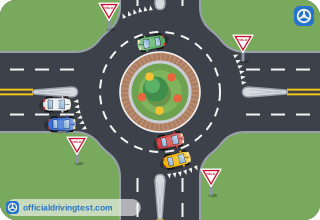
In a two-lane roundabout diagram, which lane is used for left turns and U-turns?
- The right lane
- The left lane
- Either lane
- The truck apron
Show answer
Correct answer: The left lane
The diagram says left turns and U-turns use the left lane.
Source: Alabama Driver Manual (November 2024), page 58 · Open this page in the manual (Manual page 58)
-
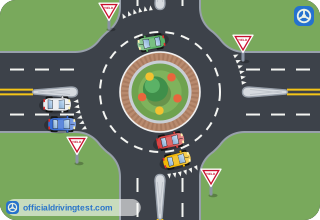
In a two-lane roundabout diagram, which lane is used for right turns?
- The left lane
- The right lane
- Either lane
- The central island
Show answer
Correct answer: The right lane
The diagram says right turns use the right lane.
Source: Alabama Driver Manual (November 2024), page 58 · Open this page in the manual (Manual page 58)
-
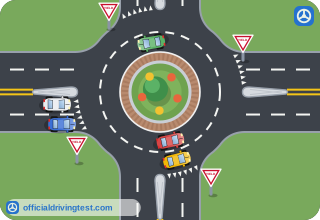
In a two-lane roundabout, how do you decide which lane to use when going straight?
- Always use the left lane, whatever the markings
- Always use the right lane, whatever the markings
- Use whichever lane has less traffic
- Follow the pavement markings, arrows or signs
Show answer
Correct answer: Follow the pavement markings, arrows or signs
The diagram says that when going straight you follow the pavement markings, arrows or signs.
Source: Alabama Driver Manual (November 2024), page 58 · Open this page in the manual (Manual page 58)
-
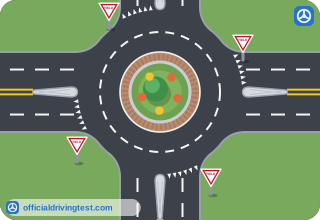
Before entering a two-lane roundabout, whom must you yield to?
- All traffic in both lanes
- Only traffic in the lane you plan to use
- Only traffic in the left lane
- Only traffic entering from the right
Show answer
Correct answer: All traffic in both lanes
The diagram says to choose your lane and yield to all traffic in both lanes before entering.
Source: Alabama Driver Manual (November 2024), page 58 · Open this page in the manual (Manual page 58)
-
Where must a vehicle approaching a STOP sign stop if a stop line is marked?
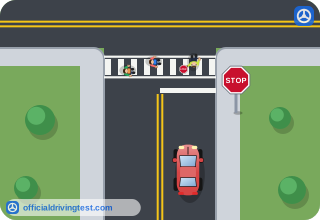
- Past the stop line, at the edge of the intersection
- In the middle of the crosswalk
- Ten feet before the stop line
- At the marked stop line
Show answer
Correct answer: At the marked stop line
A vehicle approaching a STOP sign must stop at the marked stop line.
Source: Alabama Driver Manual (November 2024), page 60 · Open this page in the manual (Manual page 60)
-
At a STOP sign with no marked stop line, where must you stop?
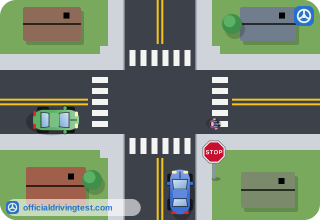
- Before entering the crosswalk on the near side of the intersection
- Past the crosswalk, at the very edge of the intersection
- At the center of the intersection
- At the far side of the crosswalk
Show answer
Correct answer: Before entering the crosswalk on the near side of the intersection
With no stop line, the vehicle must stop before entering the crosswalk on the near side of the intersection.
Source: Alabama Driver Manual (November 2024), page 60 · Open this page in the manual (Manual page 60)
-
At a STOP sign with no stop line and no crosswalk, where must you stop?
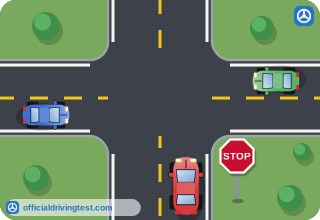
- At the point farthest from the intersection, well back from the road
- In the center of the crossing street
- Before the crossing street, at the nearest point with a clear view of traffic
- Wherever you first see traffic
Show answer
Correct answer: Before the crossing street, at the nearest point with a clear view of traffic
With no crosswalk, you stop before entering the crossing street at the point nearest the intersection with a clear view of approaching traffic.
Source: Alabama Driver Manual (November 2024), page 60 · Open this page in the manual (Manual page 60)
-
When may you have to stop a second time at a STOP sign?
- If another driver is waiting behind you at the sign
- If your view was blocked and there is conflicting traffic
- If a pedestrian waves you through
- If you stopped before the stop line
Show answer
Correct answer: If your view was blocked and there is conflicting traffic
A second stop may be needed if your view was blocked at the first stop and there is conflicting traffic.
Source: Alabama Driver Manual (November 2024), page 60 · Open this page in the manual (Manual page 60)
-
When you come from an alley, private driveway, or building within a business or residence district, where must you stop?
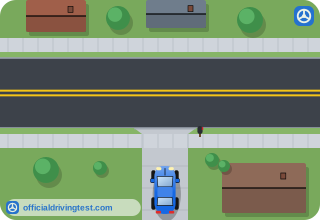
- Only after entering the street
- Only if you see another vehicle
- At the curb of the street you are entering
- Before crossing the sidewalk or crosswalk area
Show answer
Correct answer: Before crossing the sidewalk or crosswalk area
The manual says to always stop before crossing the sidewalk or crosswalk area.
Source: Alabama Driver Manual (November 2024), page 60 · Open this page in the manual (Manual page 60)
-
At which of these must you come to a complete stop?
- At any bridge over a river
- At bridges opening for water navigation
- At every bridge with a toll
- At any bridge in a business district
Show answer
Correct answer: At bridges opening for water navigation
The manual lists bridges opening for water navigation as a place for a complete stop.
Source: Alabama Driver Manual (November 2024), page 61 · Open this page in the manual (Manual page 61)
-
What does the manual say is one of the main causes of traffic crashes?
- Driving with the headlights on
- Violating right-of-way rules
- Using turn signals too early
- Stopping at STOP signs
Show answer
Correct answer: Violating right-of-way rules
The manual says the violation of right-of-way rules is one of the main causes of traffic crashes.
Source: Alabama Driver Manual (November 2024), page 62 · Open this page in the manual (Manual page 62)
-
If two vehicles enter an intersection not controlled by signs or signals from different roadways at about the same time, who must yield?
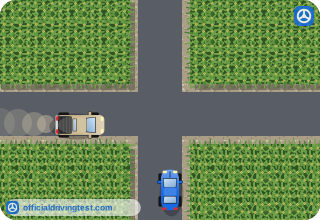
- The driver of the vehicle on the right yields to the vehicle on the left
- The driver of the larger vehicle yields
- The driver of the faster vehicle yields
- The driver of the vehicle on the left yields to the vehicle on the right
Show answer
Correct answer: The driver of the vehicle on the left yields to the vehicle on the right
The driver of the vehicle on the left shall yield to the vehicle on the right.
Source: Alabama Driver Manual (November 2024), page 63 · Open this page in the manual (Manual page 63)
-
What happens if you enter an uncontrolled intersection at an unlawful speed?
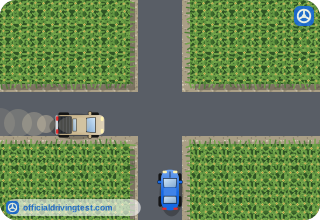
- You lose any right of way you might otherwise have
- You keep the right of way if you arrive first
- You must stop and wait for a police officer
- You gain the right of way over slower vehicles
Show answer
Correct answer: You lose any right of way you might otherwise have
If you enter an uncontrolled intersection at an unlawful speed, you lose any right of way you might otherwise have.
Source: Alabama Driver Manual (November 2024), page 63 · Open this page in the manual (Manual page 63)
-
What must cars entering from a private road or driveway do?
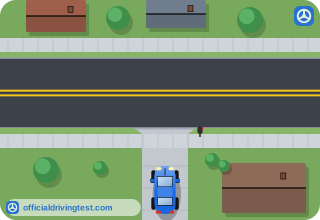
- Yield only to cars on their left
- Proceed first if the road is clear on the right
- Yield only when a stop sign is posted
- Stop and yield to cars on a public street or highway
Show answer
Correct answer: Stop and yield to cars on a public street or highway
Cars entering from a private road or driveway must stop and yield to cars on a public street or highway.
Source: Alabama Driver Manual (November 2024), page 63 · Open this page in the manual (Manual page 63)
-
What should you do when entering an intersection where there is a yield sign facing you?
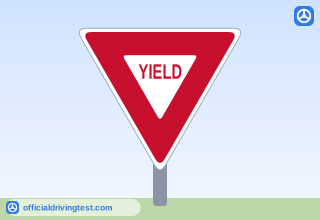
- Slow down and, if necessary, stop to yield to crossing traffic
- Always stop completely and wait for a green light
- Maintain your speed, since you have the right of way
- Stop only if a vehicle is directly beside you
Show answer
Correct answer: Slow down and, if necessary, stop to yield to crossing traffic
At a yield sign you slow down and, if necessary, stop to yield to vehicles and pedestrians legally crossing the roadway.
Source: Alabama Driver Manual (November 2024), page 63 · Open this page in the manual (Manual page 63)
-
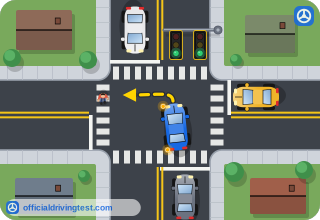
When making a left turn, which vehicles must you yield to?
- Only vehicles that are approaching from behind you in your lane
- Only vehicles that are stopped
- Oncoming vehicles within the intersection or close enough to be a hazard
- No vehicles, since you are already in the intersection
Show answer
Correct answer: Oncoming vehicles within the intersection or close enough to be a hazard
A driver turning left must yield to any vehicle approaching from the opposite direction within the intersection or so close as to constitute an immediate hazard.
Source: Alabama Driver Manual (November 2024), page 63 · Open this page in the manual (Manual page 63)
-
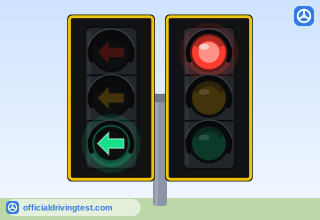
What must vehicles entering an intersection on a green arrow do?
- Proceed first, as the arrow gives absolute right of way
- Yield to other traffic lawfully using the intersection
- Stop and wait for a full green light
- Yield only to pedestrians
Show answer
Correct answer: Yield to other traffic lawfully using the intersection
Vehicles entering on green arrows must yield to other traffic lawfully using the intersection.
Source: Alabama Driver Manual (November 2024), page 63 · Open this page in the manual (Manual page 63)
-
According to the manual, what causes most head-on and sideswipe collisions on two-lane highways?
- Improper or careless passing
- Driving below the posted speed limit
- Using turn signals too early
- Driving with the headlights on in daytime
Show answer
Correct answer: Improper or careless passing
The manual says most of these collisions are caused by improper or careless passing.
Source: Alabama Driver Manual (November 2024), page 64 · Open this page in the manual (Manual page 64)
-
Besides the areas marked no-passing, when must drivers exercise extreme caution in all areas?
- Only when the road ahead is straight and dry
- In darkness, poor visibility, and on slippery roads
- Only on roads with three or more lanes
- Only during the first hour after sunrise
Show answer
Correct answer: In darkness, poor visibility, and on slippery roads
The manual requires extreme caution in all areas during darkness, poor visibility, and slippery road surfaces.
Source: Alabama Driver Manual (November 2024), page 64 · Open this page in the manual (Manual page 64)
-
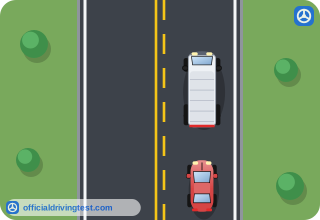
On a two-lane road with traffic moving in both directions, when may you pass traffic on the left?
- Whenever the driver ahead is going slower than you
- Only when the driver ahead gives a hand signal to pass
- Only if you speed up to 10 mph over the limit
- When it can be completed safely within the speed limit
Show answer
Correct answer: When it can be completed safely within the speed limit
Passing on the left is allowed only if it can be completed safely without exceeding the speed limit.
Source: Alabama Driver Manual (November 2024), page 64 · Open this page in the manual (Manual page 64)
-
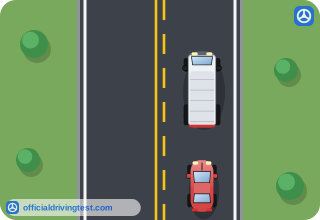
In preparing to pass, what should you check besides the road ahead for sufficient distance?
- The fuel gauge, to be sure you can speed up
- The mirror of the car you are about to pass
- The road behind, for traffic preparing to pass you
- The road to the right, for pedestrians only
Show answer
Correct answer: The road behind, for traffic preparing to pass you
The manual says to check the road ahead for distance and the road behind for traffic that may be preparing to pass you.
Source: Alabama Driver Manual (November 2024), page 64 · Open this page in the manual (Manual page 64)
-
Which is a helpful way to signal your intention to the driver ahead before passing at night?
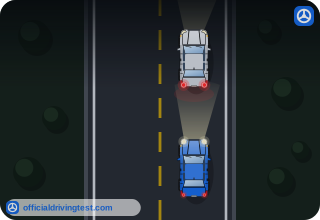
- A flick of your headlights
- Turning on your hazard lights
- A long blast of the horn
- Turning off your headlights briefly
Show answer
Correct answer: A flick of your headlights
The manual says a tap of the horn or a flick of headlights at night is helpful.
Source: Alabama Driver Manual (November 2024), page 64 · Open this page in the manual (Manual page 64)
-
When should you activate your right turn signal when passing another vehicle?
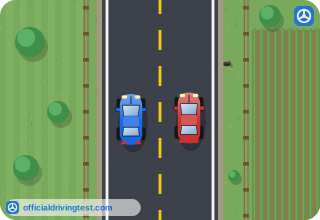
- Before you move into the left lane to pass
- While you are alongside the other vehicle
- Only if the other driver signals first
- After passing, before returning to the right lane
Show answer
Correct answer: After passing, before returning to the right lane
Left turn signals are used before passing and right turn signals after passing and before returning to the right lane.
Source: Alabama Driver Manual (November 2024), page 64 · Open this page in the manual (Manual page 64)
-
After passing a vehicle, when may you return to the right lane?
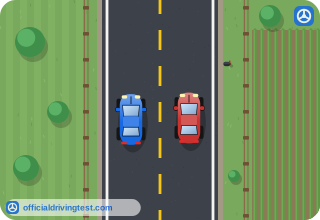
- As soon as your front bumper is even with the passed vehicle
- When you see the whole front of the passed vehicle in your mirror
- After you have driven one full mile past the vehicle
- When the passed vehicle slows to 30 mph or less
Show answer
Correct answer: When you see the whole front of the passed vehicle in your mirror
You must not return to the right lane until you can see the entire front of the vehicle you passed in your interior rear view mirror.
Source: Alabama Driver Manual (November 2024), page 64 · Open this page in the manual (Manual page 64)
-
When another car is trying to pass you, what should you do?
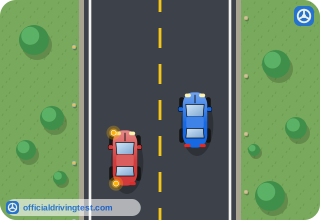
- Stay in your own lane and not increase speed
- Speed up to keep the other car behind you
- Move onto the shoulder to let it by
- Brake hard so the other car can pass quickly
Show answer
Correct answer: Stay in your own lane and not increase speed
The manual says to stay in your own lane and not increase speed when another car is passing you.
Source: Alabama Driver Manual (November 2024), page 64 · Open this page in the manual (Manual page 64)
-
Where is passing on the right permissible?
- On any two-lane road with traffic in both directions
- Only on curves and hills with a clear view
- On one-way roads and roads with two or more lanes in one direction
- Nowhere, because passing on the right is always unlawful
Show answer
Correct answer: On one-way roads and roads with two or more lanes in one direction
Passing on the right is permitted on one-way roadways and on roads marked for two or more lanes moving in the same direction.
Source: Alabama Driver Manual (November 2024), page 64 · Open this page in the manual (Manual page 64)
-
What does using your turn signal alone give you when you want to pass on the right?
- The right of way over the car ahead
- Permission to drive on the shoulder
- The right to pass without checking traffic
- No right to pass
Show answer
Correct answer: No right to pass
The manual states that use of the signal alone does not give you the right to pass.
Source: Alabama Driver Manual (November 2024), page 65 · Open this page in the manual (Manual page 65)
-
Why must you be extremely cautious when passing on the right?
- Because it is unlawful everywhere in the state of Alabama
- Because other drivers always signal first
- It is forbidden in some states, so visitors may not expect it
- Because the shoulder is reserved for wreckers
Show answer
Correct answer: It is forbidden in some states, so visitors may not expect it
The manual notes that passing on the right is forbidden in some states, so out-of-state drivers may not expect it.
Source: Alabama Driver Manual (November 2024), page 65 · Open this page in the manual (Manual page 65)
-
You may not cross the center line to pass on a curve or hill unless you can see a clear passing distance of at least how many feet?
- 500 feet
- 200 feet
- 300 feet
- 1,000 feet
Show answer
Correct answer: 500 feet
The manual prohibits crossing the center line on a curve or hill where you cannot see a clear passing distance of at least 500 feet.
Source: Alabama Driver Manual (November 2024), page 65 · Open this page in the manual (Manual page 65)
-
In which situation may you not cross the center line to pass?
- On a straight road with no oncoming traffic
- When the vehicle ahead is signaling a right turn
- On a one-way street with two lanes
- At a highway intersection
Show answer
Correct answer: At a highway intersection
The manual lists a highway intersection among the places where crossing the center line to pass is prohibited.
Source: Alabama Driver Manual (November 2024), page 65 · Open this page in the manual (Manual page 65)
-
When may you not cross the center line to pass?
- When the vehicle ahead is traveling under the speed limit
- When meeting an oncoming vehicle
- When the road ahead is straight and clear for a long distance
- When you are on a road with no center line painted
Show answer
Correct answer: When meeting an oncoming vehicle
Crossing the center line to pass is prohibited when meeting an oncoming vehicle.
Source: Alabama Driver Manual (November 2024), page 65 · Open this page in the manual (Manual page 65)