Tennessee: Health and driving Practice Test
How vision, hearing, illness, medication and conditions such as epilepsy or diabetes can affect your driving.
Independent educational site · not affiliated with any government agency or DMV
Ready? Test yourself
- Instant feedback with an explanation
- Every answer cites its source in the manual
- Your best score is saved on this device
- Keyboard: press 1 to 4 to answer and Enter for the next question
Questions are original and based on the official manual "Tennessee Comprehensive Driver License Manual" (March 2025 printing), Tennessee Department of Safety and Homeland Security.
All 20 questions in this practice test
Take the test above first, then use this list to study. Tap “Show answer” to see the correct answer and explanation.
Show the questions and answersHide the questions
-
At what age does the “Expiring Identification License” stop expiring?
- 65 or older
- 55 or older
- 60 or older
- 70 or older
Show answer
Correct answer: 65 or older
The manual notes that at age 65 or older, this identification license does not expire.
Source: Tennessee Comprehensive Driver License Manual (March 2025 printing), page 4 · Open this page in the manual (Manual page 4)
-
A driver who loses consciousness or control due to epilepsy, cardiac syncope or diabetes must remain lapse free for at least how long before reinstatement?
- One month
- Three months
- Six months
- One year
Show answer
Correct answer: Six months
Such drivers are suspended and must remain lapse free for a minimum of six months before being eligible for reinstatement.
Source: Tennessee Comprehensive Driver License Manual (March 2025 printing), page 88 · Open this page in the manual (Manual page 88)
-
What does side (peripheral) vision let you do while you look ahead?
- Read signs far down the road
- See clearly in the dark
- Spot vehicles and other trouble on either side of you
- Judge the speed of the vehicle behind you in your mirror
Show answer
Correct answer: Spot vehicles and other trouble on either side of you
Peripheral vision lets you see out of the corner of your eyes and spot trouble at the sides.
Source: Tennessee Comprehensive Driver License Manual (March 2025 printing), page 98 · Open this page in the manual (Manual page 98)
-
How does seeing at night compare with seeing in the daytime?
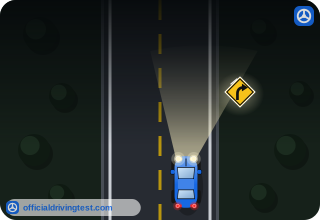
- It is more difficult for everyone
- It is easier for drivers who wear glasses
- It is no different for drivers with good vision
- It is easier for younger drivers
Show answer
Correct answer: It is more difficult for everyone
The manual says it is more difficult for everyone to see at night.
Source: Tennessee Comprehensive Driver License Manual (March 2025 printing), page 98 · Open this page in the manual (Manual page 98)
-
If you have problems seeing at night, what should you do?
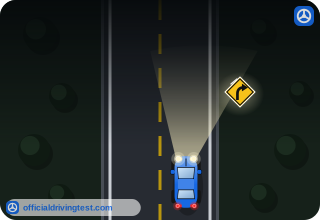
- Use your high beams at all times
- Wear dark sunglasses so oncoming headlights do not bother you
- Drive only on interstate highways
- Avoid driving more than necessary and be very careful when you do
Show answer
Correct answer: Avoid driving more than necessary and be very careful when you do
Drivers with night vision problems should limit night driving and take great care.
Source: Tennessee Comprehensive Driver License Manual (March 2025 printing), page 99 · Open this page in the manual (Manual page 99)
-
Judging distance and speed is especially important for which situations?
- Reading road signs from a long distance at night or in fog
- Judging safe gaps when merging and when passing on two-lane roads
- Parallel parking
- Backing out of a driveway
Show answer
Correct answer: Judging safe gaps when merging and when passing on two-lane roads
It matters most for knowing how far you are from other vehicles and judging gaps when merging and passing.
Source: Tennessee Comprehensive Driver License Manual (March 2025 printing), page 99 · Open this page in the manual (Manual page 99)
-
How often does the manual say you should have your eyes checked by an eye specialist?
- Every year or two
- Every five years
- Every ten years
- Only when you renew your license
Show answer
Correct answer: Every year or two
The manual recommends an eye check every year or two.
Source: Tennessee Comprehensive Driver License Manual (March 2025 printing), page 99 · Open this page in the manual (Manual page 99)
-
If you are required to wear glasses or contact lenses, when should you wear them?
- Only when driving at night
- Only on long trips
- Always when you drive, even on very short trips
- Only when driving on highways or on unfamiliar roads
Show answer
Correct answer: Always when you drive, even on very short trips
Glasses or contacts should be worn every time you drive, even on very short trips.
Source: Tennessee Comprehensive Driver License Manual (March 2025 printing), page 99 · Open this page in the manual (Manual page 99)
-
What does Restriction Code 01 on a driver license mean?
- You may drive only during daylight hours and in good weather
- You must wear corrective lenses at all times when driving
- You may drive only with a licensed adult
- You must have a spare vehicle key with you
Show answer
Correct answer: You must wear corrective lenses at all times when driving
Restriction Code 01 means the license holder must wear corrective lenses at all times when driving.
Source: Tennessee Comprehensive Driver License Manual (March 2025 printing), page 99 · Open this page in the manual (Manual page 99)
-
What can happen if you are stopped while driving without the glasses or contacts your license requires?
- Your license is cancelled on the spot
- Your vehicle is impounded
- You must retake the road test immediately
- You could be fined and receive a ticket
Show answer
Correct answer: You could be fined and receive a ticket
Driving without required corrective lenses can bring a fine and a ticket.
Source: Tennessee Comprehensive Driver License Manual (March 2025 printing), page 99 · Open this page in the manual (Manual page 99)
-
If you are required to wear glasses, what should you keep in your vehicle?
- A copy of your eye exam results
- A pair of dark sunglasses
- A spare pair of glasses
- A clip-on tinted lens
Show answer
Correct answer: A spare pair of glasses
A spare pair lets you drive safely if your regular glasses are broken or lost.
Source: Tennessee Comprehensive Driver License Manual (March 2025 printing), page 99 · Open this page in the manual (Manual page 99)
-
Why should you avoid dark sunglasses or tinted contact lenses at night?
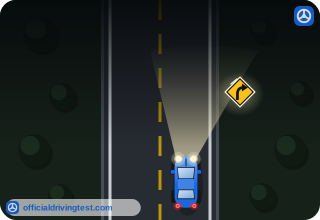
- They cut down the light you need to see clearly
- They make the glare from oncoming headlights much brighter
- They tire your eyes more quickly
- They are not allowed by law
Show answer
Correct answer: They cut down the light you need to see clearly
Dark sunglasses and tinted lenses reduce the light you need to see at night.
Source: Tennessee Comprehensive Driver License Manual (March 2025 printing), page 99 · Open this page in the manual (Manual page 99)
-
How can drivers who have a hearing impairment compensate?
- By keeping the radio volume high
- By driving only on interstate highways
- By using the horn more often
- By relying more on their vision
Show answer
Correct answer: By relying more on their vision
Drivers with a hearing impairment can adjust by relying more on their vision.
Source: Tennessee Comprehensive Driver License Manual (March 2025 printing), page 99 · Open this page in the manual (Manual page 99)
-
If you are not feeling well and need to go somewhere, what does the manual say to do?
- Drive, but only on slower roads
- Drive with the windows open
- Let someone else do the driving
- Take a short nap and then drive
Show answer
Correct answer: Let someone else do the driving
Even small health problems can affect driving, so let someone else drive.
Source: Tennessee Comprehensive Driver License Manual (March 2025 printing), page 99 · Open this page in the manual (Manual page 99)
-
In Tennessee, how long must a person with epilepsy who is under a doctor’s care be seizure free to drive?
- A minimum of six months
- A minimum of three months
- A minimum of one year
- A minimum of two years
Show answer
Correct answer: A minimum of six months
The manual says a person under a doctor’s care and seizure free for at least six months may drive in Tennessee.
Source: Tennessee Comprehensive Driver License Manual (March 2025 printing), page 99 · Open this page in the manual (Manual page 99)
-
When should diabetics who take insulin not drive?
- Only when they have eaten a large meal within the last two or three hours
- Whenever they have taken their insulin
- Only during daylight hours
- When there is any chance of an insulin reaction, blackout, convulsion or shock
Show answer
Correct answer: When there is any chance of an insulin reaction, blackout, convulsion or shock
Any chance of an insulin reaction, blackout, convulsion or shock makes driving unsafe.
Source: Tennessee Comprehensive Driver License Manual (March 2025 printing), page 99 · Open this page in the manual (Manual page 99)
-
Which of these could result in an insulin reaction while driving?
- Eating a light meal
- Skipping a meal
- Drinking water
- Taking a short walk
Show answer
Correct answer: Skipping a meal
Skipping a meal, taking the wrong amount of insulin or a dosage adjustment can cause such a situation.
Source: Tennessee Comprehensive Driver License Manual (March 2025 printing), page 99 · Open this page in the manual (Manual page 99)
-
What should a driver with diabetes have checked regularly?
- Their eyes, for possible night blindness or other vision problems
- Their hearing, for a loss of sensitivity to sirens and horns
- Their reflexes, for a slower braking response
- Their legs, for numbness that affects the pedals
Show answer
Correct answer: Their eyes, for possible night blindness or other vision problems
Diabetes can affect vision, so the manual says to have your eyes checked regularly.
Source: Tennessee Comprehensive Driver License Manual (March 2025 printing), page 99 · Open this page in the manual (Manual page 99)
-
Who should not get behind the wheel of a vehicle, according to the heart-condition guidance?
- Anyone who takes any prescription medicine
- Anyone who wears glasses
- People in danger of a blackout, fainting or a heart attack
- Anyone who has had a cold or a cough within the past year
Show answer
Correct answer: People in danger of a blackout, fainting or a heart attack
People with heart disease, high blood pressure or circulation problems, or in danger of a blackout, fainting or a heart attack, should not drive.
Source: Tennessee Comprehensive Driver License Manual (March 2025 printing), page 99 · Open this page in the manual (Manual page 99)
-
If you are being treated by a doctor for a heart condition, what should you do?
- Stop driving permanently
- Ask whether the condition could affect your driving
- Drive only on local roads during daylight hours
- Report the condition to the police
Show answer
Correct answer: Ask whether the condition could affect your driving
The manual advises asking your doctor whether the condition could affect your driving.
Source: Tennessee Comprehensive Driver License Manual (March 2025 printing), page 99 · Open this page in the manual (Manual page 99)