Rhode Island: Distractions, drowsiness and emotions
Distracted driving, cell phones and texting, drowsy driving, and how emotions affect the way you drive. Split into 5 shorter tests so you're not stuck in one long quiz.
Independent educational site · not affiliated with any government agency or DMV
Choose a part
Distractions, drowsiness and emotions — Part 1
Questions in this part include: “How does the Governor's message describe drowsy driving?”
StartDistractions, drowsiness and emotions — Part 2
Questions in this part include: “Which of these is listed as an additional cause of distraction inside the vehicle?”
StartDistractions, drowsiness and emotions — Part 3
Questions in this part include: “What are short bursts of sleep lasting only a few seconds called?”
StartDistractions, drowsiness and emotions — Part 4
Questions in this part include: “When driving a long trip with a companion driver, what should at least one passenger do?”
StartDistractions, drowsiness and emotions — Part 5
Questions in this part include: “Why does the manual say many traffic situations are frustrating?”
StartAll 97 Distractions, drowsiness and emotions questions with answers
Choose a part above to take a practice test, or study every question and answer here.
Show the questions and answersHide the questions
-
How does the Governor's message describe drowsy driving?
- Dangerous only when driving after midnight
- Extremely dangerous and to be avoided at all costs
- A minor risk compared with speeding on highways
- Safe on short trips if you drive slowly
Show answer
Correct answer: Extremely dangerous and to be avoided at all costs
The message says drowsy driving has proven to be extremely dangerous and should be avoided at all costs.
Source: Rhode Island Driver’s Manual (April 2024), page 2
-
According to the DOT Director's message, what does a good driver not do?
- Wear a seat belt on every trip
- Follow the posted speed limits
- Text and drive, or check electronic messages
- Respect pedestrians and other motorists
Show answer
Correct answer: Text and drive, or check electronic messages
The message says a good driver does not text and drive and does not check messages on an electronic device while driving.
Source: Rhode Island Driver’s Manual (April 2024), page 6
-
What occurs when a driver’s attention drifts away from driving without having been influenced by a situation, event, or person?
- Inattention
- Distraction
- Drowsiness
- Road rage
Show answer
Correct answer: Inattention
The manual calls this inattention. Distraction, by contrast, happens when a situation, event or person pulls the driver's focus away from driving.
Source: Rhode Island Driver’s Manual (April 2024), page 17
-
What does the manual say causes distraction?
- A driver’s attention drifts away from driving without any outside cause
- A driver has gone too long without sleep and cannot stay focused
- A situation, event or person draws a driver’s focus away from driving
- A driver keeps a safe distance from the vehicle ahead
Show answer
Correct answer: A situation, event or person draws a driver’s focus away from driving
Distraction happens when a situation, event or person draws the driver's focus away from driving.
Source: Rhode Island Driver’s Manual (April 2024), page 17
-
Which effect of distraction can cause a driver to completely fail to perceive an important traffic event?
- Improper action
- Delayed decision-making
- Mental distraction
- Slowed perception
Show answer
Correct answer: Slowed perception
Slowed perception means a distracted driver may notice an important traffic event late or not at all.
Source: Rhode Island Driver’s Manual (April 2024), page 17
-
Which effect of distraction can cause a driver to choose an action that is inappropriate for the situation at hand?
- Delayed decision-making
- Slowed perception
- Improper action
- Auditory distraction
Show answer
Correct answer: Delayed decision-making
The manual says distraction can delay the driver's decision-making or lead to an action that does not suit the situation.
Source: Rhode Island Driver’s Manual (April 2024), page 17
-
Which effect of distraction can lead a driver to make incorrect inputs to the steering, accelerator, or brakes?
- Slowed perception
- Delayed decision-making
- Improper action
- Visual distraction
Show answer
Correct answer: Improper action
Improper action is the effect in which a driver is slow to carry out a decision or makes wrong inputs to the controls.
Source: Rhode Island Driver’s Manual (April 2024), page 17
-
A distraction that causes a driver to take their hands off the wheel, such as reaching for an object, is which type?
- Mental
- Physical
- Visual
- Auditory
Show answer
Correct answer: Physical
The manual defines a physical distraction as one that takes the driver's hands off the wheel.
Source: Rhode Island Driver’s Manual (April 2024), page 17
-
Engaging in conversation with a passenger or thinking about something that happened during the day is which type of distraction?
- Physical
- Visual
- Auditory
- Mental
Show answer
Correct answer: Mental
Mental distractions take the driver's mind away from the road, and the manual gives passenger conversation as an example.
Source: Rhode Island Driver’s Manual (April 2024), page 17
-
Checking the navigation system is an example of which type of distraction?
- Visual
- Physical
- Mental
- Auditory
Show answer
Correct answer: Visual
Visual distractions make the driver take their eyes off the road, and the manual uses checking the navigation system as its example.
Source: Rhode Island Driver’s Manual (April 2024), page 17
-
Listening to music at a high volume, a remote conversation, or electronic communication device notifications are examples of which type of distraction?
- Physical
- Mental
- Auditory
- Visual
Show answer
Correct answer: Auditory
Auditory distractions are any noise that takes attention away from driving.
Source: Rhode Island Driver’s Manual (April 2024), page 17
-
What happens to the chance of a crash when physical, mental, visual, and auditory distractions are combined?
- The chance is no different from a single distraction
- There is an even greater chance a crash could happen
- The distractions cancel each other out
- The chance drops once the driver is used to them
Show answer
Correct answer: There is an even greater chance a crash could happen
Combining the distraction types makes a crash even more likely than any one type alone.
Source: Rhode Island Driver’s Manual (April 2024), page 17
-
Which of these does the manual give as an example of adjusting the radio/podcast apps?
- Switching on the headlights at dusk
- Adjusting the side mirrors slightly
- Selecting a song from an MP3 player
- Fastening the seat belt again
Show answer
Correct answer: Selecting a song from an MP3 player
Changing a CD, choosing a song from an MP3 player or podcast app, or changing the station all count as adjusting the audio.
Source: Rhode Island Driver’s Manual (April 2024), page 18
-
Who does the manual say is especially vulnerable to collisions when reaching for a loose object?
- Drivers over 65
- Teens
- Commercial drivers
- Motorcyclists
Show answer
Correct answer: Teens
The manual points to teens as especially vulnerable when reaching for a loose object, which often takes their eyes off the road.
Source: Rhode Island Driver’s Manual (April 2024), page 18
-
Dialing a phone number while driving may require a driver to do what?
- Remove one hand from the steering wheel and look down at the keypad
- Remove both hands from the steering wheel for several seconds
- Come to a complete stop before the call connects
- Take a foot off the brake pedal to reach the phone
Show answer
Correct answer: Remove one hand from the steering wheel and look down at the keypad
Dialing can take one hand off the wheel and the driver's eyes off the road to the keypad.
Source: Rhode Island Driver’s Manual (April 2024), page 18
-
What do drivers talking on wireless communication devices frequently do?
- Keep a steady speed but drift toward the shoulder
- Vary their speed and weave along the roadway
- Drive well below the speed limit
- Follow farther behind other vehicles
Show answer
Correct answer: Vary their speed and weave along the roadway
The manual says drivers on a wireless device often change speed and weave in the lane.
Source: Rhode Island Driver’s Manual (April 2024), page 18
-
What does the manual say research indicates about hand-held versus hands-free wireless communication devices?
- Hands-free devices carry much lower risk
- Hands-free devices carry a higher risk
- Hand-held phones are risky only for new drivers
- There is no difference in risk between the two modes
Show answer
Correct answer: There is no difference in risk between the two modes
Research cited in the manual finds no difference in risk, since both ways of using a phone can divert attention enough to cause a collision.
Source: Rhode Island Driver’s Manual (April 2024), page 18
-
Text messaging is the common term for sending short text messages of how many characters or fewer from cell phones?
- 160
- 100
- 140
- 250
Show answer
Correct answer: 160
The manual describes text messaging as sending short messages of 160 or fewer characters.
Source: Rhode Island Driver’s Manual (April 2024), page 18
-
Why does the manual say text messaging is riskier than talking on a cell phone?
- Text messages are received more slowly than email, so drivers keep checking
- Texting always takes place at higher speeds than phone calls
- It often requires the driver to both look at the phone and manipulate the keypad
- Drivers cannot hear the road while texting, unlike on a phone call
Show answer
Correct answer: It often requires the driver to both look at the phone and manipulate the keypad
Texting needs both the driver's eyes and hands, which makes it riskier than talking.
Source: Rhode Island Driver’s Manual (April 2024), page 18
-
According to the manual, using a map while driving can cause distraction and what else?
- A louder cabin because of the paper
- Significant reductions in visibility
- Slower engine response
- Lower fuel economy
Show answer
Correct answer: Significant reductions in visibility
The manual says using a map while driving can cause distraction as well as significant reductions in visibility.
Source: Rhode Island Driver’s Manual (April 2024), page 18
-
Which of these is listed as an additional cause of distraction inside the vehicle?
- Scanning ahead
- Checking blind spots
- Signaling a lane change
- Grooming
Show answer
Correct answer: Grooming
Eating, drinking, grooming, adjusting climate controls and attending to pets are all internal distractions.
Source: Rhode Island Driver’s Manual (April 2024), page 18
-
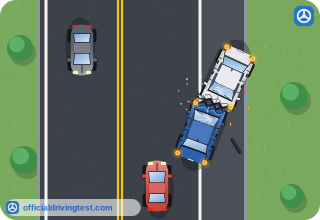
Reducing speed and diverting attention to a nearby crash scene is sometimes referred to as what?
- Accident gawking
- Road hypnosis
- Tunnel vision
- Highway fatigue
Show answer
Correct answer: Accident gawking
The manual uses the term "accident gawking" for slowing down and staring at a nearby crash scene.
Source: Rhode Island Driver’s Manual (April 2024), page 19
-
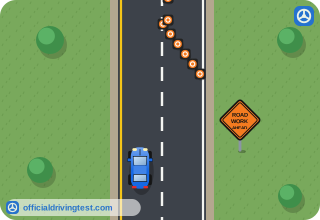
What may construction zones contain that can also divert a driver’s attention?
- Extra traffic signals at every corner
- Pedestrian-only crossings
- Unusual vehicles or machinery
- Unusually bright pavement markings
Show answer
Correct answer: Unusual vehicles or machinery
The manual notes that unusual vehicles or machinery in construction zones can draw a driver's attention away.
Source: Rhode Island Driver’s Manual (April 2024), page 19
-
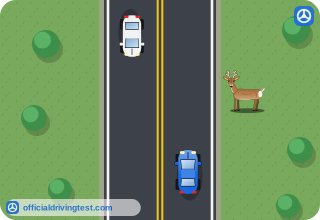
Even if there is no risk of colliding with an animal near the road, what may it still do?
- Reduce the driver’s need to slow down
- Draw a driver’s attention away from the roadway
- Improve the driver’s awareness of the road
- Warn the driver of an upcoming crossing
Show answer
Correct answer: Draw a driver’s attention away from the roadway
An animal can pull a driver's attention off the road even when no collision is likely.
Source: Rhode Island Driver’s Manual (April 2024), page 19
-
Which of these does the manual list as other roadway users that could attract a driver’s attention?
- Aircraft overhead
- Boats on a nearby river
- Hot-air balloons
- Horse-drawn buggies
Show answer
Correct answer: Horse-drawn buggies
The manual lists horse-drawn buggies, motorcycles, scooters, bicycles and pedestrians as other roadway users that may distract.
Source: Rhode Island Driver’s Manual (April 2024), page 19
-
According to the manual, what is the key to preventing becoming distracted?
- Prepare as much as possible before you drive
- Drive only on roads that you know very well
- Keep the radio turned off at all times
- Drive only during the daylight hours
Show answer
Correct answer: Prepare as much as possible before you drive
The manual says the key is to prepare ahead and deal with likely distractions before getting behind the wheel.
Source: Rhode Island Driver’s Manual (April 2024), page 19
-
Which of these is a technique the manual lists for preventing and managing distractions?
- Adjust the radio and climate control while merging onto a highway
- Read maps only while driving on straight roads
- Preset radio stations, podcast app playlist, and climate control
- Eat and drink only when stopped at red lights
Show answer
Correct answer: Preset radio stations, podcast app playlist, and climate control
Presetting the radio, playlist and climate control before driving is one of the listed techniques.
Source: Rhode Island Driver’s Manual (April 2024), page 19
-
What does the manual advise doing with items that may move around when the car is in motion?
- Keep them within reach on the seat
- Secure them
- Hold them in your lap
- Place them on the dashboard
Show answer
Correct answer: Secure them
Securing loose items before driving prevents them from becoming a distraction.
Source: Rhode Island Driver’s Manual (April 2024), page 19
-
Which of these does the manual say to avoid while driving?
- Using a mirror to check the traffic
- Using the turn signal to change lanes
- Keeping both hands on the steering wheel
- Smoking, eating, drinking, and reading
Show answer
Correct answer: Smoking, eating, drinking, and reading
The manual advises avoiding smoking, eating, drinking and reading while driving.
Source: Rhode Island Driver’s Manual (April 2024), page 19
-
What does the manual say to do when you need to attend to children or passengers?
- Pull safely off the road and out of traffic
- Reach back with one hand while keeping your eyes ahead
- Slow down by 10 mph and turn to look at them
- Stop in the nearest traffic lane with your hazard lights on
Show answer
Correct answer: Pull safely off the road and out of traffic
Attending to children or passengers should be done after pulling safely out of traffic.
Source: Rhode Island Driver’s Manual (April 2024), page 19
-
Who does the manual suggest you ask to help with activities that may be distracting?
- The driver behind you
- A police officer
- A passenger
- The next driver at a light
Show answer
Correct answer: A passenger
Asking a passenger to handle distracting tasks keeps the driver's attention on the road.
Source: Rhode Island Driver’s Manual (April 2024), page 19
-
If you find your mind wandering while driving, what should you do?
- Turn up the radio to stay alert
- Remind yourself to stay focused on the road
- Take both hands off the wheel to stretch
- Begin a conversation on the phone
Show answer
Correct answer: Remind yourself to stay focused on the road
The manual says to remind yourself to stay focused on the road when your mind wanders.
Source: Rhode Island Driver’s Manual (April 2024), page 19
-
What is the manual’s first tip about wireless communication devices?
- Use a device only for calls shorter than one minute
- Use a device only in light traffic
- Keep the device on your lap while driving
- Do not use a wireless communication device while driving
Show answer
Correct answer: Do not use a wireless communication device while driving
The first tip is to avoid using a wireless communication device at all while driving.
Source: Rhode Island Driver’s Manual (April 2024), page 19
-
When does the manual say you should use message-taking functions and return calls?
- When you are stopped at a safe location
- When traffic is light
- When you are below the speed limit
- When you are driving on a highway
Show answer
Correct answer: When you are stopped at a safe location
Calls should be returned only after stopping at a safe location.
Source: Rhode Island Driver’s Manual (April 2024), page 19
-
When does the manual say to limit casual conversations on a wireless communication device?
- To times when you are driving on straight roads
- To times when traffic is light
- To times when you are not operating a motor vehicle
- To times when you are using a headset
Show answer
Correct answer: To times when you are not operating a motor vehicle
The manual says to use the device only when necessary and keep casual conversations for when you are not driving.
Source: Rhode Island Driver’s Manual (April 2024), page 20
-
In which conditions is it especially important to keep a necessary phone conversation short?
- Light traffic in daylight
- Inclement weather or heavy traffic
- Straight, empty roads
- While stopped in a parking lot
Show answer
Correct answer: Inclement weather or heavy traffic
The manual says to plan the call in advance and keep it short, especially in hazardous conditions such as bad weather or heavy traffic.
Source: Rhode Island Driver’s Manual (April 2024), page 20
-
What does the manual say to do before continuing an emotional phone conversation?
- Switch to a headset
- Slow down to a lower speed
- Ask passengers to stay silent
- Pull off the road to a safe spot
Show answer
Correct answer: Pull off the road to a safe spot
Emotions can affect safe driving, so the manual says to pull off the road to a safe spot before such a conversation continues.
Source: Rhode Island Driver’s Manual (April 2024), page 20
-
Who does the manual suggest could place a call for you and, if possible, speak in your place?
- A passenger in the car
- The driver of the next car
- A pedestrian
- Nobody, a call must always be made by the driver
Show answer
Correct answer: A passenger in the car
Asking a passenger to place the call and speak for you keeps the driver's attention on driving.
Source: Rhode Island Driver’s Manual (April 2024), page 20
-
Why does the manual say to secure your wireless communication device in the car?
- So it stays within easy reach of the driver’s hand
- So its battery stays charged during the trip
- So it does not become a projectile object in a crash
- So it can be used hands-free more easily
Show answer
Correct answer: So it does not become a projectile object in a crash
An unsecured device can fly around the car in a crash.
Source: Rhode Island Driver’s Manual (April 2024), page 20
-
According to the manual, drowsiness can affect what?
- Only the driver’s reaction time
- Every process involved in safe driving
- Only the driver’s ability to see signs and lights
- Only the driver’s judgment of speed
Show answer
Correct answer: Every process involved in safe driving
The manual says drowsiness can affect every process involved in safe driving, from seeing and processing to deciding.
Source: Rhode Island Driver’s Manual (April 2024), page 20
-
What are short bursts of sleep lasting only a few seconds called?
- Sleep apnea
- Narcolepsy
- Circadian lows
- Microsleeps
Show answer
Correct answer: Microsleeps
The manual calls short bursts of sleep lasting a few seconds microsleeps.
Source: Rhode Island Driver’s Manual (April 2024), page 20
-
Drivers may underestimate their drowsiness and stay behind the wheel instead of stopping for what length of rest?
- 15 to 20 minutes
- 2 to 5 minutes
- 30 to 45 minutes
- 1 hour
Show answer
Correct answer: 15 to 20 minutes
The manual, citing the AAA Foundation for Traffic Safety, says drivers skip a rest of about 15 to 20 minutes.
Source: Rhode Island Driver’s Manual (April 2024), page 20
-
What does the manual say about driving while drowsy and continued driving?
- It is a mild form of impairment that improves after the first hour of driving
- It improves once the windows are opened and fresh air comes in
- It is a dangerous form of impairment that does not improve with continued driving
- It improves if the radio is turned up and the driver sings along
Show answer
Correct answer: It is a dangerous form of impairment that does not improve with continued driving
Drowsiness does not get better by driving on; rest is what helps.
Source: Rhode Island Driver’s Manual (April 2024), page 20
-
Sleep apnea is described in the manual as what?
- The inability to remain awake, even during the daytime
- Stoppage of breathing due to soft-tissue blockage of the airway
- Short bursts of sleep that last only a few seconds at a time
- The pattern of energy throughout a 24-hour period
Show answer
Correct answer: Stoppage of breathing due to soft-tissue blockage of the airway
The manual defines sleep apnea as stoppage of breathing caused by soft-tissue blockage of the airway.
Source: Rhode Island Driver’s Manual (April 2024), page 20
-
Narcolepsy is described in the manual as what?
- Stoppage of breathing during sleep
- A short burst of sleep lasting a few seconds
- A pattern of low energy in the afternoon
- The inability to remain awake
Show answer
Correct answer: The inability to remain awake
The manual defines narcolepsy as the inability to remain awake.
Source: Rhode Island Driver’s Manual (April 2024), page 20
-
If you often have difficulty sleeping at night, experience frequent daytime drowsiness, or snore every night, what does the manual say to do?
- Consult your physician
- Limit yourself to short trips
- Drive only at night
- Wait for the symptoms to pass
Show answer
Correct answer: Consult your physician
These can be signs of a sleep disorder, and the manual says to consult your physician.
Source: Rhode Island Driver’s Manual (April 2024), page 21
-
Most people experience “lows” in alertness between midnight and 6 a.m. and again between approximately what times?
- 8 a.m. and 11 a.m.
- Noon and 2 p.m.
- 2 p.m. and 5 p.m.
- 6 p.m. and 9 p.m.
Show answer
Correct answer: 2 p.m. and 5 p.m.
The manual says most people have lows from midnight to 6 a.m. and from about 2 p.m. to 5 p.m.
Source: Rhode Island Driver’s Manual (April 2024), page 21
-
What is the body’s “circadian rhythm”?
- A short burst of sleep lasting a few seconds
- The pattern of energy throughout a 24-hour period
- The inability to remain awake
- The tiredness felt after a large meal
Show answer
Correct answer: The pattern of energy throughout a 24-hour period
The manual defines it as the pattern of energy through a 24-hour period.
Source: Rhode Island Driver’s Manual (April 2024), page 21
-
Which driver does the manual describe as more likely to fall asleep while driving?
- One who slept a full night and is on a short local trip
- One who drives mid-morning after a full night's sleep
- One who works late-night or early-morning shifts
- One who shares the driving with a companion driver
Show answer
Correct answer: One who works late-night or early-morning shifts
Shift workers are at increased risk of falling asleep at the wheel.
Source: Rhode Island Driver’s Manual (April 2024), page 21
-
Rotating-shift workers and people working more than how many hours a week need to be particularly careful about drowsy driving?
- 40 hours
- 60 hours
- 50 hours
- 80 hours
Show answer
Correct answer: 60 hours
The manual says rotating-shift workers and people working over 60 hours a week need to be particularly careful.
Source: Rhode Island Driver’s Manual (April 2024), page 21
-
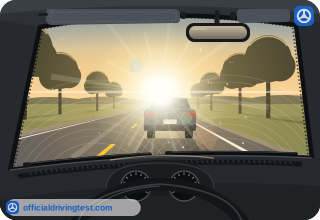
Sun glare is a major factor in what, which can also contribute to fatigue?
- Hearing loss
- Muscle strain
- Motion sickness
- Eyestrain
Show answer
Correct answer: Eyestrain
The manual says sun glare is a major factor in eyestrain and can contribute to fatigue.
Source: Rhode Island Driver’s Manual (April 2024), page 21
-
Which of these does the manual list as something that can make a driver more likely to become drowsy?
- Overeating
- Wearing sunglasses
- Taking periodic breaks
- Sleeping eight hours the night before
Show answer
Correct answer: Overeating
Overeating, drinking alcohol, drug use or a warm passenger compartment can all make a driver drowsier.
Source: Rhode Island Driver’s Manual (April 2024), page 21
-
According to the manual, on which kind of road is a driver much more likely to doze off?
- A winding road with many curves, hills and signals
- A busy street with frequent signals
- An empty, straight road with no signals or billboards
- A road lined with billboards and shops
Show answer
Correct answer: An empty, straight road with no signals or billboards
An empty, straight road offers little stimulation to keep a driver mentally alert.
Source: Rhode Island Driver’s Manual (April 2024), page 21
-
What does the manual say about warning signs before falling asleep at the wheel?
- Drowsiness always gives several minutes of warning
- There may be no warning before falling asleep
- A driver always yawns before falling asleep
- Only drivers over 30 miss the warning signs
Show answer
Correct answer: There may be no warning before falling asleep
The manual notes that half of drivers who crashed after falling asleep detected no signs of drowsiness.
Source: Rhode Island Driver’s Manual (April 2024), page 21
-
Which of these physical signs is listed as a warning sign of drowsy driving?
- Feeling unusually energetic
- Gripping the wheel very tightly
- Seeing objects more sharply than usual
- Yawning repeatedly or rubbing your eyes
Show answer
Correct answer: Yawning repeatedly or rubbing your eyes
Repeated yawning and eye rubbing are warning signs of drowsiness.
Source: Rhode Island Driver’s Manual (April 2024), page 21
-
Which of these is a warning sign of drowsy driving?
- Trouble remembering the last few miles driven
- Noticing every sign along the road ahead
- Feeling calm and relaxed after a meal
- Passing slower vehicles more often
Show answer
Correct answer: Trouble remembering the last few miles driven
Not remembering the last few miles, or missing exits or signs, is a drowsiness warning sign.
Source: Rhode Island Driver’s Manual (April 2024), page 21
-
Which of these driving behaviors is listed as a warning sign of drowsy driving?
- Staying exactly centered in the lane and following at a safe distance
- Checking the mirrors every few seconds
- Drifting from your lane, following too closely, or hitting a shoulder rumble strip
- Keeping a longer following distance than usual
Show answer
Correct answer: Drifting from your lane, following too closely, or hitting a shoulder rumble strip
Lane drifting, following too closely and hitting a rumble strip are signs of drowsiness.
Source: Rhode Island Driver’s Manual (April 2024), page 21
-
How many hours of sleep per night do sleep experts recommend for adults?
- 4 to 5 hours
- 7 to 9 hours
- 5 to 6 hours
- 10 to 12 hours
Show answer
Correct answer: 7 to 9 hours
The manual says experts recommend 7 to 9 hours of sleep per night for adults.
Source: Rhode Island Driver’s Manual (April 2024), page 21
-
How many hours of sleep per night do sleep experts recommend for teens?
- 4 to 6 hours
- 5 to 7 hours
- 11 to 12 hours
- 8 to 10 hours
Show answer
Correct answer: 8 to 10 hours
The manual says experts recommend 8 to 10 hours of sleep per night for teens.
Source: Rhode Island Driver’s Manual (April 2024), page 21
-
When driving a long trip with a companion driver, what should at least one passenger do?
- Stay awake to talk to the driver
- Sleep so they are rested to drive later
- Keep the radio loud
- Watch the road ahead in silence
Show answer
Correct answer: Stay awake to talk to the driver
The manual says at least one passenger should stay awake and talk to the driver.
Source: Rhode Island Driver’s Manual (April 2024), page 21
-
What kind of medications does the manual say to avoid before driving to help prevent drowsiness?
- Only prescribed medications, whatever their effects
- Only over-the-counter medications of any kind
- Those that cause drowsiness or otherwise impair performance
- Only medications that contain caffeine
Show answer
Correct answer: Those that cause drowsiness or otherwise impair performance
The manual says to avoid both over-the-counter and prescribed medications that cause drowsiness or impair performance.
Source: Rhode Island Driver’s Manual (April 2024), page 21
-
What kind of foods does the manual say to avoid to help maintain alertness while driving?
- Cold foods
- Heavy foods
- Fresh fruit
- Spicy foods
Show answer
Correct answer: Heavy foods
Avoiding heavy foods is one of the alertness tips on the road.
Source: Rhode Island Driver’s Manual (April 2024), page 22
-
A good rule of thumb for periodic breaks on long trips is to stop how often?
- Every 50 miles or every hour
- Every 200 miles or every three hours
- Every 300 miles or every four hours
- Every 100 miles or every two hours
Show answer
Correct answer: Every 100 miles or every two hours
The manual's rule of thumb is a break every 100 miles or every two hours.
Source: Rhode Island Driver’s Manual (April 2024), page 22
-
On long trips, you should stop for at least how long every two hours or every 100 miles?
- 10 minutes
- 2 minutes
- 1 hour
- 90 minutes
Show answer
Correct answer: 10 minutes
The manual says to stop for at least 10 minutes every two hours or every 100 miles.
Source: Rhode Island Driver’s Manual (April 2024), page 22
-
What does the manual advise about how far to drive on a long trip?
- Never drive more than 300 miles in one day
- Keep going until you feel tired, then stop at the next available exit
- Determine a reasonable distance in advance and stop driving when you reach it
- Drive as far as possible before the first break
Show answer
Correct answer: Determine a reasonable distance in advance and stop driving when you reach it
There is no fixed rule, so the manual says to choose a reasonable distance beforehand and stop when you get there.
Source: Rhode Island Driver’s Manual (April 2024), page 22
-
According to the manual, what is the only recovery strategy to counter drowsiness?
- Caffeine
- Resting
- Loud music
- Fresh air
Show answer
Correct answer: Resting
The manual says resting is by far the most effective way, and the only recovery strategy, to counter drowsiness.
Source: Rhode Island Driver’s Manual (April 2024), page 22
-
Which of these will NOT help prevent drowsiness longer than just a few minutes?
- Getting adequate sleep before driving
- Stopping to rest
- Planning to drive with a companion driver
- Opening the windows or sunroof
Show answer
Correct answer: Opening the windows or sunroof
The manual lists opening the windows or sunroof among actions that help only for a few minutes.
Source: Rhode Island Driver’s Manual (April 2024), page 22
-
What does the manual say about sleeping in a vehicle at the side of the road?
- It is not safe
- It is safe if the engine is running
- It is safe during daylight hours
- It is safe for up to two hours
Show answer
Correct answer: It is not safe
The manual states that it is not safe to sleep in a vehicle at the side of the road.
Source: Rhode Island Driver’s Manual (April 2024), page 22
-
If you must stop along the roadway to rest, where does the manual say to stop?
- On a dark, quiet part of the shoulder
- In the lane closest to the shoulder
- At a roadside area where security is present
- Just past a sharp curve
Show answer
Correct answer: At a roadside area where security is present
The manual says to use a roadside area with security, or else get as far off the highway as possible.
Source: Rhode Island Driver’s Manual (April 2024), page 22
-
If you must stop to rest after dark, where does the manual say to stop?
- On an unlit country road
- In a populated, lighted area
- Beside an empty field
- Under a bridge
Show answer
Correct answer: In a populated, lighted area
After dark the manual says to find a populated, lighted area.
Source: Rhode Island Driver’s Manual (April 2024), page 22
-
When you stop along the roadway to rest, what does the manual say to do about the windows?
- Open them fully so that you can hear any approaching traffic and see around you
- Keep them completely open for fresh air
- Roll them down only when a stranger approaches
- Give yourself a little outside air but keep them closed enough to prevent entry from outside
Show answer
Correct answer: Give yourself a little outside air but keep them closed enough to prevent entry from outside
A little air is fine, but the windows must stay closed enough that nobody can enter from outside.
Source: Rhode Island Driver’s Manual (April 2024), page 22
-
When you stop along the roadway to rest, what should you do with the doors and the engine?
- Lock all doors and turn off your engine
- Leave the engine running and the doors unlocked
- Lock the doors but keep the engine running
- Leave the doors unlocked so help can reach you
Show answer
Correct answer: Lock all doors and turn off your engine
The manual says to lock all doors and turn the engine off while resting.
Source: Rhode Island Driver’s Manual (April 2024), page 22
-
When you stop along the roadway to rest, what should you do with your lights and other electrical equipment?
- Turn on the high beams and turn off the parking lights
- Leave all lights and the radio on so you are seen
- Turn on parking lights and turn off other electrical equipment
- Turn off every light so no one notices you
Show answer
Correct answer: Turn on parking lights and turn off other electrical equipment
The manual says to turn on parking lights and turn off other electrical equipment.
Source: Rhode Island Driver’s Manual (April 2024), page 22
-
After you rest, what does the manual say to do if safe, to be sure you are completely awake before driving again?
- Drink a caffeinated beverage and drive on
- Get out of the vehicle and walk a few minutes
- Turn up the air conditioning for a few minutes
- Play loud music for the first few miles
Show answer
Correct answer: Get out of the vehicle and walk a few minutes
If it is safe, getting out and walking a few minutes helps make sure you are fully awake.
Source: Rhode Island Driver’s Manual (April 2024), page 22
-
Sleeping for more than 20 minutes can make you groggy for at least how long after awakening?
- One minute
- Thirty minutes
- Two hours
- Five minutes
Show answer
Correct answer: Five minutes
The manual says sleeping over 20 minutes can leave you groggy for at least five minutes after waking.
Source: Rhode Island Driver’s Manual (April 2024), page 22
-
According to the manual, what do studies show is the most critical factor in driver performance, regardless of training?
- An individual’s self-awareness and ability to interact with other people
- The number of years of driving experience behind the wheel
- The type of vehicle the driver owns
- The amount of formal driver training the person has received
Show answer
Correct answer: An individual’s self-awareness and ability to interact with other people
Studies cited in the manual put self-awareness and the ability to interact with others ahead of training.
Source: Rhode Island Driver’s Manual (April 2024), page 22
-
What may an upset or emotionally charged driver do at a traffic light or stop sign?
- Stop well before it and wait too long
- Slow to a crawl as it approaches
- Look directly at it and drive through it
- Stop and rest until the feeling passes
Show answer
Correct answer: Look directly at it and drive through it
Strong emotions can lead a driver to look right at a light or sign and still drive through it.
Source: Rhode Island Driver’s Manual (April 2024), page 23
-
Which emotions may affect driving safety to an even greater degree than positive emotions such as feeling overly happy and excited?
- Calm and relaxation
- Anger and frustration
- Curiosity and surprise
- Pride and satisfaction
Show answer
Correct answer: Anger and frustration
The manual says negative emotions such as anger and frustration may affect driving safety even more than positive ones.
Source: Rhode Island Driver’s Manual (April 2024), page 23
-
Why does the manual say many traffic situations are frustrating?
- Other drivers deliberately block us
- Roads are too narrow
- Speed limits are set too low
- We fail to allow enough time for trips
Show answer
Correct answer: We fail to allow enough time for trips
The manual says failing to allow enough time for trips makes many situations frustrating, so planning helps.
Source: Rhode Island Driver’s Manual (April 2024), page 23
-
The more you drive, the more you will realize what about other drivers?
- All drivers make mistakes
- Most drivers never make mistakes
- Mistakes are made only by new drivers
- Mistakes are always made on purpose
Show answer
Correct answer: All drivers make mistakes
The manual tells drivers to expect other drivers to make mistakes.
Source: Rhode Island Driver’s Manual (April 2024), page 23
-
What does the manual say can be spread among drivers just as easily as frustrations and anger?
- Fatigue and boredom
- Impatience and speed
- Smiles and courtesy
- Caution and delay
Show answer
Correct answer: Smiles and courtesy
Emotions are contagious, and the manual says smiles and courtesy spread as easily as anger does.
Source: Rhode Island Driver’s Manual (April 2024), page 23
-
What should you remember about other drivers’ goals?
- Other drivers share your goals and travel at your pace
- Other drivers do not know your goals or have anything against you
- Other drivers want to delay you on purpose to annoy you
- Other drivers always know when you are in a hurry
Show answer
Correct answer: Other drivers do not know your goals or have anything against you
The manual says other drivers do not know your goals or have anything against you.
Source: Rhode Island Driver’s Manual (April 2024), page 24
-
If you must drive when emotionally upset, what does the manual say to wait for?
- The heavy traffic to clear completely
- Nightfall
- A passenger to calm down
- The strength of the emotion to fade
Show answer
Correct answer: The strength of the emotion to fade
Most emotional upsets are temporary, so waiting for the emotion to fade helps you drive safely and courteously.
Source: Rhode Island Driver’s Manual (April 2024), page 24
-
When an upset occurs while you are driving, what does the manual say to do?
- Find a place to stop and take a short walk and a few deep breaths
- Keep driving at a steady speed until the feeling passes
- Find a place to stop and play loud music
- Speed up to reach your destination sooner
Show answer
Correct answer: Find a place to stop and take a short walk and a few deep breaths
The manual says to stop somewhere, take a short walk and take a few deep breaths.
Source: Rhode Island Driver’s Manual (April 2024), page 24
-
How long may emotional upsets such as grief and anxiety last?
- A few minutes
- About one hour
- Several days
- One afternoon
Show answer
Correct answer: Several days
The manual says such upsets may last several days, so it may be wise to have another person drive.
Source: Rhode Island Driver’s Manual (April 2024), page 24
-
May a driver under the age of 18 use a hands-free device or speakerphone while operating a motor vehicle?
- Yes, if the call is made with a hands-free device
- Yes, if only the speakerphone is used for the call
- Yes, if a licensed adult is riding in the vehicle
- No, the ban includes hands-free devices and speakerphones
Show answer
Correct answer: No, the ban includes hands-free devices and speakerphones
The ban for drivers under 18 covers hands-free devices and speakerphones too.
Source: Rhode Island Driver’s Manual (April 2024), page 36
-
When is a driver under 18 permitted to use a cell phone?
- Only in an emergency
- Only when the vehicle is in a travel lane with no traffic
- Only to place a call, not to take one
- Only when using a speakerphone
Show answer
Correct answer: Only in an emergency
The only time a minor is permitted to use a cell phone is in an emergency.
Source: Rhode Island Driver’s Manual (April 2024), page 36
-
If you are under 18 and have an emergency, what does the manual say to do?
- Keep driving and call 911 on speakerphone
- Text 911 while driving carefully
- Pull to a safe location and call 911
- Ask a friend to call after the trip
Show answer
Correct answer: Pull to a safe location and call 911
You should pull to a safe location and call 911.
Source: Rhode Island Driver’s Manual (April 2024), page 36
-
Which of these is a precaution the manual lists if you do use a cellular phone?
- Hold the phone at eye level while you dial
- Have a passenger place the call or dial when stopped
- Place calls only while you are on a freeway
- Keep the phone in your lap so it is within reach
Show answer
Correct answer: Have a passenger place the call or dial when stopped
One listed precaution is to have a passenger place the call or dial the device while stopped.
Source: Rhode Island Driver’s Manual (April 2024), page 36
-
What does the manual say about hands-free wireless devices?
- Hands-free devices remove the risk of using a phone
- Hands-free devices are riskier than hand-held phones
- Hands-free devices are forbidden for all drivers
- Hands free is not risk free
Show answer
Correct answer: Hands free is not risk free
The manual warns that hands free is not risk free.
Source: Rhode Island Driver’s Manual (April 2024), page 36
-
Who is prohibited from using a wireless handset to compose, read, or send a text message while operating a motor vehicle?
- Drivers of every age
- Only drivers under 18
- Only drivers under 21
- Only drivers with a learner permit
Show answer
Correct answer: Drivers of every age
The manual says that no matter the age, drivers may not use a wireless handset to text.
Source: Rhode Island Driver’s Manual (April 2024), page 37
-
What is the fine for a first offense of a driver under 18 using a cellular phone while driving?
- $50
- $75
- $100
- $125
Show answer
Correct answer: $100
The first offense carries a $100 fine.
Source: Rhode Island Driver’s Manual (April 2024), page 37
-
What is the penalty for a third and subsequent offense of a driver under 18 using a cellular phone while driving?
- A $250 fine and loss of license for 30 days
- A $250 fine and loss of license until 18 years of age
- A $150 fine and loss of license until 21 years of age
- A $500 fine and loss of license for one year
Show answer
Correct answer: A $250 fine and loss of license until 18 years of age
A third or later offense brings a $250 fine and loss of license until age 18.
Source: Rhode Island Driver’s Manual (April 2024), page 37
-
What is the fine for a second texting offense while operating a motor vehicle?
- $100
- $200
- $300
- $150
Show answer
Correct answer: $150
A second texting offense carries a $150 fine.
Source: Rhode Island Driver’s Manual (April 2024), page 37
-
What is the fine for a third and subsequent texting offense while operating a motor vehicle?
- $250
- $150
- $350
- $500
Show answer
Correct answer: $250
Third and later texting offenses carry a $250 fine.
Source: Rhode Island Driver’s Manual (April 2024), page 37
-
Under the list of laws you must know, what is the rule on wearing earphones or headsets while operating a motor vehicle on a public highway?
- It is not allowed
- It is allowed if the volume is low
- It is allowed if only one ear is covered
- It is allowed on roads with no traffic
Show answer
Correct answer: It is not allowed
Drivers in Rhode Island may not operate a motor vehicle on a public highway while wearing earphones or headsets.
Source: Rhode Island Driver’s Manual (April 2024), page 58
-
Which of these is listed as a distracting activity you should refrain from in a work zone?
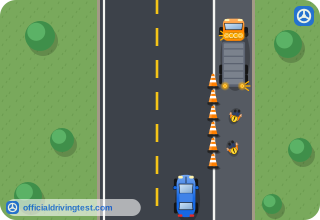
- Changing radio stations
- Watching for workers and equipment
- Reading the posted speed limit sign
- Looking for flaggers' hand signals
Show answer
Correct answer: Changing radio stations
The manual tells drivers in work zones to refrain from distractions such as changing radio stations.
Source: Rhode Island Driver’s Manual (April 2024), page 73