Oregon: Emergencies
Avoiding collisions, skids and hydroplaning, vehicle equipment failures, emergency parking and what to do after a crash. Split into 3 shorter tests so you're not stuck in one long quiz.
Independent educational site · not affiliated with any government agency or DMV
Choose a part
Emergencies — Part 1
Questions in this part include: “If your parked vehicle cannot be seen from 200 feet in each direction, what must you do?”
StartEmergencies — Part 2
Questions in this part include: “If your brakes stop working, what may build up enough pressure to get them working again?”
StartEmergencies — Part 3
Questions in this part include: “If your brakes fail, how can you warn others that you are out of control?”
StartAll 49 Emergencies questions with answers
Choose a part above to take a practice test, or study every question and answer here.
Show the questions and answersHide the questions
-
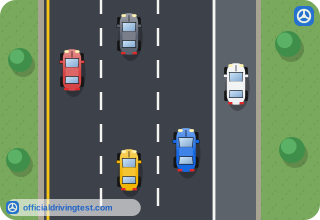
When may you temporarily stop or park where parking is usually not allowed?
- If you plan to return to the vehicle within about an hour
- If you leave a note with your name and number on the windshield
- If other vehicles are already stopped at the same spot ahead of you
- If your vehicle breaks down, you have no choice, and it creates no hazard
Show answer
Correct answer: If your vehicle breaks down, you have no choice, and it creates no hazard
After a breakdown, with no choice, you may temporarily stop or park where it is usually not allowed, as long as the vehicle creates no hazard.
Source: Oregon Driver Manual (2026-2027), page 71 · Open this page in the manual (Manual page 71)
-
If you must stop or pull off the road, what should you turn on to warn other drivers?
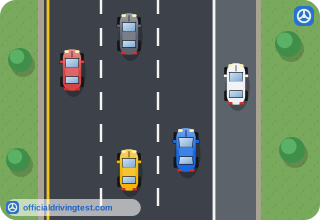
- Your hazard lights
- Your high beams
- Your parking lights only
- Your turn signal
Show answer
Correct answer: Your hazard lights
The manual says to turn on your hazard lights to warn other drivers.
Source: Oregon Driver Manual (2026-2027), page 71 · Open this page in the manual (Manual page 71)
-
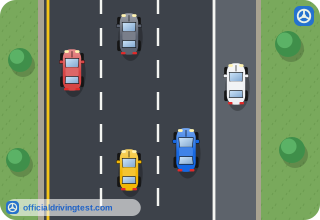
When may you park a vehicle on the shoulder of a highway if necessary?
- If you stay inside the vehicle
- If you will be stopped for less than ten minutes
- If passing traffic has enough room to get by
- If other drivers can see your brake lights
Show answer
Correct answer: If passing traffic has enough room to get by
You may park on the shoulder of a highway if necessary and passing traffic has enough room to get by.
Source: Oregon Driver Manual (2026-2027), page 71 · Open this page in the manual (Manual page 71)
-
If your parked vehicle cannot be seen from 200 feet in each direction, what must you do?
- Wait for approaching drivers to see it
- Warn approaching traffic
- Move it to the center of the road
- Turn on your high beams only
Show answer
Correct answer: Warn approaching traffic
If your vehicle cannot be seen from 200 feet in each direction, you need to warn approaching traffic.
Source: Oregon Driver Manual (2026-2027), page 71 · Open this page in the manual (Manual page 71)
-
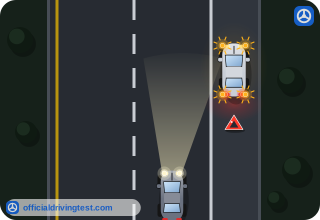
How far from your vehicle in each direction should flags, flares, signs, signals or flaggers be placed to warn approaching traffic?
- At least 100 feet
- At least 300 feet
- At least 400 feet
- At least 200 feet
Show answer
Correct answer: At least 200 feet
Warning devices are placed at least 200 feet from your vehicle in each direction.
Source: Oregon Driver Manual (2026-2027), page 71 · Open this page in the manual (Manual page 71)
-
What should you do if you must leave your vehicle unattended?
- Turn off the engine, remove the key, set the brakes, and turn on your hazard lights
- Leave the engine running, set the brakes, and turn on your hazard lights
- Turn off the engine, leave the key in the ignition, and turn off all lights
- Turn off the engine, remove the key, and lock the doors without setting the brakes
Show answer
Correct answer: Turn off the engine, remove the key, set the brakes, and turn on your hazard lights
You turn off the engine, remove the key, set the brakes, and turn on your hazard lights.
Source: Oregon Driver Manual (2026-2027), page 71 · Open this page in the manual (Manual page 71)
-
What happens if a police officer finds a vehicle parked where it is not allowed or where it creates a hazard?
- The officer must wait for the owner to return before any action is taken
- The vehicle may be removed, and the state pays all of the towing costs
- The officer may have it removed, and you are responsible for towing and storage costs
- The officer may only issue a warning to you for the first violation
Show answer
Correct answer: The officer may have it removed, and you are responsible for towing and storage costs
The officer may have the vehicle removed, and you are responsible for the towing and storage costs.
Source: Oregon Driver Manual (2026-2027), page 71 · Open this page in the manual (Manual page 71)
-
When might speeding up be the best way to avoid a collision?
- When about to be hit from the side or behind and there is room ahead
- When a vehicle is stopped in the road a short way ahead of you
- When an oncoming vehicle is drifting into your lane at night
- When you are approaching a sharp curve on a wet road
Show answer
Correct answer: When about to be hit from the side or behind and there is room ahead
Speeding up can be best when another vehicle is about to hit you from the side or from behind and there is room ahead of you to get out of danger.
Source: Oregon Driver Manual (2026-2027), page 74 · Open this page in the manual (Manual page 74)
-
In most cases, which can you do more quickly to avoid a collision?
- Stop the vehicle
- Both take the same amount of time
- Turn the vehicle
- Back the vehicle up
Show answer
Correct answer: Turn the vehicle
The manual says that in most cases you can turn the vehicle more quickly than you can stop it.
Source: Oregon Driver Manual (2026-2027), page 74 · Open this page in the manual (Manual page 74)
-
What should you do if you will not be able to stop in time to avoid a collision?
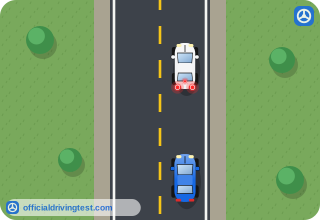
- Turn toward it
- Turn away from it
- Take your hands off the wheel
- Shift into a lower gear
Show answer
Correct answer: Turn away from it
The manual says to turn away from the collision if you will not stop in time.
Source: Oregon Driver Manual (2026-2027), page 74 · Open this page in the manual (Manual page 74)
-
What does scanning the area ahead help you identify?
- Hidden speed limit signs
- The next place to park
- Vehicles that will turn left
- Potential escape routes
Show answer
Correct answer: Potential escape routes
Scanning the area ahead helps you identify potential escape routes.
Source: Oregon Driver Manual (2026-2027), page 74 · Open this page in the manual (Manual page 74)
-
When should you apply the brakes to avoid a collision?
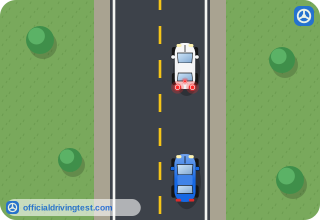
- When you have enough distance to stop
- Only when the other driver sounds a horn
- Only when your speed is above 55 mph
- Only when the road is dry
Show answer
Correct answer: When you have enough distance to stop
The manual says to apply the brakes if you have enough distance to stop.
Source: Oregon Driver Manual (2026-2027), page 74 · Open this page in the manual (Manual page 74)
-
If you drive off the road, what should you do first?
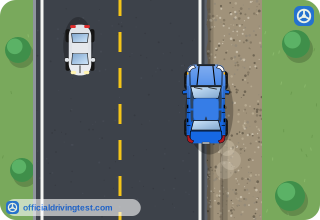
- Brake as hard as you can until the vehicle stops
- Turn sharply back toward the road right away
- Slow down until you can get back on the road safely
- Accelerate to get back on the road quickly
Show answer
Correct answer: Slow down until you can get back on the road safely
The manual says not to panic or brake hard, but to slow down until you can get back on the road safely.
Source: Oregon Driver Manual (2026-2027), page 75 · Open this page in the manual (Manual page 75)
-
If you drive off the road, how should you hold the steering wheel?
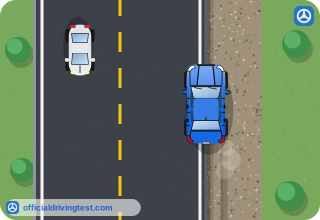
- Hold it loosely and let the vehicle drift back on its own
- Grip it firmly and keep the vehicle on a straight course
- Turn it sharply toward the road as fast as you can
- Turn it back and forth quickly to regain your grip
Show answer
Correct answer: Grip it firmly and keep the vehicle on a straight course
The manual says to grip the steering wheel firmly and keep your vehicle on a straight course.
Source: Oregon Driver Manual (2026-2027), page 75 · Open this page in the manual (Manual page 75)
-
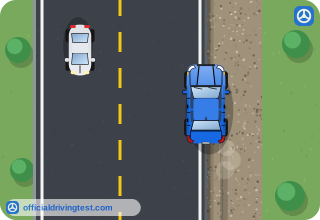
How far should you turn the front wheels to get back on the road after driving off it?
- As sharply as possible to return at once
- Fully to the left
- Not at all until the vehicle stops
- Just enough to get back on the road
Show answer
Correct answer: Just enough to get back on the road
Turning the wheels just enough avoids a sharp turn that could send you across the road into oncoming traffic.
Source: Oregon Driver Manual (2026-2027), page 75 · Open this page in the manual (Manual page 75)
-
What should you do if an oncoming vehicle is drifting into your lane?
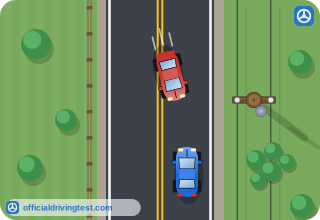
- Pull right as far as possible, slow down, and warn with your horn or lights
- Move into the opposing lane and speed up to pass it quickly
- Speed up and stay in the center of your lane, flashing your lights
- Stop in your lane, set the parking brake, and wait for it to pass
Show answer
Correct answer: Pull right as far as possible, slow down, and warn with your horn or lights
The manual says to pull to the right as far as possible, slow down, and warn the other driver with your horn or lights.
Source: Oregon Driver Manual (2026-2027), page 75 · Open this page in the manual (Manual page 75)
-
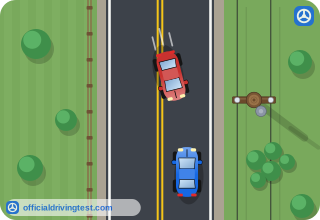
Why should you never pull into the opposing lane when an oncoming vehicle drifts toward you?
- The opposing lane is always narrower than your own lane
- Your headlights cannot light up the opposing lane well
- The oncoming driver may turn back sharply into that lane
- The opposing lane is always blocked by other vehicles
Show answer
Correct answer: The oncoming driver may turn back sharply into that lane
The oncoming driver may turn back sharply into that lane.
Source: Oregon Driver Manual (2026-2027), page 75 · Open this page in the manual (Manual page 75)
-
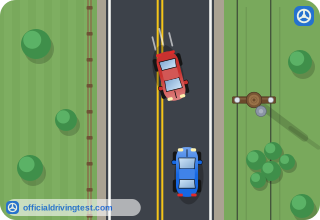
In most cases, what is safer than risking a head-on collision?
- Steering into the opposing lane
- Steering to the shoulder or ditch
- Braking hard in the middle of the road
- Turning on your hazard lights and not steering
Show answer
Correct answer: Steering to the shoulder or ditch
The manual says steering to the shoulder or ditch is, in most cases, safer than risking a head-on collision.
Source: Oregon Driver Manual (2026-2027), page 75 · Open this page in the manual (Manual page 75)
-
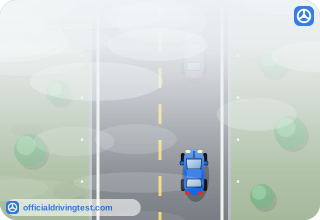
If you choose to pull off the road in low visibility, what should you do?
- Stop in the lane and turn off all of your lights to avoid glare
- Pull to the left side and use your high beams to be seen
- Pull as far to the right as you can and turn on your hazard lights
- Stop on the road itself and turn on your parking lights only
Show answer
Correct answer: Pull as far to the right as you can and turn on your hazard lights
The manual says to pull as far as you can to the right and turn on your hazard lights.
Source: Oregon Driver Manual (2026-2027), page 77 · Open this page in the manual (Manual page 77)
-
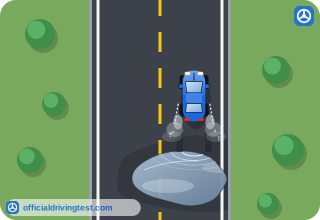
What should you do if your brakes get wet after driving through water?
- Stop your vehicle for an hour and wait for the brakes to dry out
- Press the brakes as hard as you can to squeeze the water out
- Gently apply the brakes while driving slowly until they respond
- Shift into neutral and coast until the brakes dry out
Show answer
Correct answer: Gently apply the brakes while driving slowly until they respond
The manual says to gently apply the brakes while driving slowly until they begin to respond, as soon as you can after driving through water.
Source: Oregon Driver Manual (2026-2027), page 78 · Open this page in the manual (Manual page 78)
-
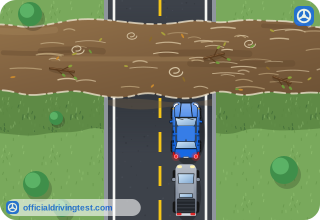
Why should you not drive through flooded areas?
- Water always damages the tires and wheel bearings
- High water may cause loss of control or engine stalling
- Flooded areas are always closed to all traffic by law
- Wet brakes can never be dried out once flooded
Show answer
Correct answer: High water may cause loss of control or engine stalling
High water may cause loss of control or engine stalling.
Source: Oregon Driver Manual (2026-2027), page 78 · Open this page in the manual (Manual page 78)
-
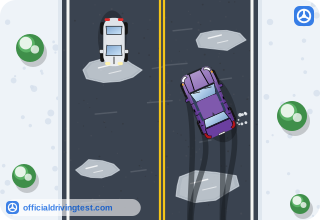
What causes skids?
- Driving with the headlights turned on
- Driving too fast for road conditions
- Driving with the windows rolled down
- Driving with a full tank of fuel
Show answer
Correct answer: Driving too fast for road conditions
Driving too fast for road conditions causes skids, which occur when the tires can no longer grip the road.
Source: Oregon Driver Manual (2026-2027), page 79 · Open this page in the manual (Manual page 79)
-
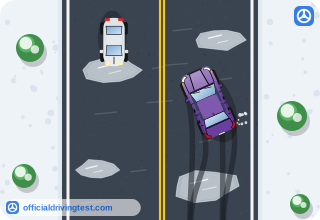
What should you do about the brakes if your vehicle begins to skid?
- Press them hard to slow down as quickly as possible
- Pump them quickly to regain control
- Apply them only with your left foot
- Stay off them until the vehicle slows
Show answer
Correct answer: Stay off them until the vehicle slows
The manual says to stay off the brakes because they will not be effective until the vehicle slows.
Source: Oregon Driver Manual (2026-2027), page 79 · Open this page in the manual (Manual page 79)
-
In which direction should you steer if your vehicle begins to skid?
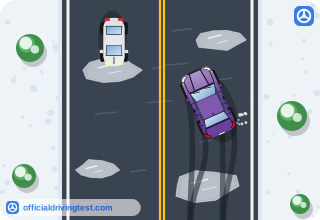
- In the direction you want the vehicle to go
- Away from the direction you want the vehicle to go
- Toward the nearest shoulder of the road
- Straight ahead no matter which way the vehicle slides
Show answer
Correct answer: In the direction you want the vehicle to go
The manual says to steer in the direction you want the vehicle to go.
Source: Oregon Driver Manual (2026-2027), page 79 · Open this page in the manual (Manual page 79)
-
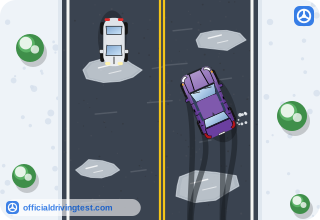
What should you do as soon as a skidding vehicle begins to straighten out?
- Brake firmly to stop the vehicle quickly
- Hold the wheel in the same position you used
- Turn the steering wheel back the other way
- Take both hands off the wheel for a moment
Show answer
Correct answer: Turn the steering wheel back the other way
If you do not turn the wheel back, the vehicle may swing around in the other direction and you could start a new skid.
Source: Oregon Driver Manual (2026-2027), page 79 · Open this page in the manual (Manual page 79)
-
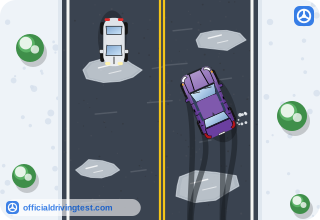
How long should you continue to correct your steering during a skid?
- Until the vehicle first stops sliding to either side
- Until the vehicle is moving down the road under your control
- For about three seconds after the vehicle starts to slide
- Until the brakes become effective again on the road
Show answer
Correct answer: Until the vehicle is moving down the road under your control
Continue to correct your steering, left and right, until the vehicle is again moving down the road under your control.
Source: Oregon Driver Manual (2026-2027), page 79 · Open this page in the manual (Manual page 79)
-
According to the manual, most equipment failures can be avoided with
- good maintenance
- an extra spare tire
- a newer vehicle
- frequent car washes
Show answer
Correct answer: good maintenance
Most equipment failures can be avoided with good maintenance.
Source: Oregon Driver Manual (2026-2027), page 84 · Open this page in the manual (Manual page 84)
-
What may you feel if a front tire blows?
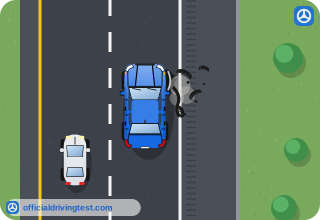
- The back of the vehicle swaying
- A strong pull to the side
- The steering wheel becoming very light
- The engine suddenly stalling
Show answer
Correct answer: A strong pull to the side
If a front tire blows, steering will be difficult and there may be a strong pull to the side.
Source: Oregon Driver Manual (2026-2027), page 84 · Open this page in the manual (Manual page 84)
-
What does a rear tire blowout cause?
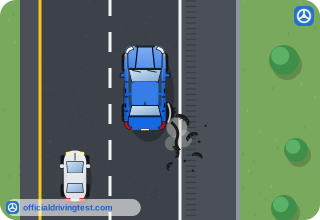
- A strong pull to the side of the road
- The steering wheel to lock up
- The brakes to stop working
- The back of the vehicle to sway
Show answer
Correct answer: The back of the vehicle to sway
A rear blowout causes the back of the vehicle to weave or sway.
Source: Oregon Driver Manual (2026-2027), page 84 · Open this page in the manual (Manual page 84)
-
What should you do if you have a blowout?
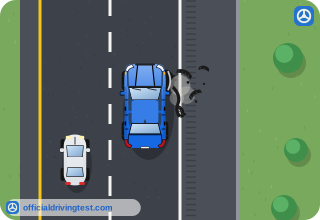
- Grip the steering wheel firmly and slow down gradually
- Brake hard right away and stop in your lane
- Let go of the wheel and let the car straighten
- Speed up to regain control, then pull off
Show answer
Correct answer: Grip the steering wheel firmly and slow down gradually
With a blowout, grip the steering wheel firmly, slow down gradually and pull off the road.
Source: Oregon Driver Manual (2026-2027), page 84 · Open this page in the manual (Manual page 84)
-
If your brakes stop working, what may build up enough pressure to get them working again?
- Shifting to neutral
- Turning off the engine
- Pumping the brakes
- Flashing your lights
Show answer
Correct answer: Pumping the brakes
Pumping the brakes may build up enough pressure to get them working again.
Source: Oregon Driver Manual (2026-2027), page 85 · Open this page in the manual (Manual page 85)
-
If your brakes fail, why should you shift to a lower gear?
- It turns on the brake lights
- It shuts off the fuel supply
- The engine can help slow you down
- It warns the drivers behind you
Show answer
Correct answer: The engine can help slow you down
Shifting to a lower gear lets the engine help slow you down.
Source: Oregon Driver Manual (2026-2027), page 85 · Open this page in the manual (Manual page 85)
-
If your brakes fail, how should you apply the parking brake?
- Slowly
- Hard at once
- Only after stopping
- Not at all
Show answer
Correct answer: Slowly
The manual says to slowly apply the parking brake.
Source: Oregon Driver Manual (2026-2027), page 85 · Open this page in the manual (Manual page 85)
-
If your brakes fail, how can you warn others that you are out of control?
- Wave your arm out the window
- Roll down your windows and shout
- Turn on your turn signal only
- Use your horn or lights
Show answer
Correct answer: Use your horn or lights
The manual says to use your horn or lights to warn others that you are out of control.
Source: Oregon Driver Manual (2026-2027), page 85 · Open this page in the manual (Manual page 85)
-
If your headlights stop working, what should you try?
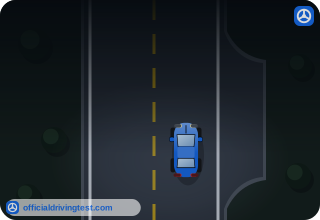
- Turn the engine off and on
- Turn the headlight switch off and on
- Stop in the traffic lane and wait
- Switch to the interior dome light
Show answer
Correct answer: Turn the headlight switch off and on
The manual says to turn the headlight switch off and on, then try other lights.
Source: Oregon Driver Manual (2026-2027), page 85 · Open this page in the manual (Manual page 85)
-
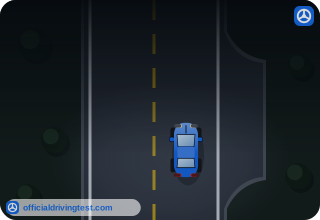
If your headlights stop working, which lights may give you enough light to guide you off the road?
- High beams, driving lights or hazard lights
- Turn signals and brake lights only
- Only the interior dome light and map lights
- The parking lights and the dashboard lights
Show answer
Correct answer: High beams, driving lights or hazard lights
Trying other lights such as high beams, driving lights or hazard lights may give you enough light to guide you off the road.
Source: Oregon Driver Manual (2026-2027), page 85 · Open this page in the manual (Manual page 85)
-
What should you do if your power steering stops working?
- Let go of the wheel and let it center
- Stop suddenly in your lane
- Grip the wheel firmly and slow down
- Speed up to keep steering control
Show answer
Correct answer: Grip the wheel firmly and slow down
Steering will be difficult, so grip the steering wheel firmly, slow down and ease onto the shoulder.
Source: Oregon Driver Manual (2026-2027), page 85 · Open this page in the manual (Manual page 85)
-
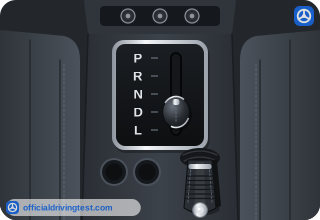
If your accelerator sticks, how should you shift the vehicle to neutral?
- Use a closed fist
- Use an open palm
- Use only your thumb
- Use both hands
Show answer
Correct answer: Use an open palm
An open palm avoids shifting into another gear.
Source: Oregon Driver Manual (2026-2027), page 85 · Open this page in the manual (Manual page 85)
-
If your accelerator sticks, what does the manual say to search for?
- A repair shop
- A gas station
- An exit ramp
- An escape path
Show answer
Correct answer: An escape path
The first step listed for a stuck accelerator is to search for an escape path.
Source: Oregon Driver Manual (2026-2027), page 85 · Open this page in the manual (Manual page 85)
-
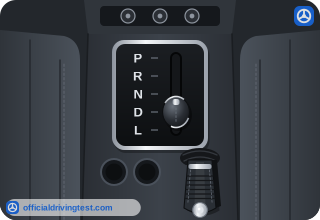
What should you shift the vehicle to if your accelerator sticks?
- Park
- Reverse
- A lower gear
- Neutral
Show answer
Correct answer: Neutral
The manual says to shift the vehicle to neutral if the accelerator sticks.
Source: Oregon Driver Manual (2026-2027), page 85 · Open this page in the manual (Manual page 85)
-
What does the manual call a collision caused by being distracted, tired, or not driving defensively?
- An accident
- An unavoidable crash
- A reportable accident
- A preventable collision
Show answer
Correct answer: A preventable collision
The manual says the word accident is misleading: such a collision is preventable, not an accident.
Source: Oregon Driver Manual (2026-2027), page 93 · Open this page in the manual (Manual page 93)
-
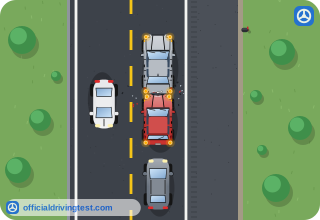
If you are in a collision with no injuries and the vehicles can be safely moved, what should you do?
- Leave them where they stopped until police arrive
- Move them only after exchanging all information in the lane
- Leave them in the lane and turn on your hazard lights
- Move them out of travel lanes as soon as possible
Show answer
Correct answer: Move them out of travel lanes as soon as possible
If there are no injuries and vehicles can be safely moved, move them out of travel lanes as soon as possible.
Source: Oregon Driver Manual (2026-2027), page 93 · Open this page in the manual (Manual page 93)
-
If you are in a collision with no injuries and the vehicles can be safely moved, where can information be exchanged?
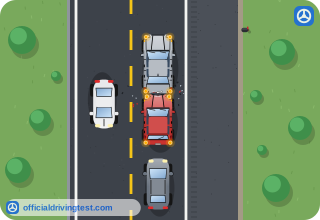
- Only in the travel lane
- Away from the scene of the collision
- Only at a DMV office
- Only at the next day's court hearing
Show answer
Correct answer: Away from the scene of the collision
Information can be exchanged away from the scene of the collision.
Source: Oregon Driver Manual (2026-2027), page 93 · Open this page in the manual (Manual page 93)
-
After a collision, what must you do for injured persons?
- Move them to the roadside right away
- Leave assistance to passing drivers
- Give reasonable assistance
- Give them your keys
Show answer
Correct answer: Give reasonable assistance
You must give reasonable assistance to injured persons, and injured people should never be moved carelessly.
Source: Oregon Driver Manual (2026-2027), page 93 · Open this page in the manual (Manual page 93)
-
What does the manual say about moving injured people?
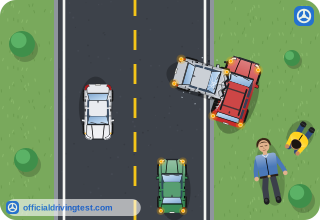
- They should never be moved carelessly
- They should always be moved out of the road immediately
- They should be moved only by police
- They should be moved to the driver's seat
Show answer
Correct answer: They should never be moved carelessly
Injured people should never be moved carelessly.
Source: Oregon Driver Manual (2026-2027), page 93 · Open this page in the manual (Manual page 93)
-
If a person is killed or unconscious in a collision, what must you do?
- Leave once you have exchanged information
- Drive to the nearest DMV office
- Remain at the scene until police arrive
- Leave once you have called your insurer
Show answer
Correct answer: Remain at the scene until police arrive
If a person is killed or unconscious, you must remain at the scene of the collision until police arrive.
Source: Oregon Driver Manual (2026-2027), page 94 · Open this page in the manual (Manual page 94)
-
You hit an unoccupied vehicle and cannot find its owner. What must you do?
- Leave a note with your name and address and a brief description of what happened
- Drive away, since the vehicle was unoccupied and no one was hurt in it
- Leave a note with only your license plate number
- Wait in your vehicle until the owner returns
Show answer
Correct answer: Leave a note with your name and address and a brief description of what happened
If you cannot find the owner, leave a note with your name and address, along with a brief description of what happened.
Source: Oregon Driver Manual (2026-2027), page 94 · Open this page in the manual (Manual page 94)
-
You hit an unoccupied vehicle. What must you try to do first?
- Find the owner
- Move the vehicle off the road
- Call your insurance agent
- Take the vehicle to a tow yard
Show answer
Correct answer: Find the owner
If you hit an unoccupied vehicle, try to find the owner.
Source: Oregon Driver Manual (2026-2027), page 94 · Open this page in the manual (Manual page 94)
-
If you damage property other than a motor vehicle, what must you try to do?
- Fix the damage yourself before you leave the scene of the collision
- Leave the scene without notifying anyone
- Find the owner or someone in charge of the property to notify them
- Notify only the police
Show answer
Correct answer: Find the owner or someone in charge of the property to notify them
You must also try to find the owner or someone in charge of the property to notify them of the damage.
Source: Oregon Driver Manual (2026-2027), page 94 · Open this page in the manual (Manual page 94)