Oklahoma: Signals and vehicle controls
Turn signals and arm signals, mirrors and blind spots, headlight beams, backing, driving posture and checking your vehicle before the driving test. Split into 3 shorter tests so you're not stuck in one long quiz.
Independent educational site · not affiliated with any government agency or DMV
Choose a part
Signals and vehicle controls — Part 1
Questions in this part include: “Which of these lights will be inspected and must be in good working order?”
StartSignals and vehicle controls — Part 2
Questions in this part include: “What should you do with your arm during the actual turn when you use arm signals?”
StartSignals and vehicle controls — Part 3
Questions in this part include: “Why does the manual say not to drive with your elbow out the window?”
StartAll 56 Signals and vehicle controls questions with answers
Choose a part above to take a practice test, or study every question and answer here.
Show the questions and answersHide the questions
-
Which of these lights will be inspected and must be in good working order?
- Fog lights
- Underbody lights
- Plate lights
- Cargo-area lights
Show answer
Correct answer: Plate lights
The inspection covers headlights, taillights, brake lights, turn signals, parking lights, plate lights and reflectors.
Source: Oklahoma Driver Manual (2025 (updated November 24, 2025)), page 12 · Open this page in the manual (Manual page 12)
-
Which of these will be inspected and must be in good working order?
- Air conditioning
- Exhaust system
- Radio
- Cruise control
Show answer
Correct answer: Exhaust system
The inspected items include the exhaust system, along with the brakes, horn, tires, wipers and others.
Source: Oklahoma Driver Manual (2025 (updated November 24, 2025)), page 12 · Open this page in the manual (Manual page 12)
-
Windshield and glass must be free of major cracks, chips or obstructions in the driver's line of sight, especially within which area?
- The area behind the rearview mirror
- The lower edge by the dashboard
- The top edge near the roof
- The wiper blade area
Show answer
Correct answer: The wiper blade area
Damage and obstructions are a concern in the driver's line of sight, especially in the area the wiper blades sweep.
Source: Oklahoma Driver Manual (2025 (updated November 24, 2025)), page 12 · Open this page in the manual (Manual page 12)
-
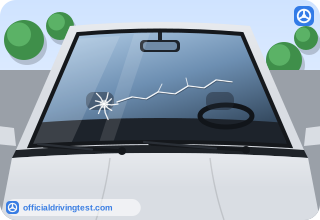
A star break or impact point on the windshield that can be felt by touch will do what at inspection?
- It will not pass
- It will pass with a written warning
- It will pass if the car is under 10 years old
- It will pass as long as the wipers work
Show answer
Correct answer: It will not pass
Damage such as star breaks or impact points that can be felt by touch will not pass.
Source: Oklahoma Driver Manual (2025 (updated November 24, 2025)), page 12 · Open this page in the manual (Manual page 12)
-
If a vehicle is required by federal law to have a third brake light, when must it be in working order?
- Within 30 days after the test
- Only when driving after dark
- At the time of testing
- Only if you pass the driving test
Show answer
Correct answer: At the time of testing
A required third brake light must work at the time of testing.
Source: Oklahoma Driver Manual (2025 (updated November 24, 2025)), page 12 · Open this page in the manual (Manual page 12)
-
Seat belts are inspected on vehicles made after which year?
- 1955
- 1965
- 1975
- 1985
Show answer
Correct answer: 1965
The inspection list covers seat belts on vehicles after 1965.
Source: Oklahoma Driver Manual (2025 (updated November 24, 2025)), page 12 · Open this page in the manual (Manual page 12)
-
Third brake lights must be working on cars made since which year?
- 1976
- 1996
- 2006
- 1986
Show answer
Correct answer: 1986
The pre-test checklist requires working third brake lights on cars since 1986.
Source: Oklahoma Driver Manual (2025 (updated November 24, 2025)), page 12 · Open this page in the manual (Manual page 12)
-
Third brake lights must be working on trucks made since which year?
- 1994
- 1984
- 2004
- 1974
Show answer
Correct answer: 1994
The pre-test checklist requires working third brake lights on trucks since 1994.
Source: Oklahoma Driver Manual (2025 (updated November 24, 2025)), page 12 · Open this page in the manual (Manual page 12)
-
What does the drive-test checklist say about covering a light's lens with tape?
- Clear tape is allowed on any lens, but colored tape is not
- Colored tape is allowed on any lens, but clear tape is not
- No lens may be covered by tape of any kind, colored or clear
- Tape is allowed on the rear lights only, not the front
Show answer
Correct answer: No lens may be covered by tape of any kind, colored or clear
No light lens may be covered in any way by tape, whether colored or clear.
Source: Oklahoma Driver Manual (2025 (updated November 24, 2025)), page 12 · Open this page in the manual (Manual page 12)
-
What minimum tread depth must your tires have for the drive test?
- 1/32 inch
- 2/32 inch
- 4/32 inch
- 6/32 inch
Show answer
Correct answer: 2/32 inch
The checklist requires a minimum tire tread depth of 2/32 of an inch.
Source: Oklahoma Driver Manual (2025 (updated November 24, 2025)), page 12 · Open this page in the manual (Manual page 12)
-
What does the drive-test checklist suggest using to check tire tread depth?
- A tire pressure gauge
- A tape measure on the sidewall
- A flashlight inspection
- The penny test
Show answer
Correct answer: The penny test
The checklist says to use the penny test to check tread depth.
Source: Oklahoma Driver Manual (2025 (updated November 24, 2025)), page 12 · Open this page in the manual (Manual page 12)
-
What must not be exposed in the tread of a tire?
- Ply or cord
- The valve stem
- Sidewall lettering
- The date code
Show answer
Correct answer: Ply or cord
Tires must have no ply or cord showing in the tread, and no bulges or bumps.
Source: Oklahoma Driver Manual (2025 (updated November 24, 2025)), page 12 · Open this page in the manual (Manual page 12)
-
What must tires not have, according to the drive-test checklist?
- White sidewalls
- A winter tread pattern
- Bulges or bumps
- A spare tire mounted
Show answer
Correct answer: Bulges or bumps
Tires with bulges or bumps do not meet the checklist.
Source: Oklahoma Driver Manual (2025 (updated November 24, 2025)), page 12 · Open this page in the manual (Manual page 12)
-
How far away must the horn be audible?
- 50 feet
- 200 feet
- 100 feet
- 500 feet
Show answer
Correct answer: 200 feet
The checklist says the horn must be audible at 200 feet.
Source: Oklahoma Driver Manual (2025 (updated November 24, 2025)), page 12 · Open this page in the manual (Manual page 12)
-
How must the front door handles operate?
- From the inside only, with normal effort
- From the outside only, with normal effort
- Only when the engine is running
- From both inside and outside with normal effort
Show answer
Correct answer: From both inside and outside with normal effort
Front door handles must work from both inside and outside with normal effort.
Source: Oklahoma Driver Manual (2025 (updated November 24, 2025)), page 12 · Open this page in the manual (Manual page 12)
-
For the drive test, which mirror must a vehicle always have?
- A left outside mirror
- A right outside mirror
- A mirror on the sun visor
- A dashboard-mounted mirror
Show answer
Correct answer: A left outside mirror
A vehicle must have a left outside mirror, plus either a center inside mirror or a right outside mirror.
Source: Oklahoma Driver Manual (2025 (updated November 24, 2025)), page 12 · Open this page in the manual (Manual page 12)
-
The current insurance verification form you must have for the drive test can not do what?
- List more than one vehicle
- Name a different insurance company
- Exclude the driver
- Show a policy held by a parent
Show answer
Correct answer: Exclude the driver
The insurance verification form must be current and can not exclude the driver.
Source: Oklahoma Driver Manual (2025 (updated November 24, 2025)), page 12 · Open this page in the manual (Manual page 12)
-
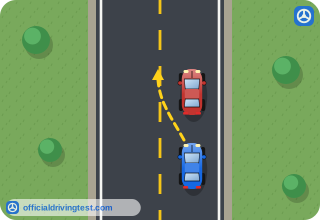
What signal do you give when you are ready to move into the left lane to pass?
- A right turn signal
- The emergency flashers
- A left turn signal
- No signal until you are in the left lane
Show answer
Correct answer: A left turn signal
You signal for a left turn and move into the left lane when it is clear.
Source: Oklahoma Driver Manual (2025 (updated November 24, 2025)), page 35 · Open this page in the manual (Manual page 35)
-
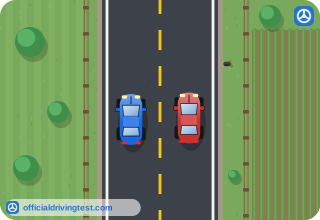
After you pull back into the right lane following a pass, what should you do with your signal?
- Leave it on until you reach the next intersection
- Turn it off once you are in the lane
- Leave it on for 100 feet after the lane change
- Switch it to the emergency flashers for a moment
Show answer
Correct answer: Turn it off once you are in the lane
The manual says to signal, pull into the right lane and turn the signal off when you are in the lane.
Source: Oklahoma Driver Manual (2025 (updated November 24, 2025)), page 35 · Open this page in the manual (Manual page 35)
-
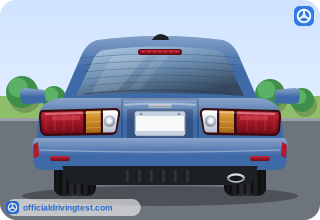
Which of these is a reason to use your turn signal?
- You are driving straight through an intersection on green
- You intend to pull off or onto the roadway
- You are speeding up to the speed limit
- You are driving in a straight line on an open road
Show answer
Correct answer: You intend to pull off or onto the roadway
Turn signals warn other drivers of a turn, lane change, slowing, pulling off or onto the roadway, or a stop.
Source: Oklahoma Driver Manual (2025 (updated November 24, 2025)), page 36 · Open this page in the manual (Manual page 36)
-
What does the manual say about turning without signaling?
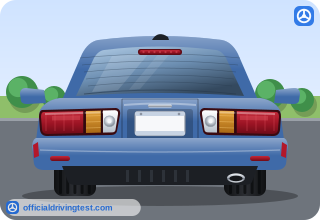
- It is allowed if no other cars are near
- It is legal but not recommended
- It is illegal
- It is illegal only at night
Show answer
Correct answer: It is illegal
Signaling before a turn is required: turning without signaling is illegal.
Source: Oklahoma Driver Manual (2025 (updated November 24, 2025)), page 36 · Open this page in the manual (Manual page 36)
-
How far before you turn, slow down or stop should you signal?
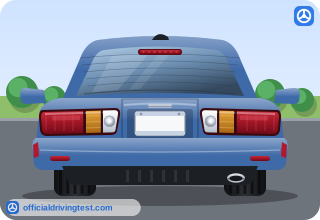
- At least 100 feet or 1/3 of a block
- At least 25 feet or 1/10 of a block
- At least 50 feet or 1/6 of a block
- At least 300 feet or a full block
Show answer
Correct answer: At least 100 feet or 1/3 of a block
The manual says to signal for at least 100 feet or one third of a block before turning, slowing down or stopping.
Source: Oklahoma Driver Manual (2025 (updated November 24, 2025)), page 36 · Open this page in the manual (Manual page 36)
-
What should you do with your arm during the actual turn when you use arm signals?
- Bring it in to keep control of the steering wheel
- Keep it out of the window until the turn is finished
- Hold it straight up to show the turn is under way
- Keep it out and steer with your knee
Show answer
Correct answer: Bring it in to keep control of the steering wheel
You bring your arm back in during the turn so that you control the wheel.
Source: Oklahoma Driver Manual (2025 (updated November 24, 2025)), page 36 · Open this page in the manual (Manual page 36)
-
How should you give an arm signal?
- Hold your arm just inside the window with a loose hand
- Hold your arm low beside the door where it is easy to see
- Extend your arm well out of the window and make the signal clear
- Wave your hand briefly at the rearview mirror
Show answer
Correct answer: Extend your arm well out of the window and make the signal clear
Arm signals have to be given well out of the window so that other drivers can see them.
Source: Oklahoma Driver Manual (2025 (updated November 24, 2025)), page 36 · Open this page in the manual (Manual page 36)
-
Which arm signal means a left turn?
- Arm and hand pointed upward
- Arm and hand extended straight out
- Arm and hand pointed down with palm to the rear
- Arm bent with the hand held against the door
Show answer
Correct answer: Arm and hand extended straight out
A left turn is shown by an arm and hand extended straight out of the window.
Source: Oklahoma Driver Manual (2025 (updated November 24, 2025)), page 36 · Open this page in the manual (Manual page 36)
-
Which arm signal means a right turn?
- Arm and hand extended straight out
- Arm and hand pointed down with palm to the rear
- Arm and hand pointed forward toward the road
- Arm and hand pointed upward
Show answer
Correct answer: Arm and hand pointed upward
A right turn is shown by an arm and hand pointed upward.
Source: Oklahoma Driver Manual (2025 (updated November 24, 2025)), page 36 · Open this page in the manual (Manual page 36)
-
Which arm signal means slow or stop?
- Arm and hand extended straight out
- Arm and hand pointed down with palm to the rear
- Arm and hand pointed upward
- Arm and hand extended straight out with palm to the rear
Show answer
Correct answer: Arm and hand pointed down with palm to the rear
Slowing or stopping is shown with the arm and hand pointed down and the palm to the rear.
Source: Oklahoma Driver Manual (2025 (updated November 24, 2025)), page 36 · Open this page in the manual (Manual page 36)
-
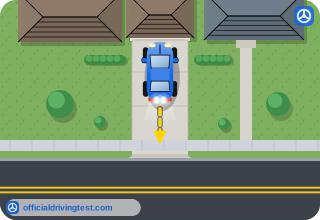
Why is backing more difficult for a beginner than driving forward?
- The brakes do not work as well in reverse as they do going forward
- You cannot use the steering wheel at all while in reverse gear
- The engine has much less power in reverse than going forward
- The car blocks your view, and speed and direction are harder to control
Show answer
Correct answer: The car blocks your view, and speed and direction are harder to control
The car blocks your view, and speed and direction are harder to control, so backing needs a lot of practice.
Source: Oklahoma Driver Manual (2025 (updated November 24, 2025)), page 39 · Open this page in the manual (Manual page 39)
-
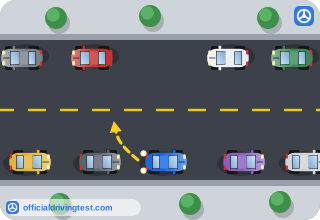
What should you do when you back out of a parking place?
- Look only through the rear window and check for cars
- Look in both directions and double-check for cars and pedestrians
- Back out quickly to clear the space for other drivers
- Watch only the traffic coming from behind you on the left
Show answer
Correct answer: Look in both directions and double-check for cars and pedestrians
The manual says to look both ways and double-check for cars and pedestrians.
Source: Oklahoma Driver Manual (2025 (updated November 24, 2025)), page 39 · Open this page in the manual (Manual page 39)
-
When you start to back up, where should your foot be as you shift to reverse?
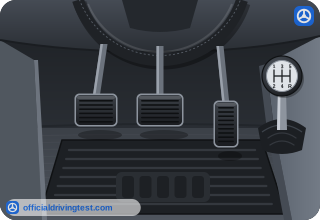
- On the accelerator
- On the clutch only
- Off the pedals
- On the brake
Show answer
Correct answer: On the brake
You place your foot on the brake and then shift to reverse.
Source: Oklahoma Driver Manual (2025 (updated November 24, 2025)), page 39 · Open this page in the manual (Manual page 39)
-
How does the manual tell you to hold the steering wheel when you back up?
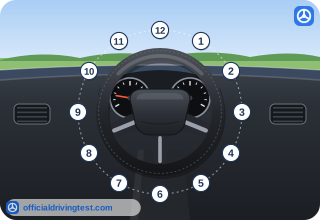
- At the 12 o'clock position with your left hand
- At the 6 o'clock position with your right hand
- At the 9 o'clock position with both hands
- At the 3 o'clock position with your right hand
Show answer
Correct answer: At the 12 o'clock position with your left hand
You grasp the wheel at 12 o'clock with your left hand while your right arm rests on the seat back.
Source: Oklahoma Driver Manual (2025 (updated November 24, 2025)), page 39 · Open this page in the manual (Manual page 39)
-
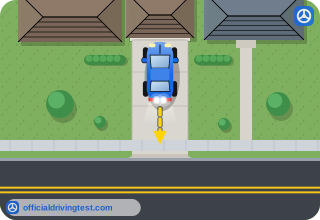
How should you look when backing up?
- Keep both hands on the wheel and look out through the side window
- Look at the passenger-side mirror with your arm on the dashboard
- Right arm on the back of the seat, looking directly through the rear window
- Look forward and glance back now and then
Show answer
Correct answer: Right arm on the back of the seat, looking directly through the rear window
You twist back, resting your right arm on the seat, and look straight through the rear window.
Source: Oklahoma Driver Manual (2025 (updated November 24, 2025)), page 39 · Open this page in the manual (Manual page 39)
-
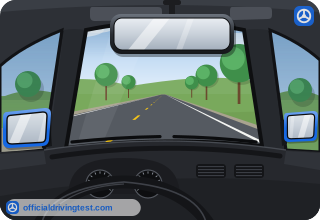
What does the manual say about using your rearview mirror for backing up?
- Use it together with the side mirrors
- Use it only at night
- Use it only when backing out of a parking place
- Never use it for backing up
Show answer
Correct answer: Never use it for backing up
The rearview mirror is not to be used for backing; you look through the rear window.
Source: Oklahoma Driver Manual (2025 (updated November 24, 2025)), page 39 · Open this page in the manual (Manual page 39)
-
How should you accelerate when you are backing up?
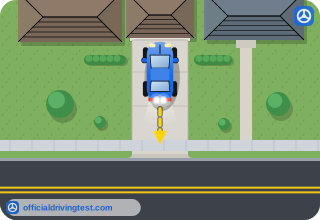
- Quickly, to clear the space fast
- Gently and smoothly, keeping your speed slow
- In short bursts with a pause between
- Only when no one is behind you, at normal speed
Show answer
Correct answer: Gently and smoothly, keeping your speed slow
The manual says to accelerate gently and smoothly and to keep your speed slow.
Source: Oklahoma Driver Manual (2025 (updated November 24, 2025)), page 39 · Open this page in the manual (Manual page 39)
-
How does steering while backing up compare with steering forward?
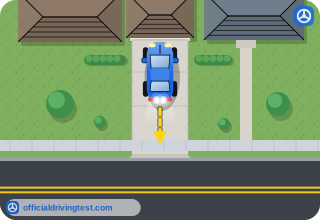
- It is easier because the rear wheels do the steering
- It is the same, if you go slowly
- Your vehicle is much harder to steer while backing up
- It is easier because your field of vision is wider
Show answer
Correct answer: Your vehicle is much harder to steer while backing up
The manual says a vehicle is much harder to steer while backing up.
Source: Oklahoma Driver Manual (2025 (updated November 24, 2025)), page 39 · Open this page in the manual (Manual page 39)
-
In which direction should you steer while backing up?
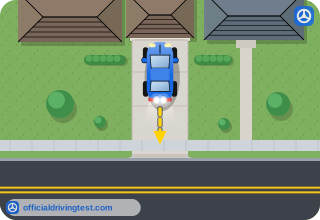
- Slightly in the direction the rear of the vehicle should move
- Slightly in the direction the front of the vehicle should move
- Sharply toward the curb
- Straight, then correct only at the end
Show answer
Correct answer: Slightly in the direction the rear of the vehicle should move
You steer slightly toward the direction you want the rear of the vehicle to go.
Source: Oklahoma Driver Manual (2025 (updated November 24, 2025)), page 39 · Open this page in the manual (Manual page 39)
-
Into which lane should you back slowly?
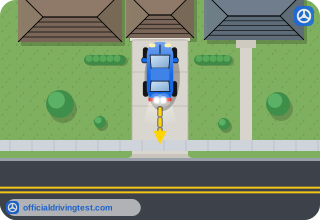
- The lane closest to you for the direction you will be going
- The center lane of the road, away from the parked cars
- The lane farthest from the curb for the direction you go
- Any lane that has no cars in it at the time
Show answer
Correct answer: The lane closest to you for the direction you will be going
You back slowly into the lane that is closest to you for the direction you will go.
Source: Oklahoma Driver Manual (2025 (updated November 24, 2025)), page 39 · Open this page in the manual (Manual page 39)
-
If you are backing up while turning, what should you do?
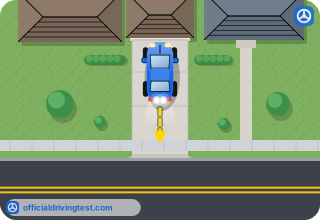
- Look only to the rear until you finish
- Look only at the side mirror
- Make quick checks to the front and sides
- Stop to check the front before each turn
Show answer
Correct answer: Make quick checks to the front and sides
While backing around a turn you make quick looks to the front and sides.
Source: Oklahoma Driver Manual (2025 (updated November 24, 2025)), page 39 · Open this page in the manual (Manual page 39)
-
How long should you keep looking to the rear when you back up?
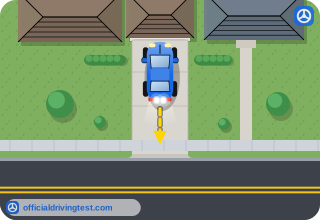
- Until you have backed about one car length
- Until you come to a complete stop
- Until your vehicle is out of the parking space
- Until you have shifted out of reverse
Show answer
Correct answer: Until you come to a complete stop
You keep looking to the rear until the vehicle has come to a complete stop.
Source: Oklahoma Driver Manual (2025 (updated November 24, 2025)), page 39 · Open this page in the manual (Manual page 39)
-
Within how many feet of an oncoming vehicle should you dim your high beam headlights to low beams?
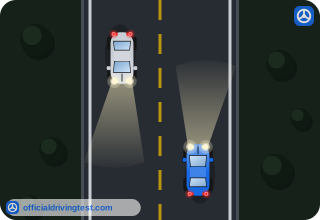
- 1000 feet
- 500 feet
- 300 feet
- 200 feet
Show answer
Correct answer: 1000 feet
High beams must be dimmed to low beams once you are within 1000 feet of an oncoming vehicle, so you do not glare at the other driver.
Source: Oklahoma Driver Manual (2025 (updated November 24, 2025)), page 59 · Open this page in the manual (Manual page 59)
-
How close behind a vehicle you are following must you be before dimming your high beams to low beams?
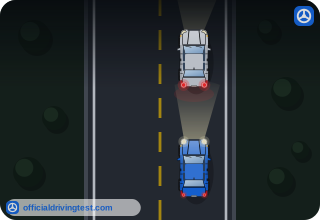
- Within 400 feet
- Within 200 feet
- Within 600 feet
- Within 100 feet
Show answer
Correct answer: Within 600 feet
The manual says to dim high beams to low beams within 600 feet of the vehicle you are following.
Source: Oklahoma Driver Manual (2025 (updated November 24, 2025)), page 59 · Open this page in the manual (Manual page 59)
-
When does the manual say to begin using your headlights in the evening and morning?
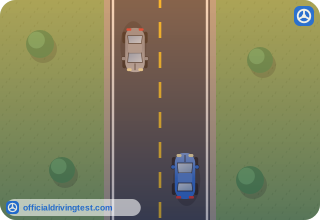
- Only once it is completely dark outside, until the sky is bright
- Beginning 30 minutes after sunset and 30 minutes before sunrise
- From the moment of sunset until the moment of sunrise, never earlier
- One hour after sunset and one hour before sunrise
Show answer
Correct answer: Beginning 30 minutes after sunset and 30 minutes before sunrise
Headlights are used starting 30 minutes after sunset and 30 minutes before sunrise.
Source: Oklahoma Driver Manual (2025 (updated November 24, 2025)), page 59 · Open this page in the manual (Manual page 59)
-
In which situation does the manual say high beams may be used?
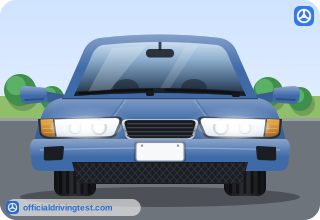
- On a street that has streetlights
- In fog
- In rain or snow
- In open country with no cars nearby
Show answer
Correct answer: In open country with no cars nearby
High beams are for open country with no other cars nearby; streetlights, fog, rain and snow call for low beams.
Source: Oklahoma Driver Manual (2025 (updated November 24, 2025)), page 59 · Open this page in the manual (Manual page 59)
-
Which headlight setting does the manual say to use where there are streetlights, fog, rain or snow?
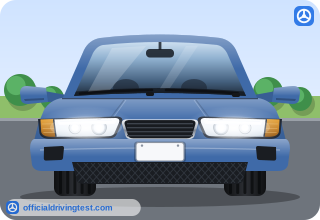
- Low beams
- High beams
- Parking lights only
- Hazard flashers only
Show answer
Correct answer: Low beams
Low beams are the right setting where there are streetlights or fog, rain, snow and other adverse weather.
Source: Oklahoma Driver Manual (2025 (updated November 24, 2025)), page 59 · Open this page in the manual (Manual page 59)
-
How should your speed at night with high beams in open country compare with your speed by day?
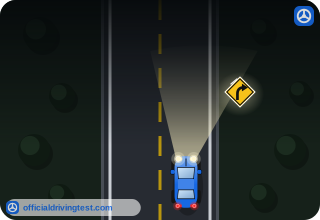
- The same as it is by day
- Faster than it is by day
- Slower than it is by day
- Faster, because high beams show more road
Show answer
Correct answer: Slower than it is by day
When you drive with high beams in open country at night, your speed should be slower than by day.
Source: Oklahoma Driver Manual (2025 (updated November 24, 2025)), page 59 · Open this page in the manual (Manual page 59)
-
What can a driver of a car with a standard transmission use, instead of the brakes, to help slow down?
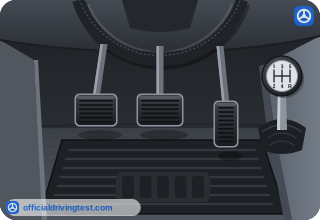
- The clutch pedal alone
- The gears
- The parking brake
- The accelerator pedal
Show answer
Correct answer: The gears
With a standard transmission you control the gear-speed ratio and can use the gears rather than the brakes to help slow the car.
Source: Oklahoma Driver Manual (2025 (updated November 24, 2025)), page 59 · Open this page in the manual (Manual page 59)
-
Below what speed should you hold the clutch pedal all the way down as you come to a stop in a standard-transmission car?
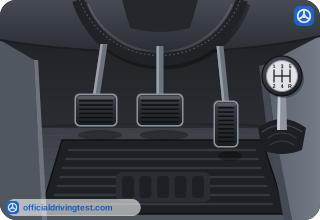
- 5 mph
- 15 mph
- 20 mph
- 10 mph
Show answer
Correct answer: 10 mph
The manual says to hold the clutch pedal all the way down when your speed drops below 10 mph while coming to a stop.
Source: Oklahoma Driver Manual (2025 (updated November 24, 2025)), page 59 · Open this page in the manual (Manual page 59)
-
In a standard-transmission car, what does "riding the clutch" mean?
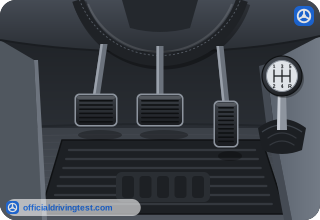
- Driving with your foot resting on the clutch pedal
- Pressing the clutch all the way down to start the motor
- Shifting gears without using the accelerator
- Holding the clutch down only when you stop
Show answer
Correct answer: Driving with your foot resting on the clutch pedal
Riding the clutch means driving with your foot resting on the clutch pedal, which the manual says not to do.
Source: Oklahoma Driver Manual (2025 (updated November 24, 2025)), page 59 · Open this page in the manual (Manual page 59)
-
What should you do with a standard-transmission car when going down steep hills?
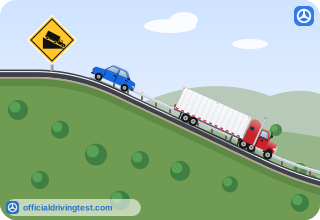
- Shift the car into neutral
- Push the clutch pedal down and coast
- Put the car in a lower gear
- Shift into a higher gear
Show answer
Correct answer: Put the car in a lower gear
On steep downhill grades the manual says to put the car in a lower gear rather than coasting.
Source: Oklahoma Driver Manual (2025 (updated November 24, 2025)), page 59 · Open this page in the manual (Manual page 59)
-
Coasting on a downgrade with the clutch engaged or the vehicle in neutral is described in the manual as what?
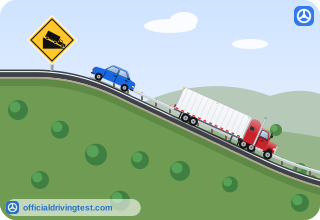
- A fuel-saving technique
- A violation of Oklahoma law
- Allowed on long downgrades
- Required on steep hills
Show answer
Correct answer: A violation of Oklahoma law
The manual states that coasting downhill with the clutch engaged or in neutral violates the state traffic statute.
Source: Oklahoma Driver Manual (2025 (updated November 24, 2025)), page 59 · Open this page in the manual (Manual page 59)
-
How should you adjust the seat as part of good driving posture?
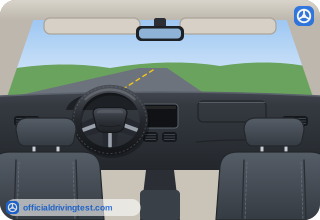
- As far back as it goes, to stay away from the wheel
- As close to the steering wheel as it goes, to hold it firmly
- Low enough that you sit below the level of the windows
- To a comfortable position with easy pedal reach and good vision
Show answer
Correct answer: To a comfortable position with easy pedal reach and good vision
The seat should let you reach the pedals easily and see well while staying comfortable.
Source: Oklahoma Driver Manual (2025 (updated November 24, 2025)), page 59 · Open this page in the manual (Manual page 59)
-
How should you adjust the rearview mirror before driving?
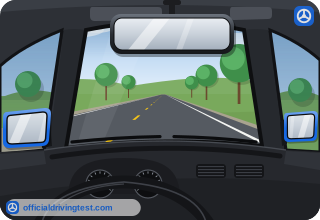
- So that you can see the road behind
- So that you can see the front seat
- So that it points at the left outside mirror
- So that the roof of the car fills most of it
Show answer
Correct answer: So that you can see the road behind
The rearview mirror should be set to show the road behind you.
Source: Oklahoma Driver Manual (2025 (updated November 24, 2025)), page 59 · Open this page in the manual (Manual page 59)
-
How much of the steering wheel should you have between your hands for a strong turning force with either hand?
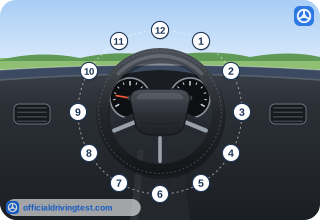
- At least 1/2 of the wheel
- At least 1/3 of the wheel
- At least 2/3 of the wheel
- No more than 1/4 of the wheel
Show answer
Correct answer: At least 1/3 of the wheel
Keeping at least a third of the wheel between your hands gives a strong turning force with either hand.
Source: Oklahoma Driver Manual (2025 (updated November 24, 2025)), page 60 · Open this page in the manual (Manual page 60)
-
Thinking of the steering wheel as a clock, where should your left hand generally be?
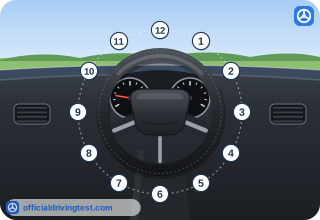
- Between 7:00 and 8:30
- Between 10:30 and 12:00
- Between 11:00 and 1:00
- Between 9:00 and 10:30
Show answer
Correct answer: Between 9:00 and 10:30
The manual says your left hand should generally be between 9:00 and 10:30.
Source: Oklahoma Driver Manual (2025 (updated November 24, 2025)), page 60 · Open this page in the manual (Manual page 60)
-
Thinking of the steering wheel as a clock, where should your right hand generally be?
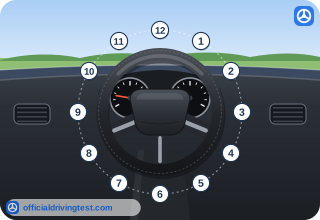
- Between 2:00 and 4:00
- Between 12:00 and 1:30
- Between 4:30 and 6:00
- Between 5:00 and 7:00
Show answer
Correct answer: Between 2:00 and 4:00
The manual says your right hand should generally be between 2:00 and 4:00.
Source: Oklahoma Driver Manual (2025 (updated November 24, 2025)), page 60 · Open this page in the manual (Manual page 60)
-
Why does the manual say not to drive with your elbow out the window?
- It blocks your view of the left mirror
- It lets cold air onto your face
- You lack full control of the steering wheel
- It makes the turn signal harder to see
Show answer
Correct answer: You lack full control of the steering wheel
An elbow out of the window means less than full control of the wheel, and a side-swipe collision could take off the arm.
Source: Oklahoma Driver Manual (2025 (updated November 24, 2025)), page 60 · Open this page in the manual (Manual page 60)