Traffic signals and pavement markings in Ohio
The Ohio Driver Manual shows or names everything on this page: 21 in all, on pages 10, 13–14, 17, 21, 23.
Independent educational site · not affiliated with any government agency or DMV
Traffic signals
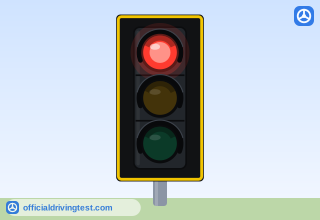
RED
A red traffic light means stop before entering the intersection. You must wait behind the stop line, crosswalk, or intersection until the traffic light turns green.
Manual page 10
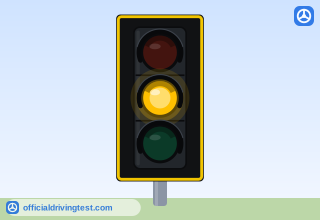
YELLOW
A yellow traffic light indicates the color is about to change to red; use caution. Prepare to stop.
Manual page 10
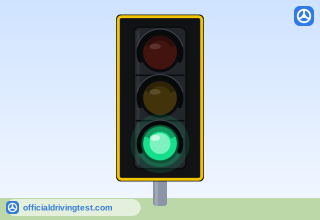
GREEN
A green traffic light means you may travel with caution through the intersection if it is clear to do so.
Manual page 10
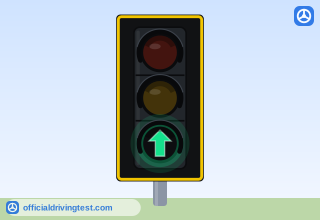
GREEN ARROW
A light marked with a green arrow indicates you can turn in the direction of the arrow without stopping.
Manual page 10
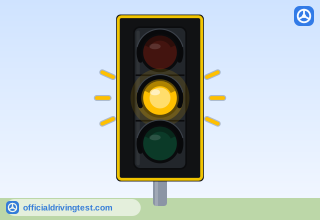
FLASHING YELLOW
Slow down and proceed with caution. Be prepared to stop for any traffic flow that may be entering the intersection.
Manual page 10
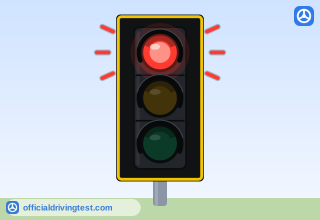
FLASHING RED
Stop behind a stop line, crosswalk, or intersection before entering and come to a complete stop. Be sure no traffic is traveling across your path of travel before entering the intersection.
Manual page 10
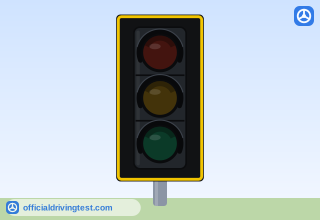
INOPERABLE TRAFFIC LIGHT
Inoperable traffic lights are treated the same as a stop sign. Yield the right-of-way and use caution while entering the intersection.
Manual page 10
Pavement markings
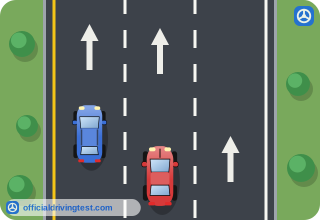
WHITE LINES
WHITE LINES: Separates traffic traveling in the same direction. White lines may be solid or broken (dashed) lines.
Manual page 13
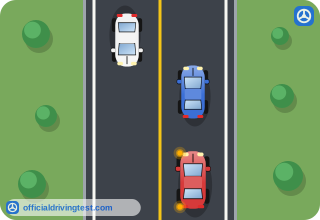
YELLOW SOLID LINE
YELLOW SOLID LINE: Separates traffic traveling in opposite directions.
Manual page 13
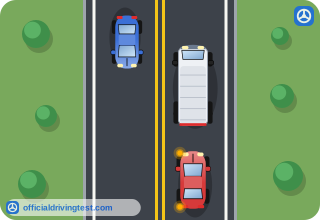
YELLOW SOLID DOUBLE LINE
YELLOW SOLID DOUBLE LINE: Do not drive to the left of the center line, unless you must cross the lines to turn left or pass a slow-moving vehicle (e.g., bicycle or vehicle displaying a slow-moving vehicle sign).
Manual page 13
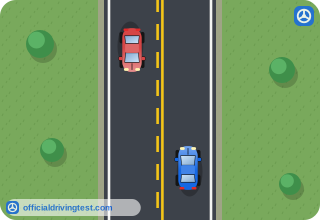
YELLOW SOLID LINE WITH A BROKEN LINE
Passing other vehicles is allowed for motorists traveling in the lane with the broken line. Passing is prohibited for motorists traveling in the lane with the solid line.
Manual page 13
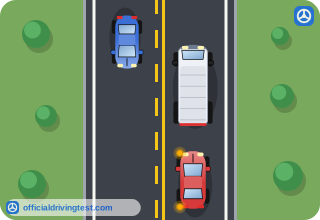
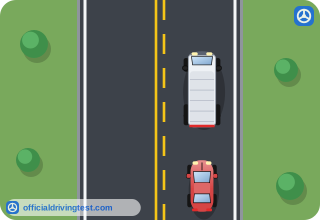
DO NOT PASS (SOLID LINE ON YOUR SIDE)
Passing is prohibited when the solid yellow line is in your lane. You can only pass when the broken yellow line is in your lane.
Manual page 21
PASS WITH CARE (BROKEN LINE ON YOUR SIDE)
Passing is prohibited when the solid yellow line is in your lane. You can only pass when the broken yellow line is in your lane.
Manual page 21
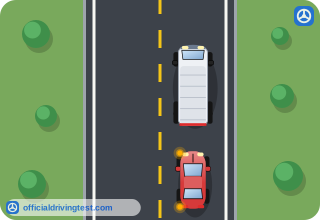
YELLOW BROKEN LINE
YELLOW BROKEN (DASHED) LINE: Vehicles traveling in either direction may pass vehicles traveling in the same direction when safe to do so.
Manual page 13
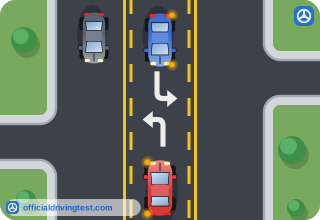
CENTER TURN LANE
A two-way left turn lane is marked with a broken yellow line and a solid yellow line on each side of the lane. It is also marked with white two-way left-turn lane arrows. The marked center lane is for left turns only. Vehicles from either direction may use the center lane immediately prior to making a left turn. This is not a lane used for traveling or passing.
Manual page 14
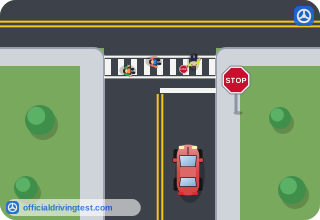
STOP LINE
You must yield the right-of-way to pedestrians entering or in a crosswalk. If there is a stop line before the crosswalk, the stop line must be obeyed.
Manual page 14
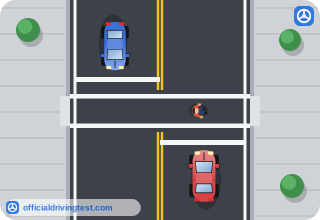
CROSSWALKS
Crosswalks define the area where pedestrians may cross the roadway. ... Not all crosswalks are marked in the same way.
Manual page 14
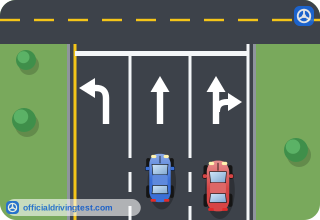
LANE-USE ARROWS
Pavement markings are lines, arrows, words, or symbols painted on the roadway. They divide lanes, tell you when you may pass other vehicles, tell you which lanes to use for turns, define pedestrian walkways, and show you where you must stop for signs or traffic signals.
Manual page 17
CURB COLORS
Some parking restrictions are indicated by colored curb markings.
Manual page 23
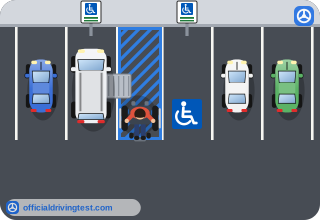
ACCESSIBLE PARKING SPACE
Do not park in spaces marked by a wheelchair symbol reserved for people with disabilities, unless you have been issued a disability placard or disability license plate.
Manual page 23
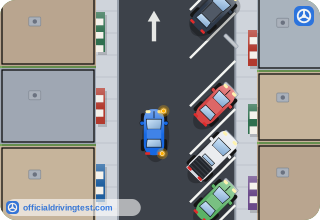
ANGLED PARKING SPACE LINES
Angled parking is marked with lines.
Manual page 23