Regulatory signs in Ohio
The Ohio Driver Manual shows or names everything on this page: 31 in all, on pages 9, 11, 14, 17, 23, 34.
Independent educational site · not affiliated with any government agency or DMV
Regulatory signs
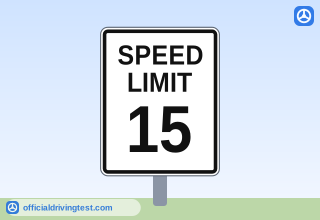
SPEED LIMIT 15
Generally, speed limits are based on the type of road (two-lane, divided highways, etc.), and the road’s location as described in the examples below. [Table row: 15 — Alleys within a municipal corporation]
Manual page 9
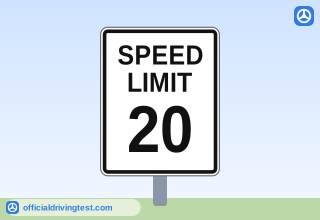
SPEED LIMIT 20
Generally, speed limits are based on the type of road (two-lane, divided highways, etc.), and the road’s location as described in the examples below. [Table row: 20 — School Zones during recess and while children are arriving or leaving school during normal hours of operation]
Manual page 9
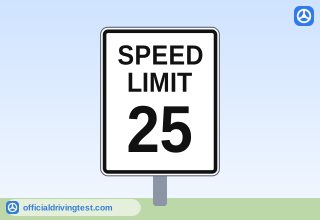
SPEED LIMIT 25
Generally, speed limits are based on the type of road (two-lane, divided highways, etc.), and the road’s location as described in the examples below. [Table row: 25 — Streets within a municipal corporation]
Manual page 9
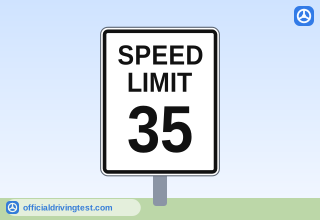
SPEED LIMIT 35
Generally, speed limits are based on the type of road (two-lane, divided highways, etc.), and the road’s location as described in the examples below. [Table row: 35 — State routes or through highways, except controlled-access highways within municipal corporations outside business districts]
Manual page 9
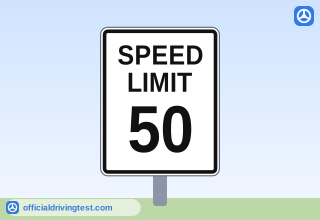
SPEED LIMIT 50
Generally, speed limits are based on the type of road (two-lane, divided highways, etc.), and the road’s location as described in the examples below. [Table row: 50 — State routes within municipal corporations outside urban districts]
Manual page 9
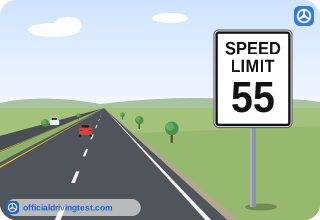
SPEED LIMIT 55
Generally, speed limits are based on the type of road (two-lane, divided highways, etc.), and the road’s location as described in the examples below. [Table row: 55 — Freeways with paved shoulders inside municipal corporations]
Manual page 9
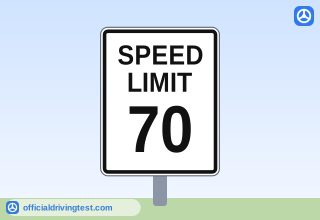
SPEED LIMIT 70
Generally, speed limits are based on the type of road (two-lane, divided highways, etc.), and the road’s location as described in the examples below. [Table row: 70 — Rural freeways]
Manual page 9
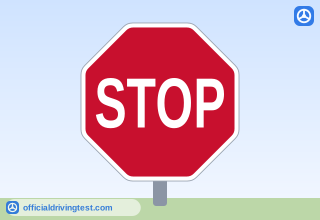
STOP
Regulatory Signs regulate the movement of traffic. These signs give notice to travelers of traffic laws or regulations.
Manual page 11
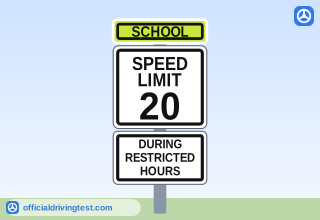
SCHOOL SPEED LIMIT 20 DURING RESTRICTED HOURS
Regulatory Signs regulate the movement of traffic. These signs give notice to travelers of traffic laws or regulations.
Manual page 11
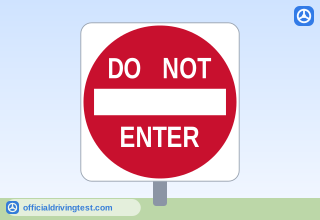
DO NOT ENTER
Regulatory Signs regulate the movement of traffic. These signs give notice to travelers of traffic laws or regulations.
Manual page 11
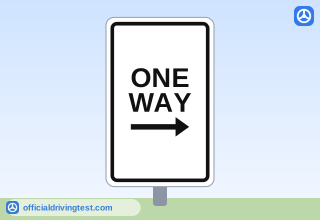
ONE WAY
Regulatory Signs regulate the movement of traffic. These signs give notice to travelers of traffic laws or regulations.
Manual page 11
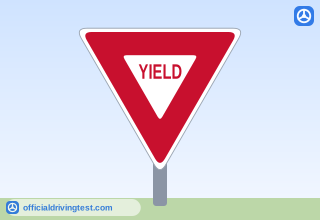
YIELD
Regulatory Signs regulate the movement of traffic. These signs give notice to travelers of traffic laws or regulations.
Manual page 11
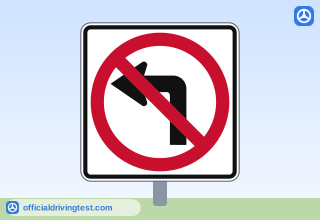
NO LEFT TURN
Prohibitory Signs instruct the viewer that an action is prohibited. The red circle with a slash represents the word ‘NO.’ Whenever this symbol appears on a sign, the illustrated action is prohibited.
Manual page 11
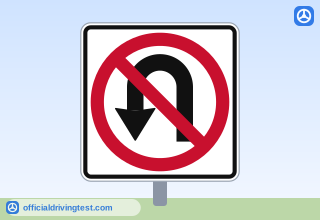
NO U TURN
Prohibitory Signs instruct the viewer that an action is prohibited. The red circle with a slash represents the word ‘NO.’ Whenever this symbol appears on a sign, the illustrated action is prohibited.
Manual page 11
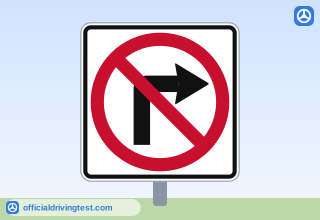
NO RIGHT TURN
Prohibitory Signs instruct the viewer that an action is prohibited. The red circle with a slash represents the word ‘NO.’ Whenever this symbol appears on a sign, the illustrated action is prohibited.
Manual page 11
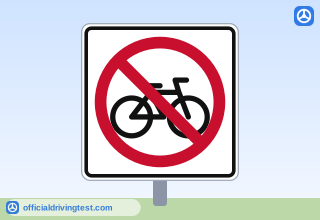
NO BICYCLES
Prohibitory Signs instruct the viewer that an action is prohibited. The red circle with a slash represents the word ‘NO.’ Whenever this symbol appears on a sign, the illustrated action is prohibited.
Manual page 11
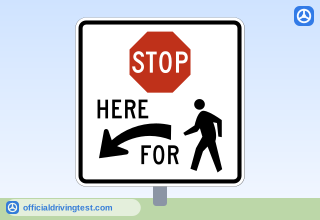
STOP HERE FOR PEDESTRIANS
You must yield the right-of-way to pedestrians entering or in a crosswalk. If there is a stop line before the crosswalk, the stop line must be obeyed.
Manual page 14
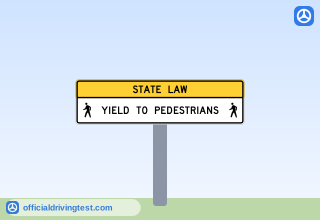
STATE LAW YIELD TO PEDESTRIANS
You must yield the right-of-way to pedestrians entering or in a crosswalk.
Manual page 14
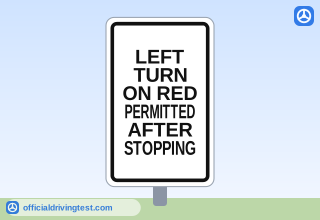
LEFT TURN ON RED PERMITTED AFTER STOPPING
Left Turn on Red — You may turn left at a red traffic signal, only from the extreme left lane of a one-way street onto another one-way street, unless the intersection has a sign posted forbidding a left turn on red.
Manual page 17
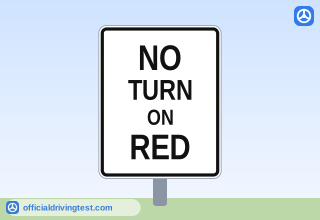
NO TURN ON RED
Right Turn on Red — You may turn right at a red traffic signal, unless a sign specifically prohibits it.
Manual page 17
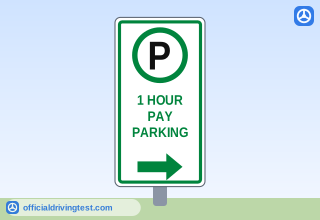
1 HOUR PAY PARKING
Always park in a designated area.
Manual page 23
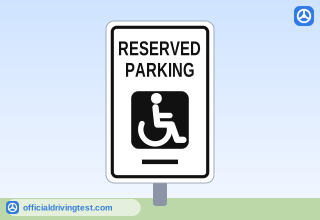
RESERVED PARKING (ACCESSIBLE)
Do not park in spaces marked by a wheelchair symbol reserved for people with disabilities, unless you have been issued a disability placard or disability license plate.
Manual page 23
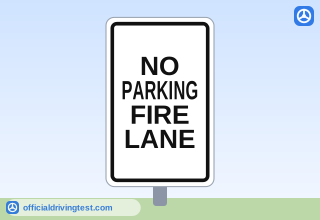
NO PARKING FIRE LANE
Check for signs or painted curbs that may prohibit or limit parking.
Manual page 23
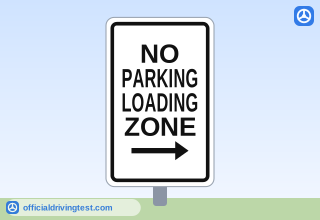
NO PARKING LOADING ZONE
Check for signs or painted curbs that may prohibit or limit parking.
Manual page 23
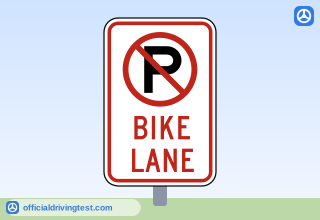
NO PARKING BIKE LANE
Check for signs or painted curbs that may prohibit or limit parking.
Manual page 23
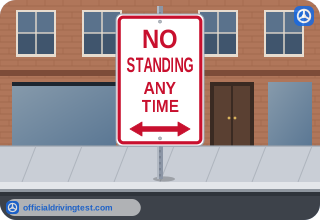
NO STANDING ANY TIME
No person shall stop, park, or stand a vehicle in any of the following places, except when necessary to avoid conflict with other traffic, or in compliance with the directions of a law enforcement officer or traffic control device: ... At any place where signs prohibit stopping.
Manual page 23
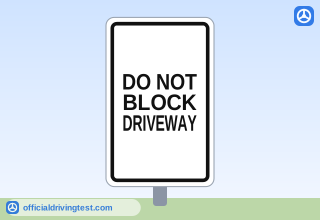
DO NOT BLOCK DRIVEWAY
No person shall stop, park, or stand a vehicle in any of the following places, except when necessary to avoid conflict with other traffic, or in compliance with the directions of a law enforcement officer or traffic control device: ... At any place where signs prohibit stopping.
Manual page 23
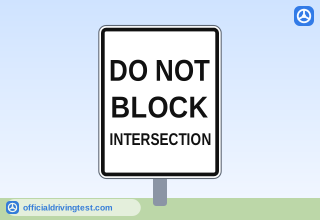
DO NOT BLOCK INTERSECTION
No person shall stop, park, or stand a vehicle in any of the following places, except when necessary to avoid conflict with other traffic, or in compliance with the directions of a law enforcement officer or traffic control device: ... At any place where signs prohibit stopping.
Manual page 23
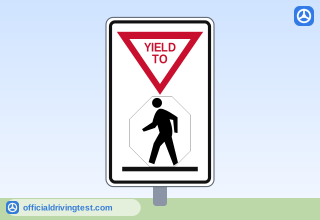
YIELD TO PEDESTRIANS (SYMBOL)
Pedestrians don’t always obey traffic signals or walk in marked crosswalks, so as a driver, you must yield to pedestrians.
Manual page 34
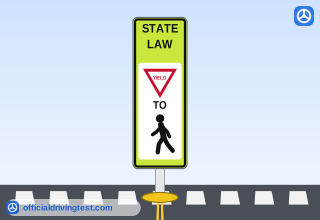
STATE LAW YIELD TO PEDESTRIANS WITHIN CROSSWALK
Pedestrians don’t always obey traffic signals or walk in marked crosswalks, so as a driver, you must yield to pedestrians.
Manual page 34
Lane-use control signals
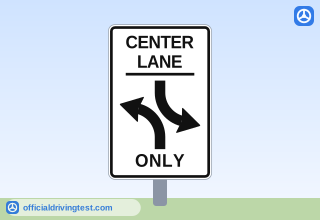
CENTER LANE ONLY
The marked center lane is for left turns only. Vehicles from either direction may use the center lane immediately prior to making a left turn. This is not a lane used for traveling or passing.
Manual page 14