North Dakota: Speed and following distance Practice Test
North Dakota speed limits, the three-second rule, stopping distances and adjusting your speed to the road.
Independent educational site · not affiliated with any government agency or DMV
Ready? Test yourself
- Instant feedback with an explanation
- Every answer cites its source in the manual
- Your best score is saved on this device
- Keyboard: press 1 to 4 to answer and Enter for the next question
Questions are original and based on the official manual "North Dakota Noncommercial Driver License Manual" (2025-2027), North Dakota Department of Transportation (NDDOT).
All 31 questions in this practice test
Take the test above first, then use this list to study. Tap “Show answer” to see the correct answer and explanation.
Show the questions and answersHide the questions
-
What do speed limits tell you about driving conditions?
- They are the speed you must always drive on that road
- They are minimum speeds that you must always reach
- They apply only on dry pavement in daylight hours
- They are maximum limits for use only in ideal conditions
Show answer
Correct answer: They are maximum limits for use only in ideal conditions
Speed limits are maximum limits to be traveled only when driving conditions are ideal, and conditions may require you to drive slower.
Source: North Dakota Noncommercial Driver License Manual (2025-2027), page 20 · Open this page in the manual (Manual page 20)
-
Which speed limits may authorities also post if they think it necessary for the safe movement of traffic?
- Seasonal speed limits
- Night-only speed limits
- Minimum speed limits
- Weight-based speed limits
Show answer
Correct answer: Minimum speed limits
The manual says authorities may also post minimum speed limits if deemed necessary for the safe movement of traffic.
Source: North Dakota Noncommercial Driver License Manual (2025-2027), page 20 · Open this page in the manual (Manual page 20)
-
What is the maximum speed when approaching a railway crossing where your view of the track is obstructed, unless otherwise posted?
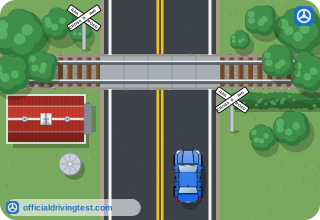
- 20 miles per hour
- 15 miles per hour
- 25 miles per hour
- 30 miles per hour
Show answer
Correct answer: 20 miles per hour
The maximum speed is 20 miles per hour when approaching a railway crossing where your view of the track is obstructed, unless otherwise posted.
Source: North Dakota Noncommercial Driver License Manual (2025-2027), page 20 · Open this page in the manual (Manual page 20)
-
What is the maximum speed when approaching an intersection where your view of the intersection is in any way obstructed, unless otherwise posted?
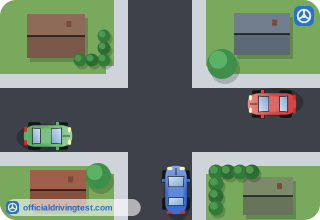
- 10 miles per hour
- 25 miles per hour
- 35 miles per hour
- 20 miles per hour
Show answer
Correct answer: 20 miles per hour
The maximum speed is 20 miles per hour when approaching an intersection where your view is in any way obstructed, unless otherwise posted.
Source: North Dakota Noncommercial Driver License Manual (2025-2027), page 20 · Open this page in the manual (Manual page 20)
-
What is the maximum speed when you pass by a school during recess or while children are going to or leaving school during opening or closing hours, unless otherwise posted?
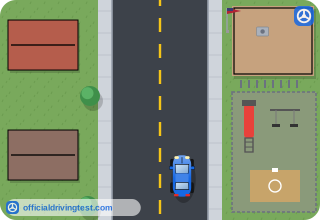
- 15 miles per hour
- 20 miles per hour
- 25 miles per hour
- 30 miles per hour
Show answer
Correct answer: 20 miles per hour
The maximum speed is 20 miles per hour when passing a school during recess or while children are going to or leaving school at opening or closing hours.
Source: North Dakota Noncommercial Driver License Manual (2025-2027), page 20 · Open this page in the manual (Manual page 20)
-
What is the maximum speed in a business or residential district, unless otherwise posted?
- 25 miles per hour
- 20 miles per hour
- 30 miles per hour
- 35 miles per hour
Show answer
Correct answer: 25 miles per hour
The maximum speed is 25 miles per hour in a business or residential district, unless otherwise posted.
Source: North Dakota Noncommercial Driver License Manual (2025-2027), page 20 · Open this page in the manual (Manual page 20)
-
What is the maximum speed on gravel, dirt, or loose surface roads, unless otherwise posted?
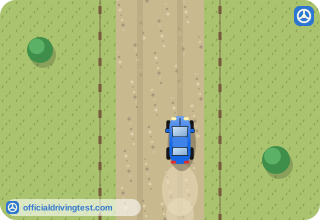
- 45 miles per hour
- 65 miles per hour
- 55 miles per hour
- 70 miles per hour
Show answer
Correct answer: 55 miles per hour
The maximum speed is 55 miles per hour on gravel, dirt, or loose surface roads unless otherwise posted.
Source: North Dakota Noncommercial Driver License Manual (2025-2027), page 20 · Open this page in the manual (Manual page 20)
-
What is the maximum speed on a paved two-lane county or township highway when no speed limit is posted?
- 25 miles per hour
- 55 miles per hour
- 65 miles per hour
- 80 miles per hour
Show answer
Correct answer: 55 miles per hour
The maximum speed is 55 miles per hour on paved two-lane county and township highways if there is no speed limit posted.
Source: North Dakota Noncommercial Driver License Manual (2025-2027), page 20 · Open this page in the manual (Manual page 20)
-
What is the maximum speed on rural paved 2-lane highways if they are posted for that speed?
- 55 miles per hour
- 70 miles per hour
- 80 miles per hour
- 65 miles per hour
Show answer
Correct answer: 65 miles per hour
Rural paved 2-lane highways have a maximum speed of 65 miles per hour if posted for that speed.
Source: North Dakota Noncommercial Driver License Manual (2025-2027), page 20 · Open this page in the manual (Manual page 20)
-
What is the maximum speed on paved and divided multi-lane highways, unless otherwise posted?
- 55 miles per hour
- 65 miles per hour
- 70 miles per hour
- 80 miles per hour
Show answer
Correct answer: 70 miles per hour
The maximum speed is 70 miles per hour on paved and divided multi-lane highways, unless otherwise posted.
Source: North Dakota Noncommercial Driver License Manual (2025-2027), page 20 · Open this page in the manual (Manual page 20)
-
What is the maximum speed on rural Interstate highways, unless otherwise posted?
- 80 miles per hour
- 65 miles per hour
- 70 miles per hour
- 75 miles per hour
Show answer
Correct answer: 80 miles per hour
The maximum speed is 80 miles per hour on rural Interstate highways, unless otherwise posted.
Source: North Dakota Noncommercial Driver License Manual (2025-2027), page 20 · Open this page in the manual (Manual page 20)
-
At 55 miles per hour, about how far does it take to stop on dry pavement?
- Approximately 100 feet, or one car length
- Approximately 500 feet, or two city blocks
- Approximately 150 feet, or half a city block
- Approximately 300 feet, or one city block
Show answer
Correct answer: Approximately 300 feet, or one city block
At 55 miles per hour, it takes approximately 300 feet, or one city block, on dry pavement to stop.
Source: North Dakota Noncommercial Driver License Manual (2025-2027), page 21 · Open this page in the manual (Manual page 21)
-
When one vehicle follows another, how much distance must there be between them?
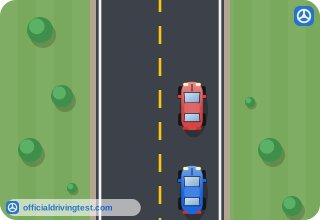
- One car length for every 10 miles per hour of speed
- Enough for a passing vehicle to come into that space safely
- Only enough to see the tail lights of the vehicle ahead
- Enough for you to read the license plate of the vehicle ahead
Show answer
Correct answer: Enough for a passing vehicle to come into that space safely
There must be enough distance between vehicles to allow a passing vehicle to come into that space without any danger.
Source: North Dakota Noncommercial Driver License Manual (2025-2027), page 21 · Open this page in the manual (Manual page 21)
-
What is the “three-second rule” used for?
- To measure the distance to keep when following another vehicle
- To decide how long to wait before you move from a stop sign
- To measure how long a yellow light stays on before red
- To time how long to signal before making a turn
Show answer
Correct answer: To measure the distance to keep when following another vehicle
The three-second rule is a way to measure the distance you should use as a cushion when following another vehicle.
Source: North Dakota Noncommercial Driver License Manual (2025-2027), page 22 · Open this page in the manual (Manual page 22)
-
When using the three-second rule, when do you start counting?
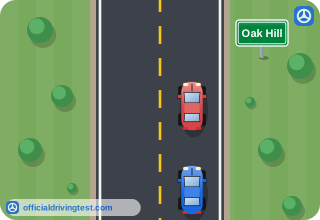
- When the front bumper of the vehicle ahead passes a mark
- When the vehicle ahead brakes
- When the rear bumper of the vehicle ahead passes a mark you picked
- When you pass the vehicle ahead
Show answer
Correct answer: When the rear bumper of the vehicle ahead passes a mark you picked
You pick a shadow, mark, or object ahead and start counting when the rear bumper of the vehicle ahead passes it.
Source: North Dakota Noncommercial Driver License Manual (2025-2027), page 22 · Open this page in the manual (Manual page 22)
-
Using the three-second rule, you reach the mark before you count “one-thousand-and-three.” What does this mean?
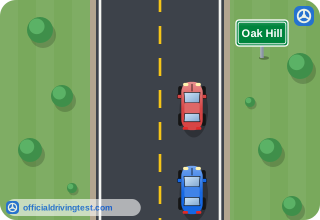
- You are following at a safe distance.
- You are following too closely.
- You are following too far behind.
- You are driving over the speed limit.
Show answer
Correct answer: You are following too closely.
If you reach the spot before you count “one-thousand-and-three,” you are following too closely.
Source: North Dakota Noncommercial Driver License Manual (2025-2027), page 22 · Open this page in the manual (Manual page 22)
-
Which of these is a time when you need as much as four or more seconds of following distance?
- When the road is dry and traffic is light
- When you are following a vehicle of the same size
- When the driver behind you is far back
- When the roads are slippery
Show answer
Correct answer: When the roads are slippery
The manual says you need even more following distance, as much as four or more seconds, when the roads are slippery.
Source: North Dakota Noncommercial Driver License Manual (2025-2027), page 22 · Open this page in the manual (Manual page 22)
-
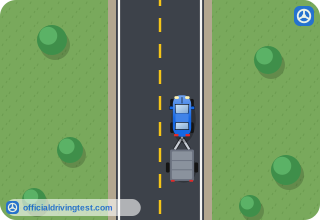
You have a heavy load or are pulling a trailer. How much following distance may you need?
- About one second at most
- About two seconds
- As much as four or more seconds
- No more than you would leave normally
Show answer
Correct answer: As much as four or more seconds
You may need as much as four or more seconds of following distance when you have a heavy load or are pulling a trailer.
Source: North Dakota Noncommercial Driver License Manual (2025-2027), page 22 · Open this page in the manual (Manual page 22)
-
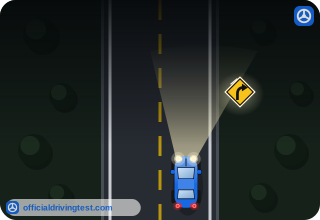
At night, you should be able to stop within what distance?
- The distance to the next intersection
- The distance covered by your headlights
- Twice the distance of your headlights
- The distance of one city block
Show answer
Correct answer: The distance covered by your headlights
You should be able to stop in the distance covered by your headlights, even if you come up on a vehicle without taillights or a parked vehicle with its lights on.
Source: North Dakota Noncommercial Driver License Manual (2025-2027), page 24 · Open this page in the manual (Manual page 24)
-
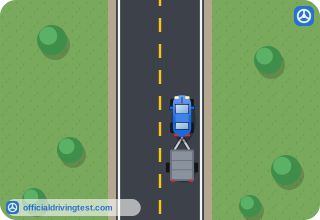
How does the weight of a trailer affect your vehicle?
- It shortens the distance necessary to stop
- It has no effect on stopping
- It lengthens the distance necessary to stop
- It improves traction on wet roads
Show answer
Correct answer: It lengthens the distance necessary to stop
The increased weight from a trailer lengthens the distance necessary to stop your vehicle.
Source: North Dakota Noncommercial Driver License Manual (2025-2027), page 26 · Open this page in the manual (Manual page 26)
-
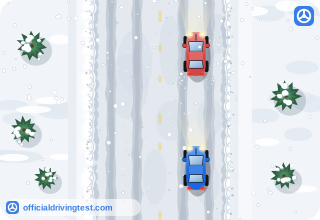
Even if you have snow tires or tire chains, what should you still do on a winter road?
- Keep the same following distance as on dry roads
- Drive at the posted speed limit
- Follow closer so you can use the other vehicle's tracks
- Double your distance for following other vehicles
Show answer
Correct answer: Double your distance for following other vehicles
Snow tires or tire chains are helpful, but the manual says you should still double your distance for following other vehicles.
Source: North Dakota Noncommercial Driver License Manual (2025-2027), page 28 · Open this page in the manual (Manual page 28)
-
What does the manual say causes most winter crashes?

- Studded tires being used
- Snowplows stopping on the road
- Frost forming on bridges
- Driving too fast for conditions
Show answer
Correct answer: Driving too fast for conditions
The manual says most winter crashes are caused by driving too fast for conditions.
Source: North Dakota Noncommercial Driver License Manual (2025-2027), page 28 · Open this page in the manual (Manual page 28)
-
As an operator, what must you adjust your speed to fit?
- The weather, traffic conditions, and the condition of the road
- The time of day, the length of your trip, and your fuel level
- The age of your vehicle and the number of passengers
- The color of the signs and the width of the lanes
Show answer
Correct answer: The weather, traffic conditions, and the condition of the road
The manual says that as an operator you must adjust your speed to fit the weather, traffic conditions, and the condition of the road.
Source: North Dakota Noncommercial Driver License Manual (2025-2027), page 30 · Open this page in the manual (Manual page 30)
-
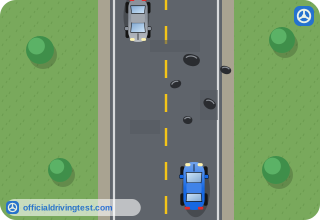
How should you handle ruts, holes, broken pavement, or other objects on the road?
- Brake hard and steer sharply around them to avoid damage to the tires
- Speed up so your tires cross them quickly
- Slow down, and do not slam on your brakes or steer hard to avoid them
- Straddle them by driving along the center line
Show answer
Correct answer: Slow down, and do not slam on your brakes or steer hard to avoid them
The manual says to slow down where there are ruts, holes, broken pavement, or other objects, and not to slam on your brakes or steer hard to avoid them.
Source: North Dakota Noncommercial Driver License Manual (2025-2027), page 30 · Open this page in the manual (Manual page 30)
-
Why is driving on loose gravel harder than driving on pavement?
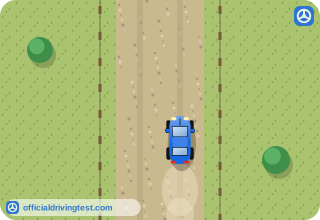
- Gravel makes the steering wheel so heavy that it is hard to turn
- Your tires don’t have the traction needed to give you stable control
- Gravel limits how far ahead you can see the road
- Gravel raises the temperature of your tires quickly
Show answer
Correct answer: Your tires don’t have the traction needed to give you stable control
The manual says loose gravel is harder to drive on because your tires don’t have the traction needed for stable control.
Source: North Dakota Noncommercial Driver License Manual (2025-2027), page 30 · Open this page in the manual (Manual page 30)
-
What should you do when driving on loose gravel?
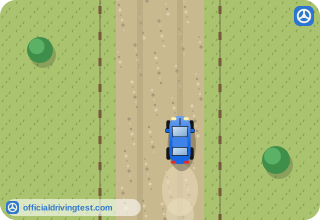
- Speed up to get across it quickly
- Brake hard whenever the tires slide
- Steer sharply to stay out of the loose gravel
- Slow down and avoid sudden changes in direction
Show answer
Correct answer: Slow down and avoid sudden changes in direction
The manual says to slow down and avoid sudden changes in direction on loose gravel.
Source: North Dakota Noncommercial Driver License Manual (2025-2027), page 30 · Open this page in the manual (Manual page 30)
-
According to the manual, what happens to crash risk, severity, and force as a driver's speed increases?
- Risk drops but severity stays the same
- All three increase
- Only crash severity increases
- They stay the same on dry pavement
Show answer
Correct answer: All three increase
The manual states that crash risk, severity, and force all increase as speed increases.
Source: North Dakota Noncommercial Driver License Manual (2025-2027), page 41 · Open this page in the manual (Manual page 41)
-
What happens to your braking distance when you double your speed?
- It quadruples
- It doubles
- It stays the same
- It increases by half
Show answer
Correct answer: It quadruples
Doubling your speed will quadruple your braking distance; the faster you go, the longer it takes to stop.
Source: North Dakota Noncommercial Driver License Manual (2025-2027), page 42 · Open this page in the manual (Manual page 42)
-
What happens to your braking distance when you double your vehicle's weight?
- It quadruples
- It is cut in half
- It does not change
- It doubles
Show answer
Correct answer: It doubles
Doubling your vehicle weight will double your braking distance, so a large vehicle or a vehicle towing a trailer takes longer to stop.
Source: North Dakota Noncommercial Driver License Manual (2025-2027), page 42 · Open this page in the manual (Manual page 42)
-
Why does the manual say compliance with speed limits applies on all roads at all times?
- Speed limits are the same on every road
- Police patrol all roads at all times
- Insurance rates depend on speed
- Crash forces at higher speeds kill
Show answer
Correct answer: Crash forces at higher speeds kill
Speed limit compliance applies on all roads at all times because crash forces at higher speeds kill.
Source: North Dakota Noncommercial Driver License Manual (2025-2027), page 42 · Open this page in the manual (Manual page 42)
-
The manual lists driving how much too fast for conditions as a top teen driving error?
- Ten or more miles per hour
- Fifteen or more miles per hour
- Five or more miles per hour
- One or more miles per hour
Show answer
Correct answer: Five or more miles per hour
The list of top teen driving errors includes driving five or more miles per hour too fast for conditions.
Source: North Dakota Noncommercial Driver License Manual (2025-2027), page 43 · Open this page in the manual (Manual page 43)