North Dakota: Seat belts and child safety Practice Test
North Dakota’s seat belt and child restraint laws, air bags, booster seats and keeping children safe from vehicle heatstroke.
Independent educational site · not affiliated with any government agency or DMV
Ready? Test yourself
- Instant feedback with an explanation
- Every answer cites its source in the manual
- Your best score is saved on this device
- Keyboard: press 1 to 4 to answer and Enter for the next question
Questions are original and based on the official manual "North Dakota Noncommercial Driver License Manual" (2025-2027), North Dakota Department of Transportation (NDDOT).
All 30 questions in this practice test
Take the test above first, then use this list to study. Tap “Show answer” to see the correct answer and explanation.
Show the questions and answersHide the questions
-
Besides protecting you in a crash, what else do seat belts help with according to the manual?
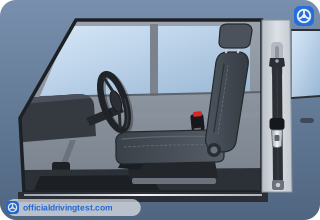
- They let you drive faster on the highway than otherwise
- They remove the need for air bags in the vehicle
- They help you keep proper posture, so you feel less tired
- They allow you to take your eyes off the road longer
Show answer
Correct answer: They help you keep proper posture, so you feel less tired
The manual says seat belts help you keep proper posture, making you feel less tired after a trip.
Source: North Dakota Noncommercial Driver License Manual (2025-2027), page 33 · Open this page in the manual (Manual page 33)
-
How should a lap belt lie when it is worn correctly?
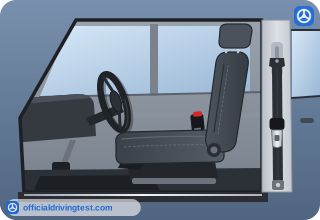
- Snug and low across the abdomen
- Snug and low across the hips
- Loose across the lower ribs
- Across the chest and under the arm
Show answer
Correct answer: Snug and low across the hips
The manual says lap belts should lie snug and low across the hips, not across the abdomen.
Source: North Dakota Noncommercial Driver License Manual (2025-2027), page 34 · Open this page in the manual (Manual page 34)
-
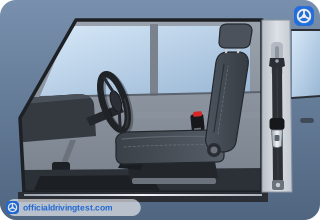
How should a shoulder belt lie when it is worn correctly?
- Across the neck with a lot of slack
- Under the arm and across the lower ribs
- Across the abdomen with some slack
- Across the chest and over the collarbone
Show answer
Correct answer: Across the chest and over the collarbone
The manual says shoulder belts should lie across the chest and over the collarbone with minimal, if any, slack.
Source: North Dakota Noncommercial Driver License Manual (2025-2027), page 34 · Open this page in the manual (Manual page 34)
-
What is needed for sufficient protection when a car has automatic shoulder belts?
- Nothing more, because the shoulder belt is enough
- A separate lap belt fastened manually
- The front doors left slightly open
- A second shoulder belt worn across the abdomen
Show answer
Correct answer: A separate lap belt fastened manually
The manual says a separate lap belt must be fastened manually to provide sufficient protection with automatic shoulder belts.
Source: North Dakota Noncommercial Driver License Manual (2025-2027), page 34 · Open this page in the manual (Manual page 34)
-
According to North Dakota’s seat belt law, who must wear seat belts?
- Only the driver and front-seat passengers
- Only drivers and passengers under 18
- Only occupants on highways
- All occupants, in all seating positions
Show answer
Correct answer: All occupants, in all seating positions
The manual states that North Dakota’s seat belt law requires all occupants to wear seat belts in all seating positions.
Source: North Dakota Noncommercial Driver License Manual (2025-2027), page 34 · Open this page in the manual (Manual page 34)
-
What are air bags designed to provide?
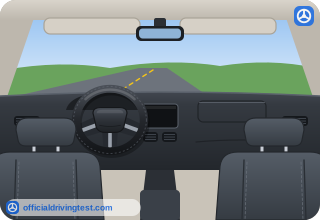
- Supplemental protection for belted front-seat occupants
- Protection that replaces seat belts in a frontal crash
- Protection for unbelted occupants in a roll-over crash
- Protection only for back-seat occupants in crashes
Show answer
Correct answer: Supplemental protection for belted front-seat occupants
The manual says air bags are designed to provide supplemental protection for belted front-seat occupants in a frontal crash.
Source: North Dakota Noncommercial Driver License Manual (2025-2027), page 34 · Open this page in the manual (Manual page 34)
-
What must always be used in conjunction with an air bag to protect occupants in side-impact and roll-over crashes?
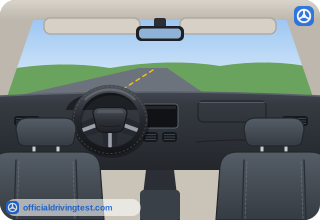
- Head restraints only
- Tinted windows
- Lap/shoulder belts
- Side mirrors
Show answer
Correct answer: Lap/shoulder belts
The manual says lap/shoulder belts must always be used with an airbag to protect occupants in side-impact and roll-over crashes.
Source: North Dakota Noncommercial Driver License Manual (2025-2027), page 34 · Open this page in the manual (Manual page 34)
-
Under North Dakota’s child passenger safety law, how must children under eight years of age be secured?
- In a regular seat belt only, whatever the child’s height
- In the front seat with the air bag turned off
- In the cargo area with a safety harness
- In a child restraint (car seat or booster seat)
Show answer
Correct answer: In a child restraint (car seat or booster seat)
The law requires children under eight to be properly secured in a child restraint, which is a car seat or booster seat.
Source: North Dakota Noncommercial Driver License Manual (2025-2027), page 34 · Open this page in the manual (Manual page 34)
-
A seat belt may be substituted for a child restraint for a child under eight who is at least how tall?
- 57 inches
- 40 inches
- 48 inches
- 63 inches
Show answer
Correct answer: 57 inches
The manual says a seat belt may be substituted for children who are at least 57 inches tall.
Source: North Dakota Noncommercial Driver License Manual (2025-2027), page 34 · Open this page in the manual (Manual page 34)
-
How must children ages eight through seventeen be secured?
- In a booster seat only
- In a car seat only
- In a seat belt or child restraint
- They need no restraint in the back seat
Show answer
Correct answer: In a seat belt or child restraint
The law requires children ages eight through seventeen to be properly secured in a seat belt or child restraint.
Source: North Dakota Noncommercial Driver License Manual (2025-2027), page 34 · Open this page in the manual (Manual page 34)
-
What is the penalty for violating North Dakota’s child passenger safety law?
- $50 and two points against the license
- $25 and one point on the driver’s license
- $25 and no points against the license
- $100 and three points against the license
Show answer
Correct answer: $25 and one point on the driver’s license
The manual states the penalty is $25 and one point against the license of the driver.
Source: North Dakota Noncommercial Driver License Manual (2025-2027), page 34 · Open this page in the manual (Manual page 34)
-
What does correct use of a child restraint include?
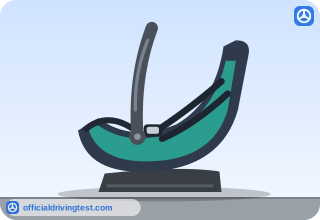
- Installing the car seat tightly and snugly securing the child
- Installing the car seat loosely so it can move with the child
- Securing the child loosely so the child can move around
- Placing the car seat only on the front seat of the vehicle
Show answer
Correct answer: Installing the car seat tightly and snugly securing the child
The manual says correct use includes installing the car seat tightly with the safety belt or LATCH system and snugly securing the child in it.
Source: North Dakota Noncommercial Driver License Manual (2025-2027), page 34 · Open this page in the manual (Manual page 34)
-
According to the manual’s child passenger safety tips, children under what age should ride in the back seat?
- 8
- 10
- 13
- 16
Show answer
Correct answer: 13
The manual says children under age 13 should ride in the back seat, even if the vehicle does not have an airbag.
Source: North Dakota Noncommercial Driver License Manual (2025-2027), page 34 · Open this page in the manual (Manual page 34)
-
Where must you never place a rear-facing infant car seat?
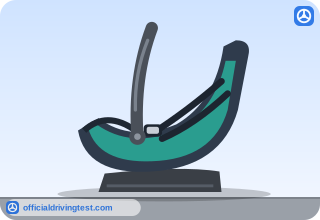
- In the back seat
- In front of an airbag
- In the middle of the back seat
- Behind the driver’s seat
Show answer
Correct answer: In front of an airbag
The manual says never to place a rear-facing infant car seat in front of an airbag.
Source: North Dakota Noncommercial Driver License Manual (2025-2027), page 34 · Open this page in the manual (Manual page 34)
-
According to the manual, a child should be at least what weight and age to move from a car seat to a booster seat?
- At least 30 pounds and at least 2 years of age
- At least 60 pounds and at least 8 years of age
- At least 50 pounds and at least 6 years of age
- At least 40 pounds and at least 4 years of age
Show answer
Correct answer: At least 40 pounds and at least 4 years of age
The manual says children should be at least 40 pounds and at least 4 years of age to move from a car seat to a booster seat.
Source: North Dakota Noncommercial Driver License Manual (2025-2027), page 34 · Open this page in the manual (Manual page 34)
-
Where does the manual say you should never allow children to ride?
- In the back seat of a pickup truck
- In the cargo area of a pickup truck
- In the back seat of a car
- In a booster seat in the back seat
Show answer
Correct answer: In the cargo area of a pickup truck
The manual says never to allow children to ride in the cargo area of a pickup truck.
Source: North Dakota Noncommercial Driver License Manual (2025-2027), page 34 · Open this page in the manual (Manual page 34)
-
Which of these does the manual say you should never do?
- Buckle one child into each seat belt
- Place a child in a booster seat in the back seat
- Follow the manufacturer’s instructions for a car seat
- Buckle two children into one seat belt
Show answer
Correct answer: Buckle two children into one seat belt
The manual says never to buckle two children into one seat belt.
Source: North Dakota Noncommercial Driver License Manual (2025-2027), page 34 · Open this page in the manual (Manual page 34)
-
Vehicle heatstroke occurs when what happens?
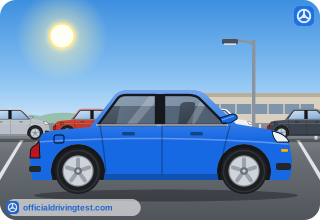
- A child is left in a vehicle and the child’s body temperature rises quickly
- A vehicle’s engine overheats on a hot day and the cabin warms up
- A child is buckled too tightly in a car seat and cannot move freely
- A driver falls asleep in a parked vehicle with the engine running
Show answer
Correct answer: A child is left in a vehicle and the child’s body temperature rises quickly
The manual says vehicle heatstroke occurs when a child is left in a vehicle and the child’s body temperature rises quickly.
Source: North Dakota Noncommercial Driver License Manual (2025-2027), page 35 · Open this page in the manual (Manual page 35)
-
Heatstroke begins when the core body temperature reaches about what temperature?
- 98 degrees
- 100 degrees
- 104 degrees
- 102 degrees
Show answer
Correct answer: 104 degrees
The manual says heatstroke begins when the core body temperature reaches about 104 degrees.
Source: North Dakota Noncommercial Driver License Manual (2025-2027), page 35 · Open this page in the manual (Manual page 35)
-
A core body temperature of about what temperature is lethal?
- 100 degrees
- 102 degrees
- 110 degrees
- 107 degrees
Show answer
Correct answer: 107 degrees
The manual says a core body temperature of about 107 degrees is lethal.
Source: North Dakota Noncommercial Driver License Manual (2025-2027), page 35 · Open this page in the manual (Manual page 35)
-
Who is more vulnerable to heatstroke, according to the manual?
- Children are more vulnerable than adults
- Adults are more vulnerable than children
- Adults and children are equally vulnerable
- Only infants are vulnerable
Show answer
Correct answer: Children are more vulnerable than adults
The manual says children are more vulnerable to heatstroke than adults are.
Source: North Dakota Noncommercial Driver License Manual (2025-2027), page 35 · Open this page in the manual (Manual page 35)
-
Which is named as a risk factor for forgetting a child in a vehicle?
- Driving only on rural roads with very little traffic at night
- Having more than one child in the vehicle at the same time on trips
- Caregivers not used to driving kids, or whose routine suddenly changes
- Driving with the windows open on a warm, sunny day with a breeze
Show answer
Correct answer: Caregivers not used to driving kids, or whose routine suddenly changes
The manual lists caregivers who are not used to driving kids, or whose routine suddenly changes, as risk factors.
Source: North Dakota Noncommercial Driver License Manual (2025-2027), page 35 · Open this page in the manual (Manual page 35)
-
According to the manual, what can an outside temperature in the mid-60s cause?
- The inside of a vehicle to stay below 80 degrees Fahrenheit
- The inside of a vehicle to rise above 110 degrees Fahrenheit
- The inside of a vehicle to rise to about 80 degrees Fahrenheit
- No change in the temperature inside a vehicle
Show answer
Correct answer: The inside of a vehicle to rise above 110 degrees Fahrenheit
The manual says that even in cooler temperatures a vehicle can heat up quickly, rising above 110 degrees Fahrenheit inside.
Source: North Dakota Noncommercial Driver License Manual (2025-2027), page 35 · Open this page in the manual (Manual page 35)
-
About how much can the inside temperature of a vehicle rise within the first 10 minutes?
- Almost 20 degrees Fahrenheit
- About 5 degrees Fahrenheit
- About 10 degrees Fahrenheit
- About 40 degrees Fahrenheit
Show answer
Correct answer: Almost 20 degrees Fahrenheit
The manual says a vehicle’s inside temperature can rise almost 20 degrees Fahrenheit within the first 10 minutes.
Source: North Dakota Noncommercial Driver License Manual (2025-2027), page 35 · Open this page in the manual (Manual page 35)
-
What does the heatstroke prevention tip “Look before you lock” mean?
- Check that all doors are closed before you start the engine
- Check the tires before you lock the vehicle
- Make it a habit to look in your back seat before you lock the vehicle
- Look at the dashboard before you leave
Show answer
Correct answer: Make it a habit to look in your back seat before you lock the vehicle
The manual advises making a habit of looking in the back seat before locking the vehicle.
Source: North Dakota Noncommercial Driver License Manual (2025-2027), page 35 · Open this page in the manual (Manual page 35)
-
Why should you keep your vehicle locked and your keys out of reach of children?
- Locked doors keep the vehicle cool
- Unattended children who get into a vehicle can suffer heatstroke
- A locked vehicle cannot be towed
- A locked vehicle with hidden keys is cheaper to insure each year
Show answer
Correct answer: Unattended children who get into a vehicle can suffer heatstroke
Keep your vehicle locked and your keys out of reach: an unattended child who gets into a vehicle can suffer heatstroke.
Source: North Dakota Noncommercial Driver License Manual (2025-2027), page 35 · Open this page in the manual (Manual page 35)
-
What should you do if you notice a child alone in a vehicle?
- Wait a few minutes to see if the driver returns
- Do nothing, because the parent is probably nearby
- Leave a note on the windshield and walk away
- Take action
Show answer
Correct answer: Take action
The manual says to take action if you notice a child alone in a vehicle.
Source: North Dakota Noncommercial Driver License Manual (2025-2027), page 35 · Open this page in the manual (Manual page 35)
-
For how long is it okay to leave a child alone in a vehicle?
- For up to 5 minutes
- Never, for any amount of time
- For up to 10 minutes
- For as long as the windows are open
Show answer
Correct answer: Never, for any amount of time
The manual says it is never okay to leave a child alone in a vehicle for any amount of time.
Source: North Dakota Noncommercial Driver License Manual (2025-2027), page 35 · Open this page in the manual (Manual page 35)
-
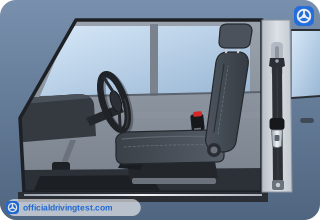
Why does the manual say seat belts are important?
- They prevent the vehicle from rolling over in a crash
- They make the vehicle's airbags unnecessary
- They reduce the speed of a vehicle in a crash
- They keep occupants inside the vehicle where they are safest
Show answer
Correct answer: They keep occupants inside the vehicle where they are safest
Seat belts keep the driver and passengers inside the vehicle, where they are the safest.
Source: North Dakota Noncommercial Driver License Manual (2025-2027), page 41 · Open this page in the manual (Manual page 41)
-
In the family driving rules the manual suggests, who should be required to use seat belts?
- Only the driver and front-seat passengers
- The teen and all passengers, at all times
- Everyone, except on short trips in town
- Only the teen, while driving alone
Show answer
Correct answer: The teen and all passengers, at all times
The suggested family rule requires seat belt use for the teen and all passengers at all times.
Source: North Dakota Noncommercial Driver License Manual (2025-2027), page 42 · Open this page in the manual (Manual page 42)