Pavement markings in New Hampshire
The New Hampshire Driver’s Manual shows or names everything on this page: 12 in all, on pages 23–24, 28.
Independent educational site · not affiliated with any government agency or DMV
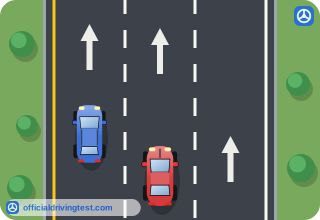
Broken White Lane Line
These lines mark traffic lanes. White lines mean these lanes of traffic are moving in the same direction. Yellow lines mean the lanes of traffic are moving in the opposite direction. Driver may pass other vehicles over broken (dotted) lines when it is safe to do so.
Manual page 23 · Open this page in the manual (Manual page 23)
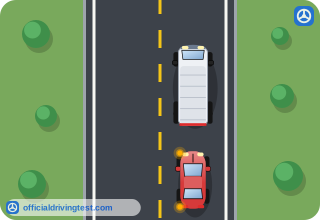
Broken Yellow Center Line
Yellow lines mean the lanes of traffic are moving in the opposite direction. Driver may pass other vehicles over broken (dotted) lines when it is safe to do so.
Manual page 23 · Open this page in the manual (Manual page 23)
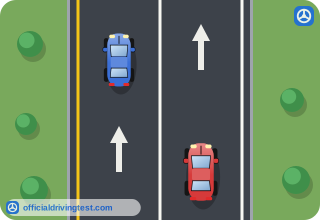
Solid White Line
Drivers are prohibited from changing lanes or to pass another vehicle.
Manual page 23 · Open this page in the manual (Manual page 23)
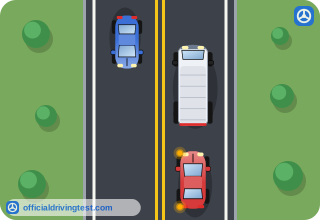
Double Solid Yellow Lines
Drivers must not pass if the line on the driver's side is solid. If the line on the driver's side is broken (dotted), they may pass when safe to do so.
Manual page 23 · Open this page in the manual (Manual page 23)
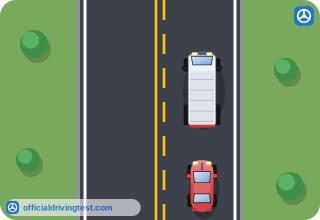
Solid and Broken Yellow Lines
Drivers must not pass if the line on the driver's side is solid. If the line on the driver's side is broken (dotted), they may pass when safe to do so.
Manual page 23 · Open this page in the manual (Manual page 23)
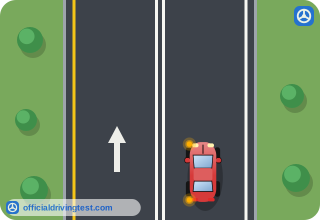
Double White Lines
Drivers must not pass if the line on the driver's side is solid. If the line on the driver's side is broken (dotted), they may pass when safe to do so.
Manual page 23 · Open this page in the manual (Manual page 23)
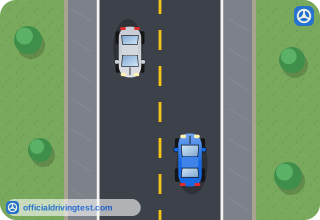
Solid White Edge Line
Edge markings are the single line that marks the edge of the road. The line is white on two-way roads and on the right edges of one-way roads. The line is yellow on the left edges of one-way roads.
Manual page 23 · Open this page in the manual (Manual page 23)
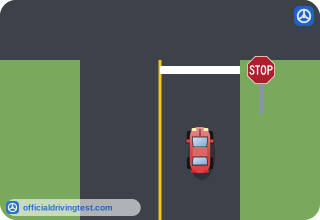
Stop Line
White stop lines are located on the pavement to show drivers where to stop. After initially stopping at the required point, a driver should look both ways and proceed forward making sure it is safe to continue into the intersection. If there is no white stop line but only a crosswalk present, then drivers must stop before the crosswalk. If no crosswalk lines are present, drivers should come to a full stop prior to entering the intersection.
Manual page 23 · Open this page in the manual (Manual page 23)
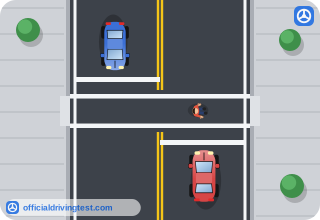
Crosswalk
Crosswalk lines are painted across a road to show pedestrian crossing areas. Drivers are required to yield to pedestrians crossing the road in marked crosswalks or at intersections even if no crosswalk lines exist at the intersection.
Manual page 23 · Open this page in the manual (Manual page 23)
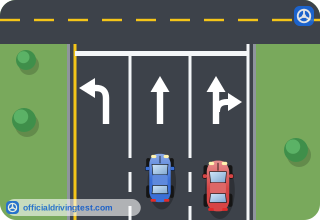
Lane-Use Arrows
White arrows are painted on some roadways to help guide drivers into the proper lanes for turning at intersections and through traffic.
Manual page 24 · Open this page in the manual (Manual page 24)
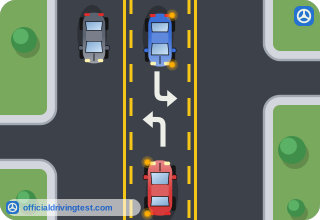
Shared Center Turn Lane
Shared center lanes are for left turns only. This sign tells a driver where a lane is reserved for the use of left turning vehicles from either direction and is not to be used for through traffic or passing other vehicles.
Manual page 24 · Open this page in the manual (Manual page 24)
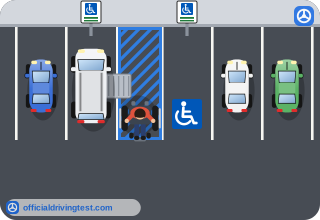
Accessible Parking Spaces and Access Aisles
Access aisles are the crosshatched area parallel and adjacent to the accessible parking space. This area, marked with yellow or white diagonally striped lines is the space needed by individuals with walking disabilities to be able to fully open the door to their vehicle and safely maneuver in and out of their vehicle.
Manual page 28 · Open this page in the manual (Manual page 28)