Nevada road sign library
Every sign, signal and marking the Nevada driver manual shows or names, with its meaning in the manual's words and its page.
Independent educational site · not affiliated with any government agency or DMV
Regulatory signs - Nevada
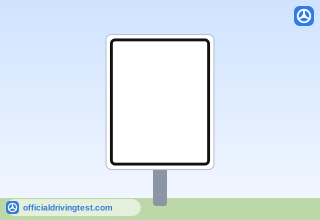
REGULATORY shape (vertical rectangle)
Rectangle — traffic regulations or directions to drivers
Manual page 28 · Open this page in the manual (Manual page 28)
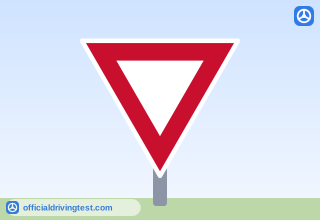
YIELD shape (inverted triangle)
Inverted triangle — yield right-of-way
Manual page 28 · Open this page in the manual (Manual page 28)
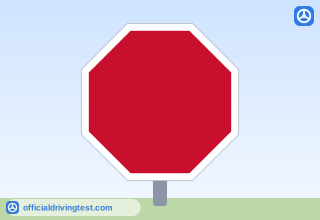
STOP shape (octagon)
Octagon (8 sides) — STOP
Manual page 28 · Open this page in the manual (Manual page 28)
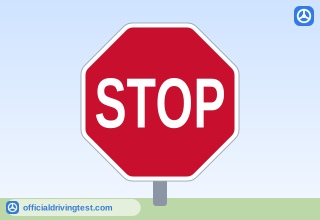
STOP
Stop signs mean you must: Come to a full stop behind the stop sign at the crosswalk or stop line. If the view of the cross street is blocked, slowly move forward to determine when it is safe to proceed. If no signs or markings exist, slow down and stop, if necessary, at the point nearest the intersection where there is a view of approaching traffic on the through roadway. Give right-of-way to pedestrians and to any cross traffic before moving forward.
Manual page 29 · Open this page in the manual (Manual page 29)
See them all (24) · Regulatory signs →
Warning and work zone signs - Nevada
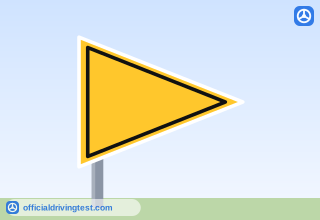
NO PASSING shape (pennant)
Pennant — no passing
Manual page 28 · Open this page in the manual (Manual page 28)
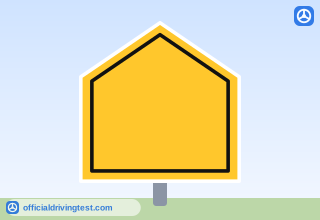
SCHOOL shape (pentagon)
Pentagon (5 sides) — school zones and school crossings
Manual page 28 · Open this page in the manual (Manual page 28)
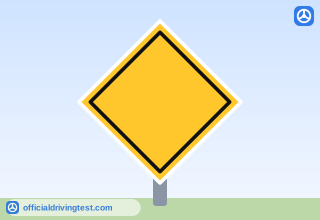
WARNING shape (diamond)
Diamond — warning
Manual page 28 · Open this page in the manual (Manual page 28)
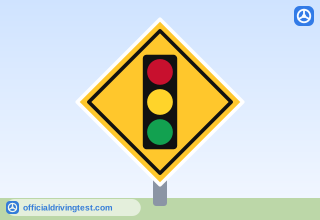
Traffic Signal Ahead
Warning signs are yellow, diamond-shaped, with black letters and symbols. They tell the driver there are special conditions or hazards ahead.
Manual page 29 · Open this page in the manual (Manual page 29)
See them all (15) · Warning and work zone signs →
Guide signs and railroad crossings - Nevada
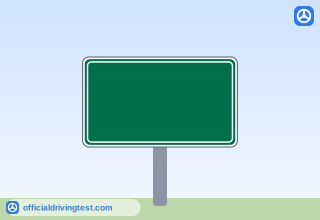
GUIDE shape (horizontal rectangle)
Rectangle — traffic regulations or directions to drivers
Manual page 28 · Open this page in the manual (Manual page 28)
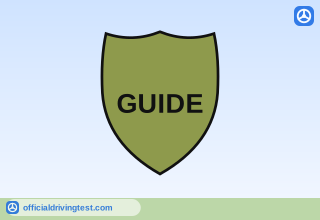
GUIDE shape (route shield)
Shield — route marker
Manual page 28 · Open this page in the manual (Manual page 28)
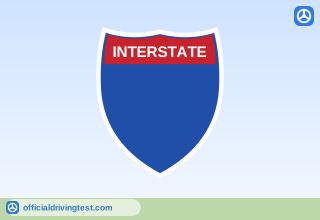
GUIDE shape (Interstate shield)
Shield — route marker
Manual page 28 · Open this page in the manual (Manual page 28)
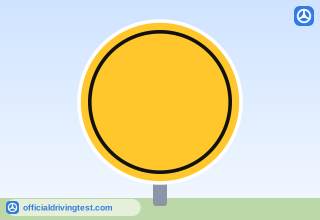
RAILROAD shape (circle)
Circle — railroad crossing ahead
Manual page 28 · Open this page in the manual (Manual page 28)
See them all (12) · Guide signs and railroad crossings →
Traffic signals - Nevada
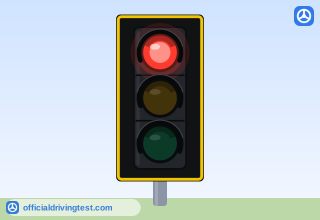
Red Light
A red light means STOP. Drivers must come to a complete stop before they reach the intersection. Stop your vehicle behind the crosswalk or stop line. If there is no stop line or crosswalk, stop before entering the intersection. Remain stopped until the light turns green. Where not prohibited by signs, a right turn may be made on a red light after coming to a complete stop. Signal for a right turn, then turn when motor and pedestrian traffic is clear and it is safe to proceed.
Manual page 30 · Open this page in the manual (Manual page 30)
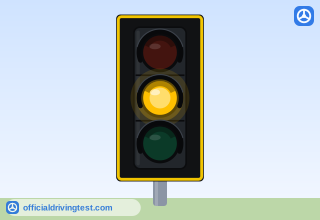
Yellow Light
A yellow light means CAUTION. A steady yellow light is a warning that the light will be turning red. If a driver has not entered the intersection, they must stop. If they are already in the intersection, they should continue moving and clear it safely. DO NOT speed up to “beat the light.”
Manual page 30 · Open this page in the manual (Manual page 30)
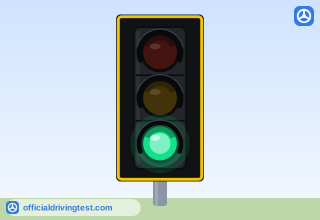
Green Light
A green light means drivers may go straight ahead, turn right or turn left unless a sign forbids the turn.
Manual page 30 · Open this page in the manual (Manual page 30)
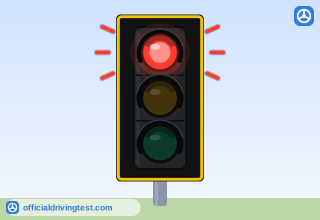
Flashing Red Light
A flashing red light means that drivers must come to a full stop. They may go only when the road is clear and they have the right-of-way. The signal has the same meaning as a stop sign.
Manual page 30 · Open this page in the manual (Manual page 30)
See them all (17) · Traffic signals →
Pavement markings - Nevada
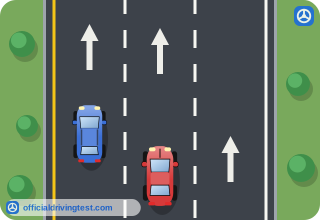
Broken White Lane Lines
Broken or dashed white lines are used to mark traffic lanes on roads which have more than one lane moving in the same direction. You should drive within these lanes and not straddle the lines. Passing is permitted when it is safe to do so [see picture (A) below].
Manual page 32 · Open this page in the manual (Manual page 32)
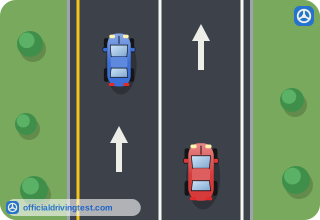
Solid White Line
Solid white lines are used in several ways. When solid white lines separate lanes of traffic moving in the same direction, do not change lanes or pass. A solid white line is also used to mark the edge of the highway as well as the boundary between a travel lane and a highway shoulder.
Manual page 32 · Open this page in the manual (Manual page 32)
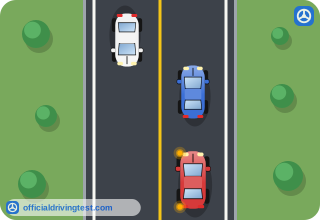
Yellow Center Line
Yellow lines separate lanes of traffic moving in opposite directions.
Manual page 32 · Open this page in the manual (Manual page 32)
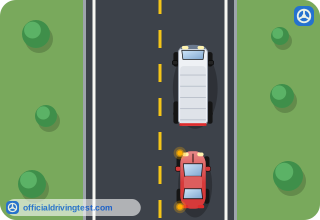
Broken Yellow Center Line
Broken or dashed yellow lines mean you may pass when it is safe to do so [see (B)].
Manual page 32 · Open this page in the manual (Manual page 32)
See them all (19) · Pavement markings →
More signs from our practice questions
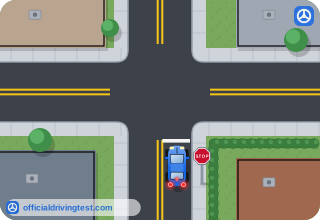
At a stop sign, what should you do if the view of the cross street is blocked?
Slowly move forward to determine when it is safe to proceed
Source: Nevada Driver's Handbook (March 2024 (DMV 700)), page 29 · Open this page in the manual (Manual page 29)
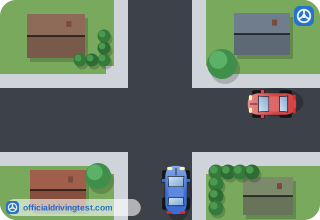
If there are no signs or markings at an intersection, where should you slow down and stop, if necessary?
Nearest the intersection where you can see approaching through traffic
Source: Nevada Driver's Handbook (March 2024 (DMV 700)), page 29 · Open this page in the manual (Manual page 29)
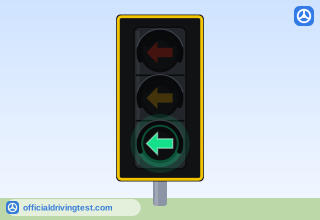
When a green turn arrow is showing, how is the turn described?
It is protected from other traffic
Source: Nevada Driver's Handbook (March 2024 (DMV 700)), page 30 · Open this page in the manual (Manual page 30)
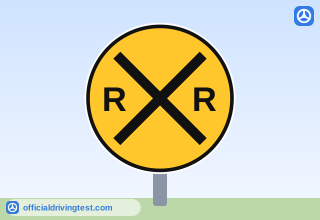
What should drivers do when they see the round railway crossing sign?
Slow down and be ready to stop
Source: Nevada Driver's Handbook (March 2024 (DMV 700)), page 33 · Open this page in the manual (Manual page 33)
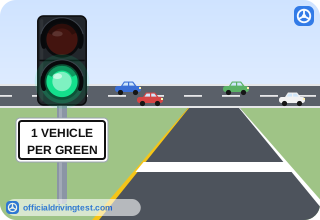
What should you do when a ramp meter light turns green?
Proceed along the ramp and merge onto the freeway safely
Source: Nevada Driver's Handbook (March 2024 (DMV 700)), page 36 · Open this page in the manual (Manual page 36)
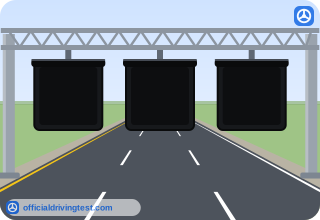
What do lane use control signals allow?
Lanes to be used by traffic from different directions at different times
Source: Nevada Driver's Handbook (March 2024 (DMV 700)), page 37 · Open this page in the manual (Manual page 37)
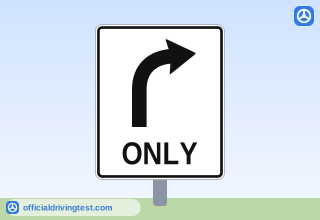
When turning right, a single lane is provided to be used only for turning. When may you enter this lane?
Only if you are making a right turn
Source: Nevada Driver's Handbook (March 2024 (DMV 700)), page 45 · Open this page in the manual (Manual page 45)
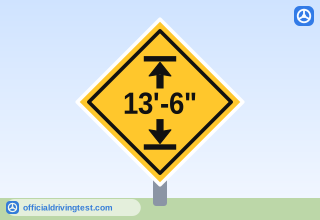
Why should you not assume that the height posted at a bridge or overpass is correct?
Repaving or packed snow may have reduced the clearance since the height was posted
Source: Nevada Driver's Handbook (March 2024 (DMV 700)), page 72 · Open this page in the manual (Manual page 72)
What should you do if you are not sure you can pass under a low bridge or underpass?
Take another route
Source: Nevada Driver's Handbook (March 2024 (DMV 700)), page 72 · Open this page in the manual (Manual page 72)
What should you do if you doubt you have enough space to pass under an object?
Go slowly
Source: Nevada Driver's Handbook (March 2024 (DMV 700)), page 72 · Open this page in the manual (Manual page 72)
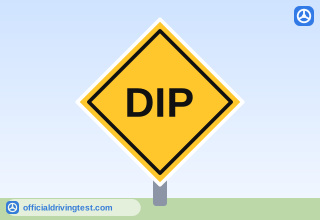
How should you cross drainage channels across a road?
Carefully, because the end of some vehicles can drag
Source: Nevada Driver's Handbook (March 2024 (DMV 700)), page 72 · Open this page in the manual (Manual page 72)