Mississippi: Signals and vehicle controls
Required vehicle equipment, lights and mirrors, getting ready to drive, turn and arm signals, turning around, headlights at night and the equipment rules for company trucks. Split into 5 shorter tests so you're not stuck in one long quiz.
Independent educational site · not affiliated with any government agency or DMV
Choose a part
Signals and vehicle controls — Part 1
Questions in this part include: “How far must the foot brake be able to stop your vehicle when it is going twenty miles per hour?”
StartSignals and vehicle controls — Part 2
Questions in this part include: “In the squatted vehicle law, what is a fender?”
StartSignals and vehicle controls — Part 3
Questions in this part include: “According to the manual, which of these drivers use arm signals?”
StartSignals and vehicle controls — Part 4
Questions in this part include: “At night, from how far away must the tag light make the letters and numerals on your license plate visible?”
StartSignals and vehicle controls — Part 5
Questions in this part include: “How many red reflectors must a truck-trailer have on the rear?”
StartAll 94 Signals and vehicle controls questions with answers
Choose a part above to take a practice test, or study every question and answer here.
Show the questions and answersHide the questions
-
How far must the foot brake be able to stop your vehicle when it is going twenty miles per hour?
- Within fifteen feet
- Within sixty feet
- Within ninety feet
- Within thirty feet
Show answer
Correct answer: Within thirty feet
The foot brake must be strong enough to stop the vehicle within thirty feet at a speed of twenty miles per hour.
Source: Mississippi Driver's License Manual (Revised December 2024), page 19 · Open this page in the manual (Manual page 19)
-
How far must the parking brake be able to stop your vehicle when it is going twenty miles per hour?
- Within fifty-five feet
- Within forty feet
- Within seventy feet
- Within twenty-five feet
Show answer
Correct answer: Within fifty-five feet
The parking brake must be strong enough to stop the vehicle within fifty-five feet at twenty miles per hour.
Source: Mississippi Driver's License Manual (Revised December 2024), page 19 · Open this page in the manual (Manual page 19)
-
How far away must your vehicle’s horn be able to be heard?
- One hundred feet
- Three hundred feet
- Two hundred feet
- One thousand feet
Show answer
Correct answer: Two hundred feet
The manual says a vehicle must have a horn which can be heard two hundred feet away.
Source: Mississippi Driver's License Manual (Revised December 2024), page 19 · Open this page in the manual (Manual page 19)
-
How many headlights must a vehicle other than a motorcycle have?
- One
- Two
- Three
- Four
Show answer
Correct answer: Two
The manual says a vehicle must have two headlights (one for a motorcycle).
Source: Mississippi Driver's License Manual (Revised December 2024), page 19 · Open this page in the manual (Manual page 19)
-
What is the minimum number of taillights your vehicle must have?
- Two
- Three
- Four
- One
Show answer
Correct answer: One
The manual says a vehicle must have at least one taillight.
Source: Mississippi Driver's License Manual (Revised December 2024), page 19 · Open this page in the manual (Manual page 19)
-
With your headlights, how far ahead does the manual recommend you be able to see a person under good weather conditions at night?
- Five hundred feet
- One hundred feet
- Three hundred feet
- One thousand feet
Show answer
Correct answer: Five hundred feet
It is recommended that headlights let you see a person five hundred feet ahead under good weather conditions at night.
Source: Mississippi Driver's License Manual (Revised December 2024), page 19 · Open this page in the manual (Manual page 19)
-
How far behind you must the red taillight on your vehicle be visible?
- One hundred feet
- Three hundred feet
- Five hundred feet
- One thousand feet
Show answer
Correct answer: Five hundred feet
The taillight must be red and visible five hundred feet behind you.
Source: Mississippi Driver's License Manual (Revised December 2024), page 19 · Open this page in the manual (Manual page 19)
-
In addition to two headlights, how many spotlights may your vehicle have?
- No more than two
- No more than one
- No more than five
- None at all
Show answer
Correct answer: No more than one
The manual says that besides two headlights, a vehicle may have no more than one spotlight and no more than three auxiliary lights.
Source: Mississippi Driver's License Manual (Revised December 2024), page 19 · Open this page in the manual (Manual page 19)
-
In addition to two headlights, how many auxiliary lights may your vehicle have?
- No more than one
- No more than two
- No more than five
- No more than three
Show answer
Correct answer: No more than three
The manual says that besides two headlights, a vehicle may have no more than one spotlight and no more than three auxiliary lights.
Source: Mississippi Driver's License Manual (Revised December 2024), page 19 · Open this page in the manual (Manual page 19)
-
Which two colors are against the law for spotlights and auxiliary lights on your vehicle?
- Red and blue
- Red and white
- Blue and green
- Yellow and green
Show answer
Correct answer: Red and blue
The manual says it is against the law for a spotlight or auxiliary light to be either red or blue.
Source: Mississippi Driver's License Manual (Revised December 2024), page 19 · Open this page in the manual (Manual page 19)
-
At no time should you have more than how many lights, not including headlights, burning at once?
- Two
- Six
- Four
- Eight
Show answer
Correct answer: Four
The manual says you should never have more than four lights, not including headlights, burning at once.
Source: Mississippi Driver's License Manual (Revised December 2024), page 19 · Open this page in the manual (Manual page 19)
-
What must the muffler on your vehicle do?
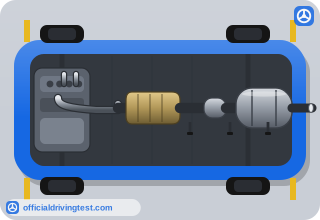
- Be replaced every year, whether or not it is worn, to keep engine noise low
- Be in good working order and operate constantly to prevent excess noise and smoke
- Operate only at highway speed to reduce noise and smoke on the road
- Be fitted with a bypass that lets you cut the noise when you want
Show answer
Correct answer: Be in good working order and operate constantly to prevent excess noise and smoke
The muffler must be in good working order and must operate constantly to prevent excessive or unusual noise and annoying smoke.
Source: Mississippi Driver's License Manual (Revised December 2024), page 19 · Open this page in the manual (Manual page 19)
-
What does the manual say about using a muffler cutout, bypass, or similar device on a vehicle?
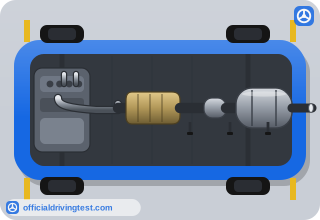
- It is allowed on highways outside municipalities
- It is allowed if the vehicle passes an inspection
- It is allowed on trucks but not on passenger cars
- No person shall use one on their vehicle
Show answer
Correct answer: No person shall use one on their vehicle
The manual states that no person shall use a muffler cutout, bypass, or a similar device on their vehicle.
Source: Mississippi Driver's License Manual (Revised December 2024), page 19 · Open this page in the manual (Manual page 19)
-
Does Mississippi law require you to have a rearview mirror?
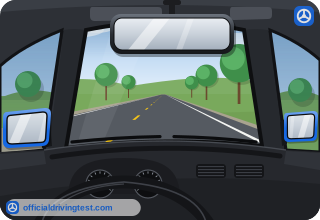
- No, but it is recommended
- Yes, on every motor vehicle
- Yes, but only on vehicles driven at night
- Yes, but only on passenger cars
Show answer
Correct answer: No, but it is recommended
Mississippi law does not require a rearview mirror, but the manual recommends having one.
Source: Mississippi Driver's License Manual (Revised December 2024), page 19 · Open this page in the manual (Manual page 19)
-
When are you required by law to have a side mirror?
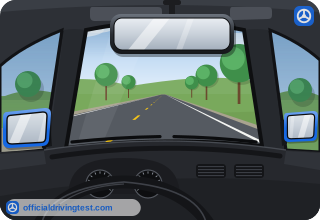
- When you drive any vehicle that has a spotlight and auxiliary lights
- When you drive any vehicle with tinted windows on its rear glass
- When you drive a truck with a body that blocks your view of the road behind
- When you drive any vehicle at night on a highway outside a city
Show answer
Correct answer: When you drive a truck with a body that blocks your view of the road behind
A driver of a truck whose body blocks the view of the road behind is required by law to have a side mirror.
Source: Mississippi Driver's License Manual (Revised December 2024), page 19 · Open this page in the manual (Manual page 19)
-
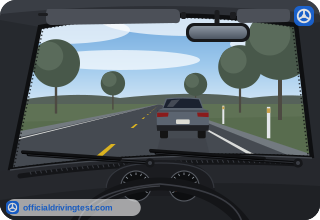
What does the manual say about windshield wipers?
- They are optional equipment on all vehicles
- They must work
- They are required only in the winter months
- They are required only on trucks
Show answer
Correct answer: They must work
The manual states plainly that windshield wipers must work.
Source: Mississippi Driver's License Manual (Revised December 2024), page 19 · Open this page in the manual (Manual page 19)
-
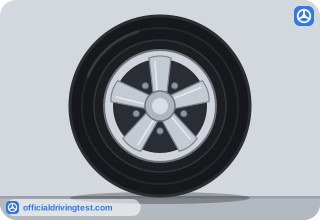
Which description of your tires matches what the manual requires?
- Studded, and rated for use on any highway at night or in snow
- Replaced every year whether or not they show any wear or decay
- Marked with a tread depth gauge in the sidewall rubber of the tire
- Properly inflated, with good tread, and free of breaks, cuts, and decay
Show answer
Correct answer: Properly inflated, with good tread, and free of breaks, cuts, and decay
The manual requires tires to be properly inflated, have good tread, and be free of breaks, cuts, and decay.
Source: Mississippi Driver's License Manual (Revised December 2024), page 19 · Open this page in the manual (Manual page 19)
-
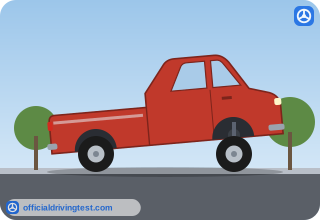
Under the squatted vehicle law, it is unlawful to drive a passenger motor vehicle whose front fender has been raised, by altering the suspension, frame or chassis, how much greater than the rear fender?
- Four or more inches
- Two or more inches
- Six or more inches
- Eight or more inches
Show answer
Correct answer: Four or more inches
The law makes it unlawful to drive a passenger motor vehicle whose front fender is raised four or more inches greater than the rear fender by alteration.
Source: Mississippi Driver's License Manual (Revised December 2024), page 20 · Open this page in the manual (Manual page 20)
-
Under the squatted vehicle law, how is the height of a fender measured?
- Along the body of the vehicle from the bumper to the top of the wheel well
- From the top of the tire to the top of the hood along the fender line
- Vertically from the ground, through the wheel’s centerline, to the bottom of the fender
- At the wheel’s outer edge, from the road to the bottom of the door
Show answer
Correct answer: Vertically from the ground, through the wheel’s centerline, to the bottom of the fender
The law says fender height is a vertical measurement from, and perpendicular to, the ground, through the centerline of the wheel, and to the bottom of the fender.
Source: Mississippi Driver's License Manual (Revised December 2024), page 20 · Open this page in the manual (Manual page 20)
-
In the squatted vehicle law, what is a fender?
- The part of the frame that connects the front and rear axles of a truck
- The formed part mounted over the road wheels to reduce splashing of mud and water
- The bumper that protects the front and rear of the vehicle in a crash
- The panel under the rear window that holds the taillights and trunk lid
Show answer
Correct answer: The formed part mounted over the road wheels to reduce splashing of mud and water
The law defines a fender as the pressed and formed part mounted over the road wheels of a motor vehicle to reduce the splashing of mud, water or similar substances.
Source: Mississippi Driver's License Manual (Revised December 2024), page 20 · Open this page in the manual (Manual page 20)
-
What does the modification covered by the squatted vehicle law make a vehicle appear to be doing?
- Leaning onto its front tires
- Hovering just above the road
- Tipping toward the driver’s side
- Squatting on its back tires
Show answer
Correct answer: Squatting on its back tires
The law says the described modification makes a vehicle appear as if it is squatting on its back tires.
Source: Mississippi Driver's License Manual (Revised December 2024), page 20 · Open this page in the manual (Manual page 20)
-
Where does the manual say to find the recommended tire pressure (PSI) for your vehicle?
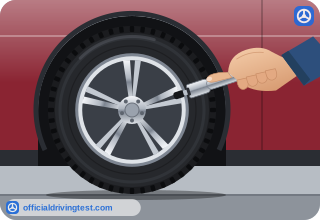
- In the vehicle owner’s manual or on the driver’s side door jamb
- On the back of the vehicle registration card kept in the glove box
- On a sticker on the front license plate bracket
- In the vehicle’s title and registration paperwork
Show answer
Correct answer: In the vehicle owner’s manual or on the driver’s side door jamb
Your tire pressure should match the recommended PSI located in the vehicle owner’s manual or the driver’s side door jamb.
Source: Mississippi Driver's License Manual (Revised December 2024), page 21 · Open this page in the manual (Manual page 21)
-
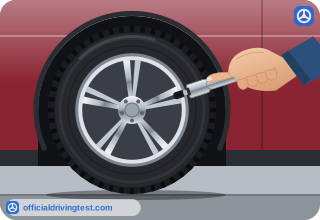
How often does the manual say to check your tires for wear and damage problems?
- Once a year, or when the tires look worn
- Every week, or before every trip
- Once a month, or before any long road trip
- Only when you have the tires rotated
Show answer
Correct answer: Once a month, or before any long road trip
The safety tip says to check your tires for wear and damage once a month or before any long road trip.
Source: Mississippi Driver's License Manual (Revised December 2024), page 21 · Open this page in the manual (Manual page 21)
-
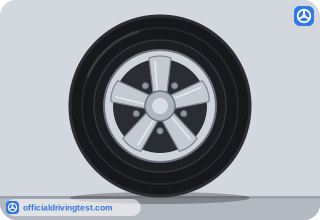
In the penny test for tire tread, where do you place Lincoln’s head?
- Against the sidewall at the point where the tire looks most worn
- Into one of the grooves at the point where the tread appears lowest
- Along the outer edge of the tire where it meets the rim
- On the center of the tread where the tire looks newest
Show answer
Correct answer: Into one of the grooves at the point where the tread appears lowest
The penny test has you place Lincoln’s head into one of the grooves at a point where the tread appears to be lowest.
Source: Mississippi Driver's License Manual (Revised December 2024), page 21 · Open this page in the manual (Manual page 21)
-
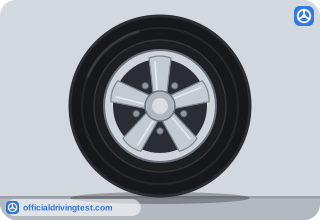
In the penny test, what does it mean if any part of Lincoln’s head is covered by the tread?
- Your tire is too worn to be driven safely
- Your tire is overinflated
- You need to rotate your tires
- You are driving with a safe amount of tread
Show answer
Correct answer: You are driving with a safe amount of tread
If any part of Lincoln’s head is covered by the tread, you have a safe amount of tread.
Source: Mississippi Driver's License Manual (Revised December 2024), page 21 · Open this page in the manual (Manual page 21)
-
What happens if your tire tread is below the safe level shown by the penny test?
- Your car’s ability to grip the road in adverse conditions is greatly reduced
- Your tires will wear out faster, but only on dry roads and highways
- Your tire pressure will rise above the level shown in the owner’s manual
- Your car will use more fuel on long trips on the highway
Show answer
Correct answer: Your car’s ability to grip the road in adverse conditions is greatly reduced
Below that tread level, the car’s ability to grip the road in adverse conditions is greatly reduced.
Source: Mississippi Driver's License Manual (Revised December 2024), page 21 · Open this page in the manual (Manual page 21)
-
How should you adjust your seat before you drive?
- As far back as it goes so you sit well away from the steering wheel
- Low enough that your knees stay above the top of the steering wheel
- To a comfortable position so you can reach the wheel and pedals easily
- High enough that your head touches the roof of the vehicle
Show answer
Correct answer: To a comfortable position so you can reach the wheel and pedals easily
The seat should be adjusted to a comfortable position from which you can easily reach the wheel and the pedals.
Source: Mississippi Driver's License Manual (Revised December 2024), page 22 · Open this page in the manual (Manual page 22)
-
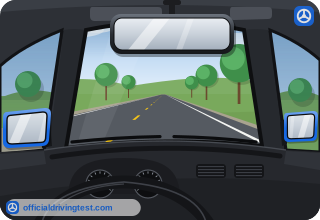
What should you be able to see when you adjust the rearview mirror?
- The passengers in the back seat
- The roadway behind
- Your own face and the steering wheel
- The hood of your vehicle
Show answer
Correct answer: The roadway behind
The rearview mirror is adjusted so that you can see the roadway behind you.
Source: Mississippi Driver's License Manual (Revised December 2024), page 22 · Open this page in the manual (Manual page 22)
-
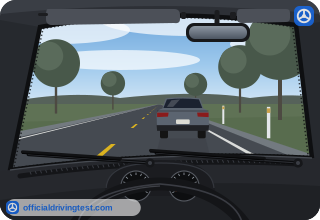
Besides your seat and the rearview mirror, what else does the manual say to adjust before you drive?
- Your headlight aim
- Your dashboard clock
- Your steering wheel angle
- Your sideview mirrors
Show answer
Correct answer: Your sideview mirrors
The manual’s list for preparing to drive says to adjust your sideview mirrors as well as the rearview mirror.
Source: Mississippi Driver's License Manual (Revised December 2024), page 22 · Open this page in the manual (Manual page 22)
-
Where should both hands be placed on the steering wheel to maintain control of the vehicle?
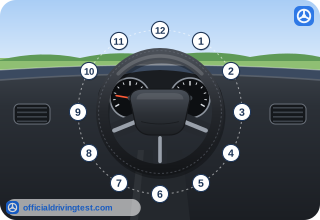
- At the 2 and 10 o’clock positions
- At the 11 and 1 o’clock positions
- At the 3 and 9 o’clock positions
- At the 12 and 6 o’clock positions
Show answer
Correct answer: At the 3 and 9 o’clock positions
Both hands should be on the outside of the wheel on opposite sides, at the 3 and 9 o’clock positions.
Source: Mississippi Driver's License Manual (Revised December 2024), page 22 · Open this page in the manual (Manual page 22)
-
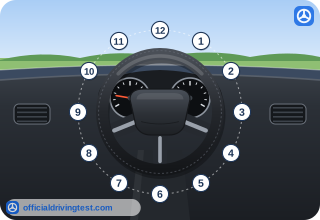
Why is placing your hands at the 2 and 10 o’clock positions no longer recommended?
- It blocks your view of the instrument panel gauges
- It can be dangerous in a vehicle equipped with airbags
- It makes it harder to use the turn signal lever
- It causes your arms to tire quickly on long trips
Show answer
Correct answer: It can be dangerous in a vehicle equipped with airbags
The manual says the 2 and 10 position is no longer recommended because it can be dangerous in a vehicle with airbags.
Source: Mississippi Driver's License Manual (Revised December 2024), page 22 · Open this page in the manual (Manual page 22)
-
How should your grip on the steering wheel be?
- As tight as you can make it
- Loose, with one hand resting on the wheel
- Light enough that the wheel can slip
- Firm but gentle
Show answer
Correct answer: Firm but gentle
The manual says your grip on the steering wheel should be firm but gentle.
Source: Mississippi Driver's License Manual (Revised December 2024), page 22 · Open this page in the manual (Manual page 22)
-
What part of your hands should you use to grip the steering wheel?
- Your fingers instead of the palms
- Your palms, with your fingers extended
- Only your thumbs and wrists
- Your palms, with your thumbs inside the rim
Show answer
Correct answer: Your fingers instead of the palms
The manual says to use your fingers instead of the palms of your hands.
Source: Mississippi Driver's License Manual (Revised December 2024), page 22 · Open this page in the manual (Manual page 22)
-
Where should you keep your thumbs while holding the steering wheel?
- Hooked around the inside of the wheel
- Tucked under the rim of the wheel
- Up along the face of the steering wheel
- Resting on the horn at the center
Show answer
Correct answer: Up along the face of the steering wheel
The manual says to keep your thumbs up along the face of the steering wheel.
Source: Mississippi Driver's License Manual (Revised December 2024), page 22 · Open this page in the manual (Manual page 22)
-
Which of these does the manual say you should never do?
- Keep your thumbs up along the face of the wheel
- Turn the wheel while gripping it from the inside
- Use your fingers instead of the palms of your hands
- Place both hands on the outside of the steering wheel
Show answer
Correct answer: Turn the wheel while gripping it from the inside
The manual says never to turn the wheel while gripping it from the inside of the steering wheel.
Source: Mississippi Driver's License Manual (Revised December 2024), page 22 · Open this page in the manual (Manual page 22)
-
What does the manual say your windshield must be free of?
- The window tint compliance decal
- Any signs or unofficial stickers
- The mounting of the rearview mirror
- Any window cleaner residue
Show answer
Correct answer: Any signs or unofficial stickers
The manual says your windshield must be free of any signs or unofficial stickers.
Source: Mississippi Driver's License Manual (Revised December 2024), page 24 · Open this page in the manual (Manual page 24)
-
What does the manual say about signs, posters, stickers, or glass material on a vehicle’s windows?
- They may be placed anywhere on the side windows
- They may cover half of the rear window
- They may be used if they are removable
- They may not cause a mirrored effect on the windows
Show answer
Correct answer: They may not cause a mirrored effect on the windows
Vehicles may not have signs, posters, stickers, or glass material that cause a mirrored effect on the windows.
Source: Mississippi Driver's License Manual (Revised December 2024), page 24 · Open this page in the manual (Manual page 24)
-
When does the manual say to use your vehicle's signal lights?
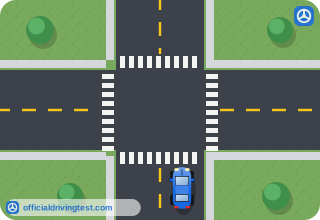
- Each time you turn, change lanes, pass, or enter or exit a parallel space
- Only when another car is close enough to be affected by your move
- Only when you turn at an intersection with a traffic light
- Only after you have begun a turn or a lane change
Show answer
Correct answer: Each time you turn, change lanes, pass, or enter or exit a parallel space
The manual says to use signal lights each time you intend to turn, change lanes, pass, or enter or exit a parallel parking space.
Source: Mississippi Driver's License Manual (Revised December 2024), page 42 · Open this page in the manual (Manual page 42)
-
What does the manual say is the best way to notify other drivers that you intend to turn or pass?
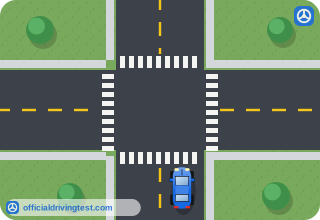
- Sound your horn just before you move
- Flash your headlights as you begin the move
- Use your signal lights well in advance
- Slow down sharply without signaling
Show answer
Correct answer: Use your signal lights well in advance
The manual says the best way to notify other drivers that you intend to turn or pass is to use your signal lights well in advance.
Source: Mississippi Driver's License Manual (Revised December 2024), page 42 · Open this page in the manual (Manual page 42)
-
If the vehicle ahead of you signals for a turn, when should you activate your own signal?
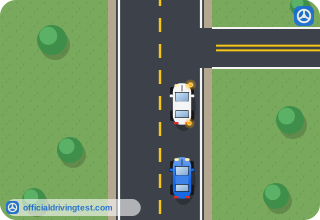
- To warn others that the vehicle in front of you is turning
- Only if you also intend to turn
- Whenever you are following closely behind it
- To let the driver ahead know you saw the signal
Show answer
Correct answer: Only if you also intend to turn
The manual says to activate your signal only if you also intend to turn, and not to warn others that the vehicle in front is turning.
Source: Mississippi Driver's License Manual (Revised December 2024), page 42 · Open this page in the manual (Manual page 42)
-
The manual says not to use your left signal to let a vehicle behind you know it is safe to pass. Who is responsible for determining whether it is safe to pass?
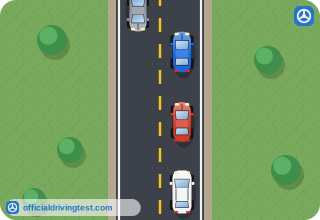
- The driver of the vehicle in front of you
- The driver in the oncoming lane
- Whichever driver has the right of way
- The driver behind you
Show answer
Correct answer: The driver behind you
The manual says the driver behind you is responsible for determining whether it is safe to pass.
Source: Mississippi Driver's License Manual (Revised December 2024), page 42 · Open this page in the manual (Manual page 42)
-
According to the manual, which of these drivers use arm signals?
- Motorists whose signal lights are malfunctioning
- Drivers of any vehicle on a divided highway
- Only school bus drivers on regular routes
- Only drivers who are on the interstate
Show answer
Correct answer: Motorists whose signal lights are malfunctioning
The manual says arm signals are used by bicyclists, motorists whose signal lights are malfunctioning, and drivers of some antique vehicles and farm equipment.
Source: Mississippi Driver's License Manual (Revised December 2024), page 42 · Open this page in the manual (Manual page 42)
-
If you are using arm signals, for at least how far should you extend your arm fully and signal continuously before you slow down, turn, stop, or change lanes?
- 50 feet
- 200 feet
- 100 feet
- 500 feet
Show answer
Correct answer: 100 feet
The manual says to signal continuously for at least one hundred feet before you slow down, turn, stop, or change lanes.
Source: Mississippi Driver's License Manual (Revised December 2024), page 42 · Open this page in the manual (Manual page 42)
-
A driver gives an arm signal by extending the arm and hand straight out. What does that arm signal mean?
- A right turn
- A left turn
- Slow down or stop
- Pass me on the left
Show answer
Correct answer: A left turn
The manual says extending the arm and hand straight out is the arm signal for a left turn.
Source: Mississippi Driver's License Manual (Revised December 2024), page 42 · Open this page in the manual (Manual page 42)
-
A driver gives an arm signal by extending the arm and hand upward, with the arm bent at the elbow. What does that arm signal mean?
- A left turn
- Slow down or stop
- The driver is backing up
- A right turn
Show answer
Correct answer: A right turn
The manual says extending the arm and hand upward, with the arm bent at the elbow, is the arm signal for a right turn.
Source: Mississippi Driver's License Manual (Revised December 2024), page 42 · Open this page in the manual (Manual page 42)
-
A driver gives an arm signal by extending the arm and hand downward, with the palm facing the rear. What does that arm signal mean?
- Slow down or stop
- A left turn
- A right turn
- Continue straight ahead
Show answer
Correct answer: Slow down or stop
The manual says extending the arm and hand downward with the palm facing the rear is the arm signal to slow down or stop.
Source: Mississippi Driver's License Manual (Revised December 2024), page 42 · Open this page in the manual (Manual page 42)
-
Which arm signal is used when starting from a parallel parking position?
- The one for a right turn (arm upward)
- The one for slowing down (arm downward)
- The one for a left turn (arm straight out)
- None; a parallel parking start needs no signal
Show answer
Correct answer: The one for a left turn (arm straight out)
The manual says the left turn arm signal, with the arm and hand straight out, is also used when starting from a parallel parking position.
Source: Mississippi Driver's License Manual (Revised December 2024), page 42 · Open this page in the manual (Manual page 42)
-
Which arm signal is used when changing from the left lane to the right lane?
- The one for a left turn (arm straight out)
- The one for a right turn (arm upward)
- The one for slowing down (arm downward)
- None; a lane change needs no signal
Show answer
Correct answer: The one for a right turn (arm upward)
The manual says the right turn arm signal, with the arm and hand upward and bent at the elbow, is also used when changing from the left lane to the right lane.
Source: Mississippi Driver's License Manual (Revised December 2024), page 42 · Open this page in the manual (Manual page 42)
-
When you must turn your car around in a confined space, where do you start?
- From the center of the road
- From the extreme left side of the road
- From the middle of the nearest intersection
- From the extreme right side of the road
Show answer
Correct answer: From the extreme right side of the road
To turn around safely, you start from the extreme right side of the road and give the correct signal.
Source: Mississippi Driver's License Manual (Revised December 2024), page 49 · Open this page in the manual (Manual page 49)
-
When you turn your car around in a confined space and start from the extreme right side of the road, which way do you turn the steering wheel while inching forward?
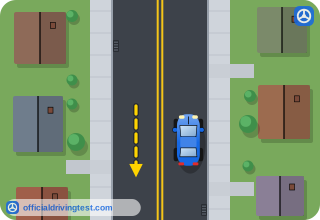
- Sharply to the left
- Sharply to the right
- Slightly to the left
- Straight ahead
Show answer
Correct answer: Sharply to the left
The first step is to turn the steering wheel sharply to the left while inching forward.
Source: Mississippi Driver's License Manual (Revised December 2024), page 49 · Open this page in the manual (Manual page 49)
-
When turning your car around, after the wheels are turned completely to the left, how far forward do you drive?
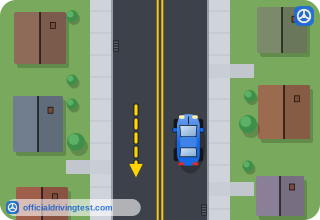
- Slowly until your bumper touches the left curb or edge of the road
- Slowly to within a few feet of the left curb or edge of the road
- Slowly to within a few inches of the left curb or edge of the road
- Slowly until you are halfway across the road
Show answer
Correct answer: Slowly to within a few inches of the left curb or edge of the road
You drive slowly forward to within a few inches of the left curb or edge of the road.
Source: Mississippi Driver's License Manual (Revised December 2024), page 49 · Open this page in the manual (Manual page 49)
-
When turning your car around, what do you do after driving forward to within a few inches of the left curb?
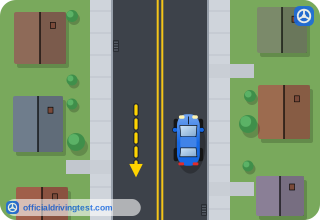
- Turn sharply to the left while inching backward
- Turn sharply to the right while inching backward
- Turn sharply to the right while inching forward
- Straighten the wheels and back up quickly
Show answer
Correct answer: Turn sharply to the right while inching backward
After reaching the left curb, you turn sharply to the right while inching backward.
Source: Mississippi Driver's License Manual (Revised December 2024), page 49 · Open this page in the manual (Manual page 49)
-
When turning your car around, after you back slowly to within a few inches of the curb with the wheels turned completely to the right, what is the next step?
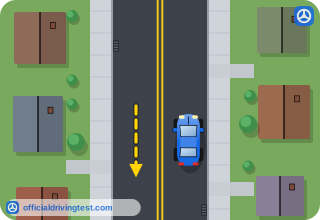
- Turn your wheels to the right and keep backing
- Straighten your wheels and stop
- Turn your wheels to the left and keep backing
- Turn your wheels to the left and pull forward
Show answer
Correct answer: Turn your wheels to the left and pull forward
The last step is to turn your wheels to the left and pull forward.
Source: Mississippi Driver's License Manual (Revised December 2024), page 49 · Open this page in the manual (Manual page 49)
-
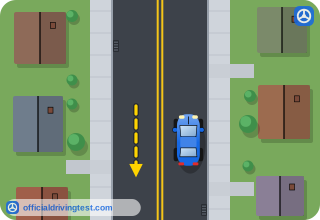
If one pass through the steps for turning around does not complete the turn, what should you do?
- Repeat the steps as needed until you have completed the turn
- Drive forward onto the shoulder to finish the turn quickly
- Stop the car and wait for traffic to clear the road
- Turn the wheels all the way left and drive straight ahead
Show answer
Correct answer: Repeat the steps as needed until you have completed the turn
The manual says to repeat the steps as needed until you have completed the turn.
Source: Mississippi Driver's License Manual (Revised December 2024), page 49 · Open this page in the manual (Manual page 49)
-
If you meet a vehicle at night with bright or blinding headlights, what is the safest thing to do?
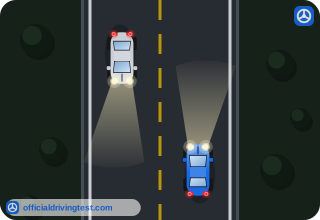
- Switch to your high beams and look straight at the lights
- Flash your high beams at them and slow down
- Dim your lights and keep your eyes on the right side of the road
- Wear darkened glasses and look at the lights
Show answer
Correct answer: Dim your lights and keep your eyes on the right side of the road
The safest thing is to dim your lights and keep your eyes on the right side of the road.
Source: Mississippi Driver's License Manual (Revised December 2024), page 63 · Open this page in the manual (Manual page 63)
-
If you meet a vehicle at night with one headlight missing, what should you do?
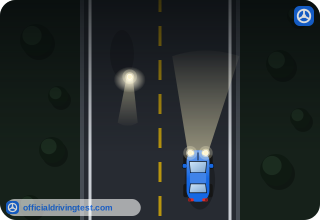
- Drive to the far right of your lane
- Flash your high beams at it
- Drive to the left side of your lane
- Stop on the roadway
Show answer
Correct answer: Drive to the far right of your lane
When meeting a vehicle with one headlight missing at night, you drive to the far right of your lane.
Source: Mississippi Driver's License Manual (Revised December 2024), page 63 · Open this page in the manual (Manual page 63)
-
What does the manual say about wearing darkened glasses at night to cope with glare?
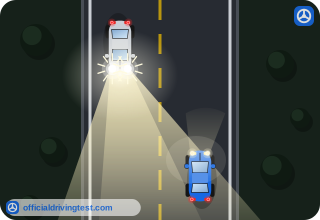
- They only further reduce your vision
- They are the best way to cut glare
- They help only on dark days
- They help if you also dim your lights
Show answer
Correct answer: They only further reduce your vision
The manual says never to compensate for glare by wearing darkened glasses, because at night or on dark days they only further reduce your vision.
Source: Mississippi Driver's License Manual (Revised December 2024), page 63 · Open this page in the manual (Manual page 63)
-
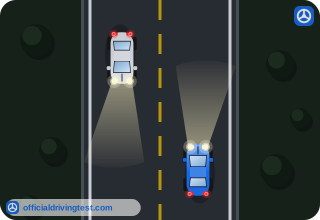
You are required by law to use your low beams when you approach within what distance of an oncoming vehicle?
- Two hundred fifty feet
- Seven hundred fifty feet
- Five hundred feet
- One thousand feet
Show answer
Correct answer: Five hundred feet
You are required by law to use low beams within five hundred feet of an oncoming vehicle or when following within five hundred feet of another vehicle.
Source: Mississippi Driver's License Manual (Revised December 2024), page 63 · Open this page in the manual (Manual page 63)
-
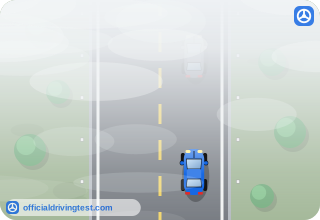
The manual says you should use your lights at any time when you cannot see clearly ahead for what distance?
- One hundred feet
- Five hundred feet
- Two hundred fifty feet
- One thousand feet
Show answer
Correct answer: Five hundred feet
You should use your lights between sunset and sunrise and any other time you cannot see clearly ahead for five hundred feet.
Source: Mississippi Driver's License Manual (Revised December 2024), page 63 · Open this page in the manual (Manual page 63)
-
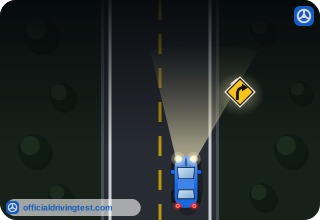
The manual says you should use your lights during which period?
- Only when it is fully dark
- Only after midnight
- Only on roads without streetlights
- Between sunset and sunrise
Show answer
Correct answer: Between sunset and sunrise
You should use your lights between sunset and sunrise and at any other time when you cannot see clearly ahead for five hundred feet.
Source: Mississippi Driver's License Manual (Revised December 2024), page 63 · Open this page in the manual (Manual page 63)
-
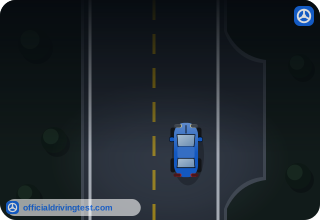
If you need lights while driving, what does the manual say about parking lights?
- Parking lights are enough in town
- Parking lights are enough at dusk
- Parking lights are enough with emergency flashers on
- Do not drive with only parking lights on; use your headlights
Show answer
Correct answer: Do not drive with only parking lights on; use your headlights
The manual says not to drive with only your parking lights turned on; if you need lights, use your headlights.
Source: Mississippi Driver's License Manual (Revised December 2024), page 63 · Open this page in the manual (Manual page 63)
-
When should you use the high beam?
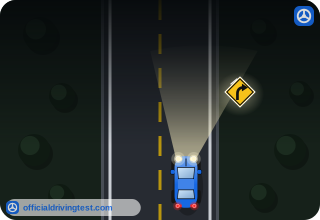
- Whenever you drive at night on a dark road
- Only in open country without other cars nearby
- When you follow another car closely at night
- When the road has streetlights on
Show answer
Correct answer: Only in open country without other cars nearby
The high beam is only for driving in the open country without other cars nearby.
Source: Mississippi Driver's License Manual (Revised December 2024), page 63 · Open this page in the manual (Manual page 63)
-
Which beam should you use when approaching another car, so as not to blind the driver?
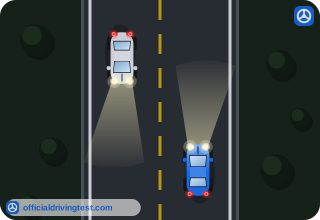
- The lower beam
- The high beam
- Your parking lights
- Your fog lights
Show answer
Correct answer: The lower beam
The manual says to always use the lower beam when approaching another car so as not to blind the driver.
Source: Mississippi Driver's License Manual (Revised December 2024), page 63 · Open this page in the manual (Manual page 63)
-
Which beam should you use when you drive where there are streetlights?
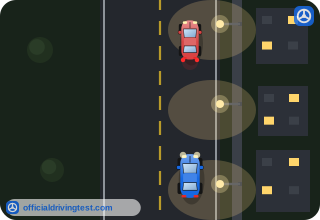
- The lower beam
- The high beam
- Either beam
- Your parking lights only
Show answer
Correct answer: The lower beam
The manual says to always use the lower beam when driving where there are streetlights.
Source: Mississippi Driver's License Manual (Revised December 2024), page 63 · Open this page in the manual (Manual page 63)
-
Which beam should you use when you are following another car?
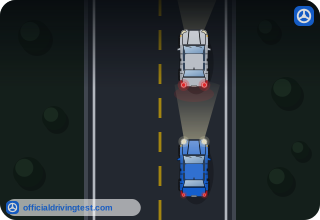
- The high beam
- Either beam
- The lower beam
- Your parking lights only
Show answer
Correct answer: The lower beam
The manual says to always use the lower beam when following another car.
Source: Mississippi Driver's License Manual (Revised December 2024), page 63 · Open this page in the manual (Manual page 63)
-
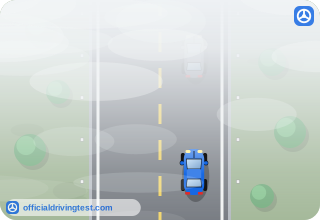
Which beam should you use when you drive in fog?
- The high beam at night and the lower beam by day
- The lower beam, at night or during the day
- The high beam, during the day only
- Parking lights only, night or day
Show answer
Correct answer: The lower beam, at night or during the day
The manual says to use the lower beam when driving in fog during the night or day.
Source: Mississippi Driver's License Manual (Revised December 2024), page 63 · Open this page in the manual (Manual page 63)
-
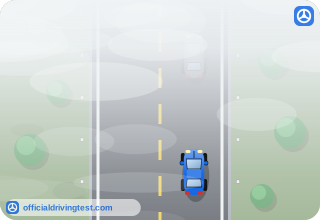
What effect does using high beams while driving in fog have?
- It improves visibility
- It shows only the road edge
- It has no effect
- It reduces visibility
Show answer
Correct answer: It reduces visibility
The manual says using high beams while driving in fog reduces visibility.
Source: Mississippi Driver's License Manual (Revised December 2024), page 63 · Open this page in the manual (Manual page 63)
-
At night, from how far away must the tag light make the letters and numerals on your license plate visible?
- Sixty feet
- Thirty feet
- One hundred feet
- Two hundred feet
Show answer
Correct answer: Sixty feet
The manual requires a tag light that makes the plate's letters and numerals visible at sixty feet at night.
Source: Mississippi Driver's License Manual (Revised December 2024), page 75 · Open this page in the manual (Manual page 75)
-
A vehicle registered in Mississippi has after-market window tint film applied. What must be done with its windows?
- They must be checked by a Highway Patrol officer at a traffic stop
- They must be approved by the county tax collector
- They must have the tint removed before registration
- They must be inspected by a Mississippi Window Tint Inspection Station
Show answer
Correct answer: They must be inspected by a Mississippi Window Tint Inspection Station
The manual says a registered vehicle with after-market tint film must have its windows inspected by a Mississippi Window Tint Inspection Station.
Source: Mississippi Driver's License Manual (Revised December 2024), page 75 · Open this page in the manual (Manual page 75)
-
Windows with aftermarket tinting must have which two items?
- A window tint inspection certificate and a decal
- A tint receipt and a county sticker
- A tint warranty and a Highway Patrol seal
- A dealer invoice and a registration card
Show answer
Correct answer: A window tint inspection certificate and a decal
The manual states that windows with aftermarket tinting must have a window tint inspection certificate and decal.
Source: Mississippi Driver's License Manual (Revised December 2024), page 75 · Open this page in the manual (Manual page 75)
-
Where must the window tint decal be affixed?
- To the upper right corner of the windshield
- To the lower left corner of the rear window
- To the lower left corner of the windshield
- To the driver's side door frame
Show answer
Correct answer: To the lower left corner of the windshield
The manual says the window tint decal must be affixed to the lower left corner of the windshield.
Source: Mississippi Driver's License Manual (Revised December 2024), page 75 · Open this page in the manual (Manual page 75)
-
Where must the window tint compliance certificate be kept?
- In the trunk of the vehicle
- On the dashboard or inside the dash compartment
- Taped to the rear window
- In your wallet with your driver's license
Show answer
Correct answer: On the dashboard or inside the dash compartment
The manual says the compliance certificate must be kept on the dashboard or inside the dash compartment.
Source: Mississippi Driver's License Manual (Revised December 2024), page 75 · Open this page in the manual (Manual page 75)
-
The label on the windshield certifies that all the windows of the vehicle have a light transmittance of at least what percentage?
- 18%
- 35%
- 50%
- 28%
Show answer
Correct answer: 28%
The manual states that the windshield label certifies a light transmittance of 28% or more for all the windows.
Source: Mississippi Driver's License Manual (Revised December 2024), page 75 · Open this page in the manual (Manual page 75)
-
A company truck-trailer's lights and reflectors must be visible from how far behind the vehicle?
- Five hundred feet
- One hundred feet
- Three hundred feet
- One thousand feet
Show answer
Correct answer: Five hundred feet
The manual requires all lights and reflectors to be clean, working and visible five hundred feet from the rear of the truck-trailer.
Source: Mississippi Driver's License Manual (Revised December 2024), page 84 · Open this page in the manual (Manual page 84)
-
What color must the reflectors on the rear of a truck-trailer, and on its sides near the rear, show?
- Amber
- White
- Red
- Blue
Show answer
Correct answer: Red
Reflectors on the rear and on the sides near the rear must show a red color.
Source: Mississippi Driver's License Manual (Revised December 2024), page 84 · Open this page in the manual (Manual page 84)
-
What color must the reflectors on the front of a truck-trailer, and on its sides near the front, show?
- Red
- Amber
- White
- Green
Show answer
Correct answer: Amber
Reflectors on the front and on the sides near the front must show an amber color.
Source: Mississippi Driver's License Manual (Revised December 2024), page 84 · Open this page in the manual (Manual page 84)
-
How many red reflectors must a truck-trailer have on the rear?
- One
- Three
- Four
- Two
Show answer
Correct answer: Two
The manual says you must have two red reflectors on the rear, along with a red taillight.
Source: Mississippi Driver's License Manual (Revised December 2024), page 84 · Open this page in the manual (Manual page 84)
-
What color may the stop light of a company truck show when the foot brake is applied?
- Red or amber
- White or red
- Amber only
- Green or amber
Show answer
Correct answer: Red or amber
When the foot brake is applied, the stop light must show a red or amber color.
Source: Mississippi Driver's License Manual (Revised December 2024), page 84 · Open this page in the manual (Manual page 84)
-
A truck-trailer's stop light may be incorporated with which other light?
- The headlight
- The clearance lamp
- The taillight
- The side-marker lamp
Show answer
Correct answer: The taillight
The manual says the stop light may be incorporated with the taillight.
Source: Mississippi Driver's License Manual (Revised December 2024), page 84 · Open this page in the manual (Manual page 84)
-
When lighted, what color must the clearance and side-marker lamps display on or near the front of the trailer?
- Red
- Amber
- White
- Blue
Show answer
Correct answer: Amber
Clearance and side-marker lamps display amber on or near the trailer's front and red on or near the rear.
Source: Mississippi Driver's License Manual (Revised December 2024), page 84 · Open this page in the manual (Manual page 84)
-
When lighted, what color must the clearance and side-marker lamps display on or near the rear of the trailer?
- Amber
- White
- Green
- Red
Show answer
Correct answer: Red
Clearance and side-marker lamps display red on or near the rear and amber on or near the front of the trailer.
Source: Mississippi Driver's License Manual (Revised December 2024), page 84 · Open this page in the manual (Manual page 84)
-
What kind of device must a company truck-trailer have for giving turn signals?
- A mechanical or electrical device
- Arm signals given by the driver
- A horn signal sounded twice
- A flashing light on the cab roof
Show answer
Correct answer: A mechanical or electrical device
The manual requires a mechanical or electrical device for giving turn signals.
Source: Mississippi Driver's License Manual (Revised December 2024), page 84 · Open this page in the manual (Manual page 84)
-
A vehicle designed or loaded so the driver's rear view is blocked must have a side mirror that lets the driver see at least how far to the rear?
- One hundred feet
- Three hundred feet
- Two hundred feet
- Five hundred feet
Show answer
Correct answer: Two hundred feet
A vehicle with an obstructed rear view must have a side mirror located so the driver can see at least two hundred feet to the rear.
Source: Mississippi Driver's License Manual (Revised December 2024), page 84 · Open this page in the manual (Manual page 84)
-
Which device may a company truck NOT use on its muffler?
- A stop light combined with the taillight
- A muffler cutout
- A side mirror
- An electric turn signal
Show answer
Correct answer: A muffler cutout
The manual says the muffler must be in good working condition and you may not use a muffler cutout, bypass, or similar device.
Source: Mississippi Driver's License Manual (Revised December 2024), page 84 · Open this page in the manual (Manual page 84)
-
When should a truck driver check the tires, lights, brakes, and load?
- Only before the trip begins
- Once a day
- Only when something sounds wrong
- During each stop
Show answer
Correct answer: During each stop
The manual says to check all your equipment, such as tires, lights, brakes, and load during each stop.
Source: Mississippi Driver's License Manual (Revised December 2024), page 87 · Open this page in the manual (Manual page 87)
-
When must you turn off the ignition of a truck carrying gasoline, oil, or explosives?
- Only when the truck is parked for the night
- Only when crossing railroad tracks with no signals
- When you put gasoline in the tank or unload the truck
- Only when driving through business districts
Show answer
Correct answer: When you put gasoline in the tank or unload the truck
The manual says to turn off the ignition when you put gasoline in the tank or unload the truck.
Source: Mississippi Driver's License Manual (Revised December 2024), page 87 · Open this page in the manual (Manual page 87)
-
When may you smoke on or near a truck carrying gasoline, oil, or explosives?
- Only while unloading
- At no time
- Only with the windows closed
- Only when the engine is off
Show answer
Correct answer: At no time
The manual says not to smoke at any time on or near a truck carrying gasoline, oil, or explosives.
Source: Mississippi Driver's License Manual (Revised December 2024), page 87 · Open this page in the manual (Manual page 87)
-
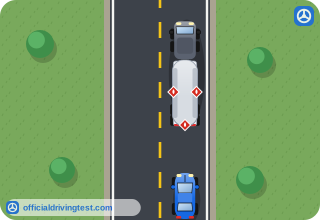
Where should you keep out of as often as possible when driving a truck carrying gasoline, oil, or explosives?
- Business districts and heavy traffic
- Rural highways and open country roads
- Interstate highways and toll roads
- Left lanes and passing zones
Show answer
Correct answer: Business districts and heavy traffic
The manual says to keep out of business districts and heavy traffic as often as possible with such a load.
Source: Mississippi Driver's License Manual (Revised December 2024), page 87 · Open this page in the manual (Manual page 87)
-
Where should you park a truck carrying gasoline, oil, or explosives, when possible?
- Beside other trucks
- Close to buildings for protection
- Away from buildings and other vehicles
- Under an overpass
Show answer
Correct answer: Away from buildings and other vehicles
With such a load you should park away from buildings and other vehicles when possible.
Source: Mississippi Driver's License Manual (Revised December 2024), page 87 · Open this page in the manual (Manual page 87)
-
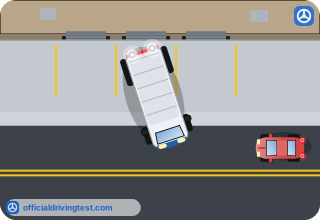
What should you always do when preparing to back up a truck or other large vehicle?
- Sound the horn twice and back up slowly
- Get out and carefully check clearance limits
- Check only the mirrors before you start
- Turn on the hazard lights and back slowly
Show answer
Correct answer: Get out and carefully check clearance limits
When preparing to back up, always get out and carefully check clearance limits.
Source: Mississippi Driver's License Manual (Revised December 2024), page 87 · Open this page in the manual (Manual page 87)
-
When backing up a truck, if possible, what should you have?
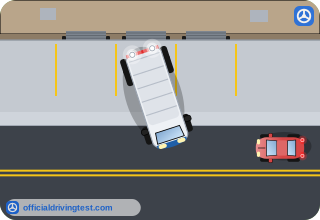
- A second horn
- Another truck behind you
- The trailer lights off
- Someone to guide you
Show answer
Correct answer: Someone to guide you
The manual advises that, if possible, you have someone guide you when you back up.
Source: Mississippi Driver's License Manual (Revised December 2024), page 87 · Open this page in the manual (Manual page 87)
-
What should you never do to turn a truck around?
- Back into an intersection
- Back into a driveway
- Make a three-point turn
- Use a side street
Show answer
Correct answer: Back into an intersection
The manual says never back into an intersection to turn around.
Source: Mississippi Driver's License Manual (Revised December 2024), page 87 · Open this page in the manual (Manual page 87)
-
What is the "coasting" that the manual calls illegal and very risky for a truck driver?
- Driving with the cruise control on
- Idling on an upgrade
- Disengaging the clutch on a downgrade
- Shifting gears on a flat road
Show answer
Correct answer: Disengaging the clutch on a downgrade
The manual says never to disengage the clutch while driving a truck on a downgrade; this coasting is illegal and very risky.
Source: Mississippi Driver's License Manual (Revised December 2024), page 87 · Open this page in the manual (Manual page 87)
-
What does the manual say to do to protect your load?
- Keep rear doors open for air
- Keep rear doors locked
- Park beside another truck
- Leave the cab unlocked
Show answer
Correct answer: Keep rear doors locked
To protect your load, the manual says to make certain to keep rear doors locked.
Source: Mississippi Driver's License Manual (Revised December 2024), page 87 · Open this page in the manual (Manual page 87)