Mississippi: Signals and vehicle controls — Part 3 Practice Test
Questions in this part include: “According to the manual, which of these drivers use arm signals?” · “Which arm signal is used when starting from a parallel parking position?”
Independent educational site · not affiliated with any government agency or DMV
Ready? Test yourself
- Instant feedback with an explanation
- Every answer cites its source in the manual
- Your best score is saved on this device
Questions are original and based on the official manual "Mississippi Driver's License Manual" (Revised December 2024), Mississippi Department of Public Safety, Driver Service Bureau.
All 19 questions in this practice test
Take the test above first, then use this list to study. Tap “Show answer” to see the correct answer and explanation.
Show the questions and answersHide the questions
-
What does the manual say is the best way to notify other drivers that you intend to turn or pass?
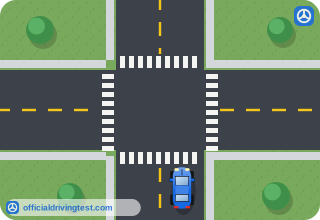
- Sound your horn just before you move
- Flash your headlights as you begin the move
- Use your signal lights well in advance
- Slow down sharply without signaling
Show answer
Correct answer: Use your signal lights well in advance
The manual says the best way to notify other drivers that you intend to turn or pass is to use your signal lights well in advance.
Source: Mississippi Driver's License Manual (Revised December 2024), page 42 · Open this page in the manual (Manual page 42)
-
If the vehicle ahead of you signals for a turn, when should you activate your own signal?
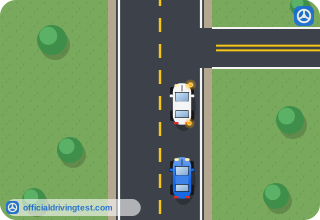
- To warn others that the vehicle in front of you is turning
- Only if you also intend to turn
- Whenever you are following closely behind it
- To let the driver ahead know you saw the signal
Show answer
Correct answer: Only if you also intend to turn
The manual says to activate your signal only if you also intend to turn, and not to warn others that the vehicle in front is turning.
Source: Mississippi Driver's License Manual (Revised December 2024), page 42 · Open this page in the manual (Manual page 42)
-
The manual says not to use your left signal to let a vehicle behind you know it is safe to pass. Who is responsible for determining whether it is safe to pass?
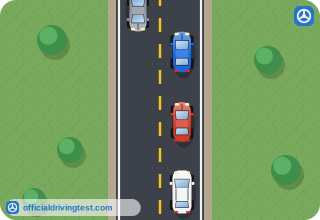
- The driver of the vehicle in front of you
- The driver in the oncoming lane
- Whichever driver has the right of way
- The driver behind you
Show answer
Correct answer: The driver behind you
The manual says the driver behind you is responsible for determining whether it is safe to pass.
Source: Mississippi Driver's License Manual (Revised December 2024), page 42 · Open this page in the manual (Manual page 42)
-
According to the manual, which of these drivers use arm signals?
- Motorists whose signal lights are malfunctioning
- Drivers of any vehicle on a divided highway
- Only school bus drivers on regular routes
- Only drivers who are on the interstate
Show answer
Correct answer: Motorists whose signal lights are malfunctioning
The manual says arm signals are used by bicyclists, motorists whose signal lights are malfunctioning, and drivers of some antique vehicles and farm equipment.
Source: Mississippi Driver's License Manual (Revised December 2024), page 42 · Open this page in the manual (Manual page 42)
-
If you are using arm signals, for at least how far should you extend your arm fully and signal continuously before you slow down, turn, stop, or change lanes?
- 50 feet
- 200 feet
- 100 feet
- 500 feet
Show answer
Correct answer: 100 feet
The manual says to signal continuously for at least one hundred feet before you slow down, turn, stop, or change lanes.
Source: Mississippi Driver's License Manual (Revised December 2024), page 42 · Open this page in the manual (Manual page 42)
-
A driver gives an arm signal by extending the arm and hand straight out. What does that arm signal mean?
- A right turn
- A left turn
- Slow down or stop
- Pass me on the left
Show answer
Correct answer: A left turn
The manual says extending the arm and hand straight out is the arm signal for a left turn.
Source: Mississippi Driver's License Manual (Revised December 2024), page 42 · Open this page in the manual (Manual page 42)
-
A driver gives an arm signal by extending the arm and hand upward, with the arm bent at the elbow. What does that arm signal mean?
- A left turn
- Slow down or stop
- The driver is backing up
- A right turn
Show answer
Correct answer: A right turn
The manual says extending the arm and hand upward, with the arm bent at the elbow, is the arm signal for a right turn.
Source: Mississippi Driver's License Manual (Revised December 2024), page 42 · Open this page in the manual (Manual page 42)
-
A driver gives an arm signal by extending the arm and hand downward, with the palm facing the rear. What does that arm signal mean?
- Slow down or stop
- A left turn
- A right turn
- Continue straight ahead
Show answer
Correct answer: Slow down or stop
The manual says extending the arm and hand downward with the palm facing the rear is the arm signal to slow down or stop.
Source: Mississippi Driver's License Manual (Revised December 2024), page 42 · Open this page in the manual (Manual page 42)
-
Which arm signal is used when starting from a parallel parking position?
- The one for a right turn (arm upward)
- The one for slowing down (arm downward)
- The one for a left turn (arm straight out)
- None; a parallel parking start needs no signal
Show answer
Correct answer: The one for a left turn (arm straight out)
The manual says the left turn arm signal, with the arm and hand straight out, is also used when starting from a parallel parking position.
Source: Mississippi Driver's License Manual (Revised December 2024), page 42 · Open this page in the manual (Manual page 42)
-
Which arm signal is used when changing from the left lane to the right lane?
- The one for a left turn (arm straight out)
- The one for a right turn (arm upward)
- The one for slowing down (arm downward)
- None; a lane change needs no signal
Show answer
Correct answer: The one for a right turn (arm upward)
The manual says the right turn arm signal, with the arm and hand upward and bent at the elbow, is also used when changing from the left lane to the right lane.
Source: Mississippi Driver's License Manual (Revised December 2024), page 42 · Open this page in the manual (Manual page 42)
-
When you must turn your car around in a confined space, where do you start?
- From the center of the road
- From the extreme left side of the road
- From the middle of the nearest intersection
- From the extreme right side of the road
Show answer
Correct answer: From the extreme right side of the road
To turn around safely, you start from the extreme right side of the road and give the correct signal.
Source: Mississippi Driver's License Manual (Revised December 2024), page 49 · Open this page in the manual (Manual page 49)
-
When you turn your car around in a confined space and start from the extreme right side of the road, which way do you turn the steering wheel while inching forward?
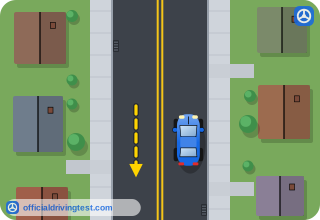
- Sharply to the left
- Sharply to the right
- Slightly to the left
- Straight ahead
Show answer
Correct answer: Sharply to the left
The first step is to turn the steering wheel sharply to the left while inching forward.
Source: Mississippi Driver's License Manual (Revised December 2024), page 49 · Open this page in the manual (Manual page 49)
-
When turning your car around, after the wheels are turned completely to the left, how far forward do you drive?
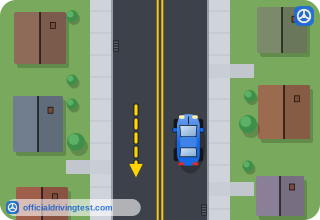
- Slowly until your bumper touches the left curb or edge of the road
- Slowly to within a few feet of the left curb or edge of the road
- Slowly to within a few inches of the left curb or edge of the road
- Slowly until you are halfway across the road
Show answer
Correct answer: Slowly to within a few inches of the left curb or edge of the road
You drive slowly forward to within a few inches of the left curb or edge of the road.
Source: Mississippi Driver's License Manual (Revised December 2024), page 49 · Open this page in the manual (Manual page 49)
-
When turning your car around, what do you do after driving forward to within a few inches of the left curb?
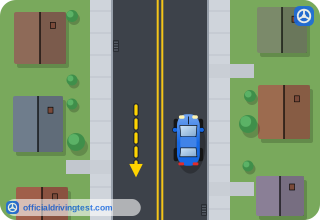
- Turn sharply to the left while inching backward
- Turn sharply to the right while inching backward
- Turn sharply to the right while inching forward
- Straighten the wheels and back up quickly
Show answer
Correct answer: Turn sharply to the right while inching backward
After reaching the left curb, you turn sharply to the right while inching backward.
Source: Mississippi Driver's License Manual (Revised December 2024), page 49 · Open this page in the manual (Manual page 49)
-
When turning your car around, after you back slowly to within a few inches of the curb with the wheels turned completely to the right, what is the next step?
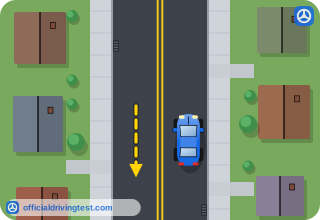
- Turn your wheels to the right and keep backing
- Straighten your wheels and stop
- Turn your wheels to the left and keep backing
- Turn your wheels to the left and pull forward
Show answer
Correct answer: Turn your wheels to the left and pull forward
The last step is to turn your wheels to the left and pull forward.
Source: Mississippi Driver's License Manual (Revised December 2024), page 49 · Open this page in the manual (Manual page 49)
-
If one pass through the steps for turning around does not complete the turn, what should you do?
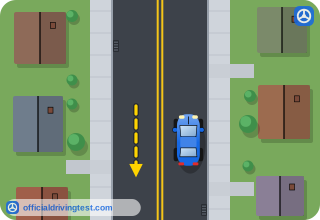
- Repeat the steps as needed until you have completed the turn
- Drive forward onto the shoulder to finish the turn quickly
- Stop the car and wait for traffic to clear the road
- Turn the wheels all the way left and drive straight ahead
Show answer
Correct answer: Repeat the steps as needed until you have completed the turn
The manual says to repeat the steps as needed until you have completed the turn.
Source: Mississippi Driver's License Manual (Revised December 2024), page 49 · Open this page in the manual (Manual page 49)
-
If you meet a vehicle at night with bright or blinding headlights, what is the safest thing to do?
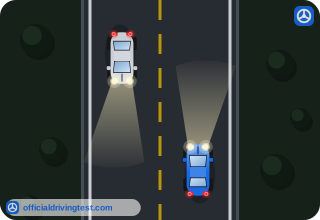
- Switch to your high beams and look straight at the lights
- Flash your high beams at them and slow down
- Dim your lights and keep your eyes on the right side of the road
- Wear darkened glasses and look at the lights
Show answer
Correct answer: Dim your lights and keep your eyes on the right side of the road
The safest thing is to dim your lights and keep your eyes on the right side of the road.
Source: Mississippi Driver's License Manual (Revised December 2024), page 63 · Open this page in the manual (Manual page 63)
-
If you meet a vehicle at night with one headlight missing, what should you do?
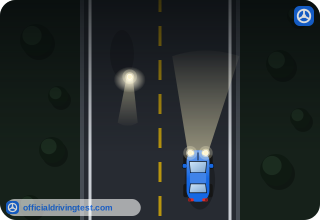
- Drive to the far right of your lane
- Flash your high beams at it
- Drive to the left side of your lane
- Stop on the roadway
Show answer
Correct answer: Drive to the far right of your lane
When meeting a vehicle with one headlight missing at night, you drive to the far right of your lane.
Source: Mississippi Driver's License Manual (Revised December 2024), page 63 · Open this page in the manual (Manual page 63)
-
What does the manual say about wearing darkened glasses at night to cope with glare?
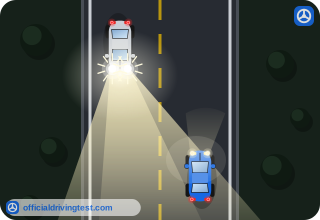
- They only further reduce your vision
- They are the best way to cut glare
- They help only on dark days
- They help if you also dim your lights
Show answer
Correct answer: They only further reduce your vision
The manual says never to compensate for glare by wearing darkened glasses, because at night or on dark days they only further reduce your vision.
Source: Mississippi Driver's License Manual (Revised December 2024), page 63 · Open this page in the manual (Manual page 63)