Mississippi: Right-of-way, turning and passing
Who yields at intersections and four-way stops, driveways, turning step by step, multiple turn lanes, one-way streets, passing and being passed. Split into 5 shorter tests so you're not stuck in one long quiz.
Independent educational site · not affiliated with any government agency or DMV
Choose a part
Right-of-way, turning and passing — Part 1
Questions in this part include: “According to the manual, how are crosswalks treated in the definition of an intersection?”
StartRight-of-way, turning and passing — Part 2
Questions in this part include: “In which situation may you overtake and pass another vehicle on the right?”
StartRight-of-way, turning and passing — Part 3
Questions in this part include: “When approaching an intersection and traffic is blocked ahead of you, what should you do?”
StartRight-of-way, turning and passing — Part 4
Questions in this part include: “At an intersection of two one-way streets, what does the manual say about turning right?”
StartRight-of-way, turning and passing — Part 5
Who yields at intersections and four-way stops, driveways, turning step by step, multiple turn lanes, one-way streets, passing and being passed. — Part 5
StartAll 86 Right-of-way, turning and passing questions with answers
Choose a part above to take a practice test, or study every question and answer here.
Show the questions and answersHide the questions
-
According to the manual, how are crosswalks treated in the definition of an intersection?
- They are separate from the intersection
- They are counted as part of the intersection
- They count only when a pedestrian is crossing
- They count only when a traffic signal controls them
Show answer
Correct answer: They are counted as part of the intersection
The definition says that crosswalks are counted as part of the intersection, which is the place where roads come together or cross.
Source: Mississippi Driver's License Manual (Revised December 2024), page 18 · Open this page in the manual (Manual page 18)
-
How does the manual define right of way?
- The legal duty to stop for all other traffic at an intersection
- The privilege of the immediate use of the highway
- The part of the road that is set aside for pedestrians
- The requirement to yield to the vehicle on your right
Show answer
Correct answer: The privilege of the immediate use of the highway
Right of way is defined as the privilege of the immediate use of the highway.
Source: Mississippi Driver's License Manual (Revised December 2024), page 18 · Open this page in the manual (Manual page 18)
-
Where a sign does not prohibit it, what must you do first before turning right on a red light?
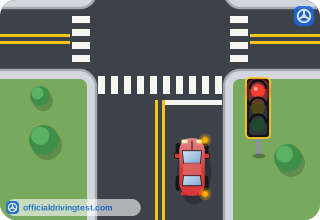
- Slow down and yield to other traffic; a full stop is not required
- Stop completely and yield to other traffic and pedestrians
- Yield to other traffic and pedestrians without stopping if the way is clear
- Wait for a green arrow before turning
Show answer
Correct answer: Stop completely and yield to other traffic and pedestrians
Before turning right on red you must first stop completely; only yielding before turning is not enough and is illegal.
Source: Mississippi Driver's License Manual (Revised December 2024), page 37 · Open this page in the manual (Manual page 37)
-
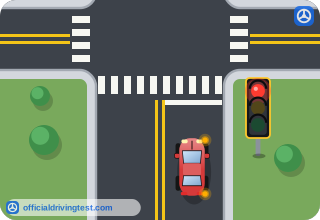
When are you NOT allowed to turn right on a red light?
- At night
- When the pavement is wet
- When there is more than one lane
- When a sign prohibits it
Show answer
Correct answer: When a sign prohibits it
You may not turn on red if a sign prohibits you.
Source: Mississippi Driver's License Manual (Revised December 2024), page 37 · Open this page in the manual (Manual page 37)
-
According to the manual, when are you in a traffic lane?
- Only when the road has painted lane lines
- Only when more than one lane goes your direction
- Only on roads with a posted speed limit
- Whenever you are driving on any street or highway
Show answer
Correct answer: Whenever you are driving on any street or highway
The manual says you are in a traffic lane whenever you are driving on any street or highway, whether or not the lanes are marked.
Source: Mississippi Driver's License Manual (Revised December 2024), page 45 · Open this page in the manual (Manual page 45)
-
According to the manual, a street or highway's number of lanes corresponds to what?
- The number of cars (or lines of cars) that could travel on it side by side
- The number of cars that could be parked along its edge at one time
- The number of lines painted on the pavement across its width
- The number of vehicles allowed on it at one time each hour
Show answer
Correct answer: The number of cars (or lines of cars) that could travel on it side by side
The manual says the number of lanes corresponds to the number of cars (or lines of cars) that could travel on it side-by-side.
Source: Mississippi Driver's License Manual (Revised December 2024), page 45 · Open this page in the manual (Manual page 45)
-
If traffic lanes travel in opposite directions, what does the manual say will separate them?
- Only solid white lines, never barricades
- Only traffic cones placed by workers
- Pavement markings, barricades, or medians
- Only a gravel strip along the edge
Show answer
Correct answer: Pavement markings, barricades, or medians
The manual says lanes that travel in opposite directions are separated by pavement markings (lines), barricades, or medians.
Source: Mississippi Driver's License Manual (Revised December 2024), page 45 · Open this page in the manual (Manual page 45)
-
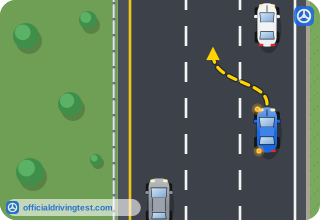
According to the manual, when should you change lanes?
- Whenever the lane next to you is moving faster
- Whenever you have signaled
- Only when the lanes are marked
- Only when the movement can be made safely
Show answer
Correct answer: Only when the movement can be made safely
The manual says to always drive in a single lane and never change lanes unless the movement can be made safely.
Source: Mississippi Driver's License Manual (Revised December 2024), page 45 · Open this page in the manual (Manual page 45)
-
On a four-lane highway, which lane should you drive in?
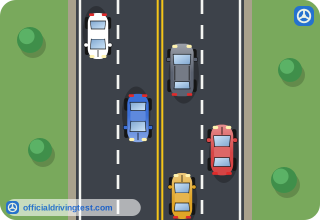
- The right lane, except when passing or preparing to turn left
- The left lane at all times, except when preparing to turn right
- Whichever lane has the least traffic at the time
- The lane next to the center line at all times
Show answer
Correct answer: The right lane, except when passing or preparing to turn left
The manual says that on a four-lane highway you should drive in the right lane except when passing or preparing to turn left.
Source: Mississippi Driver's License Manual (Revised December 2024), page 45 · Open this page in the manual (Manual page 45)
-
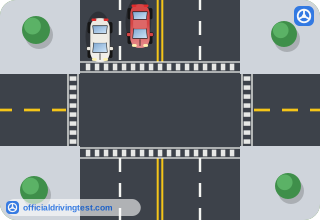
If there is no designated turn lane, which lane should you use to turn left on a two-way street with more than one lane for your direction?
- The extreme right lane
- The lane with the fewest cars
- The lane next to the center
- Any lane, if you signal first
Show answer
Correct answer: The lane next to the center
The manual says that if there is no designated turn lane, you should use the lane next to the center for turning left.
Source: Mississippi Driver's License Manual (Revised December 2024), page 45 · Open this page in the manual (Manual page 45)
-
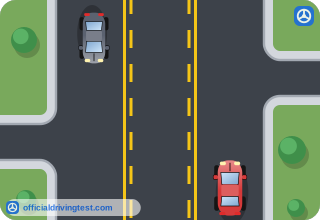
On a road with two travel lanes plus a center turn lane, when do you use the center turn lane?
- When preparing to turn left
- When passing a slower vehicle
- When traveling straight through an intersection
- When overtaking in heavy traffic
Show answer
Correct answer: When preparing to turn left
The manual says to use the center turn lane when preparing to turn left.
Source: Mississippi Driver's License Manual (Revised December 2024), page 46 · Open this page in the manual (Manual page 46)
-
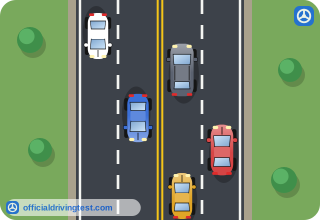
On a road with four lanes or more, the lane next to the double yellow center lines is used for which purposes?
- Normal travel only, with no passing allowed
- Slow-moving vehicles and parking
- Overtaking, passing, or preparing to turn left
- Stopping to let passengers out
Show answer
Correct answer: Overtaking, passing, or preparing to turn left
The manual's lane-use diagram marks the lane next to the center line for overtaking, passing, or preparing to turn left, and the outer lane for travel.
Source: Mississippi Driver's License Manual (Revised December 2024), page 46 · Open this page in the manual (Manual page 46)
-
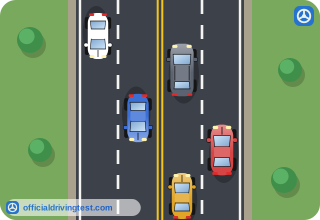
What does the manual say about moving across the center line of a four-lane highway to pass another vehicle?
- It is legal when the oncoming lane is clear
- It is legal during daylight hours only
- It is legal if the vehicle ahead is moving slowly
- It is never legal
Show answer
Correct answer: It is never legal
Moving across the center line of a four-lane highway to pass another vehicle is never legal.
Source: Mississippi Driver's License Manual (Revised December 2024), page 47 · Open this page in the manual (Manual page 47)
-
Before you move into the left lane to pass another vehicle, what must you be sure of?
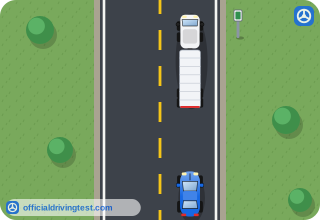
- That the lane ahead is clear
- That the other driver has seen you
- That the vehicle you are passing is slowing down
- That the shoulder is clear
Show answer
Correct answer: That the lane ahead is clear
When passing on the left, you must be sure that the lane ahead is clear before you move.
Source: Mississippi Driver's License Manual (Revised December 2024), page 47 · Open this page in the manual (Manual page 47)
-
Before you try to pass, how far should you drop back from the vehicle you intend to pass?
- As close as possible so you can pass quickly
- Exactly one hundred feet
- Far enough that you can see around it
- Only a few feet
Show answer
Correct answer: Far enough that you can see around it
You should not tailgate a vehicle you intend to pass; drop back far enough that you can see around it before you try to change lanes.
Source: Mississippi Driver's License Manual (Revised December 2024), page 47 · Open this page in the manual (Manual page 47)
-
When passing on the left, when should you signal your intentions?
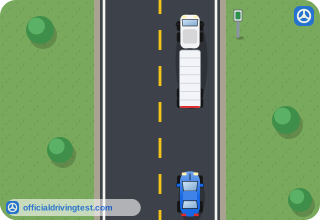
- After you are in the left lane
- Before you move into the left lane
- When you are alongside the vehicle you are passing
- Only if another vehicle is behind you
Show answer
Correct answer: Before you move into the left lane
You should signal your intentions before you move into the left lane to pass.
Source: Mississippi Driver's License Manual (Revised December 2024), page 47 · Open this page in the manual (Manual page 47)
-
When passing on the left, how should you move into the left lane?
- Slowly, drifting over gradually
- Quickly, without checking first
- Cautiously and slowly
- Cautiously but quickly
Show answer
Correct answer: Cautiously but quickly
After checking carefully, you should move cautiously but quickly into the left lane.
Source: Mississippi Driver's License Manual (Revised December 2024), page 47 · Open this page in the manual (Manual page 47)
-
After passing a vehicle on the left, what must you make sure of before moving back into the right lane?
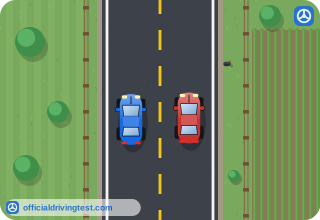
- That you can see the vehicle you passed in your rearview mirror
- That the driver of the vehicle you passed has signaled you
- That you have driven at least one hundred feet in the left lane
- That the vehicle you passed has slowed down to let you in
Show answer
Correct answer: That you can see the vehicle you passed in your rearview mirror
Before moving back into the right lane, you must be able to see the vehicle you passed in your rearview mirror.
Source: Mississippi Driver's License Manual (Revised December 2024), page 47 · Open this page in the manual (Manual page 47)
-
In which situation may you overtake and pass another vehicle on the right?
- When the vehicle you are passing is making or about to make a right turn
- When the vehicle you are passing is driving below the speed limit
- When the vehicle you are passing is making or about to make a left turn
- When you are on a two-lane highway with no oncoming traffic in sight
Show answer
Correct answer: When the vehicle you are passing is making or about to make a left turn
You may pass on the right when the vehicle you are passing is making or is about to make a left turn.
Source: Mississippi Driver's License Manual (Revised December 2024), page 47 · Open this page in the manual (Manual page 47)
-
On an interstate, when may you pass another vehicle on the right?
- When the interstate has a paved shoulder wide enough to drive on
- When there are multiple lanes traveling in your direction
- When the driver ahead has signaled that you may pass
- When you can use the shoulder to get around the vehicle
Show answer
Correct answer: When there are multiple lanes traveling in your direction
Passing on the right is allowed on an interstate with multiple lanes traveling in your direction.
Source: Mississippi Driver's License Manual (Revised December 2024), page 47 · Open this page in the manual (Manual page 47)
-
On a four-lane highway of adequate width, you may pass on the right when there are no what?
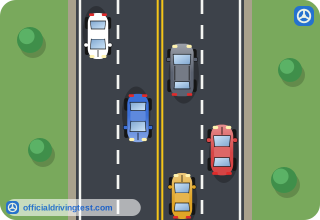
- Oncoming vehicles or pedestrians
- Bicycles or motorcycles
- Trucks or buses
- Obstructions or parked cars
Show answer
Correct answer: Obstructions or parked cars
On a four-lane highway of adequate width, passing on the right is allowed where there are no obstructions or parked cars.
Source: Mississippi Driver's License Manual (Revised December 2024), page 47 · Open this page in the manual (Manual page 47)
-
On which kind of highway of adequate width may you pass another vehicle on the right?
- Any one-way highway
- Any two-lane highway
- Any highway with a posted speed limit
- Any highway with a paved shoulder
Show answer
Correct answer: Any one-way highway
Passing on the right is allowed on any one-way highway of adequate width.
Source: Mississippi Driver's License Manual (Revised December 2024), page 47 · Open this page in the manual (Manual page 47)
-
If you pass another vehicle on the right, when should you do so?
- Only when the driver ahead signals you to pass
- Only when no other vehicle is in sight
- Only when conditions permit you to do so safely
- Only during daylight hours
Show answer
Correct answer: Only when conditions permit you to do so safely
If you pass on the right, you should do so only when conditions permit you to do so safely.
Source: Mississippi Driver's License Manual (Revised December 2024), page 47 · Open this page in the manual (Manual page 47)
-
Under what circumstances may you drive off the pavement or on the shoulder to pass another vehicle?
- When the vehicle ahead is moving slowly
- Under no circumstances
- When the shoulder is paved and clear
- When no oncoming traffic is in sight
Show answer
Correct answer: Under no circumstances
The manual says that under no circumstances are you allowed to drive off the pavement or on the shoulder to pass.
Source: Mississippi Driver's License Manual (Revised December 2024), page 47 · Open this page in the manual (Manual page 47)
-
The manual says not to pass within how many feet of bridges, viaducts, overpasses, railroad crossings, crosswalks and intersections?
- Fifty feet
- Two hundred feet
- Five hundred feet
- One hundred feet
Show answer
Correct answer: One hundred feet
You should not pass on hills, curves, or within one hundred feet of bridges, viaducts, overpasses, railroad crossings, crosswalks or intersections.
Source: Mississippi Driver's License Manual (Revised December 2024), page 47 · Open this page in the manual (Manual page 47)
-
Besides hills, curves and the areas near bridges and crossings, you should not pass at any place where what is true?
- Your view is obstructed in any way
- The road is wet
- Another vehicle is following you
- The vehicle ahead is driving slowly
Show answer
Correct answer: Your view is obstructed in any way
You should not pass at any place where your view is obstructed in any way.
Source: Mississippi Driver's License Manual (Revised December 2024), page 47 · Open this page in the manual (Manual page 47)
-
If you are not sure where to turn at an intersection, what should you do?
- Stop in the travel lane until you are certain
- Make a last minute turn at the nearest intersection
- Drive slowly and read the street signs or road markers
- Follow the vehicle ahead through the intersection
Show answer
Correct answer: Drive slowly and read the street signs or road markers
If you are not sure where to turn, you should drive slowly and read the street signs or road markers.
Source: Mississippi Driver's License Manual (Revised December 2024), page 50 · Open this page in the manual (Manual page 50)
-
To make a safe turn, what does the manual say to avoid?
- Signaling before you turn
- Last minute turns
- Getting into the correct lane early
- Looking around you before you turn
Show answer
Correct answer: Last minute turns
The guidelines for a safe turn say to avoid last minute turns.
Source: Mississippi Driver's License Manual (Revised December 2024), page 50 · Open this page in the manual (Manual page 50)
-
When making a turn, when should you get into the correct lane?
- Just as you reach the crosswalk
- After you begin the turn
- Only when you see other traffic
- As soon as possible
Show answer
Correct answer: As soon as possible
The guidelines for a safe turn say to get into the correct lane as soon as possible.
Source: Mississippi Driver's License Manual (Revised December 2024), page 50 · Open this page in the manual (Manual page 50)
-
Before you change lanes or turn, what should you not assume about other drivers?
- That they will see you
- That they will signal
- That they will slow down
- That they will stop at the crosswalk
Show answer
Correct answer: That they will see you
You should look around in all directions and not assume that other drivers will see you.
Source: Mississippi Driver's License Manual (Revised December 2024), page 50 · Open this page in the manual (Manual page 50)
-
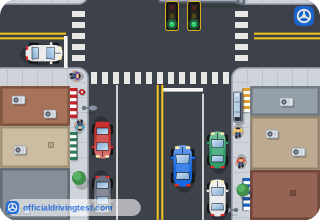
When approaching an intersection to make a turn, when should you slow down?
- Only after you have entered the crosswalk of the intersection
- Once the turn has started and you are in the intersection
- Well before you reach the crosswalk of the intersection
- Just as your vehicle reaches the crosswalk of the intersection
Show answer
Correct answer: Well before you reach the crosswalk of the intersection
You should slow down well before you reach the crosswalk of the intersection.
Source: Mississippi Driver's License Manual (Revised December 2024), page 50 · Open this page in the manual (Manual page 50)
-
When preparing to turn at an intersection, until when should you keep the wheels of your vehicle straight?
- Until you reach the crosswalk
- Until the turn has started
- Until you have signaled
- Until you are past the center of the intersection
Show answer
Correct answer: Until the turn has started
You should keep the wheels of your vehicle straight until the turn has started.
Source: Mississippi Driver's License Manual (Revised December 2024), page 50 · Open this page in the manual (Manual page 50)
-
At what speed should you complete a turn at an intersection?
- Speeding up all the way through the turn
- Slowing down more and more until you stop
- Alternating between braking and accelerating
- A consistent speed
Show answer
Correct answer: A consistent speed
You should complete the turn at a consistent speed.
Source: Mississippi Driver's License Manual (Revised December 2024), page 50 · Open this page in the manual (Manual page 50)
-
Which of these should you avoid while you are turning at an intersection?
- Pushing down on the brake or clutch
- Staying in your lane throughout the turn
- Finishing the turn in the proper lane
- Completing the turn at a consistent speed
Show answer
Correct answer: Pushing down on the brake or clutch
The manual says not to push down on the brake or clutch while you are turning.
Source: Mississippi Driver's License Manual (Revised December 2024), page 50 · Open this page in the manual (Manual page 50)
-
What should you not do while entering an intersection to make a turn?
- Stay in your lane
- Signal what you intend to do
- Shift gears
- Look around you in all directions
Show answer
Correct answer: Shift gears
The manual says not to shift gears while entering the intersection.
Source: Mississippi Driver's License Manual (Revised December 2024), page 50 · Open this page in the manual (Manual page 50)
-
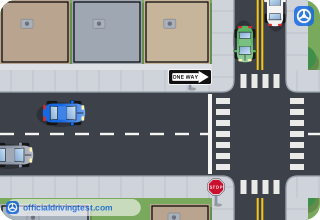
According to the guidelines for a safe turn, what should you do throughout the turn?
- Move gradually toward the center line
- Stay in your lane
- Change lanes to avoid slow traffic
- Ease toward the shoulder
Show answer
Correct answer: Stay in your lane
You should stay in your lane throughout the turn and finish the turn in the proper lane.
Source: Mississippi Driver's License Manual (Revised December 2024), page 50 · Open this page in the manual (Manual page 50)
-
When approaching an intersection and traffic is blocked ahead of you, what should you do?
- Move into the crosswalk and wait for traffic to start moving
- Enter the intersection and wait there until traffic clears
- Pull onto the shoulder and go around the blocked vehicles
- Stop before reaching the crosswalk and wait for traffic to move
Show answer
Correct answer: Stop before reaching the crosswalk and wait for traffic to move
When traffic is blocked ahead of you at an intersection, you should stop before reaching the crosswalk and wait for traffic to move.
Source: Mississippi Driver's License Manual (Revised December 2024), page 50 · Open this page in the manual (Manual page 50)
-
Before making a left turn, at least how far from the intersection should you turn on your left signal and slow down?
- One hundred feet
- Fifty feet
- Twenty-five feet
- Two hundred feet
Show answer
Correct answer: One hundred feet
For a left turn, you turn on your left signal and slow down at least one hundred feet from the intersection.
Source: Mississippi Driver's License Manual (Revised December 2024), page 51 · Open this page in the manual (Manual page 51)
-
Well ahead of a left turn, what should you do?
- Move to the right lane and turn from there
- Stay in the right lane until you reach the intersection
- Check for traffic and move safely into the left lane
- Stop in the center of the road and signal
Show answer
Correct answer: Check for traffic and move safely into the left lane
For a left turn, you check for traffic well ahead and move safely into the left lane, using your signal to show you are changing lanes.
Source: Mississippi Driver's License Manual (Revised December 2024), page 51 · Open this page in the manual (Manual page 51)
-
While waiting to make a left turn at an intersection, what should you do with your wheels?
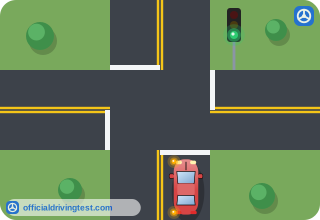
- Turn them to the left
- Keep them straight
- Turn them to the right
- Turn them slightly to the left
Show answer
Correct answer: Keep them straight
While waiting to turn left, you should keep your wheels straight.
Source: Mississippi Driver's License Manual (Revised December 2024), page 51 · Open this page in the manual (Manual page 51)
-
While waiting to make a left turn at an intersection, where should you keep your vehicle?
- Close to the right side of the lane
- In the middle of the right lane
- On the shoulder
- Close to the center line
Show answer
Correct answer: Close to the center line
While waiting to turn left, you should keep close to the center line.
Source: Mississippi Driver's License Manual (Revised December 2024), page 51 · Open this page in the manual (Manual page 51)
-
When travel is permitted and you are making a left turn, where should you enter the intersection?
- Just to the right of center
- Just to the left of center
- On the far right side of the road
- Across the center line
Show answer
Correct answer: Just to the right of center
After looking both ways, you enter the intersection just to the right of center.
Source: Mississippi Driver's License Manual (Revised December 2024), page 51 · Open this page in the manual (Manual page 51)
-
Which of these is a mistake to avoid when making a left turn?
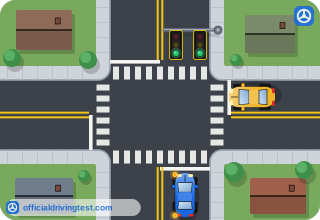
- Entering just to the right of center
- Keeping close to the center line while waiting
- Cutting the corner
- Slowing down at least one hundred feet from the intersection
Show answer
Correct answer: Cutting the corner
The manual warns not to cut the corner when making a left turn.
Source: Mississippi Driver's License Manual (Revised December 2024), page 51 · Open this page in the manual (Manual page 51)
-
In making a left turn, what should you do after completing the turn, when it is safe?
- Stay in the left lane
- Return to the right lane
- Pull onto the shoulder
- Move into the center turn lane
Show answer
Correct answer: Return to the right lane
The last step of a left turn is to return to the right lane when it is safe.
Source: Mississippi Driver's License Manual (Revised December 2024), page 51 · Open this page in the manual (Manual page 51)
-
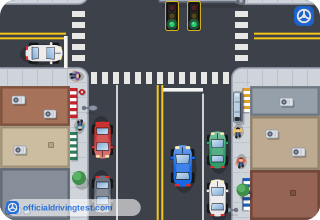
If you are not already in the right lane when preparing for a right turn, when should you move into it?
- Just before the crosswalk
- After the turn has started
- At the intersection itself
- Well ahead of the turn
Show answer
Correct answer: Well ahead of the turn
For a right turn, you should move into the right lane well ahead of the turn, after checking for traffic and using your signal.
Source: Mississippi Driver's License Manual (Revised December 2024), page 52 · Open this page in the manual (Manual page 52)
-
While waiting to make a right turn at an intersection, where should you keep your vehicle?
- Close to the right side of the lane
- Close to the center line of the road
- In the middle of the lane, away from the curb
- Partly on the shoulder of the road
Show answer
Correct answer: Close to the right side of the lane
While waiting to turn right, you should keep close to the right side of the lane.
Source: Mississippi Driver's License Manual (Revised December 2024), page 52 · Open this page in the manual (Manual page 52)
-
When travel is permitted and you are making a right turn, how should you enter the intersection?
- Starting from the left lane of the road
- Entering just to the right of center
- Keeping as close as possible to the right
- Swinging out toward the center line first
Show answer
Correct answer: Keeping as close as possible to the right
For a right turn, you enter the intersection keeping as close as possible to the right.
Source: Mississippi Driver's License Manual (Revised December 2024), page 52 · Open this page in the manual (Manual page 52)
-
After completing a right turn, which lane should you continue in?
- The left lane
- The right lane
- The center lane
- The lane farthest from the curb
Show answer
Correct answer: The right lane
The last step of a right turn is to continue in the right lane.
Source: Mississippi Driver's License Manual (Revised December 2024), page 52 · Open this page in the manual (Manual page 52)
-
At an intersection with multiple turn lanes or lane options, what must you always follow?
- The vehicle ahead of you
- The lane lines on the other road
- Pedestrian signals
- Directional arrows
Show answer
Correct answer: Directional arrows
At intersections with side-by-side turn lanes and lane options, you should always follow directional arrows.
Source: Mississippi Driver's License Manual (Revised December 2024), page 53 · Open this page in the manual (Manual page 53)
-
If you choose to turn at an intersection with multiple turn lanes, what must you be certain to do?
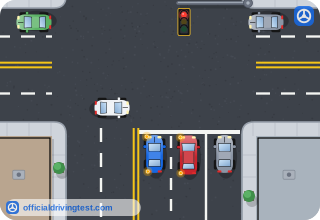
- Stay in your lane
- Move to the outside lane as you turn
- Change lanes during the turn if traffic is slow
- Enter the lane closest to the center
Show answer
Correct answer: Stay in your lane
If you choose to turn at such an intersection, you must be certain to stay in your lane.
Source: Mississippi Driver's License Manual (Revised December 2024), page 53 · Open this page in the manual (Manual page 53)
-
What does the manual say some roadways allow at intersections with side-by-side turn lanes?
- Only vehicles in the left lane to turn at the same time
- Vehicles to turn from any lane, regardless of arrows
- Vehicles in multiple lanes to turn at the same time
- Only one vehicle at a time to make a turn
Show answer
Correct answer: Vehicles in multiple lanes to turn at the same time
Some roadways allow vehicles in multiple lanes to turn at the same time.
Source: Mississippi Driver's License Manual (Revised December 2024), page 53 · Open this page in the manual (Manual page 53)
-
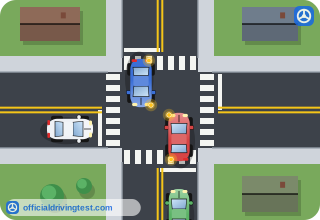
When two drivers approach an intersection and both want to turn left, how should each driver turn?
- To the right of the other driver
- To the left of the other driver
- Directly in front of the other driver
- After the other driver has stopped
Show answer
Correct answer: To the left of the other driver
When both drivers want to turn left, each should turn to the left of the other.
Source: Mississippi Driver's License Manual (Revised December 2024), page 54 · Open this page in the manual (Manual page 54)
-
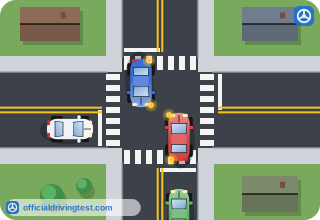
When two drivers both want to turn left at an intersection, which lane do they leave from and enter?
- Leave from the left lane and enter into the right lane
- Leave from the right lane and enter into the left lane
- Leave from the right lane and enter into the right lane
- Leave from the left lane and enter into the left lane
Show answer
Correct answer: Leave from the left lane and enter into the left lane
When turning left of center, you leave from the left lane and enter into the left lane.
Source: Mississippi Driver's License Manual (Revised December 2024), page 54 · Open this page in the manual (Manual page 54)
-
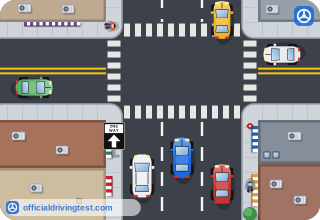
On a one-way street, from which lane is it a good rule to turn?
- The lane nearest the curb
- The lane nearest the center of the street
- The middle lane
- Any lane you choose
Show answer
Correct answer: The lane nearest the curb
A good rule on a one-way street is to always turn from the lane nearest the curb.
Source: Mississippi Driver's License Manual (Revised December 2024), page 54 · Open this page in the manual (Manual page 54)
-
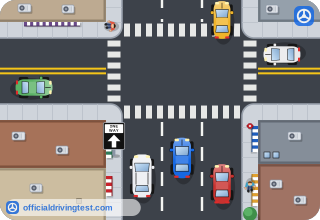
On a one-way street, what may permit turning from additional lanes?
- The time of day
- The width of the street
- Pavement markings or signage
- The speed of the traffic
Show answer
Correct answer: Pavement markings or signage
Pavement markings or signage may permit turning from additional lanes on a one-way street.
Source: Mississippi Driver's License Manual (Revised December 2024), page 54 · Open this page in the manual (Manual page 54)
-
At an intersection of two one-way streets, what does the manual say about turning right?
- It is permitted from both streets
- It is permitted from one street, but not from the other
- It is not permitted from either street
- It is permitted only from the street with more lanes
Show answer
Correct answer: It is permitted from one street, but not from the other
At two intersecting one-way streets, turning right is permitted from one street but not from the other.
Source: Mississippi Driver's License Manual (Revised December 2024), page 54 · Open this page in the manual (Manual page 54)
-
Why are turning restrictions placed at intersections of one-way streets?
- To reduce the number of traffic signals needed at each corner of the street
- To give pedestrians more time to cross the intersection
- To keep large trucks from using the one-way streets at night
- To keep drivers from traveling in the wrong direction on a one-way street
Show answer
Correct answer: To keep drivers from traveling in the wrong direction on a one-way street
The restrictions keep drivers from traveling in the wrong direction on a one-way street.
Source: Mississippi Driver's License Manual (Revised December 2024), page 54 · Open this page in the manual (Manual page 54)
-
According to the manual, what is the most dangerous place on a highway?
- An intersection
- A freeway on-ramp
- A school zone
- A rural road at night
Show answer
Correct answer: An intersection
The manual says the most dangerous place on a highway is an intersection, so approach every cross street with extreme caution.
Source: Mississippi Driver's License Manual (Revised December 2024), page 55 · Open this page in the manual (Manual page 55)
-
If you cannot see the entire intersection as you approach it, what should you do?

- Speed up to clear it quickly
- Sound your horn and keep your speed
- Slow down and proceed cautiously
- Stop and wait for another driver to go first
Show answer
Correct answer: Slow down and proceed cautiously
When you cannot see the whole intersection, you should slow down and proceed cautiously and look in both directions as you cross.
Source: Mississippi Driver's License Manual (Revised December 2024), page 55 · Open this page in the manual (Manual page 55)
-
When you cannot see the entire intersection as you approach, what else does the manual say to be sure to do as you cross?

- Look only to your left
- Look in both directions
- Look only at the road ahead
- Keep your eyes on the crosswalk
Show answer
Correct answer: Look in both directions
The manual says to be sure to look in both directions as you cross an intersection you cannot see completely.
Source: Mississippi Driver's License Manual (Revised December 2024), page 55 · Open this page in the manual (Manual page 55)
-
If traffic is blocked when you approach an intersection, where should you stop?
- Inside the intersection, as far forward as you can
- On the crosswalk so you can move quickly
- Just beyond the crosswalk
- Before you reach the crosswalk
Show answer
Correct answer: Before you reach the crosswalk
When traffic is blocked, you stop before reaching the crosswalk and wait for traffic to move.
Source: Mississippi Driver's License Manual (Revised December 2024), page 55 · Open this page in the manual (Manual page 55)
-
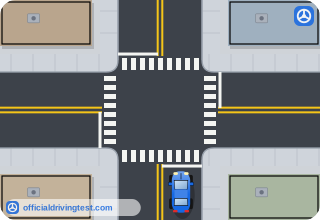
As you clear an intersection, what does the manual say to do with your speed?
- Gradually increase it
- Accelerate as hard as you can
- Hold the slowed speed until the next intersection
- Stop and check traffic again
Show answer
Correct answer: Gradually increase it
The manual says to slow down as you approach the intersection and gradually increase your speed as you clear it.
Source: Mississippi Driver's License Manual (Revised December 2024), page 55 · Open this page in the manual (Manual page 55)
-
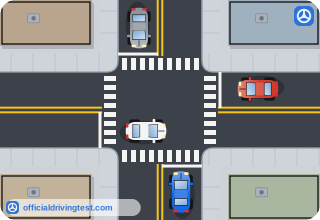
As you cross an intersection, the manual says to drive defensively and not to assume that pedestrians or other drivers do what?
- Know the speed limit
- Will signal before turning
- Understand your intentions
- Have had driver education
Show answer
Correct answer: Understand your intentions
The manual says not to assume that pedestrians or other drivers understand your intentions.
Source: Mississippi Driver's License Manual (Revised December 2024), page 55 · Open this page in the manual (Manual page 55)
-
In the manual’s definition, "right of way" is the privilege of doing what?
- Driving at the posted speed limit without stopping
- Making immediate use of the highway
- Passing any slower vehicle on the highway
- Turning at any intersection without signaling
Show answer
Correct answer: Making immediate use of the highway
The manual defines right of way as the privilege of immediate use of the highway.
Source: Mississippi Driver's License Manual (Revised December 2024), page 55 · Open this page in the manual (Manual page 55)
-
In a situation where two drivers, cyclists, or pedestrians meet, what must the person who does not have the right of way do?
- Move ahead while sounding the horn
- Proceed at the same speed with care
- Pass on the right side first
- Yield and wait
Show answer
Correct answer: Yield and wait
The person who has the right of way may move ahead, and the person who does not must yield and wait.
Source: Mississippi Driver's License Manual (Revised December 2024), page 55 · Open this page in the manual (Manual page 55)
-
What does the manual call the first rule for deciding who has the right of way?
- Always use your common sense
- Always yield to the larger vehicle
- Always let the faster vehicle go first
- Always let the driver on the left go first
Show answer
Correct answer: Always use your common sense
The manual says the first rule is to always use your common sense, because your right of way is not worth an accident.
Source: Mississippi Driver's License Manual (Revised December 2024), page 55 · Open this page in the manual (Manual page 55)
-
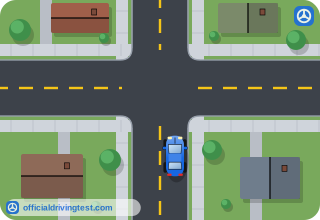
When should you determine your right of way?
- After you stop at the crosswalk
- Once you are in the middle of the intersection
- Before you enter an intersection
- When the other driver honks
Show answer
Correct answer: Before you enter an intersection
The manual says to determine your right of way before you enter an intersection.
Source: Mississippi Driver's License Manual (Revised December 2024), page 55 · Open this page in the manual (Manual page 55)
-
If another driver yields to you at an intersection, what should you do?
- Wait for the driver to wave you on again
- Proceed immediately
- Stop and let that driver go first anyway
- Slow down and look for a different route
Show answer
Correct answer: Proceed immediately
The manual says that if another driver yields to you, you proceed immediately; if not, slow or stop and let them proceed.
Source: Mississippi Driver's License Manual (Revised December 2024), page 55 · Open this page in the manual (Manual page 55)
-
Besides pedestrians in crosswalks, which vehicles also have the right of way at an intersection?
- Vehicles already inside the intersection
- Vehicles with the larger engines
- Vehicles traveling at the highest speed
- Vehicles that are about to enter it
Show answer
Correct answer: Vehicles already inside the intersection
The manual says vehicles already inside an intersection also have the right of way.
Source: Mississippi Driver's License Manual (Revised December 2024), page 55 · Open this page in the manual (Manual page 55)
-
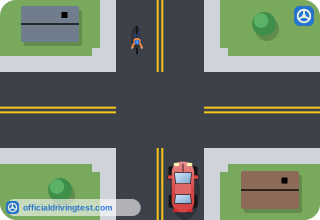
How does the manual say you must yield to bicycles?
- Only when they are in a marked bike lane
- Only when the cyclist signals first
- Exactly as you would to any other vehicle
- By waving them ahead before you stop
Show answer
Correct answer: Exactly as you would to any other vehicle
The manual says you must yield to bicycles exactly as you would to any other vehicle.
Source: Mississippi Driver's License Manual (Revised December 2024), page 55 · Open this page in the manual (Manual page 55)
-
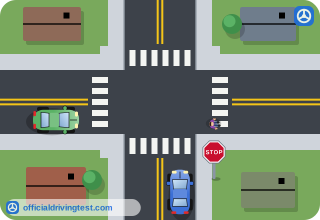
At an intersection with a stop sign or signal, where must you bring your vehicle to a complete stop?
- Past the crosswalk, inside the intersection
- At the crosswalk
- At the middle of the intersection
- At the far edge of the intersection
Show answer
Correct answer: At the crosswalk
At a stop sign or signal you must bring your vehicle to a complete stop at the crosswalk.
Source: Mississippi Driver's License Manual (Revised December 2024), page 56 · Open this page in the manual (Manual page 56)
-
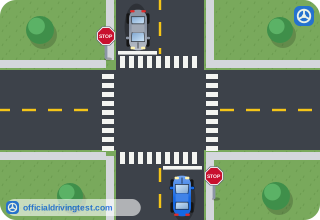
At an intersection with a stop sign or signal, after your complete stop, to whom must you yield the right-of-way?
- Only vehicles that are traveling straight ahead
- Only pedestrians who are in a marked crosswalk
- Only vehicles larger than yours
- Any vehicle or pedestrian in the intersection
Show answer
Correct answer: Any vehicle or pedestrian in the intersection
You must yield the right-of-way to any vehicle or pedestrian in the intersection and may proceed only when your way is completely clear.
Source: Mississippi Driver's License Manual (Revised December 2024), page 56 · Open this page in the manual (Manual page 56)
-
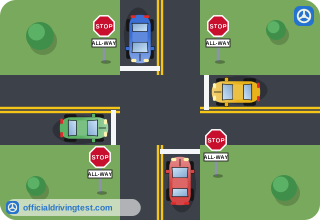
At a four-way stop, which vehicle has the right-of-way when the vehicles arrive at different times?
- The first vehicle to arrive
- The largest vehicle
- The vehicle on the left
- The vehicle that is traveling fastest
Show answer
Correct answer: The first vehicle to arrive
At a four-way stop the first vehicle to arrive has the right-of-way.
Source: Mississippi Driver's License Manual (Revised December 2024), page 56 · Open this page in the manual (Manual page 56)
-
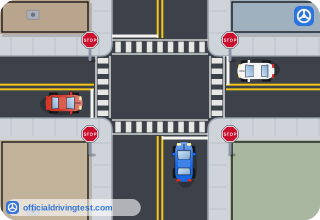
At a four-way stop, if several vehicles arrive at the same time, which vehicle has the right of way?
- The vehicle on the left
- The vehicle that signals first
- The vehicle on the right
- The largest vehicle
Show answer
Correct answer: The vehicle on the right
When multiple vehicles arrive at a four-way stop at the same time, the vehicle on the right has the right of way.
Source: Mississippi Driver's License Manual (Revised December 2024), page 56 · Open this page in the manual (Manual page 56)
-
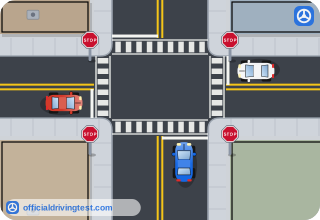
What does the manual warn you not to do in order to "stop first" at a four-way stop?
- Look at the other drivers
- Slam on your brakes
- Use your turn signal
- Yield to the driver on your right
Show answer
Correct answer: Slam on your brakes
The manual says not to slam on your brakes to “stop first” and to yield to the driver on the right.
Source: Mississippi Driver's License Manual (Revised December 2024), page 56 · Open this page in the manual (Manual page 56)
-
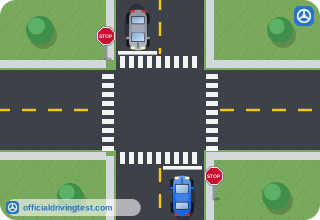
At a two-way stop, which traffic has the right of way?
- The traffic on the wider road, whether it has a stop sign or not
- Whichever vehicle at a stop sign is turning right
- The traffic that has the stop signs
- The cross-traffic with no stop signs
Show answer
Correct answer: The cross-traffic with no stop signs
At a two-way stop, the cross-traffic with no stop signs has the right of way, and vehicles at the stop signs wait until the way is clear.
Source: Mississippi Driver's License Manual (Revised December 2024), page 56 · Open this page in the manual (Manual page 56)
-
At a two-way stop, if two vehicles arrive at the stop signs at the same time, which has the right of way?
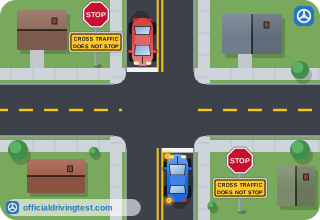
- The vehicle intending to travel straight across
- The vehicle intending to turn across the traffic lane
- The vehicle with its turn signal on
- The larger of the two vehicles
Show answer
Correct answer: The vehicle intending to travel straight across
When two vehicles arrive at the same time at a two-way stop, the vehicle intending to travel straight across has the right of way.
Source: Mississippi Driver's License Manual (Revised December 2024), page 56 · Open this page in the manual (Manual page 56)
-
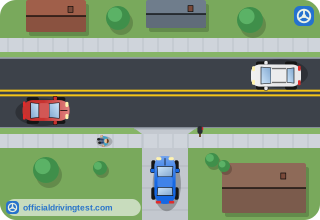
Even when no stop sign is present, what must you do when entering a street or highway from a driveway?
- Slow down and enter ahead of oncoming traffic
- Sound your horn and pull out slowly
- Stop and yield to oncoming traffic
- Merge into traffic without stopping
Show answer
Correct answer: Stop and yield to oncoming traffic
When entering a street or highway from a driveway or other entrance point, you must stop and yield to oncoming traffic even without a stop sign.
Source: Mississippi Driver's License Manual (Revised December 2024), page 57 · Open this page in the manual (Manual page 57)
-
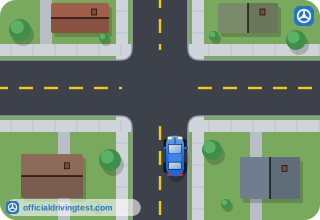
At a highway intersection with no traffic signs or signals, what should you do?
- Go first if you are on the wider road
- Yield to approaching traffic
- Sound your horn and keep your speed
- Speed up to clear it before others arrive
Show answer
Correct answer: Yield to approaching traffic
At an unmarked intersection you yield to approaching traffic, then proceed only when it is safe.
Source: Mississippi Driver's License Manual (Revised December 2024), page 57 · Open this page in the manual (Manual page 57)
-
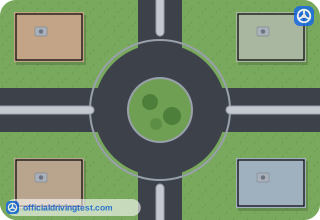
In which direction do vehicles travel around a roundabout or traffic circle?
- Clockwise
- Straight across the center island
- Toward the nearest exit only
- Counterclockwise
Show answer
Correct answer: Counterclockwise
Vehicles travel counterclockwise around the raised center island of a roundabout.
Source: Mississippi Driver's License Manual (Revised December 2024), page 57 · Open this page in the manual (Manual page 57)
-
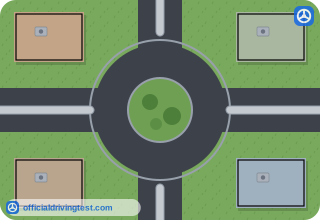
At a roundabout or traffic circle, which traffic yields the right of way?
- Traffic entering the roundabout
- Traffic already circulating in the roundabout
- Traffic exiting the roundabout
- The smaller vehicle
Show answer
Correct answer: Traffic entering the roundabout
Entering traffic yields the right of way to circulating traffic in a roundabout.
Source: Mississippi Driver's License Manual (Revised December 2024), page 57 · Open this page in the manual (Manual page 57)
-
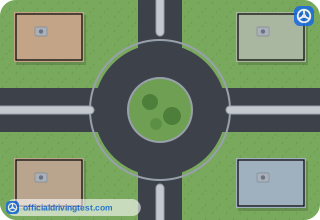
What does the manual say to do as you approach a roundabout or traffic circle to enter it?
- Speed up to merge ahead of circulating traffic
- Signal and enter at your current speed
- Slow down
- Sound your horn and enter
Show answer
Correct answer: Slow down
The manual lists slowing down to enter the roundabout or traffic circle as the first step.
Source: Mississippi Driver's License Manual (Revised December 2024), page 57 · Open this page in the manual (Manual page 57)
-
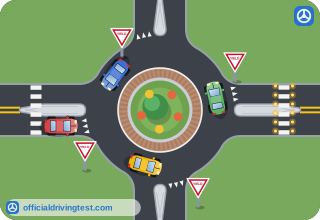
When you reach the appropriate exit of a roundabout, what does the manual say to do?
- Stop and wait for traffic to pass the exit
- Signal your intent and exit
- Turn on your hazard lights and slow to a crawl
- Sound your horn and exit
Show answer
Correct answer: Signal your intent and exit
The manual says to proceed to the appropriate exit, signal intent, and exit.
Source: Mississippi Driver's License Manual (Revised December 2024), page 57 · Open this page in the manual (Manual page 57)
-
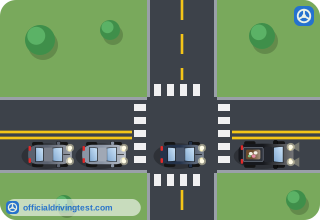
What does the manual say about yielding the right of way to funeral processions?
- It is required by law only on divided highways
- It is required by law in every situation
- It is not required by law, but common courtesy is to yield
- It is required by law only when a police escort leads the procession
Show answer
Correct answer: It is not required by law, but common courtesy is to yield
The manual says that although it is not required by law, common courtesy is to yield the right of way to funeral processions.
Source: Mississippi Driver's License Manual (Revised December 2024), page 59 · Open this page in the manual (Manual page 59)
-
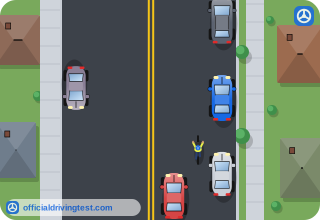
What is true of the right of way for a driver leaving a parking space?
- The driver always has it
- The driver has it if signaling first
- The driver has it when leaving a parallel space
- The driver does not have it
Show answer
Correct answer: The driver does not have it
The manual says the driver leaving a parking space does not have the right of way and must yield to oncoming traffic.
Source: Mississippi Driver's License Manual (Revised December 2024), page 61 · Open this page in the manual (Manual page 61)
-
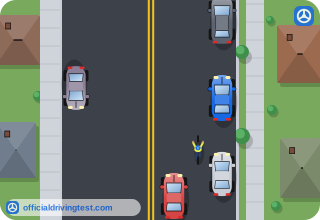
When leaving a parking space, what must you do about oncoming traffic?
- Sound your horn and pull out
- Pull out first if you have signaled
- Speed up to merge with it
- Yield to it
Show answer
Correct answer: Yield to it
The manual says you must yield to any oncoming traffic when leaving a parking space.
Source: Mississippi Driver's License Manual (Revised December 2024), page 61 · Open this page in the manual (Manual page 61)