Louisiana: Emergencies — Part 3 Practice Test
Skids, hydroplaning, brake failure, tire blowouts, a stuck accelerator, fires, a car in water, bad weather and what to do after a crash. — Part 3
Independent educational site · not affiliated with any government agency or DMV
Ready? Test yourself
- Instant feedback with an explanation
- Every answer cites its source in the manual
- Your best score is saved on this device
Questions are original and based on the official manual "Class D & E Driver’s Guide" (Revised August 2025 (DPSMV2052 R08/25)), Louisiana Office of Motor Vehicles.
All 35 questions in this practice test
Take the test above first, then use this list to study. Tap “Show answer” to see the correct answer and explanation.
Show the questions and answersHide the questions
-
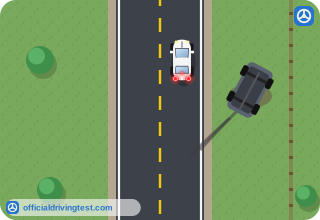
If you are about to be hit from the side, what should you get ready to do in case you spin around?
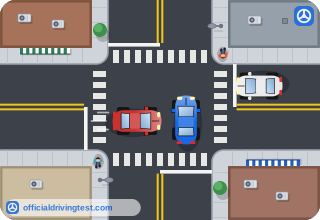
- Brake hard and hold the pedal down firmly
- Open the door to get out of the car quickly
- Steer quickly to try to regain control of the car
- Shift into park and turn off the engine
Show answer
Correct answer: Steer quickly to try to regain control of the car
The manual says to get ready to steer quickly so that if you spin around you can try to regain control of the car.
Source: Class D & E Driver’s Guide (Revised August 2025 (DPSMV2052 R08/25)), page 114 · Open this page in the manual (Manual page 114)
-
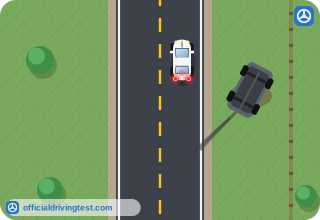
Compared with most other types of crashes, how likely are rollovers to result in serious injury or death?
- Slightly less likely
- Much more likely
- About equally likely
- Much less likely
Show answer
Correct answer: Much more likely
Rollovers are much more likely than most other types of crashes to result in serious injury or death.
Source: Class D & E Driver’s Guide (Revised August 2025 (DPSMV2052 R08/25)), page 114 · Open this page in the manual (Manual page 114)
-
Which of these can "trip" a vehicle that is sliding sideways and cause it to roll over?
- A smooth, level paved shoulder with no drop-off
- A flat, dry road surface with no obstacles on it
- A painted white lane line on the pavement
- A curb, guardrail, tree stump or soft, uneven ground
Show answer
Correct answer: A curb, guardrail, tree stump or soft, uneven ground
A vehicle sliding sideways can be tripped by a curb, guardrail, tree stump, or soft, uneven ground on the side of the roadway.
Source: Class D & E Driver’s Guide (Revised August 2025 (DPSMV2052 R08/25)), page 114 · Open this page in the manual (Manual page 114)
-
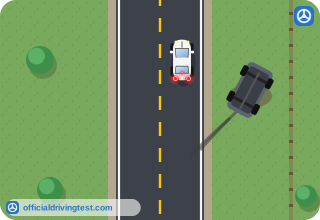
Why are rollover crashes more common for SUVs, vans, pickups and small trucks than for passenger vehicles?
- They have lower centers of gravity than cars do
- They are never equipped with safety belts or air bags
- Their higher centers of gravity make them top heavy
- They always have worn tires and poorly adjusted brakes
Show answer
Correct answer: Their higher centers of gravity make them top heavy
Rollovers are more common for these vehicles due to their higher centers of gravity, which makes them top heavy and more likely to tip over.
Source: Class D & E Driver’s Guide (Revised August 2025 (DPSMV2052 R08/25)), page 114 · Open this page in the manual (Manual page 114)
-
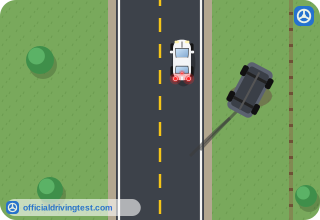
According to the manual, which can increase the chances of a rollover?
- Additional cargo and passengers
- A lighter load with fewer passengers
- Driving more slowly in bad weather
- Using the turn signal before a turn
Show answer
Correct answer: Additional cargo and passengers
The manual says additional cargo and passengers can also increase the chances of a rollover.
Source: Class D & E Driver’s Guide (Revised August 2025 (DPSMV2052 R08/25)), page 114 · Open this page in the manual (Manual page 114)
-
Which simple choices does the manual say can reduce your chances of a rollover crash?
- Driving a little over the posted limit to keep control of the car
- Braking harder and steering more sharply in every curve you take
- Adding extra cargo and passengers for extra weight in the car
- Obeying the posted speed limit and using extra caution in bad weather
Show answer
Correct answer: Obeying the posted speed limit and using extra caution in bad weather
Speed is a rollover factor you can control: obeying the posted speed limit and using extra caution in bad weather can reduce your chances of a rollover.
Source: Class D & E Driver’s Guide (Revised August 2025 (DPSMV2052 R08/25)), page 115 · Open this page in the manual (Manual page 115)
-
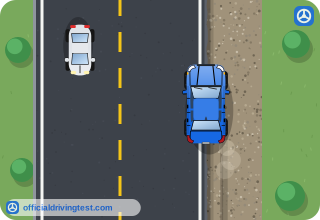
What do many rollovers occur when drivers do in response to unexpected situations?
- Brake too gently
- Overcorrect their steering
- Drive below the speed limit
- Keep both hands on the wheel
Show answer
Correct answer: Overcorrect their steering
Many rollovers occur when drivers overcorrect their steering in response to unexpected situations, such as a stopped vehicle in their lane.
Source: Class D & E Driver’s Guide (Revised August 2025 (DPSMV2052 R08/25)), page 115 · Open this page in the manual (Manual page 115)
-
What can side air bags triggered by rollover sensors help prevent?
- The tires from losing traction on wet roads or on soft ground
- Upper body contact with the ground and even complete occupant ejection
- The engine from stalling when the vehicle rolls over onto its side
- Any contact between the vehicle and a guardrail, curb or tree at all
Show answer
Correct answer: Upper body contact with the ground and even complete occupant ejection
Side airbags triggered by rollover sensors can prevent the upper body from being exposed to contacts with the ground or even complete occupant ejection.
Source: Class D & E Driver’s Guide (Revised August 2025 (DPSMV2052 R08/25)), page 115 · Open this page in the manual (Manual page 115)
-
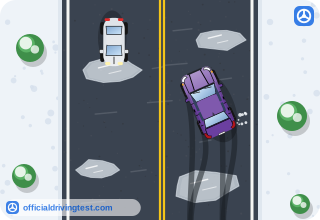
When do most skids happen, according to the manual?
- When you drive slowly and steadily on dry pavement
- When you accelerate gently on a long straight dry road
- When you park your vehicle on a steep hill beside a road
- When you try to turn or stop suddenly on slippery pavement
Show answer
Correct answer: When you try to turn or stop suddenly on slippery pavement
Most skids happen when you try to turn or stop suddenly on slippery pavement.
Source: Class D & E Driver’s Guide (Revised August 2025 (DPSMV2052 R08/25)), page 115 · Open this page in the manual (Manual page 115)
-
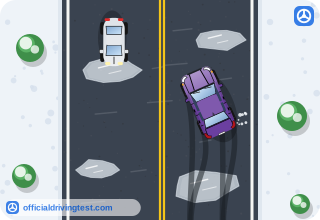
If the rear of your car starts to slide, which way should you steer?
- Opposite to the direction the rear end is skidding
- Straight ahead without turning
- In the direction in which the rear end is skidding
- Toward the shoulder
Show answer
Correct answer: In the direction in which the rear end is skidding
The manual says to steer in the direction in which the rear end of your car is skidding.
Source: Class D & E Driver’s Guide (Revised August 2025 (DPSMV2052 R08/25)), page 115 · Open this page in the manual (Manual page 115)
-
To steer out of a skid, what is the first step?
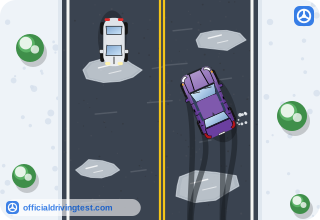
- Take your foot off the gas pedal
- Push the brake pedal hard
- Turn the wheel fully to the left
- Shift into neutral
Show answer
Correct answer: Take your foot off the gas pedal
The first step in steering out of a skid is to take your foot off the gas pedal.
Source: Class D & E Driver’s Guide (Revised August 2025 (DPSMV2052 R08/25)), page 115 · Open this page in the manual (Manual page 115)
-
If the rear of your car is skidding to the right, which way should you turn the front wheels?
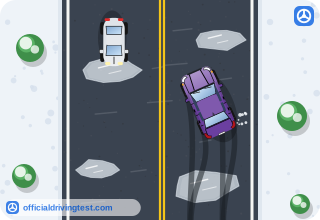
- To the left
- Straight ahead
- Back and forth quickly
- To the right
Show answer
Correct answer: To the right
The manual says that if the rear is skidding to the right, turn the front wheels to the right, and turn left for a skid to the left.
Source: Class D & E Driver’s Guide (Revised August 2025 (DPSMV2052 R08/25)), page 115 · Open this page in the manual (Manual page 115)
-
While steering out of a skid, why should you be careful not to over steer?
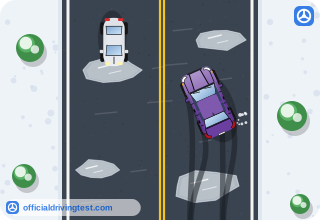
- The brakes will lock
- Your car may start to skid the other way
- The engine will stall
- The anti-lock system will turn off
Show answer
Correct answer: Your car may start to skid the other way
The manual warns that over steering may start the car skidding the other way.
Source: Class D & E Driver’s Guide (Revised August 2025 (DPSMV2052 R08/25)), page 115 · Open this page in the manual (Manual page 115)
-
When should you straighten the wheels while steering out of a skid?
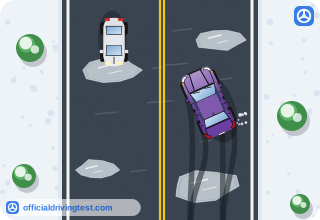
- When you feel the car is back under control
- As soon as the rear begins to slide
- Before you take your foot off the gas
- Only after the car has stopped
Show answer
Correct answer: When you feel the car is back under control
The manual says you can feel when the car is back under control; then you straighten the wheels.
Source: Class D & E Driver’s Guide (Revised August 2025 (DPSMV2052 R08/25)), page 115 · Open this page in the manual (Manual page 115)
-
When you need to stop or slow, how does the manual say to apply the brake pedal to avoid a skid?
- Stomp on the pedal and release
- Maintain mild pressure on the pedal
- Lock the wheels briefly
- Hold the pedal down as hard as possible
Show answer
Correct answer: Maintain mild pressure on the pedal
The manual says not to brake hard or lock the wheels and risk a skid, but to maintain mild pressure on the brake pedal.
Source: Class D & E Driver’s Guide (Revised August 2025 (DPSMV2052 R08/25)), page 115 · Open this page in the manual (Manual page 115)
-
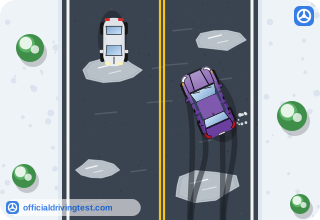
In a skid, how long must you be prepared to turn the steering wheel?
- Once, then hold the wheel still until the car stops
- Only while the car is still slowing down in the skid
- Until the car has reached the shoulder of the road
- Again and again until the front travels in a straight line
Show answer
Correct answer: Again and again until the front travels in a straight line
You must be prepared to turn the steering wheel again and again until the front of the vehicle is traveling in a straight line.
Source: Class D & E Driver’s Guide (Revised August 2025 (DPSMV2052 R08/25)), page 115 · Open this page in the manual (Manual page 115)
-
Which habit helps you avoid hydroplaning on wet roads?
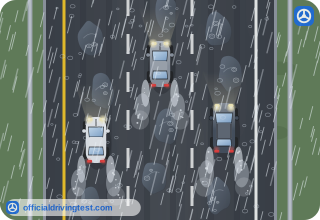
- Keeping your tires inflated correctly and maintaining good tire tread
- Letting some air out of the tires so that more rubber touches the road surface
- Driving through puddles quickly so the tires wipe the water away
- Replacing worn tires only after the rainy season has ended
Show answer
Correct answer: Keeping your tires inflated correctly and maintaining good tire tread
To avoid hydroplaning, keep your tires inflated correctly and maintain good tire tread. Do not put off replacing worn tires.
Source: Class D & E Driver’s Guide (Revised August 2025 (DPSMV2052 R08/25)), page 116 · Open this page in the manual (Manual page 116)
-
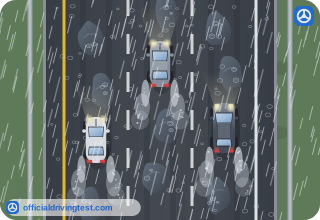
On a wet road, where does the manual suggest you try to drive to help avoid hydroplaning?
- Close behind the car ahead so its spray clears the road
- Along the edge of the road next to the shoulder
- In the tire tracks left by the cars in front of you
- On the painted lines, which shed the water
Show answer
Correct answer: In the tire tracks left by the cars in front of you
Driving in the tire tracks left by the cars in front of you is one way to avoid hydroplaning, along with slowing down and staying away from puddles.
Source: Class D & E Driver’s Guide (Revised August 2025 (DPSMV2052 R08/25)), page 116 · Open this page in the manual (Manual page 116)
-
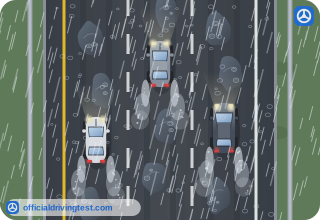
What should you do if your car begins hydroplaning?
- Shift into neutral and let the engine idle until the water clears
- Ease your foot off the gas until the car slows and you feel the road
- Turn the steering wheel sharply to get out of the wet area
- Press the gas pedal firmly to drive out of the water layer
Show answer
Correct answer: Ease your foot off the gas until the car slows and you feel the road
When hydroplaning, ease your foot off the gas until the car slows and you can feel the road again.
Source: Class D & E Driver’s Guide (Revised August 2025 (DPSMV2052 R08/25)), page 116 · Open this page in the manual (Manual page 116)
-
Why should you not brake or turn suddenly if your car is hydroplaning?
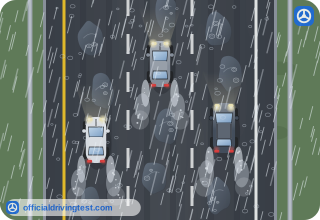
- It could cause one of the tires to blow out
- It could lock the steering wheel
- It could stall the engine
- It could throw your car into a skid
Show answer
Correct answer: It could throw your car into a skid
Braking or turning suddenly while hydroplaning could throw the car into a skid.
Source: Class D & E Driver’s Guide (Revised August 2025 (DPSMV2052 R08/25)), page 116 · Open this page in the manual (Manual page 116)
-
What does a defensive driver do about wet road conditions?
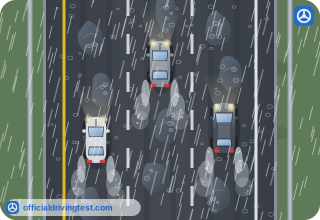
- Waits for the car to begin skidding before changing speed at all
- Keeps the same speed and relies on the anti-lock brakes to stay in control
- Turns on the hazard flashers and drives at normal speed
- Adjusts speed to the wet road in time to avoid using skid measures
Show answer
Correct answer: Adjusts speed to the wet road in time to avoid using skid measures
A defensive driver adjusts speed to the wet road conditions in time to avoid having to use skid-recovery measures.
Source: Class D & E Driver’s Guide (Revised August 2025 (DPSMV2052 R08/25)), page 116 · Open this page in the manual (Manual page 116)
-
If your car begins to skid on a wet or icy road, in which direction should you steer?
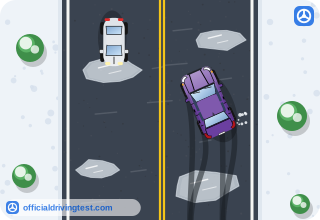
- Toward the nearest edge of the road
- In the direction you want to go
- Away from the direction you are looking
- Toward the center line of the road
Show answer
Correct answer: In the direction you want to go
If your car begins to skid on a wet or icy road, look and steer in the direction you want to go.
Source: Class D & E Driver’s Guide (Revised August 2025 (DPSMV2052 R08/25)), page 116 · Open this page in the manual (Manual page 116)
-
In a loss of traction in a vehicle with ESP, what should you do?
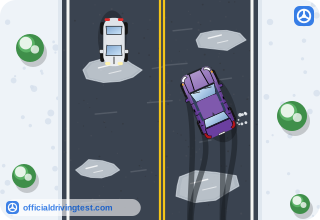
- Turn the wheel sharply away from the skid and let ESP finish the job for you
- Steer toward the direction you are looking and avoid abrupt steering
- Speed up so ESP can pull the vehicle back into its lane
- Take both hands off the wheel and let ESP steer for you
Show answer
Correct answer: Steer toward the direction you are looking and avoid abrupt steering
With ESP, steer the vehicle toward the direction you are looking and avoid abrupt steering.
Source: Class D & E Driver’s Guide (Revised August 2025 (DPSMV2052 R08/25)), page 116 · Open this page in the manual (Manual page 116)
-
If your wheels slip off the edge of the road, why should you not turn back onto the pavement right away?
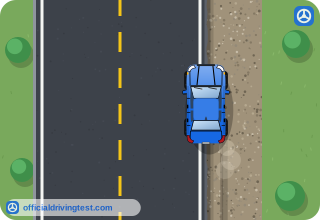
- You could damage the tires on the edge of the pavement
- You could swerve into the lane of oncoming traffic
- The engine could stall on the loose shoulder surface
- The car could roll over onto its side at once
Show answer
Correct answer: You could swerve into the lane of oncoming traffic
Turning back onto the pavement right away could make you swerve into the lane of oncoming traffic.
Source: Class D & E Driver’s Guide (Revised August 2025 (DPSMV2052 R08/25)), page 116 · Open this page in the manual (Manual page 116)
-
If your wheels slip off the edge of the road, what is the first thing to do while you stay on the shoulder?
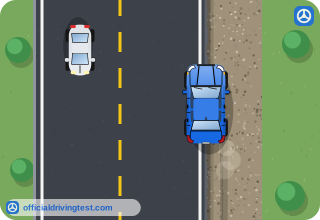
- Steer immediately back onto the road without slowing down
- Speed up to get past the drop-off
- Brake hard until the car stops
- Slow down by gently using your brakes
Show answer
Correct answer: Slow down by gently using your brakes
While staying on the shoulder, first slow down by gently using your brakes.
Source: Class D & E Driver’s Guide (Revised August 2025 (DPSMV2052 R08/25)), page 116 · Open this page in the manual (Manual page 116)
-
If your wheels slip off the road and the shoulder is much lower than the pavement, to what speed should you slow?
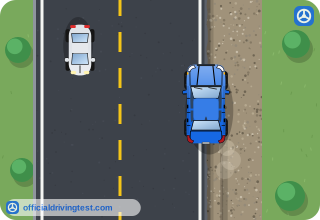
- 10 mph
- 20 mph
- 5 mph
- 30 mph
Show answer
Correct answer: 10 mph
When the shoulder is much lower than the pavement, slow to a very slow speed (10 mph) before returning to the road.
Source: Class D & E Driver’s Guide (Revised August 2025 (DPSMV2052 R08/25)), page 116 · Open this page in the manual (Manual page 116)
-
What is the most important rule when a tire blows out?
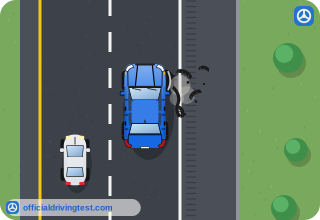
- Brake hard to stop as quickly as possible
- Don't panic and don't slam on the brakes
- Turn sharply toward the shoulder right away
- Shift into neutral and coast to a stop
Show answer
Correct answer: Don't panic and don't slam on the brakes
The most important rule in a tire blowout is not to panic and not to slam on the brakes.
Source: Class D & E Driver’s Guide (Revised August 2025 (DPSMV2052 R08/25)), page 117 · Open this page in the manual (Manual page 117)
-
During a tire blowout, how should you handle the steering wheel and your lane?
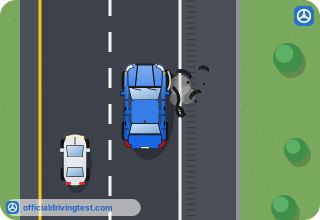
- Turn the wheel sharply toward the side with the flat tire
- Move quickly into the lane with the least traffic
- Loosen your grip so the wheel can straighten itself
- Hold the wheel firmly and keep the car in the same lane
Show answer
Correct answer: Hold the wheel firmly and keep the car in the same lane
In a blowout, hold the steering wheel firmly and keep your car in the same lane, because there may be a strong pull to the right or left.
Source: Class D & E Driver’s Guide (Revised August 2025 (DPSMV2052 R08/25)), page 117 · Open this page in the manual (Manual page 117)
-
After a tire blowout, you should not use the brakes until you have slowed to about what speed?
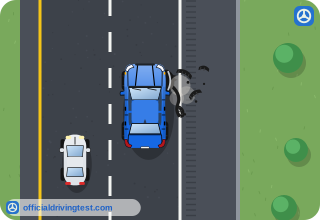
- 10 mph
- 20 mph
- 45 mph
- 30 mph
Show answer
Correct answer: 30 mph
After a blowout, let the car slow down and do not use the brakes until you reach a safer speed, around 30 mph.
Source: Class D & E Driver’s Guide (Revised August 2025 (DPSMV2052 R08/25)), page 117 · Open this page in the manual (Manual page 117)
-
After a blowout, once the car has slowed to a safer speed, what do you do?
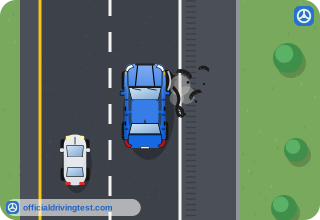
- Stop in your lane and turn on the hazard flashers until help comes
- Brake gently and pull off the road into a safe area
- Brake hard to stop where you are right away
- Keep driving to the next exit before stopping
Show answer
Correct answer: Brake gently and pull off the road into a safe area
Once the car has slowed to a safer speed after a blowout, brake gently and pull off the road into a safe area.
Source: Class D & E Driver’s Guide (Revised August 2025 (DPSMV2052 R08/25)), page 117 · Open this page in the manual (Manual page 117)
-
If a wheel comes off your vehicle, which procedure does the manual say to use?
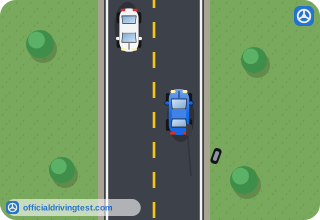
- Brake hard and steer toward the nearest exit
- Shift into neutral and use the parking brake
- The same procedure used for a tire blowout
- Turn off the engine and coast to a stop in your lane
Show answer
Correct answer: The same procedure used for a tire blowout
The loss of a wheel is handled with the same procedure as for a tire blowout.
Source: Class D & E Driver’s Guide (Revised August 2025 (DPSMV2052 R08/25)), page 117 · Open this page in the manual (Manual page 117)
-
What are the warning signs that a wheel is coming off your vehicle?
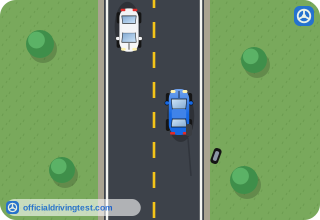
- A thumping noise and/or pulling to one side
- A burning odor and/or smoke from under the hood
- A hissing sound and/or a vibrating brake pedal
- A grinding noise and/or a warning light flashing
Show answer
Correct answer: A thumping noise and/or pulling to one side
The warning signs of the loss of a wheel are a thumping noise and/or pulling to one side.
Source: Class D & E Driver’s Guide (Revised August 2025 (DPSMV2052 R08/25)), page 117 · Open this page in the manual (Manual page 117)
-
After a vehicle that lost a wheel has stopped, what must happen to it?
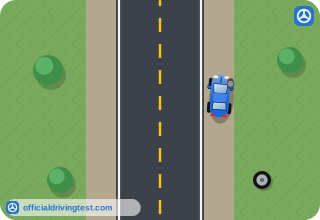
- It can be driven slowly to a repair shop
- It can be pushed to the shoulder by passengers
- It must be towed
- It can be driven on the rim to a safe area
Show answer
Correct answer: It must be towed
Once stopped after losing a wheel, you will be unable to move the vehicle; it must be towed.
Source: Class D & E Driver’s Guide (Revised August 2025 (DPSMV2052 R08/25)), page 117 · Open this page in the manual (Manual page 117)
-
If your gas pedal sticks and you keep your eyes on the road, what is the first step?
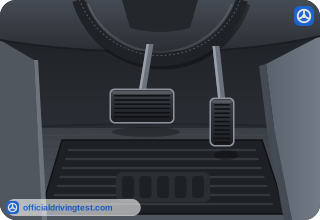
- Put the gear shift in neutral
- Pump the gas pedal hard to free it
- Pull the hand brake firmly
- Shift into a lower gear
Show answer
Correct answer: Put the gear shift in neutral
If the gas pedal sticks, keep your eyes on the road and first put the gear shift in neutral.
Source: Class D & E Driver’s Guide (Revised August 2025 (DPSMV2052 R08/25)), page 117 · Open this page in the manual (Manual page 117)
-
If your gas pedal sticks and your foot cannot free it, what does the manual say to do?
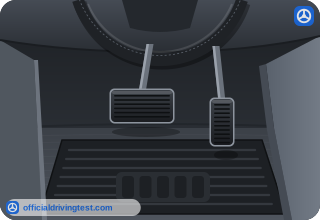
- Lean down and pull the pedal up with your hand
- Pump the brake pedal until the pedal comes loose
- Honk the horn until another driver stops to help
- If possible, have a passenger try to free it
Show answer
Correct answer: If possible, have a passenger try to free it
Try to free the stuck pedal with your foot; if you can't, have your passenger try to free it if possible.
Source: Class D & E Driver’s Guide (Revised August 2025 (DPSMV2052 R08/25)), page 117 · Open this page in the manual (Manual page 117)