Louisiana: Emergencies — Part 2 Practice Test
Skids, hydroplaning, brake failure, tire blowouts, a stuck accelerator, fires, a car in water, bad weather and what to do after a crash. — Part 2
Independent educational site · not affiliated with any government agency or DMV
Ready? Test yourself
- Instant feedback with an explanation
- Every answer cites its source in the manual
- Your best score is saved on this device
Questions are original and based on the official manual "Class D & E Driver’s Guide" (Revised August 2025 (DPSMV2052 R08/25)), Louisiana Office of Motor Vehicles.
All 35 questions in this practice test
Take the test above first, then use this list to study. Tap “Show answer” to see the correct answer and explanation.
Show the questions and answersHide the questions
-
Why does the manual say to take maps of local areas on a trip?
- In case your vehicle breaks down
- In case you lock your keys in the vehicle
- In case you are in a crash
- In case you get lost
Show answer
Correct answer: In case you get lost
The manual says to take maps of local areas in case you get lost.
Source: Class D & E Driver’s Guide (Revised August 2025 (DPSMV2052 R08/25)), page 109 · Open this page in the manual (Manual page 109)
-
Which of these is listed among the worst hazards to safe driving?
- Drowsiness
- Using the turn signal
- Driving in the daytime
- Driving on a divided highway
Show answer
Correct answer: Drowsiness
The manual lists cell phone usage, weather, alcohol, drowsiness, aggressive behavior, unintended acceleration and eating or drinking while driving as the worst hazards.
Source: Class D & E Driver’s Guide (Revised August 2025 (DPSMV2052 R08/25)), page 110 · Open this page in the manual (Manual page 110)
-
What should you adjust before you start your engine?
- Your tire pressure and headlights
- Your radio and navigation system
- Your trunk and spare tire
- Your seat cushions and mirrors
Show answer
Correct answer: Your seat cushions and mirrors
The manual's list of things to remember before you start your engine includes adjusting your seat cushions and mirrors.
Source: Class D & E Driver’s Guide (Revised August 2025 (DPSMV2052 R08/25)), page 110 · Open this page in the manual (Manual page 110)
-
Brakes, unsafe tires, steering and suspension are examples of which factor that contributes to collisions?
- Roadway design
- Poor roadway maintenance
- Driver behavior
- Equipment failure
Show answer
Correct answer: Equipment failure
Equipment failure, including brakes, unsafe tires, steering and suspension, is one of the four factors contributing to the majority of collisions.
Source: Class D & E Driver’s Guide (Revised August 2025 (DPSMV2052 R08/25)), page 112 · Open this page in the manual (Manual page 112)
-
Traffic control devices, roadway surfaces, weather, road hazards and traffic flow are examples of which factor that contributes to collisions?
- Equipment failure
- Roadway design
- Poor roadway maintenance
- Driver behavior
Show answer
Correct answer: Roadway design
Roadway design, including traffic control devices, surfaces, weather, hazards and traffic flow, is one of the four factors contributing to the majority of collisions.
Source: Class D & E Driver’s Guide (Revised August 2025 (DPSMV2052 R08/25)), page 112 · Open this page in the manual (Manual page 112)
-
Debris on the highway, potholes and construction are examples of which factor that contributes to collisions?
- Poor roadway maintenance
- Equipment failure and tires
- Roadway design and weather
- Driver behavior and speeding
Show answer
Correct answer: Poor roadway maintenance
Poor roadway maintenance, such as debris, potholes and construction, is one of the four factors contributing to the majority of collisions.
Source: Class D & E Driver’s Guide (Revised August 2025 (DPSMV2052 R08/25)), page 112 · Open this page in the manual (Manual page 112)
-
Which of these is listed under driver behavior as a factor that contributes to collisions?
- Potholes
- Unsafe tires
- Tailgating
- Weather
Show answer
Correct answer: Tailgating
Driver behavior includes speeding, tailgating, aggressive driving, unsafe lane changing, failure to signal and failure to give the right of way.
Source: Class D & E Driver’s Guide (Revised August 2025 (DPSMV2052 R08/25)), page 112 · Open this page in the manual (Manual page 112)
-
In the few seconds you have before a possible crash, what does the manual say to do?
- Close your eyes and brace yourself for the crash
- Try not to panic and react properly and quickly
- Take both hands off the wheel and cover your face
- Wait until the last possible moment before you react
Show answer
Correct answer: Try not to panic and react properly and quickly
Reacting properly and quickly can avoid crashes or at least minimize the damage.
Source: Class D & E Driver’s Guide (Revised August 2025 (DPSMV2052 R08/25)), page 113 · Open this page in the manual (Manual page 113)
-
To help prevent injuries in a collision, where does the manual say to put loose items whenever possible?
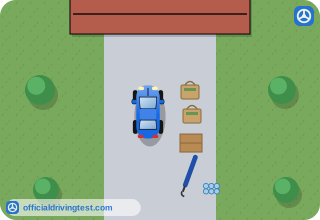
- On the back seat
- On the floor in front of the passenger seat
- On the dashboard
- In the trunk
Show answer
Correct answer: In the trunk
The manual says to put loose items in the trunk whenever possible.
Source: Class D & E Driver’s Guide (Revised August 2025 (DPSMV2052 R08/25)), page 113 · Open this page in the manual (Manual page 113)
-
Where does the manual say to keep a collision kit?
- In the trunk
- Under the driver's seat
- In your glove compartment
- In the door pocket
Show answer
Correct answer: In your glove compartment
The manual says to have a collision kit in your glove compartment.
Source: Class D & E Driver’s Guide (Revised August 2025 (DPSMV2052 R08/25)), page 113 · Open this page in the manual (Manual page 113)
-
Which of these should a collision kit include, according to the manual?
- Paper, a pen and insurance information
- A copy of the vehicle title papers
- A spare set of keys for the car
- A tire pressure gauge and a funnel
Show answer
Correct answer: Paper, a pen and insurance information
The manual says a collision kit should include paper, pen, insurance information, medical information if needed, and emergency supplies.
Source: Class D & E Driver’s Guide (Revised August 2025 (DPSMV2052 R08/25)), page 113 · Open this page in the manual (Manual page 113)
-
If your vehicle has a manual (disc) brake system, why should you not brake hard and hold?
- It overheats the brake pedal and the brake fluid
- It makes the engine stall and the steering lock
- It turns on the anti-lock system and the horn
- It locks the wheels and puts the car into a skid
Show answer
Correct answer: It locks the wheels and puts the car into a skid
With a manual (disc) brake system, braking hard and holding locks the wheels and puts the car into a skid.
Source: Class D & E Driver’s Guide (Revised August 2025 (DPSMV2052 R08/25)), page 113 · Open this page in the manual (Manual page 113)
-
When the brakes are pressed hard, about how many times per second can an anti-lock braking system (ABS) pump the brakes?
- Up to 30 times
- Up to 3 times
- Up to 10 times
- Up to 100 times
Show answer
Correct answer: Up to 30 times
The manual says that when the brakes are pressed hard, the ABS pumps the brakes up to 30 times a second.
Source: Class D & E Driver’s Guide (Revised August 2025 (DPSMV2052 R08/25)), page 113 · Open this page in the manual (Manual page 113)
-
What does the manual say about an anti-lock braking system (ABS) and stopping speed?
- It always stops the car in a shorter distance
- It stops the car twice as fast
- It does not stop the car faster
- It stops the car faster only on wet roads
Show answer
Correct answer: It does not stop the car faster
ABS does not stop the car faster; it lets you stop where you want by allowing you to concentrate on steering.
Source: Class D & E Driver’s Guide (Revised August 2025 (DPSMV2052 R08/25)), page 113 · Open this page in the manual (Manual page 113)
-
What does an anti-lock braking system (ABS) enable you to do?
- Stop in half the distance on any road surface
- Stop where you want by concentrating on steering
- Stop without any need to steer the car at all
- Stop without using the brake pedal at any time
Show answer
Correct answer: Stop where you want by concentrating on steering
ABS enables you to stop where you want by allowing you to concentrate on steering the car to safety.
Source: Class D & E Driver’s Guide (Revised August 2025 (DPSMV2052 R08/25)), page 113 · Open this page in the manual (Manual page 113)
-
What does it mean if the ABS light stays lit after you start your vehicle?
- The ABS is working normally
- The brakes are cold
- The ABS is not working correctly
- The parking brake is set
Show answer
Correct answer: The ABS is not working correctly
The ABS light illuminates and then dims at start-up; if it stays lit, the ABS is not working correctly.
Source: Class D & E Driver’s Guide (Revised August 2025 (DPSMV2052 R08/25)), page 113 · Open this page in the manual (Manual page 113)
-
What happens to the ABS light when you start a vehicle that has ABS?
- It illuminates and then dims
- It stays off the whole time
- It flashes until you brake
- It stays lit until you drive away
Show answer
Correct answer: It illuminates and then dims
When you start your vehicle the ABS light will illuminate and then dim.
Source: Class D & E Driver’s Guide (Revised August 2025 (DPSMV2052 R08/25)), page 113 · Open this page in the manual (Manual page 113)
-
If a front end collision looks probable, what does the manual say may be your only chance of avoiding it?
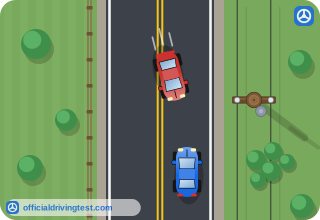
- Braking hard and holding the pedal to the floor
- Crossing into the oncoming lane to get around
- Stopping in your own lane and waiting for it to pass
- Turning quickly, even if it means leaving the road
Show answer
Correct answer: Turning quickly, even if it means leaving the road
Turning quickly may be your only chance of avoiding a front end collision; turn away from it even if it means leaving the road.
Source: Class D & E Driver’s Guide (Revised August 2025 (DPSMV2052 R08/25)), page 113 · Open this page in the manual (Manual page 113)
-
If you must leave the road to avoid a collision, how should you do it?
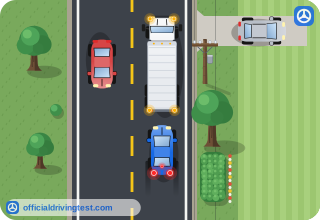
- Skid off with the wheels locked
- Drive off the road rather than skid off
- Brake hard and hold until you hit something
- Turn the wheel only after you leave the pavement
Show answer
Correct answer: Drive off the road rather than skid off
The manual says to drive (rather than skid) off the road.
Source: Class D & E Driver’s Guide (Revised August 2025 (DPSMV2052 R08/25)), page 113 · Open this page in the manual (Manual page 113)
-
If you have to hit something to avoid a collision, what does the manual say to choose?
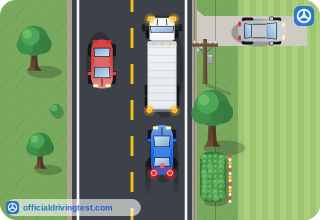
- Something that will give way, such as brush or shrubs
- Something solid and hard, such as a large tree trunk
- Another vehicle that is stopped along the roadside
- A solid concrete barrier or a guardrail head-on
Show answer
Correct answer: Something that will give way, such as brush or shrubs
The manual says to choose to hit something that will give way, such as brush or shrubs, rather than something hard.
Source: Class D & E Driver’s Guide (Revised August 2025 (DPSMV2052 R08/25)), page 113 · Open this page in the manual (Manual page 113)
-
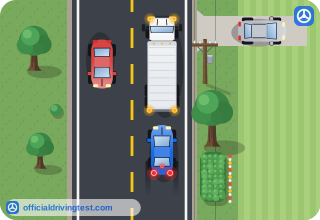
If you have to hit anything to avoid a crash, what kind of blow does the manual say to try to make it?
- A head-on blow
- A direct blow from behind
- A glancing blow
- A blow at full speed
Show answer
Correct answer: A glancing blow
The manual says a glancing blow, such as a sideswipe, is better than a head-on collision.
Source: Class D & E Driver’s Guide (Revised August 2025 (DPSMV2052 R08/25)), page 113 · Open this page in the manual (Manual page 113)
-
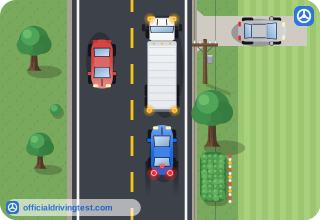
Why does the manual say you should never cross over into the oncoming traffic lane to avoid a collision?
- Oncoming traffic always has the right of way
- The other driver may swerve back into his own lane
- The oncoming lane has no shoulder
- You cannot steer back once you cross
Show answer
Correct answer: The other driver may swerve back into his own lane
The manual says never to cross over into the oncoming traffic lane because the other driver may swerve back into his own lane.
Source: Class D & E Driver’s Guide (Revised August 2025 (DPSMV2052 R08/25)), page 113 · Open this page in the manual (Manual page 113)
-
When does the manual say you may need to speed up quickly to avoid a collision?
- When a car is stopped in the lane right in front of you
- When an oncoming car is coming toward you in your own lane
- When the rear of your car begins to skid on wet pavement
- When another car is about to hit you from the side or from behind
Show answer
Correct answer: When another car is about to hit you from the side or from behind
The manual says you may need to speed up quickly when another car is about to hit you from the side or from behind.
Source: Class D & E Driver’s Guide (Revised August 2025 (DPSMV2052 R08/25)), page 113 · Open this page in the manual (Manual page 113)
-
If you must speed up quickly to avoid a collision and your car has a manual shift, what does the manual say to do?
- Shift quickly into neutral and let the car coast to a stop
- Shift quickly into a higher gear and ease down on the gas pedal
- Shift quickly into a lower gear and push the gas pedal to the floor
- Shift quickly into reverse and push the brake pedal hard
Show answer
Correct answer: Shift quickly into a lower gear and push the gas pedal to the floor
With a manual shift, shift quickly into a lower gear and push the gas pedal to the floor.
Source: Class D & E Driver’s Guide (Revised August 2025 (DPSMV2052 R08/25)), page 113 · Open this page in the manual (Manual page 113)
-
If a car is coming toward you in your lane, what does the manual say to do first, if you have time?
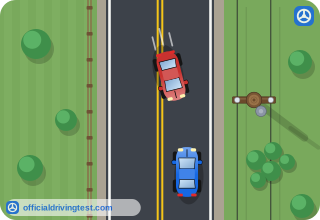
- Blow your horn and flash your lights
- Brake hard and lock the wheels
- Steer into the left lane
- Stop and wait in your lane
Show answer
Correct answer: Blow your horn and flash your lights
The first step is to blow your horn and flash your lights to warn the other driver, if you have time.
Source: Class D & E Driver’s Guide (Revised August 2025 (DPSMV2052 R08/25)), page 113 · Open this page in the manual (Manual page 113)
-
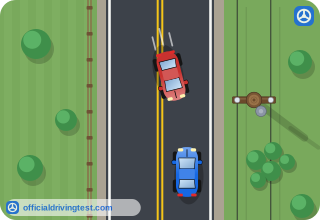
If a car is coming toward you in your lane, how should you brake?
- Brake gently and lock the wheels at once
- Do not brake at all and steer to the left
- Pump the brake pedal one time only, then release
- Brake fast, but do not lock your wheels
Show answer
Correct answer: Brake fast, but do not lock your wheels
The manual says to brake fast but not to lock your wheels and lose control.
Source: Class D & E Driver’s Guide (Revised August 2025 (DPSMV2052 R08/25)), page 113 · Open this page in the manual (Manual page 113)
-
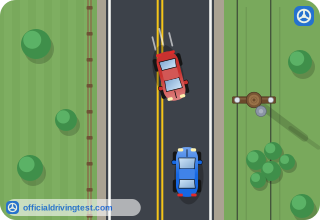
If an oncoming car keeps coming in your lane and a crash is probable, where should you steer?
- Into the left lane to go around it quickly
- Off the road to the right shoulder or ditch
- Straight ahead in your lane without braking
- Onto the center line between both lanes
Show answer
Correct answer: Off the road to the right shoulder or ditch
The manual says to steer off the road to the right shoulder or ditch and not to drive into the left lane.
Source: Class D & E Driver’s Guide (Revised August 2025 (DPSMV2052 R08/25)), page 113 · Open this page in the manual (Manual page 113)
-
If a vehicle is trying to pass you but cannot complete the pass because of oncoming traffic, what can you do to help if it continues to attempt the pass?
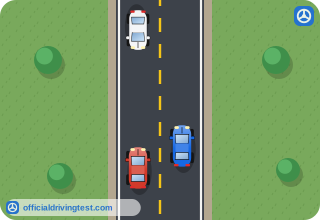
- Slow down and move as far to the right as you can safely
- Speed up and stay in the middle of your own lane
- Move left toward the center line to give it more room
- Brake hard and come to a stop in the middle of the lane
Show answer
Correct answer: Slow down and move as far to the right as you can safely
If the passing vehicle continues to attempt to pass, you can help by slowing your vehicle and moving as far to the right as you can safely.
Source: Class D & E Driver’s Guide (Revised August 2025 (DPSMV2052 R08/25)), page 114 · Open this page in the manual (Manual page 114)
-
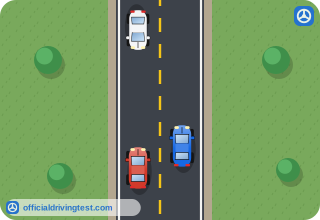
If the driver of an overtaking vehicle definitely cannot complete the pass and must drop back, what does the manual say you should do?
- Slow down so he can pass ahead of you instead
- Move into the left lane beside the passing car
- Increase your speed so he can move in behind you
- Stop in your lane until he has dropped back in
Show answer
Correct answer: Increase your speed so he can move in behind you
The manual says to increase your speed so that he can move in behind you.
Source: Class D & E Driver’s Guide (Revised August 2025 (DPSMV2052 R08/25)), page 114 · Open this page in the manual (Manual page 114)
-
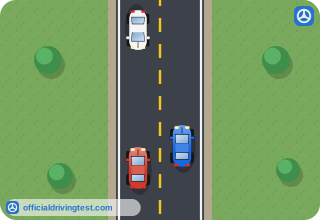
If the right shoulder is safe and a crash with a passing car is almost certain, what does the manual say to do?
- Move left across the center line to cut off the passing car
- Move quickly onto the shoulder so the passing car can use your lane
- Brake hard and stay in your lane in front of the passing car
- Speed up and stay in your lane to keep the passing car back
Show answer
Correct answer: Move quickly onto the shoulder so the passing car can use your lane
If the right shoulder is safe and a crash is almost certain, move quickly onto the shoulder to allow the passing car to move into your lane.
Source: Class D & E Driver’s Guide (Revised August 2025 (DPSMV2052 R08/25)), page 114 · Open this page in the manual (Manual page 114)
-
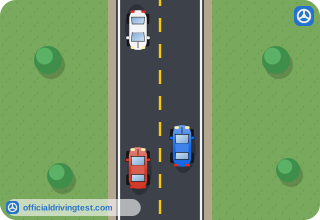
Before you change your speed to help an overtaking vehicle that is in danger, what must you be certain of?
- The speed limit on that stretch of road
- The make and model of the passing vehicle
- The distance to the next road intersection ahead
- The intentions of the driver of the passing vehicle
Show answer
Correct answer: The intentions of the driver of the passing vehicle
The manual says to be certain of the intentions of the driver of the passing vehicle before you change your speed.
Source: Class D & E Driver’s Guide (Revised August 2025 (DPSMV2052 R08/25)), page 114 · Open this page in the manual (Manual page 114)
-
If you are about to be hit from the rear, what should you be ready to do with your brake?
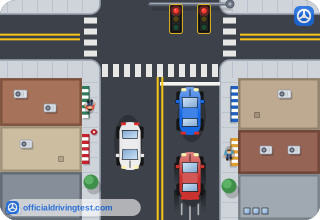
- Apply it so you will not be pushed into the car ahead
- Release it fully so the car can roll forward
- Pump it rapidly until the other car has hit you
- Keep your foot off it so you can steer freely
Show answer
Correct answer: Apply it so you will not be pushed into the car ahead
The manual says to be ready to apply your brake so you won't be pushed into the car ahead.
Source: Class D & E Driver’s Guide (Revised August 2025 (DPSMV2052 R08/25)), page 114 · Open this page in the manual (Manual page 114)
-
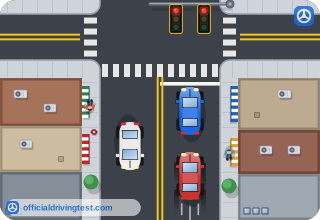
If you are about to be hit from the rear, how should you brace yourself?
- Against the door
- Between the dashboard and the seat belt
- Hunched forward over the steering wheel
- Between the steering wheel and the seat back
Show answer
Correct answer: Between the steering wheel and the seat back
The manual says to brace yourself between the steering wheel and the seat back.
Source: Class D & E Driver’s Guide (Revised August 2025 (DPSMV2052 R08/25)), page 114 · Open this page in the manual (Manual page 114)
-
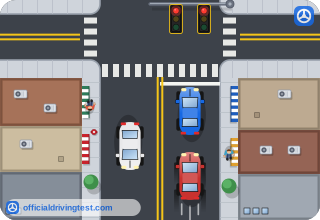
If you are about to be hit from the rear, what should you do with your head?
- Turn it sideways to look back at the other car
- Press the back of it firmly against the head rest
- Lower it below the level of the steering wheel
- Lean it against the side window of the door
Show answer
Correct answer: Press the back of it firmly against the head rest
The manual says to press the back of your head firmly against the head rest.
Source: Class D & E Driver’s Guide (Revised August 2025 (DPSMV2052 R08/25)), page 114 · Open this page in the manual (Manual page 114)
-
If you are about to be hit from the side, what should you do with the steering wheel?
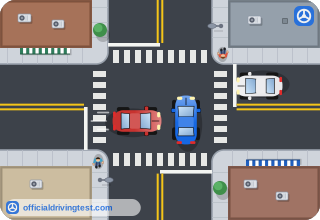
- Keep a tight grip on it
- Let go of it
- Hold it loosely with one hand
- Turn it fully toward the other car
Show answer
Correct answer: Keep a tight grip on it
A tight grip on the steering wheel may keep you from being thrown against the side of the car.
Source: Class D & E Driver’s Guide (Revised August 2025 (DPSMV2052 R08/25)), page 114 · Open this page in the manual (Manual page 114)