Louisiana: Distracted and drowsy driving
Cell phones and texting, other distractions, fatigue and drowsy driving, stress, aggressive driving and road rage. Split into 4 shorter tests so you're not stuck in one long quiz.
Independent educational site · not affiliated with any government agency or DMV
Choose a part
Distracted and drowsy driving — Part 1
Questions in this part include: “When should you call the litter hotline to report someone littering?”
StartDistracted and drowsy driving — Part 2
Questions in this part include: “Between which hours does the manual say to try to limit driving to prevent drowsy driving?”
StartDistracted and drowsy driving — Part 3
Questions in this part include: “When does the manual advise using your cell phone while driving?”
StartDistracted and drowsy driving — Part 4
Questions in this part include: “Which of these is listed as a distracting activity?”
StartAll 76 Distracted and drowsy driving questions with answers
Choose a part above to take a practice test, or study every question and answer here.
Show the questions and answersHide the questions
-
When should you call the litter hotline to report someone littering?
- While driving, right after you see it
- While parked, not while driving
- Only after you have driven away
- Only while stopped at a red light
Show answer
Correct answer: While parked, not while driving
The manual says to call while parked, not while driving.
Source: Class D & E Driver’s Guide (Revised August 2025 (DPSMV2052 R08/25)), page 14 · Open this page in the manual (Manual page 14)
-
According to the manual, what is the most important safety feature of the automobile?
- The driver
- The air bag
- The safety belt
- The anti-lock brakes
Show answer
Correct answer: The driver
The manual says the most important safety feature of the automobile is the driver.
Source: Class D & E Driver’s Guide (Revised August 2025 (DPSMV2052 R08/25)), page 53 · Open this page in the manual (Manual page 53)
-
What does the manual say you must do each and every time you drive, whatever the time of year?
- Check the weather report before leaving
- Drive only on familiar roads
- Pay attention to your surroundings
- Reduce your speed by 10 mph
Show answer
Correct answer: Pay attention to your surroundings
Each time you drive your vehicle upon the road you must pay attention to your surroundings, whatever the time of year.
Source: Class D & E Driver’s Guide (Revised August 2025 (DPSMV2052 R08/25)), page 53 · Open this page in the manual (Manual page 53)
-
In the manual’s discussion of driving under stress, what are “incidents”?
- Normal maneuvers such as stopping for the light
- Frequent but unpredictable events, such as near-misses
- Crashes that cause injury or property damage
- Traffic offenses that result in a ticket
Show answer
Correct answer: Frequent but unpredictable events, such as near-misses
The manual defines incidents as frequent but unpredictable events, some dangerous and frightening like near-misses, others merely annoying like missing your turn.
Source: Class D & E Driver’s Guide (Revised August 2025 (DPSMV2052 R08/25)), page 56 · Open this page in the manual (Manual page 56)
-
According to the manual, which of these is an example of an unpredictable action that creates danger, stress and crashes?
- Impulsive lane changes without signaling
- Maintaining a steady speed in your lane
- Stopping for a red light
- Keeping a safe following distance
Show answer
Correct answer: Impulsive lane changes without signaling
The manual gives impulsive lane changes without signaling as unpredictability that creates danger, stress and crashes.
Source: Class D & E Driver’s Guide (Revised August 2025 (DPSMV2052 R08/25)), page 56 · Open this page in the manual (Manual page 56)
-
According to the manual, what does predictability, such as maintaining a steady speed in your lane, create?
- Danger, stress and a higher risk of crashes
- Boredom and highway hypnosis on long trips
- Safety, security and escape from disaster
- Impatience and aggressiveness toward others
Show answer
Correct answer: Safety, security and escape from disaster
The manual says predictability, like maintaining steady speed in one’s lane, creates safety, security and escape from disaster.
Source: Class D & E Driver’s Guide (Revised August 2025 (DPSMV2052 R08/25)), page 56 · Open this page in the manual (Manual page 56)
-
What does the manual say you should do if you are worried, nervous, angry, frustrated or depressed?
- Take a short drive to calm down
- Let someone else drive
- Drive slowly in the right lane
- Drive only at night when traffic is light
Show answer
Correct answer: Let someone else drive
The manual says to let someone else drive, because you may become impulsive and aggressive and take risks you normally wouldn’t.
Source: Class D & E Driver’s Guide (Revised August 2025 (DPSMV2052 R08/25)), page 56 · Open this page in the manual (Manual page 56)
-
If you do all the driving yourself, the manual says not to drive longer than how many hours a day?
- Four or five hours
- Twelve or fifteen hours
- Six or eight hours
- Twelve or fourteen hours
Show answer
Correct answer: Six or eight hours
The manual says a driver should rest every two hours and not drive longer than six or eight hours a day.
Source: Class D & E Driver’s Guide (Revised August 2025 (DPSMV2052 R08/25)), page 56 · Open this page in the manual (Manual page 56)
-
The manual says driver fatigue, just like alcohol and drugs, impairs which of these?
- Your vision and judgment
- Your hearing and balance
- Your strength and flexibility
- Your sense of taste and smell
Show answer
Correct answer: Your vision and judgment
The manual says driver fatigue, just like alcohol and drugs, impairs your vision and judgment.
Source: Class D & E Driver’s Guide (Revised August 2025 (DPSMV2052 R08/25)), page 56 · Open this page in the manual (Manual page 56)
-
Which of these is one way fatigue can affect you, according to the manual?
- It widens your side vision
- It shortens the distance you need to stop
- It makes you more alert to hazards
- It slows your reaction time
Show answer
Correct answer: It slows your reaction time
The manual says fatigue slows your reaction time and causes a loss in concentration and attention.
Source: Class D & E Driver’s Guide (Revised August 2025 (DPSMV2052 R08/25)), page 56 · Open this page in the manual (Manual page 56)
-
Which of these does the manual list as a way of fighting fatigue?
- Turn the heater up
- Chew gum
- Keep the windows closed
- Drive faster to finish the trip sooner
Show answer
Correct answer: Chew gum
The manual lists taking a break, having a cup of coffee, chewing gum, listening to the radio and letting some fresh air into your car as ways of fighting fatigue.
Source: Class D & E Driver’s Guide (Revised August 2025 (DPSMV2052 R08/25)), page 56 · Open this page in the manual (Manual page 56)
-
What does the manual mean by “highway hypnosis”?
- Your senses become dulled and your eyes become fixed on the road
- A sudden fear of driving at high speeds that makes you pull over
- Dizziness caused by bright sunlight shining on the road ahead
- A habit of changing lanes often without signaling first
Show answer
Correct answer: Your senses become dulled and your eyes become fixed on the road
The manual says boredom on long trips can lead to highway hypnosis: your senses become dulled, your eyes become fixed on the road and you are not alert to traffic situations.
Source: Class D & E Driver’s Guide (Revised August 2025 (DPSMV2052 R08/25)), page 56 · Open this page in the manual (Manual page 56)
-
On a long trip, how does the manual say you should take rest stops?
- Only when you feel tired
- Only when your fuel is low
- Regularly, even if you are not tired
- Only after driving four hours without a break
Show answer
Correct answer: Regularly, even if you are not tired
To keep from getting tired on a long trip, the manual says to take regular rest stops, even if you are not tired.
Source: Class D & E Driver’s Guide (Revised August 2025 (DPSMV2052 R08/25)), page 56 · Open this page in the manual (Manual page 56)
-
To keep from getting tired on a long trip, what does the manual say to do with your eyes?
- Keep them fixed on the road directly ahead of you
- Keep moving them, looking near and far, left and right
- Close them briefly every few minutes
- Look only at the center line
Show answer
Correct answer: Keep moving them, looking near and far, left and right
The manual says to keep moving your eyes and look at objects near and far, left and right.
Source: Class D & E Driver’s Guide (Revised August 2025 (DPSMV2052 R08/25)), page 56 · Open this page in the manual (Manual page 56)
-
What does the manual say to do if nothing helps you stay awake?
- Drive faster to reach your destination sooner
- Keep driving in the right lane at a lower speed
- Stop in the traffic lane with your flashers on
- Get off the highway and take a short nap
Show answer
Correct answer: Get off the highway and take a short nap
The manual says that if nothing helps you stay awake, you should get off the highway and take a short nap, which could save your life.
Source: Class D & E Driver’s Guide (Revised August 2025 (DPSMV2052 R08/25)), page 56 · Open this page in the manual (Manual page 56)
-
According to the manual, which of these is a common factor in drowsy-driving crashes?
- The crash occurs around midday
- The crash involves several vehicles in heavy traffic
- The crash occurs late at night or early in the morning
- The crash occurs at low speed in a parking lot
Show answer
Correct answer: The crash occurs late at night or early in the morning
The manual lists crashes late at night or early in the morning as one of the common factors involving drowsy-driving crashes.
Source: Class D & E Driver’s Guide (Revised August 2025 (DPSMV2052 R08/25)), page 57 · Open this page in the manual (Manual page 57)
-
Which of these does the manual list among the common factors in drowsy-driving crashes involving the driver?
- The driver is alone in the vehicle
- The driver has several passengers
- The driver tries hard to avoid the crash
- The driver is driving at a very low speed
Show answer
Correct answer: The driver is alone in the vehicle
The manual lists a driver who is alone in the vehicle as one of the common factors in drowsy-driving crashes.
Source: Class D & E Driver’s Guide (Revised August 2025 (DPSMV2052 R08/25)), page 57 · Open this page in the manual (Manual page 57)
-
According to the manual, drowsy-driving crashes commonly involve what kind of vehicle movement?
- Two vehicles colliding head-on in a parking lot
- Several vehicles stopped at an intersection
- A vehicle backing out of a driveway
- A single vehicle which leaves the roadway
Show answer
Correct answer: A single vehicle which leaves the roadway
The manual lists a crash involving a single vehicle which leaves the roadway as a common factor in drowsy-driving crashes.
Source: Class D & E Driver’s Guide (Revised August 2025 (DPSMV2052 R08/25)), page 57 · Open this page in the manual (Manual page 57)
-
How does the manual say to begin a journey to prevent drowsy driving?
- After a large meal
- Well rested
- After a short drive around the block
- With a full tank of fuel
Show answer
Correct answer: Well rested
The manual says to begin your journey well rested to prevent drowsy driving.
Source: Class D & E Driver’s Guide (Revised August 2025 (DPSMV2052 R08/25)), page 57 · Open this page in the manual (Manual page 57)
-
To prevent drowsy driving, which hours does the manual say you should avoid driving because they are the body’s natural sleep times?
- Late night and early morning hours
- Midday and early afternoon hours
- Rush hours in the morning and evening
- Sunset and the first hour after dark
Show answer
Correct answer: Late night and early morning hours
The manual says to avoid driving late night and early morning hours, which are the body’s natural sleep times.
Source: Class D & E Driver’s Guide (Revised August 2025 (DPSMV2052 R08/25)), page 57 · Open this page in the manual (Manual page 57)
-
Between which hours does the manual say to try to limit driving to prevent drowsy driving?
- 1 a.m. and 7 a.m.
- 2 a.m. and 8 a.m.
- Midnight and 6 a.m.
- 9 p.m. and 3 a.m.
Show answer
Correct answer: Midnight and 6 a.m.
The manual says to try to limit driving between midnight and 6 a.m.
Source: Class D & E Driver’s Guide (Revised August 2025 (DPSMV2052 R08/25)), page 57 · Open this page in the manual (Manual page 57)
-
What does the manual say about setting travel goals to prevent drowsy driving?
- Plan the shortest possible time and skip stops
- Set realistic goals for the time the trip will take
- Plan to drive straight through without breaks
- Set a goal that requires driving through the night
Show answer
Correct answer: Set realistic goals for the time the trip will take
The manual says to set realistic travel goals about the time it will take to reach your destination.
Source: Class D & E Driver’s Guide (Revised August 2025 (DPSMV2052 R08/25)), page 57 · Open this page in the manual (Manual page 57)
-
To prevent drowsy driving, which foods does the manual say to avoid because they can contribute to fatigue?
- Foods high in protein and fiber
- Foods high in vitamins and minerals
- Foods high in water content
- Foods high in fat and sugar
Show answer
Correct answer: Foods high in fat and sugar
The manual says to eat healthy meals and avoid foods high in fat and sugar, which can contribute to fatigue.
Source: Class D & E Driver’s Guide (Revised August 2025 (DPSMV2052 R08/25)), page 57 · Open this page in the manual (Manual page 57)
-
To prevent drowsy driving, how often does the manual say to switch drivers, even if you don’t feel tired?
- Every hour
- Every four hours
- Every two hours
- Every six hours
Show answer
Correct answer: Every two hours
The manual says to share the driving and switch drivers every two hours, even if you don’t feel tired.
Source: Class D & E Driver’s Guide (Revised August 2025 (DPSMV2052 R08/25)), page 57 · Open this page in the manual (Manual page 57)
-
What does the manual say sugar and caffeine do?
- Promote short-term alertness but may increase later drowsiness
- Keep you fully alert for the whole length of a long trip
- Have no effect on drowsiness during a long trip
- Reduce drowsiness only when taken with a meal
Show answer
Correct answer: Promote short-term alertness but may increase later drowsiness
The manual says sugar and caffeine promote short-term alertness but may increase drowsiness over longer periods of time.
Source: Class D & E Driver’s Guide (Revised August 2025 (DPSMV2052 R08/25)), page 57 · Open this page in the manual (Manual page 57)
-
Why does the manual say to keep the inside of your vehicle at a cool temperature?
- To make passengers sleep during the trip
- To save fuel on long trips
- To keep the windshield from fogging
- To help prevent drowsy driving
Show answer
Correct answer: To help prevent drowsy driving
Keeping the inside of your vehicle at a cool temperature is listed among the ways to prevent drowsy driving.
Source: Class D & E Driver’s Guide (Revised August 2025 (DPSMV2052 R08/25)), page 57 · Open this page in the manual (Manual page 57)
-
To prevent drowsy driving, what kind of radio programming does the manual say helps keep you alert?
- Slow music
- Talk shows
- Loud music
- Music with a steady rhythm
Show answer
Correct answer: Talk shows
The manual says to listen to radio talk shows rather than music, because the discussion format will help keep you alert.
Source: Class D & E Driver’s Guide (Revised August 2025 (DPSMV2052 R08/25)), page 57 · Open this page in the manual (Manual page 57)
-
Which of these is listed as a warning sign of drowsy driving?
- Inability to recall the last few miles traveled
- Noticing every traffic sign early
- Feeling very energetic
- Keeping your car centered in the lane with ease
Show answer
Correct answer: Inability to recall the last few miles traveled
The manual lists the inability to recall the last few miles traveled as a warning sign of drowsy driving.
Source: Class D & E Driver’s Guide (Revised August 2025 (DPSMV2052 R08/25)), page 57 · Open this page in the manual (Manual page 57)
-
Which lane-related behavior does the manual list as a warning sign of drowsy driving?
- Staying well within your own lane at all times
- Seeing every traffic sign clearly and early
- Drifting from the lane in which you are driving
- Feeling your head is very light and energized
Show answer
Correct answer: Drifting from the lane in which you are driving
The manual lists drifting from the lane in which you are driving as a warning sign of drowsy driving.
Source: Class D & E Driver’s Guide (Revised August 2025 (DPSMV2052 R08/25)), page 57 · Open this page in the manual (Manual page 57)
-
Which group does the manual say seems to be more at risk of drowsy driving?
- Young males between the ages of 30 and 45
- Young males between the ages of 16 and 29
- Females between the ages of 16 and 29
- Drivers between the ages of 45 and 60
Show answer
Correct answer: Young males between the ages of 16 and 29
The manual says young males between the ages of 16 and 29 seem to be more at risk of drowsy driving.
Source: Class D & E Driver’s Guide (Revised August 2025 (DPSMV2052 R08/25)), page 57 · Open this page in the manual (Manual page 57)
-
Which people does the manual say also face higher risk for drowsy driving?
- People who drive only on weekends or holidays
- People who commute less than ten miles to work each day
- People who eat a large meal before they drive
- People who work shift work and have disrupted sleep patterns
Show answer
Correct answer: People who work shift work and have disrupted sleep patterns
The manual says individuals who work shift work and have their sleep patterns disrupted also face higher risk for drowsy driving.
Source: Class D & E Driver’s Guide (Revised August 2025 (DPSMV2052 R08/25)), page 57 · Open this page in the manual (Manual page 57)
-
The manual gives anesthesia during a surgical procedure as an example of which kind of health condition affecting driving?
- A permanent condition
- A condition that only affects night driving
- A short-term condition
- A condition that applies only to commercial drivers
Show answer
Correct answer: A short-term condition
The manual says some conditions may be short term, such as the anesthesia given during a surgical procedure, and your doctor may advise you not to drive for a certain length of time.
Source: Class D & E Driver’s Guide (Revised August 2025 (DPSMV2052 R08/25)), page 58 · Open this page in the manual (Manual page 58)
-
Which of these does the manual list as a health condition that may affect your ability to drive safely?
- Dental problems
- Skin conditions
- Stomach ulcers
- Diabetes
Show answer
Correct answer: Diabetes
The manual lists diabetes among the health conditions that may affect your ability to drive safely, along with blackouts or fainting, vision problems, heart disease, epilepsy and others.
Source: Class D & E Driver’s Guide (Revised August 2025 (DPSMV2052 R08/25)), page 58 · Open this page in the manual (Manual page 58)
-
What does the manual say about having one of the listed health conditions?
- You must surrender your license immediately after diagnosis
- You may drive only with your doctor in the vehicle
- It does not necessarily mean you can no longer drive
- You may drive only on interstate highways at night
Show answer
Correct answer: It does not necessarily mean you can no longer drive
The manual says having any of these conditions does not necessarily mean that you will be unable to continue driving.
Source: Class D & E Driver’s Guide (Revised August 2025 (DPSMV2052 R08/25)), page 58 · Open this page in the manual (Manual page 58)
-
Which of these does the manual say you may need to do if you have a health condition that affects your driving?
- Restrict your driving to daylight only
- Restrict your driving to interstate highways
- Restrict your driving to weekends
- Restrict your driving to late-night hours
Show answer
Correct answer: Restrict your driving to daylight only
The manual says you may need to visit your doctor more often, restrict driving to daylight driving only, wear corrective lenses, or drive only on familiar streets and roads.
Source: Class D & E Driver’s Guide (Revised August 2025 (DPSMV2052 R08/25)), page 58 · Open this page in the manual (Manual page 58)
-
What must drivers practice that is guided by alertness, concentration, and interest?
- Active attention
- Passive observation
- Defensive acceleration
- Constant mirror checking
Show answer
Correct answer: Active attention
When driving you must practice active attention and remain guided by alertness, concentration, and interest.
Source: Class D & E Driver’s Guide (Revised August 2025 (DPSMV2052 R08/25)), page 63 · Open this page in the manual (Manual page 63)
-
Using a cell phone while driving involves which types of distraction?
- Visual and manual only
- Visual, manual and cognitive
- Manual and cognitive only
- Cognitive only
Show answer
Correct answer: Visual, manual and cognitive
Cell phone use while driving involves all three types of distraction: visual (eyes off the road), manual (hands off the wheel) and cognitive (mind off driving).
Source: Class D & E Driver’s Guide (Revised August 2025 (DPSMV2052 R08/25)), page 77 · Open this page in the manual (Manual page 77)
-
If you must make a phone call while you are driving, what should you do first?
- Slow to 10 mph below the speed limit
- Move into the far left lane
- Pull safely off the road and stop
- Turn on your flashers and keep going
Show answer
Correct answer: Pull safely off the road and stop
If you must make a call, pull safely off the road and stop before making the call.
Source: Class D & E Driver’s Guide (Revised August 2025 (DPSMV2052 R08/25)), page 77 · Open this page in the manual (Manual page 77)
-
When does the manual advise using your cell phone while driving?
- Only on rural highways
- Only in emergencies
- Only in light traffic
- Only below 25 mph
Show answer
Correct answer: Only in emergencies
Use your cell phone only in emergencies, and if possible have a passenger make the call.
Source: Class D & E Driver’s Guide (Revised August 2025 (DPSMV2052 R08/25)), page 77 · Open this page in the manual (Manual page 77)
-
How does the manual advise handling incoming calls while you are driving?
- Answer them only at red lights
- Answer them in the right lane
- Answer them when traffic is light
- Let your voice mail answer them
Show answer
Correct answer: Let your voice mail answer them
Let your voice mail answer incoming calls while you are driving.
Source: Class D & E Driver’s Guide (Revised August 2025 (DPSMV2052 R08/25)), page 77 · Open this page in the manual (Manual page 77)
-
Which of these does the manual tell you not to do while driving?
- Check your mirrors often
- Scan the road well ahead
- Look up telephone numbers
- Use your turn signals before turning
Show answer
Correct answer: Look up telephone numbers
Do not take notes or look up telephone numbers while driving.
Source: Class D & E Driver’s Guide (Revised August 2025 (DPSMV2052 R08/25)), page 77 · Open this page in the manual (Manual page 77)
-
Under Louisiana law, who is prohibited from writing, sending, or reading a text-based communication while driving?
- Only drivers with a learner's permit
- Only drivers of commercial vehicles
- Only drivers under the age of 21
- Anyone, regardless of age
Show answer
Correct answer: Anyone, regardless of age
Louisiana law prohibits anyone, regardless of age, from writing, sending, or reading a text-based communication while driving.
Source: Class D & E Driver’s Guide (Revised August 2025 (DPSMV2052 R08/25)), page 78 · Open this page in the manual (Manual page 78)
-
Which of these does Louisiana law prohibit for drivers of every age while driving?
- Posting to a social networking site
- Listening to music on the radio
- Talking with passengers in the car
- Driving with the windows rolled down
Show answer
Correct answer: Posting to a social networking site
Louisiana law prohibits anyone, regardless of age, from accessing, reading, or posting to a social networking site while driving.
Source: Class D & E Driver’s Guide (Revised August 2025 (DPSMV2052 R08/25)), page 78 · Open this page in the manual (Manual page 78)
-
According to the manual, what is at the root of teens being influenced to take higher driving risks?
- Not knowing the traffic laws
- The teen's need to impress peers
- Driving cars that are too powerful
- Too little sleep before driving
Show answer
Correct answer: The teen's need to impress peers
Many teens are influenced to take a higher driving risk by another teen's suggestion; at the root of this problem is the teen's need to impress his peers.
Source: Class D & E Driver’s Guide (Revised August 2025 (DPSMV2052 R08/25)), page 78 · Open this page in the manual (Manual page 78)
-
Risky behaviors such as racing or swerving to music are more likely in young drivers mainly because of what?
- Poor eyesight at a young age
- Driving mostly on rural roads
- Older cars with worn-out brakes
- Lack of experience behind the wheel
Show answer
Correct answer: Lack of experience behind the wheel
Engaging in risky behaviors is more likely due to the young driver's lack of experience behind the wheel.
Source: Class D & E Driver’s Guide (Revised August 2025 (DPSMV2052 R08/25)), page 79 · Open this page in the manual (Manual page 79)
-
Can peer pressure have a positive influence on a young driver?
- Yes; peers can encourage you and warn you of mistakes
- No; peer pressure always leads to more risk-taking
- Only when a parent is riding in the car too
- Only for drivers who already hold a full license
Show answer
Correct answer: Yes; peers can encourage you and warn you of mistakes
Peer pressure can have a positive influence: peers can offer encouragement, advice on a problem, or tell you when you are about to make a mistake.
Source: Class D & E Driver’s Guide (Revised August 2025 (DPSMV2052 R08/25)), page 79 · Open this page in the manual (Manual page 79)
-
Why does the manual say not to use cell phones or headphones around railroad tracks?
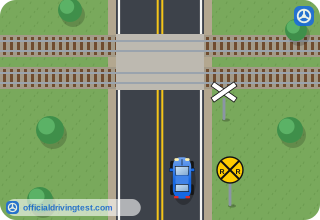
- They can interfere with the crossing's warning signals
- They are banned by law anywhere near a railroad
- They make it harder to see the cross buck sign
- They could prevent you from hearing an approaching train
Show answer
Correct answer: They could prevent you from hearing an approaching train
The manual says to stay alert and not use cell phones, headphones or other distractions that would prevent you from hearing an approaching train.
Source: Class D & E Driver’s Guide (Revised August 2025 (DPSMV2052 R08/25)), page 95 · Open this page in the manual (Manual page 95)
-
What does Louisiana law say about wearing headphones while driving?
- Headphones in both ears are prohibited, but in one ear alone is allowed
- Headphones are prohibited in either ear or in both ears
- Headphones in both ears are allowed if the volume is low
- Headphones in one ear are prohibited, but in both ears are allowed
Show answer
Correct answer: Headphones in both ears are prohibited, but in one ear alone is allowed
The manual says wearing headphones in both ears is prohibited, while wearing them in one ear alone is allowed.
Source: Class D & E Driver’s Guide (Revised August 2025 (DPSMV2052 R08/25)), page 97 · Open this page in the manual (Manual page 97)
-
If one person will be doing all of the driving, what is the limit on driving time in any one day?
- 3 to 4 hours
- 9 to 10 hours
- 6 to 8 hours
- 12 to 14 hours
Show answer
Correct answer: 6 to 8 hours
The manual says that if one person does all the driving, 6 to 8 hours in any one day should be considered the limit.
Source: Class D & E Driver’s Guide (Revised August 2025 (DPSMV2052 R08/25)), page 108 · Open this page in the manual (Manual page 108)
-
When two or more people can share the driving, what should total driving time not exceed?
- 4 to 5 hours
- 10 to 11 hours
- 14 to 16 hours
- 18 to 20 hours
Show answer
Correct answer: 10 to 11 hours
The manual says that when two or more people share the driving, total driving time should not exceed 10 to 11 hours.
Source: Class D & E Driver’s Guide (Revised August 2025 (DPSMV2052 R08/25)), page 109 · Open this page in the manual (Manual page 109)
-
After what time are you more apt to fall asleep while driving?
- 8 p.m.
- 9 p.m.
- 10 p.m.
- 11 p.m.
Show answer
Correct answer: 11 p.m.
The manual says to avoid driving after dark and particularly after 11 p.m., when you are more apt to fall asleep while driving.
Source: Class D & E Driver’s Guide (Revised August 2025 (DPSMV2052 R08/25)), page 109 · Open this page in the manual (Manual page 109)
-
When should distractions be eliminated, according to the list of things to remember before you start your engine?
- Once you reach the highway
- Only when it is dark outside
- Prior to driving
- After an hour of driving
Show answer
Correct answer: Prior to driving
The manual says to eliminate distractions prior to driving.
Source: Class D & E Driver’s Guide (Revised August 2025 (DPSMV2052 R08/25)), page 110 · Open this page in the manual (Manual page 110)
-
How does the manual define distracted driving?
- Any non-driving activity that can distract you from driving and increase crash risk
- Only the use of a hand-held phone while the vehicle is moving on a public road
- Only driving while very tired or without having had enough sleep at night
- Only looking away from the road for more than ten seconds at one time while driving
Show answer
Correct answer: Any non-driving activity that can distract you from driving and increase crash risk
Distracted driving is any non-driving activity with the potential to distract a person from the primary task of driving and increase the risk of crashing.
Source: Class D & E Driver’s Guide (Revised August 2025 (DPSMV2052 R08/25)), page 110 · Open this page in the manual (Manual page 110)
-
Taking your eyes off the road to look at something else is which type of distraction?
- Manual
- Cognitive
- Auditory
- Visual
Show answer
Correct answer: Visual
The manual names visual distraction as taking your eyes off the road to look at something else.
Source: Class D & E Driver’s Guide (Revised August 2025 (DPSMV2052 R08/25)), page 110 · Open this page in the manual (Manual page 110)
-
Taking your hands off the wheel to do something, such as adjusting the radio, is which type of distraction?
- Visual
- Manual
- Cognitive
- Auditory
Show answer
Correct answer: Manual
The manual names manual distraction as taking your hands off the wheel to do something.
Source: Class D & E Driver’s Guide (Revised August 2025 (DPSMV2052 R08/25)), page 110 · Open this page in the manual (Manual page 110)
-
Taking your mind off what you are doing is which type of distraction?
- Cognitive
- Visual
- Manual
- Auditory
Show answer
Correct answer: Cognitive
The manual names cognitive distraction as taking your mind off what you are doing.
Source: Class D & E Driver’s Guide (Revised August 2025 (DPSMV2052 R08/25)), page 110 · Open this page in the manual (Manual page 110)
-
Why does the manual call texting the most alarming distraction?
- It is the most common distraction among adults
- It takes more than a minute each time
- It involves all three types of distraction
- It is the only distraction that Louisiana law bans
Show answer
Correct answer: It involves all three types of distraction
Texting is the most alarming distraction because it involves visual, manual and cognitive distraction together.
Source: Class D & E Driver’s Guide (Revised August 2025 (DPSMV2052 R08/25)), page 110 · Open this page in the manual (Manual page 110)
-
Which of these is listed as a distracting activity?
- Checking your mirrors before a lane change
- Changing the radio station or auxiliary player
- Looking at your speedometer now and then
- Using your turn signal before a turn
Show answer
Correct answer: Changing the radio station or auxiliary player
Changing the radio station or auxiliary player is on the manual's list of other distracting activities.
Source: Class D & E Driver’s Guide (Revised August 2025 (DPSMV2052 R08/25)), page 110 · Open this page in the manual (Manual page 110)
-
Which of these does the manual list as a distracting activity?
- Scanning the road ahead
- Checking for traffic before a lane change
- Checking the speed limit sign
- Reading, including a map on your phone
Show answer
Correct answer: Reading, including a map on your phone
The manual's list of other distracting activities includes reading, including a map on your phone.
Source: Class D & E Driver’s Guide (Revised August 2025 (DPSMV2052 R08/25)), page 110 · Open this page in the manual (Manual page 110)
-
What does the manual say about using a hands-free device while driving?
- It removes all three types of distraction as long as the phone is hands free
- It is just as safe as talking with a passenger riding in your own car
- It may keep your hands on the wheel but not necessarily your mind on driving
- It removes the risk of cognitive distraction once the phone is hands free
Show answer
Correct answer: It may keep your hands on the wheel but not necessarily your mind on driving
Cognitive distraction still exists with a hands-free phone: a hands-free device does not necessarily keep your mind on your driving.
Source: Class D & E Driver’s Guide (Revised August 2025 (DPSMV2052 R08/25)), page 111 · Open this page in the manual (Manual page 111)
-
Which group does the manual call the highest risk group when it comes to texting?
- Drivers over 65
- Commercial drivers
- New residents
- Teens
Show answer
Correct answer: Teens
The manual says texting is very high risk and teens are the highest risk group.
Source: Class D & E Driver’s Guide (Revised August 2025 (DPSMV2052 R08/25)), page 111 · Open this page in the manual (Manual page 111)
-
According to the manual, what is the number one driver distraction involved in most crashes?
- Eating and drinking
- Cell phone use
- Talking to passengers
- Grooming
Show answer
Correct answer: Cell phone use
The manual says the number one driver distraction involved in most of the crashes is cell phone use.
Source: Class D & E Driver’s Guide (Revised August 2025 (DPSMV2052 R08/25)), page 111 · Open this page in the manual (Manual page 111)
-
Which of these does the manual say has no place in the driver's seat?
- Daydreaming
- Checking your mirrors
- Scanning the road ahead
- Planning your route
Show answer
Correct answer: Daydreaming
The manual says the driver's seat is no place for daydreaming, intense conversation, or absentmindedly looking at scenery.
Source: Class D & E Driver’s Guide (Revised August 2025 (DPSMV2052 R08/25)), page 111 · Open this page in the manual (Manual page 111)
-
What does the manual suggest you do with your cell phone before you get in the car?
- Place it on your lap for easy reach
- Set it to the loudest ring tone
- Turn it off or set it to silent
- Leave it on the dashboard in view
Show answer
Correct answer: Turn it off or set it to silent
If you cannot hear the phone, you will not be tempted to answer it or look at it.
Source: Class D & E Driver’s Guide (Revised August 2025 (DPSMV2052 R08/25)), page 111 · Open this page in the manual (Manual page 111)
-
What does the manual suggest you do so others know you cannot take a call while you drive?
- Call them back from the road
- Leave a message on the phone saying so
- Let a passenger answer every call
- Keep the phone in your hand
Show answer
Correct answer: Leave a message on the phone saying so
The manual advises leaving a message on the phone that lets others know you can't take the call.
Source: Class D & E Driver’s Guide (Revised August 2025 (DPSMV2052 R08/25)), page 111 · Open this page in the manual (Manual page 111)
-
What does the manual say to do if you must make a phone call while driving?
- Make it while stopped in traffic
- Use the phone only on straight roads
- Hold the phone with one hand only
- Pull over to a safe location
Show answer
Correct answer: Pull over to a safe location
If you must make a call, the manual tells you to pull over to a safe location.
Source: Class D & E Driver’s Guide (Revised August 2025 (DPSMV2052 R08/25)), page 111 · Open this page in the manual (Manual page 111)
-
If possible, who should make a necessary phone call while you are driving?
- You, while holding the phone low
- You, at a red light
- A passenger
- The driver of the next car
Show answer
Correct answer: A passenger
The manual says that if possible, you should have a passenger make the call for you.
Source: Class D & E Driver’s Guide (Revised August 2025 (DPSMV2052 R08/25)), page 111 · Open this page in the manual (Manual page 111)
-
Which of these should you never do while driving, according to the manual?
- Text, surf the web or read your emails
- Listen to the radio at a low volume
- Check your mirrors before you change lanes
- Glance at your speedometer now and then
Show answer
Correct answer: Text, surf the web or read your emails
The manual says never, ever to text or surf the web while driving, and not to read your emails while driving.
Source: Class D & E Driver’s Guide (Revised August 2025 (DPSMV2052 R08/25)), page 111 · Open this page in the manual (Manual page 111)
-
If you are going to an area you are not familiar with, what does the manual say to do before you start to drive?
- Check the map while stopped in traffic
- Ask a passenger to read your phone aloud
- Follow other vehicles going that way
- Study maps or get driving directions
Show answer
Correct answer: Study maps or get driving directions
For an unfamiliar area, the manual says to study maps or get driving directions before you start to drive.
Source: Class D & E Driver’s Guide (Revised August 2025 (DPSMV2052 R08/25)), page 111 · Open this page in the manual (Manual page 111)
-
If you are driving with pets, what does the manual say to do before you begin?
- Let them ride in your lap
- Secure them properly
- Let them move freely about the car
- Keep them in the front seat
Show answer
Correct answer: Secure them properly
The manual says to secure pets properly before you begin.
Source: Class D & E Driver’s Guide (Revised August 2025 (DPSMV2052 R08/25)), page 111 · Open this page in the manual (Manual page 111)
-
If a situation arises with a child while you are driving, what does the manual say to do?
- Pull over to a safe location before you handle it
- Turn around and handle it while you keep driving
- Slow down and handle it while in your own lane
- Wait and handle it at the next red light you reach
Show answer
Correct answer: Pull over to a safe location before you handle it
The manual says to pull over to a safe location before handling a situation with a child.
Source: Class D & E Driver’s Guide (Revised August 2025 (DPSMV2052 R08/25)), page 111 · Open this page in the manual (Manual page 111)
-
What role does the manual suggest asking a passenger to serve?
- Your phone operator
- Your lookout for police
- Your co-pilot
- Your driving instructor
Show answer
Correct answer: Your co-pilot
The manual's tip is to ask a passenger to serve as your co-pilot.
Source: Class D & E Driver’s Guide (Revised August 2025 (DPSMV2052 R08/25)), page 111 · Open this page in the manual (Manual page 111)
-
Where does the manual say you should do personal grooming?
- At red lights
- At home
- On the highway
- In the parking lane
Show answer
Correct answer: At home
The manual says to do personal grooming at home.
Source: Class D & E Driver’s Guide (Revised August 2025 (DPSMV2052 R08/25)), page 111 · Open this page in the manual (Manual page 111)
-
What does the manual say about items that fall on the floor or elsewhere in the car?
- Retrieve them at the next stop sign
- Reach for them only on straight roads
- Reach for them with one hand
- Do not try to retrieve them
Show answer
Correct answer: Do not try to retrieve them
The manual says not to try to retrieve items that fall on the floor or elsewhere in the car.
Source: Class D & E Driver’s Guide (Revised August 2025 (DPSMV2052 R08/25)), page 111 · Open this page in the manual (Manual page 111)
-
What does the manual say is the most important of all when it comes to avoiding distractions?
- To keep your windows closed
- To keep your music low
- To focus on your driving
- To drive only short trips
Show answer
Correct answer: To focus on your driving
The manual says the most important thing is to focus on your driving and refrain from any other activity that may take your attention and eyes off the road.
Source: Class D & E Driver’s Guide (Revised August 2025 (DPSMV2052 R08/25)), page 111 · Open this page in the manual (Manual page 111)
-
According to the manual, teens are easily distracted while driving by which of these?
- Their speedometer
- Other teens in the car
- Warning lights on the dashboard
- The turn signal
Show answer
Correct answer: Other teens in the car
The manual says teens are easily distracted by the radio station, a cell phone or other teens in the car.
Source: Class D & E Driver’s Guide (Revised August 2025 (DPSMV2052 R08/25)), page 112 · Open this page in the manual (Manual page 112)