Louisiana: Alcohol and drugs
How alcohol and drugs affect driving, Louisiana’s BAC limits, implied consent, DWI penalties and open containers. Split into 5 shorter tests so you're not stuck in one long quiz.
Independent educational site · not affiliated with any government agency or DMV
Choose a part
Alcohol and drugs — Part 1
Questions in this part include: “At what BAC level can a driver younger than 21 lose the driving privilege after submitting to an alcohol analysis test?”
StartAlcohol and drugs — Part 2
Questions in this part include: “Which body parts metabolize and eliminate alcohol, according to the manual?”
StartAlcohol and drugs — Part 3
Questions in this part include: “When does impairment from alcohol start, according to the manual?”
StartAlcohol and drugs — Part 4
Questions in this part include: “What prison term is among the maximum penalties for a fourth DWI conviction?”
StartAlcohol and drugs — Part 5
Questions in this part include: “Why can driving after using drugs such as amphetamines, tranquilizers and barbiturates be hazardous?”
StartAll 93 Alcohol and drugs questions with answers
Choose a part above to take a practice test, or study every question and answer here.
Show the questions and answersHide the questions
-
At what BAC level can a driver 21 years of age or older lose the driving privilege after submitting to an alcohol analysis test?
- 0.05% or more
- 0.10% or more
- 0.12% or more
- 0.08% or more
Show answer
Correct answer: 0.08% or more
The results show a BAC of 0.08% or more for those 21 or older as grounds for losing driving privilege.
Source: Class D & E Driver’s Guide (Revised August 2025 (DPSMV2052 R08/25)), page 12 · Open this page in the manual (Manual page 12)
-
At what BAC level can a driver younger than 21 lose the driving privilege after submitting to an alcohol analysis test?
- 0.04% or more
- 0.05% or more
- 0.02% or more
- 0.10% or more
Show answer
Correct answer: 0.02% or more
For those younger than 21, results showing a BAC of 0.02% or more are grounds for losing the driving privilege.
Source: Class D & E Driver’s Guide (Revised August 2025 (DPSMV2052 R08/25)), page 12 · Open this page in the manual (Manual page 12)
-
You can lose your driving privilege in Louisiana for refusing to do what when you are arrested for DWI?
- Take an alcohol analysis test
- Take a vision exam
- Attend a driver improvement class
- Sign the citation
Show answer
Correct answer: Take an alcohol analysis test
Refusal to take an alcohol analysis test when arrested for DWI is grounds for losing your driving privilege.
Source: Class D & E Driver’s Guide (Revised August 2025 (DPSMV2052 R08/25)), page 12 · Open this page in the manual (Manual page 12)
-
What does the manual say about over-the-counter allergy drugs and driving?
- They are safe to take before driving because they need no prescription
- They improve alertness and driving ability in the spring season
- They affect driving only when taken at night or with food
- They can have side effects that diminish your driving ability
Show answer
Correct answer: They can have side effects that diminish your driving ability
Over-the-counter allergy drugs can have side effects or interact with other medications to diminish your driving ability.
Source: Class D & E Driver’s Guide (Revised August 2025 (DPSMV2052 R08/25)), page 51 · Open this page in the manual (Manual page 51)
-
If you plan to drink, what does the National Safety Council guideline in the manual tell you to do?
- Designate a driver who won’t drink
- Drive with the windows open
- Eat a large meal before you drive
- Drink only a little and drive slowly
Show answer
Correct answer: Designate a driver who won’t drink
The guideline says that if you plan to drink, you should designate a driver who won’t drink.
Source: Class D & E Driver’s Guide (Revised August 2025 (DPSMV2052 R08/25)), page 54 · Open this page in the manual (Manual page 54)
-
According to the manual, which behavior by another driver may mean that the driver is impaired?
- Driving with the turn signal on early
- Staying in the right lane
- Following the vehicle ahead at a safe distance
- Straddling the center line or weaving
Show answer
Correct answer: Straddling the center line or weaving
The manual says a car straddling the center line, weaving, making wide turns, stopping abruptly or responding slowly to traffic signals may be driven by an impaired driver.
Source: Class D & E Driver’s Guide (Revised August 2025 (DPSMV2052 R08/25)), page 54 · Open this page in the manual (Manual page 54)
-
How does the manual say you can avoid an impaired driver?
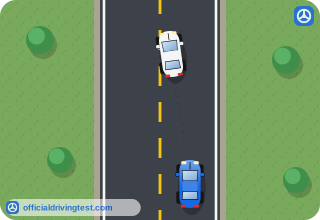
- Speed up to get ahead of the driver
- Turn right at the nearest corner or nearest exit
- Stop in the traffic lane and wait
- Stay close behind the driver to watch the driving
Show answer
Correct answer: Turn right at the nearest corner or nearest exit
The manual says to avoid an impaired driver by turning right at the nearest corner or exiting at the nearest exit.
Source: Class D & E Driver’s Guide (Revised August 2025 (DPSMV2052 R08/25)), page 54 · Open this page in the manual (Manual page 54)
-
How does the manual say the effects of drugs on driving compare with alcohol?
- They can be like those of alcohol, or even worse
- They are always milder than those of alcohol
- Only illegal drugs have effects like alcohol
- Only prescription drugs have effects like alcohol
Show answer
Correct answer: They can be like those of alcohol, or even worse
The manual says drugs can have effects like those of alcohol, or even worse, and this is true of many prescription drugs and many over-the-counter drugs.
Source: Class D & E Driver’s Guide (Revised August 2025 (DPSMV2052 R08/25)), page 58 · Open this page in the manual (Manual page 58)
-
What can over-the-counter drugs taken for headaches, colds, hay fever or other allergies do?
- Make you more alert and improve your reactions
- Have no effect because no prescription is needed
- Affect only your vision, not your alertness
- Make you drowsy and affect your driving
Show answer
Correct answer: Make you drowsy and affect your driving
The manual says over-the-counter drugs taken for headaches, colds, hay fever or other allergies, or to calm nerves, can make you drowsy and affect your driving.
Source: Class D & E Driver’s Guide (Revised August 2025 (DPSMV2052 R08/25)), page 58 · Open this page in the manual (Manual page 58)
-
What can pep pills, “uppers” and diet pills make you feel, according to the manual?
- Calm, alert and able to focus well
- Nervous, dizzy and unable to concentrate
- Sleepy and slow to react to hazards
- Relaxed and free of stress or worry
Show answer
Correct answer: Nervous, dizzy and unable to concentrate
The manual says pep pills, “uppers” and diet pills can make you feel nervous, dizzy, unable to concentrate, and they can affect your vision.
Source: Class D & E Driver’s Guide (Revised August 2025 (DPSMV2052 R08/25)), page 58 · Open this page in the manual (Manual page 58)
-
If you are not sure whether it is safe to take a drug and drive, whom does the manual say to ask about side effects?
- Your doctor or pharmacist
- Your insurance agent
- A police officer
- A driver’s license examiner
Show answer
Correct answer: Your doctor or pharmacist
The manual says to ask your doctor or pharmacist about any side effects if you are not sure it is safe to take the drug and drive.
Source: Class D & E Driver’s Guide (Revised August 2025 (DPSMV2052 R08/25)), page 58 · Open this page in the manual (Manual page 58)
-
According to the manual, some prescription drugs can affect which of these in ways similar to alcohol?
- Your hearing, balance and sense of smell
- Only your skin and muscles
- Your reflexes, judgment, vision and alertness
- Only your sense of direction
Show answer
Correct answer: Your reflexes, judgment, vision and alertness
The manual says some prescription drugs can affect your reflexes, judgment, vision and alertness in ways similar to alcohol.
Source: Class D & E Driver’s Guide (Revised August 2025 (DPSMV2052 R08/25)), page 58 · Open this page in the manual (Manual page 58)
-
Before taking a drug and driving, where does the manual say to check for warnings about its effect?
- On the back of your driver’s license card
- On the label of the product or prescription
- In the owner’s manual of your vehicle
- On your vehicle’s registration certificate
Show answer
Correct answer: On the label of the product or prescription
The manual says to check the label on the product or prescription before you take a drug for warnings about its effect.
Source: Class D & E Driver’s Guide (Revised August 2025 (DPSMV2052 R08/25)), page 58 · Open this page in the manual (Manual page 58)
-
According to the manual, how long does it take alcohol to reach your brain after it enters your stomach?
- About 20 minutes
- About 5 minutes
- About 1 hour
- About 3 hours
Show answer
Correct answer: About 20 minutes
The manual says alcohol goes into the bloodstream and reaches the brain in about 20 minutes.
Source: Class D & E Driver’s Guide (Revised August 2025 (DPSMV2052 R08/25)), page 122 · Open this page in the manual (Manual page 122)
-
How does the manual describe alcohol in terms of its effect on the brain?
- A stimulant that raises alertness
- A neutral substance with no effect on the brain
- A depressant, not a stimulant
- A vitamin that helps the brain stay awake
Show answer
Correct answer: A depressant, not a stimulant
Alcohol is a depressant with an anesthetic effect on the brain, not a stimulant.
Source: Class D & E Driver’s Guide (Revised August 2025 (DPSMV2052 R08/25)), page 122 · Open this page in the manual (Manual page 122)
-
Why might a person feel stimulated after drinking alcohol?
- Alcohol speeds up normal reflexes and reaction time
- Lowered inhibitions cause loss of caution and self-control
- Alcohol increases alertness and sharpens the vision
- Alcohol gives the brain extra energy while driving
Show answer
Correct answer: Lowered inhibitions cause loss of caution and self-control
The manual says the feeling of stimulation is simply caused by lowered inhibitions, which cause loss of caution and self-control.
Source: Class D & E Driver’s Guide (Revised August 2025 (DPSMV2052 R08/25)), page 122 · Open this page in the manual (Manual page 122)
-
According to the manual, what matters when you drink beer, wine, whiskey or another alcoholic beverage?
- Only whether the drink is beer or liquor
- Only how fast you finish the first drink
- Only the color of the drink
- The amount of alcohol that enters your blood
Show answer
Correct answer: The amount of alcohol that enters your blood
The manual says it does not matter which beverage you drink; the amount of alcohol that enters your blood causes the problem.
Source: Class D & E Driver’s Guide (Revised August 2025 (DPSMV2052 R08/25)), page 122 · Open this page in the manual (Manual page 122)
-
How does a small amount of alcohol on an empty stomach affect you compared with after you have recently eaten?
- It affects you less rapidly
- It affects you in exactly the same way
- It has no effect until you have eaten
- It affects you more rapidly
Show answer
Correct answer: It affects you more rapidly
A small amount on an empty stomach affects you more rapidly than it would if you had recently eaten.
Source: Class D & E Driver’s Guide (Revised August 2025 (DPSMV2052 R08/25)), page 122 · Open this page in the manual (Manual page 122)
-
Once alcohol has entered your blood, what can you do to lessen its effect?
- Drink black coffee until you feel alert
- Nothing; the body needs time to process it
- Take a cold shower before you drive
- Exercise for a few minutes
Show answer
Correct answer: Nothing; the body needs time to process it
The manual says there is nothing you can do to lessen the effect, and black coffee, exercise or a cold shower will not sober you up.
Source: Class D & E Driver’s Guide (Revised August 2025 (DPSMV2052 R08/25)), page 122 · Open this page in the manual (Manual page 122)
-
Which body parts metabolize and eliminate alcohol, according to the manual?
- The stomach metabolizes it; the skin eliminates it
- The heart metabolizes it; the lungs eliminate it
- The liver metabolizes it; the kidneys and lungs eliminate it
- The brain metabolizes it; the kidneys eliminate it
Show answer
Correct answer: The liver metabolizes it; the kidneys and lungs eliminate it
Alcohol is metabolized by the liver and eliminated through the kidneys and lungs, a process that takes time.
Source: Class D & E Driver’s Guide (Revised August 2025 (DPSMV2052 R08/25)), page 122 · Open this page in the manual (Manual page 122)
-
How does alcohol affect your ability to judge speeds, distances and angles?
- It reduces that ability
- It improves that ability
- It has no effect on that ability
- It affects it only at night
Show answer
Correct answer: It reduces that ability
The manual lists reduced ability to judge speeds, distances and angles as an effect of alcohol.
Source: Class D & E Driver’s Guide (Revised August 2025 (DPSMV2052 R08/25)), page 122 · Open this page in the manual (Manual page 122)
-
What does alcohol encourage a driver to do?
- Follow other vehicles at a longer distance
- Take foolish risks and break laws
- Obey speed limits more closely
- Use turn signals more often
Show answer
Correct answer: Take foolish risks and break laws
The manual says alcohol encourages the driver to take foolish risks and break laws.
Source: Class D & E Driver’s Guide (Revised August 2025 (DPSMV2052 R08/25)), page 122 · Open this page in the manual (Manual page 122)
-
How does alcohol affect a driver’s reaction time in stopping and turning?
- It speeds up reaction time
- It does not change reaction time
- It slows reaction time only when driving fast
- It slows reaction time
Show answer
Correct answer: It slows reaction time
Alcohol slows reaction time in stopping and turning.
Source: Class D & E Driver’s Guide (Revised August 2025 (DPSMV2052 R08/25)), page 122 · Open this page in the manual (Manual page 122)
-
How does alcohol affect a driver’s vision?
- Eyes become blurred and cannot focus
- Eyes adjust faster to bright light
- Vision improves for objects far ahead
- Eyes can focus better on small details
Show answer
Correct answer: Eyes become blurred and cannot focus
The manual says alcohol limits vision; the eyes become blurred and cannot focus.
Source: Class D & E Driver’s Guide (Revised August 2025 (DPSMV2052 R08/25)), page 122 · Open this page in the manual (Manual page 122)
-
How does alcohol affect a driver’s feelings toward other drivers?
- It makes the driver more patient with others
- It makes the driver more willing to yield
- It increases anger toward other drivers
- It has no effect on feelings
Show answer
Correct answer: It increases anger toward other drivers
Alcohol increases anger towards other drivers.
Source: Class D & E Driver’s Guide (Revised August 2025 (DPSMV2052 R08/25)), page 122 · Open this page in the manual (Manual page 122)
-
Which of these is an effect of alcohol on a driver?
- It causes sleepiness
- It keeps the driver awake longer
- It improves concentration
- It improves the ability to judge one’s own condition
Show answer
Correct answer: It causes sleepiness
Alcohol causes sleepiness; it also impairs concentration and reduces the ability to judge one’s own condition.
Source: Class D & E Driver’s Guide (Revised August 2025 (DPSMV2052 R08/25)), page 122 · Open this page in the manual (Manual page 122)
-
What should you do if you know someone has been drinking?
- Let them drive if they feel fine
- Let them drive if they drive slowly
- Not allow them to drive
- Let them drive only on roads they know
Show answer
Correct answer: Not allow them to drive
The manual says if you know someone has been drinking, do not allow them to drive, since even one drink can inhibit response time.
Source: Class D & E Driver’s Guide (Revised August 2025 (DPSMV2052 R08/25)), page 123 · Open this page in the manual (Manual page 123)
-
Alcohol can give a feeling of warmth by dilating the capillaries beneath the skin. What is actually happening to the body’s temperature?
- It is being raised
- It is being lowered
- It stays the same
- It rises only in hot weather
Show answer
Correct answer: It is being lowered
The feeling of warmth is caused by internal heat moving to the surface, but the body’s temperature is actually being lowered.
Source: Class D & E Driver’s Guide (Revised August 2025 (DPSMV2052 R08/25)), page 123 · Open this page in the manual (Manual page 123)
-
What is an alcoholic blackout?
- A sudden loss of vision while driving at night that lasts an hour
- A short nap brought on by drinking only a single alcoholic drink
- A loss of balance that lasts for several minutes after drinking
- Complete memory loss the next morning from information not stored properly
Show answer
Correct answer: Complete memory loss the next morning from information not stored properly
A blackout occurs when information is not stored properly in the brain, causing a complete memory loss the next morning.
Source: Class D & E Driver’s Guide (Revised August 2025 (DPSMV2052 R08/25)), page 123 · Open this page in the manual (Manual page 123)
-
What does blood alcohol concentration (BAC) of 0.10% mean, in the manual’s example?
- 10 mg of alcohol per 100 ml of blood
- 1,000 mg of alcohol per 100 ml of blood
- 100 mg of alcohol per 10 ml of blood
- 100 mg of alcohol per 100 ml of blood
Show answer
Correct answer: 100 mg of alcohol per 100 ml of blood
The manual gives the example that at 0.10% BAC there is 100 mg of alcohol per 100 ml of blood.
Source: Class D & E Driver’s Guide (Revised August 2025 (DPSMV2052 R08/25)), page 123 · Open this page in the manual (Manual page 123)
-
For most legal purposes, how can a person’s BAC be measured more simply than with a blood sample?
- By measuring the pulse rate of the person being tested
- By analyzing exhaled breath, as with a breathalyzer
- By checking the skin temperature of the person tested
- By timing how quickly the person reacts to a light
Show answer
Correct answer: By analyzing exhaled breath, as with a breathalyzer
The manual says a blood sample is not necessary for most legal purposes because BAC can be measured by analyzing exhaled breath.
Source: Class D & E Driver’s Guide (Revised August 2025 (DPSMV2052 R08/25)), page 123 · Open this page in the manual (Manual page 123)
-
According to the manual, how long should someone who has had four normal drinks wait before they drive?
- One hour
- Two hours
- Four hours or more
- Thirty minutes
Show answer
Correct answer: Four hours or more
It takes about an hour for the body to get rid of one normal drink, so someone who has had four normal drinks should wait four hours or more.
Source: Class D & E Driver’s Guide (Revised August 2025 (DPSMV2052 R08/25)), page 123 · Open this page in the manual (Manual page 123)
-
In Louisiana, what is the legal limit of blood alcohol concentration for a driver 21 years of age or older?
- .08
- .10
- .05
- .12
Show answer
Correct answer: .08
The manual states the legal limit is .08 if you are 21 years of age or older.
Source: Class D & E Driver’s Guide (Revised August 2025 (DPSMV2052 R08/25)), page 123 · Open this page in the manual (Manual page 123)
-
In Louisiana, what is the legal limit of blood alcohol concentration for a driver 20 years of age or younger?
- .01
- .02
- .05
- .10
Show answer
Correct answer: .02
The manual states the legal limit is .02 if you are 20 years of age and younger.
Source: Class D & E Driver’s Guide (Revised August 2025 (DPSMV2052 R08/25)), page 123 · Open this page in the manual (Manual page 123)
-
In Louisiana, what is the legal limit of blood alcohol concentration for a driver operating a commercial motor vehicle?
- .01
- .06
- .10
- .04
Show answer
Correct answer: .04
The manual states the legal limit is .04 if you are operating a commercial motor vehicle.
Source: Class D & E Driver’s Guide (Revised August 2025 (DPSMV2052 R08/25)), page 123 · Open this page in the manual (Manual page 123)
-
How much alcohol can the body process per hour, according to the manual?
- 0.015%
- 0.15%
- 0.05%
- 0.002%
Show answer
Correct answer: 0.015%
The manual says the body can process 0.015% of alcohol per hour.
Source: Class D & E Driver’s Guide (Revised August 2025 (DPSMV2052 R08/25)), page 123 · Open this page in the manual (Manual page 123)
-
Which of these has the same alcohol as one 12-oz serving of beer, according to the drink chart?
- Two glasses of wine
- Three shots of whiskey
- One glass of wine
- One 12-oz soft drink
Show answer
Correct answer: One glass of wine
The chart shows that one glass of wine equals one shot of whiskey, which equals one 12-oz serving of beer.
Source: Class D & E Driver’s Guide (Revised August 2025 (DPSMV2052 R08/25)), page 123 · Open this page in the manual (Manual page 123)
-
In the manual’s words, what does “sober” mean?
- No alcohol or other impairing drugs in the circulatory system
- No more than one drink has been consumed in the last hour
- The driver feels able to walk and talk without trouble
- The BAC is below the legal limit but still above zero
Show answer
Correct answer: No alcohol or other impairing drugs in the circulatory system
The manual defines “sober” as no alcohol or other impairing drugs being in the circulatory system.
Source: Class D & E Driver’s Guide (Revised August 2025 (DPSMV2052 R08/25)), page 124 · Open this page in the manual (Manual page 124)
-
When does impairment from alcohol start, according to the manual?
- After the second drink
- Only at a BAC of .08
- With the first drink
- Only after an hour of drinking
Show answer
Correct answer: With the first drink
The manual says impairment starts with the first drink, and even one drink can affect a person’s ability to operate a motor vehicle.
Source: Class D & E Driver’s Guide (Revised August 2025 (DPSMV2052 R08/25)), page 124 · Open this page in the manual (Manual page 124)
-
What does a drinking driver often think about driving at high speeds?
- That he must slow down well below the limit
- That he can drive safely at high speeds
- That high speeds are always unsafe
- That speed does not matter on a clear road
Show answer
Correct answer: That he can drive safely at high speeds
The manual lists speeding as a tell-tale sign: a drinking driver often thinks he can drive safely at high speeds.
Source: Class D & E Driver’s Guide (Revised August 2025 (DPSMV2052 R08/25)), page 124 · Open this page in the manual (Manual page 124)
-
A drinking driver may stay in his lane. What tell-tale sign might he still show?
- Frequent use of turn signals
- Steering too sharply at every curve
- Driving only on the shoulder
- Trouble steering straight
Show answer
Correct answer: Trouble steering straight
The manual lists weaving as a tell-tale sign: even a driver who stays in his lane may have trouble steering straight.
Source: Class D & E Driver’s Guide (Revised August 2025 (DPSMV2052 R08/25)), page 124 · Open this page in the manual (Manual page 124)
-
Why might a drinking driver drive slower than normal traffic?
- He is trying to save fuel
- He is following the speed limit more closely
- He is looking for a parking space
- He may be overly cautious
Show answer
Correct answer: He may be overly cautious
The manual lists slow driving as a tell-tale sign: a drinking driver may be overly cautious and drive slower than normal traffic.
Source: Class D & E Driver’s Guide (Revised August 2025 (DPSMV2052 R08/25)), page 124 · Open this page in the manual (Manual page 124)
-
What may a drinking driver have that keeps him from holding a steady speed on a clear road?
- Better focus on the road
- Short mental lapses
- A faster reaction time
- Sharper vision
Show answer
Correct answer: Short mental lapses
The manual lists jerking motion as a tell-tale sign: short mental lapses and not keeping a steady speed on a clear road.
Source: Class D & E Driver’s Guide (Revised August 2025 (DPSMV2052 R08/25)), page 124 · Open this page in the manual (Manual page 124)
-
What may a drinking driver do when approaching a traffic sign or light?
- Ease up to it gradually with the brakes
- Speed up to get through it quickly
- Stop suddenly instead of easing up to it
- Stop well before it every time
Show answer
Correct answer: Stop suddenly instead of easing up to it
The manual lists a quick stop as a tell-tale sign: sudden stops at a traffic sign or light rather than easing up to it.
Source: Class D & E Driver’s Guide (Revised August 2025 (DPSMV2052 R08/25)), page 124 · Open this page in the manual (Manual page 124)
-
What does Louisiana’s open container law prohibit?
- It prohibits possessing an open container and consuming alcohol in a vehicle
- It prohibits consumption of alcohol by the driver only, not passengers
- It prohibits possession of an open container only if the driver is drinking
- It prohibits open containers in the front seat only, not elsewhere
Show answer
Correct answer: It prohibits possessing an open container and consuming alcohol in a vehicle
The law prohibits both possessing any open alcoholic beverage container and consuming any alcohol beverage in a vehicle.
Source: Class D & E Driver’s Guide (Revised August 2025 (DPSMV2052 R08/25)), page 124 · Open this page in the manual (Manual page 124)
-
What is the maximum jail time for a first DWI conviction, according to the manual?
- One year
- Six months
- Thirty days
- Five years
Show answer
Correct answer: Six months
The maximum penalties for a first DWI conviction include six months in jail.
Source: Class D & E Driver’s Guide (Revised August 2025 (DPSMV2052 R08/25)), page 124 · Open this page in the manual (Manual page 124)
-
What is the maximum fine for a first DWI conviction, plus court costs, according to the manual?
- $500
- $2,500
- $10,000
- $1,025
Show answer
Correct answer: $1,025
The maximum penalties for a first DWI conviction include a $1,025 fine plus court costs.
Source: Class D & E Driver’s Guide (Revised August 2025 (DPSMV2052 R08/25)), page 124 · Open this page in the manual (Manual page 124)
-
How long is a driver’s license lost after a first DWI conviction, according to the manual?
- One year (365 days)
- 90 days
- Two years (730 days)
- Three years (1095 days)
Show answer
Correct answer: One year (365 days)
The maximum penalties for a first DWI conviction include loss of the driver’s license for 1 year (365 days).
Source: Class D & E Driver’s Guide (Revised August 2025 (DPSMV2052 R08/25)), page 124 · Open this page in the manual (Manual page 124)
-
What mandatory jail time applies to a second DWI conviction, according to the manual?
- 24 hours
- 72 hours
- 48 hours
- 10 days
Show answer
Correct answer: 48 hours
The maximum penalties for a second DWI conviction include six months in jail with 48 hours’ mandatory jail time.
Source: Class D & E Driver’s Guide (Revised August 2025 (DPSMV2052 R08/25)), page 124 · Open this page in the manual (Manual page 124)
-
What is the maximum fine for a second DWI conviction, plus court costs, according to the manual?
- $1,050
- $550
- $3,000
- $7,500
Show answer
Correct answer: $1,050
The maximum penalties for a second DWI conviction include a $1,050 fine plus court costs.
Source: Class D & E Driver’s Guide (Revised August 2025 (DPSMV2052 R08/25)), page 124 · Open this page in the manual (Manual page 124)
-
How long is a driver’s license lost after a second DWI conviction, according to the manual?
- One year (365 days)
- Six months (180 days)
- Two years (730 days)
- Four years (1460 days)
Show answer
Correct answer: Two years (730 days)
The maximum penalties for a second DWI conviction include loss of the driver’s license for two years (730 days).
Source: Class D & E Driver’s Guide (Revised August 2025 (DPSMV2052 R08/25)), page 124 · Open this page in the manual (Manual page 124)
-
What kind of criminal record results from a third DWI conviction?
- A misdemeanor record that is erased after a year
- A felony criminal record
- No record if the fine is paid
- A traffic-violation record only
Show answer
Correct answer: A felony criminal record
The maximum penalties for a third DWI conviction include a felony criminal record.
Source: Class D & E Driver’s Guide (Revised August 2025 (DPSMV2052 R08/25)), page 124 · Open this page in the manual (Manual page 124)
-
What prison term is among the maximum penalties for a third DWI conviction?
- 6 months, with 48 hours’ mandatory jail time
- 10-20 years, with 6 months’ mandatory jail time
- 30 years, with 90 days’ mandatory jail time
- 1-5 years, with 30 days’ mandatory jail time
Show answer
Correct answer: 1-5 years, with 30 days’ mandatory jail time
The maximum penalties for a third DWI conviction include 1-5 years in prison with 30 days’ mandatory jail time.
Source: Class D & E Driver’s Guide (Revised August 2025 (DPSMV2052 R08/25)), page 124 · Open this page in the manual (Manual page 124)
-
What is the maximum fine for a third DWI conviction, plus court costs, according to the manual?
- $1,100
- $4,000
- $9,000
- $2,100
Show answer
Correct answer: $2,100
The maximum penalties for a third DWI conviction include a $2,100 fine plus court costs.
Source: Class D & E Driver’s Guide (Revised August 2025 (DPSMV2052 R08/25)), page 124 · Open this page in the manual (Manual page 124)
-
How long is a driver’s license lost after a third DWI conviction, according to the manual?
- One year (365 days)
- Three years (1095 days)
- Two years (730 days)
- Five years (1825 days)
Show answer
Correct answer: Three years (1095 days)
The maximum penalties for a third DWI conviction include loss of the driver’s license for three years (1095 days).
Source: Class D & E Driver’s Guide (Revised August 2025 (DPSMV2052 R08/25)), page 124 · Open this page in the manual (Manual page 124)
-
What may happen to your vehicle after a third DWI conviction?
- It must be registered in a relative’s name
- It is returned after a 30-day hold
- It may be seized and sold
- Nothing; the vehicle is not affected
Show answer
Correct answer: It may be seized and sold
The maximum penalties for a third DWI conviction include that the vehicle may be seized and sold.
Source: Class D & E Driver’s Guide (Revised August 2025 (DPSMV2052 R08/25)), page 124 · Open this page in the manual (Manual page 124)
-
How long is home incarceration after a third DWI conviction, according to the manual?
- For the remainder of the sentence
- For six months after the arrest
- For one year after the conviction
- For five years from the conviction
Show answer
Correct answer: For the remainder of the sentence
The maximum penalties for a third DWI conviction include home incarceration for the remainder of the sentence.
Source: Class D & E Driver’s Guide (Revised August 2025 (DPSMV2052 R08/25)), page 124 · Open this page in the manual (Manual page 124)
-
What prison term is among the maximum penalties for a fourth DWI conviction?
- 1-5 years, with 30 days’ mandatory jail time
- 30 years, with 30 days’ mandatory jail time
- 6 months, with 48 hours’ mandatory jail time
- 10 years, with 6 months’ mandatory jail time
Show answer
Correct answer: 30 years, with 30 days’ mandatory jail time
The maximum penalties for a fourth DWI conviction include 30 years in prison with 30 days’ mandatory jail time.
Source: Class D & E Driver’s Guide (Revised August 2025 (DPSMV2052 R08/25)), page 124 · Open this page in the manual (Manual page 124)
-
What is the maximum fine for a fourth DWI conviction, plus court costs, according to the manual?
- $2,250
- $8,000
- $12,500
- $5,250
Show answer
Correct answer: $5,250
The maximum penalties for a fourth DWI conviction include a $5,250 fine plus court costs.
Source: Class D & E Driver’s Guide (Revised August 2025 (DPSMV2052 R08/25)), page 124 · Open this page in the manual (Manual page 124)
-
How long is a driver’s license lost after a fourth DWI conviction, according to the manual?
- Three years (1095 days)
- One year (365 days)
- Two years (730 days)
- Ten years (3650 days)
Show answer
Correct answer: Three years (1095 days)
The maximum penalties for a fourth DWI conviction include loss of the driver’s license for three years (1095 days).
Source: Class D & E Driver’s Guide (Revised August 2025 (DPSMV2052 R08/25)), page 124 · Open this page in the manual (Manual page 124)
-
What treatment is among the maximum penalties for a fourth DWI conviction?
- Two weeks’ inpatient and 3 months’ outpatient treatment
- Twelve weeks’ inpatient treatment and no outpatient treatment
- Six weeks’ inpatient and 12 months’ outpatient substance abuse treatment
- Six months’ inpatient and 5 years’ outpatient treatment
Show answer
Correct answer: Six weeks’ inpatient and 12 months’ outpatient substance abuse treatment
The maximum penalties for a fourth DWI conviction include six weeks’ inpatient and 12 months’ outpatient substance abuse treatment.
Source: Class D & E Driver’s Guide (Revised August 2025 (DPSMV2052 R08/25)), page 125 · Open this page in the manual (Manual page 125)
-
How long is home incarceration after a fourth DWI conviction, according to the manual?
- Five years
- Six months
- One year
- For the remainder of the sentence
Show answer
Correct answer: Five years
The maximum penalties for a fourth DWI conviction include five years’ home incarceration.
Source: Class D & E Driver’s Guide (Revised August 2025 (DPSMV2052 R08/25)), page 125 · Open this page in the manual (Manual page 125)
-
What does the manual say about voting with a felony record?
- You can vote only after paying the fine
- You can vote but not run for office
- You cannot vote
- You can vote after one year
Show answer
Correct answer: You cannot vote
The manual notes that with a felony record, you can’t vote.
Source: Class D & E Driver’s Guide (Revised August 2025 (DPSMV2052 R08/25)), page 125 · Open this page in the manual (Manual page 125)
-
Which career may you be restricted from pursuing if you have a felony record, according to the manual?
- Farming
- Medicine
- Carpentry
- Retail sales
Show answer
Correct answer: Medicine
The manual says a felony record may restrict you from careers such as the military, dentistry, engineering, insurance, law, medicine and public accounting.
Source: Class D & E Driver’s Guide (Revised August 2025 (DPSMV2052 R08/25)), page 125 · Open this page in the manual (Manual page 125)
-
Besides the listed DWI penalties, what may the court require of a convicted driver?
- A written apology to the victim and a notice in the local newspaper
- Community service, driver improvement programs and substance abuse treatment
- Surrender of the vehicle’s registration and keys to the court for a year
- A new written knowledge exam and a new road skills test at the office
Show answer
Correct answer: Community service, driver improvement programs and substance abuse treatment
The court has the authority to require community service work, driver improvement programs and substance abuse treatment, all at the driver’s expense.
Source: Class D & E Driver’s Guide (Revised August 2025 (DPSMV2052 R08/25)), page 125 · Open this page in the manual (Manual page 125)
-
Who pays for the community service, driver improvement programs and substance abuse treatment a court requires after a DWI conviction?
- The state
- The driver’s insurance company
- The convicted driver
- The court
Show answer
Correct answer: The convicted driver
The manual says the court may require these programs, all at the driver’s expense.
Source: Class D & E Driver’s Guide (Revised August 2025 (DPSMV2052 R08/25)), page 125 · Open this page in the manual (Manual page 125)
-
If a driver is driving while intoxicated and causes a crash that results in the death of another person, what jail term can the conviction result in?
- Up to 30 years
- Up to 6 months
- Up to 1 year
- Up to 5 years
Show answer
Correct answer: Up to 30 years
The manual says a conviction for a death caused by driving while intoxicated can result in a jail term of up to 30 years.
Source: Class D & E Driver’s Guide (Revised August 2025 (DPSMV2052 R08/25)), page 125 · Open this page in the manual (Manual page 125)
-
What could the relatives of a person killed by a drunk driver do, according to the manual?
- Take over the driver’s insurance policy and its benefits
- Sue for amounts that could exceed the driver’s insurance
- Have the driver’s license reinstated at the court’s cost
- Cancel the driver’s court fines by filing a written request
Show answer
Correct answer: Sue for amounts that could exceed the driver’s insurance
The manual says the driver faces being sued by the deceased person’s relatives for amounts that could easily exceed insurance coverage.
Source: Class D & E Driver’s Guide (Revised August 2025 (DPSMV2052 R08/25)), page 125 · Open this page in the manual (Manual page 125)
-
If you see a drunk driver, how should you position yourself in relation to the other vehicle?
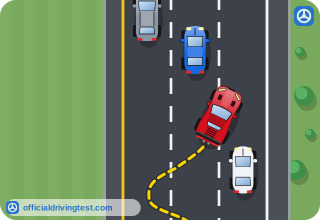
- Follow it closely to read its license plate
- Drive next to it and honk
- Pass it and slow down in front of it
- Stay as far away from it as possible
Show answer
Correct answer: Stay as far away from it as possible
The manual says to stay as far away from the other vehicle as possible.
Source: Class D & E Driver’s Guide (Revised August 2025 (DPSMV2052 R08/25)), page 125 · Open this page in the manual (Manual page 125)
-
If you see a drunk driver, why should you not signal the driver to pull over?
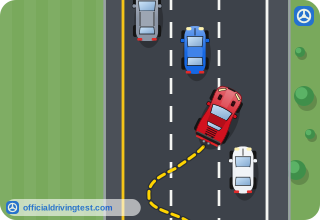
- It may result in a collision
- It may cause the driver to speed up
- It is illegal to signal other drivers
- It may confuse the police
Show answer
Correct answer: It may result in a collision
The manual says not to signal the driver to pull over because this may result in a collision.
Source: Class D & E Driver’s Guide (Revised August 2025 (DPSMV2052 R08/25)), page 125 · Open this page in the manual (Manual page 125)
-
If you see a drunk driver, what should you note about the vehicle?
- Only the color of the driver’s clothing and hair
- Only the speed of the vehicle as it passes you
- The license plate number and vehicle details
- Nothing; you should look away and keep driving
Show answer
Correct answer: The license plate number and vehicle details
The manual says to note the license plate number and vehicle details, without compromising your safety.
Source: Class D & E Driver’s Guide (Revised August 2025 (DPSMV2052 R08/25)), page 125 · Open this page in the manual (Manual page 125)
-
After seeing a drunk driver, what should you do once you have pulled over?
- Call 911 and describe the vehicle and its exact location
- Wait for the vehicle to stop and speak with the driver
- Drive ahead of the vehicle and block its path forward
- Call a relative of the driver and ask them to help
Show answer
Correct answer: Call 911 and describe the vehicle and its exact location
The manual says to pull over, call 911, and give a complete description of the vehicle and its exact location.
Source: Class D & E Driver’s Guide (Revised August 2025 (DPSMV2052 R08/25)), page 125 · Open this page in the manual (Manual page 125)
-
How does the penalty for driving under the influence of drugs compare with the penalty for alcohol in Louisiana?
- It is lighter, and prescribed medication is exempt
- It is heavier than the penalty for alcohol
- It is the same, even for prescribed medication
- It applies only to illegal drugs, not medication
Show answer
Correct answer: It is the same, even for prescribed medication
Louisiana law provides the same penalty for driving under the influence of drugs as for alcohol, including over-the-counter and prescribed medication.
Source: Class D & E Driver’s Guide (Revised August 2025 (DPSMV2052 R08/25)), page 125 · Open this page in the manual (Manual page 125)
-
Why is it important to read the labels on medications you take?
- They list the legal BAC limit
- They may interfere with your driving ability
- They show whether the drug is legal in another state
- They tell you how many hours to drive
Show answer
Correct answer: They may interfere with your driving ability
The manual says to pay attention to medication labels because medications may interfere with your driving ability.
Source: Class D & E Driver’s Guide (Revised August 2025 (DPSMV2052 R08/25)), page 125 · Open this page in the manual (Manual page 125)
-
What happens to the effects of drugs when they are combined with alcohol?
- They cancel each other out so the driver is safer
- They wear off faster than either one alone would
- They stay the same as with one substance alone
- They can be exaggerated and increased dramatically
Show answer
Correct answer: They can be exaggerated and increased dramatically
The manual says if drugs are combined with alcohol, the effects can be exaggerated and increased dramatically.
Source: Class D & E Driver’s Guide (Revised August 2025 (DPSMV2052 R08/25)), page 125 · Open this page in the manual (Manual page 125)
-
Why can driving after using drugs such as amphetamines, tranquilizers and barbiturates be hazardous?
- Faster reflexes and sharper judgment at night
- Improved night vision and better coordination
- A shorter stopping distance and quicker steering
- Drowsiness, reduced coordination and poor judgment
Show answer
Correct answer: Drowsiness, reduced coordination and poor judgment
The manual says such drugs can be hazardous, and possibly lethal, because of drowsiness, reduced coordination and poor judgment or risk taking.
Source: Class D & E Driver’s Guide (Revised August 2025 (DPSMV2052 R08/25)), page 125 · Open this page in the manual (Manual page 125)
-
About how long does it take for the effects of smoking one marijuana cigarette to wear off?
- About 30 minutes
- Five to six hours
- About one hour
- About 24 hours
Show answer
Correct answer: Five to six hours
The manual says it takes five to six hours for the effects of smoking one marijuana cigarette to wear off, compared with about an hour for a single drink.
Source: Class D & E Driver’s Guide (Revised August 2025 (DPSMV2052 R08/25)), page 125 · Open this page in the manual (Manual page 125)
-
With some users, what does marijuana interfere with when driving?
- The ability to hear sirens only
- The ability to read road signs only
- The ability to judge time, speed and distance
- The ability to steer a straight line only
Show answer
Correct answer: The ability to judge time, speed and distance
The manual says that with some users, marijuana interferes with the ability to judge time, speed and distance.
Source: Class D & E Driver’s Guide (Revised August 2025 (DPSMV2052 R08/25)), page 125 · Open this page in the manual (Manual page 125)
-
What effect does marijuana have on young people, according to the manual?
- It impairs concentration and retaining information
- It improves memory and the ability to learn
- It speeds up learning of new driving skills
- It has no effect on concentration or memory
Show answer
Correct answer: It impairs concentration and retaining information
The manual says in young people marijuana impairs the ability to concentrate and retain information.
Source: Class D & E Driver’s Guide (Revised August 2025 (DPSMV2052 R08/25)), page 125 · Open this page in the manual (Manual page 125)
-
Which of these can marijuana use cause, according to the manual?
- A slower heart rate and calm feelings in all users
- Increased heart rate and, in some users, anxiety
- Better vision and faster reaction time at night
- Sharper judgment of speed and distance in all users
Show answer
Correct answer: Increased heart rate and, in some users, anxiety
The manual says marijuana use can cause increased heart rate and make some users paranoid and anxious.
Source: Class D & E Driver’s Guide (Revised August 2025 (DPSMV2052 R08/25)), page 125 · Open this page in the manual (Manual page 125)
-
Which offense is inflicting any injury with a vehicle while under the influence of alcohol or drugs and/or with a BAC of 0.08% or more (R.S. 14:39.1)?
- Vehicular homicide
- Hit and run driving
- Vehicle negligent injury
- Flight from an officer
Show answer
Correct answer: Vehicle negligent injury
Under R.S. 14:39.1, vehicle negligent injury is inflicting any injury with a vehicle while under the influence of alcohol or drugs and/or with a BAC of 0.08% or more.
Source: Class D & E Driver’s Guide (Revised August 2025 (DPSMV2052 R08/25)), page 126 · Open this page in the manual (Manual page 126)
-
What are the penalties for vehicle negligent injury, according to the manual?
- A fine of not less than $2,000 and imprisonment of at least five years
- A fine of not more than $1,000 or imprisonment for not more than six months, or both
- A fine of not more than $5,000 or imprisonment for not more than one year
- A fine of not more than $2,000 or imprisonment for not more than five years
Show answer
Correct answer: A fine of not more than $1,000 or imprisonment for not more than six months, or both
Penalties for vehicle negligent injury include fines of not more than $1,000 or imprisonment for not more than six months, or both.
Source: Class D & E Driver’s Guide (Revised August 2025 (DPSMV2052 R08/25)), page 126 · Open this page in the manual (Manual page 126)
-
What kind of injury is involved in first degree vehicle negligent injury (R.S. 14:39.2)?
- Any injury, however minor
- Property damage only
- A fatal injury
- Serious bodily injury
Show answer
Correct answer: Serious bodily injury
First degree vehicle negligent injury is inflicting serious bodily injury while under the influence of alcohol or drugs and/or with a BAC of 0.08% or more.
Source: Class D & E Driver’s Guide (Revised August 2025 (DPSMV2052 R08/25)), page 126 · Open this page in the manual (Manual page 126)
-
What are the penalties for first degree vehicle negligent injury, according to the manual?
- A fine of not more than $1,000 or imprisonment for not more than six months, or both
- A fine of not less than $2,000 and imprisonment of at least five years
- A fine of not more than $15,000 or imprisonment for not more than 30 years
- A fine of not more than $2,000 or imprisonment for not more than five years, or both
Show answer
Correct answer: A fine of not more than $2,000 or imprisonment for not more than five years, or both
Penalties for first degree vehicle negligent injury include fines of not more than $2,000 or imprisonment for not more than five years, or both.
Source: Class D & E Driver’s Guide (Revised August 2025 (DPSMV2052 R08/25)), page 126 · Open this page in the manual (Manual page 126)
-
What is it called when, by driving on Louisiana highways, you are deemed to have given your consent to a test of your blood for alcohol content and for abused or illegal controlled dangerous substances?
- Administrative waiver
- Implied consent
- Automatic release
- Presumed innocence
Show answer
Correct answer: Implied consent
The manual says that by driving on the highways of Louisiana you are deemed to have given consent to such a test, which is known as implied consent.
Source: Class D & E Driver’s Guide (Revised August 2025 (DPSMV2052 R08/25)), page 126 · Open this page in the manual (Manual page 126)
-
Which of these may you be asked to undergo when an officer suspects you of driving under the influence?
- A new written knowledge test at the license office
- A road skills test with an examiner in the car
- A cash bond before any other test can be given
- A field sobriety test or a blood, urine or breath test
Show answer
Correct answer: A field sobriety test or a blood, urine or breath test
The manual says you may be asked to perform a field sobriety test or consent to a blood, urine, or breath test to determine your blood-alcohol level.
Source: Class D & E Driver’s Guide (Revised August 2025 (DPSMV2052 R08/25)), page 126 · Open this page in the manual (Manual page 126)
-
Whose discretion governs whether the alcohol or drug test is administered?
- A law enforcement officer with reason to believe you were impaired
- Only a judge, after a hearing held before you are stopped
- The clerk at the Office of Motor Vehicles who issued your license
- Your own choice, whenever you decide you want to be tested
Show answer
Correct answer: A law enforcement officer with reason to believe you were impaired
The test is administered at the discretion of a law enforcement officer who has reason to believe you were driving under the influence of alcohol or drugs.
Source: Class D & E Driver’s Guide (Revised August 2025 (DPSMV2052 R08/25)), page 126 · Open this page in the manual (Manual page 126)
-
At the time of the test, what will the officer advise you of?
- Only your criminal rights, not civil ones
- Only your civil rights, not criminal ones
- Both your criminal and civil rights
- Only the penalty for refusing to submit
Show answer
Correct answer: Both your criminal and civil rights
The officer will advise you of both your criminal and civil rights as they relate to your arrest and to the chemical test.
Source: Class D & E Driver’s Guide (Revised August 2025 (DPSMV2052 R08/25)), page 126 · Open this page in the manual (Manual page 126)
-
For how long are your driving privileges suspended if you refuse to submit to the alcohol analysis test on a first offense?
- 365 days
- 90 days
- 180 days
- 730 days
Show answer
Correct answer: 365 days
The manual says refusing the test suspends your driving privileges for 365 days on a first offense.
Source: Class D & E Driver’s Guide (Revised August 2025 (DPSMV2052 R08/25)), page 126 · Open this page in the manual (Manual page 126)
-
For how long are your driving privileges suspended if you refuse the alcohol analysis test on a second or subsequent offense?
- 365 days
- 180 days
- 730 days
- 1095 days
Show answer
Correct answer: 730 days
The manual says refusing the test on a second or subsequent offense suspends your driving privileges for 730 days.
Source: Class D & E Driver’s Guide (Revised August 2025 (DPSMV2052 R08/25)), page 126 · Open this page in the manual (Manual page 126)
-
You are 21 or older and submit to the test, which shows a BAC of 0.08% to 0.149%. For how long are your driving privileges suspended?
- 90 days
- 365 days
- Two years (730 days)
- 180 days
Show answer
Correct answer: 180 days
The manual says a BAC of 0.08% to 0.149% for a driver 21 or older results in a 180-day suspension.
Source: Class D & E Driver’s Guide (Revised August 2025 (DPSMV2052 R08/25)), page 126 · Open this page in the manual (Manual page 126)
-
You are 21 or older and submit to the test, which shows a BAC of 0.15% or greater. For how long are your driving privileges suspended?
- 180 days
- One year (365 days)
- Three years (1095 days)
- Two years (730 days)
Show answer
Correct answer: Two years (730 days)
The manual says a BAC of 0.15% or greater results in a two-year (730-day) suspension.
Source: Class D & E Driver’s Guide (Revised August 2025 (DPSMV2052 R08/25)), page 126 · Open this page in the manual (Manual page 126)
-
You are under 21 and submit to the test, which shows a BAC of 0.02% or more. For how long are your driving privileges suspended?
- 30 days
- 180 days
- 365 days
- Two years (730 days)
Show answer
Correct answer: 180 days
The manual says a driver under 21 whose test shows a BAC of 0.02% or more has driving privileges suspended for 180 days.
Source: Class D & E Driver’s Guide (Revised August 2025 (DPSMV2052 R08/25)), page 127 · Open this page in the manual (Manual page 127)