Iowa: Signals and vehicle controls — Part 4 Practice Test
Maintaining your vehicle, seats and mirrors, driver-assistance systems, starting, shifting, braking, steering, backing, turn signals, headlights and the horn. — Part 4
Independent educational site · not affiliated with any government agency or DMV
Ready? Test yourself
- Instant feedback with an explanation
- Every answer cites its source in the manual
- Your best score is saved on this device
Questions are original and based on the official manual "Iowa Driver’s License Manual" (July 2026), Iowa Department of Transportation.
All 36 questions in this practice test
Take the test above first, then use this list to study. Tap “Show answer” to see the correct answer and explanation.
Show the questions and answersHide the questions
-
What is a blind spot?
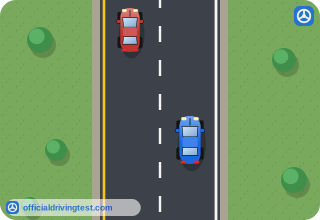
- An area outside your vehicle that cannot be seen using mirrors
- An area in front of your vehicle that is hidden by the hood
- An area of the road ahead that your headlights do not reach
- A part of the road where you cannot see any lane markings
Show answer
Correct answer: An area outside your vehicle that cannot be seen using mirrors
Blind spots are areas outside your vehicle that cannot be seen using mirrors.
Source: Iowa Driver’s License Manual (July 2026), page 34
-
Which of these is given as an example of vehicle equipment that can cause a blind spot?
- Hedges
- Hills
- Door posts
- Walls
Show answer
Correct answer: Door posts
Vehicle equipment such as rearview mirrors and door posts can obstruct your vision, while hedges, hills and walls belong to the driving environment.
Source: Iowa Driver’s License Manual (July 2026), page 34
-
When should you be especially cautious of your own blind spots?
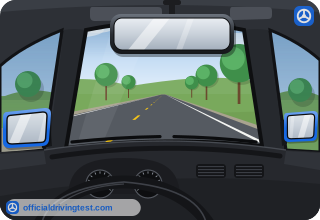
- When changing lanes or pulling into cross traffic
- Only when you are backing out of a parking space
- Only when you are driving on a freeway at night
- Only when you are towing a trailer or a boat
Show answer
Correct answer: When changing lanes or pulling into cross traffic
You should be cautious of blind spots when changing lanes and/or pulling into cross traffic.
Source: Iowa Driver’s License Manual (July 2026), page 34
-
Where is the most common place for glaring reflections and blind spots caused by the sun?
- The rear window
- The driver’s side window
- The passenger-side window
- The front windshield
Show answer
Correct answer: The front windshield
The front windshield is the most common place for glaring reflections and blind spots.
Source: Iowa Driver’s License Manual (July 2026), page 34
-
Which of these helps shield your eyes from reflections that make it hard to see?
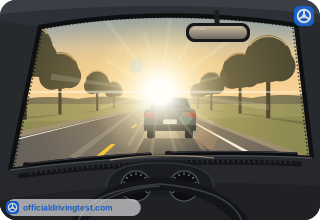
- Turning on the windshield wipers
- Sunglasses or the sun visors
- Using the high-beam headlights
- Rolling down the windows
Show answer
Correct answer: Sunglasses or the sun visors
Sunglasses or the visors in most cars help shield your eyes from reflections that make it hard to see.
Source: Iowa Driver’s License Manual (July 2026), page 34
-
Which of these can increase blind spots?
- Using your turn signal early
- Weather conditions and daylight
- Keeping a long following distance
- Driving with your headlights on
Show answer
Correct answer: Weather conditions and daylight
Blind spots can be increased by weather conditions and daylight.
Source: Iowa Driver’s License Manual (July 2026), page 34
-
Where does the manual tell you to look for the best starting procedures for a vehicle?
- The driver’s license manual
- A posted sign on the dashboard
- The dealer’s service receipt
- The vehicle owner’s manual
Show answer
Correct answer: The vehicle owner’s manual
The manual says to check the vehicle owner’s manual for the best starting procedures for the vehicle.
Source: Iowa Driver’s License Manual (July 2026), page 39
-
Starting procedures can vary depending on which two things about the vehicle?
- The color of the vehicle and its model year
- Whether it has fuel injection, and the type of transmission
- The number of doors and the tire size
- The weight of the vehicle and its seating capacity
Show answer
Correct answer: Whether it has fuel injection, and the type of transmission
Starting procedures vary depending on whether the vehicle has fuel injection and on the type of transmission.
Source: Iowa Driver’s License Manual (July 2026), page 39
-
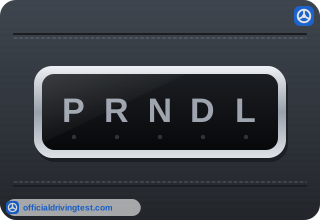
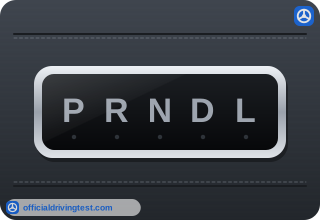
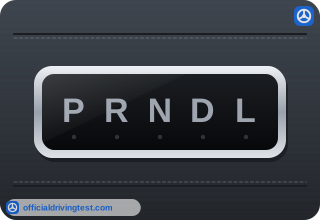
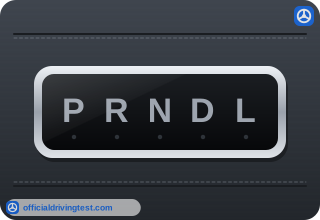
In a vehicle with an automatic transmission, what is the gear selector responsible for?
- Shifting through every gear as the speed rises
- Operating the clutch when slowing down
- Moving the car using the P-R-N-D-L column
- Holding the car at a steady speed
Show answer
Correct answer: Moving the car using the P-R-N-D-L column
With an automatic transmission there is no need to shift gears manually; the gear selector moves the car using the P-R-N-D-L column.
Source: Iowa Driver’s License Manual (July 2026), page 39
-
In an automatic transmission’s P-R-N-D-L column, what does “P” (Park) do?
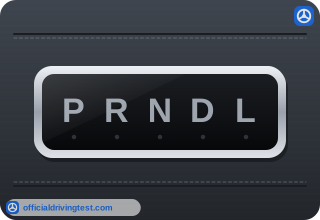
- Locks the vehicle for parking
- Leaves the engine idle
- Limits the engine’s speed
- Moves the vehicle in reverse
Show answer
Correct answer: Locks the vehicle for parking
On an automatic transmission, P for “Park” locks the vehicle for parking.
Source: Iowa Driver’s License Manual (July 2026), page 39
-
In an automatic transmission’s P-R-N-D-L column, what is “R” (Reverse) used for?
- Moving in reverse
- Locking the vehicle in place
- Moving the vehicle forward
- Limiting the engine’s speed
Show answer
Correct answer: Moving in reverse
On an automatic transmission, R for “Reverse” is for moving in reverse.
Source: Iowa Driver’s License Manual (July 2026), page 39
-
In an automatic transmission’s P-R-N-D-L column, what is “N” (Neutral) used for?
- To lock the vehicle for parking
- To move the vehicle forward
- To leave the engine idle
- To limit the engine’s speed
Show answer
Correct answer: To leave the engine idle
On an automatic transmission, N for “Neutral” is used to leave the engine idle.
Source: Iowa Driver’s License Manual (July 2026), page 39
-
In an automatic transmission’s P-R-N-D-L column, what is “D” (Drive) used for?
- To move the vehicle in reverse
- To move the vehicle forward
- To leave the engine idle
- To lock the vehicle for parking
Show answer
Correct answer: To move the vehicle forward
On an automatic transmission, D for “Drive” is used to move the vehicle forward.
Source: Iowa Driver’s License Manual (July 2026), page 39
-
In an automatic transmission’s P-R-N-D-L column, what is “L” (Low Gear) used for?
- To move the vehicle forward at highway speed
- To leave the engine idle
- To lock the vehicle for parking
- To limit the engine’s speed
Show answer
Correct answer: To limit the engine’s speed
On an automatic transmission, L for “Low Gear” is used to limit the engine’s speed.
Source: Iowa Driver’s License Manual (July 2026), page 39
-
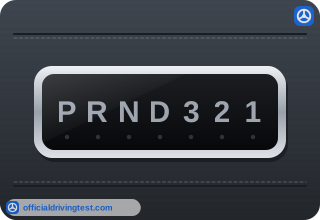
On an automatic transmission, what may “3, 2, 1” on the gear selector indicate?
- The number of passengers the vehicle can carry
- The three levels of braking available
- The maximum gear the transmission may shift to
- The order of the gears used to start the engine
Show answer
Correct answer: The maximum gear the transmission may shift to
The low-gear setting may also be shown as “3, 2, 1,” indicating the maximum gear the automatic transmission may shift to.
Source: Iowa Driver’s License Manual (July 2026), page 39
-
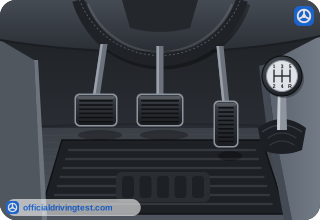
For vehicles with a manual transmission, what does shifting gears regulate?
- The range of speeds the vehicle may travel in
- The amount of fuel the engine uses at idle
- The distance needed to stop the vehicle
- The temperature of the engine
Show answer
Correct answer: The range of speeds the vehicle may travel in
In a manual transmission vehicle, shifting gears regulates the range of speeds the vehicle may travel in.
Source: Iowa Driver’s License Manual (July 2026), page 40
-
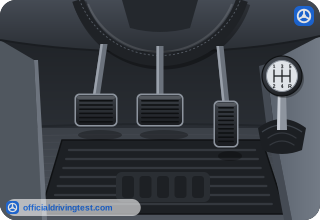
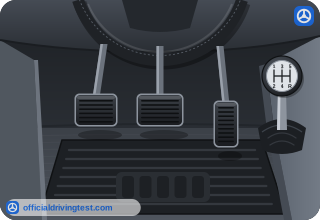
In a manual transmission vehicle, what is the third pedal called, and what is it used for?
- The booster, used to help the engine start
- The throttle, used to hold a steady speed
- The retarder, used to slow the vehicle
- The clutch, used to alternate between gears
Show answer
Correct answer: The clutch, used to alternate between gears
A third pedal called the clutch is used to alternate between gears in a manual transmission.
Source: Iowa Driver’s License Manual (July 2026), page 40
-
To accelerate in a manual transmission vehicle, from which gears must the driver be able to shift to higher gears?
- “Park” or “Reverse”
- “Neutral” or “1”
- “Low” or “Drive”
- “2” or “3” only
Show answer
Correct answer: “Neutral” or “1”
The driver must be able to shift from “Neutral” or “1” to higher gears (2, 3, 4…) in order to accelerate.
Source: Iowa Driver’s License Manual (July 2026), page 40
-
What is the first step in shifting gears in a manual transmission vehicle?
- Depress the clutch with your right foot
- Depress the clutch with your left foot
- Release the parking brake with your left hand
- Press the brake pedal with your left foot
Show answer
Correct answer: Depress the clutch with your left foot
Step 1 of shifting a manual transmission is to depress the clutch with your left foot.
Source: Iowa Driver’s License Manual (July 2026), page 40
-
When shifting gears in a manual transmission vehicle, which part of your body moves the gear stick?
- Your left hand
- Your right foot
- Your left foot
- Your right hand
Show answer
Correct answer: Your right hand
Step 2 of shifting a manual transmission is to shift the gear stick with your right hand.
Source: Iowa Driver’s License Manual (July 2026), page 40
-
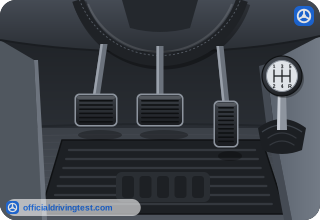
What is the third step in shifting gears in a manual transmission vehicle?
- Slowly step on the gas pedal while simultaneously releasing the clutch
- Step on the gas pedal fully before you release the clutch
- Release the clutch completely, then slowly add gas pedal pressure
- Hold the clutch down while pressing the gas pedal
Show answer
Correct answer: Slowly step on the gas pedal while simultaneously releasing the clutch
Step 3 is to slowly step on the gas pedal while simultaneously releasing the clutch.
Source: Iowa Driver’s License Manual (July 2026), page 40
-
In a manual transmission vehicle, when do you repeat the clutch-and-gear-stick process?
- Only when you are speeding up to merge onto a highway ramp
- Only when you are parking on a steep hill or slope
- When downshifting or when you need to slow down to come to a stop
- Only when you are starting the engine from a cold start
Show answer
Correct answer: When downshifting or when you need to slow down to come to a stop
The same process is repeated when downshifting or when you need to slow down to come to a stop.
Source: Iowa Driver’s License Manual (July 2026), page 40
-
How do you move a manual transmission vehicle backward?
- Shift into “Reverse” from the “Drive” gear
- Shift into “Park” and release the clutch
- Shift into “2” and release the clutch slowly
- Shift into “Reverse” from the “Neutral” or “1” gear
Show answer
Correct answer: Shift into “Reverse” from the “Neutral” or “1” gear
The same process is used to move the vehicle backward by shifting into “Reverse” from the “Neutral” or “1” gear.
Source: Iowa Driver’s License Manual (July 2026), page 40
-
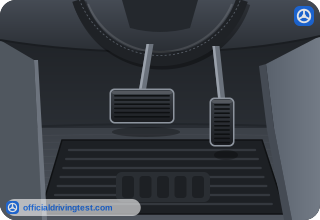
How should you accelerate a vehicle?
- Quickly, to reach traffic speed sooner
- Gradually and smoothly
- In short, hard bursts
- Only after the engine has idled for a minute
Show answer
Correct answer: Gradually and smoothly
The manual says to accelerate gradually and smoothly.
Source: Iowa Driver’s License Manual (July 2026), page 40
-
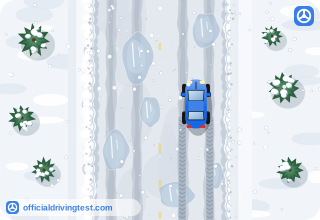
What can happen if you try to start too fast, particularly on slippery surfaces?
- The brakes can lock, causing the engine to stall
- The steering can lock, causing the vehicle to roll back
- The drive wheels can spin, causing the vehicle to slide
- The tires can wear evenly, causing less grip
Show answer
Correct answer: The drive wheels can spin, causing the vehicle to slide
Trying to start too fast can cause the drive wheels to spin, particularly on slippery surfaces, causing the vehicle to slide.
Source: Iowa Driver’s License Manual (July 2026), page 40
-
With a manual-shift vehicle, why should you practice using the clutch and accelerator?
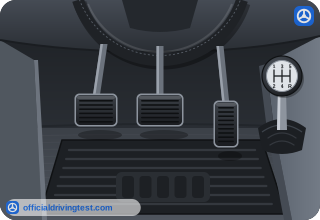
- So the engine does not run too fast or stall when shifting
- So the brakes do not wear out too quickly when you slow down
- So the tires do not spin when you drive on dry pavement
- So the vehicle can start moving from any gear it is in
Show answer
Correct answer: So the engine does not run too fast or stall when shifting
The manual says to practice with the clutch and accelerator so the engine does not run too fast or stall when shifting between gears.
Source: Iowa Driver’s License Manual (July 2026), page 40
-
What does the manual say ABS (antilock braking system) allows you to do?
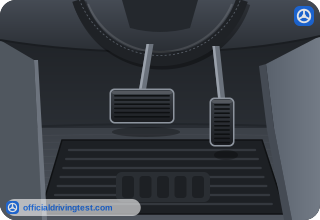
- Stop in a shorter distance on any surface
- Stop without skidding
- Drive faster on slippery roads
- Brake without using the brake pedal
Show answer
Correct answer: Stop without skidding
The ABS will allow you to stop without skidding.
Source: Iowa Driver’s License Manual (July 2026), page 41
-
Where does the manual tell you to look for how to use your vehicle’s ABS?
- The dealer’s service department
- The vehicle owner’s manual
- The driver’s license manual only
- A sticker on the brake pedal
Show answer
Correct answer: The vehicle owner’s manual
It says to be sure to read the vehicle owner’s manual on how to use the ABS.
Source: Iowa Driver’s License Manual (July 2026), page 41
-
If your vehicle has ABS and you need to stop quickly, what should you do?
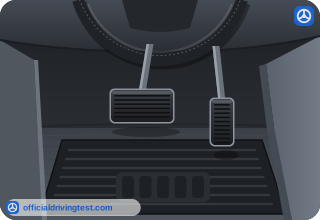
- Pump the brake pedal several times quickly
- Press lightly and then release
- Press hard once and then let up
- Press hard on the pedal and keep pressing
Show answer
Correct answer: Press hard on the pedal and keep pressing
With ABS you press on the brake pedal as hard as you can and keep pressing.
Source: Iowa Driver’s License Manual (July 2026), page 41
-
You feel the brake pedal pushing back while your ABS is working. What should you do?
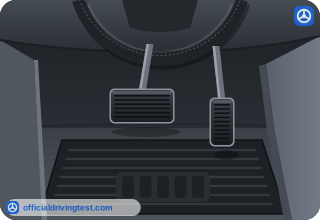
- Do not let up on the brake pedal
- Ease off the brake pedal until the pushing stops
- Pump the brake pedal quickly
- Take your foot off the pedal and steer
Show answer
Correct answer: Do not let up on the brake pedal
The pedal may push back when the ABS is working, but you should not let up because the ABS only works with the brake pedal pushed down.
Source: Iowa Driver’s License Manual (July 2026), page 41
-
If the vehicle behind you is following too closely, what does the manual say you should do?
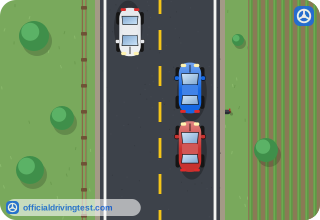
- Slam on the brakes hard to scare the driver
- Speed up to get away from it
- Tap your brake pedal three or four times quickly
- Turn on your hazard lights and keep driving
Show answer
Correct answer: Tap your brake pedal three or four times quickly
Tapping the brake pedal three or four times quickly lets those behind you know you are about to slow down.
Source: Iowa Driver’s License Manual (July 2026), page 41
-
Where should your hands be placed on the steering wheel?
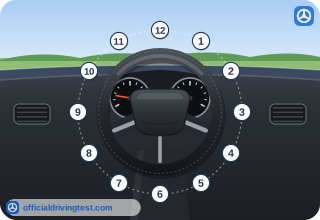
- At 10 and 2 o’clock
- At 12 and 6 o’clock
- Both hands together at the top at 12 o’clock
- At 9 and 3 o’clock, or lower at 7 and 5
Show answer
Correct answer: At 9 and 3 o’clock, or lower at 7 and 5
The manual says to place your hands on opposite sides of the wheel at 9 and 3 o’clock, or slightly lower at 7 and 5 o’clock.
Source: Iowa Driver’s License Manual (July 2026), page 42
-
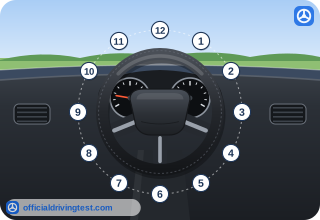
Why does the manual say you should use a proper grip on the steering wheel?
- To keep your hands warm
- To avoid needing to look at the road
- To reduce injury risk from front airbags
- To make the horn easier to reach
Show answer
Correct answer: To reduce injury risk from front airbags
A proper grip reduces the risk of injury from front airbags and best maintains control of the vehicle.
Source: Iowa Driver’s License Manual (July 2026), page 42
-
Where should you look while steering?
- Well down the road, not just in front of you
- Only at the hood of your vehicle
- At the vehicle directly beside you
- At the road surface just ahead of the bumper
Show answer
Correct answer: Well down the road, not just in front of you
Looking well down the road lets you see situations where you will need to steer so you have time to steer smoothly and safely.
Source: Iowa Driver’s License Manual (July 2026), page 42
-
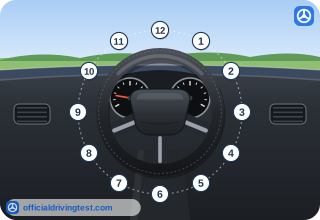
What techniques does the manual say to use to turn the steering wheel when turning corners?
- Turning with the palm of one hand
- Letting the wheel slip through your fingers
- Using only one hand at the top of the wheel
- Hand-over-hand or push-pull
Show answer
Correct answer: Hand-over-hand or push-pull
When turning corners, turn the steering wheel using the “hand-over-hand” or the “push-pull” technique.
Source: Iowa Driver’s License Manual (July 2026), page 42
-
What can happen if you turn the steering wheel with just the palm of one hand?
- You will turn more smoothly
- You could lose control
- You will straighten the wheel faster
- You will have a better view of the road
Show answer
Correct answer: You could lose control
The manual warns that turning the wheel with just the palm of one hand could make you lose control.
Source: Iowa Driver’s License Manual (July 2026), page 42