Iowa: Emergencies — Part 2 Practice Test
Questions in this part include: “What does a tornado watch mean?” · “If a tornado warning is issued, what does it mean?”
Independent educational site · not affiliated with any government agency or DMV
Ready? Test yourself
- Instant feedback with an explanation
- Every answer cites its source in the manual
- Your best score is saved on this device
Questions are original and based on the official manual "Iowa Driver’s License Manual" (July 2026), Iowa Department of Transportation.
All 19 questions in this practice test
Take the test above first, then use this list to study. Tap “Show answer” to see the correct answer and explanation.
Show the questions and answersHide the questions
-
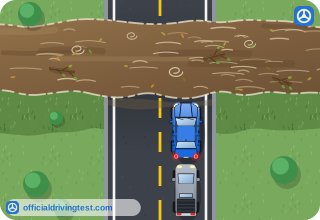
Why should you never drive through a flooded road or bridge?
- Floodwater always damages the brakes
- Water entering the exhaust will always stall the engine
- The tires will lose air pressure
- The road surface beneath the water could be entirely washed out
Show answer
Correct answer: The road surface beneath the water could be entirely washed out
The road surface beneath the water could be entirely washed out, so you should turn around.
Source: Iowa Driver’s License Manual (July 2026), page 60
-
If your vehicle is stalled in floodwater, what should you do?
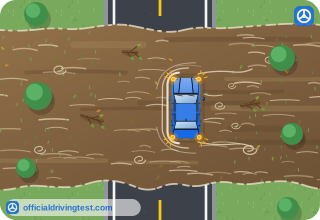
- Abandon it and move to higher ground
- Stay inside and wait for the water to drop
- Restart the engine until it runs again
- Roll up the windows and wait for help
Show answer
Correct answer: Abandon it and move to higher ground
Do not stay in a flooded vehicle: abandon the vehicle and move to higher ground.
Source: Iowa Driver’s License Manual (July 2026), page 60
-
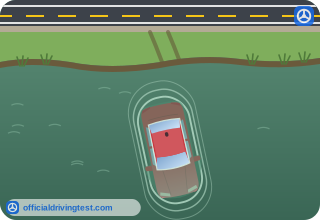
If your car is swept into the water and submerged, when are the doors easier to open?
- As soon as the car goes under
- Only after the engine is turned off
- Once the vehicle is full of water
- After the headlights go out
Show answer
Correct answer: Once the vehicle is full of water
Wait for the vehicle to fill with water; once it is full the doors are easier to open, then hold your breath and swim to the surface.
Source: Iowa Driver’s License Manual (July 2026), page 60
-
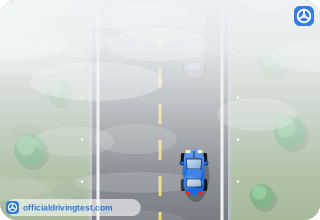
If conditions in fog require it, what should you do?
- Stop in the travel lane and turn on the flashers
- Follow the taillights of the car ahead closely
- Get off the road and find a safe place to park
- Speed up to get out of the fog quickly
Show answer
Correct answer: Get off the road and find a safe place to park
If needed, get off the road and find a safe place to park.
Source: Iowa Driver’s License Manual (July 2026), page 60
-
What does a tornado watch mean?
- A tornado is imminent in your area
- It only means that a tornado is possible
- A tornado has been seen on the ground nearby
- A tornado has already passed through the area
Show answer
Correct answer: It only means that a tornado is possible
A tornado watch is issued when a severe thunderstorm may possibly produce tornado-like conditions; it only means a tornado is possible.
Source: Iowa Driver’s License Manual (July 2026), page 60
-
If a tornado warning is issued, what does it mean?
- A tornado is possible but not yet likely
- A tornado may form later in the day
- The thunderstorm has passed and the danger is over
- A tornado is imminent, so seek shelter immediately
Show answer
Correct answer: A tornado is imminent, so seek shelter immediately
If a warning is issued, a tornado is imminent and all persons should seek shelter immediately.
Source: Iowa Driver’s License Manual (July 2026), page 60
-
If you are driving during a tornado, what is the best course of action?
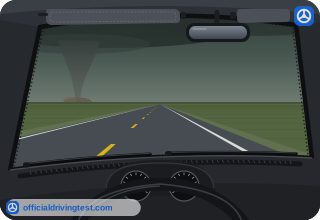
- Find a sturdy building to seek shelter
- Drive under the nearest overpass
- Outrun the storm on the highway
- Stop in the travel lane and wait
Show answer
Correct answer: Find a sturdy building to seek shelter
If you are driving during a tornado, the best course of action is to find a sturdy building to seek shelter.
Source: Iowa Driver’s License Manual (July 2026), page 60
-
If you cannot reach a shelter during a tornado, what should you do?
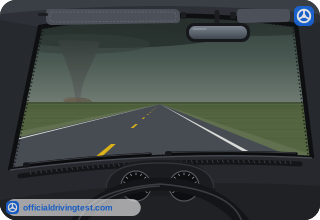
- Park under a bridge and unfasten your seat belt to move freely
- Keep driving and lean over the steering wheel to stay low
- Pull over, duck below the windows, keep your seat belt fastened, cover your head
- Stay in your lane with the windows rolled down and the engine running
Show answer
Correct answer: Pull over, duck below the windows, keep your seat belt fastened, cover your head
If you cannot reach a shelter, pull over, duck down below the windows, keep your seat belt fastened and cover your head with your hands or an object.
Source: Iowa Driver’s License Manual (July 2026), page 60
-
If you can safely exit your vehicle during a tornado and cannot reach a shelter, where can you take cover?
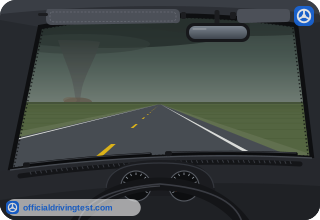
- Under a bridge
- In a low lying ditch or ravine
- Next to a tall tree beside the road
- Under an overpass
Show answer
Correct answer: In a low lying ditch or ravine
As an alternative, take cover in a low lying ditch or ravine while covering your head.
Source: Iowa Driver’s License Manual (July 2026), page 60
-
During a tornado, which places should you stay away from?
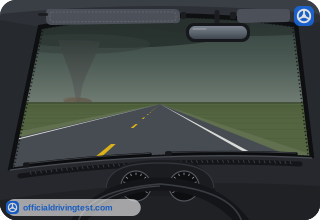
- Sturdy buildings
- Low lying ditches
- Open parking spaces
- Bridges and overpasses
Show answer
Correct answer: Bridges and overpasses
Stay away from bridges and overpasses during a tornado.
Source: Iowa Driver’s License Manual (July 2026), page 60
-
Before driving in snow or ice, how much of your vehicle should you clear?
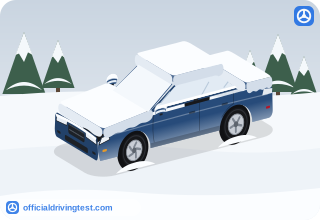
- The entire vehicle, including windows, lights and signals
- Only the windshield and the front side windows
- The windshield and the headlights only
- Only the windows, the mirrors and the windshield wipers
Show answer
Correct answer: The entire vehicle, including windows, lights and signals
Make sure your entire vehicle is clear of snow and ice, including windows, headlights, turn signals and taillights.
Source: Iowa Driver’s License Manual (July 2026), page 61
-
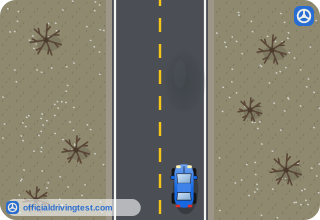
Why is black ice dangerous?
- It only forms in the middle of the day
- It only forms on gravel roads outside of towns
- It is hardly visible and often catches drivers by surprise
- It makes the road look wet and shiny to approaching drivers
Show answer
Correct answer: It is hardly visible and often catches drivers by surprise
Black ice is hardly visible and often catches drivers by surprise.
Source: Iowa Driver’s License Manual (July 2026), page 61
-
Where is black ice common?
- On wide, straight highways
- On bridges and overpasses
- In parking lots only
- In tunnels
Show answer
Correct answer: On bridges and overpasses
Black ice can occur anywhere but is common on bridges and overpasses, where moisture freezes quickly.
Source: Iowa Driver’s License Manual (July 2026), page 61
-
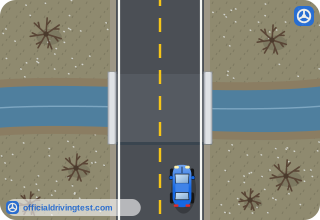
Why may bridges and overpasses be slippery even when other road surfaces are not?
- They are built with smoother pavement than other roads
- They are never treated by snowplows
- Wind pushes snow onto them from the shoulder
- Air circulates above and below, so ice forms there first
Show answer
Correct answer: Air circulates above and below, so ice forms there first
Moisture freezes quickly on bridges and overpasses because of circulating air both above and below the road surface.
Source: Iowa Driver’s License Manual (July 2026), page 61
-
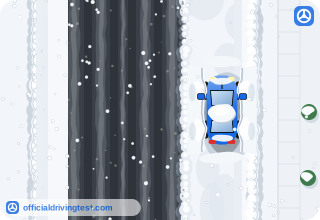
If you become stranded in the snow, what should you do if possible?
- Pull onto the shoulder and stand beside the vehicle
- Pull onto the shoulder and stay inside the vehicle
- Stop in the nearest lane and turn the engine off
- Turn onto a side road and walk to find help
Show answer
Correct answer: Pull onto the shoulder and stay inside the vehicle
If possible, pull your vehicle onto the shoulder and remain inside to avoid getting hit by other vehicles.
Source: Iowa Driver’s License Manual (July 2026), page 61
-
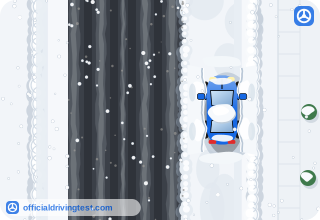
What can help guide emergency crews to your location when you are stranded in the snow?
- The color, make and model of your vehicle
- Your license plate number and your home address
- The time you left home
- Exit numbers, mileposts, crossroads or landmarks
Show answer
Correct answer: Exit numbers, mileposts, crossroads or landmarks
Call 911 and look for exit numbers, mileposts, crossroads or landmarks to guide crews to you.
Source: Iowa Driver’s License Manual (July 2026), page 61
-
What is the safest location when you are stranded in the snow?
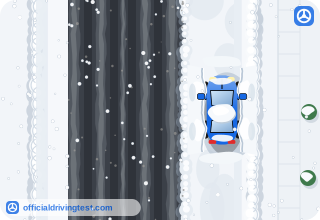
- Inside your vehicle with your seat belt on
- Standing beside your vehicle
- Walking along the shoulder
- Sitting in your vehicle with the seat belt off
Show answer
Correct answer: Inside your vehicle with your seat belt on
The safest location is to remain inside your vehicle with your seat belt on; it is the shelter you may need to survive and lets rescuers find you.
Source: Iowa Driver’s License Manual (July 2026), page 61
-
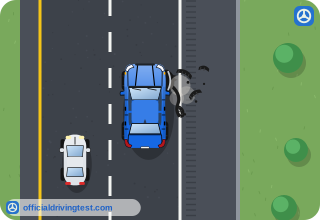
If your tire suddenly goes flat, how should you hold the steering wheel?
- Loosely, letting the car drift to the flat side
- With one hand, turning toward the flat
- Tightly, keeping the vehicle going straight
- Tightly, steering sharply toward the shoulder
Show answer
Correct answer: Tightly, keeping the vehicle going straight
If a tire goes flat, hold the steering wheel tightly and keep the vehicle going straight.
Source: Iowa Driver’s License Manual (July 2026), page 62
-
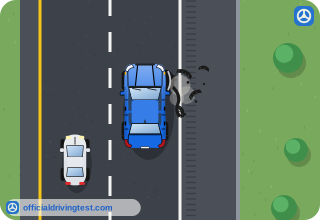
How should you slow down after a tire suddenly goes flat?
- Brake hard right away to stop in the lane
- Take your foot off the gas pedal and use the brakes lightly
- Shift to neutral and let the car coast to a stop on the road
- Pump the brake pedal several times
Show answer
Correct answer: Take your foot off the gas pedal and use the brakes lightly
Slow down gradually: take your foot off the gas pedal and use the brakes lightly.
Source: Iowa Driver’s License Manual (July 2026), page 62