Pavement markings in Illinois
The Illinois Rules of the Road shows or names everything on this page: 15 in all, on pages 35, 68, 79–80.
Independent educational site · not affiliated with any government agency or DMV
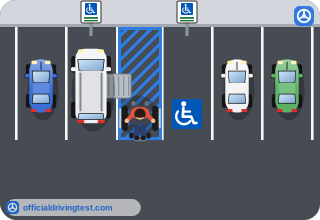
Striped Accessible Parking Access Aisle
A striped area on the pavement next to an accessible parking space is part of the reserved space. Vehicles may not use this striped area for parking, even if they have a parking placard or disability license plates.
Manual page 35
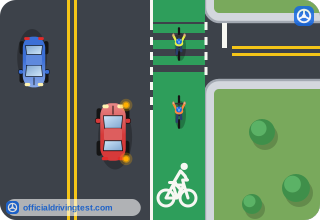
Bike Lane
These lanes are marked by a solid white line that becomes a dotted line ending before it reaches the corner. Bicycle lanes are sometimes painted a bright green color to increase visibility.
Manual page 68
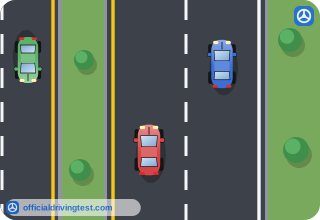
Edge Lines
Solid lines along the side of the road tell you where the edge of the pavement is located. Solid white lines are used on the right of the roadway edge. Solid yellow lines are used on the left edge of divided streets or roadways.
Manual page 79
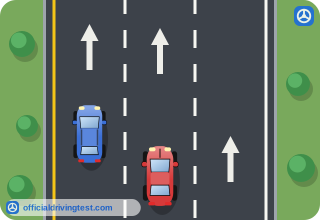
White Lane Lines (Broken)
Broken white lines separate lanes of traffic moving in the same direction. Crossing the line is only allowed when changing lanes or turning.
Manual page 79
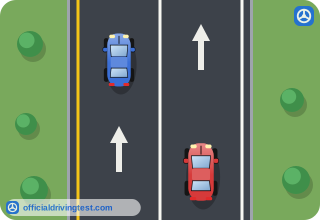
White Lane Lines (Solid)
Solid white lines separate lanes of traffic moving in the same direction. Crossing a solid white line requires special care and is discouraged.
Manual page 79
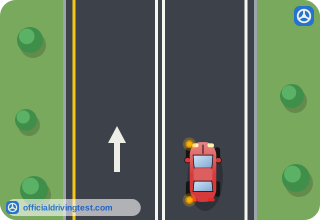
White Lane Lines (Double Solid)
Solid double white lines separate lanes of traffic moving in the same direction. Crossing a double solid white line is prohibited.
Manual page 79
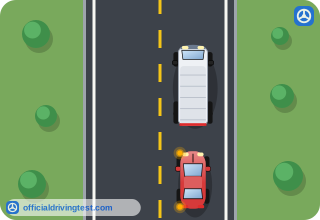
Yellow Center Line (Broken)
Broken yellow lines separate single lanes of traffic moving in opposite directions. Passing is allowed.
Manual page 79
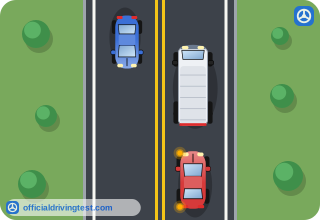
Yellow Center Lines (Double Solid)
Solid double yellow lines are used where traffic is moving in opposite directions. Two solid lines mark the center of the roadway and may be crossed to make a left turn to or from an alley, private road, driveway, or street.
Manual page 79
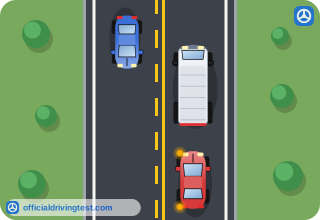
Yellow No Passing Line (Solid and Broken)
When there is a solid and a broken yellow line separating two lanes of traffic moving in opposite directions, you may pass only when the broken yellow line is nearest your lane. [p79: No passing lines are solid yellow lines on roads where traffic moves in opposite directions. The lines indicate zones where passing is not allowed. When the solid yellow line is on your side of the center line, you may cross it to finish passing a vehicle you already started to pass before the beginning of the no passing zone. You may cross it to turn left into or from an alley, private road, or driveway.]
Manual page 80
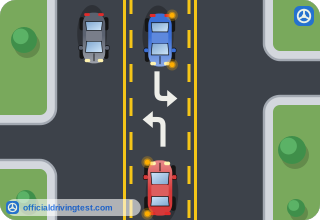
Two-Way Left Turn Lane
Two-way left turn lanes are marked with yellow lines and white arrows. A left turn may not be made from any other lane when a turn lane is provided. A vehicle may not be driven in the lane except when preparing for or making a left turn from or into the roadway or when preparing for or making a U-turn when permitted by law.
Manual page 80
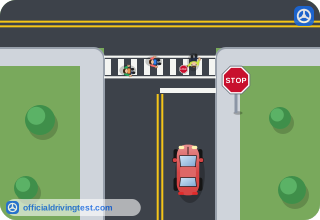
White Stop Line
A white stop line is painted across a lane at an intersection. The line is usually 4 feet before the crosswalk in an urban area. It shows where you must stop your vehicle for a stop sign or red light. You must stop your vehicle before any part of it crosses the line.
Manual page 80
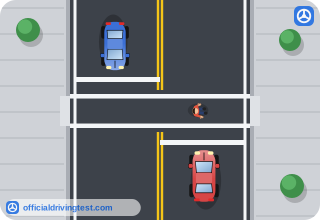
White Crosswalk Lines
White crosswalk lines are painted across the entire width of the pavement. Sometimes, the inside area is marked with white diagonal lines for added visibility. Pedestrians in crosswalks have the right of way over vehicles.
Manual page 80
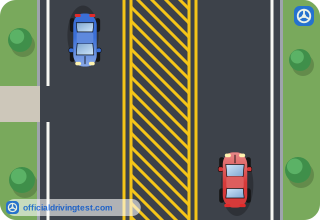
Diagonal Stripes for Obstructions
Yellow or white diagonal stripes are used to mark fixed obstructions.
Manual page 80
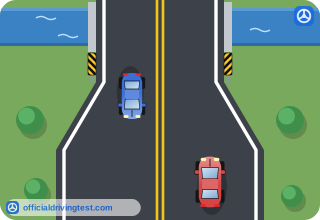
Lines Channeling Traffic Around a Hazard
Solid white or yellow lines are sometimes used to channel traffic around a hazard.
Manual page 80
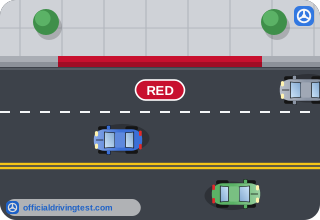
No Parking Curb Marking
Curb markings, fire lanes and pavement markings may be designated as “No Parking” areas by local authorities.
Manual page 80