Idaho: Sharing the road — Part 2 Practice Test
Bicyclists, motorcycles, large vehicles, horseback riders, wildlife and open range, and passing and being passed. — Part 2
Independent educational site · not affiliated with any government agency or DMV
Ready? Test yourself
- Instant feedback with an explanation
- Every answer cites its source in the manual
- Your best score is saved on this device
Questions are original and based on the official manual "Idaho Driver's Handbook" (July 2026), Idaho Transportation Department.
All 31 questions in this practice test
Take the test above first, then use this list to study. Tap “Show answer” to see the correct answer and explanation.
Show the questions and answersHide the questions
-
What lights must all vehicles in a funeral procession have turned on?
- Headlights and tail lights
- Hazard lights only, no headlights
- Parking lights and hazard lights
- High beams and fog lights only
Show answer
Correct answer: Headlights and tail lights
All vehicles in a funeral procession are required to have their headlights and tail lights turned on.
Source: Idaho Driver's Handbook (July 2026), page 78 · Open this page in the manual (Manual page 78)
-
Which vehicles in a funeral procession must also have their warning lights flashing?
- Every vehicle in the formation
- Only the first vehicle in line
- The first and last vehicles
- Only the last vehicle in line
Show answer
Correct answer: The first and last vehicles
The first and last vehicles flash their warning lights to indicate the beginning and ending points of the formation.
Source: Idaho Driver's Handbook (July 2026), page 78 · Open this page in the manual (Manual page 78)
-
In a rural area or on a two-lane highway, a slow vehicle must turn off the road wherever safe when it is delaying how many other vehicles?
- Two or more
- Three or more
- Five or more
- Ten or more
Show answer
Correct answer: Three or more
A slower vehicle delaying three or more other vehicles in a rural area or on a two-lane highway must turn off the road where safe.
Source: Idaho Driver's Handbook (July 2026), page 79 · Open this page in the manual (Manual page 79)
-
What are the daylight hours for slow-moving vehicles designed to go no faster than 25 mph?
- One hour before sunrise to one hour after sunset
- 30 minutes after sunrise to 30 minutes before sunset
- Sunrise to 30 minutes after sunset
- 30 minutes before sunrise to 30 minutes after sunset
Show answer
Correct answer: 30 minutes before sunrise to 30 minutes after sunset
These vehicles may travel on public highways during daylight hours only, from 30 minutes before sunrise to 30 minutes after sunset.
Source: Idaho Driver's Handbook (July 2026), page 79 · Open this page in the manual (Manual page 79)
-
What must snow removal and farm equipment on non-interstate highways have to travel outside the daylight hours limit?
- Flashing lights visible for 500 feet
- Flashing lights visible for 200 feet
- Flashing lights visible for 350 feet
- Flashing lights visible for 100 feet
Show answer
Correct answer: Flashing lights visible for 500 feet
The exception applies to snow removal and farm equipment on non-interstate highways equipped with flashing lights visible for 500 feet.
Source: Idaho Driver's Handbook (July 2026), page 79 · Open this page in the manual (Manual page 79)
-
What equipment must all slow-moving vehicles have?
- A hand brake, a rotating beacon, and an orange flag
- Rear-view mirrors, a siren, and a warning triangle
- A foot brake, turn signals, and the approved emblem
- A parking brake, a bell, and fluorescent tape
Show answer
Correct answer: A foot brake, turn signals, and the approved emblem
All slow-moving vehicles must have a foot brake, turn signals, and display the approved emblem for slow-moving vehicles.
Source: Idaho Driver's Handbook (July 2026), page 79 · Open this page in the manual (Manual page 79)
-
Which driver is described as one who may not see you, so you should give a lot of room?
- A driver whose headlights are on
- A driver whose windows are covered with ice or snow
- A driver who is using a turn signal
- A driver who has just cleaned the windshield
Show answer
Correct answer: A driver whose windows are covered with ice or snow
Drivers whose windows are covered with ice or snow are listed among those who may not see you.
Source: Idaho Driver's Handbook (July 2026), page 88 · Open this page in the manual (Manual page 88)
-
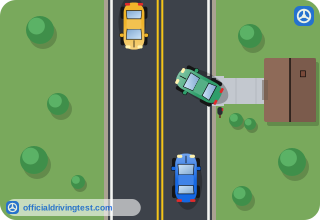
Why should you give extra room to drivers entering from intersections or driveways?
- They always stop for pedestrians first
- They are required by law to yield to you
- They are usually driving too slowly to be seen
- Their view may be blocked by buildings or trees
Show answer
Correct answer: Their view may be blocked by buildings or trees
The manual lists drivers entering from places where the view is blocked as drivers who may not see you.
Source: Idaho Driver's Handbook (July 2026), page 88 · Open this page in the manual (Manual page 88)
-
Which of the following is an example of a person who may be distracted by something they are doing, so you should allow extra room?
- Drivers who are parked with their engines turned off
- Drivers who are following the posted speed limit
- Tourists trying to figure out a complicated intersection
- Drivers who are using their turn signals properly
Show answer
Correct answer: Tourists trying to figure out a complicated intersection
Delivery and construction workers, children playing, tourists and drivers looking for a house number are listed as people who may be distracted.
Source: Idaho Driver's Handbook (July 2026), page 88 · Open this page in the manual (Manual page 88)
-
What should you do when another driver passes as you approach a curve, hill or oncoming car?
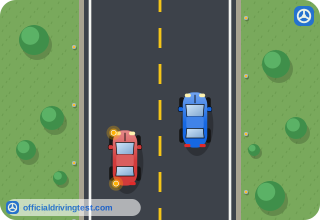
- Slow down and let them back into your lane quickly
- Speed up so that they cannot get back in front of you
- Stay beside them and sound your horn repeatedly
- Move onto the shoulder and come to a complete stop
Show answer
Correct answer: Slow down and let them back into your lane quickly
The manual says to slow down and let the passing driver back into your lane quickly.
Source: Idaho Driver's Handbook (July 2026), page 89 · Open this page in the manual (Manual page 89)
-
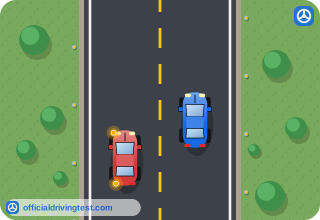
Which of the following does the manual say you should make room for?
- Only drivers who have signaled a lane change
- Only vehicles that are larger than your own
- Only drivers who have the right-of-way
- Any driver about to be forced into your lane
Show answer
Correct answer: Any driver about to be forced into your lane
Make room for any driver about to be forced into your lane by a car, pedestrian, bicyclist, obstacle, or a reduction in the number of lanes.
Source: Idaho Driver's Handbook (July 2026), page 89 · Open this page in the manual (Manual page 89)
-
What are blind spots?
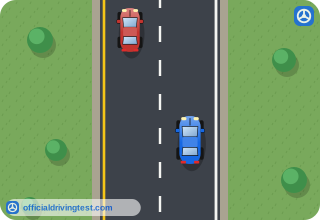
- Areas near your rear corners not seen in your mirrors
- Areas just in front of the hood of your vehicle
- Areas of the road hidden by fog or heavy rain
- Areas behind parked vehicles on the street
Show answer
Correct answer: Areas near your rear corners not seen in your mirrors
The manual defines blind spots as areas near the left and right rear corners of your vehicle that are not visible in your mirrors.
Source: Idaho Driver's Handbook (July 2026), page 90 · Open this page in the manual (Manual page 90)
-
If your vehicle does not have a right-side view mirror, how does the right blind spot compare with the left?
- The right one is larger
- The right one is smaller
- The right one disappears
- They are exactly the same
Show answer
Correct answer: The right one is larger
Without a right-side view mirror, the right blind spot will be larger than the one on the left.
Source: Idaho Driver's Handbook (July 2026), page 90 · Open this page in the manual (Manual page 90)
-
What does the manual say about driving in someone else's blind spot?
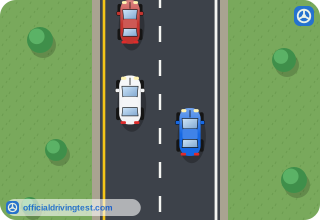
- Stay in it to stay out of the way
- Avoid it, so other drivers can see you
- Drive there only on freeways
- Drive there only at night
Show answer
Correct answer: Avoid it, so other drivers can see you
The manual says to avoid driving in someone else’s blind spot.
Source: Idaho Driver's Handbook (July 2026), page 90 · Open this page in the manual (Manual page 90)
-
According to the manual, what is the key to minimizing hazards when cars, trucks, motorcycles, bicyclists and pedestrians share the roadway?
- Being courteous, respecting others' rights and staying highly aware
- Driving faster than the other road users to clear the area
- Always letting larger vehicles go first at every crossing
- Relying on all other road users to avoid you
Show answer
Correct answer: Being courteous, respecting others' rights and staying highly aware
The key is being courteous and respectful of the rights of others and keeping a heightened awareness of potential problems.
Source: Idaho Driver's Handbook (July 2026), page 95 · Open this page in the manual (Manual page 95)
-
What should you do before getting into your vehicle in an area where children may be playing?
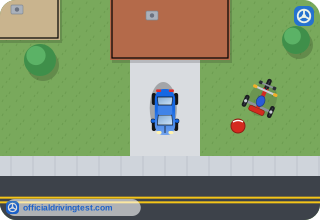
- Start the engine and sound the horn first
- Check only the mirrors once you are in the seat
- Walk around it to check for children near it
- Check only the area directly behind the vehicle
Show answer
Correct answer: Walk around it to check for children near it
You should walk around the vehicle to be sure no children are playing near it whom you cannot see from the driver's seat.
Source: Idaho Driver's Handbook (July 2026), page 97 · Open this page in the manual (Manual page 97)
-
What should you watch for when backing out of a driveway?
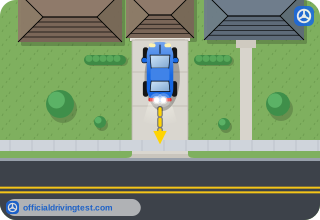
- Only vehicles approaching from the left
- Children who may run behind your vehicle
- Only pedestrians on the far side of the street
- Only parked cars across the street
Show answer
Correct answer: Children who may run behind your vehicle
When backing out of a driveway, you must watch for children who may run behind your vehicle.
Source: Idaho Driver's Handbook (July 2026), page 97 · Open this page in the manual (Manual page 97)
-
What is a common cause of serious injury to children near the roadway?
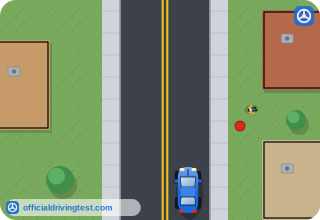
- Walking on the sidewalk next to a driveway
- Waiting at the curb for the light to change
- Playing in a yard that is far from the street
- Darting into traffic from between parked cars
Show answer
Correct answer: Darting into traffic from between parked cars
Darting into traffic from between or around a parked car is a common cause of serious injury to children.
Source: Idaho Driver's Handbook (July 2026), page 97 · Open this page in the manual (Manual page 97)
-
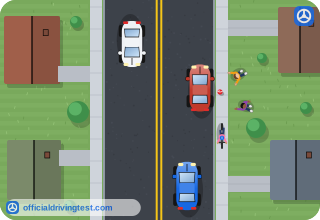
Why are children playing near parked cars hard for a driver to see?
- They usually wear dark clothing
- They stay in the shadow of the parked cars
- They are often too short to be seen easily
- They keep very still when a car approaches
Show answer
Correct answer: They are often too short to be seen easily
Children are often too short to be seen easily when playing near parked cars.
Source: Idaho Driver's Handbook (July 2026), page 97 · Open this page in the manual (Manual page 97)
-
When you see a child near the roadway, what should you remember about other children?
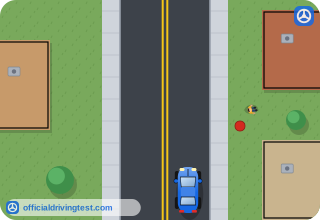
- They may have an unseen playmate who cannot see you
- Children never play in groups near the road
- Another child will always stay on the sidewalk
- Other children will wait for the driver to pass by
Show answer
Correct answer: They may have an unseen playmate who cannot see you
Use extra caution because a child may have an unseen playmate who cannot see you either.
Source: Idaho Driver's Handbook (July 2026), page 97 · Open this page in the manual (Manual page 97)
-
What rights and duties do people riding horses have on public roads?
- They have the right of way over every driver
- They may ignore traffic signals and signs
- They have fewer rights than drivers but need not follow the rules
- The same rights as motor vehicle drivers, and they must obey the same rules
Show answer
Correct answer: The same rights as motor vehicle drivers, and they must obey the same rules
Horseback riders may use most public roads, have the same rights as drivers and must obey the same rules.
Source: Idaho Driver's Handbook (July 2026), page 97 · Open this page in the manual (Manual page 97)
-
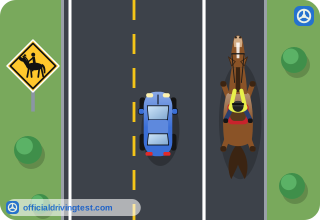
What should you do when approaching someone riding a horse?
- Pass closely and quickly to get by the rider
- Slow down and allow plenty of room
- Flash your headlights to warn the rider ahead
- Stay close behind until the rider comes to a stop
Show answer
Correct answer: Slow down and allow plenty of room
Slowing down and leaving plenty of room avoids frightening the animal.
Source: Idaho Driver's Handbook (July 2026), page 97 · Open this page in the manual (Manual page 97)
-
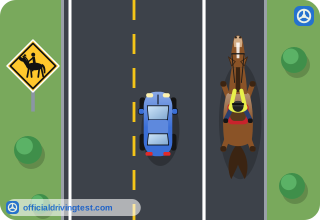
Why should you never sound your horn when passing a horse?
- The rider may think you are signaling to turn
- It may frighten the horse and cause an accident
- It is only allowed on freeways
- Horses are trained to ignore horns
Show answer
Correct answer: It may frighten the horse and cause an accident
The manual says never to sound your horn because you may frighten the horse and cause an accident.
Source: Idaho Driver's Handbook (July 2026), page 98 · Open this page in the manual (Manual page 98)
-
A horseback rider is having difficulty controlling the animal. What should you do?
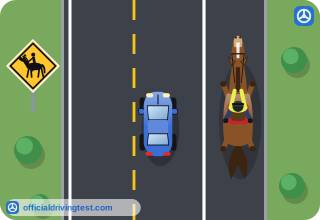
- Sound your horn to calm the animal down
- Drive past quickly to clear the area at once
- Follow closely behind the horse until it calms
- Use extreme caution going around, stopping if necessary
Show answer
Correct answer: Use extreme caution going around, stopping if necessary
Use extreme caution when going around the rider, and stop if necessary to avoid becoming part of the hazard.
Source: Idaho Driver's Handbook (July 2026), page 98 · Open this page in the manual (Manual page 98)
-
On which Idaho roadways are bicyclists legally allowed to ride?
- All Idaho roadways
- Only roadways that have bike lanes
- Only local streets with low traffic
- Only roadways that have paved shoulders
Show answer
Correct answer: All Idaho roadways
Bicyclists are legally allowed to ride on all Idaho roadways and have the same rights as drivers.
Source: Idaho Driver's Handbook (July 2026), page 98 · Open this page in the manual (Manual page 98)
-
In which direction relative to traffic are bicyclists required to ride?
- Against the flow of traffic
- Either direction on streets with no center line
- With the flow of traffic
- Against the flow of traffic when there is no sidewalk
Show answer
Correct answer: With the flow of traffic
Bicyclists are required to ride with the flow of traffic.
Source: Idaho Driver's Handbook (July 2026), page 98 · Open this page in the manual (Manual page 98)
-
When is a bicyclist NOT required to ride as close to the right-hand curb or edge as safety allows?
- When riding downhill
- When riding on a dry road
- When no vehicles are behind them
- When turning left
Show answer
Correct answer: When turning left
The exceptions are passing, turning left, avoiding an obstacle, or a roadway too narrow for a bicycle and motor vehicle to travel safely side by side.
Source: Idaho Driver's Handbook (July 2026), page 98 · Open this page in the manual (Manual page 98)
-
What should you do to increase the safety margin when passing a bicyclist?
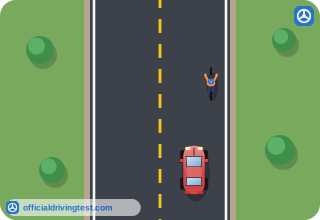
- Stay in your lane and sound your horn
- Move into the left lane if possible
- Pass as close as possible to get by quickly
- Drive on the shoulder to the right of the bicyclist
Show answer
Correct answer: Move into the left lane if possible
To increase the safety margin when passing a bicyclist, move into the left lane if possible.
Source: Idaho Driver's Handbook (July 2026), page 98 · Open this page in the manual (Manual page 98)
-
When you cannot change lanes to pass a bicyclist, what is a safe passing margin?
- At least one foot
- At least two feet
- At least three feet
- At least five feet
Show answer
Correct answer: At least three feet
If you cannot change lanes, pass with as much clearance as possible; a safe margin is at least three feet.
Source: Idaho Driver's Handbook (July 2026), page 98 · Open this page in the manual (Manual page 98)
-
What should you do when passing children on bicycles?
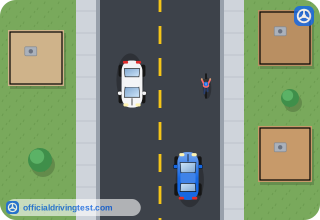
- Slow down; they may swerve into your lane
- Maintain speed because they ride on the right side
- Sound your horn to warn them that you are passing
- Pass as close as you can to keep out of traffic
Show answer
Correct answer: Slow down; they may swerve into your lane
Children on bicycles may unpredictably swerve into your lane, so you slow down when passing them.
Source: Idaho Driver's Handbook (July 2026), page 98 · Open this page in the manual (Manual page 98)
-
What are bicyclists in Idaho required to do at a stop sign?
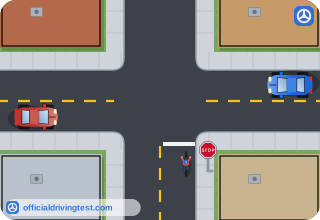
- Yield to vehicles at the intersection, then proceed with caution
- Come to a complete stop every single time
- Stop only when other traffic is directly behind them
- Proceed without yielding if the intersection looks clear
Show answer
Correct answer: Yield to vehicles at the intersection, then proceed with caution
Bicyclists need not come to a complete stop but must yield to the right-of-way of vehicles in or already at the intersection, then proceed with caution.
Source: Idaho Driver's Handbook (July 2026), page 98 · Open this page in the manual (Manual page 98)