Idaho: Right-of-way and turning — Part 3 Practice Test
Questions in this part include: “How does the manual describe the right-of-way?” · “As you approach a place where other cars, people or animals may cross your path, what should you not rely on?”
Independent educational site · not affiliated with any government agency or DMV
Ready? Test yourself
- Instant feedback with an explanation
- Every answer cites its source in the manual
- Your best score is saved on this device
Questions are original and based on the official manual "Idaho Driver's Handbook" (July 2026), Idaho Transportation Department.
All 16 questions in this practice test
Take the test above first, then use this list to study. Tap “Show answer” to see the correct answer and explanation.
Show the questions and answersHide the questions
-
How does the manual describe the right-of-way?
- Something that belongs to the faster driver
- Something that belongs to the larger vehicle
- Something the first driver to signal may claim
- Something to be given, not taken
Show answer
Correct answer: Something to be given, not taken
The manual says to always remember that right-of-way is something to be given, not taken.
Source: Idaho Driver's Handbook (July 2026), page 74 · Open this page in the manual (Manual page 74)
-
As you approach a yield sign, what should you always do?
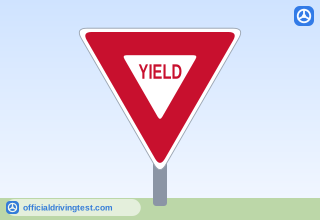
- Slow down and be prepared to stop
- Maintain your speed and sound the horn
- Speed up to get ahead of cross-traffic
- Pull onto the shoulder and wait
Show answer
Correct answer: Slow down and be prepared to stop
The manual says that approaching a yield sign you should always slow down and be prepared to stop.
Source: Idaho Driver's Handbook (July 2026), page 75 · Open this page in the manual (Manual page 75)
-
You stopped to enter a street from an alley, driveway, or garage. What must you do next?
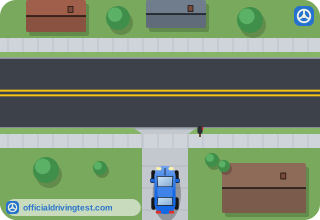
- Enter at once, since you have already stopped
- Sound your horn and then enter
- Yield to other drivers
- Enter if the street has fewer than two lanes
Show answer
Correct answer: Yield to other drivers
After stopping to enter a street from an alley, driveway, or garage, you must yield to other drivers.
Source: Idaho Driver's Handbook (July 2026), page 75 · Open this page in the manual (Manual page 75)
-
After stopping for a stop sign at a two-way stop, what must you do?
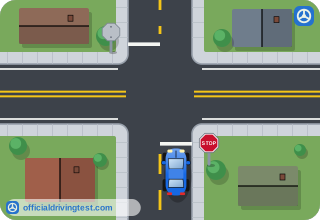
- Proceed, because you have already stopped
- Yield to cross-traffic
- Wait three seconds and then proceed
- Flash your headlights and proceed
Show answer
Correct answer: Yield to cross-traffic
After stopping at a two-way stop you must yield to cross-traffic.
Source: Idaho Driver's Handbook (July 2026), page 75 · Open this page in the manual (Manual page 75)
-
At a four-way stop, which vehicle has the right of way?
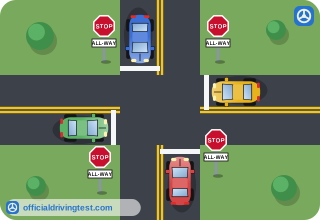
- The vehicle that is going straight
- The largest vehicle
- The vehicle on the left
- The first vehicle to arrive
Show answer
Correct answer: The first vehicle to arrive
The first vehicle to arrive at a four-way stop has the right of way.
Source: Idaho Driver's Handbook (July 2026), page 75 · Open this page in the manual (Manual page 75)
-
Two vehicles arrive at a four-way stop at the same time. Which one must yield?
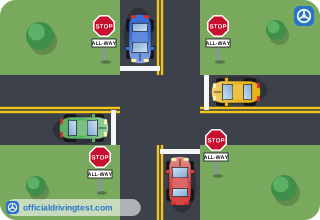
- The vehicle on the left
- The vehicle on the right
- The vehicle that is going straight
- The vehicle that is moving faster
Show answer
Correct answer: The vehicle on the left
If two vehicles arrive at the same time, the vehicle on the left must yield to the vehicle on the right.
Source: Idaho Driver's Handbook (July 2026), page 75 · Open this page in the manual (Manual page 75)
-
At an unmarked intersection with no signs or signals, you arrive at the same time as a vehicle on your right. What must you do?
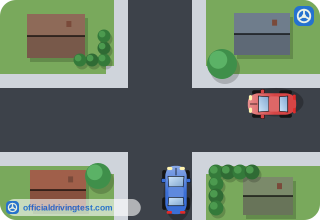
- Go first, since you are on the left
- Go first if you signal
- Yield to that vehicle
- Speed up to clear the intersection
Show answer
Correct answer: Yield to that vehicle
At an uncontrolled intersection, if two vehicles arrive at the same time, the vehicle on the left must yield to the vehicle on the right.
Source: Idaho Driver's Handbook (July 2026), page 75 · Open this page in the manual (Manual page 75)
-
At an unmarked three-way T intersection where you will have to turn either right or left, what must you do?
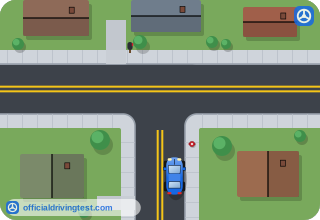
- Yield only to vehicles approaching from your left side
- Stop and/or yield to drivers from the other two directions
- Go first, because you are the one turning at the T
- Yield only to oncoming vehicles from straight ahead
Show answer
Correct answer: Stop and/or yield to drivers from the other two directions
At an unmarked three-way T intersection you must stop and/or yield to any drivers approaching from the other two directions.
Source: Idaho Driver's Handbook (July 2026), page 75 · Open this page in the manual (Manual page 75)
-
When making a left turn, what must you always yield to, unless a traffic-control device directs otherwise?
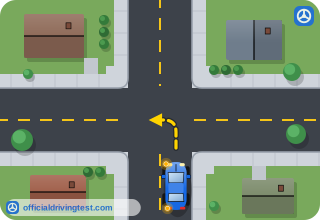
- Vehicles approaching from behind you
- Only vehicles that are also turning
- Vehicles parked at the curb
- Oncoming traffic in the intersection
Show answer
Correct answer: Oncoming traffic in the intersection
When making a left turn, always yield to oncoming traffic in the intersection unless directed otherwise by a traffic-control device.
Source: Idaho Driver's Handbook (July 2026), page 76 · Open this page in the manual (Manual page 76)
-
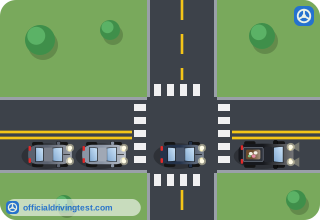
A funeral procession is proceeding through an intersection and your light is green. What must you do?
- Enter, because a green light gives you the right of way
- Enter by driving between the vehicles
- Enter after sounding your horn
- Not enter unless you can do so without crossing its path
Show answer
Correct answer: Not enter unless you can do so without crossing its path
You may not enter an intersection when the procession is proceeding through, regardless of the traffic light color, unless you can do so without crossing its path.
Source: Idaho Driver's Handbook (July 2026), page 78 · Open this page in the manual (Manual page 78)
-
As you approach a place where other cars, people or animals may cross your path, what should you not rely on?
- Your mirrors on the left side
- Your headlights in the daytime
- Your owner's manual instructions
- Traffic lights or stop signs
Show answer
Correct answer: Traffic lights or stop signs
The manual says to look to both sides and not to rely on traffic lights or stop signs.
Source: Idaho Driver's Handbook (July 2026), page 89 · Open this page in the manual (Manual page 89)
-
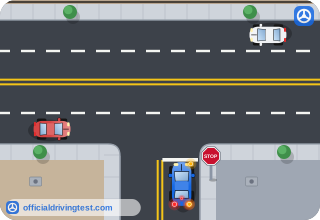
You are stopped and about to turn right. Which way should you check first?
- Right first, then left and rear
- Only to the left, since traffic comes from there
- Only to the rear, since bicyclists come from behind
- Left first, then right, ignoring the rear
Show answer
Correct answer: Right first, then left and rear
Always look left, right and to the rear, checking the right first, because a bicyclist riding against traffic or on the sidewalk may be approaching on your right.
Source: Idaho Driver's Handbook (July 2026), page 99 · Open this page in the manual (Manual page 99)
-
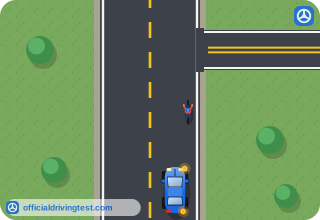
A bicyclist is ahead of you and you are preparing to turn right. How do you avoid a "right hook" crash?
- Speed up and turn before the bicyclist reaches the turn
- Sound your horn and turn ahead of the bicyclist
- Move alongside the bicyclist and turn right together
- Slow and stay behind the bicyclist until they pass your turn
Show answer
Correct answer: Slow and stay behind the bicyclist until they pass your turn
Do not assume you can beat the bicyclist to the turn; slow and remain behind until they pass the point where you will turn.
Source: Idaho Driver's Handbook (July 2026), page 99 · Open this page in the manual (Manual page 99)
-
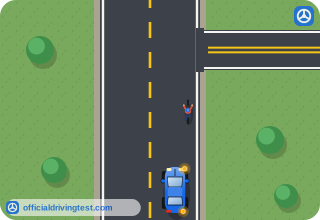
What is the broadside crash caused by misjudging a right turn ahead of a bicyclist called?
- A left cross
- A right hook
- A door crash
- A side swipe
Show answer
Correct answer: A right hook
The manual calls this broadside crash a right hook.
Source: Idaho Driver's Handbook (July 2026), page 99 · Open this page in the manual (Manual page 99)
-
What should you remember when making a right turn across a bike lane?
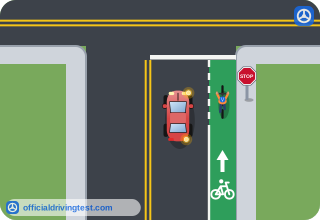
- Bicyclists must yield to turning vehicles
- You are turning across a dedicated travel lane
- The bike lane is part of your own travel lane
- Bicyclists will always be on the sidewalk
Show answer
Correct answer: You are turning across a dedicated travel lane
On streets with bike lanes you are turning across a dedicated travel lane, so always look for and expect bicyclists.
Source: Idaho Driver's Handbook (July 2026), page 99 · Open this page in the manual (Manual page 99)
-
When turning right at an intersection where the bike lane lines are dashed, what may you do with the bike lane?
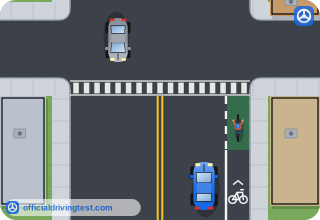
- Never enter it before the corner
- Park in it while waiting for the light
- Occupy it in the dashed line area
- Pass bicyclists on their right inside it
Show answer
Correct answer: Occupy it in the dashed line area
You may occupy the bike lane in the dashed line area, which prevents bicyclists from approaching along your right side.
Source: Idaho Driver's Handbook (July 2026), page 100 · Open this page in the manual (Manual page 100)