Florida: Road signs — Part 1 Practice Test
Questions in this part include: “What do Blue and White Service Signs direct drivers to?”
Independent educational site · not affiliated with any government agency or DMV
Ready? Test yourself
Answer to start, or tap Start below:
What do Blue and White Service Signs direct drivers to?
- Instant feedback with an explanation
- Every answer cites its source in the manual
- Your best score is saved on this device
- Keyboard: press 1 to 4 to answer and Enter for the next question
Questions are original and based on the official manual "Florida Driver License Handbook" (Revised August 2023), Florida Department of Highway Safety and Motor Vehicles (FLHSMV).
Did you know?
- Florida's handbook has a dedicated "Move Over Law" — drivers must slow down and, when possible, move over a lane for any stopped law enforcement, emergency, sanitation, utility, or tow/wrecker vehicle with its lights flashing.
More background reading from the manual →
All 21 questions in this practice test
Take the test above first, then use this list to study. Tap “Show answer” to see the correct answer and explanation.
Show the questions and answersHide the questions
-
On Green Guide Signs, how are highway route numbers typically assigned?
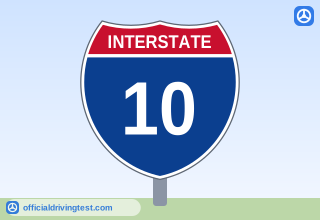
- Route numbers indicate the posted speed limit
- All routes are numbered sequentially regardless of direction
- East-West routes have even numbers, and North-South routes have odd numbers
- East-West routes have odd numbers, and North-South routes have even numbers
Show answer
Correct answer: East-West routes have even numbers, and North-South routes have odd numbers
Green Guide Signs give information about directions and distances; East-West routes have even numbers and North-South routes have odd numbers.
Source: Florida Driver License Handbook (Revised August 2023), page 46
-
In Florida, what do mile markers on an interstate indicate?
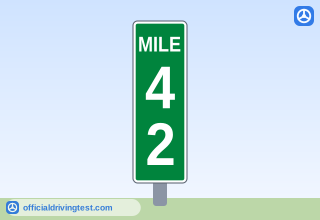
- The number of travel lanes ahead
- Your location on the interstate, and they match with exit numbers
- The distance to the nearest hospital
- The posted speed limit for that section
Show answer
Correct answer: Your location on the interstate, and they match with exit numbers
In Florida, mile markers indicate your location on an interstate, and they match with exit numbers.
Source: Florida Driver License Handbook (Revised August 2023), page 46
-
What do Blue and White Service Signs direct drivers to?
- Gas, food, motels, and hospitals
- School and pedestrian zones
- Scenic areas and parks
- Construction zones
Show answer
Correct answer: Gas, food, motels, and hospitals
Blue and White Service Signs direct drivers to services, such as gas, food, motels, and hospitals.
Source: Florida Driver License Handbook (Revised August 2023), page 46
-
What do Brown and White Signs direct drivers to?
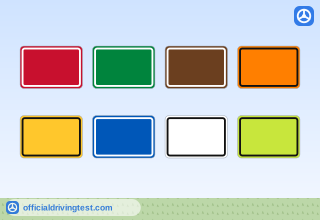
- Construction and maintenance zones
- Areas with school and pedestrian activity
- Scenic areas, parks, and cultural or historical sites
- Services such as gas, food, motels, and hospitals
Show answer
Correct answer: Scenic areas, parks, and cultural or historical sites
Brown and White Signs direct drivers to scenic areas, parks, and areas of cultural and historical significance.
Source: Florida Driver License Handbook (Revised August 2023), page 46
-
What is the purpose of regulatory signs in Florida?
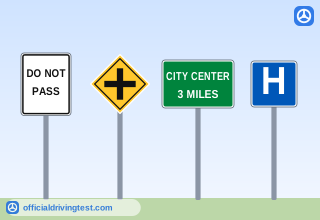
- They are normally yellow and diamond-shaped to warn of road conditions ahead
- They only provide friendly suggestions that drivers may choose to ignore
- They are used only to mark construction zones
- They control traffic, set limits or instruct drivers, and are enforceable by law
Show answer
Correct answer: They control traffic, set limits or instruct drivers, and are enforceable by law
Regulatory signs set legal limits and instructions for drivers and are enforceable by law, unlike yellow diamond-shaped warning signs, which merely alert drivers to conditions ahead.
Source: Florida Driver License Handbook (Revised August 2023), page 47
-
When you approach a Stop Sign, what must you do?
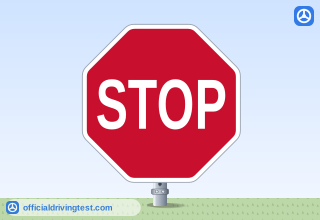
- Yield to crossing traffic and continue without stopping if the way is clear
- Stop only if other vehicles are present at the intersection
- Stop completely before the stop line or, if none, the crosswalk or intersection
- Slow down and proceed if the way looks clear
Show answer
Correct answer: Stop completely before the stop line or, if none, the crosswalk or intersection
A Stop Sign requires a complete stop before the stop line, or if none exists, before the crosswalk or intersection, at a point with a clear view of approaching traffic.
Source: Florida Driver License Handbook (Revised August 2023), page 47
-
At an All Way Stop intersection, how should vehicles proceed?
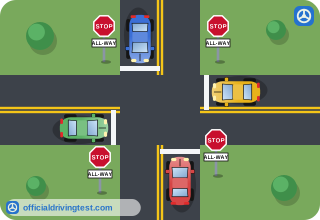
- Only the vehicle going straight has the right-of-way
- Vehicles turning left always proceed first
- All vehicles stop and proceed in the order they arrived
- The largest vehicle always goes first
Show answer
Correct answer: All vehicles stop and proceed in the order they arrived
At an All Way Stop, traffic in every direction stops, and vehicles go in arrival order; if two arrive together, the driver yields to the vehicle on their right.
Source: Florida Driver License Handbook (Revised August 2023), page 47
-
What must you do at a Yield sign?
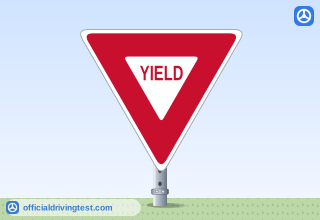
- Slow down and give crossing vehicles the right-of-way
- Speed up to merge quickly with crossing traffic
- Come to a complete stop regardless of traffic
- Wait for a green light before proceeding
Show answer
Correct answer: Slow down and give crossing vehicles the right-of-way
A Yield sign means slow down and give right-of-way to crossing vehicles; you may proceed slowly without a full stop if the way is clear.
Source: Florida Driver License Handbook (Revised August 2023), page 47
-
Where would you typically see a Do Not Enter sign?
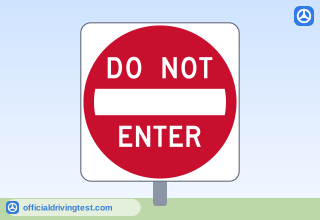
- At the entrance to a parking garage only
- At all intersections with traffic signals
- On one-way streets and roads you may not enter
- Only on interstate highway on-ramps
Show answer
Correct answer: On one-way streets and roads you may not enter
The Do Not Enter sign is posted on one-way streets and roadways where entry is prohibited.
Source: Florida Driver License Handbook (Revised August 2023), page 47
-
If you see a Wrong Way sign, what does it mean and what should you do?
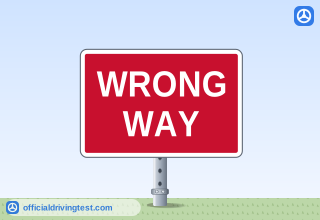
- It means the road is closed ahead; find an alternate route
- It means you have entered a construction zone; proceed with caution
- It means you are going the wrong way; you should turn around immediately
- It means a curve is ahead; slow down
Show answer
Correct answer: It means you are going the wrong way; you should turn around immediately
A Wrong Way sign tells you that you are traveling the wrong way and you must turn around immediately.
Source: Florida Driver License Handbook (Revised August 2023), page 47
-
What does a red circle with a red slash through it (the NO symbol) indicate?
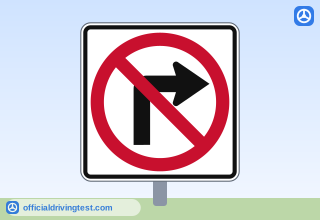
- It shows what you are not allowed to do
- It marks a hospital zone
- It marks a restricted parking permit zone only
- It indicates a school crossing
Show answer
Correct answer: It shows what you are not allowed to do
The NO symbol is a red circle with a red slash; the sign shows what you are not allowed to do.
Source: Florida Driver License Handbook (Revised August 2023), page 47
-
What does a Speed Limit sign require of drivers?
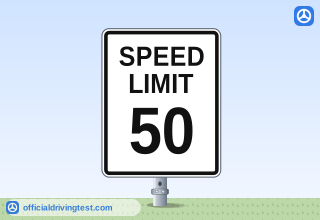
- Your speed must not exceed the posted speed in that area
- The posted speed only applies to trucks
- You must always drive at exactly the posted speed
- You may exceed the posted speed if traffic allows
Show answer
Correct answer: Your speed must not exceed the posted speed in that area
A Speed Limit sign means your speed must not exceed the posted speed for that area.
Source: Florida Driver License Handbook (Revised August 2023), page 47
-
What information does an Exit Speed sign provide?
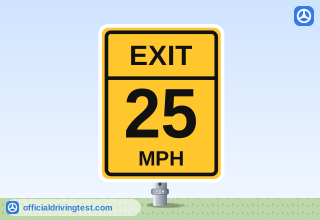
- The speed limit for the entire expressway
- The distance remaining to the next exit
- The minimum speed required to merge onto the expressway
- The maximum safe speed for an exit ramp on an expressway
Show answer
Correct answer: The maximum safe speed for an exit ramp on an expressway
The Exit Speed sign lists the maximum safe speed for an expressway exit ramp, and drivers should slow to that posted speed.
Source: Florida Driver License Handbook (Revised August 2023), page 47
-
Where are Speeding Fines Doubled signs posted, and what do they mean?
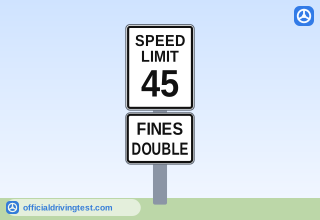
- They are posted in active school and work zones, where speeding fines double
- They are posted on truck routes and apply only to commercial trucks
- They are posted only on interstate highways during holidays
- They are posted at all four-way stop intersections
Show answer
Correct answer: They are posted in active school and work zones, where speeding fines double
Speeding Fines Doubled signs are posted in active school and work zones, warning that speeding fines double in that area.
Source: Florida Driver License Handbook (Revised August 2023), page 47
-
At an intersection ahead, a Turn Lanes sign shows an arrow pointing left for the left lane and arrows pointing left and straight for the adjoining lane. What does this mean?
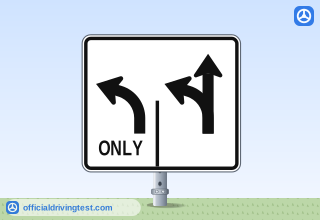
- The left lane must turn left, and the adjoining lane may turn left or go straight
- The left lane must turn right, and the adjoining lane must turn left
- Both lanes must continue straight ahead; no turns are permitted
- All traffic in both lanes must turn left
Show answer
Correct answer: The left lane must turn left, and the adjoining lane may turn left or go straight
This regulatory Turn Lanes sign directs left-lane traffic to turn left, while the adjoining lane may turn left or go straight.
Source: Florida Driver License Handbook (Revised August 2023), page 47
-
What does a Center Turn Lane sign indicate about the center lane?
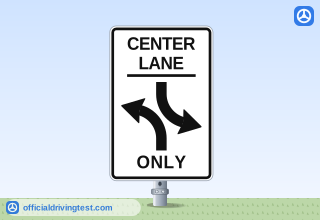
- It is reserved exclusively for emergency vehicles
- It is a shared lane that allows left turns in both directions of travel
- It may only be used by buses and carpool vehicles during rush hour
- It is for parking only and vehicles must not drive through it
Show answer
Correct answer: It is a shared lane that allows left turns in both directions of travel
The Center Turn Lane is a shared lane in the middle of the road that allows drivers traveling in both directions to make left turns.
Source: Florida Driver License Handbook (Revised August 2023), page 47
-
What does a Left Lane Must Turn sign mean?
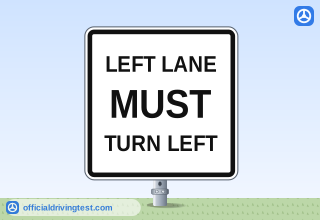
- Traffic in the left lane must come to a complete stop
- Traffic in the left lane must merge into the right lane before the intersection
- Traffic in the left lane may either turn left or continue straight
- Traffic in the left lane must turn left at the intersection ahead
Show answer
Correct answer: Traffic in the left lane must turn left at the intersection ahead
A Left Lane Must Turn sign requires traffic in that lane to turn left at the upcoming intersection (a Right Lane Must Turn sign works the same way for the right lane).
Source: Florida Driver License Handbook (Revised August 2023), page 47
-
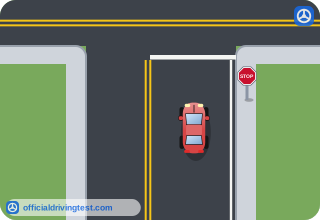
When entering a right turn lane marked with a Begin Right Turn Lane sign, what must you watch for?
- Trains crossing the roadway ahead
- Oncoming vehicles turning left across your path
- Bicyclists traveling straight, to whom you must yield
- Pedestrians only, since bicyclists are not permitted in this area
Show answer
Correct answer: Bicyclists traveling straight, to whom you must yield
A Begin Right Turn Lane sign warns that you may encounter bicyclists traveling straight through the area, and you must yield to them.
Source: Florida Driver License Handbook (Revised August 2023), page 47
-
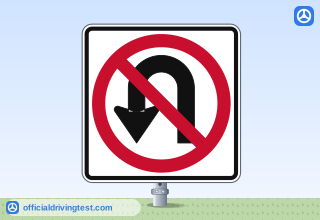
What does a No U-Turn sign prohibit?
- Continuing straight through the intersection
- Turning right or left during a red light
- Turning right or left at the intersection
- Making a complete turn to go in the opposite direction
Show answer
Correct answer: Making a complete turn to go in the opposite direction
A No U-Turn sign means you must not make a complete turn to travel in the opposite direction.
Source: Florida Driver License Handbook (Revised August 2023), page 48
-
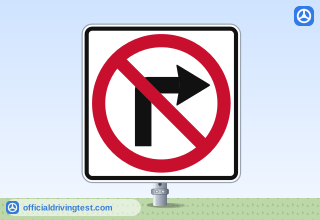
What does a No Right Turn sign mean at an intersection?
- You must not make a U-turn at this intersection
- You must not turn right only during a red light, but may turn right on green
- You must turn right at this intersection; you cannot continue straight
- You must not make a right turn at this intersection
Show answer
Correct answer: You must not make a right turn at this intersection
A No Right Turn sign means you must not turn right at that intersection (a No Left Turn sign works the same way for left turns).
Source: Florida Driver License Handbook (Revised August 2023), page 48
-
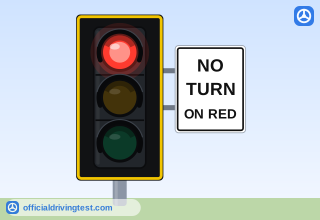
What does a No Turn on Red sign require?
- You must not turn right or left during the red light; wait for the green signal
- Turning is permitted on red as long as no pedestrians are present
- You must make a U-turn instead of waiting at the red light
- You may turn right on red after coming to a complete stop, but not left
Show answer
Correct answer: You must not turn right or left during the red light; wait for the green signal
A No Turn on Red sign means you must not turn right or left during the red light and must wait for the green signal.
Source: Florida Driver License Handbook (Revised August 2023), page 48