Delaware: Sharing the road — Part 3 Practice Test
Questions in this part include: “At night, how far away must the white headlight on a bicycle be visible?” · “What does the manual say a cyclist must not do while on the highway?”
Independent educational site · not affiliated with any government agency or DMV
Ready? Test yourself
- Instant feedback with an explanation
- Every answer cites its source in the manual
- Your best score is saved on this device
Questions are original and based on the official manual "Delaware Driver Manual" (July 2026), Delaware Division of Motor Vehicles (DMV).
All 20 questions in this practice test
Take the test above first, then use this list to study. Tap “Show answer” to see the correct answer and explanation.
Show the questions and answersHide the questions
-
At night, how far away must the white headlight on a bicycle be visible?
- 100 feet
- 300 feet
- 600 feet
- 500 feet
Show answer
Correct answer: 500 feet
A cyclist must not ride at night unless the white headlight is visible for 500 feet.
Source: Delaware Driver Manual (July 2026), page 98 · Open this page in the manual (Manual page 98)
-
At night, how far away must the red rear reflector on a bicycle be visible?
- 600 feet
- 200 feet
- 300 feet
- 500 feet
Show answer
Correct answer: 600 feet
The required red rear reflector must be visible for 600 feet.
Source: Delaware Driver Manual (July 2026), page 98 · Open this page in the manual (Manual page 98)
-
For night riding, what is required in addition to the white headlight and the red rear reflector?
- Reflective material or a lighted lamp, visible from the front only
- A reflector on the rear wheel only, visible from behind
- Reflective material or a lighted lamp, visible from both sides
- A flag or lamp on the rear that is visible from behind only
Show answer
Correct answer: Reflective material or a lighted lamp, visible from both sides
Night riding also needs either reflective material visible from both sides for 600 feet or a lighted lamp visible from both sides for 500 feet.
Source: Delaware Driver Manual (July 2026), page 98 · Open this page in the manual (Manual page 98)
-
While riding a bicycle, where must you be seated?
- On the handle bars
- On or astride a permanent seat
- Standing on the pedals at all times
- Seated behind the rider ahead
Show answer
Correct answer: On or astride a permanent seat
Cyclists must be on or astride a permanent seat.
Source: Delaware Driver Manual (July 2026), page 98 · Open this page in the manual (Manual page 98)
-
When may a cyclist carry a passenger?
- Only on roads that have a marked bike lane or cycle track
- Only during daylight hours when the road is dry
- Only if the passenger wears a properly fitted helmet
- Only if the bicycle is designed for carrying a passenger
Show answer
Correct answer: Only if the bicycle is designed for carrying a passenger
You may not carry a passenger unless your bicycle is designed for carrying a passenger.
Source: Delaware Driver Manual (July 2026), page 98 · Open this page in the manual (Manual page 98)
-
What does the manual say a cyclist must not do while on the highway?
- Cling to any vehicle
- Ride in a bike lane
- Use hand signals
- Ride in the right side of the lane
Show answer
Correct answer: Cling to any vehicle
A cyclist must not cling to any vehicle upon the highway.
Source: Delaware Driver Manual (July 2026), page 98 · Open this page in the manual (Manual page 98)
-
How many hands must a cyclist keep on the handle bars?
- Both hands at all times
- Both hands except when signaling a stop
- At least one hand at all times
- No hands are required on a straight road
Show answer
Correct answer: At least one hand at all times
A cyclist must keep at least one hand on the handle bars at all times.
Source: Delaware Driver Manual (July 2026), page 98 · Open this page in the manual (Manual page 98)
-
What must a cyclist do when approaching a pedestrian on a sidewalk or in a crosswalk?
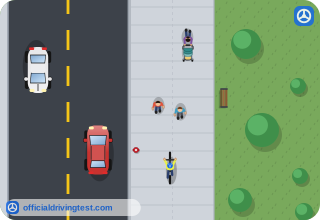
- Ride past quickly and avoid giving the pedestrian any signal
- Yield to the pedestrian and give an audible signal before overtaking
- Stop and wait until the pedestrian waves you through the area
- Use hand signals only, then pass on the left of the pedestrian
Show answer
Correct answer: Yield to the pedestrian and give an audible signal before overtaking
A cyclist must yield to pedestrians on a sidewalk and in a crosswalk and give an audible signal before overtaking.
Source: Delaware Driver Manual (July 2026), page 98 · Open this page in the manual (Manual page 98)
-
What kind of headset is a cyclist not allowed to wear?
- A headset covering one ear
- Any headset with a microphone
- A headset with a volume control
- A headset covering both ears
Show answer
Correct answer: A headset covering both ears
A cyclist must not wear a headset covering both ears.
Source: Delaware Driver Manual (July 2026), page 98 · Open this page in the manual (Manual page 98)
-
Who must wear a properly fitted and fastened bicycle helmet?
- All persons under the age of 18
- Only children under 12
- Only riders on roads with 3 or more lanes
- Only riders at night
Show answer
Correct answer: All persons under the age of 18
All persons under the age of 18 must wear a properly fitted and fastened bicycle helmet.
Source: Delaware Driver Manual (July 2026), page 99 · Open this page in the manual (Manual page 99)
-
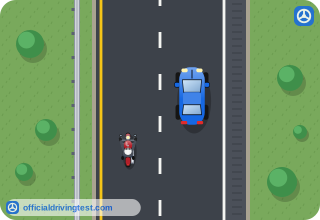
What should a driver check frequently to make sure a motorcycle is not present?
- Sound the horn
- Flash the high beams
- Check the blind spot
- Slow to ten miles per hour
Show answer
Correct answer: Check the blind spot
The manual says to remain alert and check your blind spot frequently for motorcycles.
Source: Delaware Driver Manual (July 2026), page 99 · Open this page in the manual (Manual page 99)
-
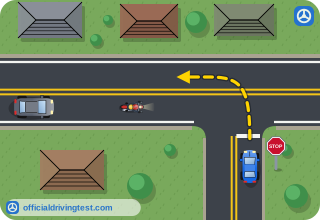
When do you need to be especially alert for motorcycles?
- Only when you are driving on limited access highways at night or in rain
- When turning at intersections and pulling out from a side road or driveway
- Only on roads that have a marked bike lane or a cycle track nearby
- Only when you are driving a truck or a bus on a local street
Show answer
Correct answer: When turning at intersections and pulling out from a side road or driveway
The manual says to be especially alert for motorcycles when turning at intersections and pulling out from a side road or driveway.
Source: Delaware Driver Manual (July 2026), page 99 · Open this page in the manual (Manual page 99)
-
What rights and responsibilities do motorcyclists have on public roadways?
- Fewer rights than car drivers
- More rights than other highway users
- Rights only on limited access highways
- The same as other highway users
Show answer
Correct answer: The same as other highway users
Motorcyclists have the same rights and responsibilities on public roadways as other highway users.
Source: Delaware Driver Manual (July 2026), page 99 · Open this page in the manual (Manual page 99)
-
Why is it so important to be aware of motorcycles?
- Motorcycles are not easily identified in traffic
- Motorcycles are always the fastest vehicles
- Motorcycles have no right to use the lane
- Motorcycles make no noise
Show answer
Correct answer: Motorcycles are not easily identified in traffic
The manual says awareness is important primarily because motorcycles are not easily identified in traffic.
Source: Delaware Driver Manual (July 2026), page 99 · Open this page in the manual (Manual page 99)
-
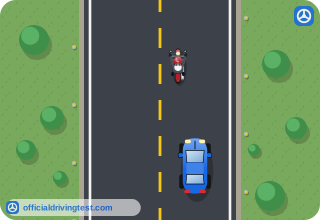
About how wide is a motorcycle compared with an automobile, according to the manual?
- About four feet, compared with an automobile that is eight feet wide
- About three feet, compared with an automobile that is six feet wide
- About two feet, compared with the five- to six-foot width of an automobile
- About one foot, compared with an automobile that is four feet wide
Show answer
Correct answer: About two feet, compared with the five- to six-foot width of an automobile
Motorcycles are only about two feet wide, compared with the five- to six-foot width of an automobile.
Source: Delaware Driver Manual (July 2026), page 99 · Open this page in the manual (Manual page 99)
-
Even when a motorcycle is seen, what is difficult for some drivers?
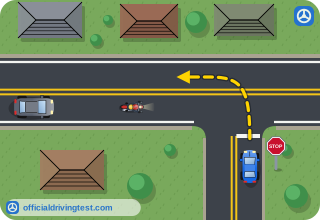
- Hearing the motorcycle's engine
- Judging how far away the motorcyclist is
- Recognizing that it is a vehicle
- Knowing that it has the right-of-way
Show answer
Correct answer: Judging how far away the motorcyclist is
The manual says it is difficult for some drivers to judge how far away motorcyclists are.
Source: Delaware Driver Manual (July 2026), page 99 · Open this page in the manual (Manual page 99)
-
Even when a motorcycle is seen and its distance judged correctly, what can some drivers not tell?
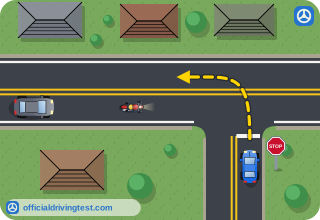
- Whether it is a motorcycle or a moped
- Which lane it is using
- Whether it is about to stop
- How fast the motorcycle is going
Show answer
Correct answer: How fast the motorcycle is going
The manual says some drivers can't tell how fast motorcycles are going.
Source: Delaware Driver Manual (July 2026), page 99 · Open this page in the manual (Manual page 99)
-
When you plan a left turn in front of an oncoming motorcyclist, what does the manual say the correct behavior is?
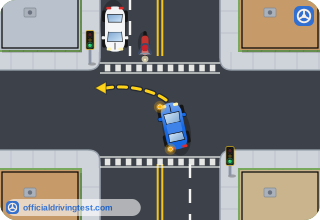
- Look and look again
- Turn quickly before the rider arrives
- Assume the rider will slow down for you
- Flash your headlights to warn the rider
Show answer
Correct answer: Look and look again
The manual says left turns in front of oncoming motorcycles cause many injury crashes, so drivers must look and look again.
Source: Delaware Driver Manual (July 2026), page 100 · Open this page in the manual (Manual page 100)
-
Which is one of the two parts of the problem of not seeing an oncoming motorcyclist before a left turn?
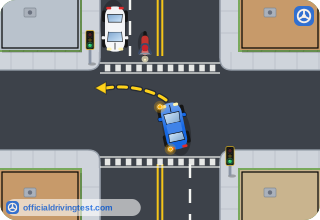
- Drivers may fail to hear the engine of the motorcycle
- Riders may fail to signal a turn in front of the driver
- Drivers may fail to judge the speed of the oncoming motorcycle
- Drivers may fail to notice the helmet of the motorcyclist
Show answer
Correct answer: Drivers may fail to judge the speed of the oncoming motorcycle
The manual says the problem is twofold: drivers may not pick the cyclist out of the traffic scene, or may not judge the oncoming motorcycle's speed.
Source: Delaware Driver Manual (July 2026), page 100 · Open this page in the manual (Manual page 100)
-
Before you turn in front of a motorcyclist whose turn signal is blinking, what should you be sure of?
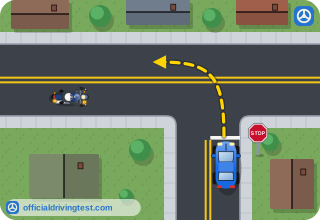
- That the rider has seen your vehicle and will stop for you
- That the rider is turning and not continuing straight with a forgotten signal
- That the rider will cancel the signal automatically before the turn
- That the rider is traveling slower than the posted speed limit
Show answer
Correct answer: That the rider is turning and not continuing straight with a forgotten signal
Turn signals are not automatically self-canceling on most motorcycles, so a blinking signal may have been forgotten.
Source: Delaware Driver Manual (July 2026), page 100 · Open this page in the manual (Manual page 100)