Delaware: Seat belts and child safety
The Delaware seat belt law and the child restraint rules for car seats and booster seats. Split into 3 shorter tests so you're not stuck in one long quiz.
Independent educational site · not affiliated with any government agency or DMV
Choose a part
Seat belts and child safety — Part 1
Questions in this part include: “Under the Level One Learner’s Permit restrictions, who must wear a safety belt while the vehicle is in motion?”
StartSeat belts and child safety — Part 2
Questions in this part include: “What does it mean that the child seatbelt law is a primary enforcement law?”
StartSeat belts and child safety — Part 3
Questions in this part include: “Where should a car seat's chest clip sit?”
StartAll 50 Seat belts and child safety questions with answers
Choose a part above to take a practice test, or study every question and answer here.
Show the questions and answersHide the questions
-
Under the Level One Learner’s Permit restrictions, who must wear a safety belt while the vehicle is in motion?
- The permit holder only
- The permit holder and the front-seat passenger only
- The permit holder and passengers under age 16 only
- The permit holder and all passengers
Show answer
Correct answer: The permit holder and all passengers
The permit holder and all passengers must wear a safety belt or be secured in a child safety seat or booster seat.
Source: Delaware Driver Manual (July 2026), page 29 · Open this page in the manual (Manual page 29)
-
Seat belts must be installed for all front seat occupants in passenger cars manufactured after which date?
- July 1, 1968
- January 1, 1971
- July 1, 1971
- January 1, 1968
Show answer
Correct answer: January 1, 1968
The manual requires seat belts for front seat occupants in passenger cars manufactured after January 1, 1968.
Source: Delaware Driver Manual (July 2026), page 61 · Open this page in the manual (Manual page 61)
-
Trucks, buses and multi-passenger vehicles must have seat belts installed if they were manufactured after which date?
- July 1, 1971
- January 1, 1968
- July 1, 1968
- January 1, 1975
Show answer
Correct answer: July 1, 1971
Trucks, buses and multi-passenger vehicles manufactured after July 1, 1971 require installed seat belts.
Source: Delaware Driver Manual (July 2026), page 61 · Open this page in the manual (Manual page 61)
-
Who receives the ticket for an unrestrained or improperly restrained vehicle occupant?
- The unrestrained occupant
- The vehicle owner
- The occupant's parent only
- The driver of the vehicle
Show answer
Correct answer: The driver of the vehicle
The driver of the vehicle receives a ticket for any unrestrained or improperly restrained vehicle occupants.
Source: Delaware Driver Manual (July 2026), page 63 · Open this page in the manual (Manual page 63)
-
What may officers do if they see unbuckled occupants inside a vehicle?
- Pull over the vehicle
- Only issue a warning letter
- Wait until the vehicle is parked
- Nothing unless another violation occurs
Show answer
Correct answer: Pull over the vehicle
Officers may pull over a vehicle if they see unbuckled occupants inside.
Source: Delaware Driver Manual (July 2026), page 63 · Open this page in the manual (Manual page 63)
-
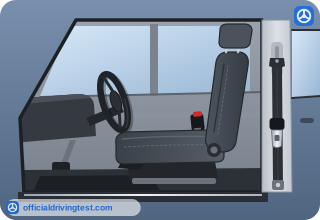
Who must be properly restrained in a seatbelt or child safety seat under Delaware law?
- Only front seat occupants
- Only the driver and children
- All occupants of a vehicle
- Only occupants under 18
Show answer
Correct answer: All occupants of a vehicle
Delaware law requires all occupants of a vehicle to be properly restrained in a seatbelt or child safety seat.
Source: Delaware Driver Manual (July 2026), page 63 · Open this page in the manual (Manual page 63)
-
Under Delaware law, who must wear seatbelts in a motor vehicle?
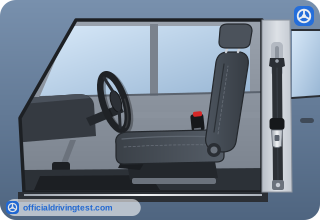
- All occupants of a motor vehicle
- Only the driver and front-seat passengers
- Only occupants under age 16
- Only drivers who are under age 21
Show answer
Correct answer: All occupants of a motor vehicle
The manual says Delaware law requires all occupants of a motor vehicle to wear seatbelts.
Source: Delaware Driver Manual (July 2026), page 108 · Open this page in the manual (Manual page 108)
-
For what seatbelt-related reason may a law enforcement officer pull a vehicle over?
- Only when the driver is also breaking another traffic law
- A seat belt that is dirty or worn at the edges
- An unrestrained or improperly restrained occupant inside
- An occupant who is not sitting upright
Show answer
Correct answer: An unrestrained or improperly restrained occupant inside
The manual says an officer may pull a vehicle over if they see an unrestrained or improperly restrained occupant.
Source: Delaware Driver Manual (July 2026), page 108 · Open this page in the manual (Manual page 108)
-
What can happen if you put the shoulder belt under your arm or behind you?
- It is allowed if you are sitting in the back seat
- It can cause serious injury and could result in a ticket
- It is allowed when the vehicle has air bags
- Nothing, as long as the lap belt is fastened
Show answer
Correct answer: It can cause serious injury and could result in a ticket
The manual says this can result in serious injury and is not proper safety belt use, so it could result in a ticket.
Source: Delaware Driver Manual (July 2026), page 108 · Open this page in the manual (Manual page 108)
-
If your vehicle has an automatic shoulder belt, what else must you do?
- Nothing more, the shoulder belt is enough
- Move the seat back as far as it goes
- Wear the shoulder belt under your arm
- Buckle your lap belt as well
Show answer
Correct answer: Buckle your lap belt as well
The manual says to buckle the lap belt as well, or you could slide out of the belt in a collision.
Source: Delaware Driver Manual (July 2026), page 108 · Open this page in the manual (Manual page 108)
-
How does wearing only the lap belt or only the shoulder belt affect your protection?
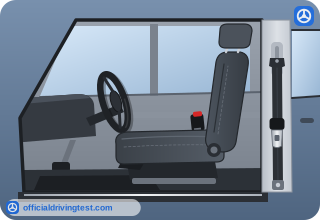
- It greatly reduces your protection
- It gives you almost the same protection
- It protects you fully at low speeds
- It only matters at highway speeds
Show answer
Correct answer: It greatly reduces your protection
The manual says wearing either part alone greatly reduces your protection.
Source: Delaware Driver Manual (July 2026), page 108 · Open this page in the manual (Manual page 108)
-
At what speeds can fatal crashes occur?
- Only above 55 mph
- Only on highways
- Any speed
- Only above 35 mph
Show answer
Correct answer: Any speed
The manual says fatal crashes can occur at any speed.
Source: Delaware Driver Manual (July 2026), page 108 · Open this page in the manual (Manual page 108)
-
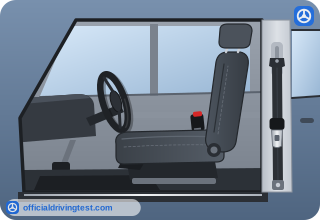
Why does a safety belt help you keep control of the vehicle if you are struck from the side or make a quick turn?
- It makes the vehicle's tires grip the road better
- It keeps you behind the wheel so you can still steer
- It keeps the vehicle's air bags from going off
- It slows the vehicle to a stop faster
Show answer
Correct answer: It keeps you behind the wheel so you can still steer
The manual explains that you cannot steer the vehicle if you are not behind the wheel.
Source: Delaware Driver Manual (July 2026), page 109 · Open this page in the manual (Manual page 109)
-
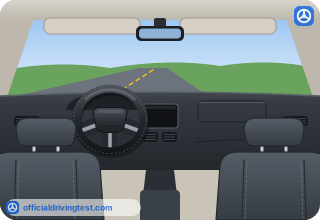
If your vehicle has air bags, do you still need to wear safety belts?
- No, air bags give full protection in a crash
- Only if you sit in the back seat
- Only if the air bags are turned off
- Yes, safety belts must be worn even with air bags
Show answer
Correct answer: Yes, safety belts must be worn even with air bags
The manual says safety belts must be worn even if the vehicle is equipped with air bags.
Source: Delaware Driver Manual (July 2026), page 109 · Open this page in the manual (Manual page 109)
-
In which situation do air bags not protect you?
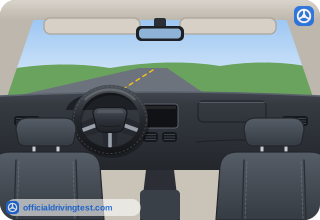
- If you are hit from the side or rear, or if the vehicle rolls over
- In a head-on crash with the steering wheel or dashboard
- When your body would hit the windshield
- When the vehicle strikes a fixed object straight ahead
Show answer
Correct answer: If you are hit from the side or rear, or if the vehicle rolls over
The manual says air bags do not protect you if you are hit from the side or rear, or if the vehicle rolls over.
Source: Delaware Driver Manual (July 2026), page 109 · Open this page in the manual (Manual page 109)
-
Under Delaware law, a child under age 2 AND 30 pounds must ride in what kind of seat?
- A forward-facing car seat with a harness
- A belt positioning booster seat
- A rear-facing car seat
- An adult seat belt in the back seat
Show answer
Correct answer: A rear-facing car seat
Delaware law requires children under age 2 and 30 pounds to ride in a rear-facing car seat.
Source: Delaware Driver Manual (July 2026), page 109 · Open this page in the manual (Manual page 109)
-
Delaware law requires a child under age 4 AND 40 pounds to ride in what?
- A belt positioning booster seat
- A harnessed car seat
- A lap belt in the back seat
- A shoulder belt adjusted with a cushion
Show answer
Correct answer: A harnessed car seat
Delaware law requires children under age 4 and 40 pounds to ride in a harnessed car seat.
Source: Delaware Driver Manual (July 2026), page 109 · Open this page in the manual (Manual page 109)
-
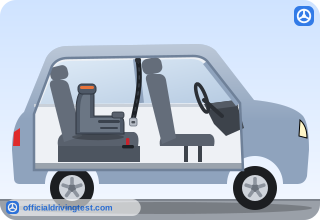
How long must a child in a belt positioning booster seat remain in it under Delaware law?
- Until they reach their eighth birthday, regardless of their height or weight
- Until they are tall enough to see over the front seat headrest
- Until they weigh 60 pounds, regardless of the manufacturer's limits
- Until reaching the height or weight maximum listed by the booster seat manufacturer
Show answer
Correct answer: Until reaching the height or weight maximum listed by the booster seat manufacturer
The law keeps children in a booster seat until the height or weight maximum listed by the booster seat manufacturer.
Source: Delaware Driver Manual (July 2026), page 109 · Open this page in the manual (Manual page 109)
-
A child who has outgrown a belt positioning booster seat must wear a properly secured seatbelt in all seating positions until what age?
- 16
- 12
- 14
- 18
Show answer
Correct answer: 16
The manual says such a child who has not yet reached the age of 16 must wear a properly secured seatbelt in all seating positions.
Source: Delaware Driver Manual (July 2026), page 109 · Open this page in the manual (Manual page 109)
-
What does it mean that the child seatbelt law is a primary enforcement law?
- Officers can only issue a ticket if the vehicle is stopped for another reason
- Officers can issue only a warning the first time they see it
- Officers can pull a vehicle over if they see an unrestrained child inside
- The child's parents must attend a safety class after a ticket
Show answer
Correct answer: Officers can pull a vehicle over if they see an unrestrained child inside
The manual says primary enforcement means officers can pull a vehicle over if they see an unrestrained child inside.
Source: Delaware Driver Manual (July 2026), page 109 · Open this page in the manual (Manual page 109)
-
Which child should not occupy the front passenger seat of a vehicle?
- A child under age 8 or under 4'9"
- A child under age 12 or under 5'5"
- A child under age 14 or under 5'8"
- A child under age 6 or under 4'0"
Show answer
Correct answer: A child under age 12 or under 5'5"
The manual says a child under age 12 or under 5'5" should not occupy the front passenger seat.
Source: Delaware Driver Manual (July 2026), page 109 · Open this page in the manual (Manual page 109)
-
What do the NHTSA and the AAP recommend for a child under the age of 1?
- Ride in a forward-facing car seat with a harness
- Ride in a belt positioning booster seat
- Ride on an adult's lap in the back seat
- Always ride in a rear-facing car seat
Show answer
Correct answer: Always ride in a rear-facing car seat
The manual says children under the age of 1 should always ride in a rear-facing car seat.
Source: Delaware Driver Manual (July 2026), page 109 · Open this page in the manual (Manual page 109)
-
How can infant-only car seats be used?
- Only rear-facing
- Only forward-facing
- Rear- or forward-facing
- Only as a booster
Show answer
Correct answer: Only rear-facing
The manual says infant-only seats can only be used rear-facing.
Source: Delaware Driver Manual (July 2026), page 109 · Open this page in the manual (Manual page 109)
-
Why can convertible and all-in-one car seats keep a child rear-facing for longer?
- They are installed in the front passenger seat instead of the back
- They switch to a belt positioning booster after the first year
- They typically have higher height and weight limits for rear-facing mode
- They have a built-in harness that works only when facing forward
Show answer
Correct answer: They typically have higher height and weight limits for rear-facing mode
The manual says these seats typically have higher rear-facing height and weight limits.
Source: Delaware Driver Manual (July 2026), page 109 · Open this page in the manual (Manual page 109)
-
For a child aged 1 to 3 years, how long do the NHTSA and the AAP recommend a rear-facing car seat?
- Until the child's second birthday, whatever the seat's limits
- Until the top height or weight limit for rear-facing mode
- Only until the child can sit up without any help
- Until the child learns to walk without any help
Show answer
Correct answer: Until the top height or weight limit for rear-facing mode
The manual says the child should remain rear-facing until reaching the seat manufacturer's top rear-facing height or weight limit.
Source: Delaware Driver Manual (July 2026), page 109 · Open this page in the manual (Manual page 109)
-
Once a child outgrows the rear-facing car seat, what is the child ready to travel in?
- A belt positioning booster seat
- An adult lap belt in the back seat
- A rear-facing infant-only seat
- A forward-facing car seat with a harness
Show answer
Correct answer: A forward-facing car seat with a harness
The manual says once the rear-facing seat is outgrown, the child is ready for a forward-facing car seat with a harness.
Source: Delaware Driver Manual (July 2026), page 109 · Open this page in the manual (Manual page 109)
-
When is it time for a child to travel in a booster seat?
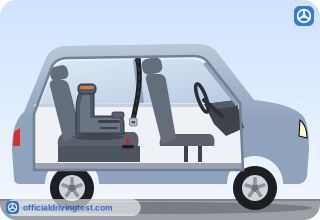
- When they outgrow their forward-facing car seat with a harness
- Once they can sit upright in the seat without any support
- Once they learn how to unbuckle the harness themselves
- Once they are tall enough to see out of the window
Show answer
Correct answer: When they outgrow their forward-facing car seat with a harness
The manual says that once a child outgrows a forward-facing car seat with a harness, it is time for a booster seat.
Source: Delaware Driver Manual (July 2026), page 110 · Open this page in the manual (Manual page 110)
-
According to the NHTSA and AAP recommendations in the manual, how long should an 8- to 12-year-old child stay in a booster seat?
- Until the child can buckle the seat belt without any help
- Until the child's feet can rest flat on the floor mat
- Until the child is big enough to fit the adult seat belt properly
- Until the child asks to sit in the front passenger seat
Show answer
Correct answer: Until the child is big enough to fit the adult seat belt properly
The manual says NHTSA and the AAP recommend keeping 8- to 12-year-olds in a booster seat until they are big enough to fit the adult seat belt properly.
Source: Delaware Driver Manual (July 2026), page 110 · Open this page in the manual (Manual page 110)
-
For an adult seat belt to fit a child properly, where must the lap belt lie?
- Snugly across the stomach, not the thighs
- Snugly across the upper thighs, not the stomach
- Loosely across the hips with a little slack
- Across the lower abdomen, above the hip bones
Show answer
Correct answer: Snugly across the upper thighs, not the stomach
A properly fitting lap belt lies snugly across the upper thighs, not the stomach.
Source: Delaware Driver Manual (July 2026), page 110 · Open this page in the manual (Manual page 110)
-
How should the shoulder belt lie on a child who is using the adult seat belt?
- Across the neck so that the belt stays in place
- Under the arm that is closest to the door
- Behind the child's back and across the lap only
- Snug across the shoulder and chest, not the neck or face
Show answer
Correct answer: Snug across the shoulder and chest, not the neck or face
The shoulder belt should lie snug across the shoulder and chest and must not cross the neck or face.
Source: Delaware Driver Manual (July 2026), page 110 · Open this page in the manual (Manual page 110)
-
Where should an 8- to 12-year-old child ride, according to the manual?
- In the front seat, once the child is in a booster seat
- In the front seat, as long as the air bag is working
- In whichever seat the driver can watch the child from
- In the back seat, because it is safer there
Show answer
Correct answer: In the back seat, because it is safer there
The manual says a child in this age group should still ride in the back seat because it is safer there.
Source: Delaware Driver Manual (July 2026), page 110 · Open this page in the manual (Manual page 110)
-
According to the manual, which car seat is the best one?
- The most expensive seat sold at a juvenile product store
- The one that fits the child and vehicle and is used correctly
- The newest model released by a major manufacturer
- The largest seat that will fit in the back of the vehicle
Show answer
Correct answer: The one that fits the child and vehicle and is used correctly
The best car seat fits your child, fits your vehicle, and can be used correctly every time.
Source: Delaware Driver Manual (July 2026), page 110 · Open this page in the manual (Manual page 110)
-
Where must a rear-facing car seat never be installed?
- Directly behind the driver's seat
- In the center of the back seat
- In front of an active frontal air bag
- Next to a rear passenger window
Show answer
Correct answer: In front of an active frontal air bag
The manual says never to install a rear-facing car seat in front of an active frontal air bag.
Source: Delaware Driver Manual (July 2026), page 110 · Open this page in the manual (Manual page 110)
-
How can you tell that a car seat's harness straps fit snugly?
- You cannot pinch any excess webbing at the child's collarbone
- You can slide your whole hand between the strap and chest
- You can pinch about an inch of webbing at the collarbone
- The straps lie loosely against the child's shoulders
Show answer
Correct answer: You cannot pinch any excess webbing at the child's collarbone
Harness straps are snug when you cannot pinch excess webbing between your fingers at the child's collarbone.
Source: Delaware Driver Manual (July 2026), page 110 · Open this page in the manual (Manual page 110)
-
Where should a car seat's chest clip sit?
- Level with the child's belly button
- Resting on the child's collarbone
- Even with the child's armpits
- Up against the child's chin
Show answer
Correct answer: Even with the child's armpits
The chest clip should be even with the child's armpits.
Source: Delaware Driver Manual (July 2026), page 110 · Open this page in the manual (Manual page 110)
-
Checked at the belt path with moderate force, how far should an installed car seat move side-to-side and front-to-back?
- No more than one inch
- No more than two inches
- No more than three inches
- No more than six inches
Show answer
Correct answer: No more than one inch
An installed car seat should not move more than one inch when checked at the belt path with moderate force.
Source: Delaware Driver Manual (July 2026), page 110 · Open this page in the manual (Manual page 110)
-
When should the top tether be used on a forward-facing car seat installation?
- Only when the seat is installed with the lower anchors
- Only when the seat is installed with the seat belt
- Only for infants who ride in rear-facing seats
- Whenever possible, with lower anchors or with the seat belt
Show answer
Correct answer: Whenever possible, with lower anchors or with the seat belt
For forward-facing installations the top tether should be used whenever possible, with either lower anchors or the seat belt.
Source: Delaware Driver Manual (July 2026), page 110 · Open this page in the manual (Manual page 110)
-
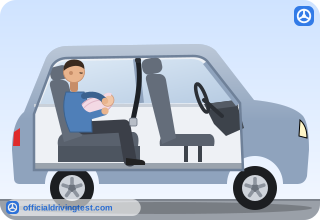
What does the manual say about holding a child on your lap while the vehicle is moving?
- It is acceptable on short trips at low speeds in town
- Never try it; the safest place is an appropriate car seat
- It is acceptable if the child is asleep in your arms
- It is acceptable if you wear your own seat belt
Show answer
Correct answer: Never try it; the safest place is an appropriate car seat
The manual says never to hold a child unrestrained on your lap; the safest place is an appropriate car seat.
Source: Delaware Driver Manual (July 2026), page 110 · Open this page in the manual (Manual page 110)
-
What does the manual say it is very important to read for proper car seat use?
- Only your car seat manual
- Both your vehicle's owner manual and your car seat manual
- Only your vehicle's owner manual
- Neither; installation is the same in every vehicle
Show answer
Correct answer: Both your vehicle's owner manual and your car seat manual
Reading the vehicle's owner manual and the car seat manual matters because proper installation affects crash injury outcomes.
Source: Delaware Driver Manual (July 2026), page 110 · Open this page in the manual (Manual page 110)
-
Who provides free car seat checks in Delaware?
- The Delaware State Police only
- Any licensed auto insurance company
- The Division of Motor Vehicles
- The Delaware Office of Highway Safety
Show answer
Correct answer: The Delaware Office of Highway Safety
The manual says the Delaware Office of Highway Safety provides free car seat checks as one-on-one appointments.
Source: Delaware Driver Manual (July 2026), page 110 · Open this page in the manual (Manual page 110)
-
Who checks your car seat and your child's harnessing at a free car seat check?
- Certified Child Passenger Safety Technicians
- Licensed mechanics from the vehicle's dealer
- Driver license examiners at a DMV location
- Pediatric nurses working at a local hospital
Show answer
Correct answer: Certified Child Passenger Safety Technicians
Certified Child Passenger Safety Technicians check the installation and the harnessing.
Source: Delaware Driver Manual (July 2026), page 110 · Open this page in the manual (Manual page 110)
-
What is a car seat fitting station?
- A seasonal event held each summer to check child car seats
- A store where caregivers can buy approved car seats for less
- A year-round place where caregivers get their car seats checked
- A DMV office counter where car seats are registered
Show answer
Correct answer: A year-round place where caregivers get their car seats checked
A fitting station is a year-round location where caregivers can get their car seats checked for proper use.
Source: Delaware Driver Manual (July 2026), page 111 · Open this page in the manual (Manual page 111)
-
What is required to get a car seat checked at a fitting station?
- An appointment, which is required at all locations
- Nothing; walk-ins are welcome at all locations
- A written referral from the DMV
- Proof that the car seat was bought in Delaware
Show answer
Correct answer: An appointment, which is required at all locations
Appointments are required at all fitting station locations.
Source: Delaware Driver Manual (July 2026), page 111 · Open this page in the manual (Manual page 111)
-
What does the manual warn you never to do when it is hot outside?
- Run the air conditioning while the vehicle is parked
- Park the vehicle in a shaded area
- Leave children or animals unattended in the vehicle
- Carry drinking water in the vehicle
Show answer
Correct answer: Leave children or animals unattended in the vehicle
The warning says that when it is hot outside you must not leave children or animals unattended in a hot vehicle.
Source: Delaware Driver Manual (July 2026), page 111 · Open this page in the manual (Manual page 111)
-
According to the manual, how long does it take to undo a safety belt?
- About five seconds
- Less than a second
- About ten seconds
- Up to thirty seconds
Show answer
Correct answer: Less than a second
The manual answers the belief that belts trap you by saying it takes less than a second to undo a safety belt.
Source: Delaware Driver Manual (July 2026), page 111 · Open this page in the manual (Manual page 111)
-
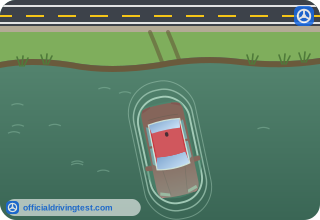
If your vehicle catches fire or sinks in deep water, how can a safety belt help you escape?
- It keeps the doors from jamming shut during the crash
- It prevents the vehicle from rolling over in the water
- It helps rescuers locate you faster after the crash
- It may keep you from being knocked out, so you can escape
Show answer
Correct answer: It may keep you from being knocked out, so you can escape
A safety belt may keep you from being knocked out, and your chance to escape is better if you are conscious.
Source: Delaware Driver Manual (July 2026), page 111 · Open this page in the manual (Manual page 111)
-
What does the manual say about being thrown clear in a crash?
- Being thrown clear lowers the risk of being hit by other vehicles
- Being thrown clear is safer than staying in at low speeds
- Being thrown clear is better in a side impact crash
- Your chances are much better if you stay inside the vehicle
Show answer
Correct answer: Your chances are much better if you stay inside the vehicle
Safety belts keep you from being thrown out into the path of another vehicle, and staying inside improves your chances.
Source: Delaware Driver Manual (July 2026), page 111 · Open this page in the manual (Manual page 111)
-
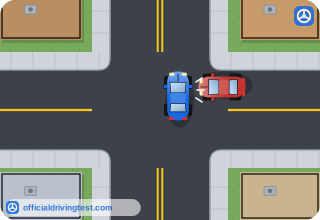
When a vehicle is struck from the side, which way do the passengers and unfastened objects slide?
- Away from the point of crash
- Toward the point of crash
- Straight ahead toward the dashboard
- Toward the rear of the vehicle
Show answer
Correct answer: Toward the point of crash
The vehicle moves sideways, so everything not fastened down slides toward the point of crash, not away from it.
Source: Delaware Driver Manual (July 2026), page 111 · Open this page in the manual (Manual page 111)
-
According to the manual, what is the most important thing you can do to lessen injuries in a collision?
- Hold the steering wheel loosely
- Brace your feet against the dashboard
- Use your lap and shoulder belts
- Turn off the engine
Show answer
Correct answer: Use your lap and shoulder belts
The manual says the most important thing is to use your lap and shoulder belts.
Source: Delaware Driver Manual (July 2026), page 139 · Open this page in the manual (Manual page 139)
-
If your vehicle is hit from the side, what does the manual say about air bags and belts?
- Air bags protect you fully, so belts are optional
- Belts may trap you, so unfasten them
- Air bags may not help; belts keep you behind the wheel
- Air bags and belts both work best in side crashes
Show answer
Correct answer: Air bags may not help; belts keep you behind the wheel
The manual says air bags may not help in a side hit and lap and shoulder belts keep you behind the wheel.
Source: Delaware Driver Manual (July 2026), page 140 · Open this page in the manual (Manual page 140)