Connecticut: Licensing basics
The learner's permit, the knowledge, vision and road tests, driver education and parent training, and the rules for 16- and 17-year-old drivers in Connecticut. Split into 6 shorter tests so you're not stuck in one long quiz.
Independent educational site · not affiliated with any government agency or DMV
Choose a part
Licensing basics — Part 1
Questions in this part include: “What is a non-commercial driver’s license known and designated as in Connecticut?”
StartLicensing basics — Part 2
Questions in this part include: “In the eye test, what does acuity measure?”
StartLicensing basics — Part 3
Questions in this part include: “What kinds of vehicles does the manual advise parents to avoid having their teen drive?”
StartLicensing basics — Part 4
Questions in this part include: “How may the at least 40 hours of behind-the-wheel training required of 16- and 17-year-old applicants be accomplished?”
StartLicensing basics — Part 5
Questions in this part include: “During the first six months, which passenger may ride with a newly licensed 16- or 17-year-old driver?”
StartLicensing basics — Part 6
Questions in this part include: “When you change your address with the DMV, what happens to your voter registration record?”
StartAll 108 Licensing basics questions with answers
Choose a part above to take a practice test, or study every question and answer here.
Show the questions and answersHide the questions
-
What is a non-commercial driver’s license known and designated as in Connecticut?
- Class D
- Class A
- Class B
- Class C
Show answer
Correct answer: Class D
The manual says a non-commercial driver’s license is known and designated as Class D.
Source: Connecticut Driver's Manual (Revised March 2023), page 4 · Open this page in the manual (Manual page 4)
-
Unless restrictions appear on the license, which vehicles may be operated with a Class D license?
- Only passenger cars, never trucks of any kind
- Any motor vehicle, including a commercial motor vehicle
- Any motor vehicle except a commercial motor vehicle
- Only vehicles that carry no more than five people
Show answer
Correct answer: Any motor vehicle except a commercial motor vehicle
Unless restrictions appear on it, a Class D license covers any motor vehicle except a commercial motor vehicle.
Source: Connecticut Driver's Manual (Revised March 2023), page 4 · Open this page in the manual (Manual page 4)
-
Which manual must you read if you want a license to drive a commercial or public service vehicle such as a truck or bus?
- The Motorcycle Operator’s manual
- The Commercial Driver’s License (CDL) manual
- The Connecticut Driver’s Manual alone
- The Class D supplement manual
Show answer
Correct answer: The Commercial Driver’s License (CDL) manual
The manual sends anyone who wants a commercial or public service vehicle license to the CDL manual.
Source: Connecticut Driver's Manual (Revised March 2023), page 4 · Open this page in the manual (Manual page 4)
-
Which manual do you need to read if you want an endorsement to drive a motorcycle?
- The Commercial Driver’s License (CDL) manual
- The Teen Safe Driving handbook
- The Connecticut Driver’s Manual only
- The Motorcycle Operator’s manual
Show answer
Correct answer: The Motorcycle Operator’s manual
The manual says a motorcycle endorsement requires reading the Motorcycle Operator’s manual.
Source: Connecticut Driver's Manual (Revised March 2023), page 4 · Open this page in the manual (Manual page 4)
-
Why does the manual say you should always check the DMV Web site?
- DMV laws change continuously, so the site has the latest information
- The manual is printed only once every ten years and is never revised
- Knowledge tests can be taken only on the Web site, never at a DMV office
- The Web site replaces the need to read this manual before the test
Show answer
Correct answer: DMV laws change continuously, so the site has the latest information
The manual explains that DMV laws change continuously, so the Web site has the most up to date information.
Source: Connecticut Driver's Manual (Revised March 2023), page 4 · Open this page in the manual (Manual page 4)
-
When is a learner’s permit required in Connecticut?
- Only after you pass the road test
- Only when you drive on highways
- Before you begin practicing driving
- Only if you are under 18 years old
Show answer
Correct answer: Before you begin practicing driving
A learner’s permit is required before you begin practicing driving, and the section applies to all ages.
Source: Connecticut Driver's Manual (Revised March 2023), page 4 · Open this page in the manual (Manual page 4)
-
What must a permit holder do whenever he or she is operating a vehicle?
- Display the permit in the windshield
- Carry the learner’s permit
- Show the permit to every other driver on the road
- Carry a copy of the knowledge test results
Show answer
Correct answer: Carry the learner’s permit
The manual says a permit holder must carry the learner’s permit whenever operating a vehicle.
Source: Connecticut Driver's Manual (Revised March 2023), page 4 · Open this page in the manual (Manual page 4)
-
How does the DMV deliver a new photo image learner’s permit to qualified applicants?
- It mails the permit to them
- It hands the permit over the counter on the test day
- It leaves the permit for pickup at a post office
- The driving school prints and issues the permit
Show answer
Correct answer: It mails the permit to them
The manual says DMV will mail a new photo image learner’s permit to all qualified applicants.
Source: Connecticut Driver's Manual (Revised March 2023), page 4 · Open this page in the manual (Manual page 4)
-
What is required of a learner’s permit applicant whose physical or medical conditions may affect safe driving?
- The permit is issued at once, but with a restriction added to it
- The applicant must wait until reaching age 18 before applying
- A review of the condition; a favorable result is needed before issue
- The applicant must pass the road test before any review is made
Show answer
Correct answer: A review of the condition; a favorable result is needed before issue
Such an applicant must undergo a review of the condition(s), and a favorable review must come before the permit is issued.
Source: Connecticut Driver's Manual (Revised March 2023), page 5 · Open this page in the manual (Manual page 5)
-
What is the minimum age to obtain a learner’s permit?
- 15 years
- 16 years
- 17 years
- 18 years
Show answer
Correct answer: 16 years
The manual states you must be at least 16 years of age to obtain a learner’s permit.
Source: Connecticut Driver's Manual (Revised March 2023), page 5 · Open this page in the manual (Manual page 5)
-
To obtain a learner’s permit, which tests must you pass?
- A road test and a 25-question knowledge test
- A vision test and a hearing test
- A knowledge test only, with no vision test
- Both a vision test and a 25-question knowledge test
Show answer
Correct answer: Both a vision test and a 25-question knowledge test
The manual lists passing both a vision test and a 25-question knowledge test as the permit requirement.
Source: Connecticut Driver's Manual (Revised March 2023), page 5 · Open this page in the manual (Manual page 5)
-
How long is a learner’s permit valid?
- Until you get a license or 2 years after issue, whichever is first
- For 5 years from the date it is issued, even after you get a license
- Until your 18th birthday, no matter when it was issued
- For 1 year from the date it is issued, with no renewal allowed
Show answer
Correct answer: Until you get a license or 2 years after issue, whichever is first
The permit is valid until you obtain a driver’s license or 2 years from the date it is issued, whichever comes first.
Source: Connecticut Driver's Manual (Revised March 2023), page 5 · Open this page in the manual (Manual page 5)
-
How do DMV offices conduct knowledge testing for operator licensing?
- On a walk-in basis only, first come first served
- Only on the first day of each month
- On an appointment basis
- Only by mail, with a proctor at home
Show answer
Correct answer: On an appointment basis
The manual says DMV offices conduct knowledge testing for operator licensing on an appointment basis.
Source: Connecticut Driver's Manual (Revised March 2023), page 5 · Open this page in the manual (Manual page 5)
-
What must applicants be prepared with before the knowledge test is administered?
- A completed road test score sheet
- A signed note from a driving instructor
- A printed copy of this driver’s manual
- All the necessary documents
Show answer
Correct answer: All the necessary documents
The manual says applicants must have all the necessary documents ready before the knowledge test.
Source: Connecticut Driver's Manual (Revised March 2023), page 5 · Open this page in the manual (Manual page 5)
-
How many of the 25 knowledge test questions must you answer correctly to pass?
- 20
- 15
- 18
- 22
Show answer
Correct answer: 20
The knowledge test has 25 questions and 20 correct answers are needed to pass.
Source: Connecticut Driver's Manual (Revised March 2023), page 5 · Open this page in the manual (Manual page 5)
-
On what is the knowledge test based?
- General driving knowledge from your own town
- Questions that appear only on the DMV mobile app
- The information contained in this manual
- The Commercial Driver’s License (CDL) manual
Show answer
Correct answer: The information contained in this manual
The manual states the test is based on the information contained in the manual.
Source: Connecticut Driver's Manual (Revised March 2023), page 5 · Open this page in the manual (Manual page 5)
-
According to the manual, where are sample knowledge tests available?
- In every DMV office waiting area
- On the DMV mobile app
- On the back of the learner’s permit
- At commercial driving schools only
Show answer
Correct answer: On the DMV mobile app
The manual says sample tests are available on the DMV mobile app.
Source: Connecticut Driver's Manual (Revised March 2023), page 5 · Open this page in the manual (Manual page 5)
-
Which two things does the eye test evaluate?
- Acuity and color perception
- Peripheral vision and night vision
- Depth perception and reaction time
- Acuity and peripheral vision
Show answer
Correct answer: Acuity and peripheral vision
The manual says the eye test evaluates acuity and peripheral vision.
Source: Connecticut Driver's Manual (Revised March 2023), page 5 · Open this page in the manual (Manual page 5)
-
In the eye test, what does acuity measure?
- How clearly you see
- How far you can see to either side while looking straight ahead
- How well you see at night
- How quickly your eyes recover from glare
Show answer
Correct answer: How clearly you see
The manual defines acuity as how clearly you see.
Source: Connecticut Driver's Manual (Revised March 2023), page 5 · Open this page in the manual (Manual page 5)
-
In the eye test, what does peripheral vision measure?
- How clearly you see objects straight ahead of you in daylight
- How well you judge distances and speeds when merging
- How far you can see to either side while looking straight ahead
- How well you see at night with the glare of headlights
Show answer
Correct answer: How far you can see to either side while looking straight ahead
The manual defines peripheral vision as how far you can see to either side while looking straight ahead.
Source: Connecticut Driver's Manual (Revised March 2023), page 5 · Open this page in the manual (Manual page 5)
-
What is the minimum vision requirement for all classes of license?
- At least 20/20 without glasses or contact lenses
- At least 20/40 with or without glasses or contact lenses
- At least 20/30 with glasses but not contact lenses
- At least 20/50 with or without corrective lenses
Show answer
Correct answer: At least 20/40 with or without glasses or contact lenses
The minimum for all license classes is at least 20/40, with or without glasses or contact lenses.
Source: Connecticut Driver's Manual (Revised March 2023), page 5 · Open this page in the manual (Manual page 5)
-
What is true of persons with monocular vision?
- They do not qualify for certain special licenses
- They cannot be issued any kind of license at all
- They may not be issued a learner’s permit or a license
- They must retake the vision test every single year
Show answer
Correct answer: They do not qualify for certain special licenses
The manual says persons with monocular vision do not qualify for certain special licenses or endorsements.
Source: Connecticut Driver's Manual (Revised March 2023), page 5 · Open this page in the manual (Manual page 5)
-
Because you cannot focus on things to the side, what must you do in addition to relying on side vision?
- Turn your head away from the road for several seconds
- Lean toward the window to widen your field of view
- Use your side mirrors or glance to the side if necessary
- Slow down to a stop until the side is clear
Show answer
Correct answer: Use your side mirrors or glance to the side if necessary
The manual says you must also use your side mirrors or glance to the side if necessary.
Source: Connecticut Driver's Manual (Revised March 2023), page 5 · Open this page in the manual (Manual page 5)
-
Judging distances and speeds is especially important in which situations?
- Reading road signs from a long way off while driving at night
- Judging safe openings when merging or passing on two-lane roads
- Judging how long a traffic light will stay green before it changes
- Parking in a space with no other cars nearby on the street
Show answer
Correct answer: Judging safe openings when merging or passing on two-lane roads
The manual says it is especially important for knowing how far you are from other vehicles and judging safe openings when merging and passing on two-lane roads.
Source: Connecticut Driver's Manual (Revised March 2023), page 5 · Open this page in the manual (Manual page 5)
-
What does the manual say to do if you have problems seeing at night?
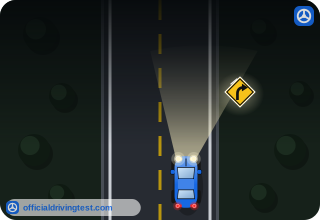
- Drive mostly at night until your eyes get used to the dark
- Take off your glasses or contact lenses once it gets dark
- Drive faster to get off the road sooner than other drivers
- Don’t drive more than necessary and be very careful when you do
Show answer
Correct answer: Don’t drive more than necessary and be very careful when you do
The manual advises drivers with night vision problems not to drive more than necessary and to be very careful.
Source: Connecticut Driver's Manual (Revised March 2023), page 5 · Open this page in the manual (Manual page 5)
-
Some drivers have problems with glare while driving at night, especially from what?
- Oncoming headlights
- Street lights
- Dashboard lights
- Road signs
Show answer
Correct answer: Oncoming headlights
The manual names the glare of oncoming headlights as a night-driving problem.
Source: Connecticut Driver's Manual (Revised March 2023), page 5 · Open this page in the manual (Manual page 5)
-
How often does the manual say you should have your eyes checked by an eye specialist?
- Every five years
- Every ten years
- Every year or two
- Only when your license is renewed
Show answer
Correct answer: Every year or two
The manual says to have your eyes checked every year or two by an eye specialist.
Source: Connecticut Driver's Manual (Revised March 2023), page 5 · Open this page in the manual (Manual page 5)
-
If your license says you must wear corrective lenses and a law enforcement officer stops you while you are not wearing them, what may happen?
- Your license is cancelled on the spot
- You may be issued a citation
- You must retake the road test
- Nothing, because it is only a recommendation
Show answer
Correct answer: You may be issued a citation
The manual says you may be issued a citation for driving without required corrective lenses.
Source: Connecticut Driver's Manual (Revised March 2023), page 5 · Open this page in the manual (Manual page 5)
-
According to the manual, which sounds can warn you of danger while driving?
- Radio traffic reports and music
- The sound of your own turn signal
- Conversation between passengers
- Horns, a siren, or screeching tires
Show answer
Correct answer: Horns, a siren, or screeching tires
The manual says horns, a siren or screeching tires can warn you of danger, which is why hearing helps.
Source: Connecticut Driver's Manual (Revised March 2023), page 5 · Open this page in the manual (Manual page 5)
-
How do drivers who know they are deaf or have hearing problems learn to drive safely?
- They rely more on vision and tend to stay more alert
- They drive only in daylight on quiet, familiar roads
- They keep the radio turned up loud to stay awake while driving
- They rely on their passengers to listen for them
Show answer
Correct answer: They rely more on vision and tend to stay more alert
The manual says such drivers rely more on vision and tend to stay more alert.
Source: Connecticut Driver's Manual (Revised March 2023), page 5 · Open this page in the manual (Manual page 5)
-
What have studies shown about the driving records of hearing-impaired drivers?
- They are worse than those of drivers with good hearing
- They are better than those of drivers with good hearing
- They are just as good as those of drivers with good hearing
- They have never been studied
Show answer
Correct answer: They are just as good as those of drivers with good hearing
The manual says studies show hearing-impaired drivers’ records are just as good as those of drivers with good hearing.
Source: Connecticut Driver's Manual (Revised March 2023), page 5 · Open this page in the manual (Manual page 5)
-
Where must the person giving instruction to a learner’s permit holder sit?
- In the back seat behind the driver
- In the front passenger seat next to the learner
- In the back seat on the passenger side
- Outside the vehicle, within sight of the learner
Show answer
Correct answer: In the front passenger seat next to the learner
The instructor must sit in the front passenger seat next to the learner.
Source: Connecticut Driver's Manual (Revised March 2023), page 5 · Open this page in the manual (Manual page 5)
-
The person giving instruction to a learner’s permit holder must be alert and ready to do what?
- Give hand signals for the learner
- Take the learner’s test score to the DMV
- Drive the vehicle on all highways
- Take over control of the vehicle
Show answer
Correct answer: Take over control of the vehicle
The instructor must be alert and ready to take over control of the vehicle.
Source: Connecticut Driver's Manual (Revised March 2023), page 5 · Open this page in the manual (Manual page 5)
-
Who is responsible for the safe operation of the vehicle when a permit holder is driving with an instructor?
- Both the instructor and the driver
- Only the learner who is driving
- Only the instructor in the passenger seat
- The registered owner of the vehicle
Show answer
Correct answer: Both the instructor and the driver
The manual says the safe operation of the vehicle is the responsibility of both the instructor and the driver.
Source: Connecticut Driver's Manual (Revised March 2023), page 5 · Open this page in the manual (Manual page 5)
-
What does the manual advise parents to do about night driving by their teens?
- Allow it once the teen has driven ten hours
- Encourage it to build skill on empty roads
- Enforce the state curfew
- Leave it to the teen’s own judgment
Show answer
Correct answer: Enforce the state curfew
Because fatal crashes are more likely at night, the manual says to restrict night driving and enforce the state curfew.
Source: Connecticut Driver's Manual (Revised March 2023), page 4 · Open this page in the manual (Manual page 4)
-
What happens to crash risk as the number of passengers in a teen’s vehicle increases?
- The risk decreases
- The risk increases
- The risk stays the same
- The risk changes only for siblings
Show answer
Correct answer: The risk increases
The manual says crash risk goes up with other teens in the car and also increases with the number of passengers.
Source: Connecticut Driver's Manual (Revised March 2023), page 4 · Open this page in the manual (Manual page 4)
-
What kinds of vehicles does the manual advise parents to avoid having their teen drive?
- Small cars that have all of the improved safety technologies
- Any vehicle that has an automatic transmission or air bags fitted
- Vehicles with more than four seats or a very large trunk space
- High performance or older vehicles without improved safety technologies
Show answer
Correct answer: High performance or older vehicles without improved safety technologies
The manual advises avoiding high performance vehicles or older model vehicles that lack improved safety technologies.
Source: Connecticut Driver's Manual (Revised March 2023), page 4 · Open this page in the manual (Manual page 4)
-
What does the manual advise parents to provide during the licensing period?
- Only highway practice
- No practice until the teen turns 18
- As much supervised practice as they can
- As little supervision as possible
Show answer
Correct answer: As much supervised practice as they can
The manual says to provide as much supervised practice as you can during the licensing period.
Source: Connecticut Driver's Manual (Revised March 2023), page 4 · Open this page in the manual (Manual page 4)
-
A 16- or 17-year-old learner's permit holder may carry one person who provides instruction. How long must that person have held a driver's license?
- Four or more consecutive years
- Two or more consecutive years
- One or more consecutive years
- Six or more consecutive years
Show answer
Correct answer: Four or more consecutive years
The person must be at least 20 years old and have held a license for four or more consecutive years, without a suspension in the four years before training.
Source: Connecticut Driver's Manual (Revised March 2023), page 6 · Open this page in the manual (Manual page 6)
-
When do the passenger restrictions for a 16- or 17-year-old learner's permit holder not apply?
- While driving between home and school on a short local trip in daylight
- While accompanied by any adult family member who holds a valid license
- While receiving specific instruction from a licensed driving school instructor
- While driving in daylight hours on roads with light traffic and few turns
Show answer
Correct answer: While receiving specific instruction from a licensed driving school instructor
The restrictions do not apply during the actual time the permit holder is receiving specific instruction from a licensed driver instructor.
Source: Connecticut Driver's Manual (Revised March 2023), page 6 · Open this page in the manual (Manual page 6)
-
What may happen if a learner's permit holder does not follow the rules for the permit?
- The permit holder must retake the written test right away
- The permit may be suspended
- The permit is automatically changed into a probationary license
- The permit holder must repeat the 30-hour classroom course
Show answer
Correct answer: The permit may be suspended
The manual says failure to follow the rules for a learner's permit may result in a permit suspension.
Source: Connecticut Driver's Manual (Revised March 2023), page 6 · Open this page in the manual (Manual page 6)
-
Which is one way a 16- or 17-year-old applicant can complete the required driver training?
- A home training program alone, with no additional classroom course
- A written online quiz given by the DMV after the permit is issued
- Practice driving with any licensed driver for six months
- A home training program plus an eight-hour course on safe driving practices
Show answer
Correct answer: A home training program plus an eight-hour course on safe driving practices
The three options are a licensed commercial driving school, a secondary school program, or a home training program with the eight-hour safe driving course.
Source: Connecticut Driver's Manual (Revised March 2023), page 6 · Open this page in the manual (Manual page 6)
-
How many hours of instruction must a parent or legal guardian complete with a teen who obtains a learner's permit?
- Two hours
- Four hours
- Six hours
- Eight hours
Show answer
Correct answer: Two hours
The parent or legal guardian must complete two hours of instruction with the teen.
Source: Connecticut Driver's Manual (Revised March 2023), page 6 · Open this page in the manual (Manual page 6)
-
What must the two-hour parent training cover?
- Vehicle insurance, registration and the cost of owning a car
- How to teach a teen to drive a vehicle with a manual transmission
- The laws governing drivers under age 18 and the dangers of teen driving
- The rules for obtaining a commercial driver's license after age 21
Show answer
Correct answer: The laws governing drivers under age 18 and the dangers of teen driving
The parent training covers the laws governing drivers under age 18 and the dangers of teen driving.
Source: Connecticut Driver's Manual (Revised March 2023), page 6 · Open this page in the manual (Manual page 6)
-
How many hours of classroom instruction do classes at a Connecticut commercial or secondary school approved by the DMV consist of?
- 20 hours
- 30 hours
- 40 hours
- 60 hours
Show answer
Correct answer: 30 hours
Approved school classes consist of 30 hours of classroom instruction.
Source: Connecticut Driver's Manual (Revised March 2023), page 6 · Open this page in the manual (Manual page 6)
-
At least how many hours of behind-the-wheel, on-the-road training are included in classes at a DMV-approved commercial or secondary school for teens with a learner's permit?
- 10 hours
- 30 hours
- 50 hours
- 40 hours
Show answer
Correct answer: 40 hours
The classes include at least 40 hours of behind-the-wheel, on-the-road training.
Source: Connecticut Driver's Manual (Revised March 2023), page 6 · Open this page in the manual (Manual page 6)
-
A teen completes driver education through a commercial driving school or a secondary school. How long after the learner's permit is issued must the teen wait before taking the road test?
- 60 days
- 90 days
- 120 days
- 180 days
Show answer
Correct answer: 120 days
Applicants who complete driver education through a commercial or secondary school must wait 120 days after the permit is issued.
Source: Connecticut Driver's Manual (Revised March 2023), page 6 · Open this page in the manual (Manual page 6)
-
A teen did not complete driver education through a commercial driving school or a secondary school. How long after the learner's permit is issued must the teen wait before taking the driver's exam?
- 90 days
- 180 days
- 120 days
- 240 days
Show answer
Correct answer: 180 days
All other applicants must wait 180 days after the issuance of the learner's permit.
Source: Connecticut Driver's Manual (Revised March 2023), page 6 · Open this page in the manual (Manual page 6)
-
Home training applicants must train with an instructor who is at least what age?
- 18 years
- 21 years
- 25 years
- 20 years
Show answer
Correct answer: 20 years
The home training instructor must be at least 20 years of age and have held a license for four or more years prior to training.
Source: Connecticut Driver's Manual (Revised March 2023), page 6 · Open this page in the manual (Manual page 6)
-
Which relative may do home training only if the applicant has no parent, foster parent, legal guardian, grandparent or spouse available?
- Uncle or aunt
- Grandparent
- Parent
- Foster parent
Show answer
Correct answer: Uncle or aunt
Uncle or aunt, brother or sister, and stepparent may do home training only when the applicant has none of the first group.
Source: Connecticut Driver's Manual (Revised March 2023), page 6 · Open this page in the manual (Manual page 6)
-
At what time must the home instructor sign a statement about the applicant's training?
- When the learner's permit is issued
- When the home training course begins
- At the time of the road test
- At the time of the written knowledge test
Show answer
Correct answer: At the time of the road test
The home instructor signs the statement at the time of the road test.
Source: Connecticut Driver's Manual (Revised March 2023), page 6 · Open this page in the manual (Manual page 6)
-
What does the home instructor's statement say about the course study the applicant has completed?
- At least 30 hours, all of it taught at home by the instructor
- At least 30 hours, including an 8-hour Safe Driving Practices class
- At least 20 hours, including a 4-hour Safe Driving Practices class
- At least 40 hours, with no school class required at all
Show answer
Correct answer: At least 30 hours, including an 8-hour Safe Driving Practices class
The statement says at least 30 hours of course study, including an 8-hour Safe Driving Practices class at a Connecticut commercial driving or secondary school.
Source: Connecticut Driver's Manual (Revised March 2023), page 6 · Open this page in the manual (Manual page 6)
-
What must a home training course cover?
- Only the chapters on road signs
- Only the topics the instructor picks
- Only the rules for 16-year-olds
- All of the material in the driver's manual
Show answer
Correct answer: All of the material in the driver's manual
The home training course must cover all of the material in the manual and other driver education information deemed necessary.
Source: Connecticut Driver's Manual (Revised March 2023), page 6 · Open this page in the manual (Manual page 6)
-
An applicant who receives the full 30 hours of classroom training must also get at least how many hours of behind-the-wheel training from a Connecticut commercial driving school to be eligible to begin testing in 120 days?
- 2 hours
- 8 hours
- 4 hours
- 12 hours
Show answer
Correct answer: 8 hours
The manual requires at least 8 hours of behind-the-wheel training from a Connecticut commercial driving school.
Source: Connecticut Driver's Manual (Revised March 2023), page 6 · Open this page in the manual (Manual page 6)
-
How may the at least 40 hours of behind-the-wheel training required of 16- and 17-year-old applicants be accomplished?
- Only through instruction at a commercial driving school
- Only through home training with a parent or guardian
- Only through a secondary school program
- By any combination of driving school instruction or home training
Show answer
Correct answer: By any combination of driving school instruction or home training
The training may be accomplished by any combination of professional (driving school) instruction or home training.
Source: Connecticut Driver's Manual (Revised March 2023), page 7 · Open this page in the manual (Manual page 7)
-
A person 18 years of age or older must hold a learner's permit for at least how long before taking a road test?
- 90 days
- 30 days
- 60 days
- 120 days
Show answer
Correct answer: 90 days
A person 18 or older must obtain and hold a learner's permit for at least 90 days prior to the road test.
Source: Connecticut Driver's Manual (Revised March 2023), page 7 · Open this page in the manual (Manual page 7)
-
Who may accompany a learner's permit holder who is 18 or older while driving?
- A friend who has held a license for two years
- Any licensed driver who is 18 years of age or older
- A secondary school instructor
- A sibling who has just earned a full license
Show answer
Correct answer: A secondary school instructor
The permit holder must be accompanied by a commercial driving school instructor, secondary school instructor or a qualified trainer.
Source: Connecticut Driver's Manual (Revised March 2023), page 7 · Open this page in the manual (Manual page 7)
-
At the time of the road test, what must you have with the vehicle?
- A copy of the purchase receipt and a service record
- A valid inspection sticker and a lease agreement
- A valid registration and proof of insurance
- A written statement from the vehicle's mechanic
Show answer
Correct answer: A valid registration and proof of insurance
The vehicle must be appropriate for the license class and mechanically safe, with valid registration and proof of insurance.
Source: Connecticut Driver's Manual (Revised March 2023), page 7 · Open this page in the manual (Manual page 7)
-
What does the manual say about a non-licensed operator driving to the road test location?
- A non-licensed operator may drive there alone if the vehicle is insured
- A non-licensed operator cannot drive to the test location alone
- A non-licensed operator may drive there alone if the test is before noon
- A non-licensed operator may drive there alone if the examiner approves
Show answer
Correct answer: A non-licensed operator cannot drive to the test location alone
The manual states that a non-licensed operator cannot drive to the test location alone.
Source: Connecticut Driver's Manual (Revised March 2023), page 7 · Open this page in the manual (Manual page 7)
-
What is required for a long-term leased vehicle to be used for a road test?
- A signed letter from the lease company giving the applicant ownership
- A lease that has at least one full year remaining
- A DMV inspection of the vehicle's leasing contract
- Insurance proof identifying the vehicle and the lease company
Show answer
Correct answer: Insurance proof identifying the vehicle and the lease company
A long-term leased vehicle may be used if it has proof of insurance identifying the vehicle and the registrant (lease company).
Source: Connecticut Driver's Manual (Revised March 2023), page 7 · Open this page in the manual (Manual page 7)
-
What is the rule on taking the road test in a rented vehicle?
- Without a valid driver's license, you cannot test in a rented vehicle
- Any rented vehicle may be used if the rental agreement is shown
- Only rented vehicles from the DMV's approved list may be used
- Rented vehicles are allowed if the rental company signs a letter
Show answer
Correct answer: Without a valid driver's license, you cannot test in a rented vehicle
The manual says that if you do not have a valid driver's license you cannot test in a rented vehicle.
Source: Connecticut Driver's Manual (Revised March 2023), page 7 · Open this page in the manual (Manual page 7)
-
What happens if the road test vehicle is found to be in an unsafe operating condition?
- The applicant's score is reduced and the test continues in the same vehicle
- The test is cancelled and the applicant must wait 180 days
- No behind-the-wheel evaluation is conducted and the test is rescheduled for no fee
- The test is carried out in a vehicle provided by the examiner
Show answer
Correct answer: No behind-the-wheel evaluation is conducted and the test is rescheduled for no fee
No evaluation is conducted, and the applicant reschedules the road test for no fee.
Source: Connecticut Driver's Manual (Revised March 2023), page 7 · Open this page in the manual (Manual page 7)
-
Which item is needed to begin the road test only if required?
- A letter from the applicant's school principal
- A clearance letter from the DMV Medical Review Division
- A statement from the applicant's insurance company
- A signed note from the applicant's employer
Show answer
Correct answer: A clearance letter from the DMV Medical Review Division
The clearance letter from the DMV Medical Review Division is needed only if required.
Source: Connecticut Driver's Manual (Revised March 2023), page 7 · Open this page in the manual (Manual page 7)
-
Which of these does the road test evaluate?
- Adjusting the seat, mirrors, steering wheel, and seat belts
- Changing a flat tire and checking the spare tire's pressure
- Diagnosing and repairing minor engine problems on the road
- Calculating the fuel economy of a long-distance trip
Show answer
Correct answer: Adjusting the seat, mirrors, steering wheel, and seat belts
The road test evaluates your ability to properly adjust the seat, mirrors, steering wheel, and seat belts.
Source: Connecticut Driver's Manual (Revised March 2023), page 8 · Open this page in the manual (Manual page 8)
-
Which of these is listed as vehicle equipment you must be able to operate on the road test?
- Radio and navigation system
- Cruise control
- Heater and defroster
- Trunk release and jack
Show answer
Correct answer: Heater and defroster
The road test lists windshield wipers and washers, heater and defroster, parking brake, headlights and high beams, and the horn.
Source: Connecticut Driver's Manual (Revised March 2023), page 8 · Open this page in the manual (Manual page 8)
-
What does the road test evaluate about your vehicle's instrument panel?
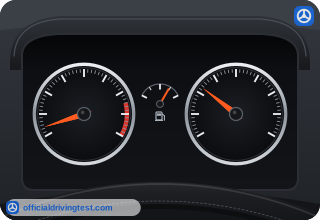
- Whether you can reset the trip odometer while driving
- Whether you can recognize any warning lights displayed
- Whether you can repair a faulty gauge or bulb
- Whether you can read the tire tread depth from the gauges
Show answer
Correct answer: Whether you can recognize any warning lights displayed
The road test evaluates your ability to recognize any warning lights that may be displayed on your instrument panel.
Source: Connecticut Driver's Manual (Revised March 2023), page 8 · Open this page in the manual (Manual page 8)
-
On the road test, who may ask you to perform other driving maneuvers beyond the listed skills?
- The owner of the test vehicle
- A parent or legal guardian riding along
- Your driving school instructor
- The agent or inspector
Show answer
Correct answer: The agent or inspector
The road test includes other driving maneuvers at the direction of the agent or inspector.
Source: Connecticut Driver's Manual (Revised March 2023), page 8 · Open this page in the manual (Manual page 8)
-
The road test evaluates your interaction with other motorists, including yielding right-of-way and responding to what?
- Parked vehicles
- Roadside billboards
- Emergency vehicles
- Weather forecasts
Show answer
Correct answer: Emergency vehicles
Interaction with other motorists on the road test includes yielding right-of-way and the response to emergency vehicles.
Source: Connecticut Driver's Manual (Revised March 2023), page 8 · Open this page in the manual (Manual page 8)
-
Which maneuver is evaluated on the road test along with basic skills such as turns?
- Backing and/or parking the vehicle
- Towing a trailer behind the vehicle
- Driving on an icy road surface
- Changing a tire at the roadside
Show answer
Correct answer: Backing and/or parking the vehicle
The road test evaluates backing and/or parking the vehicle and proficiency in basic driving skills such as turns.
Source: Connecticut Driver's Manual (Revised March 2023), page 8 · Open this page in the manual (Manual page 8)
-
Which is an acceptable form of payment at the DMV branch offices?
- Prepaid gift cards
- Cryptocurrency
- Traveler's checks
- Money orders
Show answer
Correct answer: Money orders
The manual lists cash, money orders, personal checks, debit and credit cards, and bank checks as acceptable payment.
Source: Connecticut Driver's Manual (Revised March 2023), page 8 · Open this page in the manual (Manual page 8)
-
What do qualified applicants receive at the DMV office while they wait for the permanent license card?
- A temporary plastic card with a photo
- A temporary paper card
- A voucher for a later road test
- A signed copy of the CS-1 form
Show answer
Correct answer: A temporary paper card
Qualified applicants receive a temporary paper card at the office, and the permanent card is mailed.
Source: Connecticut Driver's Manual (Revised March 2023), page 8 · Open this page in the manual (Manual page 8)
-
When you pay for your license by check, to whom should you make the check payable?
- The State Treasurer
- The Commissioner
- The Secretary of the State
- DMV
Show answer
Correct answer: DMV
The manual says to make all checks payable to DMV.
Source: Connecticut Driver's Manual (Revised March 2023), page 8 · Open this page in the manual (Manual page 8)
-
During the first six months, which passenger may ride with a newly licensed 16- or 17-year-old driver?
- A licensed driving instructor
- A friend who is 18 and licensed
- A younger brother or sister
- A cousin who has held a license for two years
Show answer
Correct answer: A licensed driving instructor
In the first six months the only allowed passengers are a licensed driving instructor, a parent or legal guardian, or one qualified person who is at least 20.
Source: Connecticut Driver's Manual (Revised March 2023), page 8 · Open this page in the manual (Manual page 8)
-
A newly licensed 16- or 17-year-old may carry one passenger in the first six months if that person is at least what age and meets the license requirements?
- 18 years old
- 21 years old
- 20 years old
- 25 years old
Show answer
Correct answer: 20 years old
The one allowed non-parent passenger must be at least 20 years old, hold a license for four or more consecutive years, and have no suspension in the previous four years.
Source: Connecticut Driver's Manual (Revised March 2023), page 8 · Open this page in the manual (Manual page 8)
-
For the one qualified passenger allowed in the first six months, how long must that person have held a driver's license?
- Four or more consecutive years
- One year or more
- Two or more consecutive years
- Ten or more consecutive years
Show answer
Correct answer: Four or more consecutive years
The passenger must have held a driver's license for four or more consecutive years.
Source: Connecticut Driver's Manual (Revised March 2023), page 8 · Open this page in the manual (Manual page 8)
-
The one qualified passenger's license must not have been suspended during how long before the time of being transported?
- The previous six months
- The previous year
- The four years preceding
- The previous ten years
Show answer
Correct answer: The four years preceding
The passenger's license must not have been suspended during the four years preceding the time of being transported.
Source: Connecticut Driver's Manual (Revised March 2023), page 8 · Open this page in the manual (Manual page 8)
-
A parent or legal guardian may ride with a newly licensed 16- or 17-year-old in the first six months. What must be true of them?
- Both of them have held a license for four years
- At least one of them holds a valid driver's license
- At least one of them is a licensed driving instructor
- Both of them must be in the vehicle
Show answer
Correct answer: At least one of them holds a valid driver's license
The exception for parents or legal guardians requires that at least one of them holds a valid driver's license.
Source: Connecticut Driver's Manual (Revised March 2023), page 8 · Open this page in the manual (Manual page 8)
-
During months seven through twelve after getting a license, which additional passengers may a 16- or 17-year-old driver carry?
- Any friend who is a licensed driver
- Any passenger of the same age
- Up to two passengers of any kind
- Members of the driver's immediate family
Show answer
Correct answer: Members of the driver's immediate family
In the second six months the only additional passengers allowed are members of the driver's immediate family.
Source: Connecticut Driver's Manual (Revised March 2023), page 8 · Open this page in the manual (Manual page 8)
-
What are the curfew hours for 16- and 17-year-old drivers?
- 9 p.m. to 5 a.m.
- 10 p.m. to 6 a.m.
- 11 p.m. to 5 a.m.
- Midnight to 4 a.m.
Show answer
Correct answer: 11 p.m. to 5 a.m.
The hour restriction for these drivers runs from 11 p.m. to 5 a.m., with listed exceptions.
Source: Connecticut Driver's Manual (Revised March 2023), page 8 · Open this page in the manual (Manual page 8)
-
Which is an exception to the curfew for a 16- or 17-year-old driver?
- Traveling for medical necessity
- Driving to visit friends
- Driving home from a party
- Running an errand for a neighbor
Show answer
Correct answer: Traveling for medical necessity
The curfew does not apply to a teen traveling for employment, school, religious activities, or medical necessity, or an assigned Safe Ride Program driver.
Source: Connecticut Driver's Manual (Revised March 2023), page 8 · Open this page in the manual (Manual page 8)
-
The passenger and curfew restrictions for young drivers do not apply to whom, when responding to or returning from an emergency call?
- Any teen carrying a medical card
- Teens driving a parent's vehicle
- Teens who completed the eight-hour course
- Active members of a volunteer fire company
Show answer
Correct answer: Active members of a volunteer fire company
The restrictions do not apply to active members of a volunteer fire company or department, a volunteer ambulance service, or an emergency medical service organization on an emergency call.
Source: Connecticut Driver's Manual (Revised March 2023), page 8 · Open this page in the manual (Manual page 8)
-
Learner's permit holders and 16- and 17-year-old licensed drivers may NOT operate which kind of vehicle?
- A pickup truck
- A vanpool vehicle
- A vehicle with a manual transmission
- A vehicle owned by a relative
Show answer
Correct answer: A vanpool vehicle
They may not operate any vehicle that requires a public passenger transportation permit or a vanpool vehicle.
Source: Connecticut Driver's Manual (Revised March 2023), page 8 · Open this page in the manual (Manual page 8)
-
For how long after a motorcycle endorsement is issued may a 16- or 17-year-old driver not carry a passenger on a motorcycle?
- Six months
- Thirty days
- Three months
- One year
Show answer
Correct answer: Six months
These drivers may not transport any passenger on a motorcycle for six months after the motorcycle endorsement is issued.
Source: Connecticut Driver's Manual (Revised March 2023), page 8 · Open this page in the manual (Manual page 8)
-
Which is a way to register as an organ and tissue donor?
- By calling a licensed physician
- By signing up at a hospital emergency room
- Through the mail with DMV's Change of Address form
- By notifying your auto insurance company
Show answer
Correct answer: Through the mail with DMV's Change of Address form
You can register when you obtain or renew your license or ID, online, or through the mail with DMV's Change of Address form.
Source: Connecticut Driver's Manual (Revised March 2023), page 8 · Open this page in the manual (Manual page 8)
-
What do you need to do to register as an organ and tissue donor at a DMV office?
- Make an appointment for driver license services
- Obtain a written letter from your doctor
- Take a short medical test at the office
- Have a family member sign your application
Show answer
Correct answer: Make an appointment for driver license services
The manual says to register at DMV you need to make an appointment for driver license services.
Source: Connecticut Driver's Manual (Revised March 2023), page 8 · Open this page in the manual (Manual page 8)
-
What does the manual say about the fee to be registered as an organ and tissue donor?
- It is paid with each license renewal
- It is an annual fee
- There is no fee
- It is a one-time processing fee
Show answer
Correct answer: There is no fee
The manual states there is "no fee" to be registered as an organ and tissue donor.
Source: Connecticut Driver's Manual (Revised March 2023), page 8 · Open this page in the manual (Manual page 8)
-
For individuals 18 and over, being in the Organ and Tissue Donor Registry is what?
- Only a request that the family must approve
- Legal authorization for organ and tissue donation
- A notice that needs a doctor's signature
- A voluntary note with no legal effect
Show answer
Correct answer: Legal authorization for organ and tissue donation
For people 18 and over, being included in the registry is legal authorization for organ and tissue donation.
Source: Connecticut Driver's Manual (Revised March 2023), page 8 · Open this page in the manual (Manual page 8)
-
What does the manual ask you to do after deciding to be an organ and tissue donor?
- Carry a signed letter from your doctor
- Tell your insurance company
- Register again every year
- Inform your family of your decision
Show answer
Correct answer: Inform your family of your decision
The manual says to be sure to inform your family of your decision to be an organ and tissue donor.
Source: Connecticut Driver's Manual (Revised March 2023), page 9 · Open this page in the manual (Manual page 9)
-
When will DMV offer you the opportunity to apply for voter registration or update your registration?
- Only when you first get a learner's permit at the DMV
- Only during the months before a general election
- When you apply for, renew or replace a license or ID card
- Only when you turn 18 years old
Show answer
Correct answer: When you apply for, renew or replace a license or ID card
You are offered the chance when you apply for, renew or replace a driver's license or identification card.
Source: Connecticut Driver's Manual (Revised March 2023), page 9 · Open this page in the manual (Manual page 9)
-
What does DMV provide when you apply for or update a voter registration?
- A receipt
- A voter identification card
- A sample ballot
- A polling place assignment
Show answer
Correct answer: A receipt
DMV provides a receipt and sends the voter registration application information to election officials.
Source: Connecticut Driver's Manual (Revised March 2023), page 9 · Open this page in the manual (Manual page 9)
-
About how long after applying should you receive a confirmation notice from the registrar of voters in your city or town?
- About three days
- About ten days
- About three months
- About three weeks
Show answer
Correct answer: About three weeks
You should receive a confirmation notice in approximately three weeks from the registrar of voters.
Source: Connecticut Driver's Manual (Revised March 2023), page 9 · Open this page in the manual (Manual page 9)
-
When you change your address with the DMV, what happens to your voter registration record?
- It is never changed by an address change made with the DMV
- It is updated unless you mark that the change is NOT for voter registration
- It is updated only if you also visit the registrar of voters in person
- It is cancelled until you register to vote again
Show answer
Correct answer: It is updated unless you mark that the change is NOT for voter registration
The change of address form updates your voter registration record unless you indicate on the form that it is NOT for voter registration purposes.
Source: Connecticut Driver's Manual (Revised March 2023), page 9 · Open this page in the manual (Manual page 9)
-
Who helps the Connecticut DMV develop its Limited Driver's License program?
- The state police medical examiners unit
- Its Medical Advisory Board of volunteer doctors
- A panel of licensed driving school instructors
- The Bureau of Motor Carrier Safety inspectors
Show answer
Correct answer: Its Medical Advisory Board of volunteer doctors
The DMV developed the program with the help of its Medical Advisory Board, a group of medical doctors who volunteer their time.
Source: Connecticut Driver's Manual (Revised March 2023), page 9 · Open this page in the manual (Manual page 9)
-
The Limited Driver's License program is for a person whose what has changed since initial licensing?
- Home address
- Insurance company
- Vehicle registration
- Physical abilities
Show answer
Correct answer: Physical abilities
The program is for the person whose physical abilities, for whatever reason, have changed since initial licensing.
Source: Connecticut Driver's Manual (Revised March 2023), page 9 · Open this page in the manual (Manual page 9)
-
What must be submitted before a limited license is issued to a person?
- Reports made by one or more physicians
- A written statement from a family member
- Proof of a clean driving record for five years
- A letter from the person's employer
Show answer
Correct answer: Reports made by one or more physicians
Before a limited license is issued, reports made by one or more physicians must be submitted.
Source: Connecticut Driver's Manual (Revised March 2023), page 9 · Open this page in the manual (Manual page 9)
-
Before a limited license is issued, what test might the person be required to pass?
- A written test given at a hospital
- A driving test with a physician
- An on-the-road skills test with a DMV inspector
- A road test with a driving school instructor
Show answer
Correct answer: An on-the-road skills test with a DMV inspector
The person may be required to pass an on-the-road skills test with a DMV inspector.
Source: Connecticut Driver's Manual (Revised March 2023), page 9 · Open this page in the manual (Manual page 9)
-
A person with certain conditions or limitations may still be able to drive safely if the conditions are what?
- Stabilized and monitored by the person's physician
- Reported once to the DMV and then ignored
- Treated by any licensed health professional
- Approved by a family member
Show answer
Correct answer: Stabilized and monitored by the person's physician
A person may still drive safely if the conditions have been stabilized and are monitored by the person's physician.
Source: Connecticut Driver's Manual (Revised March 2023), page 9 · Open this page in the manual (Manual page 9)
-
How long before applying for a Connecticut license should a person with a condition that affects driving contact the Driver Services Division?
- At least two weeks
- At least one month
- At least four months
- At least one year
Show answer
Correct answer: At least four months
The manual recommends contacting the Driver Services Division at least four months before applying, whether a new driver or a new resident.
Source: Connecticut Driver's Manual (Revised March 2023), page 9 · Open this page in the manual (Manual page 9)
-
Health standards are more stringent for which license holders?
- Holders of an ordinary passenger car license only
- CDL holders and holders of a license to carry passengers
- Holders of a learner's permit who are under age 18
- Holders of a motorcycle endorsement who ride alone
Show answer
Correct answer: CDL holders and holders of a license to carry passengers
Health standards are more stringent for a CDL holder or a holder of a license to operate a vehicle carrying passengers (taxi, delivery vehicle, bus, school bus).
Source: Connecticut Driver's Manual (Revised March 2023), page 9 · Open this page in the manual (Manual page 9)
-
A limited license may restrict driving to what period of daylight?
- From sunrise to sunset exactly
- From one hour before sunrise to one hour after sunset
- From 9 a.m. to 5 p.m.
- From half an hour before sunrise to half an hour after sunset
Show answer
Correct answer: From half an hour before sunrise to half an hour after sunset
One possible restriction is driving only from half an hour before sunrise to half an hour after sunset.
Source: Connecticut Driver's Manual (Revised March 2023), page 9 · Open this page in the manual (Manual page 9)
-
A limited license may require the driver to use corrective lenses. Which type of lenses is NOT included?
- Contact lenses
- Bifocal lenses
- Telescopic lenses
- Tinted lenses
Show answer
Correct answer: Telescopic lenses
The corrective-lens restriction does not include telescopic lenses, and the lenses must be prescribed by a licensed optometrist or ophthalmologist.
Source: Connecticut Driver's Manual (Revised March 2023), page 9 · Open this page in the manual (Manual page 9)
-
A limited license may restrict the driver to which kind of road?
- Highways that are not limited access highways
- Roads with a speed limit under 25 miles per hour
- Roads in the driver's home town only
- Divided highways only
Show answer
Correct answer: Highways that are not limited access highways
One possible restriction is driving only on highways that are not limited access highways.
Source: Connecticut Driver's Manual (Revised March 2023), page 9 · Open this page in the manual (Manual page 9)
-
A limited license may restrict the driver to a vehicle with what type of transmission?
- Manual
- Four-wheel drive
- Hybrid
- Automatic
Show answer
Correct answer: Automatic
One possible restriction is driving only a motor vehicle having an automatic transmission.
Source: Connecticut Driver's Manual (Revised March 2023), page 9 · Open this page in the manual (Manual page 9)
-
A limited license may require external mirrors on both sides that show the driver a view of the highway at least how far to the rear?
- 50 feet
- 200 feet
- 100 feet
- 500 feet
Show answer
Correct answer: 200 feet
A limited license may require external mirrors on both sides reflecting a view of the highway at least 200 feet to the rear.
Source: Connecticut Driver's Manual (Revised March 2023), page 9 · Open this page in the manual (Manual page 9)
-
A limited license may restrict the driver to a motor vehicle that has what?
- A passenger-side brake pedal
- Special controls or equipment
- A speed governor
- A dash camera
Show answer
Correct answer: Special controls or equipment
One possible restriction is driving only a motor vehicle having special controls or equipment.
Source: Connecticut Driver's Manual (Revised March 2023), page 9 · Open this page in the manual (Manual page 9)
-
Who is eligible for Connecticut's training services for disabled drivers who may drive with special adaptive equipment?
- Any visitor to the state who is disabled
- Only residents over age 65
- Only drivers with a commercial license
- Permanent state residents who are disabled
Show answer
Correct answer: Permanent state residents who are disabled
Connecticut offers training services for permanent state residents who are disabled and may still be able to drive using special adaptive equipment.
Source: Connecticut Driver's Manual (Revised March 2023), page 9 · Open this page in the manual (Manual page 9)
-
Which state agency should residents contact about disabled driver training services?
- The Bureau of Rehabilitation Services
- The Medical Advisory Board
- The Office of the Secretary of State
- The Driver Services Division
Show answer
Correct answer: The Bureau of Rehabilitation Services
Residents interested in the program should contact the state Bureau of Rehabilitation Services.
Source: Connecticut Driver's Manual (Revised March 2023), page 9 · Open this page in the manual (Manual page 9)
-
According to the manual, what does Connecticut allow parents to do regarding their teen's license?
- Give the teen's road test themselves
- Waive the teen's knowledge test
- Block the teen from getting a license
- Set a curfew later than state law
Show answer
Correct answer: Block the teen from getting a license
The manual's tips for supervising adults state that Connecticut allows parents to block teens from getting a license.
Source: Connecticut Driver's Manual (Revised March 2023), page 30 · Open this page in the manual (Manual page 30)