Connecticut: Licensing basics — Part 2 Practice Test
Questions in this part include: “In the eye test, what does acuity measure?” · “According to the manual, which sounds can warn you of danger while driving?”
Independent educational site · not affiliated with any government agency or DMV
Ready? Test yourself
- Instant feedback with an explanation
- Every answer cites its source in the manual
- Your best score is saved on this device
Questions are original and based on the official manual "Connecticut Driver's Manual" (Revised March 2023), Connecticut Department of Motor Vehicles (DMV).
All 18 questions in this practice test
Take the test above first, then use this list to study. Tap “Show answer” to see the correct answer and explanation.
Show the questions and answersHide the questions
-
In the eye test, what does acuity measure?
- How clearly you see
- How far you can see to either side while looking straight ahead
- How well you see at night
- How quickly your eyes recover from glare
Show answer
Correct answer: How clearly you see
The manual defines acuity as how clearly you see.
Source: Connecticut Driver's Manual (Revised March 2023), page 5 · Open this page in the manual (Manual page 5)
-
In the eye test, what does peripheral vision measure?
- How clearly you see objects straight ahead of you in daylight
- How well you judge distances and speeds when merging
- How far you can see to either side while looking straight ahead
- How well you see at night with the glare of headlights
Show answer
Correct answer: How far you can see to either side while looking straight ahead
The manual defines peripheral vision as how far you can see to either side while looking straight ahead.
Source: Connecticut Driver's Manual (Revised March 2023), page 5 · Open this page in the manual (Manual page 5)
-
What is the minimum vision requirement for all classes of license?
- At least 20/20 without glasses or contact lenses
- At least 20/40 with or without glasses or contact lenses
- At least 20/30 with glasses but not contact lenses
- At least 20/50 with or without corrective lenses
Show answer
Correct answer: At least 20/40 with or without glasses or contact lenses
The minimum for all license classes is at least 20/40, with or without glasses or contact lenses.
Source: Connecticut Driver's Manual (Revised March 2023), page 5 · Open this page in the manual (Manual page 5)
-
What is true of persons with monocular vision?
- They do not qualify for certain special licenses
- They cannot be issued any kind of license at all
- They may not be issued a learner’s permit or a license
- They must retake the vision test every single year
Show answer
Correct answer: They do not qualify for certain special licenses
The manual says persons with monocular vision do not qualify for certain special licenses or endorsements.
Source: Connecticut Driver's Manual (Revised March 2023), page 5 · Open this page in the manual (Manual page 5)
-
Because you cannot focus on things to the side, what must you do in addition to relying on side vision?
- Turn your head away from the road for several seconds
- Lean toward the window to widen your field of view
- Use your side mirrors or glance to the side if necessary
- Slow down to a stop until the side is clear
Show answer
Correct answer: Use your side mirrors or glance to the side if necessary
The manual says you must also use your side mirrors or glance to the side if necessary.
Source: Connecticut Driver's Manual (Revised March 2023), page 5 · Open this page in the manual (Manual page 5)
-
Judging distances and speeds is especially important in which situations?
- Reading road signs from a long way off while driving at night
- Judging safe openings when merging or passing on two-lane roads
- Judging how long a traffic light will stay green before it changes
- Parking in a space with no other cars nearby on the street
Show answer
Correct answer: Judging safe openings when merging or passing on two-lane roads
The manual says it is especially important for knowing how far you are from other vehicles and judging safe openings when merging and passing on two-lane roads.
Source: Connecticut Driver's Manual (Revised March 2023), page 5 · Open this page in the manual (Manual page 5)
-
What does the manual say to do if you have problems seeing at night?
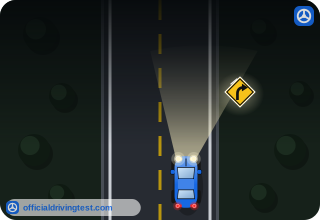
- Drive mostly at night until your eyes get used to the dark
- Take off your glasses or contact lenses once it gets dark
- Drive faster to get off the road sooner than other drivers
- Don’t drive more than necessary and be very careful when you do
Show answer
Correct answer: Don’t drive more than necessary and be very careful when you do
The manual advises drivers with night vision problems not to drive more than necessary and to be very careful.
Source: Connecticut Driver's Manual (Revised March 2023), page 5 · Open this page in the manual (Manual page 5)
-
Some drivers have problems with glare while driving at night, especially from what?
- Oncoming headlights
- Street lights
- Dashboard lights
- Road signs
Show answer
Correct answer: Oncoming headlights
The manual names the glare of oncoming headlights as a night-driving problem.
Source: Connecticut Driver's Manual (Revised March 2023), page 5 · Open this page in the manual (Manual page 5)
-
How often does the manual say you should have your eyes checked by an eye specialist?
- Every five years
- Every ten years
- Every year or two
- Only when your license is renewed
Show answer
Correct answer: Every year or two
The manual says to have your eyes checked every year or two by an eye specialist.
Source: Connecticut Driver's Manual (Revised March 2023), page 5 · Open this page in the manual (Manual page 5)
-
If your license says you must wear corrective lenses and a law enforcement officer stops you while you are not wearing them, what may happen?
- Your license is cancelled on the spot
- You may be issued a citation
- You must retake the road test
- Nothing, because it is only a recommendation
Show answer
Correct answer: You may be issued a citation
The manual says you may be issued a citation for driving without required corrective lenses.
Source: Connecticut Driver's Manual (Revised March 2023), page 5 · Open this page in the manual (Manual page 5)
-
According to the manual, which sounds can warn you of danger while driving?
- Radio traffic reports and music
- The sound of your own turn signal
- Conversation between passengers
- Horns, a siren, or screeching tires
Show answer
Correct answer: Horns, a siren, or screeching tires
The manual says horns, a siren or screeching tires can warn you of danger, which is why hearing helps.
Source: Connecticut Driver's Manual (Revised March 2023), page 5 · Open this page in the manual (Manual page 5)
-
How do drivers who know they are deaf or have hearing problems learn to drive safely?
- They rely more on vision and tend to stay more alert
- They drive only in daylight on quiet, familiar roads
- They keep the radio turned up loud to stay awake while driving
- They rely on their passengers to listen for them
Show answer
Correct answer: They rely more on vision and tend to stay more alert
The manual says such drivers rely more on vision and tend to stay more alert.
Source: Connecticut Driver's Manual (Revised March 2023), page 5 · Open this page in the manual (Manual page 5)
-
What have studies shown about the driving records of hearing-impaired drivers?
- They are worse than those of drivers with good hearing
- They are better than those of drivers with good hearing
- They are just as good as those of drivers with good hearing
- They have never been studied
Show answer
Correct answer: They are just as good as those of drivers with good hearing
The manual says studies show hearing-impaired drivers’ records are just as good as those of drivers with good hearing.
Source: Connecticut Driver's Manual (Revised March 2023), page 5 · Open this page in the manual (Manual page 5)
-
Where must the person giving instruction to a learner’s permit holder sit?
- In the back seat behind the driver
- In the front passenger seat next to the learner
- In the back seat on the passenger side
- Outside the vehicle, within sight of the learner
Show answer
Correct answer: In the front passenger seat next to the learner
The instructor must sit in the front passenger seat next to the learner.
Source: Connecticut Driver's Manual (Revised March 2023), page 5 · Open this page in the manual (Manual page 5)
-
The person giving instruction to a learner’s permit holder must be alert and ready to do what?
- Give hand signals for the learner
- Take the learner’s test score to the DMV
- Drive the vehicle on all highways
- Take over control of the vehicle
Show answer
Correct answer: Take over control of the vehicle
The instructor must be alert and ready to take over control of the vehicle.
Source: Connecticut Driver's Manual (Revised March 2023), page 5 · Open this page in the manual (Manual page 5)
-
Who is responsible for the safe operation of the vehicle when a permit holder is driving with an instructor?
- Both the instructor and the driver
- Only the learner who is driving
- Only the instructor in the passenger seat
- The registered owner of the vehicle
Show answer
Correct answer: Both the instructor and the driver
The manual says the safe operation of the vehicle is the responsibility of both the instructor and the driver.
Source: Connecticut Driver's Manual (Revised March 2023), page 5 · Open this page in the manual (Manual page 5)
-
What does the manual advise parents to do about night driving by their teens?
- Allow it once the teen has driven ten hours
- Encourage it to build skill on empty roads
- Enforce the state curfew
- Leave it to the teen’s own judgment
Show answer
Correct answer: Enforce the state curfew
Because fatal crashes are more likely at night, the manual says to restrict night driving and enforce the state curfew.
Source: Connecticut Driver's Manual (Revised March 2023), page 4 · Open this page in the manual (Manual page 4)
-
What happens to crash risk as the number of passengers in a teen’s vehicle increases?
- The risk decreases
- The risk increases
- The risk stays the same
- The risk changes only for siblings
Show answer
Correct answer: The risk increases
The manual says crash risk goes up with other teens in the car and also increases with the number of passengers.
Source: Connecticut Driver's Manual (Revised March 2023), page 4 · Open this page in the manual (Manual page 4)